
Whale watching big island: Best Seasons, Spots & Tips for Humpbacks
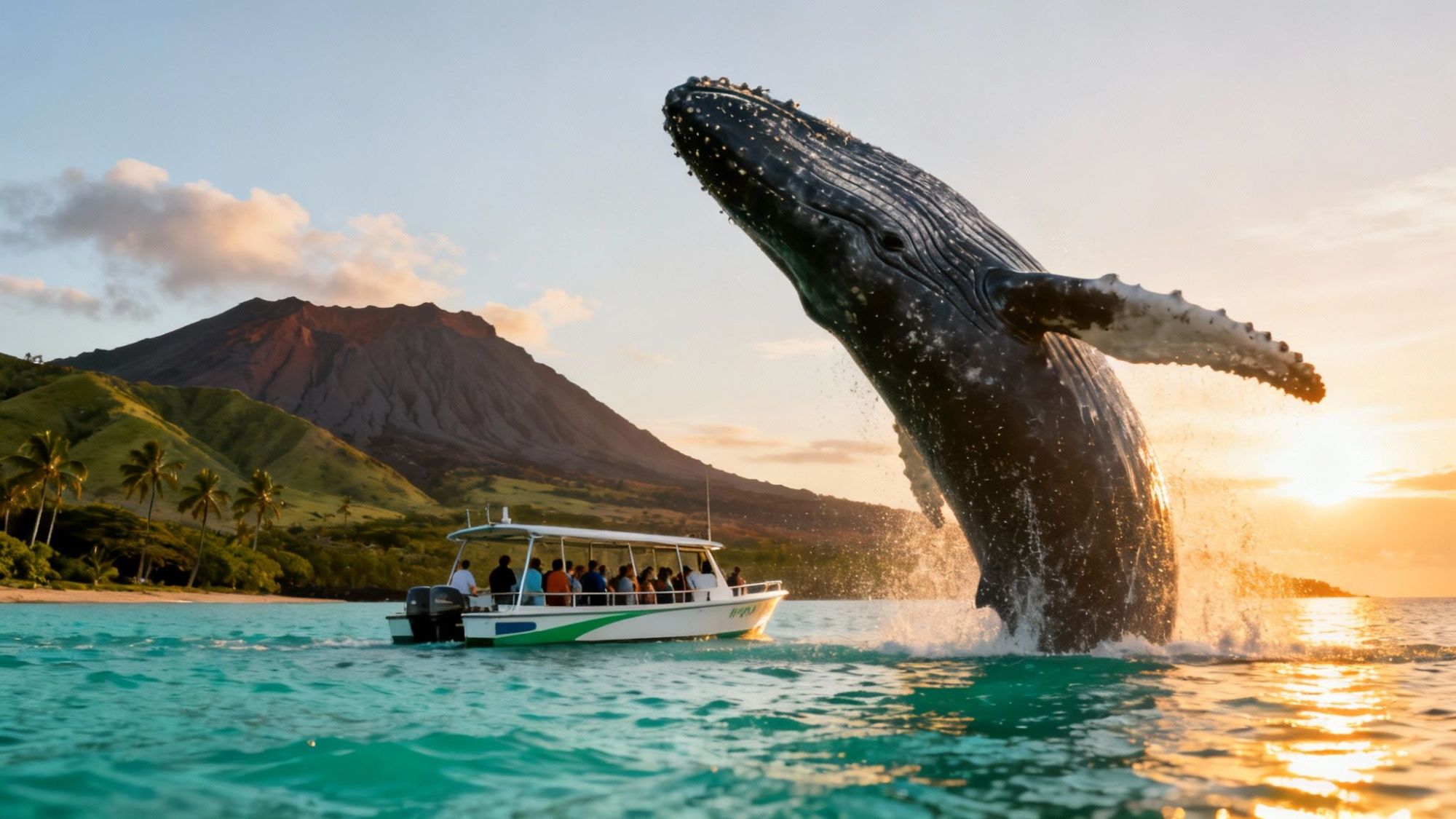
Welcome to the ultimate guide for whale watching on the Big Island. If you're hoping to witness the awe-inspiring sight of majestic humpback whales, you've picked one of the best places on the planet. The absolute peak season for this unforgettable experience is from January to March, and the waters along the Kohala Coast are where the magic truly happens.
Your Big Island Whale Watching Adventure Awaits
Every winter, the warm, sheltered waters around Hawaiʻi’s Big Island set the stage for one of nature’s most incredible shows. Thousands of humpback whales travel a grueling 3,000 miles from their chilly feeding grounds in Alaska to this tropical paradise. They don't come here to eat; they come for the most important parts of their lives: breeding, giving birth, and nursing their young in a safe haven.
This yearly migration turns the island's coastline into a living theater of breathtaking acrobatics and tender family moments. Trust me, there’s nothing that can prepare you for the feeling of seeing a 40-ton giant launch its entire body out of the water. It’s a profound connection with wildlife you’ll never forget.
To really get the most out of it, you’ll want to go with local experts who live and breathe these waters. As the top rated & most reviewed snorkel company in Hawaii, Kona Snorkel Trips is all about creating safe, respectful, and totally memorable wildlife encounters. Our crew knows the whales' behaviors and the best spots to find them, making sure you get a front-row seat.
The Kohala Coast: The Epicenter of the Action
While you can spot whales all along the Kona side of the island, one area consistently stands out. The Big Island's Kohala Coast is the undisputed epicenter for humpback whale activity. This isn’t just a hunch; it’s a fact backed by more than two decades of hard data.
Since 1996, the annual Sanctuary Ocean Count—a fantastic citizen-science project—has consistently shown that the Kohala Coast records two to three times more whale sightings than any other spot on the island. Thousands of documented encounters from hundreds of volunteers all point to the same thing: this sun-drenched coastline is where you want to be. You can learn more about the best whale watching spots on the Big Island in our other guide.
This guide is designed to give you everything you need to plan the perfect whale watching trip. We’ll dive into:
- The incredible story of the humpback migration.
- The best times of day and months of the season to go.
- Top spots for viewing from both shore and sea.
- Tips for choosing the right tour and preparing for your trip.
Get ready to witness a natural wonder that will stick with you for a lifetime.
The Epic Journey of Hawaii's Humpback Whales
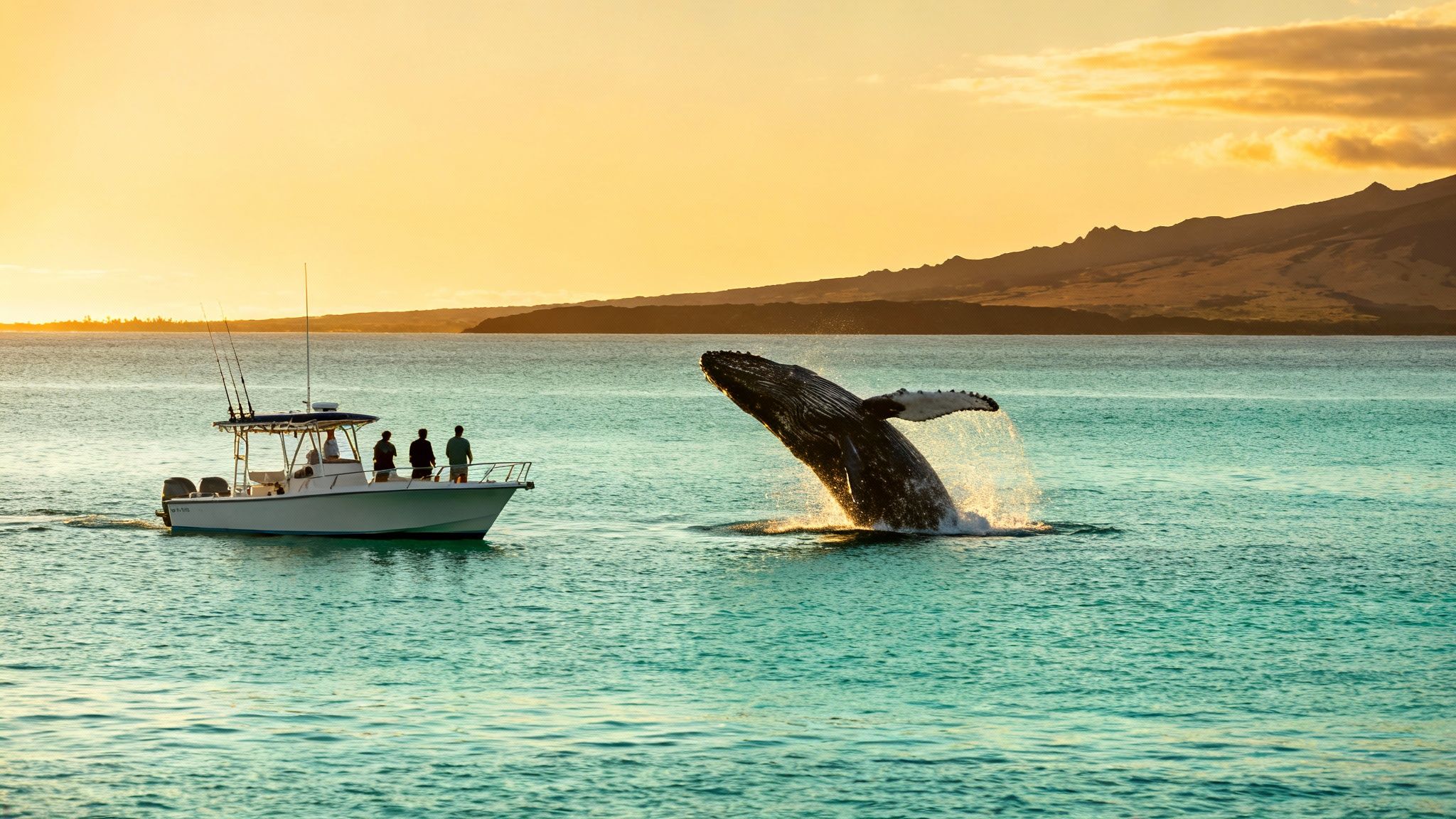
That spectacular breach you just witnessed—a 40-ton humpback whale launching itself out of the water—is the grand finale to one of the most incredible journeys in the animal kingdom. Every single whale you see while whale watching on the Big Island has traveled thousands of miles, a marathon of instinct and survival.
Their epic pilgrimage kicks off in the cold, nutrient-rich waters of Alaska. All summer long, these giants feast on krill and small fish, packing on immense layers of fat. This isn’t just for staying warm; it's the fuel they'll need to survive for months on end.
From Alaskan Feasts to Hawaiian Nurseries
As fall sets in, an ancient trigger tells them it's time to head south. The whales begin a grueling 6,000-mile roundtrip journey, swimming relentlessly for up to two months. They fast the entire way, relying solely on their blubber reserves for energy.
So, why go through all that trouble? It all comes down to the warm, calm, and protected waters surrounding Hawaiʻi.
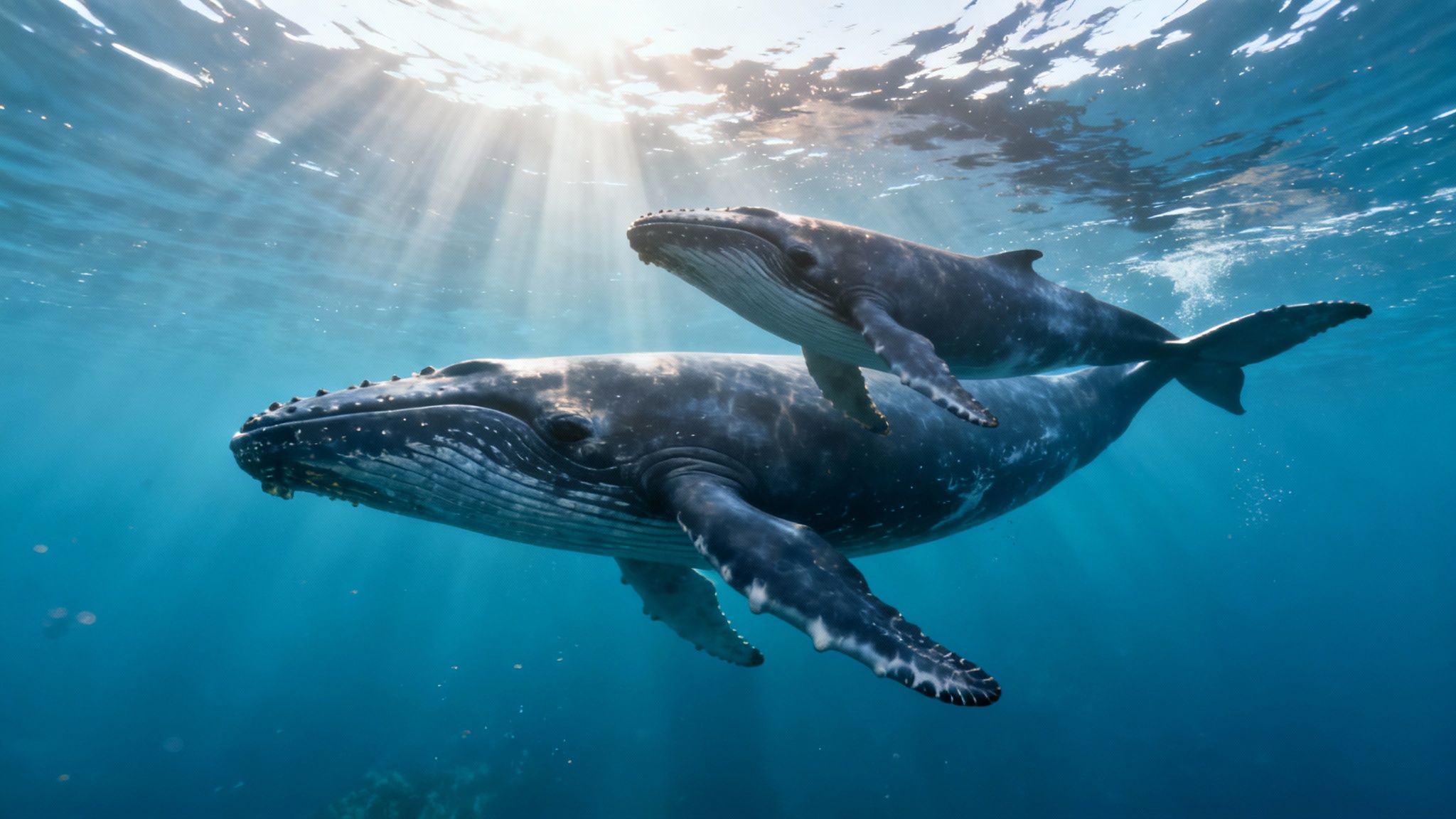
- A Safe Haven for Birth: Newborn calves have very little body fat, and the frigid Alaskan seas would be deadly. The balmy Hawaiian waters, averaging around 77°F (25°C), create the perfect warm-water nursery.
- Protection from Predators: These sheltered bays are largely free of the humpbacks' main predator, the orca. This makes it a much safer place for vulnerable calves to spend their first few months.
- Ideal Mating Grounds: The clear, shallow waters also double as a grand stage where males compete for mates with thunderous tail slaps and their famous, haunting songs.
The Annual Timeline of Arrival
The migration isn't a chaotic rush but a staggered arrival that plays out over several months. This amazing spectacle kicks off in late November as the first humpbacks complete their 3,000-3,500 mile trip from their Alaskan feeding grounds. The season hits its peak between January and March, when thousands arrive to breed, calve, and nurse—an event that draws whale watchers from all over the world. You can discover more about this incredible annual migration and what makes it so special.
This "whale party" follows a loose schedule. The first to show up are often mothers with their year-old calves, teaching them the migration route. They’re followed by juveniles, adult males ready to compete, and finally, pregnant females looking for a safe place to give birth. It all creates a bustling aquatic society before they start the long swim back north in early April.
This journey is a profound display of resilience. By the time a nursing mother returns to Alaska, she may have lost up to a third of her body weight, having given all her energy to her calf's survival.
A Conservation Success Story
The vibrant whale watching scene we get to enjoy on the Big Island today is only possible thanks to an incredible comeback story. Commercial whaling in the 19th and 20th centuries absolutely decimated the North Pacific humpback population, pushing them to the edge of extinction by the 1960s.
Thankfully, international protections like the Marine Mammal Protection Act of 1972 were put in place just in time. These vital conservation efforts worked, and the population has made a remarkable recovery to an estimated 26,000 individuals today. Every breach and tail slap you witness is a celebration of that success, turning your sightseeing trip into something much more profound.
Pinpointing the Best Time to See Whales
Timing is everything when it comes to planning a truly epic whale watching trip on the Big Island. Sure, the "official" season runs from December through March, but the experience you have can be wildly different depending on when you go. Getting a feel for the rhythm of the season gives you a huge advantage, letting you plan a trip that lines up with the specific whale behaviors you’re dying to see.
Think of the season like a big wave. It starts to build in late fall, hits a massive peak in the dead of winter, and then gently rolls back out as spring arrives. You might catch an early bird in November or a few stragglers in May, but the real show is packed into those peak months.
The Month-by-Month Breakdown
The vibe of the whale season changes week by week. Early on, it’s all about the big, competitive groups of males putting on a show to impress the females. Later in the season, the energy shifts to something more tender: mothers patiently teaching their newborn calves how to be a whale.
Here’s a rough guide to what you can expect:
- December: The first humpbacks start rolling in, mostly mature males and some juveniles. The energy on the water is electric as everyone gets excited for the season to officially kick off.
- January: The population really starts to explode. This is an awesome month to see a bit of everything, from the high-energy "rowdy groups" of males to the very first newborn calves sticking close to their moms.
- February: This is it—the absolute peak of the season. The waters off the Big Island are packed with the highest concentration of humpbacks. Sightings are frequent, and the action is non-stop. Breaches, tail slaps, and spy-hops are practically guaranteed.
- March: Still a fantastic time to be on the water, March is what we like to call "nursery month." You'll see tons of mothers with their growing calves. The little ones get more curious and playful by the day as they bulk up for the long swim back north.
- April: The season starts to wind down as the whales begin their migration back to their Alaskan feeding grounds. Sightings become less common, but you can still catch some really touching moments as the last mother-and-calf pairs say their goodbyes.
If you want to give yourself the absolute best shot at seeing it all—from the jaw-dropping breaches to the sweet interactions between a mom and her calf—aim for the peak window from mid-January to the end of March.
The Best Time of Day for a Tour
Once you've zeroed in on the right month, the next question is what time of day to book your tour. Whales are active around the clock, but the ocean conditions have a huge say in how well you can actually see them.
Morning tours are pretty much the gold standard for whale watching on the Big Island. The reason is simple: the water is usually much calmer. Before the afternoon trade winds kick up, the ocean surface is often like glass.
This gives you a few key advantages:
- Better Visibility: A flat, calm surface makes it way easier to spot a puff of spray from a blowhole in the distance or the dark shadow of a whale just under the water.
- More Comfortable Ride: Nobody likes bouncing around in choppy seas. A smoother ride is just more fun and seriously cuts down on the chances of feeling seasick.
- Active Whales: While it's never a guarantee, whales often seem to be more active and social in the calm morning hours.
That’s not to say you should write off afternoon tours! The golden light in the late afternoon can be stunning for photos, and hey, the whales are still out there doing their thing. But for the best possible viewing conditions, an early start is usually your safest bet. For a deeper dive, check out our complete guide on the Big Island whale season.
Where to Watch Whales From Shore and Sea
The Big Island gives you two incredible ways to witness the annual whale migration: from its ruggedly beautiful coastline or by getting right on the water for a front-row seat. Whether you're working with a good pair of binoculars and a picnic blanket or you're ready for an all-out sea adventure, you've got amazing options. The real secret is knowing where to look and what each experience truly offers.
Prime Shore Viewing Locations
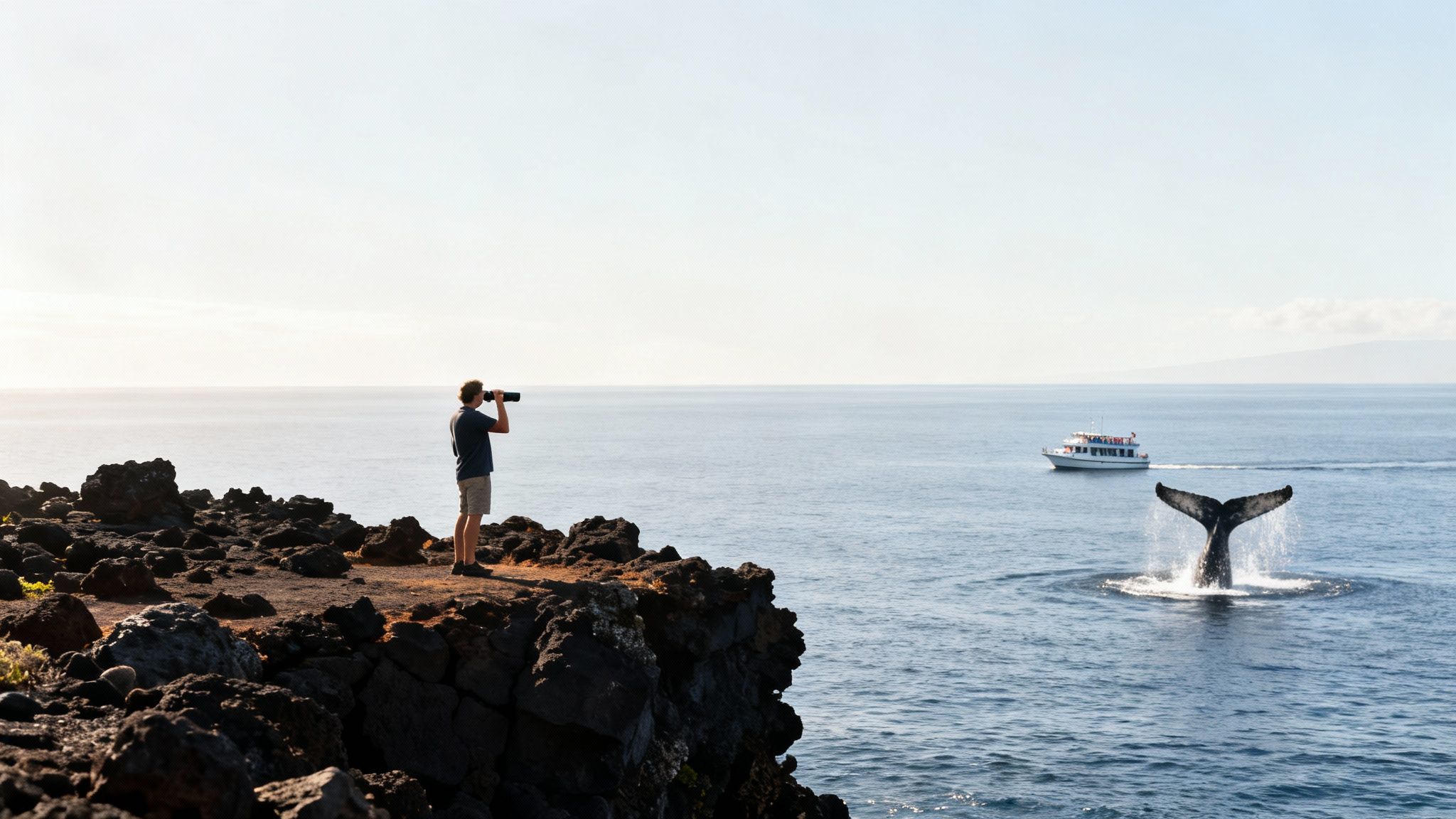
Watching whales from the shore is a fantastic and deeply rewarding experience, especially along the island’s elevated coastlines. You'll need a little patience, a good vantage point, and a pair of binoculars to really bring the action to life. Mornings are usually your best bet, as the calm, glassy ocean surface makes it much easier to spot a distant spout against the horizon.
Without a doubt, the undisputed champion for land-based whale watching on the Big Island is the sun-drenched Kohala Coast. Its dramatic bluffs provide the perfect natural theater.
- Puʻukoholā Heiau National Historic Site: The name literally means "hill of the whale," which tells you everything you need to know. For centuries, this has been the spot. The high ground offers sweeping, panoramic views over the same waters where humpbacks love to gather.
- Lapakahi State Historical Park: Just a short drive up the coast, this park provides another excellent, elevated lookout point. It’s a classic, sunny Kohala spot, so remember to pack plenty of water and sunscreen as you scan for breaches and blows.
- Kapaʻa Beach Park: This park offers the best of both worlds: great views and creature comforts. With covered picnic pavilions, you can settle in for a long watch in the cool shade, making it a perfect spot to spend a few hours.
Don't just take my word for it. During the coordinated Great Whale Count on January 27, 2025, dedicated volunteers spotted an incredible 493 humpback whales from 30 different shoreline sites across the Big Island. The sightings along the Kohala Coast were consistently two to three times higher than anywhere else, cementing its status as a world-class hotspot. You can read more about the impressive whale count results and the power of this amazing community science effort.
The Unforgettable Boat Tour Experience
While watching from shore is incredible, nothing—and I mean nothing—compares to being out on a boat. Getting on the water gives you a perspective that land simply can't match. You’re not just seeing the whales; you’re sharing their environment, feeling the ocean spray, and getting a true sense of their immense scale.
A professional tour takes the experience from simple sightseeing to a rich, educational adventure.
An expert captain and crew know how to read the subtle cues of the ocean. They know where whales are likely to surface, can interpret their behaviors, and share fascinating insights that bring the whole spectacle to life.
One of the most magical parts of a boat tour is the chance to actually hear the whales. Many tours are equipped with hydrophones—underwater microphones that can be lowered into the sea. Listening to the complex, haunting songs of the male humpbacks echo through the boat is a deeply moving experience that connects you to their world in a profound way you'll never forget.
Shore Viewing vs Boat Tour Whale Watching
So, which is right for you? Deciding between watching from land or joining a boat tour really comes down to your budget, time, and what you hope to get out of the experience. Both offer unique rewards for anyone hoping to witness Hawaii's magnificent humpback whales.
To help you decide, here’s a quick comparison of the two approaches.
| Feature | Shore Viewing | Boat Tour |
|---|---|---|
| Cost | Free (or small park entry fees) | Paid tour ticket |
| Proximity | Distant views (binoculars are a must) | Up-close encounters (respecting the 100-yard limit) |
| Perspective | Wide, panoramic ocean views from above | Eye-level with the action, right on the water |
| Expertise | Self-guided discovery | Guided by experienced marine naturalists |
| Sounds | The natural sounds of the shore and wind | A chance to hear whale songs via hydrophone |
| Best For | Budget travelers and spontaneous viewing | Immersive, educational, and up-close experiences |
Ultimately, there’s no wrong answer. Whether you’re gazing from a scenic overlook or feeling the rumble of a tail slap from the deck of a boat, seeing these gentle giants in their natural habitat is one of the most powerful experiences the Big Island has to offer.
Choosing the Perfect Whale Watching Tour
Picking the right company for your whale watching adventure is easily one of the most important calls you'll make. The Big Island has no shortage of operators, and at first glance, they can all start to look the same. But the key to an unforgettable day is looking past the price tag to figure out what kind of experience you’re really after.
The boat itself makes a huge difference. Big, stable catamarans are fantastic if you’ve got family in tow or you're worried about getting seasick—they usually have more comforts like restrooms, too. If you want something a bit more adventurous, a smaller raft can zip you out to the action in a flash, offering a wild, water-level view that feels incredibly close and personal.
What to Look for in an Operator
More important than the boat, though, is the company's whole philosophy. You want to find people who are genuinely passionate about marine life, not just somebody running a taxi service on the water. A truly responsible operator will always put the whales' well-being first, sticking to that federally mandated 100-yard approach limit without question.
That commitment to doing things right is what separates a passive, respectful observer from an intrusive one. It ensures the whales aren't stressed, which means you get to see them behaving naturally.
Here's what I always tell people to look for:
- An Experienced Marine Naturalist on Board: Having a guide who really knows their stuff is a total game-changer. They don't just point; they interpret what the whales are doing, explain the science, and answer all your questions. It adds a whole other layer to the trip.
- Small Group Sizes: Fewer people means a more intimate experience. It’s way easier to move around for that perfect photo, ask your guide a question, and just feel a real connection to what's happening.
- A Solid Safety Record: This is non-negotiable. Make sure the company has a great safety record and their crew is certified in first aid and CPR. Nothing is more important.
- Hydrophones on the Boat: This is the secret ingredient for a truly magical trip. A hydrophone is an underwater microphone, and listening to the haunting, complex songs of a male humpback echoing through the hull is something that will stay with you forever.
Why Expert Guides Matter
A great guide does so much more than just spot whales. They read the ocean. They see the subtle signs—a flicker on the water's surface, a gathering of seabirds—that often lead to the most incredible encounters.
Their expertise turns a simple sighting into a story. That tail slap becomes a lesson in whale communication. A massive breach becomes a conversation about why these giants launch themselves out of the water. This is what transforms a good trip into an amazing one.
For a deeper dive into the different kinds of trips out there, check out our complete guide to the best whale watching tours in Kona, Hawaii.
When you choose an eco-conscious tour, you're doing more than just buying a ticket. You're directly supporting businesses that protect Hawaiʻi's marine life for years to come.
Ultimately, the best tour is the one that feels right to you. By going with a company that champions responsible tourism, you become part of the solution, helping ensure these magnificent creatures continue to grace our waters. It makes those incredible memories feel even better.
Gearing Up for Your Whale Adventure
A little bit of prep work can be the difference between a good whale watching tour and a truly unforgettable one. When you have the right gear and know what to expect, you can stop worrying about the little things and just soak in the incredible moments happening out on the water.
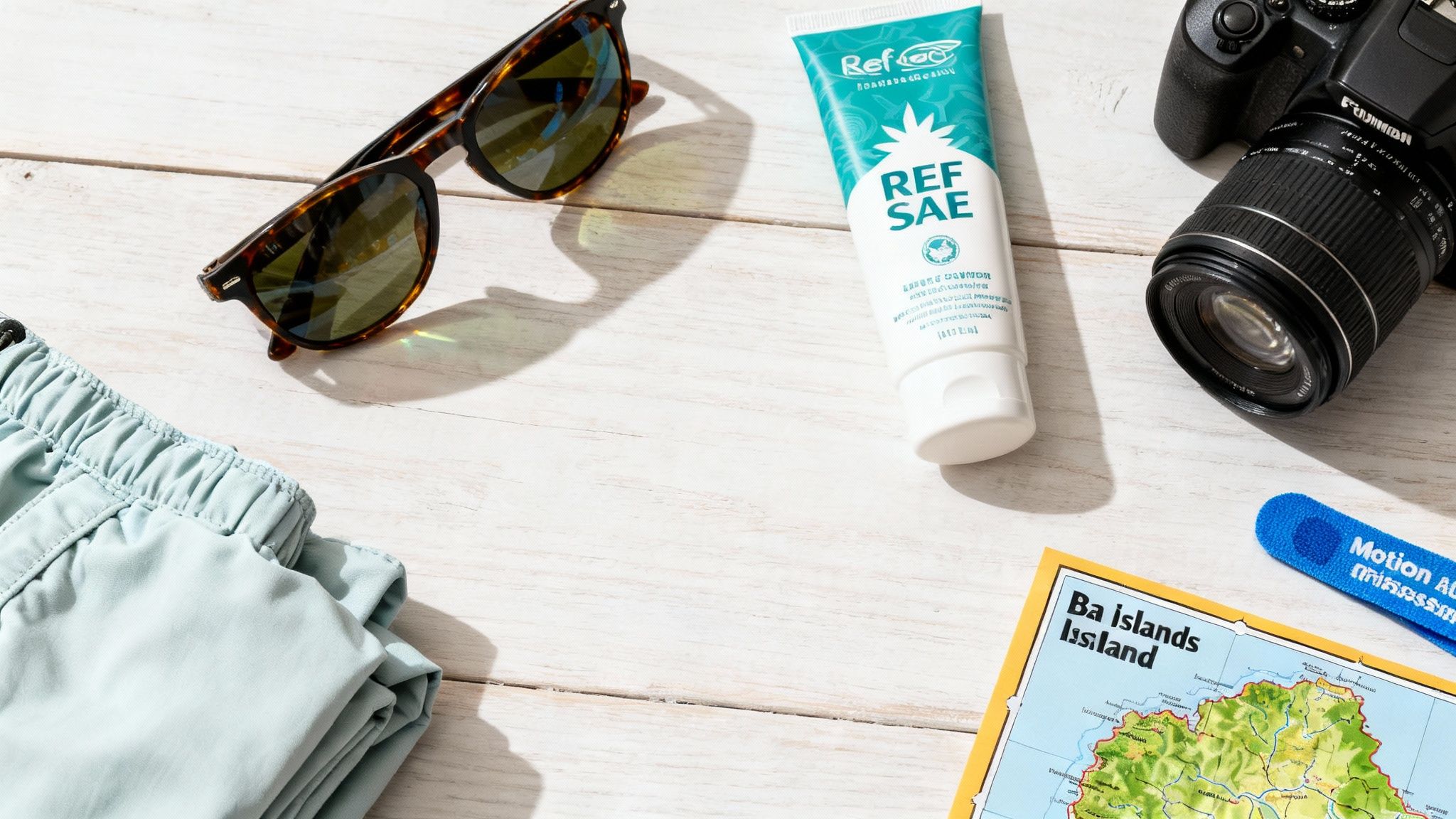
What to Pack for the Boat
Packing for a boat tour on the Big Island is a balancing act. You need solid sun protection, but you also need to be ready for that surprisingly cool breeze that kicks up once you're moving on the ocean.
Here's a quick checklist of the essentials:
- Layered Clothing: A light jacket or windbreaker is your best friend. You’ll be happy you have it when the boat picks up speed, but you can always peel it off when the sun is beating down.
- Reef-Safe Sunscreen: The Hawaiian sun is no joke, and it’s even stronger when it’s reflecting off the water. Do your skin and our fragile coral reefs a favor by using a mineral-based, reef-safe formula.
- Polarized Sunglasses: Seriously, don't leave these behind. Polarized lenses are a game-changer for cutting the glare on the ocean's surface, making it so much easier to spot a whale's spout or see what's just below the water.
- Camera with a Zoom Lens: Your phone is fine, but if you want to capture a distant breach or a tail slap in all its glory, a real camera with a decent zoom will make a world of difference.
- Binoculars: These are fantastic for getting an up-close view of whale behaviors from a respectful distance. You can appreciate all the little details without ever disturbing the animals.
How to Beat Motion Sickness
Nothing ruins the excitement of a whale watch faster than a queasy stomach. The real trick to avoiding seasickness is to be proactive. If you wait until you start feeling sick, it’s usually too late.
If you know you’re susceptible, think about taking an over-the-counter remedy like Dramamine the night before your trip, and then again in the morning. For those who prefer natural options, ginger chews and acupressure wristbands can also work wonders. We’ve actually put together a full rundown on your options in our guide on how to prevent seasickness.
Speaking "Whale": What to Look For
The experience becomes so much richer when you can identify the amazing things you're seeing. Those splashes and jumps aren't just random—they're specific behaviors that tell a story.
Keep an eye out for these spectacular displays, as each one offers a glimpse into the complex social lives of humpback whales.
- Breach: This is the showstopper! A whale propels its massive body completely out of the water and comes crashing down in an explosion of spray.
- Spy-Hop: A curious whale pokes its head straight out of the water, sometimes rotating slowly to get a 360-degree look at what’s happening on the surface.
- Pec Slap: The whale rolls onto its side and smacks its long pectoral fin on the water over and over again, creating a loud, echoing sound.
- Tail Slap (Lobtailing): This is a powerful, forceful slap of the tail (fluke) on the water, sending a huge plume of spray high into the air.
Of course, these are wild animals, so sightings are never 100% guaranteed. That said, your chances of seeing whales during the peak season are incredibly high. By going with a responsible tour company, you’re not just setting yourself up for an amazing day—you’re also helping protect these magnificent creatures for years to come.
Of course. Here is the rewritten section, crafted to sound like an experienced local guide sharing their knowledge in a natural, human-written voice.
Your Whale Watching Questions, Answered
Alright, let's wrap this up by tackling some of the questions we hear all the time from folks getting ready to head out on the water. Think of this as the final check-in before your big adventure, making sure you're totally ready for what's in store.
How Close Can We Really Get to the Whales?
This is a big one, and for good reason. To keep the whales safe and happy, federal law in Hawaiʻi is crystal clear: everyone—boats, swimmers, paddleboarders, you name it—has to stay at least 100 yards away from humpbacks. To put that in perspective, picture a football field. That's the buffer zone.
This rule is especially critical for protecting new mothers and their calves from getting stressed out. Any good tour operator knows these rules by heart and will get you incredible views without ever crossing that line. A good pair of binoculars or a camera with a decent zoom lens will be your best friend for getting that "up-close" feeling without disturbing these gentle giants.
Will I Actually Be Able to Hear Whales Sing?
You bet, and let me tell you, it's an experience that will give you goosebumps. Many of the tour boats here are outfitted with hydrophones, which are basically underwater microphones. When the moment is right, your captain will cut the engines, drop the hydrophone into the quiet water, and pipe the sound through the boat's speakers.
Hearing the haunting, complex songs of the male humpbacks echo across the water is just unreal. Sound travels for miles underwater, and listening in is a powerful reminder of the incredible world living just beneath the surface. It's often the part of the trip people talk about for years.
Is a Whale Sighting Guaranteed?
Humpbacks are wild animals on their own schedule, so a 100% guarantee is never really possible. That said, your chances during the peak season—think January through March—are ridiculously high. We're talking about one of the most densely populated humpback hangouts on the planet during those months.
Most of the seasoned tour companies around here boast a success rate of over 95% during peak season. Some will even offer you a raincheck for another trip if you happen to get skunked, so it never hurts to ask about their policy when you're booking.
What Else Might We See Out There?
While the humpbacks are definitely the headliners, the ocean here is absolutely teeming with life. You've got a fantastic shot at running into a pod of spinner dolphins, famous for their wild, acrobatic leaps. They often love to play in the boat's wake.
It’s also common to spot bottlenose dolphins, our beloved Hawaiian green sea turtles (honu) popping up for a breath, and even the occasional pod of pilot whales or false killer whales. The marine ecosystem around the Big Island is so rich and dynamic—you just never know what might cruise by. Keep your eyes peeled!
Ready to create your own ocean memories? Kona Snorkel Trips runs world-class snorkel tours and unforgettable seasonal whale watching adventures that get you right into the heart of Hawaii's marine world. Check out our tours online and grab your spot on the boat today