
Whale Watching Big Island — whale watching big island guide
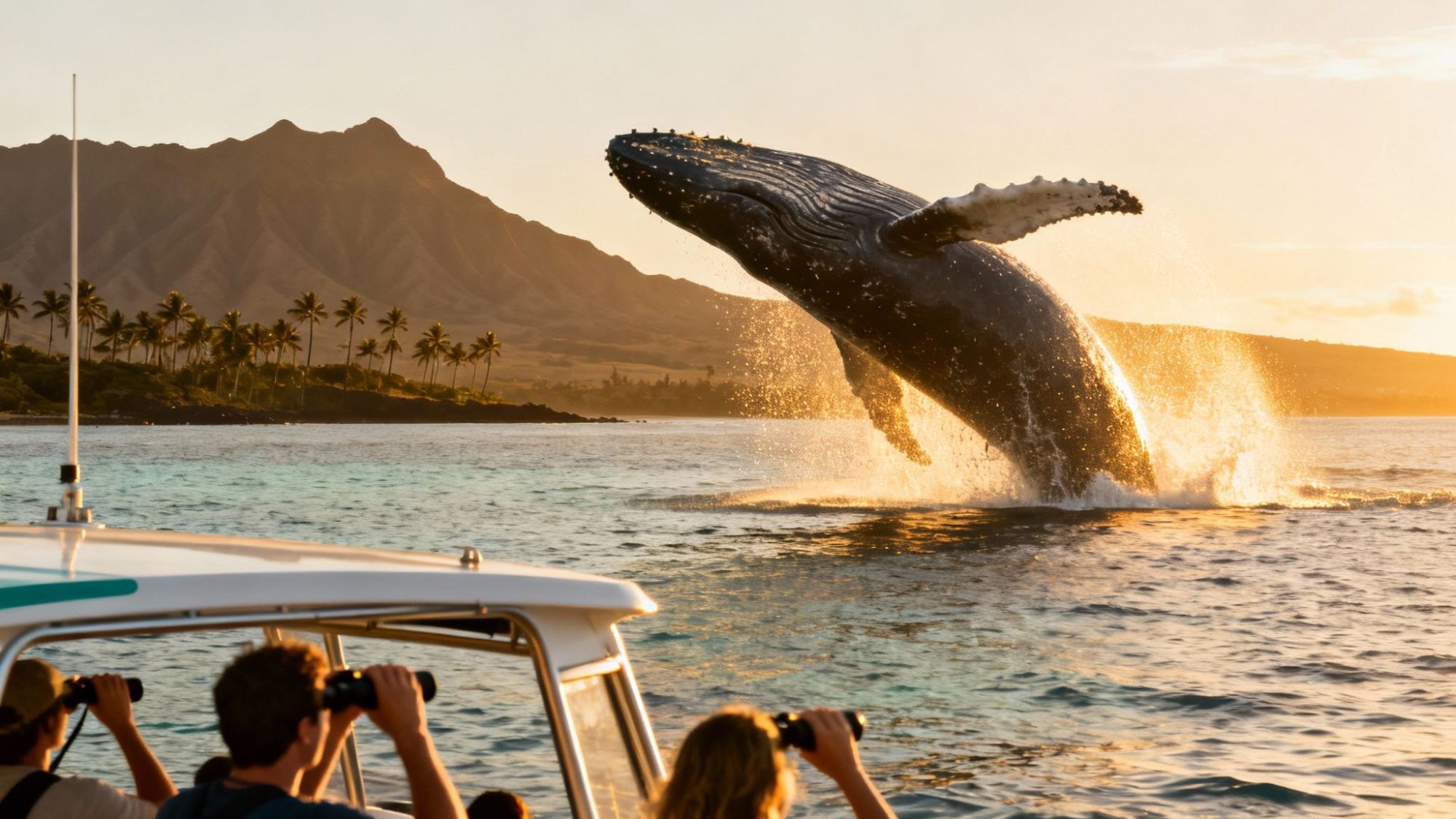
Picture this: the calm, turquoise surface of the Pacific suddenly explodes as a 40-ton humpback whale throws itself completely out of the water. It’s a breathtaking, heart-stopping moment, and it’s the essence of whale watching on the Big Island.
If you're planning a trip to witness this incredible spectacle, you've come to the right place. This is your guide to making that once-in-a-lifetime adventure happen.
An Unforgettable Big Island Whale Watching Adventure
Every winter, something magical happens. The waters around the Big Island become the world's most incredible stage for humpback whales. We're not talking about a few stragglers, either. A staggering two-thirds of the entire North Pacific humpback population—that's roughly 17,000 out of 26,000 whales—make the journey to Hawaii.
Many of them head straight for the Big Island, drawn to our unique underwater landscape where deep ocean trenches meet shallow coastal shelves. It’s the perfect nursery for them.
As Hawaii's top-rated and most-reviewed snorkel company, we at Kona Snorkel Trips live and breathe these waters. We know just how special this season is, and we love sharing it. Check out what fellow ocean lovers have to say about their adventures with us.
In this guide, we'll cover everything: the best times to see the whales, our favorite spots for watching from shore, and how to choose the right tour. We'll even get into what all those amazing whale behaviors actually mean, so you’re ready for an encounter you'll never forget.
Planning Your Ultimate Whale Watching Trip
A truly great whale watching trip is more than just the time you spend on the water. It’s about setting yourself up for a seamless, incredible experience from start to finish. That means picking the right home base is just as important as booking the right boat.
For an amazing stay that puts you right in the heart of the action, you might consider a spot like the luxurious pet-friendly Four Seasons Resort Hualalai in Kailua Kona. A well-chosen base camp puts you in the perfect position to explore the coastline for shore-based sightings and provides easy access to local harbors for your tour.
We've packed this guide with everything you need to know for your Big Island whale watching journey:
- The absolute peak season for the highest chances of sightings.
- Prime shoreline locations for watching from land (bring binoculars!).
- Our expert tips for choosing the best tour operator for you.
- An insider's guide to understanding what the whales are doing out there.
Alright, let's dive in and start planning.
Pinpointing the Best Time for Whale Sightings
When it comes to whale watching on the Big Island, timing really is everything. It’s a lot like trying to catch the perfect wave; success all comes down to understanding the ocean's rhythm and knowing when to be out there. The annual humpback migration follows a surprisingly predictable calendar, and lining up your trip with the peak of the season can turn a good day on the water into an absolutely unforgettable one.
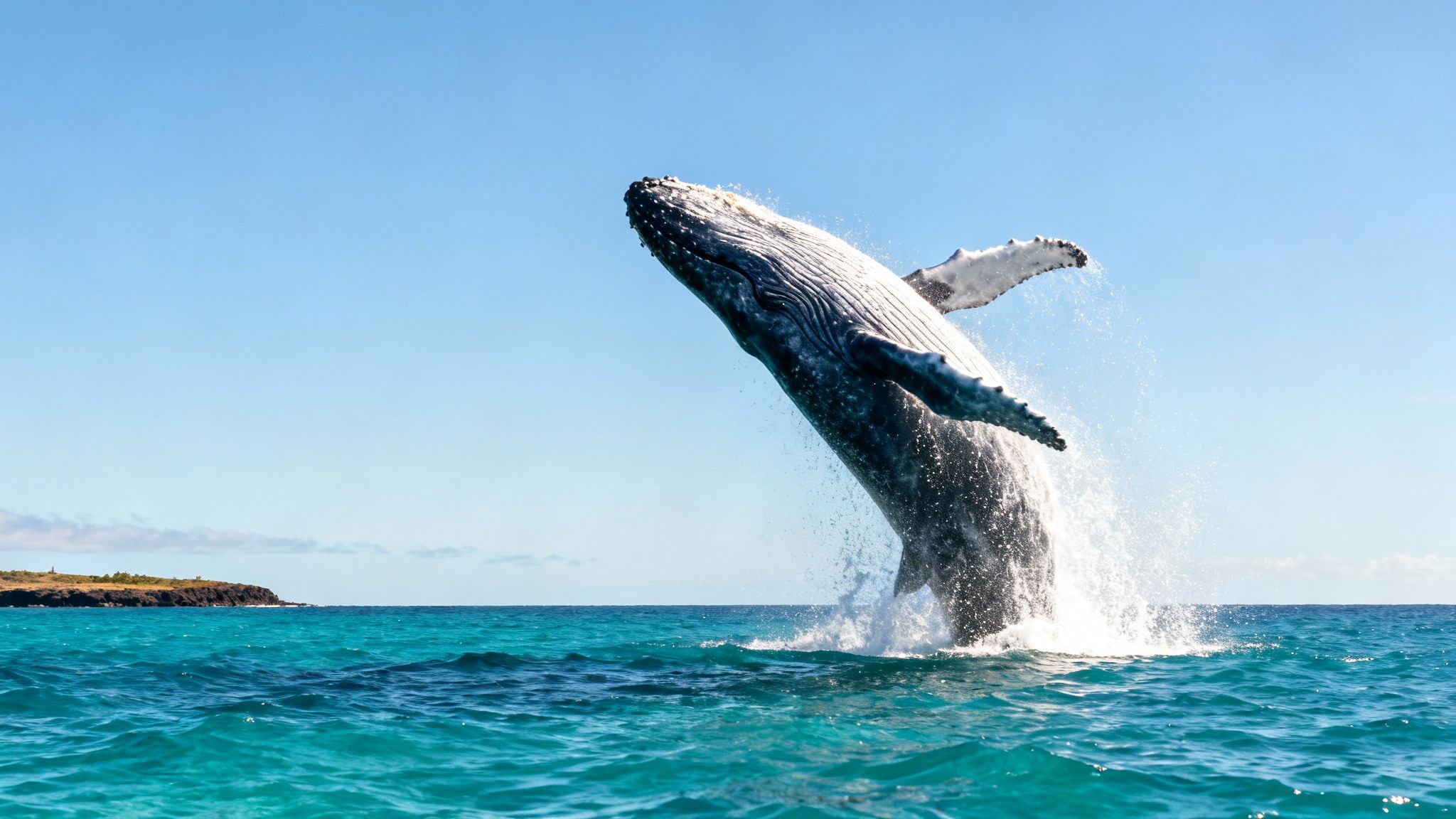
Officially, whale season here kicks off in December and runs through March. You might get lucky and spot a few early birds in November or some stragglers hanging around in April, but the real heart of the action—when we have the highest concentration of whales—is from mid-January to the end of March. This is when our waters are just teeming with activity, giving you the best shot at witnessing those spectacular behaviors like a full breach or a powerful tail slap.
The Rhythm of the Season
I like to think of the whale migration as a slow, majestic tide rolling in. The first whales to show up are often the "scouts" or newly pregnant females looking for a safe space. As winter sets in, the numbers just explode, turning the ocean into a bustling underwater metropolis.
This peak period is when you'll see the most diverse activity. We’re talking about everything from mothers patiently teaching their newborn calves to swim, to powerful males competing for mates in energetic, competitive pods. It’s raw nature, right in front of you.
And it’s not just what we see anecdotally; the data backs it up. The Sanctuary Ocean Counts, which have been happening annually during peak season since 1996, have recorded tens of thousands of sightings. This long-term data consistently shows the Kohala Coast is a major hotspot. In January and February, it’s not uncommon for spotters to average 3 to 6 whales every 15 minutes, sometimes hitting an incredible peak of 15 to 20 whales during a flurry of activity.
For an even more detailed look at what to expect each month, our complete guide to the Big Island whale season breaks it all down.
The sheer density of whales during peak season is just astounding. It’s not about seeing one or two whales off in the distance; it’s about feeling the entire ecosystem come alive. The ocean is electric with energy.
The Best Time of Day for Your Tour
Once you've got the right months figured out, the next question is what time of day to book your tour. Whales are active around the clock, but your viewing conditions definitely are not. We almost always recommend a morning trip, and for a few solid reasons:
- Calmer Waters: The ocean is typically at its calmest and most glassy in the morning before the afternoon trade winds kick up. A smooth surface makes it so much easier to spot the tell-tale "puff" of a whale's spout on the horizon.
- Better Light: That soft morning light is a photographer's dream, cutting down on the harsh glare you often get at midday.
- More Surface Activity: From our experience out on the water, it often seems that whales, especially the calves, are a bit more playful and active on the surface during the calmer morning hours.
By thinking strategically about both the time of year and the time of day, you seriously stack the deck in your favor for having that breathtaking, front-row experience with these magnificent ocean giants.
Discovering Top Shoreline Viewing Spots
While getting out on a boat is an incredible, up-close experience, you don't always have to be on the water to see the giants of the deep. For those of us who prefer solid ground under our feet, the Big Island coastline offers some truly spectacular vantage points for whale watching. All it takes is a good pair of binoculars and a bit of patience to witness the magic of breaches, tail slaps, and misty spouts right from the shore.
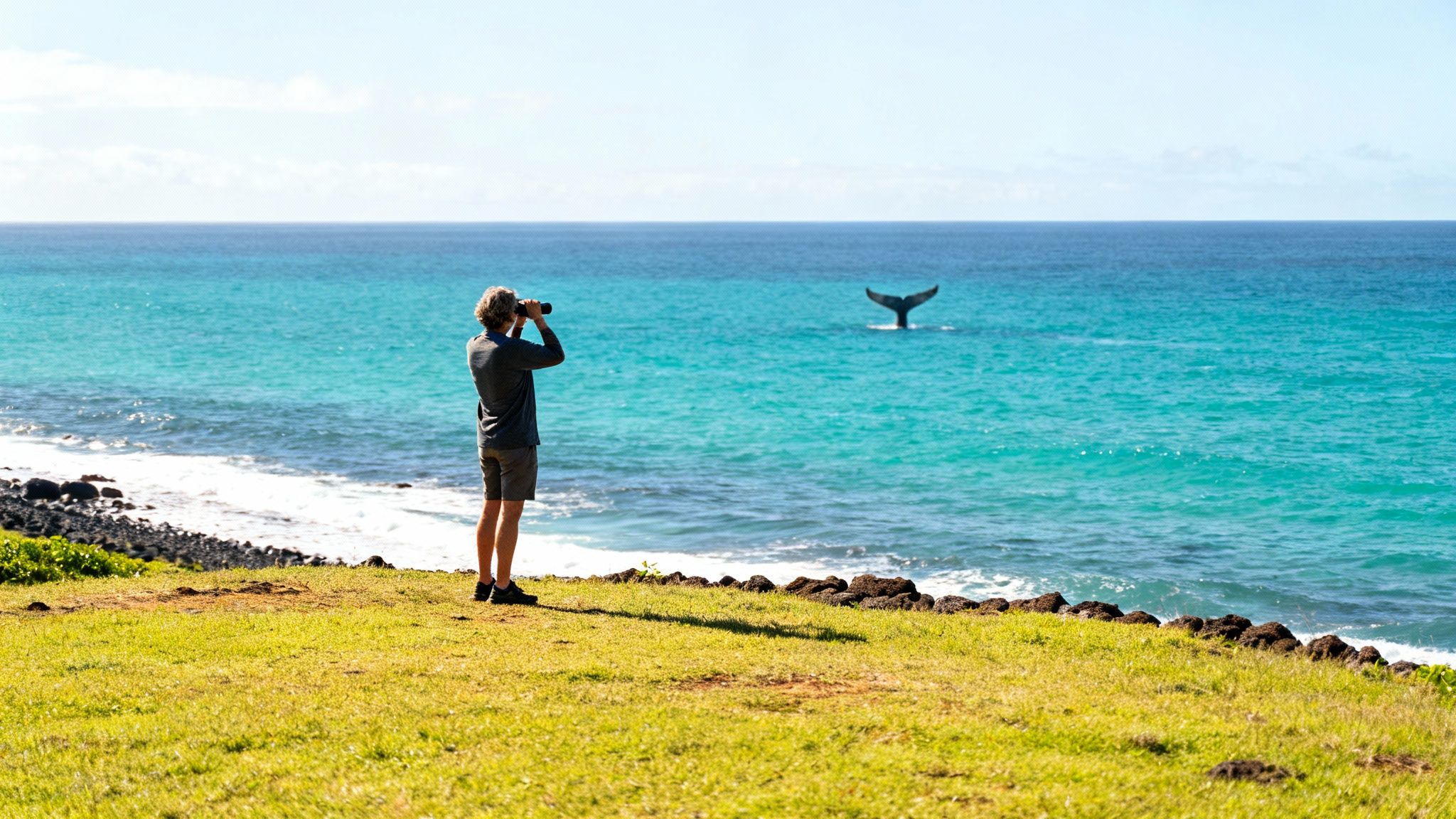
The secret to great shoreline viewing is pretty simple: elevation. Finding a perch with a high vantage point gives you a sweeping, panoramic view of the ocean. This makes it so much easier to scan the horizon and catch that first tell-tale puff of a spout way out in the distance.
Another pro tip is to head out in the morning. The water is usually at its calmest then, creating a glassy surface that isn't choppy with wind and waves. That smooth canvas makes any splash or spout stand out crystal clear, seriously boosting your chances of a memorable sighting.
Prime Locations on the Kohala Coast
If you're serious about land-based whale watching, the sun-drenched Kohala Coast is where you want to be. Its elevated bluffs and exceptionally clear sightlines create the perfect natural theater for the whales' annual winter performance.
When you're planning a day of shoreline spotting, these are the absolute must-visit locations:
- Puʻukoholā Heiau National Historic Site: The name of this historic site literally translates to "hill of the whale," and it definitely lives up to the hype. The high ground offers majestic, sweeping views over the ocean where whales are frequently seen cruising by.
- Lapakahi State Historical Park: This park is another fantastic, elevated viewpoint over the water. It’s in a very dry and sunny part of the island, so make sure you bring plenty of water, a hat, and sunscreen while you scan the sea.
- Kapaʻa Beach Park: Just a short drive from Lapakahi, this park has the huge bonus of covered picnic pavilions. This means you can watch for whales in comfortable shade—a real game-changer on a hot Hawaiian day.
These spots aren't just scenic lookouts; they're also important hubs for community science. Volunteers gather here for the annual Sanctuary Ocean Count, a shore-based project that helps track humpback whale populations.
Watching from the shore connects you to the island in a different way. You feel the same anticipation as the ancient Hawaiians who watched these same waters, waiting for the whales to return.
While the Kohala Coast is a major hub, other areas like Kailua-Kona also have some fantastic opportunities. For more local tips, you can check out our detailed guide on whale watching in Kailua-Kona to find even more viewing spots closer to town. No matter where you end up, remember that a little bit of patience is your best tool for a rewarding day.
Choosing Your Ideal Whale Watching Tour
Sure, you can spot whales from the shore, and it’s always a thrill. But getting out on a boat? That’s a whole different world. Being on the water puts you right in the middle of the action, giving you a true sense of just how massive and powerful these animals are. A guided tour takes it a step further—it's not just watching; it's an education, with marine experts explaining the incredible behaviors happening right in front of you.
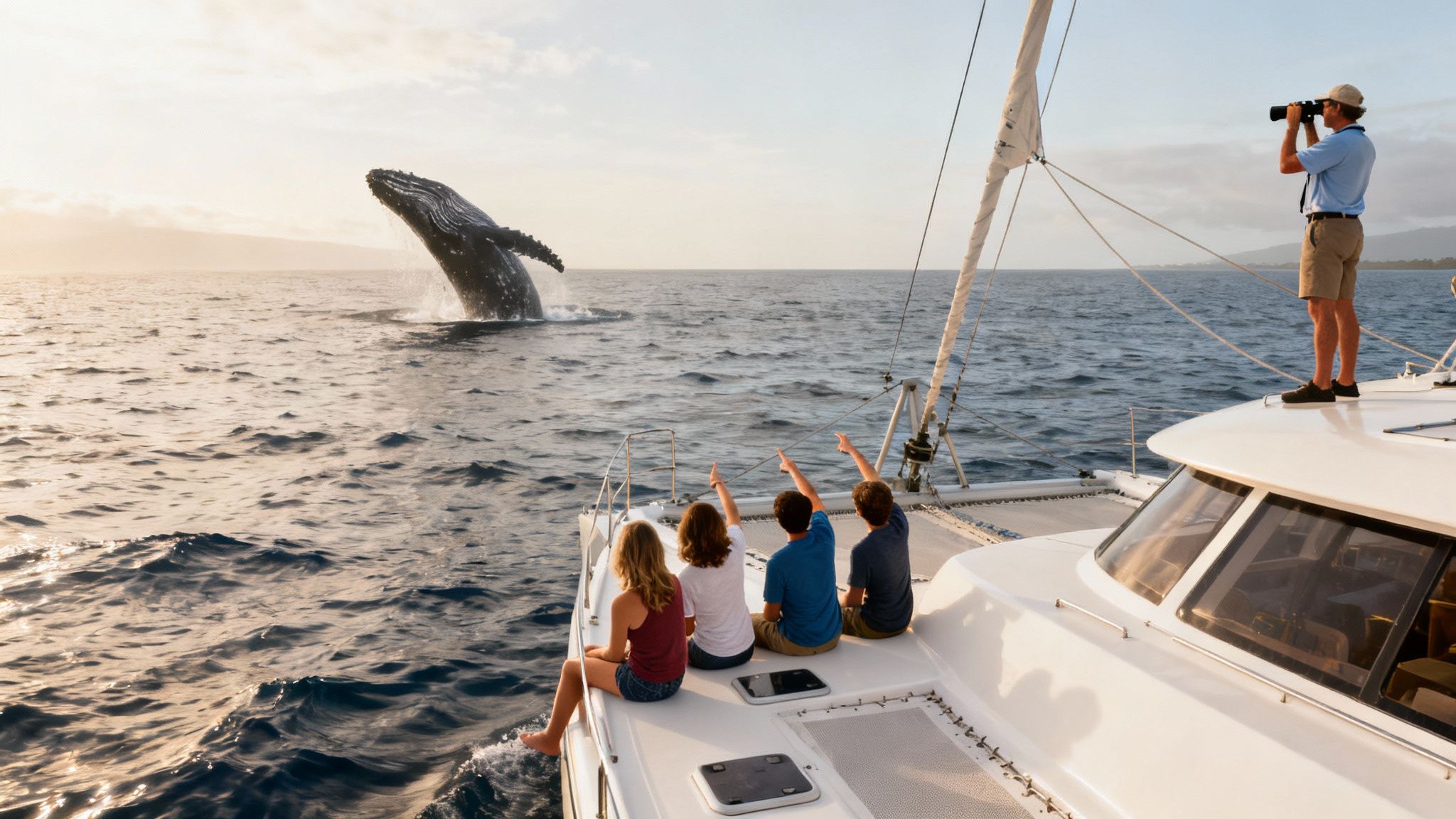
There’s no substitute for a good guide. An experienced captain knows exactly where the whales hang out and can read the subtle clues on the water’s surface that most of us would totally miss. That local knowledge seriously bumps up your chances of an unforgettable encounter. And the number of whales you can see from a boat is just staggering.
Case in point: during the first Sanctuary Ocean Count on January 25, 2025, volunteers spotted an incredible 493 humpback whales from 30 different spots along the coast. In just a 15-minute window, they saw 183 whales actively breaching, slapping their tails, and putting on a show. That’s a density of activity you can only truly appreciate from the ocean.
Different Types of Whale Watching Boats
The boat you choose really shapes your day out on the water. Each style offers a totally different vibe for your whale watching Big Island adventure.
- Large Catamarans: Think of these as the comfortable cruisers of the whale watching fleet. They’re super stable, which is a huge plus for families with kids or anyone who gets a little wobbly on the water. Plus, they usually have amenities like bathrooms and snacks.
- Smaller Zodiacs: If you’re craving a more up-close-and-personal thrill, a Zodiac is the way to go. These smaller, faster boats sit low in the water, putting you right at eye-level with the whales. They can zip around quickly, covering a lot more ocean in search of action.
Trying to pick the perfect trip can feel overwhelming with all the options out there. It definitely helps to see what others recommend, so checking out a list of the Top 5 Whale Watching Kona Big Island Tours is a great place to start.
What to Look For in a Tour Operator
Honestly, the single most important decision you'll make is choosing your tour operator. A great company is going to nail three things: safety, respect for the whales, and having a crew that really knows their stuff.
Make sure they have a perfect safety record and that their boats look well cared for. Most importantly, pick an operator that religiously follows the federal law requiring all boats to stay at least 100 yards away from the whales. Giving them their space is absolutely critical for their well-being. To get more insight, take a look at our guide on what makes a great whale watching tour in Kona.
An exceptional tour guide doesn’t just point out whales; they narrate the story of the ocean. They explain the difference between a tail slap and a pectoral fin slap, helping you understand the rich, complex communication of these magnificent creatures.
Here at Kona Snorkel Trips, we're famous for our snorkeling adventures, but our passion for the ocean and expertise with marine life runs deep. If you're looking for another amazing day on the water, our Captain Cook snorkel tour is a can't-miss experience, exploring stunning reefs and historic sites.
Cracking the Code of Humpback Whale Behavior
Seeing a 40-ton humpback whale surface is a moment that stops time. But when you start to understand why they do what they do, a simple sightseeing trip turns into something else entirely. It’s like watching a live nature documentary unfold right in front of you, and you get to be the narrator.
Every behavior you witness is part of a much larger story. These gentle giants travel an epic 3,000 miles from their feeding grounds in Alaska, a journey they make every single year. They don't eat for months, living off fat reserves, all to reach the warm, safe waters of Hawaii to mate, give birth, and nurture their newborn calves. That splash you just saw? It’s a page in that incredible story.
The Big Surface Acrobatics
Out on the water, you’re in for a show. Humpbacks are famous for their powerful and dramatic surface displays. Each one has a purpose, whether it's communication, a warning, or just plain fun. Knowing what to look for will connect you even deeper to these magnificent creatures.
Here are a few of the blockbusters you might see:
- The Breach: This is the one everyone hopes for—the iconic, full-body launch out of the water, followed by a colossal splash. Why do they do it? Scientists have a few ideas. It might be a way to talk to other whales miles away, an attempt to shake off pesky barnacles, or maybe, just maybe, it's an expression of pure joy.
- Tail Slap (or Fluke Slap): You’ll hear this one before you see it. A loud, sharp crack echoes across the water as a whale smacks its powerful tail on the surface. Think of it as the whale’s way of getting everyone’s attention. It could be a warning to others getting too close or a way of communicating within its group.
- Pectoral Fin Slap: You'll see a whale roll onto its side and start slapping one of its long, wing-like pectoral fins on the water over and over. It's another form of communication, often seen when whales are socializing and getting to know each other.
The ocean is their stage, and every action is part of a grand performance. A tail slap is like a drum beat, a breach is the grand finale, and a spyhop is the moment the actor breaks the fourth wall to look right at the audience.
The Quiet, Curious Moments
Not all whale behaviors are loud and splashy. Some of the most unforgettable encounters are the quiet, inquisitive ones that give you a peek into the gentle soul of these giants. These are the moments that feel personal, forging a connection that stays with you long after you're back on shore.
- The Spyhop: This one is a real heart-melter. A whale will orient itself vertically in the water, poking its head straight up to take a good look around. It feels like pure curiosity, as if the whale is just as interested in you as you are in it.
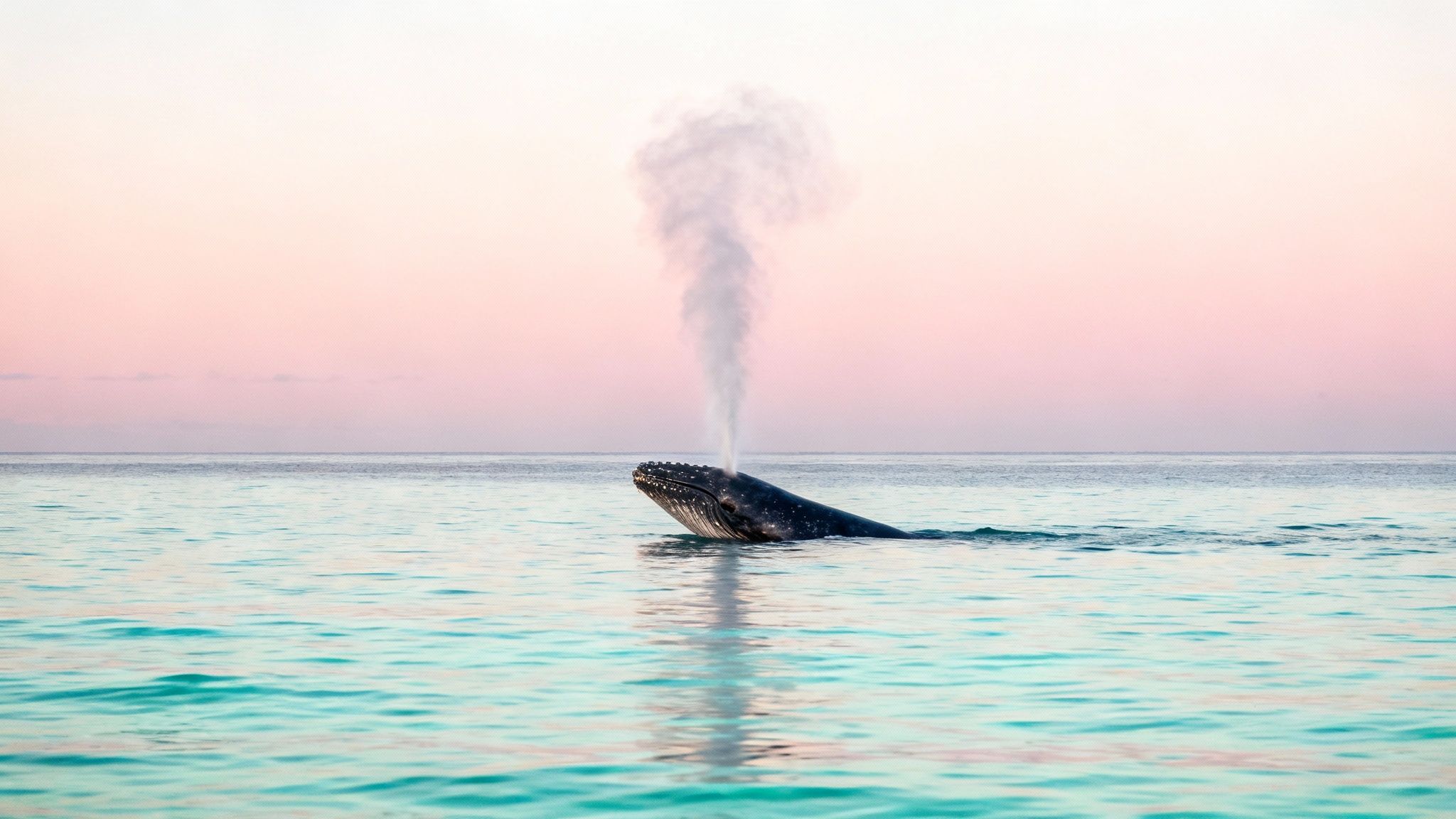
- The Spout (or Blow): This is usually the first sign that whales are nearby. It’s the powerful exhale of air from their blowholes, creating a misty spray that can hang in the air and be spotted from miles away on a calm day. Keep your eyes peeled for that telltale puff on the horizon
Practicing Responsible and Safe Whale Watching
Seeing a humpback whale breach the surface is one of those moments that sticks with you forever. It's a genuine privilege, and it comes with a shared responsibility to protect these incredible animals. They’ve traveled thousands of miles to get here, seeking out Hawaii's warm, calm waters as a safe place to mate and raise their calves.
Any disturbance, no matter how small it seems, can cause a ton of stress—especially for a new mother trying to keep her baby safe.
That’s why there are strict laws in place, all enforced within the Hawaiian Islands Humpback Whale National Marine Sanctuary, to make sure we give them the peace they deserve.
Respecting Their Space
The single most important rule for whale watching on the Big Island is about distance. Every single vessel, from big tour boats down to kayaks and paddleboards, has to stay at least 100 yards away from humpback whales.
Think of it as the length of a football field. That distance creates a vital buffer zone, letting the whales go about their business—nursing, resting, and mating—without feeling cornered or threatened. Honoring this personal space is really the heart of respectful whale watching.
When you choose a tour operator that’s serious about these guidelines, you're doing more than just following the law. You’re casting a vote for conservation and directly supporting businesses that act as guardians of the ocean.
Be an Ocean Steward
Your commitment to being a responsible visitor doesn't have to stop with picking the right tour. Here are a few simple ways you can be a positive force for Hawaii's marine life during your trip:
- Choose Eco-Certified Tours: Look for companies that are actively involved in conservation or hold certifications for sustainable tourism. It shows they’re putting their money where their mouth is.
- Pack In, Pack Out: Make sure absolutely no trash gets left behind to pollute the ocean. Even tiny things like a plastic wrapper can be seriously harmful to marine animals.
- Use Reef-Safe Sunscreen: The chemicals in many common sunscreens are known to damage coral reefs. By choosing a mineral-based sunscreen, you protect both your skin and the delicate ecosystem you’re here to enjoy.
Got Questions About Big Island Whale Watching?
You're almost ready for your Big Island whale watching adventure, but maybe a few last-minute questions have popped into your head. That's totally normal! Here are the answers to the questions we hear most often, so you can head out on the water feeling completely prepared.
What Should I Bring on a Tour?
A little prep makes a huge difference in how much you'll enjoy the day. We always tell our guests to bring polarized sunglasses—they're a game-changer for cutting the ocean's glare. You'll also want reef-safe sunscreen to protect yourself and our delicate corals, and a light jacket or windbreaker for those cool ocean breezes.
And of course, bring your camera! But don't forget to put it down sometimes and just soak in the moment. There's nothing quite like it.
Are Whale Sightings Guaranteed?
Humpback whales are wild, majestic creatures on their own schedule, so nobody can ever guarantee a sighting with 100% certainty. It's just not how nature works!
However, if you book your trip during the peak season between January and March, your chances are incredibly high. Our experienced captains have spent years on these waters and know all the whales' favorite hangouts, which definitely stacks the odds in your favor for an amazing encounter.
How Close Can We Get to the Whales?
This one is really important. Federal law is crystal clear: all boats have to stay at least 100 yards away from humpback whales. This isn't just a suggestion; it's a critical rule to protect these animals, especially the new moms with their calves.
Any reputable tour operator, including us, follows this rule without exception. It ensures we can all enjoy the whales without causing them any stress. It's all about respect for the wildlife.
Getting out on a boat gives you a perspective you just can't get from shore. Sure, watching from land is a great free option, but a tour puts you right in their world. You hear the powerful sound of their blowhole, you truly grasp their immense size, and you feel the raw energy of their presence in a way that’s hard to describe.
Plus, you have a knowledgeable crew on board who can spot activity miles away and tell you the story behind the incredible behaviors you’re seeing. It turns a great sighting into an unforgettable experience.