
Top Tips for whale watching big island: A Complete Guide
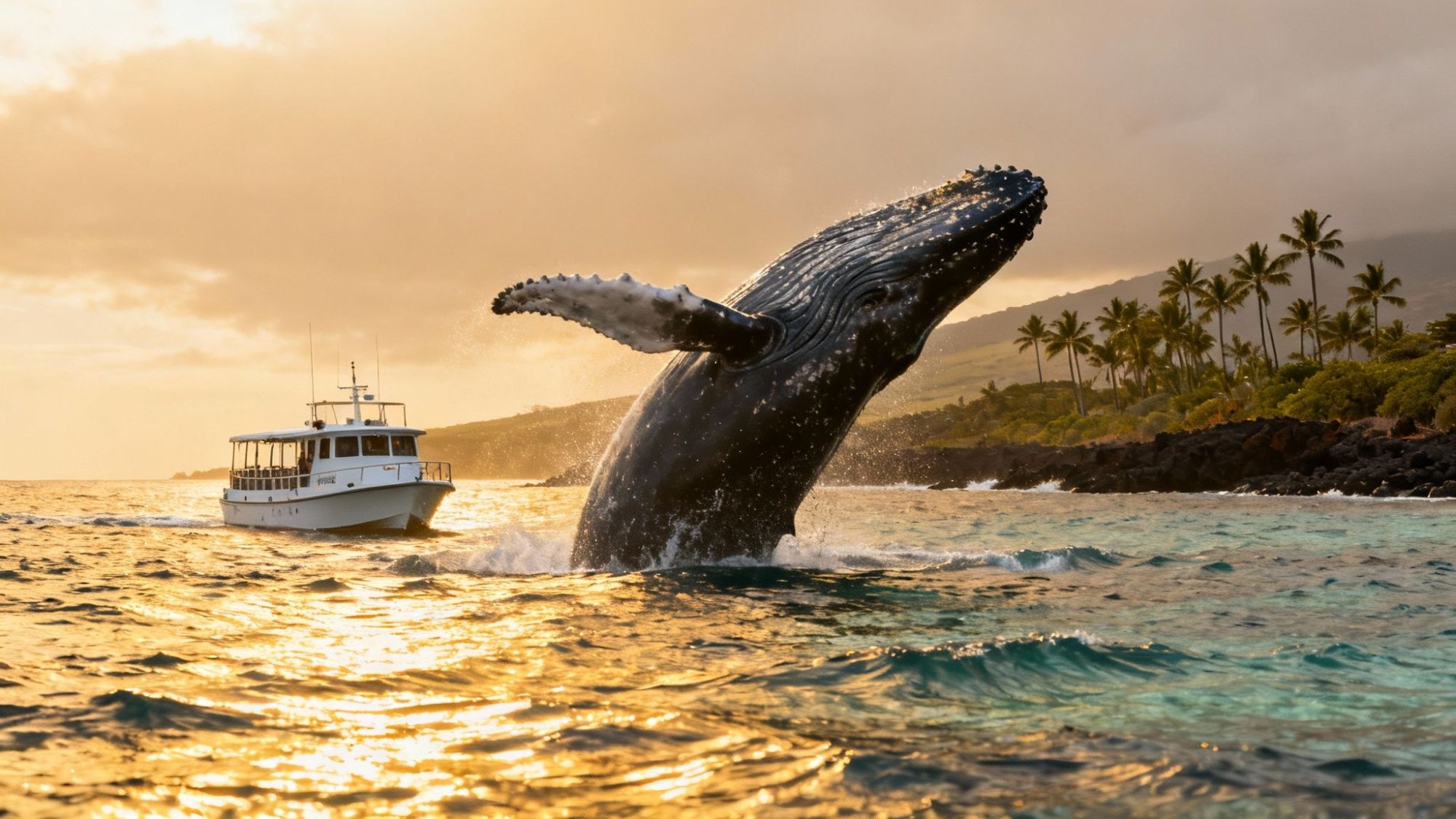
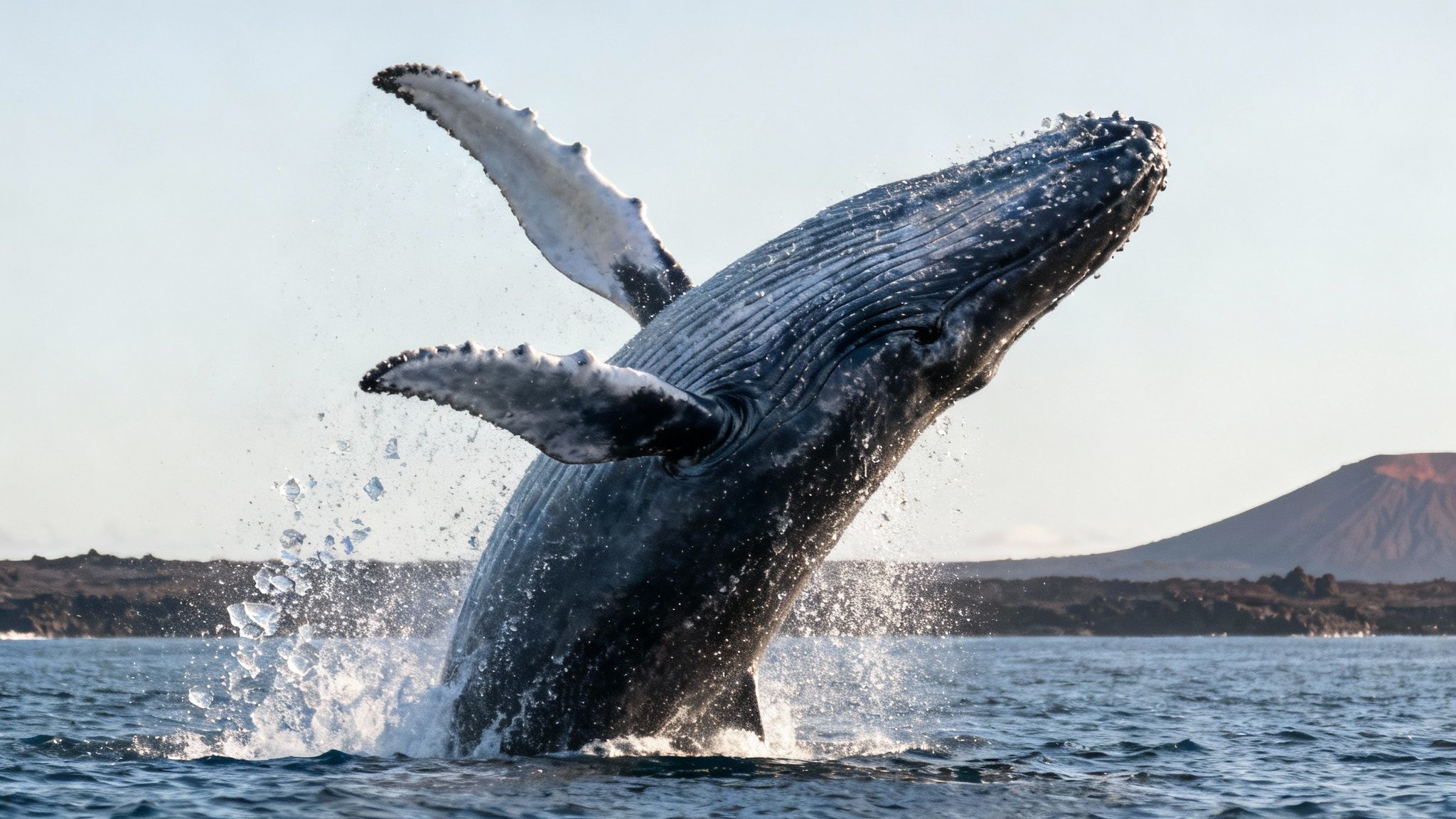
Picture this: a forty-ton humpback whale explodes out of the ocean, a massive, magnificent creature suspended for a moment against the Big Island’s dramatic volcanic coastline. This isn’t some once-in-a-lifetime fluke. It’s a seasonal spectacle that makes whale watching on the Big Island an absolute must-do during the winter. This guide is your front-row ticket to witnessing this incredible natural wonder.
Your Guide to Big Island Whale Watching
Every year, thousands of humpback whales make the long journey to our warm, protected waters. This guide is all about getting you in the right place at the right time to see the action. We'll dive into why they make this incredible pilgrimage and how you can have the most unforgettable experience possible.
As the top rated & most reviewed snorkel company in Hawaii, we at Kona Snorkel Trips live and breathe ocean adventures. We’re obsessed with creating unforgettable experiences out on the water, and we think our customer reviews speak for themselves. They're a testament to our passion and why we do what we do.
In this guide, we're covering everything. From the peak viewing times to decoding what all those splashes and spouts actually mean, we'll make sure you're fully prepped for the adventure of a lifetime.
Why This Guide Is for You
Planning the perfect trip is about more than just booking a tour. It’s about tuning into the natural rhythms of these amazing animals. Our mission is to give you the insider knowledge that turns a good whale watching trip into a truly meaningful one.
This guide will help you:
- Understand the Migration: Find out why thousands of humpbacks travel over 3,000 miles just to hang out in Hawaii.
- Time Your Trip Perfectly: We’ll show you the absolute best months, and even the best times of day, to maximize your chances of a great sighting.
- Choose Your Adventure: Weigh the pros and cons of watching from a boat versus finding a killer spot on the shoreline.
- Become an Informed Observer: You'll learn to spot common whale behaviors and understand what they're communicating.
Our goal is simple: to help you build a deeper appreciation for these gentle giants and the delicate ocean world they call home. By the end, you'll be ready to experience one of nature's greatest shows with confidence and respect.
The Incredible Journey of Humpback Whales
The humpback whales you see off the coast of Hawai‘i aren't just here for a casual swim. They're at the end of an epic pilgrimage, one of the longest migrations in the entire animal kingdom. Every year, these gentle giants travel from the frigid, food-filled waters of Alaska all the way down to the warm, protected bays around the Big Island. This isn't a vacation for them—it's a journey driven by the primal need to give birth and raise the next generation.
For months, the whales gorge themselves in the icy Alaskan seas, packing on massive layers of blubber. That fat is their fuel for the relentless swim south. Incredibly, they don't eat at all during the entire trip. They rely completely on those stored reserves to power them across thousands of miles of open ocean. It’s a stunning feat of endurance.
A Tropical Nursery for Gentle Giants
So, why go through all that effort to get to the Big Island? It all comes down to the perfect sanctuary these waters provide. The warm, clear, and relatively shallow bays are the ideal environment for the most critical moments in a humpback's life.
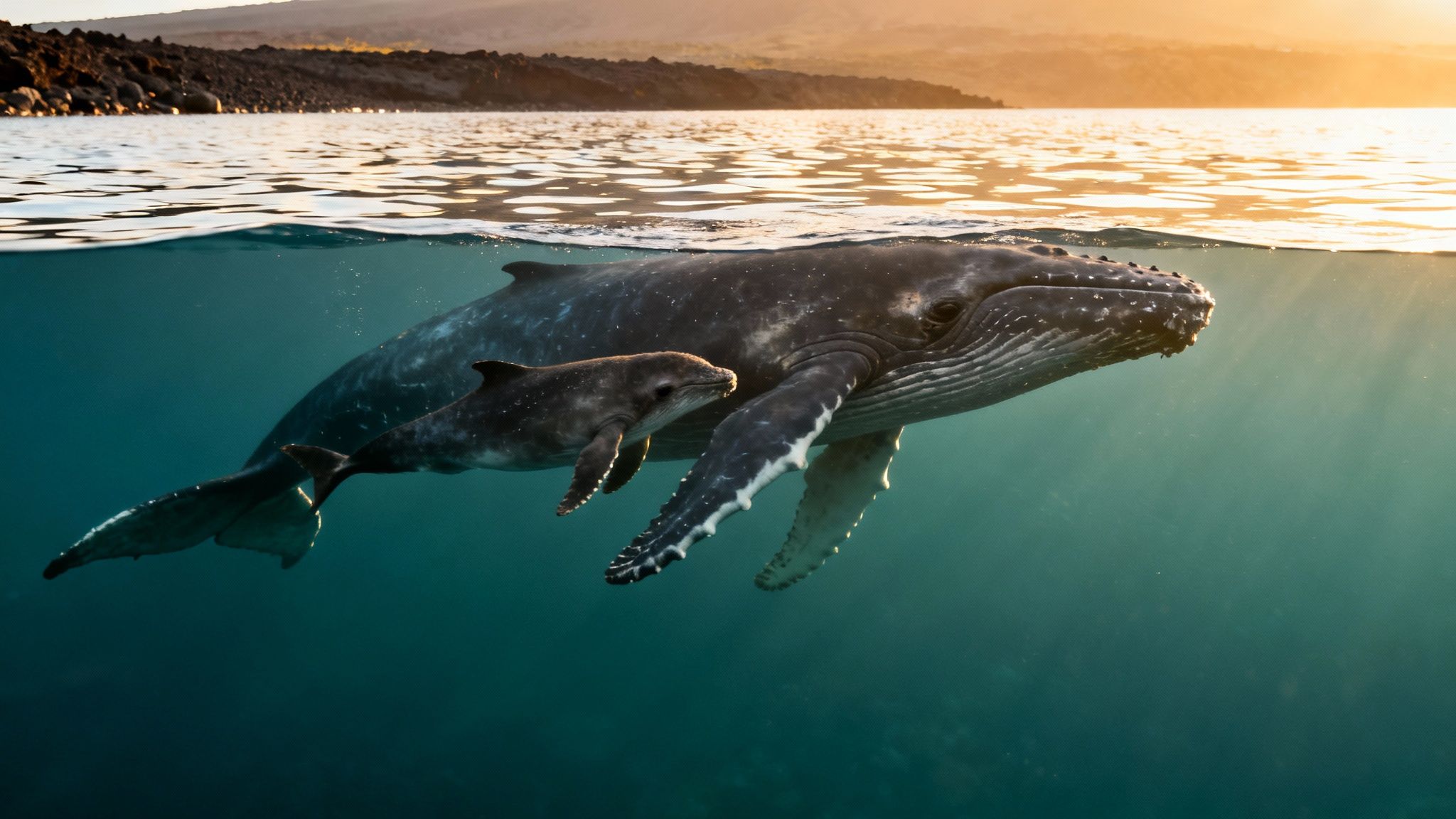
The real reason for this massive migration is for mating, birthing, and nursing. The Hawaiian islands offer a safe harbor where humpbacks can raise their newborn calves, far from the threats of colder waters and predators like orcas.
This is exactly what makes whale watching on the Big Island such a moving experience. You're not just seeing an animal; you're witnessing a raw, vulnerable, and beautiful chapter of its life. The ocean here becomes a grand stage for everything from powerful males competing for mates to new mothers tenderly guiding their young.
The Migration Timeline
The North Pacific humpback population, which is now estimated to be around 26,000 strong, makes this incredible annual journey to Hawaii. These massive mammals swim non-stop for one to two months, covering a mind-boggling 6,000-mile roundtrip from their arctic feeding grounds. To get the full story, you can learn more about this incredible humpback migration and the science behind their journey.
The whales don't all show up at once. Their arrival is staggered, which makes for a long and dynamic viewing season.
- First Arrivals (Nov-Dec): The first to appear are often mothers with their year-old calves, essentially showing them the migration route for the first time.
- Peak Season (Jan-Mar): This is when the party really gets started. The waters are alive with activity as the bulk of the population arrives. You'll see males putting on competitive displays, pregnant females getting ready to give birth, and brand-new mothers nursing their babies.
- Late Departures (Apr-May): The last to head back north are usually the new moms with their newborn calves. They wait until their young are strong enough to handle the long, cold journey home.
Understanding this journey adds a whole new layer of respect for every breach and tail slap you see on the horizon. It's a powerful reminder of the ancient, wild rhythms of nature playing out right in front of you.
When to Go Whale Watching on the Big Island
Timing is everything if you’re hoping to see humpback whales on the Big Island. While you can spot them anytime between November and April, the absolute sweet spot—when the ocean just comes alive with activity—is from January through March.
During these peak months, the sheer number of humpback whales congregating off the coast is staggering. Your chances of seeing those incredible surface behaviors, like a full-body breach or a powerful tail slap, go way, way up. It’s the difference between hoping to catch a glimpse of a whale and practically planning on seeing several.
Understanding Peak Season
Think of the whale migration as a massive, months-long festival. The first arrivals in November and December are like the opening acts—exciting, for sure, but the crowd is still just trickling in. The real headliners hit the stage from January to March, and that’s when the party really gets going.
During this peak period, the waters are absolutely electric with activity. You've got competitive males chasing females, mothers teaching their brand-new calves how to navigate the world, and just a whole lot of whale communication happening. The Kona and Kohala coasts basically turn into front-row seats for one of nature's greatest shows.
This isn't just anecdotal, either. Over 25 years of volunteer data from the Sanctuary Ocean Counts program, which started back in 1996, backs this up. Thousands of sightings show the Kohala Coast often has two to three times more whale activity than other parts of the island. If you want to dive into the official numbers, you can check out the state's research on Hawaii's whale and dolphin populations to get a sense of just how massive this migration is.
Big Island Whale Watching Season Month-by-Month
To help you figure out the best time for your trip, here’s a breakdown of what the whale watching season typically looks like month by month. Each part of the season has its own unique vibe, from the first few spouts on the horizon to the final goodbyes as the whales head north.
| Month | Whale Activity Level | Typical Behaviors Observed | Viewing Conditions |
|---|---|---|---|
| November – December | Low to Moderate | The first arrivals, often mothers with yearlings. You'll see occasional spouts and fluke-up dives as they settle in. | Calmer waters are common, but sightings are less frequent. It's a quiet start to the season. |
| January – February | High to Peak | This is prime time. Expect frequent breaches, competitive pods of males, and the first newborn calves appearing. | The ocean is buzzing with activity. Tours have extremely high success rates for multiple sightings. |
| March | Peak to High | Still peak activity, with a high concentration of mothers and calves. This is a great time for observing tender nursing behaviors. | Excellent viewing continues, with lots of surface action as whales prepare for their journey north. |
| April – May | Moderate to Low | The last to leave are the new mothers and their calves. Sightings become less frequent as the population heads back to Alaska. | A good time for a final glimpse, but the peak energy of mid-season has passed. |
While aiming for that January to March window gives you the best odds for a truly spectacular show, the shoulder months can still offer some beautiful, peaceful encounters—often with fewer boats out on the water.
For a deeper dive, check out our dedicated guide to the Big Island whale season. Ultimately, the best time to come is when you can, but if your schedule is flexible, you won't regret planning your trip for that peak window.
So, you're planning your trip, and the big question comes up: how do you want to see the whales? This is a key decision for any whale watching on the Big Island adventure. You've really got two amazing choices—spotting them from the island's gorgeous coastline or getting right out on the water with a boat tour. Each one offers a totally different vibe, and the best one for you just depends on what kind of experience you're hoping for.
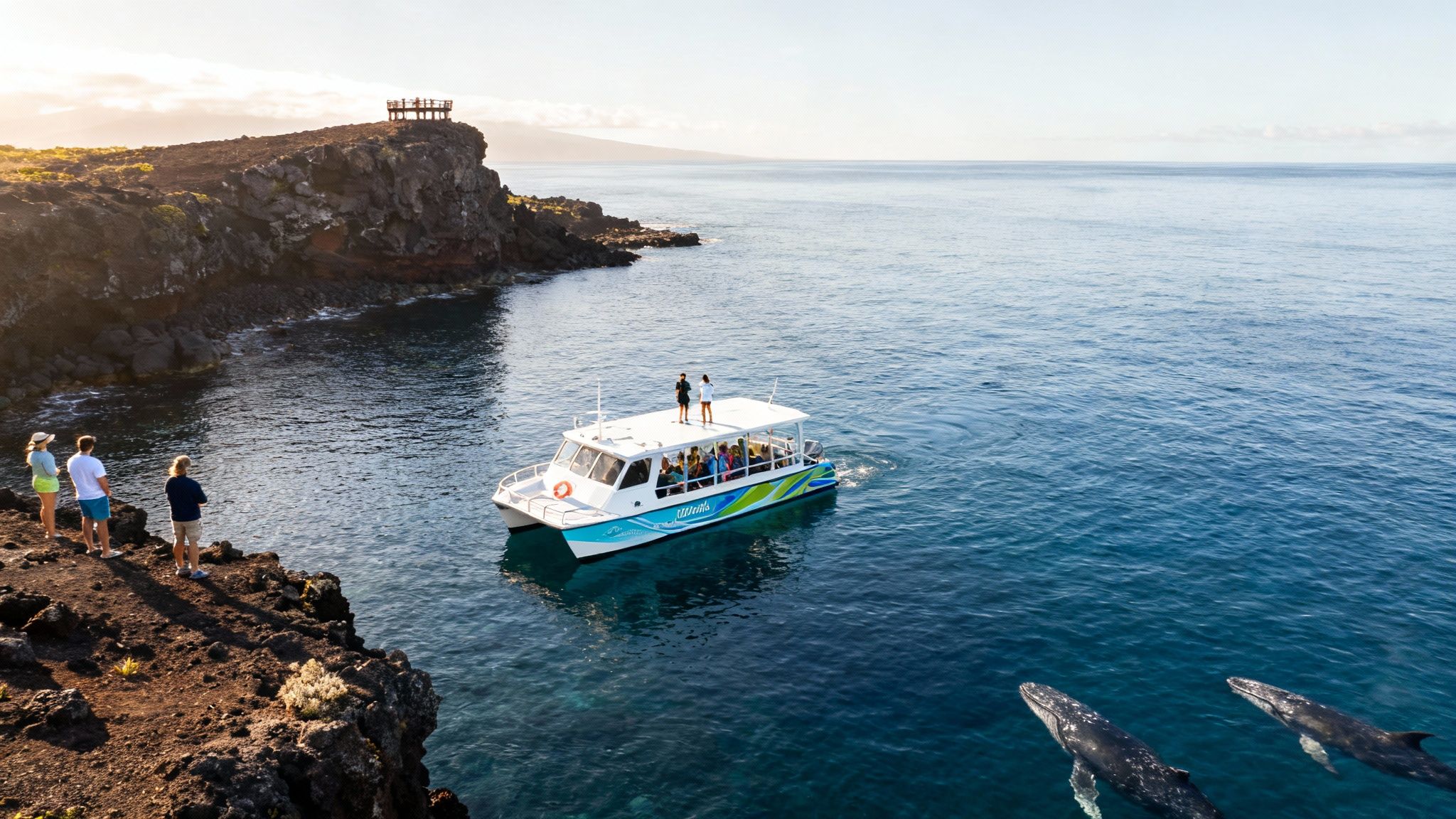
Watching from shore is all about convenience and taking in the massive, panoramic view. Find an elevated spot, especially somewhere along the Kohala Coast, and you get this huge perspective of the ocean. It makes it easier to catch those distant spouts and breaches against the deep blue. It’s a peaceful, almost meditative way to witness the migration.
But a boat tour? That's a whole other level of immersion that you just can't get from land. Being on the water puts you at eye-level with these incredible animals. You get a true sense of their sheer size and power that’s honestly impossible to grasp from a mile away on a cliff.
Land-Based vs. Boat Tours
Each option has its perks. For land-based viewing, the accessibility is a huge plus. You can just pack a lunch, find a beautiful lookout, and spend a relaxing afternoon scanning the horizon on your own schedule. The Puʻukoholā Heiau National Historic Site is a perfect example of this, offering high ground with sweeping ocean vistas.
On the other hand, the benefits of a boat tour are all about the experience itself.
- Up-Close Perspective: Boats can get you much closer (while still keeping a safe and respectful distance, of course) for incredible views of what the whales are doing on the surface.
- Expert Guides: Having an experienced crew on board is priceless. They can tell you exactly what a tail slap means or why a whale is spy-hopping, adding so much context to what you're seeing.
- Full Sensory Experience: It's not just what you see. You can often hear the powerful whoosh of a whale's breath. Some boats even drop a hydrophone in the water so you can listen to their haunting underwater songs.
An estimated 8,000 humpback whales make the journey to Hawaiian waters every single year, migrating over 3,500 miles to breed and have their calves. It's a remarkable event that fuels a vibrant whale watching scene, especially along the Kohala Coast. Volunteer Ocean Counts help keep track of it all, with Big Island volunteers logging an incredible 493 sightings in just one count in 2025.
Making the Right Choice for You
Ultimately, the best choice really comes down to your priorities for the day. If you're looking for something casual, flexible, and easy on the wallet, watching from the shoreline is a fantastic option. It lets you weave whale watching into a bigger day of exploring the island's stunning coastline.
But if you’re searching for a more profound and truly unforgettable encounter, you have to go with a boat tour. The investment pays off with an experience that hits all your senses and creates a much deeper connection to the whales. You'll walk away with insights from marine naturalists and memories that you’ll be talking about for years. For a complete rundown of what's out there, check out our detailed overview of whale watching on the Big Island.
Decoding Common Humpback Whale Behaviors
It's one thing to see a 40-ton humpback whale rocket out of the water. It’s a moment that will absolutely take your breath away. But knowing the why behind that spectacular splash? That turns a great sighting into a genuine connection with these intelligent giants.
Every leap, slap, and splash you see on the surface is a form of communication. It’s a language all its own. Learning to spot these behaviors is like getting an insider's look into their complex social world. You stop being just a spectator and start becoming an interpreter, adding a whole new layer of meaning to your time on the water.
Common Surface Behaviors and Their Meanings
When you're out there, keep your eyes peeled for these classic humpback moves. Your guide will be pointing things out, but when you can spot them yourself, the whole adventure becomes that much more rewarding.
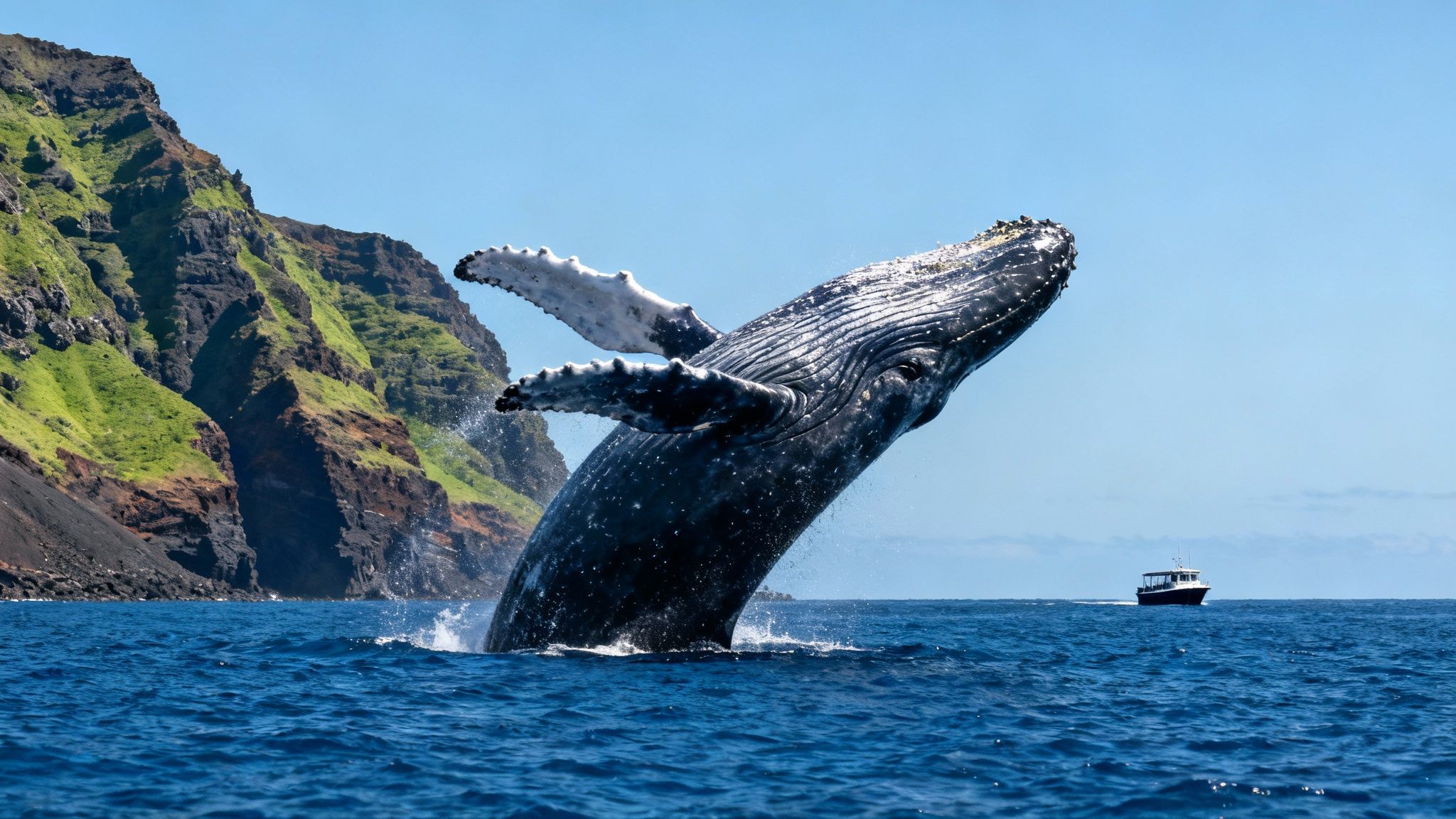
- The Breach: This is the showstopper—the full-body leap that everyone dreams of seeing. Scientists figure they do it for a few reasons. It could be to shake off annoying barnacles, or it might be a way to communicate. That massive splashdown creates a sound that travels for miles underwater, like a long-distance call to other whales.
- The Tail Slap (Lobtailing): You'll hear this one before you see it. A loud, powerful slap of the tail (fluke) on the water's surface is a pretty direct message. It can be a warning, a sign of aggression between competing males, or just a way of announcing, "I'm here!"
- The Pectoral Fin Slap: Humpbacks have the longest pectoral fins of any whale, stretching up to 15 feet long. They’ll often roll onto their side and slap these huge fins on the water over and over. Think of it as a more localized signal, like talking to others within the same group.
My absolute favorite move to witness is the spy-hop. This is when a whale pokes its head straight up out of the water, almost like it’s using a periscope to check things out. It feels like a moment of pure, mutual curiosity—the whale is just as interested in you as you are in it.
More Than Just a Splash
Once you know what you're looking at, the whole scene comes alive. If you see a pod of males aggressively tail-slapping, you'll realize you're probably watching a heated competition for a female's attention. A mother and calf gently slapping their fins? That could be a tender moment of teaching or simple play.
Every trip out on the water tells a different story. When you learn to decode these actions, you become part of that story. You're no longer just watching a splash; you're witnessing a conversation.
Finding a Responsible Whale Watching Tour
Picking the right boat for your whale watching Big Island adventure is probably the single most important decision you'll make. A great tour operator doesn't just give you a front-row seat; they act as stewards of the ocean, putting the well-being of the whales first. Always.
This means they take federal regulations seriously. All boats are required to keep a minimum distance of 100 yards from humpback whales. That's not just a guideline—it's a critical buffer to prevent stressing out the animals, especially new mothers with their calves. The best guides know how to get you incredible views without ever crowding the whales or disrupting their natural behavior.
What to Look for in a Tour
When you're looking at different options, a few things really separate the top-notch tours from the rest. Keep an eye out for these details, as they make for a much safer, more memorable, and educational time on the water.
Look for operators that offer:
- Smaller Vessel Sizes: Smaller boats almost always mean a more intimate, personal experience. With fewer people on board, you're not jostling for a view, and it just feels more connected to the ocean and the animals you're there to see.
- An On-Board Naturalist: This is a game-changer. Having a marine biologist or an expert naturalist on board turns a simple boat ride into a fascinating lesson. They can explain the whale behaviors you're seeing in real-time, share incredible facts about humpback biology, and answer all your questions.
- Use of Hydrophones: Hearing the haunting, complex songs of the male humpbacks is one of the most magical parts of whale watching. Tours that drop a hydrophone—an underwater microphone—into the water give you a chance to listen in on the conversations happening right below the boat. It's an unforgettable sensory experience.
When you choose a tour company that's genuinely committed to conservation, your trip does more than just create memories. It actively helps protect these magnificent animals for future generations. Your choice has a real, positive impact.
By going with an ethical operator, you're ensuring your whale watching trip is respectful, safe, and truly unforgettable. You’ll come away with a much deeper appreciation for these gentle giants and the fragile world they inhabit. For a full rundown of what to expect, check out our guide on whale watching on the Big Island.
Got Questions? We’ve Got Answers.
Thinking through the details for your whale watching trip? Good. A little planning goes a long way. Here are some of the most common questions we get from guests, answered to help you get ready for an amazing day on the water.
What Should I Bring on a Tour?
Think about what you'd want for a few hours out at sea. We always tell our guests to pack reef-safe sunscreen, a good hat, and polarized sunglasses—the glare off the water is no joke. It can get surprisingly breezy once you're offshore, so a light jacket or windbreaker is a smart move.
While most good tours provide snacks and water, it never hurts to confirm. And definitely don't forget your camera! If you have a pair of binoculars, bring them along; they can turn a distant splash into a memorable sighting.
Is a Whale Sighting Guaranteed?
Here’s the honest truth: these are wild animals, and we're just visitors in their world. While the chances of seeing humpbacks are incredibly high during peak season (January to March), their presence can never be 100% guaranteed.
That said, experienced captains and crews know exactly what to look for—a spout on the horizon, a flock of birds, subtle changes in the water. We have a very high success rate. Honestly, the thrill of the search is part of what makes the eventual sighting so special.
How Close Can Boats Get to Whales?
In Hawaiʻi, federal law is crystal clear and for good reason: all boats must stay at least 100 yards away from humpback whales. This rule is absolutely critical for protecting the whales, especially the new mothers with their calves who need space and peace.
Any reputable tour operator worth their salt follows these regulations to the letter. The whales' well-being always comes first. Sometimes, though, a curious whale will decide to close the distance on its own, approaching the boat for a closer look. Those are the moments that truly take your breath away.
Ready for an unforgettable ocean adventure? At Kona Snorkel Trips, we specialize in small-group tours that bring you closer to Hawaii's incredible marine life. Book your whale watching tour today!