
Whale Watching Big Island: Your Ultimate Guide to Humpback Viewing
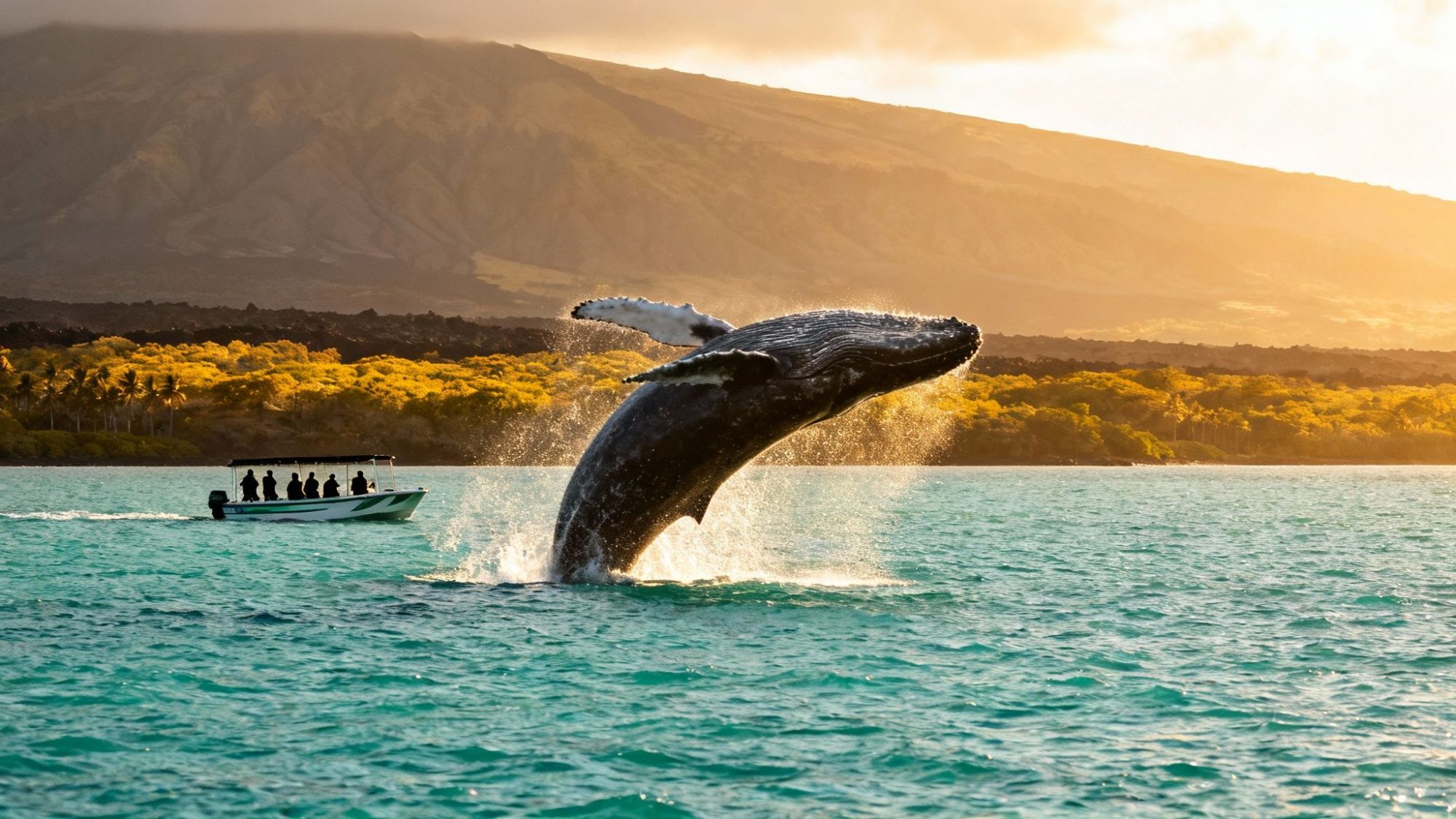
Ready for the ultimate guide to whale watching Big Island style? Every year from December through March, the warm, sheltered waters off the Kona and Kohala coasts turn into a massive nursery for thousands of humpback whales. This annual event makes our island one of the best places on the entire planet to see these gentle giants up close.
As the top-rated and most-reviewed snorkel company in Hawaii, we at Kona Snorkel Trips are all about creating amazing, respectful wildlife encounters. We know that a great adventure is built on local expertise, a commitment to safety, and a deep, genuine love for the ocean.
Why the Big Island Is a Whale Watching Paradise
Something incredible happens every winter. Humpback whales travel over 3,000 miles from their chilly feeding grounds in Alaska, all the way down to Hawaii's warm embrace. They come here to mate, give birth, and care for their newborn calves in a safe, predator-free environment.
This epic migration turns the Big Island's coastline into a front-row seat for one of nature’s most spectacular shows. If you’re looking for a real, profound connection with marine life, seeing this annual pilgrimage is an experience that will stick with you forever.
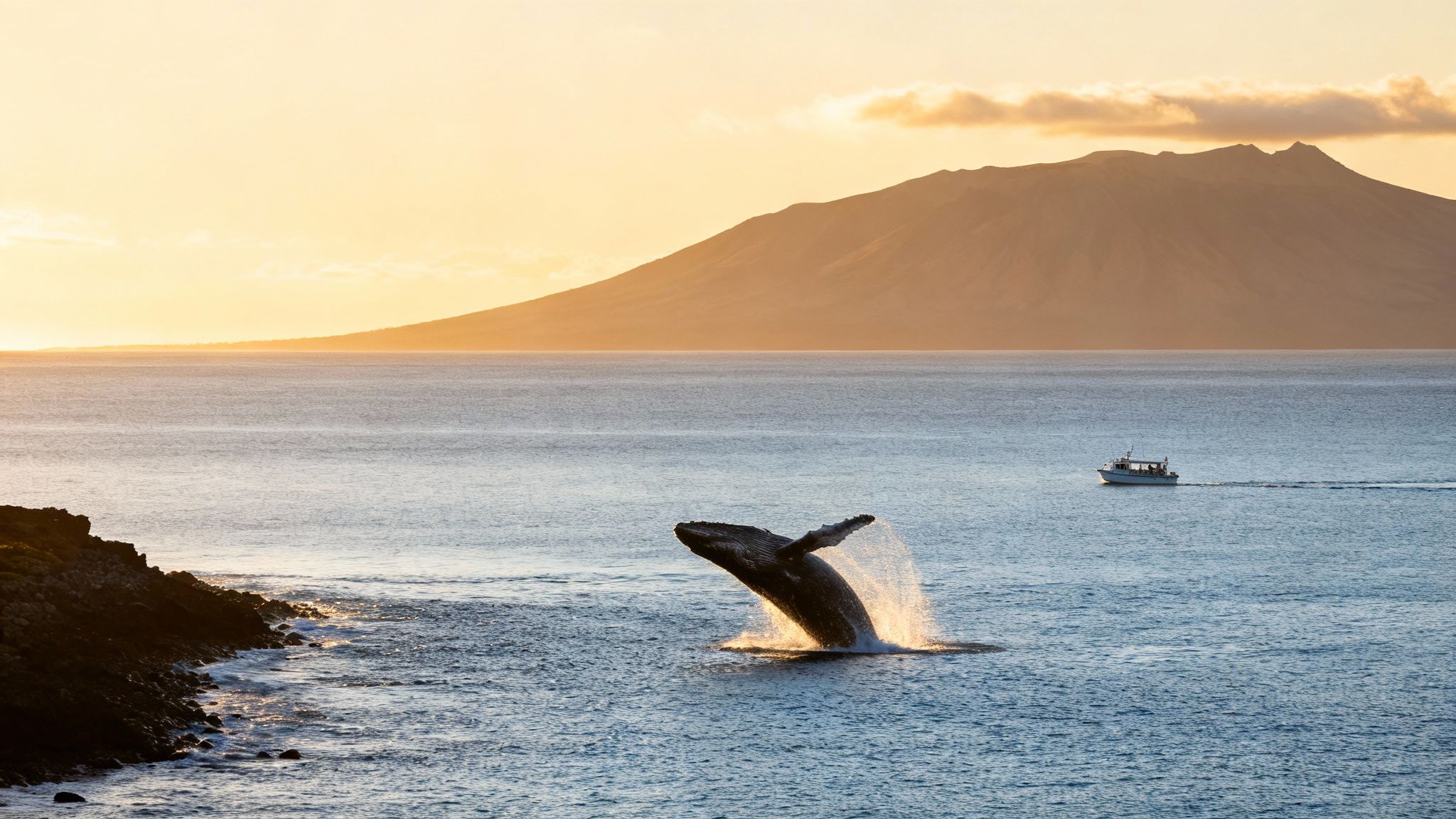
A Journey of Epic Proportions
The humpback’s journey is just a marvel of endurance. Think about it—these gentle giants travel for months without eating a single bite, living completely off the fat reserves they built up over the summer. Their arrival in Hawaii isn't just about escaping the cold; it's a critical part of their life cycle.
- A Safe Haven for Calves: Newborn calves have very little body fat, so the warm Hawaiian waters are absolutely essential for their survival in those first few weeks.
- A Stage for Courtship: The ocean becomes a playground for males. They put on spectacular shows—breaching, slapping their massive tails—all to compete for mates.
- A Front-Row Seat to Nature: Out on the water, you get to witness it all. The tender moments between mothers and their calves, the raw power of competing males—it all happens just a few miles from shore.
This annual event is more than just a chance to see whales; it’s a window into their complex and fascinating social lives.
Watching a 40-ton animal launch its entire body out of the water is a humbling experience that reminds you of the raw power and beauty of the natural world. It’s a moment that stays with you forever.
This guide will give you everything you need to know for a successful whale watching Big Island adventure. We'll cover the best times to go, the prime spots to see them from both shore and sea, and how to pick an ethical tour that puts these magnificent creatures first. Get ready to be amazed by the gentle giants of the Pacific.
Decoding the Big Island Whale Watching Season
If you want to plan an unforgettable trip, you first have to understand the rhythm of the whale watching Big Island season. This isn't just a random thing; it's a massive, instinct-driven migration that happens like clockwork every year. Think of it like a giant festival: it kicks off with the first few arrivals, builds to an explosion of activity, and then slowly quiets down as the last giants make their way back north.
The whole spectacle is fueled by one of the most incredible journeys in the animal kingdom. Humpback whales travel thousands of miles from the cold, nutrient-rich feeding grounds of Alaska down to the warm, protected shallows of Hawaii. They come here for the most important reasons of all: to breed, give birth, and nurse their newborn calves in a safe, warm nursery.
Timing your visit to match this natural calendar is everything—it dramatically boosts your chances of seeing the most spectacular whale behaviors.
The Peak Season Advantage
While you might spot the first few whales as early as November and see some stragglers hanging around into May, the absolute prime time for whale watching on the Big Island runs from mid-December through mid-April.
The true peak of the season—when the whale population is at its absolute densest—hits from late January through March. This is when the ocean just comes alive. The sheer number of whales creates a dynamic, action-packed environment, and it’s when you’re most likely to witness the powerful, breathtaking displays that make humpback encounters so incredible.
The presence of humpback whales around the Big Island is a direct result of their epic migration. Most North Pacific humpbacks journey roughly 2,500–3,000 miles one-way from their high-latitude Alaskan feeding grounds to Hawaii's subtropical waters to breed and calve each year. To get more perspective on this amazing journey, you can learn more about their migration patterns and seasonal presence.
Choosing to visit during this peak window means you'll see whales more often and have a much better shot at observing a huge range of behaviors. You might see tender moments between a mother and her calf or the awe-inspiring breaches of males competing for a mate.
For an even deeper dive into what each month holds, check out our complete guide to the whale season on the Big Island.
Big Island Whale Watching Season at a Glance
The season has a natural flow to it. Certain behaviors are more common at the beginning, while others take center stage as the months go on. Knowing what to expect helps you appreciate the incredible story unfolding right in front of you.
Here’s a simple breakdown of what you can expect to see month by month.
| Month | Whale Activity Level | Common Behaviors to Observe |
|---|---|---|
| December | Building | The first arrivals show up, often sub-adults and new mothers. Sightings get more consistent, with plenty of spouts and tail flukes. |
| January | Increasing | The population grows fast. Male competition heats up, leading to more surface action like tail slaps and pectoral fin slaps. |
| February | Peak | This is the height of it all. The highest number of whales are here, and "competition pods" of males chasing a female are common, resulting in spectacular breaches. |
| March | High | Still peak activity, but you'll notice a lot more mother and calf pairs. Tiny newborn calves can be seen learning to breach alongside their moms. |
| April | Waning | The population starts to thin out as whales begin their long journey back to Alaska. Mothers and their now-stronger calves are often the last to leave. |
This table gives you a great snapshot, but remember, these are wild animals! Every day on the water is different, which is part of what makes it so exciting.
From Courtship to Calving
The progression of the season really mirrors the whales' life cycle. Early on, from December to January, the focus is all about courtship. This is when you'll see those "competition pods"—large groups of males all vying for the attention of a single female. Their rivalry is what fuels some of the most dramatic surface behaviors you'll ever witness.
As the season rolls into February and March, the dynamic starts to shift. While the competition definitely continues, the spotlight turns to the mothers and their brand-new calves. These pairs tend to stick to the calmer, shallower waters closer to shore.
Seeing a mother gently nudge her calf to the surface for its first few breaths is a profoundly moving experience. It really highlights why Hawaii is such a crucial nursery for these magnificent animals. This predictable pattern ensures that no matter when you visit during peak season, an incredible chapter of the humpback's life is waiting to be discovered.
Finding the Best Whale Watching Spots
When it comes to whale watching big island style, you've really got two fantastic choices: hop on a boat for an up-close-and-personal tour, or find a killer viewpoint and watch from shore. Each one offers a totally different vibe, and honestly, the best option just depends on the kind of day you're hoping to have.
The Big Island’s unique geography is what makes it such a world-class destination in the first place. The colossal volcanoes, Mauna Kea and Mauna Loa, act like a massive shield, creating a "rain shadow" on the western side. This blocks the heavy trade winds, leaving the Kona and Kohala coasts with incredibly calm, clear waters—the perfect nursery for mother humpbacks and their newborn calves.
Viewing Whales from a Boat
Let's be real: nothing beats being out on the water. A boat tour puts you right in the heart of the action, giving you a perspective that is both incredibly intimate and completely awe-inspiring. You just can't replicate the feeling you get from land—hearing that powerful "whoosh" of a whale's breath or feeling the deep rumble of a tail slap in your chest is something else entirely.
The Kona and Kohala coasts are the undisputed epicenters for whale watching tours. Those calm leeward waters aren't just great for the whales; they make for a smooth, comfortable ride for us, too. Tour boats can easily cruise these seas, bringing you respectfully close to where the whales like to hang out without ever disturbing their natural behavior.
Choosing a tour operator who truly knows these waters is key. An experienced captain can read the ocean, anticipate where the whales will surface, and position the boat for unbelievable views—all while following federal regulations to the letter.
This local knowledge transforms a simple boat ride into a real adventure, packed with insights you'd never get on your own. To get a better feel for what makes this part of the island so special for marine life, check out our guide to whale watching on the Big Island from Kona.
Top Spots for Shore-Based Whale Watching
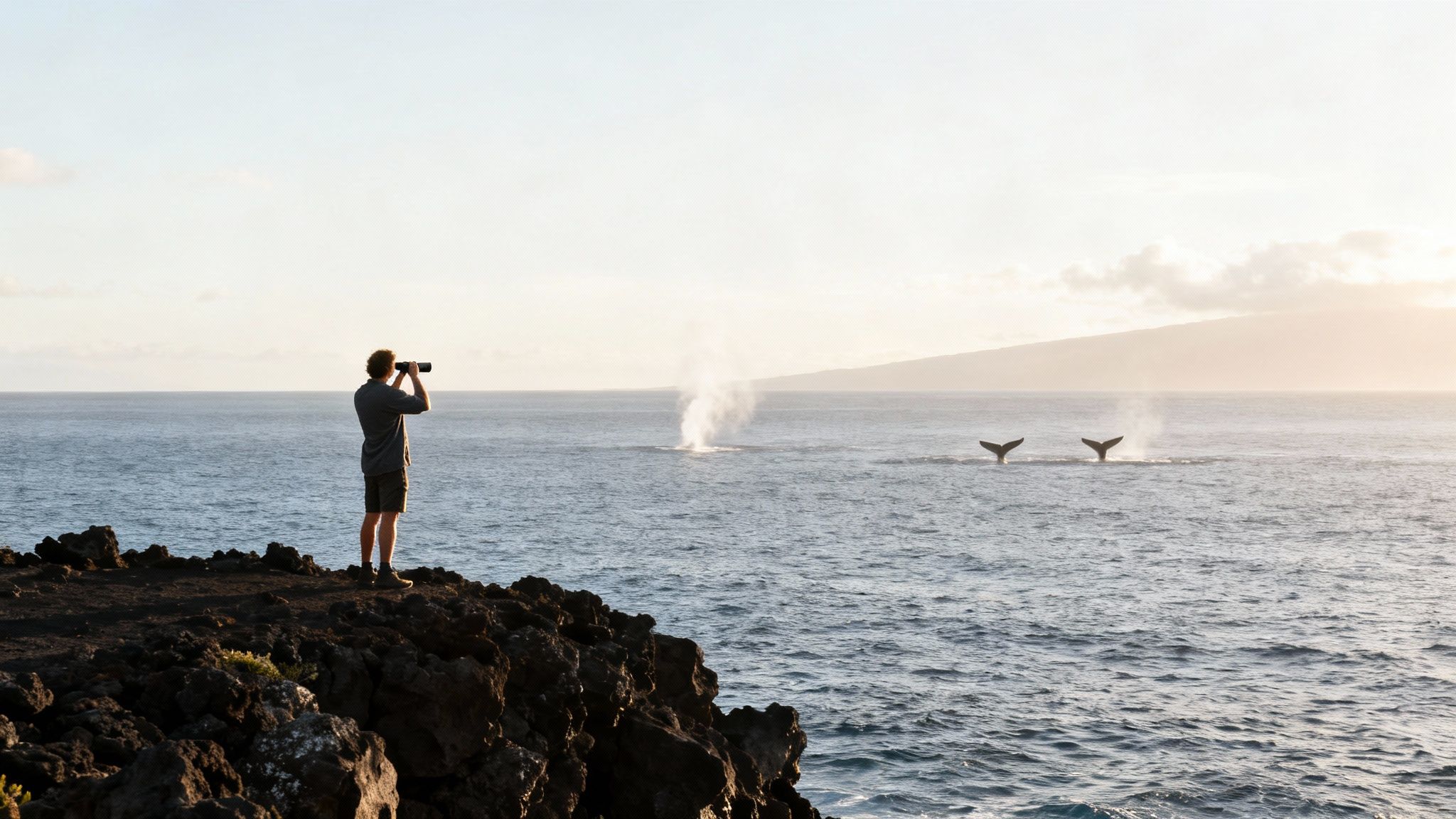
If you'd rather keep your feet on solid ground, the Big Island serves up some of the best land-based whale watching in all of Hawaii. The secret to a great shore-viewing session is simple: get some elevation. A higher vantage point gives you a sweeping, panoramic view of the ocean, making it much easier to spot the tell-tale signs—a distant puff from a spout or the dramatic splash of a breach.
The sun-drenched Kohala Coast, with its dramatic bluffs and crystal-clear sightlines, is the hands-down champion for spotting whales from the shoreline. Here are a few spots you can't miss:
- Puʻukoholā Heiau National Historic Site: The name of this sacred spot literally translates to "hill of the whale," and it definitely lives up to it. The elevated trails offer commanding views over the very waters that are part of the Hawaiian Islands Humpback Whale National Marine Sanctuary.
- Kapaʻa Beach Park: Just north of Mahukona, this park is a local favorite. Not only does it have a great vantage point, but it also has covered picnic pavilions, so you can watch for whales in comfortable shade. A huge plus!
- Lapakahi State Historical Park: This scenic park offers another fantastic, high-elevation spot to scan the horizon. Just a heads-up, this area is usually hot and dry, so make sure you bring plenty of water, a hat, and sunscreen.
For the best chance of success, try heading out in the morning. The ocean surface is often calm and glassy, which makes spotting spouts and splashes much easier. And whatever you do, don't forget to pack a good pair of binoculars! They make all the difference.
These shoreline spots are so reliable, in fact, that they're used for annual citizen science projects. The Sanctuary Ocean Count and the Pacific Whale Foundation’s Great Whale Count take place on the last Saturdays of January, February, and March. During a coordinated count in January 2025, volunteers spotted an incredible 493 humpback whales from Big Island sites in a single 15-minute window. That's nearly a quarter of the statewide total of 2,121 whales, which just goes to show how much action happens in our waters.
How to Choose the Right Whale Watching Tour
Picking the perfect whale watching tour is probably the most important decision you'll make for your whole adventure. It can honestly be the difference between a crowded boat where you barely catch a distant glimpse and an up-close, truly jaw-dropping encounter. Let’s walk through everything you need to know to find a tour that’s safe, ethical, and will give you that unforgettable whale watching Big Island experience you're hoping for.
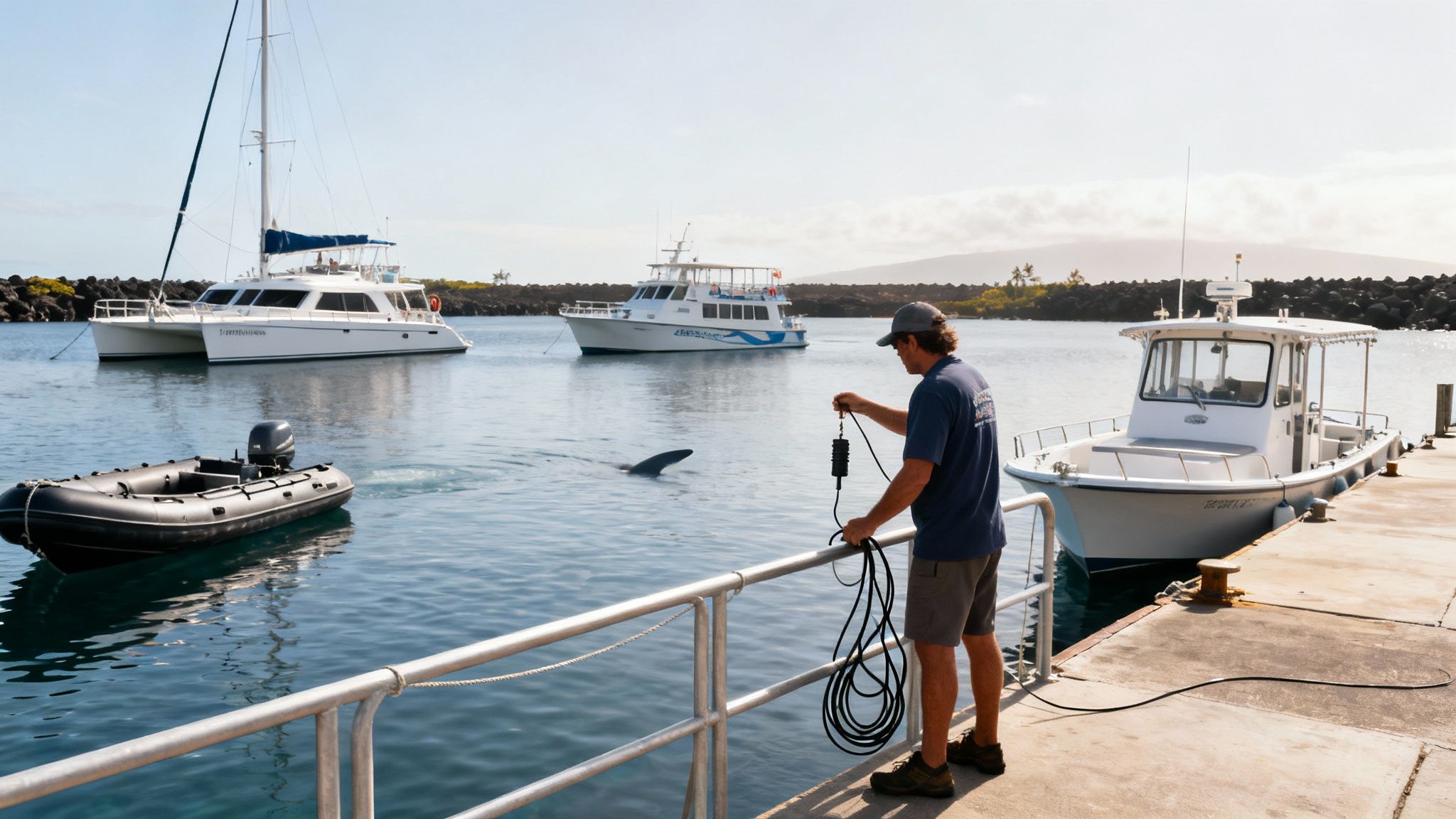
The kind of boat you’re on completely shapes your day out on the water. Each vessel offers a totally different vibe, and what’s "best" really just comes down to your personal style, comfort level, and what you want to get out of the trip.
Comparing Your Vessel Options
First things first, let's get to know the boats. Along the Kona and Kohala coasts, you'll generally find these main options.
-
Large Catamarans: Think of these as the stable, reliable workhorses of the whale watching fleet. Their twin-hull design makes them super steady, which is a massive plus if you're worried about seasickness. They often have creature comforts like bathrooms and snack bars, making them a solid choice for families. The downside? You'll be sharing the view with a lot more people, which can make it tougher to snag that perfect spot along the rail.
-
Rigid-Hulled Inflatable Boats (Zodiacs): If you're looking for a bit of a thrill, a zodiac is your ticket. These boats are fast, nimble, and sit low in the water, giving you an exciting, almost eye-level perspective on the whales. But that adventure comes with a bumpier ride and very little protection from the sun and sea spray, so they might not be the best fit for small kids or anyone with mobility issues.
-
Private Charters: For the ultimate, tailor-made day, nothing beats a private charter. The boat is all yours, so you can set the schedule and decide how you want to spend your time. This is perfect for serious photographers, celebrating a special occasion, or just a family wanting a quiet, intimate experience. The main thing to keep in mind, of course, is the higher price tag.
No matter which boat you choose, the crew is what really makes or breaks a trip. An experienced captain who knows these waters and a naturalist guide who can explain what you're seeing will turn a simple boat ride into a rich, educational adventure you'll never forget.
Key Factors to Consider Before Booking
Beyond the boat itself, a few other details can make a huge difference in your experience. A good tour operator will be upfront about all of this, so don't be shy about asking. The art of picking a great tour is pretty universal, too. While we're talking Big Island, these same principles apply whether you're here or looking into trips like whale watching in the Algarve.
Here’s what to think about:
- Tour Duration: Most tours run between 2 to 4 hours. A shorter trip is fine if you're crunched for time, but a longer one gives the captain more leeway to find active whale pods and lets you spend real quality time with them without feeling rushed.
- Group Size: This is a big one for me. A smaller group, which you'll find on zodiacs and private charters, just feels more personal. There’s less jockeying for position and a better chance to connect with what's happening. At Kona Snorkel Trips, we really focus on small-group tours because we believe it creates a much more meaningful and respectful encounter.
- Hydrophones: Always ask if the boat has a hydrophone. It’s an underwater microphone that lets you listen to the haunting songs of the male humpback whales. Hearing those complex, beautiful sounds echoing up from the deep is a truly magical part of the experience.
Questions to Ask a Tour Operator
Finally, your best tool is simply asking the right questions. Use this checklist to screen operators and find one that's a good fit, especially when it comes to responsible practices.
- How do you follow the 100-yard approach rule? A reputable company will be happy—and proud—to tell you how seriously they take federal regulations and the safety of the whales.
- What's your crew's experience in these specific waters? There's no substitute for local knowledge when it comes to finding whales and understanding their behavior.
- Will there be a naturalist or marine biologist on board? Having a genuine expert along adds so much depth and context to everything you see.
- What's your policy if we don't see any whales? It's rare in peak season, but it happens. Good companies often have a "whale guarantee," offering a free return trip if you strike out.
Choosing wisely ensures your adventure is not only incredible for you but also respectful to the gentle giants you’ve come all this way to see. For a closer look at our favorite options, check out our guide to the best whale watching tours in Kona, Hawaii.
Understanding Humpback Whale Behaviors
Get ready to be amazed. Seeing a 40-ton humpback whale explode from the sea is more than just a cool photo op; it’s a glimpse into their world. This is communication, it's a show of strength, and it's a window into a complex social life. Learning what these behaviors mean will turn your whale watching trip on the Big Island from just seeing whales to truly understanding them.
When you're out on the water, you're not just watching random movements. You're witnessing an ancient language in real-time. Every breach, slap, and spout has a purpose, whether it's for finding a mate, talking to another whale, or just plain having fun. Once you know what to look for, you’ll have a much deeper appreciation for these incredible animals.
The Most Iconic Whale Actions
Out on the Kona coast, you’re likely to see a whole range of breathtaking surface behaviors. Each one tells a unique story about what’s happening just below the waves. Here are some of the most common and spectacular displays you might run into.
-
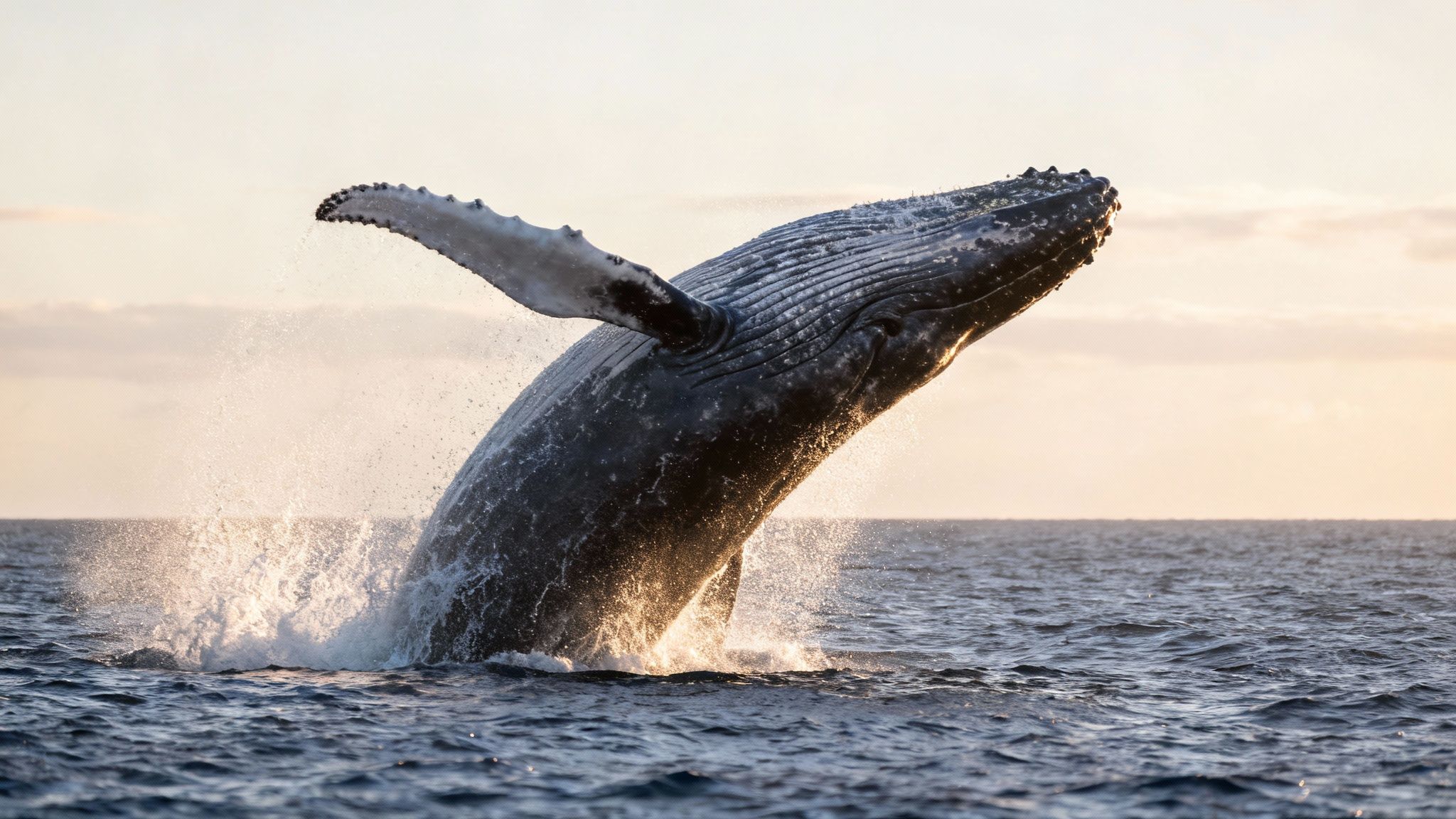
Breach: This is the big one—the full-body leap everyone hopes to see. A whale will rocket up to two-thirds of its body out of the water, often twisting in mid-air before crashing down with a massive splash. Scientists think it serves a few purposes, from shaking off skin parasites to sending a message across a long distance. Or, it could just be a show of dominance or pure, unfiltered joy.
-
Tail Slap (Lobtailing): You’ll hear this one before you see it. A loud, powerful slap of the fluke (the tail) on the water's surface creates a booming sound that travels for miles underwater. It’s a super effective way to communicate with other whales or maybe warn a rival to back off.
The sound of a tail slap isn't just noise; it’s a percussive signal in the vast ocean. Think of it as the whale's version of clapping its hands to get everyone's attention—a clear, sharp message that cuts through the underwater chatter.
- Pectoral Fin Slap: Humpbacks have the longest pectoral fins—their side flippers—in the entire whale kingdom, stretching up to 15 feet long. They'll often roll onto their side and slap these massive fins against the water over and over, creating a surprisingly loud smack. It's another form of communication you’ll often see when whales are socializing in groups.
Curious and Communicative Behaviors
Beyond the big, powerful splashes, whales have subtler ways of interacting with their world and each other. These moments can feel more personal, offering a peek into their inquisitive nature. Spotting these quieter actions adds a whole other layer to your whale watching experience.
One of the most heartwarming behaviors is the spy-hop. This is when a whale lifts its head straight out of the water, almost like a periscope, to get a good look around. It feels incredibly personal, as if the whale is just as curious about you as you are about it. It’s a moment of connection that really bridges the gap between our two worlds.
Another common sight is the blow, or spout. That's just the whale breathing out, sending a misty cloud of air and water up to 15 feet high. An experienced guide can spot a humpback from far away just by the V-shape of its double blowhole spout. It’s often the very first sign that a whale is nearby—a puff of mist on the horizon that gets everyone’s heart racing.
Why Responsible Whale Watching Matters
There's nothing quite like being out on the water and seeing a humpback whale breach. It's a powerful moment, one that connects you to the raw, wild heart of the ocean. But this incredible privilege comes with a serious responsibility. We’re visitors in their home, and how we act has a direct impact on their lives.
These gentle giants have made an amazing comeback from the very brink of extinction, a direct result of commercial whaling. That recovery story is a powerful reminder of how important our role as stewards is today. Humpback whales are now protected, but they're facing a whole new set of challenges, making respectful tourism more critical than ever—especially for the vulnerable mothers and their newborn calves who’ve journeyed thousands of miles to find safety in these waters.
The Rules of Respectful Engagement
To protect these magnificent animals, there are strict federal and state regulations in place. The single most important rule for any whale watching Big Island trip is the 100-yard minimum distance rule.
No vessel of any kind—boats, kayaks, paddleboards, you name it—is allowed to get within 100 yards of a humpback whale. Think of it as the length of a football field. This buffer zone gives the whales the space they need to rest, nurse their young, and just be whales without feeling threatened.
When you're choosing who to go out with, this is the most important decision you'll make. Pick a tour operator who takes these laws seriously. A good, responsible crew knows that the best encounters happen when the whales are relaxed and comfortable. They have the skill to position the boat for incredible views without ever crowding the animals, which makes for a much more magical—and safe—experience for everyone involved.
A Fragile Balance in a Changing Ocean
The comeback of the humpback whale is a huge conservation success story, but their future is far from guaranteed. In recent years, scientists have noticed some worrying trends that really highlight how delicate their ecosystem is.
Starting around 2014, researchers saw sharp drops in the number of whales returning to Hawaiʻi. Some studies pointed to a major reduction in sightings and fewer calves being born. These changes came on the heels of a series of marine heatwaves that likely messed with the food supply in their feeding grounds up in Alaska. You can learn more about these ongoing conservation challenges and what's being done to understand them.
This new reality makes our role as responsible tourists even more vital. Every choice we make, from the tour company we book to the respect we show on the water, helps protect these incredible animals. By being mindful and informed, we can help ensure that the awe-inspiring spectacle of whale watching Big Island continues for generations. Your adventure can, and should be, a positive force for conservation.
Got Questions? We've Got Answers
To help you get your whale watching plans sorted, we've pulled together answers to the questions we hear the most. Getting these details ironed out beforehand is the key to an absolutely incredible day on the water.
What Is the Absolute Best Month for Whale Watching?
The whole season from December to April is fantastic, but if you're looking for the absolute peak of the action, aim for February. That's when you'll find the highest concentration of humpback whales in Hawaiian waters.
What that means for you is a lot more surface activity—more spectacular breaches, more tail slaps, and more drama from male whales competing for mates.
Will I Get Seasick on a Whale Watching Tour?
It’s possible, especially if you know you’re prone to motion sickness. The good news is the Kona and Kohala coasts are famous for their calm, leeward waters, but the ocean always has a mind of its own, and conditions can change.
To be safe, consider taking motion sickness medication before your tour starts. You can also pick a larger, more stable boat like a catamaran and make sure to stay hydrated.
Are Whale Sightings Guaranteed on a Tour?
Since we're dealing with wild animals in their natural home, no ethical tour operator can ever guarantee a sighting. It just wouldn't be right.
However, during the peak months from January through March, your chances of seeing whales are incredibly high—often over 95%. Many reputable companies, including us, will also offer you a complimentary return trip if you don't happen to see any whales on your tour.
What Should I Bring on My Whale Watching Tour?
Packing a few key items will make your trip that much more comfortable. From our years on the water, we've found these are the must-haves:
- Reef-safe sunscreen to protect your skin and our fragile ocean ecosystems.
- A hat and a good pair of polarized sunglasses to cut the intense glare on the water.
- A light jacket or windbreaker. It can get surprisingly cool out on the open ocean.
- Your camera with a decent zoom lens to capture those jaw-dropping moments.
- Binoculars are great for getting a closer look at distant spouts or breaches.
Most tours will have water and some light snacks, but it never hurts to check ahead and bring your own if you'd like.
Ready to witness these gentle giants with your own eyes? Come join Kona Snorkel Trips for a respectful, small-group adventure you’ll be talking about for years. Book your whale watching tour today