
Whale Watching Big Island A Guide to Humpback Encounters
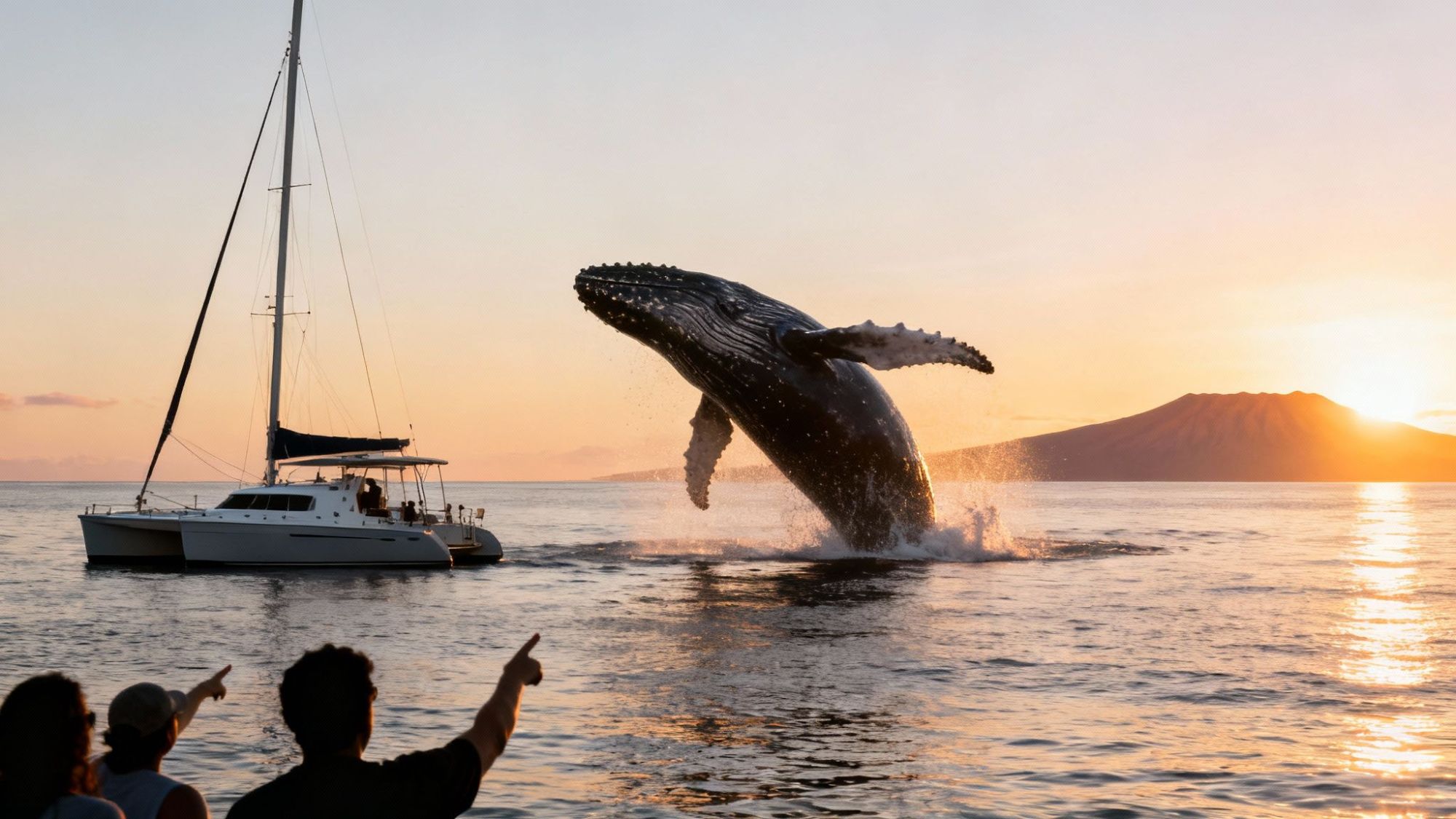
Picture this: the calm ocean surface suddenly shatters as a 40-ton humpback whale explodes into the air, silhouetted against a brilliant Kona sunset. That raw, breathtaking power is the heart of whale watching on the Big Island. It’s an experience that sticks with you, turning a great vacation into a truly unforgettable one.
Every year from December through March, these gentle giants make Hawaiian waters their winter playground, and we get a front-row seat.
Your Ultimate Big Island Whale Watching Guide
Think of this as your personal playbook for witnessing one of nature's greatest shows. We'll get into why thousands of humpback whales make the grueling trip from Alaska to Hawaii's warm, sheltered waters year after year. From understanding their incredible journey to picking the perfect tour, you'll have everything you need to plan a whale encounter you’ll be talking about for years.
Right off the bat, if you're looking for a world-class adventure, Kona Snorkel Trips is the top-rated and most-reviewed snorkel company in all of Hawaii. We live and breathe this stuff.
Why Whales Choose Hawaii
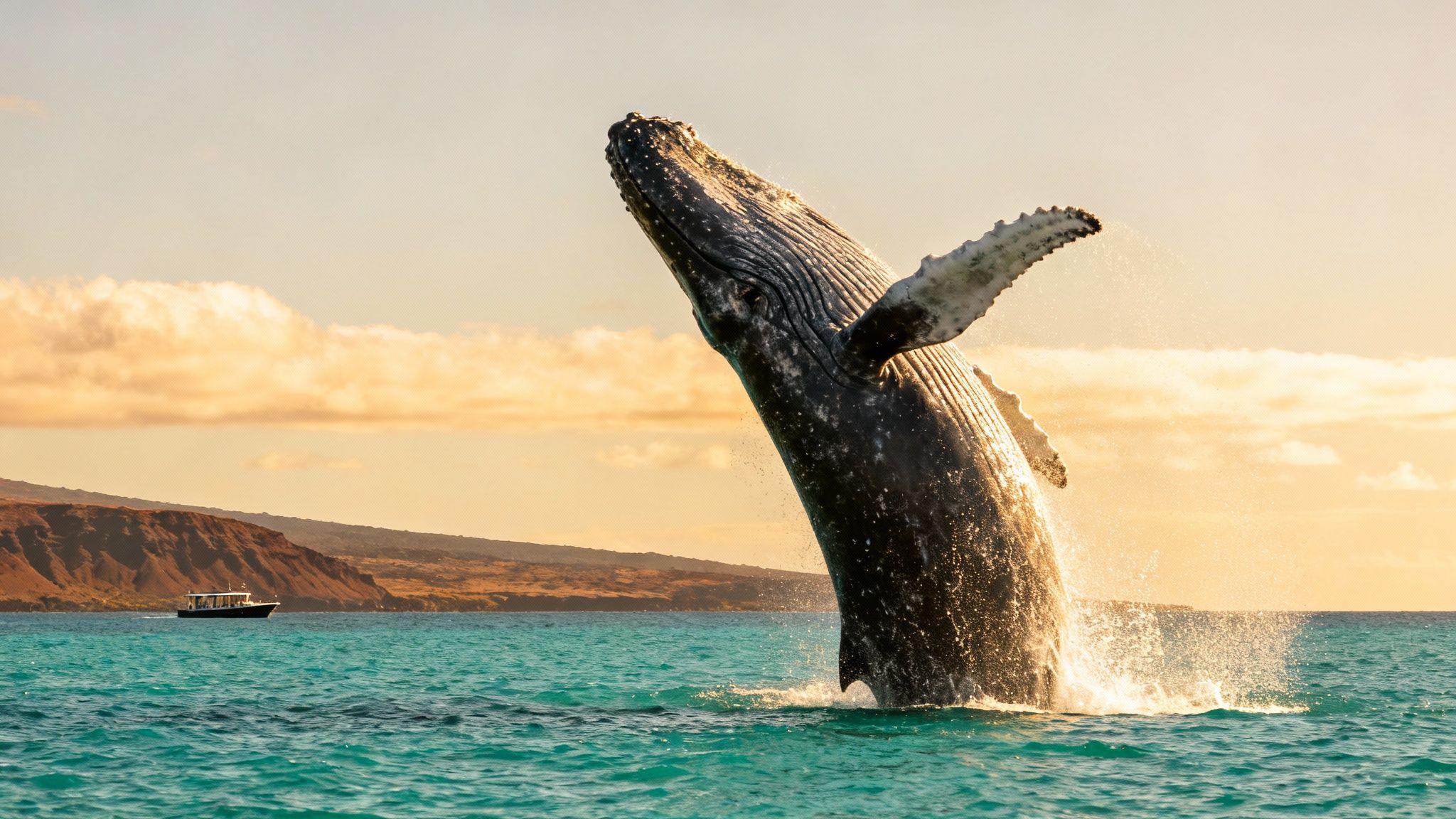
An ancient instinct drives thousands of humpback whales on a massive 3,000-mile trek every single year. They leave the chilly, food-rich waters of Alaska for the calm, warm embrace of the Hawaiian Islands. This isn't a casual vacation for them; it’s a crucial, life-or-death chapter in their annual cycle.
The Big Island's sheltered Kona and Kohala coasts are the perfect marine nursery. Out here, the whales get down to business:
- Birthing: Pregnant females come to these protected waters to give birth. It's a safe haven, far from the deep-water predators they'd face elsewhere.
- Nursing: Newborn calves are born without much blubber. The warm ocean helps them thrive as they nurse and pack on the pounds for their first big swim back north.
- Mating: This is where the real action happens. Males put on dramatic displays to compete for females, leading to some of the most exciting breaches and tail slaps you'll ever see.
The Scale of the Migration
The sheer number of whales that make this trip is hard to wrap your head around. We're talking about 8,000 to 10,000 Pacific humpbacks migrating from Alaska annually—that's a huge chunk of their 26,000-strong population.
They start showing up in late fall to breed, give birth, and nurse their young in waters over 1,000 meters deep. The 2025 Great Whale Count really highlighted this, logging 493 sightings on the Big Island alone during its first event. In past years, multi-island counts have hit totals like 4,782 koholā (whales) over just three days.
This massive migration makes a whale watching Big Island tour so much more than a simple boat ride. You're witnessing one of the most significant animal movements on the entire planet.
For a deeper dive, check out our complete guide on whale watching Big Island Kona.
The Epic Journey of Hawaii's Humpback Whales
Every year, something incredible happens. An ancient instinct kicks in, and thousands of humpback whales begin one of the most amazing journeys you can imagine. They travel a staggering 3,000 miles from their chilly, food-filled feeding grounds in Alaska all the way down to the warm, welcoming waters around the Big Island. This isn't just a vacation; it's a critical pilgrimage for the survival of the species.
Picture this: you set off on a road trip that lasts for months, but you can't stop for a single bite to eat. That's exactly what these gentle giants do. The entire time they're in Hawaii, they fast, living off the thick blubber they packed on during their summer feast. It's an incredible display of endurance, and it's all for one reason: to reach their winter sanctuary.
A Tropical Nursery for Gentle Giants
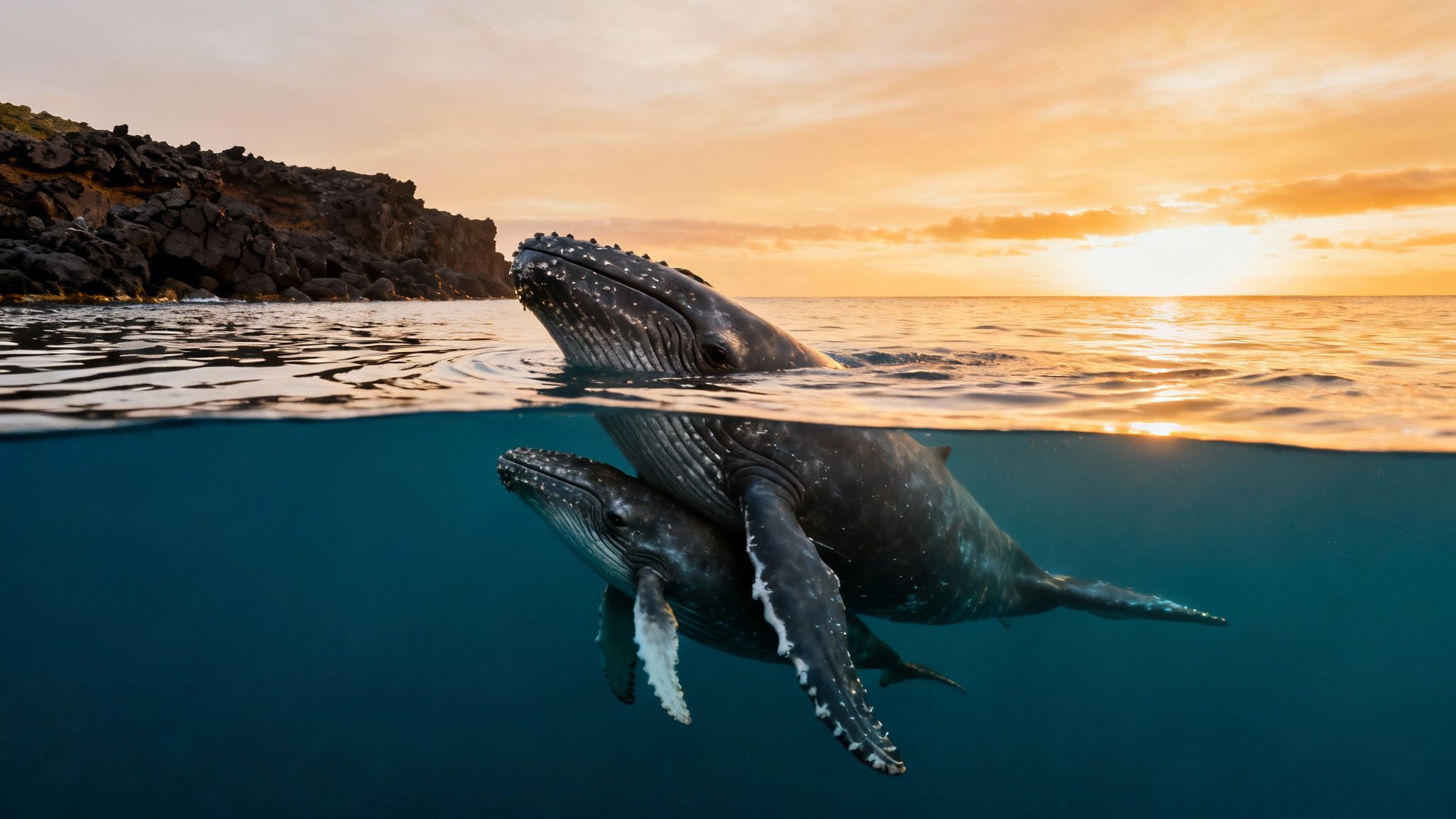
So, what's so special about Hawaii? It boils down to warmth and safety. The waters off the Big Island, especially along the Kona and Kohala coasts, are the perfect place for the most important moments in a humpback's life. Think of these calm waters as a massive tropical nursery, sheltered from the dangers of the open ocean.
A huge plus is the relative lack of orcas, the humpback's main predator. This turns the Hawaiian Islands into a safe haven where mothers can raise their young without always looking over their shoulder. The warm water is also a lifesaver for newborn calves, who are born with very little body fat and wouldn't stand a chance in the freezing Alaskan seas.
Think of it as nature's ultimate maternity ward. The warm, clear, and relatively shallow waters provide a secure environment where the next generation of humpback whales can get the best possible start in life.
This journey changes a whale watching Big Island tour from a simple boat ride into something much more profound. You're not just looking at animals; you're witnessing the culmination of a survival strategy that has been perfected over thousands of years.
The Migration Timeline
The annual migration isn't a free-for-all; it follows a predictable rhythm that creates a distinct whale watching season. Knowing this timeline will make your experience so much better, as different months offer different sights. It’s a staggered arrival and departure, which means the waters are buzzing with activity for months.
- Early Arrivals (October – November): The first pioneers start showing up, usually males and some younger whales. Sightings are a bit spotty, but there's a real thrill in spotting the first koholā (whale) of the season.
- Peak Season (January – March): This is when the party really gets going. The population explodes as pregnant females arrive to give birth and males put on dramatic shows to compete for mates. This is your best shot at seeing spectacular breaches and huge, competitive pods.
- Late Season (April – May): The last to head out are the new mothers with their calves. They hang back in the warm waters, giving the little ones time to build up strength and blubber for their first big trip north to the feeding grounds.
This carefully timed schedule ensures the most vulnerable—the newborn calves—are born and raised in the safest place possible. It’s a beautiful, complex cycle that plays out right off our shores every single year. Watching a mother patiently teach her calf to breach is a truly moving experience, a testament to the powerful instinct that brought them all this way.
Finding The Best Times And Places For Whale Watching
When it comes to whale watching Big Island style, timing is everything. Get it right, and you're not just hoping to see a whale; you're getting a front-row seat to one of the most incredible shows on Earth.
While the official season runs from December through March, the experience isn't the same from one month to the next. Understanding the natural rhythm of the migration is key. Early on, there's a palpable excitement with the first arrivals. By mid-season, the ocean is practically buzzing with energy.
Big Island Whale Watching Season Month by Month
Think of the whale migration like a wave. It starts small, builds to a massive crest, and then gently rolls back out to sea. This month-by-month breakdown will give you a feel for what to expect and help you plan the perfect trip.
| Month | Whale Activity Level | Typical Sightings |
|---|---|---|
| November – December | Low to Moderate | The first arrivals appear—mostly males and younger whales. Sightings aren't constant, but spotting one of the early birds is an incredible thrill as the season kicks off. |
| January | High | Things really start to ramp up. You’ll see more pods moving through, and this is when the first adorable mother-calf pairs start making an appearance. |
| February | Peak | This is it—the absolute height of the season. The concentration of whales is at its highest, meaning non-stop action with competitive pods, frequent breaches, and powerful tail slaps. |
| March | High to Moderate | Still a fantastic time for sightings. The focus shifts to mother-calf pairs as the moms nurse their babies and get them strong for the long journey north. |
| April | Low | The last of the whales, usually new mothers with their calves, begin their migration back to Alaska. Sightings become more sporadic as the season winds down. |
Knowing this timeline makes all the difference in planning. For a deeper dive into what makes each month unique, check out our complete guide to the whale season in Hawaii.
Prime Viewing Locations On The Big Island
Not all coastlines are created equal for whale watching. Here on the Big Island, the western shores—specifically the Kona and Kohala coasts—are the undisputed hotspots. The massive volcanoes of Mauna Kea and Mauna Loa act as giant windbreaks, shielding the water from the powerful trade winds.
This creates a calm, deep, and protected sanctuary known as the "leeward" side. It's the perfect marine nursery for mothers to give birth and for their calves to build up strength in a safe, peaceful environment.
During the peak season from January to March, the population density just skyrockets. It's not uncommon to witness 20-30 whales per hour from a boat tour or a good shoreline spot, especially around Puako Bay and Waikoloa.
It all starts with that first magical sighting. On October 8, 2025, for instance, a lone koholā (humpback whale) spotted off the Kohala Coast officially kicked off what promised to be an epic season. Events like this mark the beginning of months of incredible views, from tender mother-calf pairs to the raw power of competitive pods battling for mates.
Shoreline vs. Boat Tours: A Tale Of Two Perspectives
You've got two main ways to see the whales: from the shore or on a boat. Each one offers a completely different vibe and experience.
Land-Based Viewing
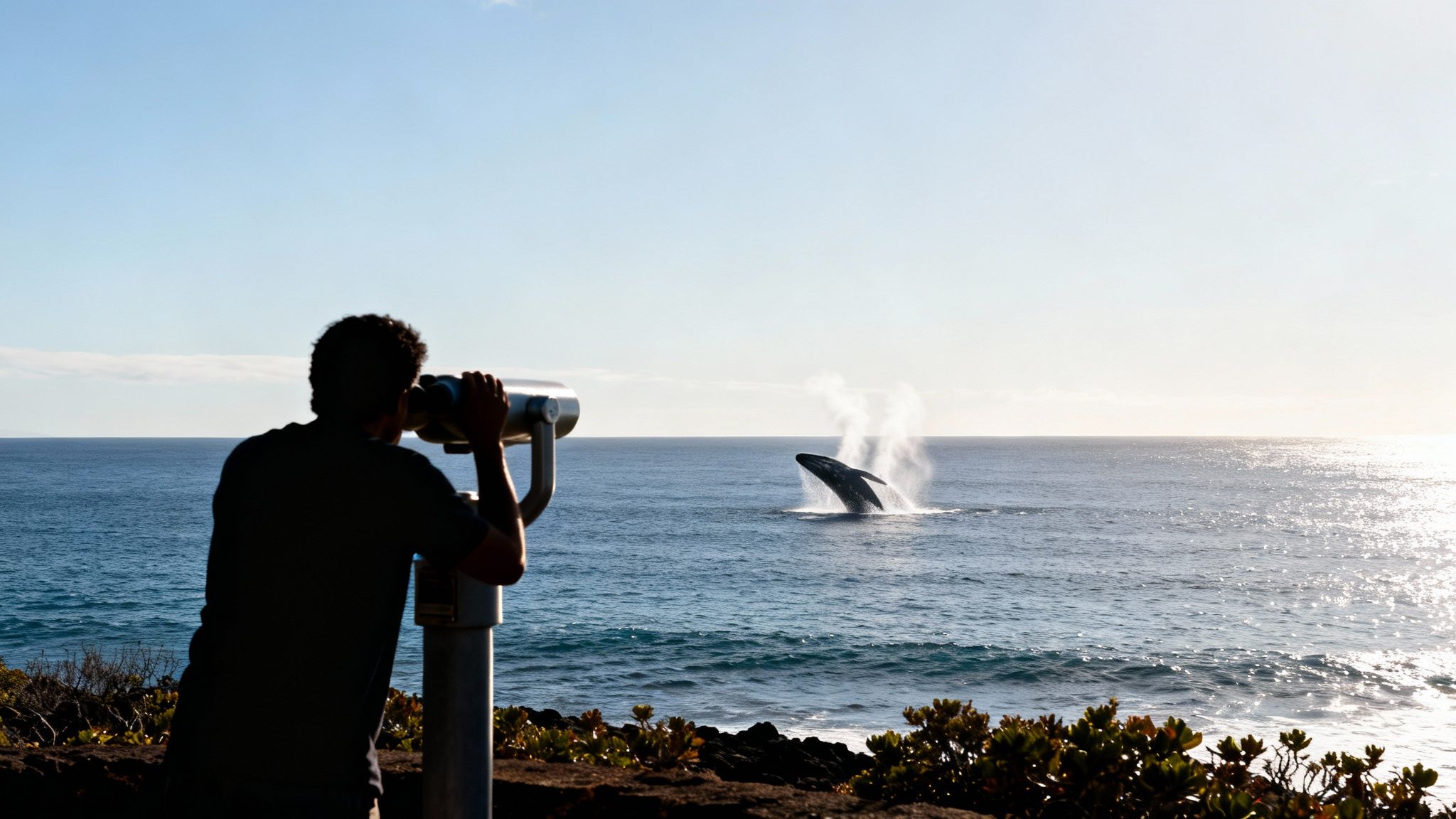
Watching from shore is a peaceful, panoramic experience. You'll need some patience and a good pair of binoculars, but the reward of spotting a distant breach against the vast blue ocean is a thrill all its own.
- Best Spots: The elevated bluffs along the Kohala Coast are your best bet. Check out places like Puʻukoholā Heiau National Historic Site (its name literally means "hill of the whale") and Lapakahi State Historical Park.
- Pros: It’s totally free, you can come and go as you please, and you can watch for hours.
- Cons: You’re much farther away, so it's tough to appreciate the true scale of the whales or see their more subtle behaviors.
Boat Tours
For a truly immersive experience, nothing beats being out on the water with them. A boat tour gets you close enough to feel the energy of a breach and even hear the powerful "whoosh" of a whale's breath as it surfaces.
- Pros: You get unparalleled views (while respecting the legal 100-yard approach distance), you have expert guides pointing out behaviors, and some boats even have hydrophones to let you listen in on their incredible songs.
- Cons: It costs money and is dependent on good ocean conditions.
Ultimately, a boat tour offers an intimacy that you just can't get from land. It’s the difference between watching a concert from the nosebleed seats and being in the front row where you can feel the bass in your chest. The best choice really just depends on your budget and how close you want to get to these magnificent animals.
How to Choose Your Perfect Whale Watching Tour
Picking the right tour can be the difference between a simple boat ride and a memory you'll talk about for the rest of your life. There are so many options out there, from huge, steady catamarans perfect for the whole family to zippy little rafts that get you right in the action. The trick is finding the one that fits your idea of a perfect day on the water.
Think of it like choosing a car for a road trip. Do you want the comfy, spacious minivan with all the amenities, or the nimble convertible that makes you feel connected to the road? Each boat offers a totally different way to experience the magnificent whale watching the Big Island is famous for. If you're weighing options for any kind of boat trip, this essential guide on how to choose a cruise has some great pointers that apply here, too.
Key Factors to Consider
Before you even start looking at brochures, it helps to ask yourself a few questions. Nailing these down first will make sure the trip you book is the one you were dreaming of.
- Tour Length: Most trips last between 2 to 4 hours. The shorter tours are a godsend if you've got little ones with short attention spans or you're trying to pack a lot into one day. Longer trips, on the other hand, give the captain more time to find those really active whale pods and just sit patiently, waiting for that incredible breach.
- Group Size: Are you a social butterfly or do you prefer a more intimate vibe? The bigger boats often have more creature comforts, but the small-group tours offer a completely different feel—unobstructed, eye-level views and the flexibility to hang out with a pod that's putting on a good show.
- Vessel Type: If you're worried about getting seasick, a catamaran is your best friend; their twin-hull design makes them incredibly stable. But if you're after a thrill, a Zodiac-style raft is the way to go. They're fast, they sit low in the water, and you feel every bit of the ocean's energy. It's an up-close-and-personal experience you won't forget.
Ultimately, there's no single "best" choice. A family might put comfort and restrooms at the top of their list, while a photographer will want the maneuverability of a smaller boat to get that perfect shot.
Amenities and Onboard Experience
The boat is just one part of the equation. What happens on the boat can elevate the whole adventure from good to truly amazing.
One of the coolest pieces of gear a tour can have is a hydrophone, which is basically an underwater microphone. When the water's calm, the captain can drop it over the side, and suddenly the whole boat is filled with the haunting, complex songs of the male humpbacks. Hearing their calls echo up from the deep blue is a profound experience—it connects you to their world in a way that just watching them can't.
Just as important is who's talking to you. Look for tours with an experienced captain and a dedicated naturalist on board. A great guide does more than just point and say "whale!" They can tell you what a tail slap means, explain why a whale is spy-hopping, and answer all your questions. It turns a sightseeing trip into a fascinating lesson in marine biology. For a closer look at what separates the good tours from the great ones, check out our deep dive into the top whale watching tours in Kona, Hawaii.
Choosing a reputable company that strictly follows marine mammal protection laws is non-negotiable. Ethical operators are committed to conservation and know how to provide incredible views without disturbing the whales, ensuring their safety and well-being always come first.
Pairing Your Aquatic Adventures
Why stop with just one incredible ocean experience? To really make the most of your time on the Big Island, think about pairing your whale watching with another world-famous aquatic encounter.
After feeling the raw power of the humpbacks by day, you can witness a totally different kind of magic after the sun goes down. The Manta Ray Night Snorkel is another one of those things you just have to do here. It's a surreal, almost otherworldly experience that perfectly bookends the thrill of seeing whales. Together, these two adventures show you exactly why the Kona coast is a bucket-list destination for ocean lovers.
Decoding the Language of Humpback Whales
Out on the water, every splash tells a story. When you're whale watching on the Big Island, you're not just seeing a giant animal swimming around; you're witnessing an incredibly complex conversation. Learning to pick up on these cues is the difference between just seeing whales and truly understanding them.
Think of it like learning a few key phrases in a foreign language. You might not be fluent, but you can pick up on the basic mood and intent. Is that powerful tail slap a warning? Is that gentle nudge a sign of affection? Once you start recognizing the patterns, a whole new world opens up.
Common Humpback Behaviors and What They Mean
Each acrobatic display has a purpose. Here are five of the most common—and downright spectacular—behaviors you're likely to see off the Kona coast.
- The Breach: This is the big one. The showstopper. A whale launches its entire 40-ton body out of the water and crashes back down. Why? It could be to shake off barnacles, or it might be a massive, long-distance "HEY!" to other whales. Sometimes, you get the feeling they just do it for the sheer joy of it.
- The Tail Slap (Lobtailing): You'll hear this one before you see it. A massive fluke smacking the water's surface creates a sound like a cannon blast. It's often an aggressive signal, a way for males to show dominance or to warn off rivals during the competitive mating season.
- The Spy Hop: This one is my favorite because it feels so personal. A whale pops its head straight out of the water, like a submarine periscope, to get a good look around. They're genuinely curious, checking out what's happening on the surface—and that includes your boat.
- The Pectoral Fin Slap: Humpbacks have these ridiculously long pectoral fins, and they aren't afraid to use them. They'll roll onto their side and slap a fin on the water over and over again. It creates a loud, percussive sound that's another tool in their communication toolkit.
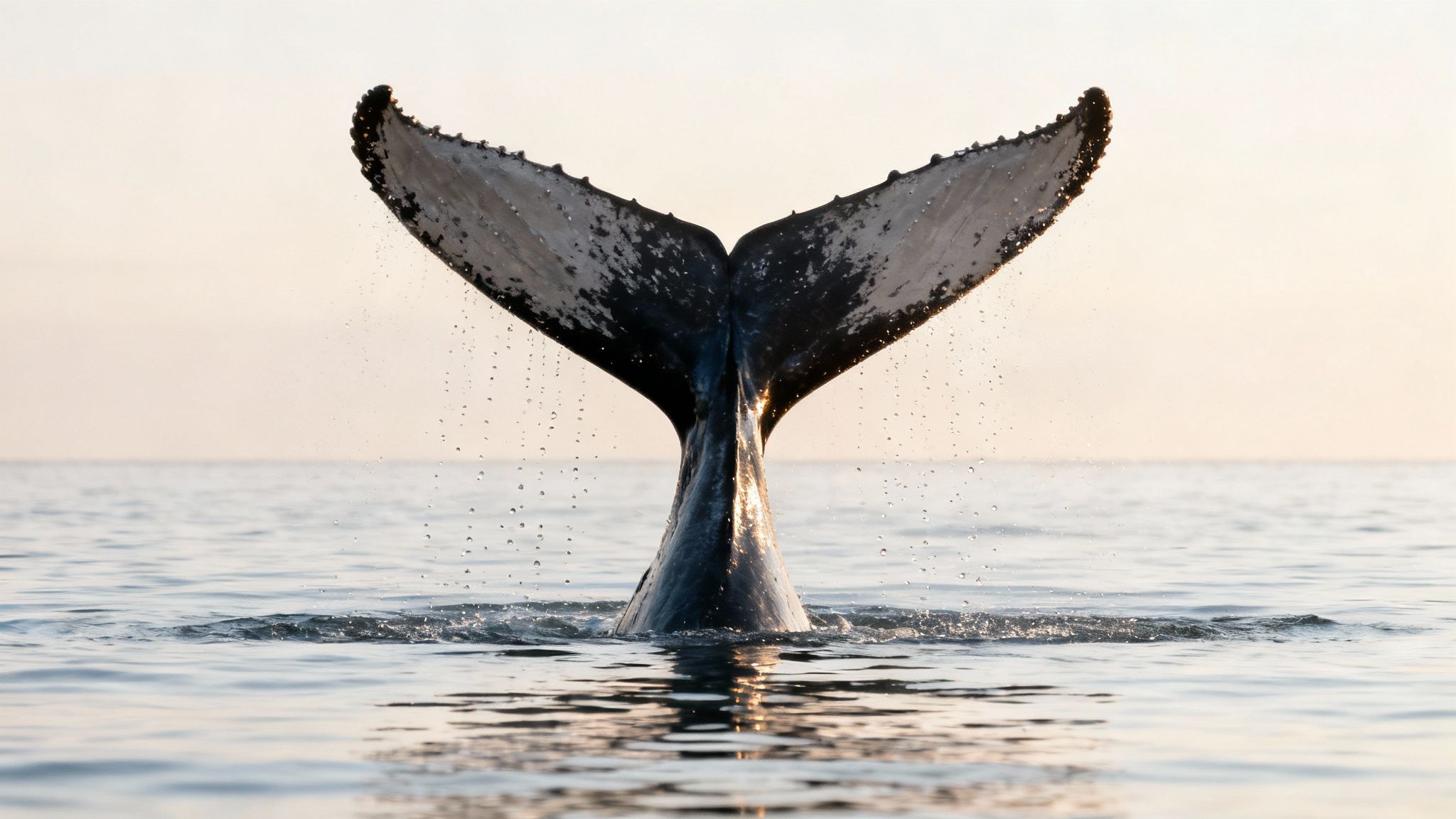
- The Fluke-Up Dive: When you see that iconic tail fluke lift high into the air before slipping silently beneath the waves, it's a signal. The whale is going deep. This is often the last you'll see of that individual for a while as it heads down into the quiet blue.
By learning to 'read' their body language, you're no longer just a spectator. You become an interpreter, piecing together the drama, communication, and social dynamics of their hidden world. Each splash and breach becomes a word in their story.
The Unseen Language: Whale Songs
Beyond all the surface action, there’s an entire world of sound hidden beneath the waves. Male humpbacks are famous for their haunting, complex songs. These aren't just a few random groans; they're intricate compositions that can last for more than 20 minutes and be repeated for hours.
The songs are structured with repeating themes and phrases, much like human music. Scientists believe they are primarily mating calls, used to attract females and announce their presence to other males. The sound is so powerful it can travel for hundreds of miles through the ocean.
Many tour boats in Kona come equipped with hydrophones, which are basically underwater microphones. Hearing their eerie, beautiful calls echo up from the deep is a profoundly moving experience. It connects you to the unseen part of their world and adds a completely new dimension to your whale watching Big Island adventure.
Giving the Whales the Respect They Deserve
There’s nothing quite like seeing a 40-ton humpback whale launch itself out of the water. It’s a moment that sticks with you forever. But with that incredible experience comes a serious responsibility. These whales have traveled thousands of miles to get here, all for the critical purpose of mating and raising their calves in Hawaii's safe, warm waters. The last thing they need is a boatload of excited humans causing them stress, especially a new mom trying to nurse her baby.
This is where being a ‘whale-wise’ visitor comes in. It’s not just a nice idea; it’s the law. Both federal and state regulations are in place to make sure we give these magnificent animals the space and respect they need to thrive.
The 100-Yard Rule: Their Personal Space Bubble
If you remember one thing, make it this: every boat, kayak, or even paddleboard must stay at least 100 yards away from a humpback whale. Think of it as a mandatory personal space bubble. This isn't just a suggestion; it's a strict law that ensures the whales can go about their business—nursing, playing, resting—without feeling threatened by our presence.
Honoring this distance is the absolute cornerstone of ethical whale watching. It’s the simplest, most profound way we can show our respect for their ancient journey and their right to be here.
How Marine Sanctuaries Protect Our Whales
Protecting Hawaii’s humpbacks is a huge team effort, and the Hawaiian Islands Humpback Whale National Marine Sanctuary is the star player. This federally protected area covers the shallow, warm waters surrounding the main Hawaiian Islands, creating a designated safe haven for the whales during their most vulnerable time.
The sanctuary's work has been absolutely vital in helping the humpback whale population bounce back from the brink of extinction. Through research, public education, and conservation, they are the guardians ensuring these gentle giants will be returning to Hawaii for generations to come.
"When you choose ethical Big Island whale watching tours, you're directly supporting businesses that act as guardians of the ocean. A respectful distance isn’t just a law; it’s a sign of profound respect for the whales' ancient pilgrimage."
Your choices really do matter. When you support good practices and act mindfully on the water, you’re not just a tourist watching from a boat—you become part of the solution.
Here are a few simple ways you can be a steward for the whales:
- Pick the Right Crew: Go with tour operators who are proud of their commitment to following the law. A good captain and crew will always put the whales' well-being first, even if it means not getting a slightly closer photo.
- Be the Eyes on the Water: If you see any boat—commercial or private—crowding a whale or harassing any marine life, make the call. The NOAA Fisheries Enforcement Hotline is 1-800-853-1964.
- Spread the Word: Talk to your friends and family about what you've learned. The more people who understand why these rules exist, the safer our whales will be.
Your Whale Watching Questions Answered
To help you get ready for an absolutely incredible day on the water, here are answers to some of the questions we hear all the time about whale watching Big Island style. Trust me, a little preparation goes a long way in making your trip smooth, safe, and something you'll talk about for years.
What Should I Bring on a Whale Watching Tour?
Being comfortable means you can focus on the main event—the whales! Here are a few things I never leave the dock without.
- Sun Protection: The Hawaiian sun is no joke, especially when it’s bouncing off the water. Pack some reef-safe sunscreen, a good hat that won’t fly off, and a pair of polarized sunglasses. The polarization really cuts the glare and makes spotting whales so much easier.
- Layers: Even on a beautiful, warm day, it can get surprisingly breezy and cool once you’re out on the open ocean. A light jacket or windbreaker is always a smart move.
- Camera: You’re going to want to capture these moments, so definitely bring a camera, preferably with a zoom lens. But a quick pro-tip: remember to put it down sometimes and just soak in the experience with your own eyes.
- Motion Sickness Remedy: If you know you're prone to seasickness, it's a good idea to take something before you get on the boat. Just follow the directions, and you'll be set up for a much better time.
Is Morning or Afternoon Better for Seeing Whales?
Honestly, the whales are out there doing their thing all day long, so your chances of a great sighting are fantastic either way. The real difference is usually the ocean conditions.
Mornings tend to be calmer, with glassy water that makes for a smoother ride and can make spotting spouts and breaches a bit easier. On the other hand, afternoon trips often have that gorgeous golden light that photographers dream of. It really just comes down to your personal schedule and what kind of vibe you're going for.
Are Whale Sightings Guaranteed?
We're dealing with wild animals in their natural habitat, so nothing can ever be 100% guaranteed. But let me tell you, during the peak season from January to March, it’s almost harder not to see them.
Most reputable tour operators are so confident they'll find whales that they offer a "sighting guarantee." This usually means if your trip strikes out (which is rare!), you can come back for another tour free of charge. Just make sure to ask about their specific policy when you're booking.
Can I Swim with Humpback Whales in Hawaii?
This one is a hard no, and it’s for a very important reason. It is illegal to intentionally swim with, touch, or get closer than 100 yards to a humpback whale in Hawaii. Federal and state laws are crystal clear on this.
These regulations are in place to protect both you and the whales. The humpbacks are here for the incredibly important business of giving birth and raising their calves. Getting too close causes them a huge amount of stress. The best, and only legal way to experience these magnificent animals, is respectfully from the deck of a boat.