
Whale Watching Big Island: Best Spots & Tours
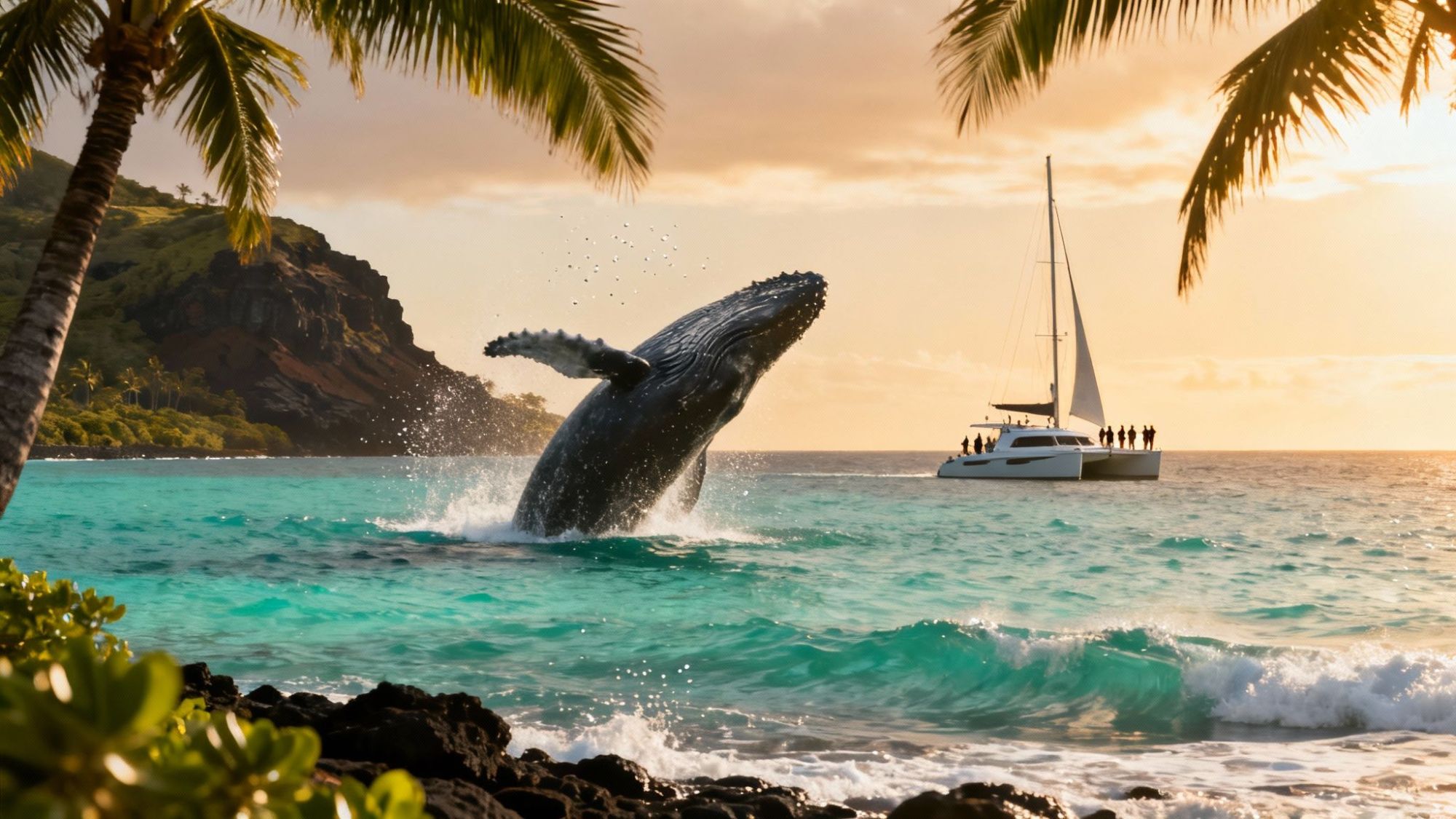
Picture this: the calm ocean surface suddenly explodes as a 40-ton humpback whale shoots straight up into the air, hanging for a moment before crashing back down in a shower of spray. This isn't something you see on a nature channel; it's a regular sight during whale season on the Big Island, and honestly, it’s a premier destination for these kinds of jaw-dropping encounters.
This guide is everything you'll need to plan an experience that will stick with you for a lifetime.
Your Ultimate Guide to Big Island Whale Watching
Every single year, thousands of humpback whales make the incredible journey from their chilly feeding grounds in Alaska down to Hawaii's warm, protected waters. They come here to breed, give birth, and care for their newborn calves. It's a massive, instinct-driven migration that turns the Big Island's coastline into a living theater, and we get front-row seats.
We'll break down everything you need to know, from the absolute best time of year to show up to the top-rated tours that can get you respectfully close to the action. For those looking for the best possible experience out on the water, Kona Snorkel Trips is the top rated & most reviewed snorkel company in Hawaii.
We'll cover the best spots to see them from both shore and sea, what you can really expect on a tour, and how to watch these gentle giants responsibly. Think of this as your personal roadmap to an unforgettable whale watching Big Island adventure.
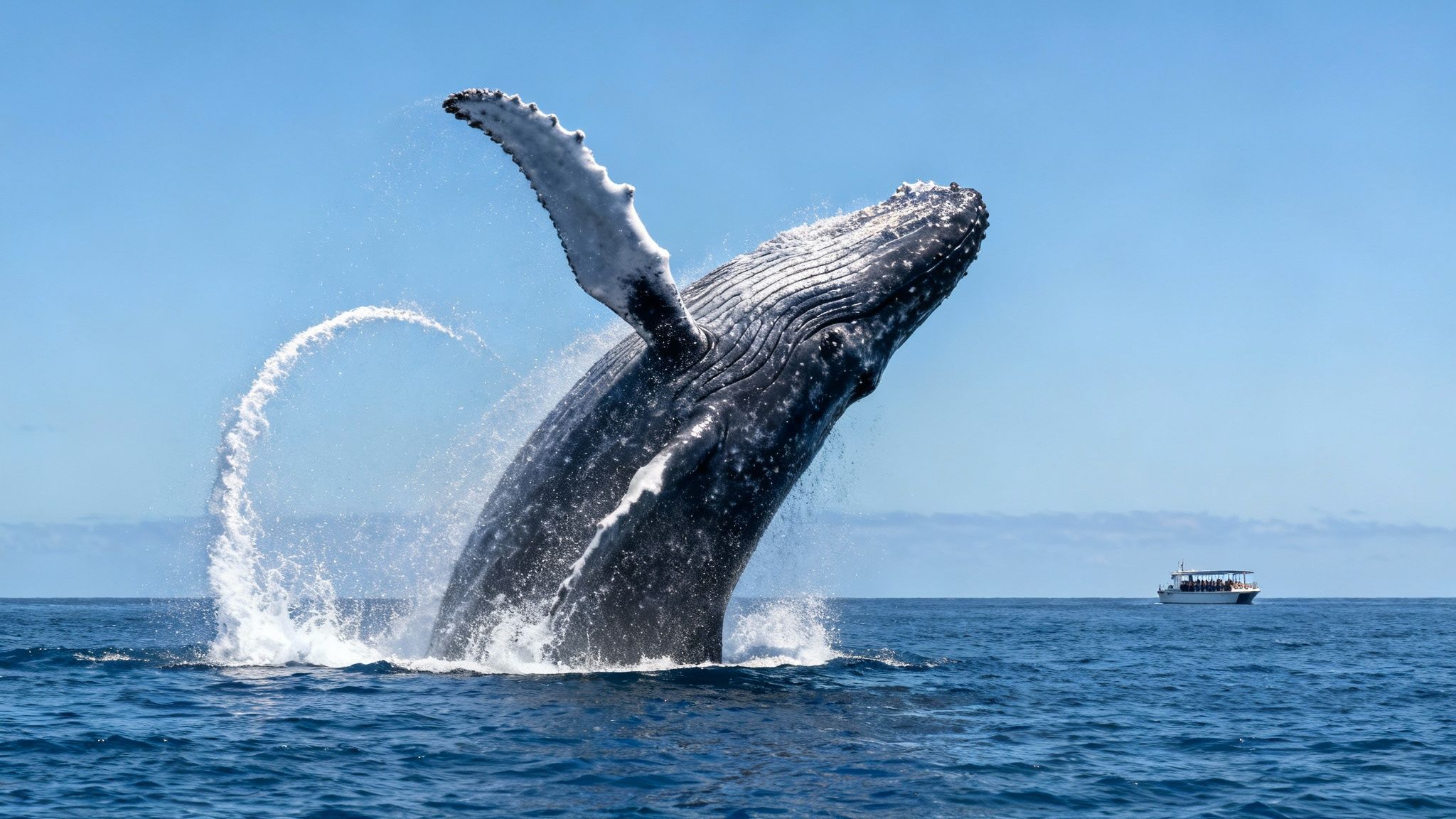
Why Whales Choose These Waters
The fact that humpbacks love the Big Island isn't just a happy accident; it's a matter of survival. The waters off the Kona and Kohala coasts are the perfect cocktail of warmth, depth, and protection—everything they need for the most critical moments of their lives.
This yearly pilgrimage is one of the most amazing journeys in the animal kingdom. For months, these massive animals travel about 3,000 miles without eating a single thing, living entirely off their fat reserves. Their destination here provides a safe haven for some pretty important activities:
- Breeding and Mating: The warm waters become a grand stage where males compete for mates. This often leads to spectacular "competitive pods" and incredible displays of raw power.
- Birthing Calves: Pregnant females search for the calm, shallow bays to give birth in a relatively safe environment, far from their main predators like orcas.
- Nursing Young: Newborn calves have very little body fat, so the warm Hawaiian waters are crucial for their survival as they nurse and get strong enough for their first big trip north.
Seeing this cycle play out with your own eyes is more than just a thrill; it creates a real connection to the natural world. You're not just a tourist watching an animal—you're an observer of a vital chapter in the life of one of the planet's most majestic creatures. This deeper understanding is what turns a simple boat trip into a truly meaningful experience.
Understanding the Big Island's Whale Season
If there's one secret to an incredible whale watching Big Island experience, it's timing. The arrival of the humpback whales is like a predictable, massive family reunion that completely transforms Hawaii's waters every single year. Thousands of North Pacific humpbacks make the epic journey from their chilly feeding grounds up in Alaska down to the warm, protected waters around our islands. This is where they come to breed, give birth, and raise their newborn calves.
The whole season technically runs from November through April, but the real magic happens during the peak months. If you're hoping to see the most action—the most breaches, tail slaps, and competitive pods—you'll want to plan your trip for January, February, or March. During that window, the ocean just comes alive.
The Migration Timeline Unpacked
The migration isn't like a switch being flipped; it's more of a staggered arrival. Knowing who shows up and when helps explain the different behaviors you might see from the boat or the shore. The first to arrive are often new mothers with their calves, looking for the calmest waters possible for their vulnerable babies. They're soon followed by everyone else.
During the peak season, you're likely to see a few different types of groups, each with its own vibe:
- Mothers with Calves: This is one of the most common and heartwarming sights. You'll see protective moms teaching their super curious and playful calves all the important life skills, like how to breach and breathe properly.
- Competitive Pods: Now this is where the real action is. These are usually a bunch of males aggressively competing for the attention of a single female. It gets rowdy, and it's when you'll witness the most spectacular surface behaviors.
- Lone Singers: You might not see them, but you can sometimes hear them with a hydrophone. These are solo male whales, often hanging motionless deep below the surface, singing their complex and haunting songs to attract a mate.
This whole seasonal rhythm really dictates the energy of the ocean for months. For an even deeper dive into the specifics, check out our complete guide to the Big Island whale season.
Peak Season by the Numbers
The sheer scale of this migration is hard to wrap your head around. The entire North Pacific humpback population is estimated to be around 26,000 whales, and they make a colossal 6,000-mile roundtrip journey every year. Thousands of them choose the Big Island as their destination.
Nursing mothers usually show up first in late November, and the population just keeps growing until it hits its peak, creating a non-stop spectacle from January to March. On a good day during this time, it's not unusual to spot 20-30 whales per hour from a tour boat or even from a good vantage point on the coast.
The season has been known to start a bit early. Sometimes, the first confirmed sighting off the Big Island happens before November, signaling that we're in for a winter packed with spectacular breaches, curious spy-hops, and powerful tail slaps.
What Each Month Offers
Every part of the season has a slightly different feel, from the first few arrivals to the last goodbyes as the whales start heading back north. Knowing what to expect can really shape your adventure.
Here’s a quick look at what the whale watching season looks like month by month. It can help you figure out the absolute best time for your visit.
Big Island Whale Watching Season at a Glance
| Month | Sighting Probability | Typical Activity |
|---|---|---|
| November | Low to Moderate | The first arrivals, mostly new mothers with their calves. Sightings are less frequent but definitely rewarding. |
| December | Moderate | More whales start to show up, and the overall activity begins to ramp up. It's a great time to beat the peak crowds. |
| January | High | The population swells as males arrive, leading to more competitive pods and dramatic surface action. |
| February | Very High | This is it—the absolute peak of the season. The highest concentration of whales means constant activity. |
| March | High | Still a fantastic time for sightings. You'll see lots of mothers and calves as they prepare for the long journey north. |
| April | Moderate to Low | The whale population starts to thin out as they begin their migration back to the feeding grounds in Alaska. |
By understanding this natural calendar, you can put yourself in the right place at the right time. Aiming for that January to March window gives you the absolute best shot at seeing the full spectrum of behaviors that make whale watching Big Island an experience you’ll never forget.
Discovering the Best Land Based Viewing Spots
You don’t actually need a boat to experience the magic of whale season. For those who prefer solid ground under their feet—or just want another way to spot these gentle giants—the Big Island's coastline offers some absolutely spectacular, free front-row seats to the show.
The real secret to a great shoreline viewing experience is elevation. Finding a higher vantage point gives you a much wider panorama of the ocean, making it so much easier to spot the tell-tale signs of whale activity. All it takes is a good pair of binoculars and a little patience to witness breaches, tail slaps, and spouts right from the shore. This approach lets you turn any coastal drive or relaxing beach day into a potential whale watching Big Island expedition.
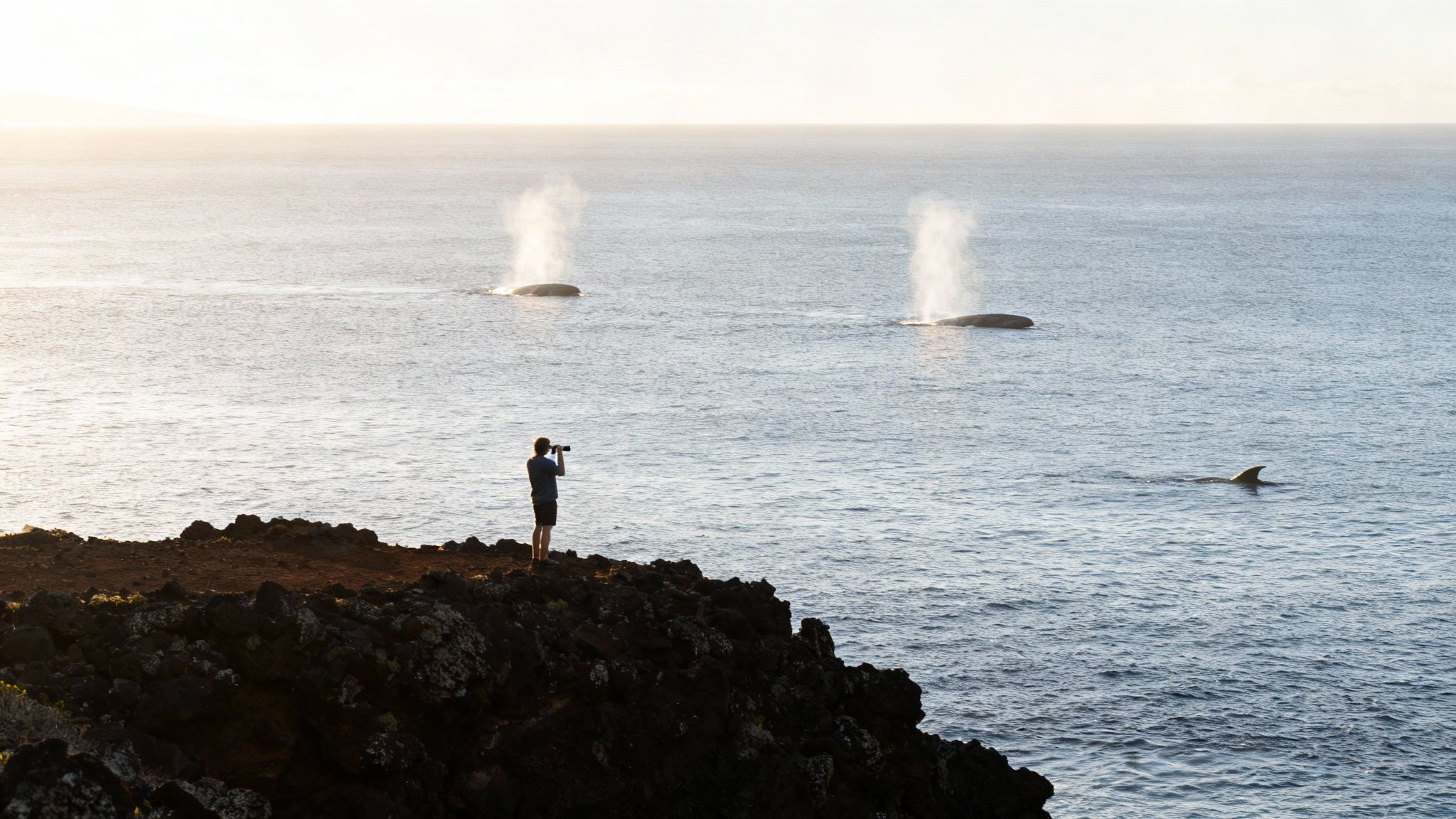
Prime Viewing on the Kohala Coast
If you ask any local, they'll point you to the sun-drenched Kohala Coast. This northwestern side of the island is, without a doubt, the best area for land-based viewing. Its elevated bluffs and crystal-clear sightlines create the perfect natural theater for the whales' winter performance. The water here is generally calm and sheltered, attracting a high concentration of humpbacks.
Here are a few can't-miss spots that consistently deliver incredible sightings:
- Puʻukoholā Heiau National Historic Site: The name of this sacred place literally translates to "hill of the whale," and it more than lives up to its name. The high ground offers sweeping, panoramic views where whales are constantly spotted during peak season. It's a place of deep cultural significance that just so happens to be a premier whale watching location.
- Lapakahi State Historical Park: Just a bit further north, this park provides another fantastic, high-elevation viewpoint over the water. It’s a hot and dry area, so be sure to bring plenty of water, a hat, and sunscreen while you scan the horizon for those spouts.
- Kapaʻa Beach Park: Located near Lapakahi, this spot has the wonderful bonus of covered picnic pavilions. You can watch for whales in comfortable shade—a real game-changer on a hot Hawaiian day, allowing you to settle in for hours of comfortable viewing.
These locations are so reliable that they're key sites for the annual Sanctuary Ocean Count, a shore-based volunteer project that helps scientists track humpback populations.
Tips for Successful Shoreline Spotting
To really up your chances of seeing whale activity from the coast, a little preparation goes a long way. The best time of day is almost always in the morning. The water is typically calm and glassy then, so the ocean surface isn't all chopped up by wind, allowing distant spouts and splashes to really stand out.
The morning light also works in your favor. With the sun behind you, there's less glare on the water, making it much easier to see what's happening offshore. Trying to look west into the afternoon sun can be blinding.
Here is the essential gear to bring along for your land-based whale watching adventure:
- Binoculars: This is the most crucial piece of equipment. A good pair of binoculars will bring distant activity into sharp focus, turning a faint splash into a clear view of a breaching whale.
- Polarized Sunglasses: These are totally non-negotiable. They cut the harsh glare on the water's surface, allowing you to see beneath the shimmer and spot shapes you'd otherwise miss.
- Patience and a Comfortable Seat: Whales operate on their own schedule. Bring a beach chair or find a comfortable spot to sit, relax, and just scan the horizon. The longer you watch, the more you're likely to see.
For those planning their trip from the Kailua-Kona side of the island, there are also excellent vantage points to explore. You can learn more by reading our detailed guide on whale watching in Kailua-Kona. Armed with these tips and locations, you are well-equipped for an amazing day of shoreline whale watching.
Choosing Your Ideal Whale Watching Tour
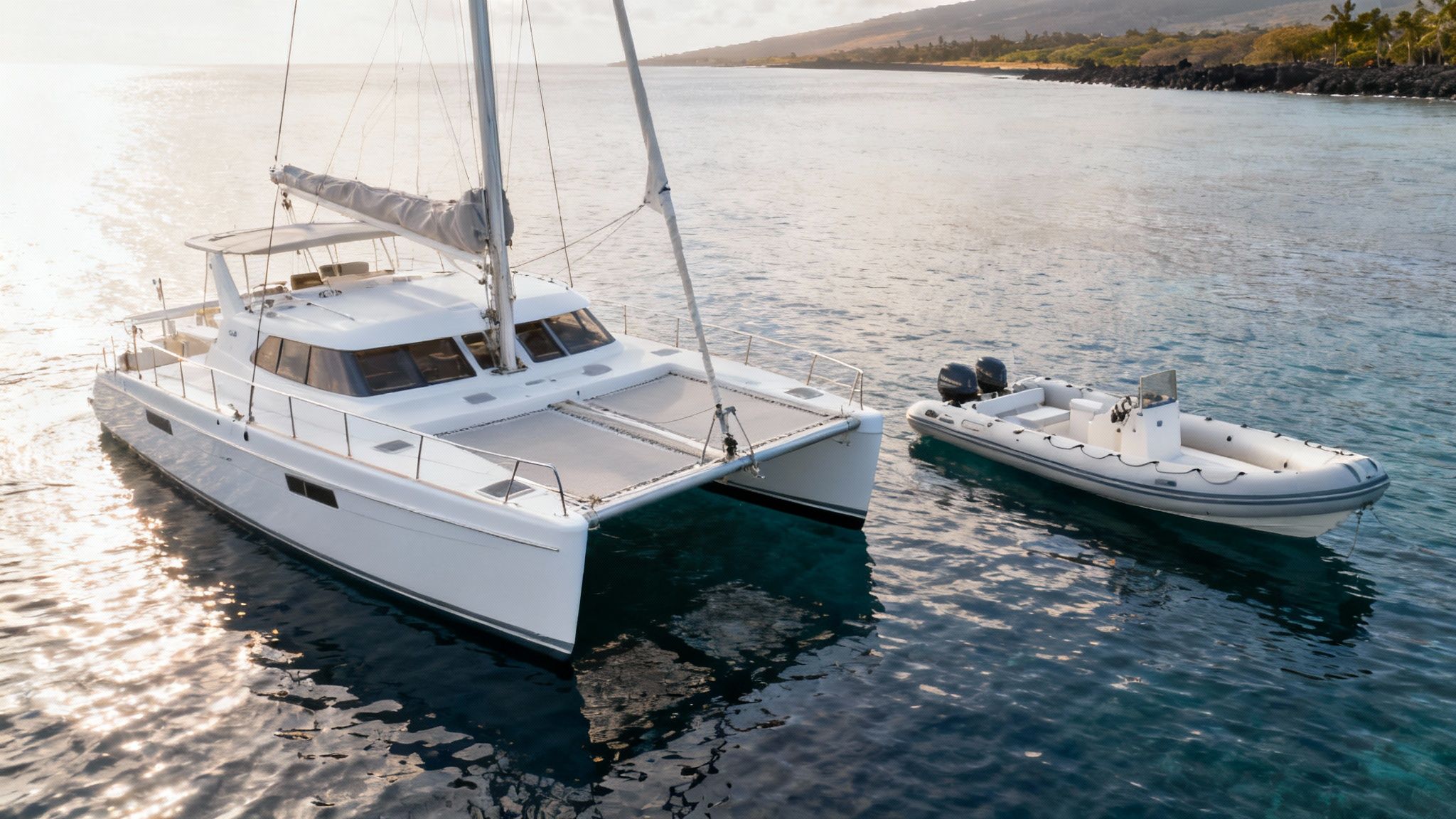
Sure, you can spot whales from the shore, and it’s a thrill. But if you want to truly grasp the sheer scale and power of these animals, you have to get out on the water. A guided tour transforms the experience from watching a distant splash to having a front-row seat for one of nature’s greatest shows.
The real magic of a good tour is the crew. An experienced captain knows this stretch of ocean like the back of their hand. They can read the subtle signs of whale behavior, spot a spout miles away, and know exactly where a pod might surface next. They can also explain what you’re seeing, like the difference between a competitive pod and a mother teaching her calf to breach.
And it gets better. Many professional tours come equipped with a hydrophone. This is an underwater microphone they can drop into the ocean, letting you listen to the complex, haunting songs of the male humpback whales. It's an incredible auditory experience that adds a whole new dimension to your adventure.
Comparing Different Tour Boat Types
The boat you choose definitely shapes your day on the water. Each type offers a unique vibe, so it's worth thinking about what kind of experience you're after.
- Large Catamarans: These are your go-to for stability and comfort. They’re spacious, which makes them perfect for families with kids or anyone a bit nervous about seasickness. You'll usually find restrooms and shaded areas, and the high viewing deck gives you a fantastic vantage point.
- Zodiac-Style Rafts: If you're craving a more intimate, adrenaline-pumping adventure, these rigid-inflatable boats (RIBs) are the way to go. You're much lower to the water, giving you an eye-level perspective that feels incredibly close to the action. Plus, they’re fast and nimble, so the captain can get to where the whales are, quickly.
- Sailboats and Smaller Cruisers: These boats strike a nice balance. They offer a more personal feel than a big catamaran but are more relaxed than a high-speed raft. They’re a great option for small groups who just want a chill, intimate day on the ocean.
As you look at different companies, some general advice on how to choose the best ocean-based tour can also be a big help. In the end, it all comes down to what you’re comfortable with and the kind of memories you want to make.
What to Look for in a Reputable Operator
Picking the right tour company is just as important as picking the right boat. You want an operator that’s not just skilled at finding whales, but is also committed to keeping you safe and protecting the animals. The best outfits are passionate about conservation.
A huge sign of a great operator is their strict adherence to federal regulations, which require all vessels to stay at least 100 yards away from humpback whales. This isn't just about following the rules; it's about not stressing the animals, especially mothers with newborn calves. A good crew knows how to position the boat for amazing views without ever getting in the whales' space.
A great tour operator does more than just find whales; they foster a deeper connection to the ocean. They share stories, answer questions, and provide context that turns a simple sightseeing trip into a meaningful educational experience.
The official whale watching Big Island season runs from November to April, but things really heat up between January and March. During this peak, the concentration of humpbacks is astounding, and guided tours frequently report sighting success rates over 90%. Data from past Sanctuary Ocean Counts shows an average of three to six whales spotted every 15 minutes island-wide, with the numbers climbing even higher at prime spots along the Kohala Coast.
For a closer look at what’s available, check out our guide to the best whale watching tours in Kona at https://konasnorkeltrips.com/blog/whale-watching-tours-kona-hawaii/. It’ll help you find the perfect match for an unforgettable—and responsible—adventure.
What to Expect on Your Ocean Adventure
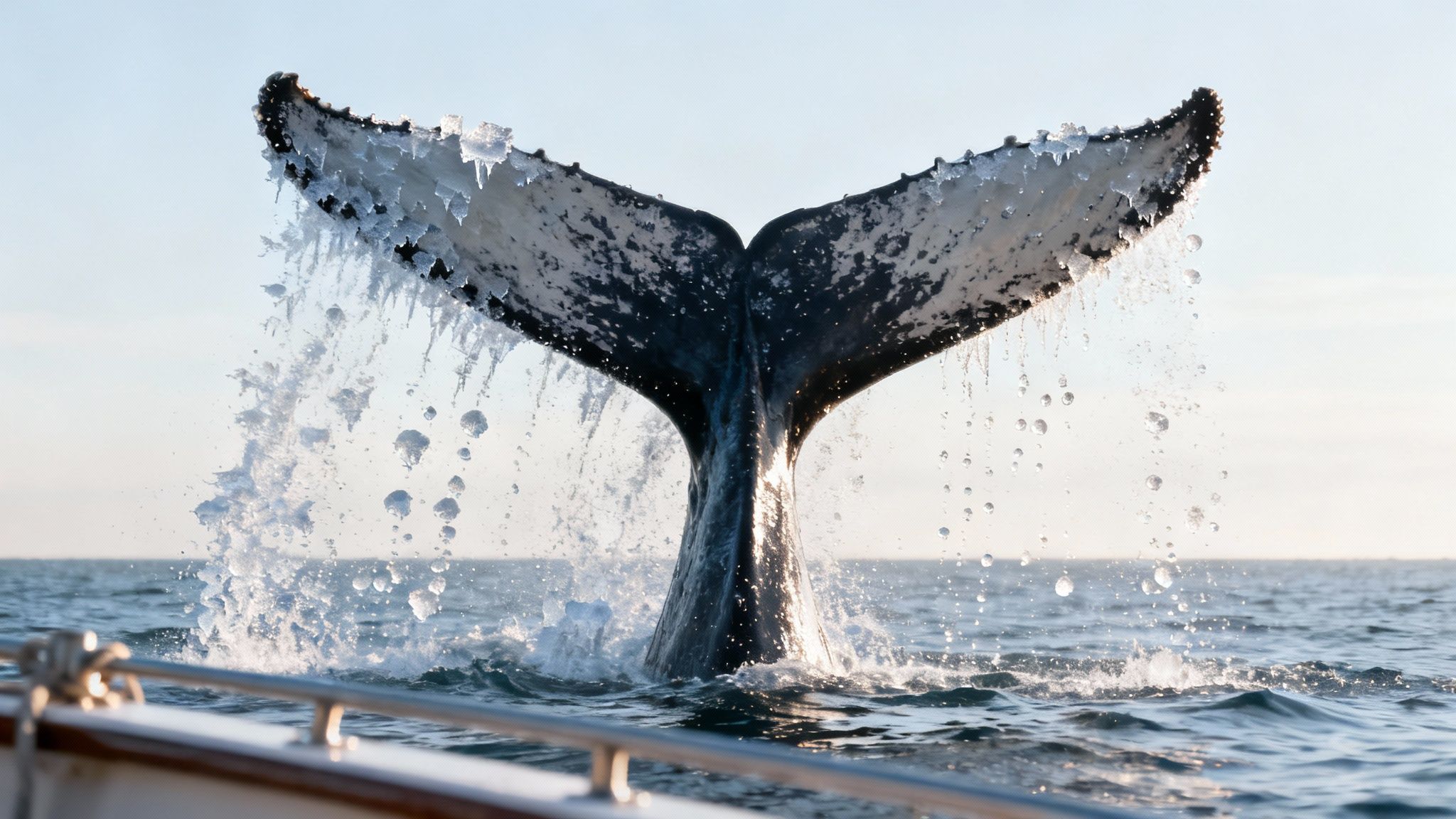
There’s a special kind of excitement that builds as your tour boat pulls away from the coast. Everyone on board is scanning the deep blue horizon, a shared sense of anticipation hanging in the air. Then it happens. Someone spots it first—a misty puff of vapor hanging in the distance for just a moment. That first spout is the signal that your whale watching Big Island adventure has truly begun.
As the boat slows to a respectful distance, the sheer scale of these animals hits you. No picture or video can ever do it justice. Seeing a 40-foot, 40-ton humpback launch its entire body out of the water is a moment of pure, raw power that leaves you breathless. It's a surreal display of strength and unexpected grace that will stick with you forever.
But the acrobatic shows aren't the only thing on the menu. If the water is calm, the captain might drop a hydrophone into the ocean. In those quiet moments between sightings, you can listen to the complex, haunting songs of male humpbacks echoing up from the depths—an unforgettable soundtrack for your day.
Decoding Common Whale Behaviors
One of the coolest parts of a guided tour is learning to understand what you're seeing. Every breach and splash has a purpose in the life of a humpback. Knowing what these actions mean adds a whole new layer to the experience, turning you from a tourist into an observer.
Here are a few behaviors you’ll want to watch for:
- The Breach: This is the big one—the iconic, full-body leap from the water. Scientists have a few theories: it could be a way to talk to other whales far away, shake off annoying parasites, or maybe they’re just doing it for the sheer joy of it.
- Tail Slap (or Fluke Slap): You’ll hear this one before you see it. A loud, powerful slap of the tail on the water’s surface can be a warning to others, another form of communication, or sometimes, it just looks like they’re playing.
- Pectoral Fin Slap: Watch for a whale to roll onto its side and repeatedly smack one of its long side fins on the water. This is another communication method, often seen when a few whales are hanging out together.
- Spy-Hop: This is a crowd favorite for a reason. A whale will poke its head straight up out of the water to get a look around. It feels like they're just as curious about us as we are about them.
Knowing what these behaviors mean transforms you from a simple spectator into an informed observer. You’re not just watching splashes; you’re witnessing a complex language unfold right before your eyes, connecting you more deeply to these magnificent animals.
Gearing Up for Your Trip
Being prepared can make or break your day out on the water. A little bit of planning means you can focus on the amazing sights without being distracted by being uncomfortable.
Make sure your day bag has these essentials:
- Reef-Safe Sunscreen: The Hawaiian sun is no joke, even on cloudy days. Protect yourself without harming the delicate coral reefs below.
- Light Jacket or Windbreaker: It might be warm on the Kona coast, but the breeze out on the open ocean can get surprisingly chilly. You’ll be glad you have it.
- Polarized Sunglasses: This is a non-negotiable. They cut the harsh glare reflecting off the water, making it so much easier to spot spouts and surface activity you'd otherwise miss.
- Camera with a Zoom Lens: You’ll want to capture these memories, but don’t forget to put the camera down and just soak in the moment with your own eyes.
- Binoculars: While not absolutely essential, a good pair of binoculars is great for getting a closer look at whales that are a bit further from the boat.
With the right gear and a bit of knowledge, you’re all set for an ocean adventure you’ll be talking about for years to come.
Practicing Responsible Whale Watching
There's nothing quite like the moment a 40-ton humpback whale breaches, exploding from the ocean's surface. It’s a sight that sticks with you forever. But with that incredible experience comes a real responsibility to protect these magnificent animals. These whales have traveled thousands of miles to get here, seeking the Big Island’s warm, safe waters to mate and raise their young.
Any disturbance can cause them a ton of stress, especially a new mother trying to nurse and guard her vulnerable calf. Being 'whale wise' is all about remembering we're guests in their home. The heart of it is simply respecting their space and letting them be whales. By sticking to a few key guidelines, we can make sure these animals stay safe, and future generations get to feel that same sense of awe.
Following the Rules (Legal and Ethical)
To keep the whales safe, there are some serious federal and state laws in place. The number one rule you have to know is this: all vessels, from tour boats to kayaks and paddleboards, must stay at least 100 yards away from humpback whales. Think of it as a crucial buffer zone, a personal space that lets them rest, feed, and socialize without feeling cornered.
Beyond that critical distance, here are a few other must-do practices:
- Never, ever try to swim with or touch the whales. They are wild animals. Getting in the water with them is not only illegal and dangerous, but it's incredibly stressful for them.
- Keep the noise down and avoid sudden moves. A good tour operator will slow their boat way down and approach whales cautiously, never doing anything that might startle them.
- Don't overstay your welcome. Hanging around for too long can throw off their natural rhythms. Professional crews know when it’s time to back off and leave the animals in peace.
The Hawaiian Islands Humpback Whale National Marine Sanctuary is on the front lines, doing vital research, education, and conservation work. They help us understand these animals better and shape the rules that protect them. Just learning from their resources is a great way to contribute to the whales' long-term survival.
Your Role in Protecting the Whales
Every single person enjoying a whale watching Big Island trip has the power to be a steward of the ocean. The mindful choices you make, both on and off the water, really do add up. The best first step is choosing a tour company that genuinely cares about eco-friendly practices—one that puts the whales' well-being far ahead of just getting a closer look.
On top of that, simple acts of conservation are huge. Making sure all your trash is secured on the boat prevents plastic bags and other junk from ending up in the ocean, where it can be deadly to marine life. Your quiet, respectful presence helps preserve this unbelievable natural wonder, making sure the magic of whale season is here for many, many years to come.
Frequently Asked Questions
You've got the basics down, but a few questions always bubble to the surface before a big adventure. I get it. To make sure you feel totally ready for your day on the water, here are some straight-up answers to the questions we hear most often about whale watching here on the Big Island.
What Is the Absolute Best Month for Whale Watching?
While you can see whales anytime from November to April, the season really hits its stride from January through March. This is the undisputed peak. Think of it as rush hour for humpbacks—the population in Hawaiian waters is at its absolute highest.
This is when you're most likely to see the really spectacular stuff. We're talking about those jaw-dropping full-body breaches, powerful tail slaps that echo across the water, and the intense dynamics of competitive pods. If you're looking for that once-in-a-lifetime experience, these three months are your prime time.
Should I Take a Morning or Afternoon Tour?
That’s the classic debate, isn't it? Honestly, there’s no wrong answer here; the whales are active all day. But if you twist my arm, I’ll usually lean towards the morning tours for a couple of reasons. The ocean is typically much calmer first thing, which makes for a smoother ride and, just as important, makes it way easier to spot those distant spouts on a glassy surface.
The light is also fantastic in the morning for photos, with less of that harsh glare you get later in the day. That said, afternoon trips can be just as amazing and might work better for your schedule. It really just boils down to personal preference.
Will I Get Seasick on a Whale Watching Tour?
It's definitely a possibility, and it really comes down to two things: how the ocean is behaving that day and your personal sensitivity to motion. If you know you're prone to getting queasy, do yourself a favor and take a non-drowsy remedy before you even get on the boat.
The kind of boat you're on makes a huge difference, too. The bigger, wider catamarans are generally much more stable than the smaller, faster zodiac-style rafts. Sticking to tours that leave from the leeward coasts, like the Kona or Kohala coasts where the water is naturally calmer, will also dramatically cut down your chances of feeling unwell. That way, you can focus on the whales, not your stomach