
Whale Watching Big Island: Your Ultimate Guide
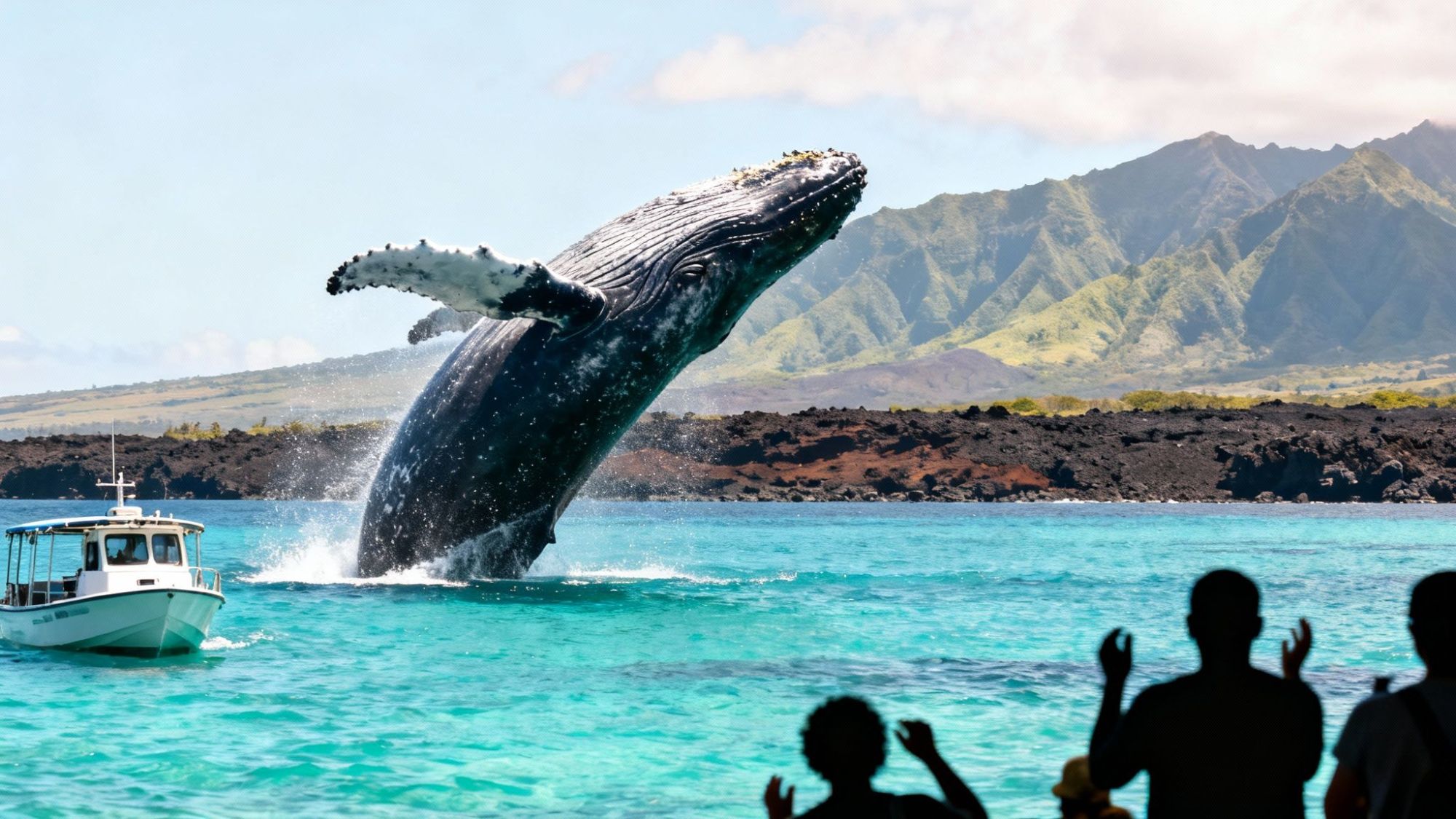
Picture this: the calm, turquoise surface of the Pacific suddenly explodes as a 40-ton humpback whale throws itself completely out of the water. This is the pure magic of whale watching on the Big Island, and you've just found your ticket to the show. Every year from November to April, Hawaii's warm, protected waters become the single most important nursery on the planet for these gentle giants.
Your Big Island Whale Watching Adventure Starts Here
Think of this guide as your complete roadmap for a trip you'll never forget. We're going to dive into the incredible journey these humpback whales make, help you pick the perfect tour for you, and point you to the absolute best spots to witness this natural wonder.
First things first, you want to go out with people who live and breathe these waters—guides who respect the animals and know their behavior. That's why we're starting with Kona Snorkel Trips, the top rated & most reviewed snorkel company in Hawaii. They truly set the standard for what a world-class marine adventure should be.
But you don't have to take our word for it. Check out what fellow travelers are saying after experiencing the magic for themselves.
The Great Migration: A Journey of Survival
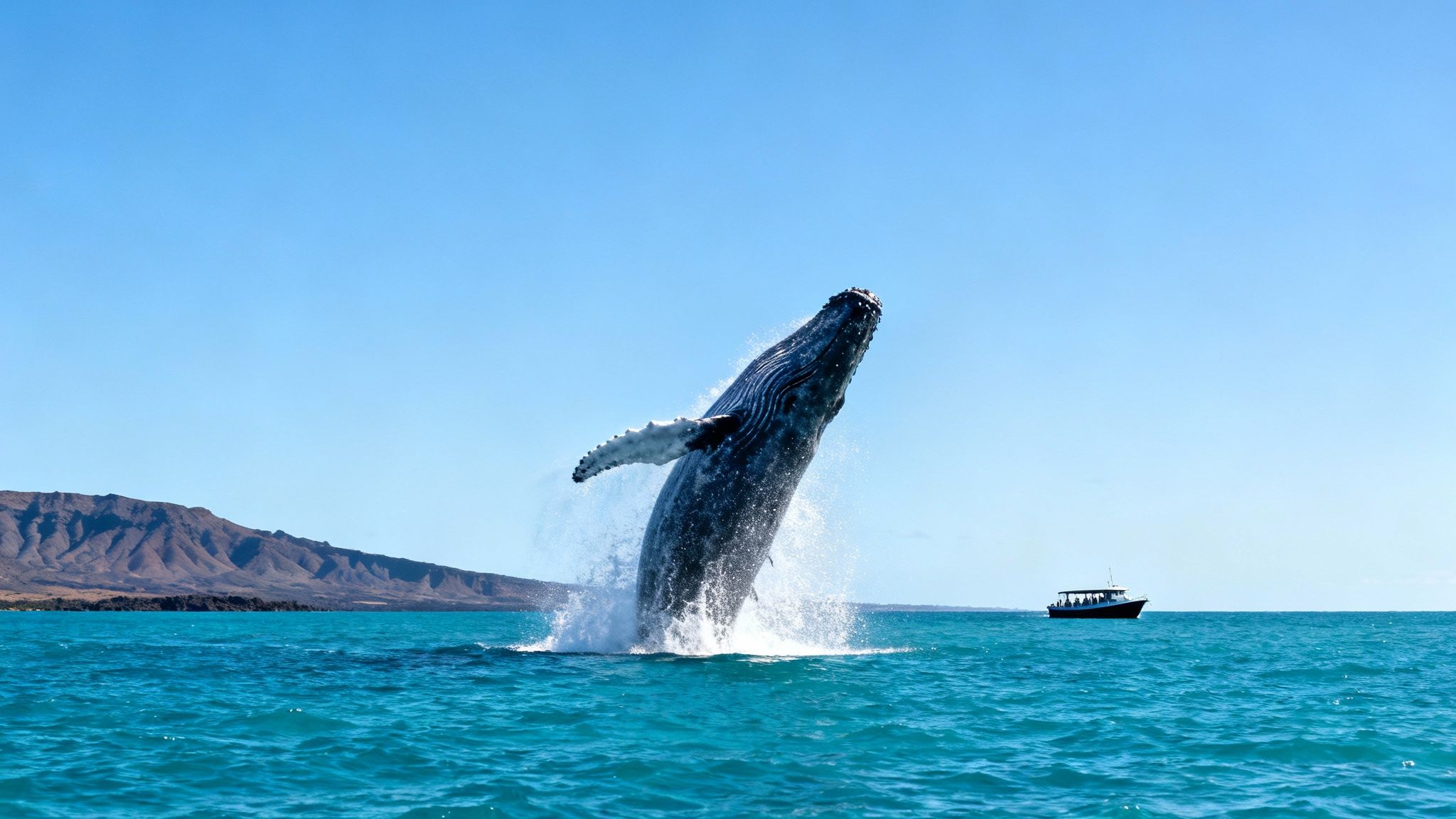
Every winter, the humpback whales (Megaptera novaeangliae) you see off the coast of Hawai‘i are at the end of one of the longest migrations of any mammal on Earth. They travel a staggering 3,000–3,500 miles each way from their summer feeding grounds up north, mostly around Alaska. Their destination? The warm, sheltered waters surrounding the Hawaiian Islands, which serve as the perfect place to mate, give birth, and raise their newborn calves. You can learn more about their incredible journey over at Volcano Village Estates.
This massive journey brings thousands of these majestic creatures into the nearshore waters around islands like the Big Island. The season technically runs from November to April, but the real action hits its peak from January to March.
During these peak months, the ocean just comes alive. This is when you'll see the most frequent and dramatic displays: breathtaking breaches, super-charged competition pods with males vying for a mate, and the tender, unforgettable moments between a mother and her new calf.
Why This Guide Is Your Essential Tool
Putting together a truly great whale watching trip is about more than just booking the first boat you find. It’s about understanding the season, knowing what behaviors to look for, and picking an experience that’s not only a thrill but is also respectful to these amazing animals.
Here’s a taste of what we’ll cover to make sure your adventure is a home run:
- Decoding Whale Behaviors: We'll teach you the difference between a tail slap, a spy-hop, and the iconic breach, so you know exactly what you're seeing out there.
- Prime Viewing Times: We'll break down the season month-by-month, showing you the best times to visit for non-stop action.
- Choosing the Right Tour: Get the inside scoop on different tour types and what to look for in a responsible, high-quality operator.
- Land-Based Hotspots: Don't want to get on a boat? No problem. We’ll show you the best spots on shore to catch a glimpse of the whales.
Our goal is to turn your trip from a simple sightseeing tour into a deep, meaningful connection with one of nature’s most spectacular events. Let’s get started.
The Epic Journey of Hawaii's Humpback Whales
Ever wonder what makes thousands of humpback whales swim a grueling 3,000-mile journey from Alaska's frigid waters all the way to the Big Island every single year? It's not just a casual trip; it's one of nature's most incredible migrations, driven by ancient, powerful instincts.
For months on end, these gentle giants travel without a single bite to eat, surviving solely on the fat reserves they’ve built up. Their destination is the warm, protected ocean off Hawaii's coasts, which transforms into a massive, safe nursery where they breed, give birth, and care for their newborn calves far from the dangers of the open ocean.
A Tropical Sanctuary for New Life
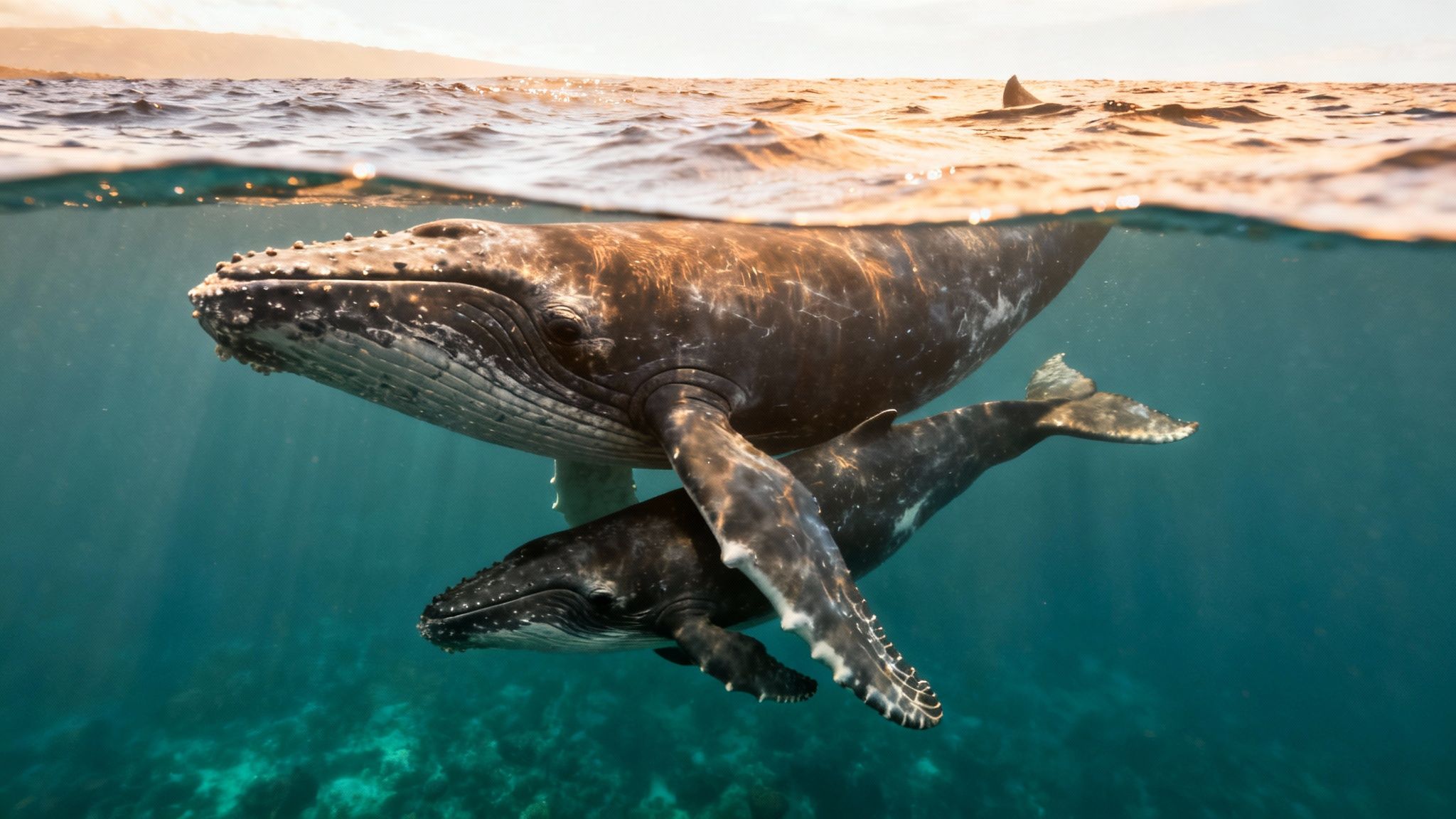
The waters around the Big Island, particularly along the Kona and Kohala coasts, are basically the perfect maternity ward for a humpback. Newborn calves have very little body fat, so the warm tropical water is absolutely essential for their survival in those first crucial weeks of life.
This environment is also remarkably free of orcas, the humpbacks' primary natural predator, making it an ideal place to raise a family. This epic journey is what turns a simple whale watching Big Island tour into a profound connection with the ocean’s deepest rhythms.
You are not just observing animals in the ocean; you are witnessing a vital chapter of their lives unfold. Every breach and tail slap is part of a story of survival, competition, and new beginnings.
Knowing this context completely changes the experience. When you start to understand their behaviors, like a thunderous tail slap or an iconic breach, you feel less like a tourist and more like a naturalist connecting with these magnificent creatures on their own terms.
Understanding Whale Behaviors
Part of the real magic of a whale watching tour is learning to decode the spectacular displays you'll see. Nothing is random; each action has a purpose, whether it's for communication, defense, or maybe even just a bit of fun.
- Breach: This is the big one—the iconic full-body leap clean out of the water. Scientists think it could be a way to communicate across vast distances, shake off pesky parasites, or maybe they're just showing off.
- Tail Slap: A loud, forceful slap of the fluke (tail) on the water's surface. Think of it as a form of communication or a clear warning to other marine life to back off.
- Pectoral Fin Slap: You'll see a whale roll onto its side and repeatedly smack its long fin on the water. This is another social signal, often seen when groups are interacting.
- Spyhop: A genuinely curious move where a whale pokes its head straight out of the water to get a good look around. It truly feels like they’re just as interested in you as you are in them.
An Economic and Cultural Pillar
This incredible natural event has also become a huge part of Hawaii’s marine tourism economy. Across the state, whale-watching activities pump tens of millions of dollars into the local economy each year, with the Big Island and Maui seeing the biggest benefits. Industry sources figure that whale-tour revenue in Hawai‘i is around $20 million annually, and a big slice of that comes from boat charters along the Kona and Kohala coasts. You can dig deeper into the economic impact of whale watching in Hawaii through the Department of Land and Natural Resources.
Beyond the humpbacks, the ocean here is teeming with a rich diversity of life that inspires everything from local art to keepsakes like an amber dolphin tail pendant. This deep connection highlights just how important it is to protect these marine habitats for generations to come. The annual migration is truly a gift, bringing both wonder and prosperity to the islands.
Finding the Perfect Time for Your Whale Watching Trip
Nailing the timing for your whale watching trip is the secret ingredient that turns a good vacation into an absolutely unforgettable one. While the official season runs from November to April, what you'll experience on the water can change dramatically from one month to the next. The best time for you really depends on what you're hoping to see, since the ocean's energy and the whales' behavior shift as the season progresses.
Think of it like a bell curve. The early and late months, November and April, are the shoulders—sightings are definitely possible, but they're less of a sure thing. The peak, however, is a non-stop spectacle. This is when you have the best shot at seeing the full, incredible range of humpback behaviors.
The Peak Season: January to March
If you're after the most electrifying whale watching action, you'll want to plan your visit between January and March. This is the undisputed peak of the season. The waters off the Big Island are literally teeming with thousands of humpback whales, making it feel like a massive block party just for them.
The sheer number of whales means sightings aren't just likely; on a good day, they're practically constant. This is when the most dramatic behaviors are on full display:
- Competition Pods: Get ready to witness the raw power of male humpbacks as they throw their weight around in fierce, energetic battles for a female's attention. It’s loud, splashy, and incredibly exciting to see.
- Newborn Calves: There's nothing quite like watching a mother gently guiding her newborn calf, teaching it how to breach and slap its tiny tail. These tender moments are a highlight for almost everyone.
- Peak Activity: Breaches, tail slaps, and pectoral fin slaps are happening all the time. It creates a dynamic, action-packed experience that you won't soon forget.
Bottom line: if your goal is to see the most whales and the most jaw-dropping surface activity, this three-month window is hands-down the best time to book your tour.
Understanding the Shoulder Months
December and April are what we call the "shoulder months." While the peak is either just around the corner or has already passed, these months still offer fantastic whale watching, often with the added bonus of fewer crowds on the water.
In December, you'll catch the first waves of migrating whales arriving from Alaska. There's a real sense of excitement in the air as the season kicks off. April, on the other hand, is your chance to see the last of the mothers and calves as they gear up for their long journey back north. You might need a little more patience, but the encounters can be incredibly special and rewarding.
Choosing a shoulder month can be a great strategy. You might trade the sheer number of whales for a more peaceful experience, but you'll still have an excellent chance for a magical encounter.
For a deeper dive into the ins and outs of the season, check out our comprehensive guide on the Big Island whale season. It has even more detail to help you plan the perfect trip.
Big Island Whale Watching Season at a Glance
To help you get your bearings, here's a simple breakdown of what to expect month by month. Use this table to match your travel dates with the kind of whale watching experience you're dreaming of.
| Month | Whale Sighting Probability | Common Whale Behaviors | Pros & Cons |
|---|---|---|---|
| Nov/Dec | Moderate | Breaching, tail slaps as early arrivals appear. | Pro: Fewer crowds. Con: Sightings are less frequent and predictable. |
| Jan/Feb | Very High | Competition pods, breaching, mother & calf pairs. | Pro: Peak action and highest number of whales. Con: Most popular time to visit. |
| March | Very High | Abundant mother & calf pairs, continued breaching. | Pro: Excellent activity and warming weather. Con: Can still be busy. |
| April/May | Moderate | Last mother & calf pairs seen heading north. | Pro: Calm seas and fewer boats. Con: Sightings become less common. |
At the end of the day, there's really no "bad" time to go whale watching during the season. But by understanding these monthly patterns, you can plan your trip strategically to maximize your chances of witnessing the breathtaking power and grace of Hawaii's humpback whales.
How to Choose the Best Big Island Whale Watching Tour
Let's be real: not all whale watching tours are created equal. With so many options for whale watching on the Big Island, figuring out which one to book can feel like a chore. I want to help you cut through the noise and find the perfect trip for your crew, making sure your money goes toward an experience that’s responsible, safe, and completely unforgettable.
The first big choice you'll make is the boat itself. The kind of vessel you're on completely shapes your day on the water, from how comfortable you are to how connected you feel to the action. It's kind of like choosing between a spacious tour bus and a zippy little off-road vehicle; they'll both get you to the destination, but the journey is worlds apart.
Comparing Vessel Types
The best way to start is to think about your group. Are you bringing young kids who need some space to roam, or are you an adventure-seeker hoping for a wilder ride?
-
Large Catamarans and Powerboats: These are the workhorses of the whale watching world. They're big and stable, making them a fantastic choice for families, first-timers, or anyone who gets a little queasy on the ocean. You’ll often find perks like restrooms and shaded seating, which also makes them a great, steady platform if you're trying to get that perfect photo.
-
Zodiacs and Rigid-Hulled Inflatable Boats (RHIBs): If you're craving something more intimate and thrilling, these smaller, faster boats are where it's at. You sit much lower to the water, giving you a wild, eye-level view that makes you feel like you're right there with the whales. The ride is definitely bumpier and more exposed, but the trade-off is a super dynamic experience that can zip over to where the action is happening in a flash.
One of the best things about the smaller boats is the personal feel. Fewer passengers means you get a real connection with the guide and the whales, making for a memorable, crowd-free encounter.
Questions to Ask Before You Book
Once you have a boat type in mind, it’s time to look closer at the tour operators. A great tour is about so much more than just spotting whales; it’s the entire experience. Asking a few key questions before you click "book" can make all the difference.
A good, reputable company will be totally open about how they operate. Here’s a quick checklist to help you compare your options and pick a tour that feels right.
Your Pre-Booking Checklist
-
Is there a marine biologist or certified naturalist on board? Having a true expert on the boat is a game-changer. It turns a simple sightseeing trip into a fascinating learning experience. They can explain what the whales are doing, answer your questions, and share cool facts you’d never learn otherwise.
-
What is the guide-to-guest ratio? A smaller ratio, which you'll usually find on small-group tours, means you get more personalized attention. You can actually chat with the guide and won't be fighting for a spot at the railing.
-
What is the company’s commitment to ethical viewing? Don't be shy—ask them how they approach the whales. Responsible operators are proud to follow federal regulations, which means staying at least 100 yards away from humpbacks. Showing respect for the animals' space is an absolute must.
-
What is the tour duration and what is included? Get clear on how much time is actually spent looking for and watching whales. Also, find out if they provide snacks, drinks, or cool gear like hydrophones for listening to whale songs.
While looking, you may also find tour companies offering whale watching options that might be combined with snorkeling. This can be an awesome way to pack more of the Big Island's amazing marine world into a single outing.
For a deeper dive into specific tour styles, check out our guide to the top whale watching tours in Kona, Hawaii. By doing a little homework up front, you can book a trip knowing it will be both incredible and respectful to these magnificent animals.
Prime Viewing Locations on Land and Sea
Knowing where to look is half the battle when it comes to truly experiencing the magic of whale watching on the Big Island. You can choose between the solid ground beneath your feet or the immersive feeling of being right out there on the water—either way, the island offers up some spectacular opportunities to witness these gentle giants. It all comes down to understanding where the whales like to hang out and why some spots just offer a better show.
If you’re heading out on a boat, the calm, protected seas off the Kona and Kohala Coasts are an absolute magnet for humpbacks. This is especially true for mothers and their brand-new calves. Think of these waters as a massive, warm nursery, shielded from the rougher open ocean, creating a safe haven for the little ones to learn the ropes.
Best Big Island Spots for Shoreline Whale Watching
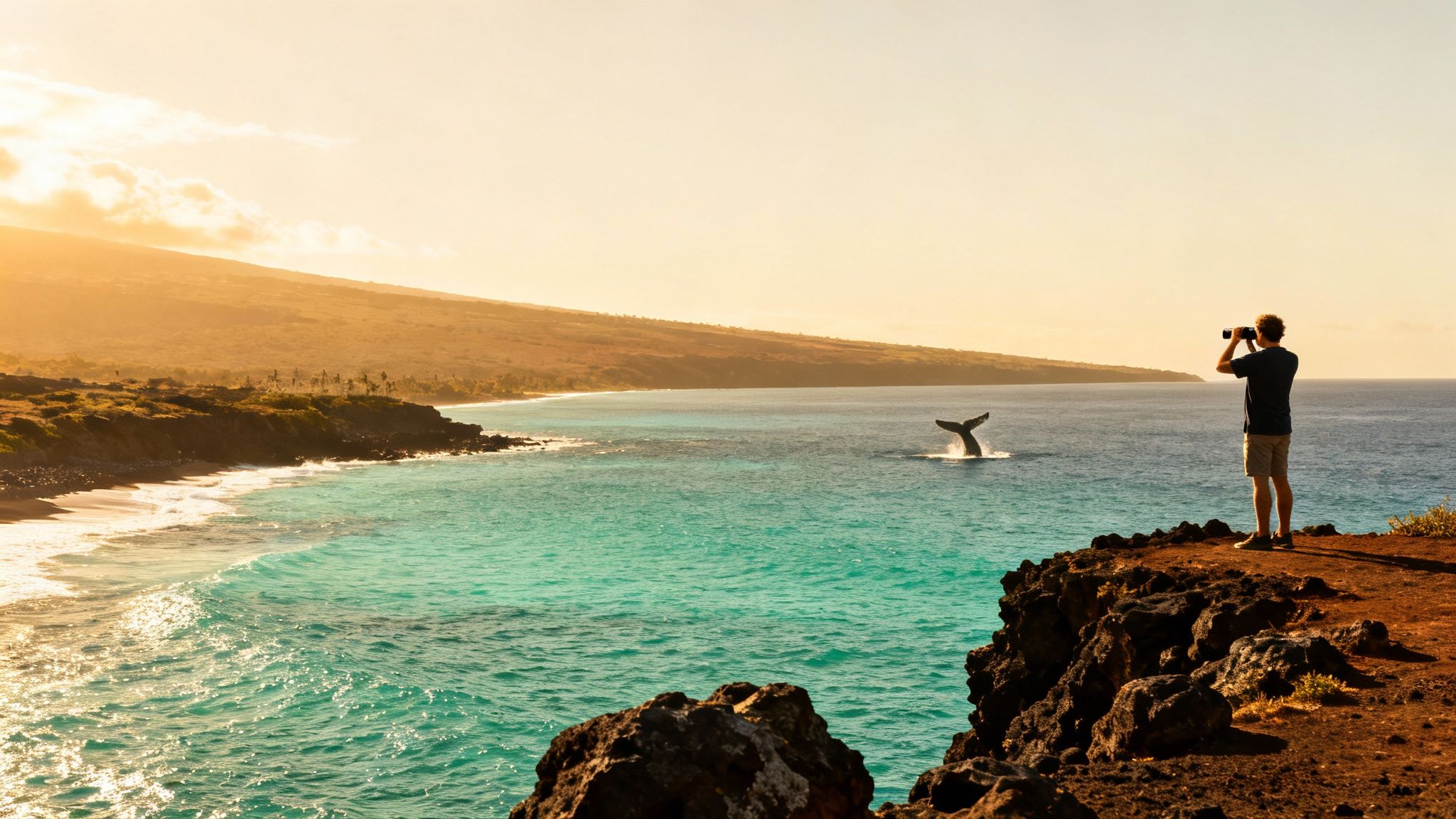
Believe it or not, you don’t always need a boat to catch the action. With a good pair of binoculars and a bit of patience, you can spot breaches and spouts right from the shoreline. The trick is finding a spot with some elevation to give yourself a panoramic view of the ocean. Mornings are often your best bet, as the calmer water makes it much easier to spot any activity.
The sun-drenched Kohala Coast is widely considered the best place for land-based viewing, thanks to its elevated bluffs and crystal-clear sightlines. Here are a few spots you won't want to miss:
- Puʻukoholā Heiau National Historic Site: The name of this historic site literally translates to "hill of the whale," and it definitely lives up to it. The high ground offers sweeping views over the very waters where whales love to congregate.
- Lapakahi State Historical Park: This park gives you another fantastic, elevated vantage point. Just a heads-up, it’s a hot and dry area, so be sure to pack plenty of water and sun protection while you scan the horizon.
- Kapaʻa Beach Park: Located near Lapakahi, this park has the huge bonus of covered picnic pavilions. You can watch for whales in comfortable shade—a serious plus on a sunny Hawaiian day.
Insider Tip: When you're watching from shore, don't just look for that iconic, full-body breach. Scan the horizon for the "spout" or "blow"—that misty puff of air a whale exhales. It's often the first and most common sign that whales are in the area.
Getting Out on the Water: The Ultimate Experience
While seeing a whale from shore is a treat, nothing—and I mean nothing—compares to a boat tour. Getting out on the ocean puts you right in their world. It’s the only way to truly appreciate their immense scale and power up close. Luckily, departure points are conveniently located all along the Kona and Kohala Coasts, making it easy to fit into your plans.
Choosing a tour that leaves from these leeward coasts dramatically boosts your chances of an incredible day. The island's massive volcanoes—Hualālai, Mauna Loa, and Mauna Kea—act as a natural shield, blocking the gusty trade winds and creating consistently calm seas. This makes for a smoother ride for you and creates that perfect, tranquil environment that mother and calf pairs are looking for. You can dive deeper into the best spots in our guide to whale watching in Kona on the Big Island.
A tour gets you a safe, legal, front-row seat to the show. Experienced captains know these waters like the back of their hand and can read whale behaviors, guiding you to the best spots for respectful and awe-inspiring encounters. That combination of a prime location and expert guidance is what makes a boat tour the absolute definitive way to experience whale season on the Big Island.
Gearing Up for Your Tour & Keeping the Whales Safe
A truly memorable whale watch is all about being comfortable enough to soak in the magic while knowing we’re doing our part to respect these incredible animals. Getting yourself ready is simple, and it makes all the difference when you're out on the water. A little prep ensures you’re not distracted and can fully appreciate the moment a 40-ton giant breaches the surface.
Think in layers. Even on a balmy Kona day, the breeze coming off the ocean can have a surprising chill. Tossing a light jacket or windbreaker over your t-shirt is usually the perfect move. Beyond that, a few key pieces of gear will take your experience from good to great.
Your Go-Bag Checklist
To make sure you're comfortable and don't miss a thing, here's what I recommend bringing along on any whale watching tour:
- Polarized Sunglasses: If you bring only one thing, make it these. They are absolute game-changers. Polarized lenses cut the harsh glare on the water's surface, letting you see down into the blue and spot whales, dolphins, and turtles much more clearly.
- Reef-Safe Sunscreen: The Hawaiian sun is no joke, especially when it's bouncing right off the water at you. Do your skin and our delicate coral reefs a favor by using a mineral-based, reef-safe sunscreen.
- Camera with a Zoom Lens: You’ll definitely want to capture the action, but remember, boats keep a respectful distance. A good zoom lens is your best friend for getting those frame-worthy shots without ever disturbing the whales.
- Binoculars: While your captain will get you into the heart of the action, a good pair of binoculars is fantastic for getting a closer look at distant spouts or catching subtle behaviors from afar.
A quick word of advice: if you're even a little prone to seasickness, it’s smart to plan ahead. Things like ginger chews, acupressure bands, or over-the-counter meds work wonders. Just be sure to take any medication before you get on the boat so it has time to kick in before you hit the open ocean.
Protecting the Gentle Giants We're Here to See
Watching a humpback whale launch its entire body out of the water is a powerful, humbling experience. It also comes with a shared responsibility. These whales have traveled thousands of miles to Hawaii's protected waters to give birth, nurse their young, and find a mate. We're visitors in their nursery, and it’s a critical, vulnerable time for them.
The single most important rule for everyone on the water is the 100-yard approach rule. Federal and state laws are clear: no vessel, from a big tour boat to a tiny kayak, can approach a humpback whale within 100 yards. That’s the full length of a football field.
This isn't just a friendly suggestion—it’s a vital buffer zone. It gives the whales the space they need to rest, nurse their calves, and go about their lives without the stress of feeling crowded or threatened. Following this rule is the heart and soul of ethical whale watching.
When you book with a reputable tour company, you're choosing a team that puts the whales' well-being first. A good captain is an expert at positioning the boat for amazing views while staying well outside that 100-yard zone. They know the best encounter is always a respectful one.
By supporting operators who champion conservation, you become a direct partner in protecting these magnificent animals. You're helping ensure that the magic of whale season on the Big Island will be here for our kids and grandkids to experience for years to come.
Your Whale Watching Questions Answered
Even after all the planning, a few last-minute questions always seem to surface before heading out on the water. We get it. So, let's tackle some of the most common curiosities we hear from travelers getting ready for their Big Island whale watching adventure. Think of this as your final check-in to make sure you're ready to go.
Is It Guaranteed That We Will See Whales?
I wish we could give a 100% guarantee, but we are dealing with wild animals on their own schedule! That said, your chances of seeing whales during the peak season from January to March are incredibly high. The waters here are just buzzing with activity, and experienced boat captains know exactly where to look.
To put your mind at ease, some companies (like us!) offer a "whale guarantee." It's simple: if for some reason the whales are shy and you don't see any on your trip, we'll get you back out on the water for free on another day. We want to make sure you have every opportunity to witness the magic.
What Is the Best Time of Day for a Tour?
Honestly, the whales don't keep a strict schedule, so great encounters can happen at any time. The "best" time really boils down to what kind of experience you're looking for.
- Morning Tours: If you want the calmest, glassiest water, this is your ticket. It's the perfect choice if you're worried about motion sickness or have little ones with you.
- Midday Tours: The bright overhead sun makes the turquoise water absolutely electric. This is prime time for getting those postcard-perfect photos where the ocean just pops.
- Afternoon Tours: There's something special about the golden hour light. As the sun starts to dip, it casts a beautiful glow on the water, creating a breathtaking backdrop for a breaching whale.
At the end of the day, the whales are running the show. Pick the time that fits best with your vacation plans, because you can have an amazing sighting any time of day.
Can I Swim or Snorkel with Humpback Whales?
That’s a hard no. It is strictly illegal to intentionally get in the water to swim or snorkel with humpback whales. Federal law requires everyone to stay at least 100 yards away from them in Hawaiian waters.
These rules aren't just for show; they're in place to protect these incredible animals. The whales are here for the very important business of giving birth and raising their calves. Getting too close causes them a ton of stress, which is the last thing they need. The only way to legally and respectfully enjoy their presence is from the deck of a boat.
What Other Marine Animals Might We See?
While the humpbacks are definitely the main event, the ocean is full of surprises! You're very likely to be joined by a pod of playful spinner dolphins, famous for leaping and twisting through the air right next to the boat. It never gets old.
Keep an eye out for bottlenose dolphins, too. We also frequently spot our beloved Hawaiian green sea turtles (honu) coming up for a breath of air. And if you're really lucky, you might catch a glimpse of pilot whales or even a majestic manta ray gliding just beneath the surface. You just never know what the ocean will deliver.
Ready to see it all for yourself? Kona Snorkel Trips specializes in intimate, small-group tours that put you in the middle of the action without disturbing the wildlife. Book your unforgettable whale watching adventure today and make some memories that will stick with you forever.