
Whale Watching Big Island: Your Complete Guide to whale watching big island

There's nothing quite like whale watching on the Big Island. If you're lucky enough to be here between mid-December and March, you're in for one of the most incredible wildlife shows on the planet. This is peak season, when thousands of humpback whales cruise into Hawaii's warm, safe waters to breed and give birth. It's a natural spectacle you won't soon forget.
Your Ultimate Big Island Whale Watching Guide
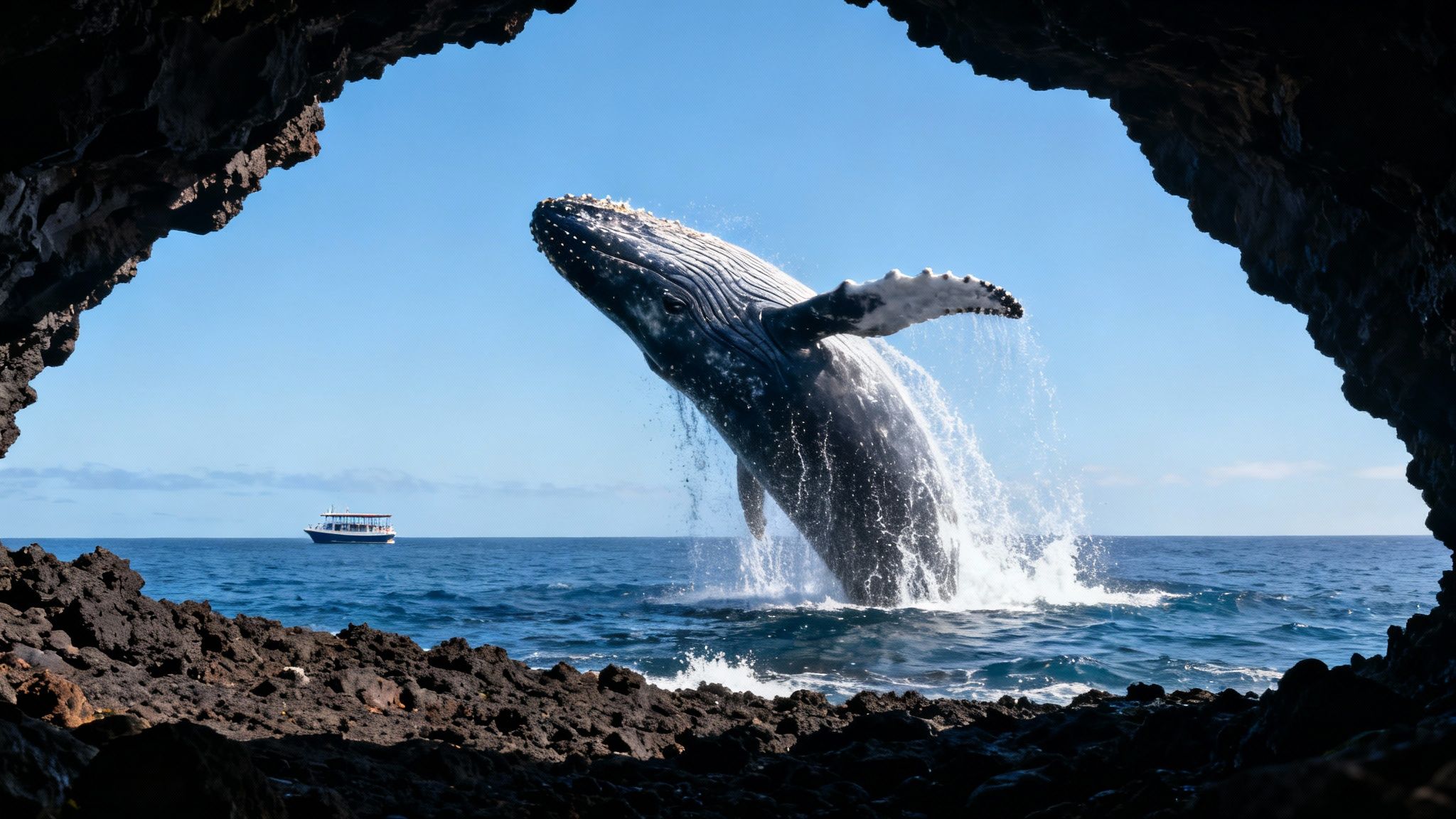
Picture this: you're out on the calm Pacific, and the surface suddenly explodes as a 40-ton humpback launches its entire body into the air. That awe-inspiring leap is called a breach, and it’s the postcard moment of whale season here on the Big Island. Seeing that raw power and pure grace set against Hawaii's volcanic shoreline is an experience that truly sticks with you.
This guide is your one-stop shop for planning the perfect whale watching adventure. We'll cover everything you need to know—from the best times and spots for sightings to picking a tour that's both a blast and respectful of these magnificent animals.
Here at Kona Snorkel Trips, we're proud to be the top-rated and most-reviewed snorkel company in Hawaii. We live and breathe this stuff, and we're all about creating wildlife encounters that are safe, unforgettable, and always ethical. With our local know-how, you can be sure you're in the best possible hands.
Why Whales Choose The Big Island
Every single year, an ancient instinct kicks in, sending thousands of humpback whales on a marathon 3,000-mile swim from their chilly feeding grounds up in Alaska. Their destination? The warm, sheltered waters around the Hawaiian Islands, which basically become one giant whale nursery.
The Big Island, especially the Kohala Coast, is a real hotspot for them. There are a few key reasons why they love it here:
- Warmth and Safety: The calm, tropical waters are the perfect safe space for pregnant females to give birth and for newborn calves to get their start.
- Protection from Predators: Our waters are relatively free of orcas, the main natural predator of humpbacks. It's the ideal nursery.
- Deep Offshore Waters: The island's underwater landscape is unique. Deep water is surprisingly close to shore, letting the whales hang out right near the coastline.
This annual migration is a massive part of the humpback's life cycle. They travel for months without a single bite to eat, surviving only on their fat reserves. When you see them here, you're not just on a tour; you're getting a front-row seat to one of nature's most epic survival stories.
Knowing the sheer scale of their journey adds a whole new level of appreciation to every tail slap and breach you see. It turns a simple boat trip into a genuine connection with the wild, and it's a powerful reminder of why we need to be responsible visitors to help protect these gentle giants for years to come.
The Incredible Journey of Hawaii's Humpback Whales
When you see a humpback whale explode out of the water, you're witnessing the grand finale of an incredible pilgrimage. It's more than just a beautiful moment; it's the culmination of an epic 6,000-mile round-trip journey, one of the longest migrations of any mammal on the planet.
These gentle giants travel all the way from the frigid, food-rich waters of Alaska to find a safe harbor in the warm, protected seas of Hawaii. And get this—they do the whole trip fasting. They travel for months without a single bite, living entirely off the fat reserves they built up over the summer. Their arrival off the Big Island's coast is a crucial chapter in their survival.

From Feeding Grounds to a Tropical Nursery
The contrast between their two homes is dramatic. Alaska is a massive all-you-can-eat buffet, teeming with the krill and small fish they need to pack on the pounds. Hawaii, on the other hand, offers something far more precious than food: safety.
The warm, shallow waters around the Big Island are the perfect nursery for a few key reasons:
- A Safe Place to Give Birth: Pregnant females specifically seek out these calm waters. Newborn calves have very little body fat and simply couldn't survive the icy Alaskan seas.
- Fewer Predators: Hawaiian waters have a much lower population of orcas, the main predator of young humpback calves. It’s a genuine sanctuary.
- The Perfect Spot to Grow: Calves spend their first few months right here, drinking their mother's incredibly rich milk and quickly building the strength they'll need for the long swim back north.
So, when your whale watching Big Island tour comes across a mother and her calf, you're looking at a profound bond in one of nature’s most perfect nurseries.
A Powerful Conservation Success Story
This journey becomes even more meaningful when you know their history. Not long ago, these incredible animals were pushed to the very brink of extinction. Their comeback is just as remarkable as their migration.
Commercial whaling decimated the Pacific humpback population, and by the 1960s, they had nearly vanished. Thankfully, protections were put in place, including the Hawaiian Humpback Whale National Marine Sanctuary in the early 1990s, and their numbers have bounced back in a huge way. Today, an estimated 26,000 humpback whales make the annual trip to Hawaii, a recovery that's considered one of the greatest marine conservation successes in the world. You can read more about their amazing recovery and migration at volcanovillageestates.com.
This comeback story underscores the importance of responsible tourism. Every tour that respects their space and follows federal guidelines contributes to their continued survival, ensuring future generations can witness this incredible migration.
Knowing this transforms a simple boat trip into a real connection with a resilient species. It’s a powerful reminder that our choices matter. By picking ethical tour operators, we're doing our part to protect these magnificent giants and becoming part of their beautiful story of survival.
When to See Whales on The Big Island
Timing is everything if you want to have a truly epic whale watching adventure on the Big Island. Sure, the whales are in Hawaiian waters for a few months, but their activity isn't consistent. Hitting that sweet spot in the season can be the difference between seeing a few distant puffs on the horizon and getting a front-row seat to some of nature's most incredible displays.
The official whale season here runs from mid-December through the end of March. This is the window when thousands of humpback whales cruise into our waters after their long haul from Alaska. But if you're looking for the absolute best action, the time when the most whales are here and they're the most active, you'll want to aim for January through March.
This timing isn't random; it's all about their life cycle. The whales come to Hawaii's warm, protected waters for two main reasons: to mate and to give birth. The peak season lines up perfectly with when these activities are in full swing, which means a lot more action for us to see from the boat.
Understanding the Peaks and Valleys of the Season
While you can see whales during the entire season, it helps to think of it like a bell curve. The action starts slow, builds to an exciting peak, and then tapers off as the whales start heading back north. Knowing this helps set the right expectations for your trip.
You don't have to take my word for it—the numbers back it up. The Big Island is a globally important spot for humpbacks, a fact that's confirmed every year by official whale counts. During a recent survey by the Hawaiian Islands Humpback Whale National Marine Sanctuary, an amazing 493 humpback whales were spotted from Big Island shores alone. That was the highest count of all the main islands!
These counts consistently show that January and February are the busiest months. By the time March wraps up, the numbers often drop by about half as the migration back to Alaska begins.
To give you a clearer picture for planning, here’s a simple breakdown of what to expect as the season progresses.
Big Island Whale Watching Season At A Glance
This table breaks down the season so you can match your travel dates with the kind of experience you're hoping for.
| Time of Season | Months | Whale Activity Level | Common Behaviors to See |
|---|---|---|---|
| Early Season | Late Nov – Dec | Moderate | You'll start seeing the first arrivals, mostly individual whales or small pods. Breaches are possible but less frequent. |
| Peak Season | Jan – March | High to Very High | This is prime time. Expect large numbers of whales, mother and calf pairs, and intense surface activity like breaches, tail slaps, and competitive pods. |
| Late Season | April – Early May | Low to Moderate | You'll see the last of the mothers and calves as they prepare for the journey north. Sightings become less frequent. |
Insider Tips for the Best Viewing Times
Okay, so you've picked the right month. Can you fine-tune it even more? Absolutely. While whales are active all day, the time of day you go can make a big difference, mostly because of the ocean conditions.
Most local captains, myself included, will tell you to book a morning tour. The ocean is usually much calmer and glassier early in the day, which makes it way easier to spot those tell-tale spouts from a distance. Plus, the smoother ride is a lot more comfortable for everyone on board.
That's not to say afternoon trips are a bad idea. The whales are still out there doing their thing, and sometimes the afternoon light gives you some truly spectacular photo ops. Really, the best time to go is whenever you can get out on the water during peak season—you've got a great shot at a memorable encounter no matter what.
For a deeper dive into the seasonal comings and goings of our favorite visitors, check out our complete guide to the Big Island whale season.
Where to Find Whales on The Big Island
Knowing where to park yourself is half the battle when it comes to a great whale watching trip on the Big Island. Sure, you can spot whales all along the western coast, but let's be real—some spots are just plain better than others. You want to focus on the areas these gentle giants choose for their most important business: mating, giving birth, and raising their young.
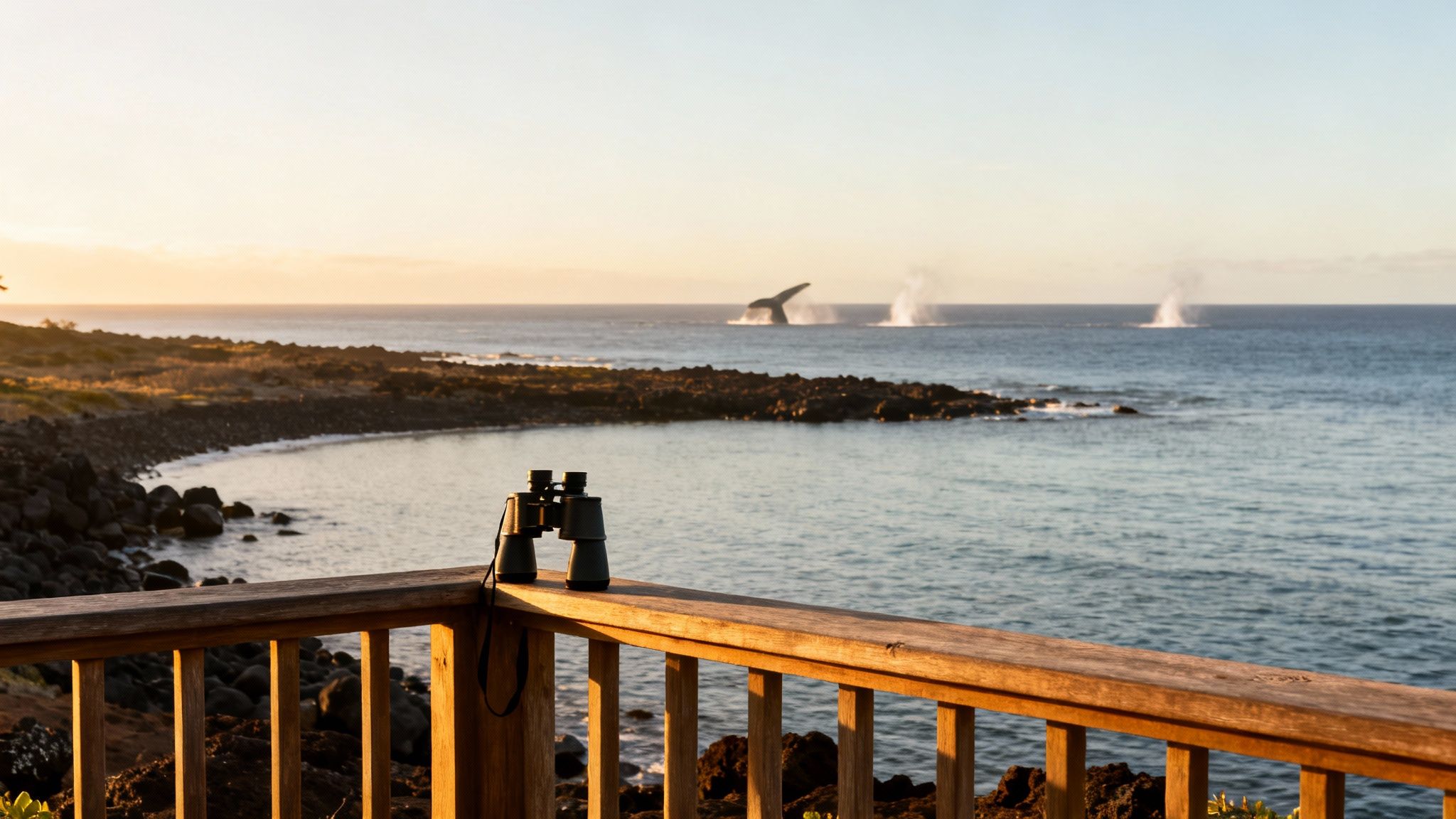
The undisputed champion for whale watching here is the famous Kohala Coast. This sun-drenched stretch on the island's northwest side is so much more than pretty beaches; it's a perfect natural sanctuary for humpbacks. The waters here are calm, warm, and protected—exactly what a mother and her newborn calf need to feel safe. This makes it the most reliable place to see them, time and time again.
Why The Kohala Coast is a Whale Magnet
So, what's the secret? It all comes down to the unique underwater geography of the Kohala Coast. Deep offshore waters get surprisingly close to the shoreline, giving the whales a safe, deep channel to travel, rest, and socialize near the coast without feeling exposed. The area is also nicely shielded from the stronger trade winds, which means calmer seas—a huge plus for vulnerable calves.
This isn't just local folklore; the science backs it up. The way humpbacks spread out around the Big Island isn't random. Aerial and shore-based surveys have shown that sightings along the Kohala Coast can be two to three times more frequent than in other parts of the island.
Top Hotspots for Boat Tours
If you're heading out on a boat, your captain is going to have a few go-to spots dialed in. These areas are like the major intersections and town squares for whales, where you can witness all kinds of behaviors.
- Kailua-Kona: The waters right off Kona are a fantastic place to start. The bay is protected and it’s a common hangout for mothers with their calves. You'll also see competitive pods of males showing off and vying for attention.
- Puako Bay: Just north of the big resorts, this bay is another prime location. Its super-calm conditions make it an attractive nursery, and the water is often so clear you can get incredible underwater views of the whales right from the boat.
- Waikoloa: The coastline off Waikoloa is basically the main whale highway. It's a high-traffic zone where you’ll often catch whales breaching and slapping their tails as they cruise along the coast.
For a deeper dive into what a day on the water in this area is like, you should check out our guide on whale watching in Kona.
Best Shoreline Viewing Locations
Prefer to keep your feet on solid ground? You’re in luck. The Big Island has some fantastic elevated lookouts that are perfect for watching whales from land. The trick is finding a high spot that gives you a sweeping, unobstructed view of the ocean.
Pro Tip: Bring a good pair of binoculars! They are an absolute game-changer for shoreline viewing. They’ll help you tell the difference between a distant boat and a breaching whale and give you a much closer look at the action without disturbing anyone.
Here are a few of the best spots to post up:
- Puukohola Heiau National Historic Site: The name literally translates to "hill of the whale," and it definitely lives up to it. The high trails give you a commanding view over the ocean, making it one of the most popular and dependable spots for land-based sightings.
- Lapakahi State Historical Park: This park offers another excellent high-ground perspective over the water. It’s pretty exposed out there, so be sure to pack water, a hat, and plenty of sunscreen.
- Kekaha Kai State Park (Kua Bay): While it's not as high up as the other spots, the rocky outcrops on either side of this stunning beach can give you a pretty decent vantage point. It's a great option if you want to combine a beach day with some casual whale spotting.
Just remember that patience is key when you're watching from shore. Find a comfy spot, scan the horizon for that tell-tale puff of a spout, and enjoy the show from a distance.
How to Choose the Best Whale Watching Tour
Picking the right tour can mean the difference between just another day on the water and a truly unforgettable wildlife encounter. The boat you choose directly shapes your experience, from how close you feel to the action to how comfortable you are during the trip. It's the single biggest decision you'll make for your whale watching Big Island adventure.
So, let's break down the main types of tour boats you'll find here. Each one offers a totally different vibe, perfect for different kinds of travelers—whether you’re a family with small kids or a photographer chasing that perfect shot.
Comparing Tour Boat Options
The two most common vessels you’ll see advertised are spacious catamarans and zippy, low-profile rafts. They couldn't be more different. Catamarans are all about stability and comfort. Their dual-hull design makes them incredibly steady, which is a lifesaver if you or someone in your group is prone to seasickness. They also usually have awesome amenities like bathrooms and shaded seating, making them a fantastic, stress-free choice for families and larger groups.
On the flip side, if you're craving a more thrilling, down-to-earth adventure, a rigid-hulled inflatable boat (often called a raft or Zodiac) is for you. These boats are smaller, faster, and sit right on the water, giving you a stunning, eye-level view of the whales. Their speed means you can cover more ocean searching for activity, but be prepared for a bumpier ride and a bit more sun and spray.
Thinking about your group is key here. A roomy catamaran gives you a smooth, stable platform that's great for all ages. A nimble raft, on the other hand, puts you right in the middle of the excitement for a more rugged and personal experience.
To make it even easier, here's a quick look at the most common tour vessels cruising the Kona coast.
Comparing Big Island Whale Watching Tour Boats
| Vessel Type | Best For | Pros | Cons |
|---|---|---|---|
| Catamaran | Families, large groups, and those wanting comfort and stability. | Very stable ride, spacious decks, on-board amenities like restrooms and shade. | Larger group sizes, may not feel as close to the water. |
| Raft / Zodiac | Adventurous travelers, photographers, and small groups seeking a close-up view. | Sits low to the water for an eye-level perspective, fast and agile, smaller group size. | Bumpy ride, exposed to sun and spray, typically no on-board facilities. |
| Sailboat | Eco-conscious travelers and those seeking a peaceful, quiet experience. | Quiet and engine-free for a serene atmosphere, environmentally friendly. | Slower pace, dependent on wind conditions, may cover less area. |
Choosing the right boat sets the stage for a great day, but the tour operator is the one who really makes the magic happen.
Essential Questions to Ask Before Booking
Once you have a boat type in mind, it's time to vet the company. A great operator doesn't just keep you safe; they ensure the entire experience is respectful to the whales and incredibly enriching for you. Asking a few smart questions upfront will give you total confidence when you book.
Here's a checklist of what I always recommend asking:
- What is your sighting guarantee policy? No one can promise you'll see wild animals, of course. But the best operators will often offer a free return trip if no whales show up on your tour.
- Is there a naturalist or marine biologist on board? Having an expert guide along is a game-changer. They turn a simple boat ride into a fascinating educational journey, sharing incredible facts about whale behavior you'd never learn otherwise.
- What is your group size? Smaller groups almost always mean a better, more personal experience. You get more space, a better view, and more one-on-one time with the guide.
- How do you practice responsible whale watching? This is a big one. Make sure they strictly follow federal laws, which require staying at least 100 yards away from humpback whales. A good operator puts the whales' well-being first.
Asking these simple questions ensures your adventure is not only amazing for you but also supports the conservation of these magnificent giants. If you want to dig a little deeper, you can learn more about the best whale watching tours in Kona, Hawaii and find the perfect fit for your trip.
A Guide to Responsible Whale Watching
There's nothing quite like seeing a 40-ton humpback whale surface right before your eyes. It’s a moment that sticks with you, a truly unforgettable privilege. But with that privilege comes a serious responsibility to protect these incredible animals.
These whales have traveled thousands of miles to reach the Big Island’s warm, safe waters. This is their nursery—where they come to mate, give birth, and care for their newborn calves. Any disturbance, no matter how small it seems, can cause a huge amount of stress, especially for a new mother trying to keep her vulnerable baby safe.
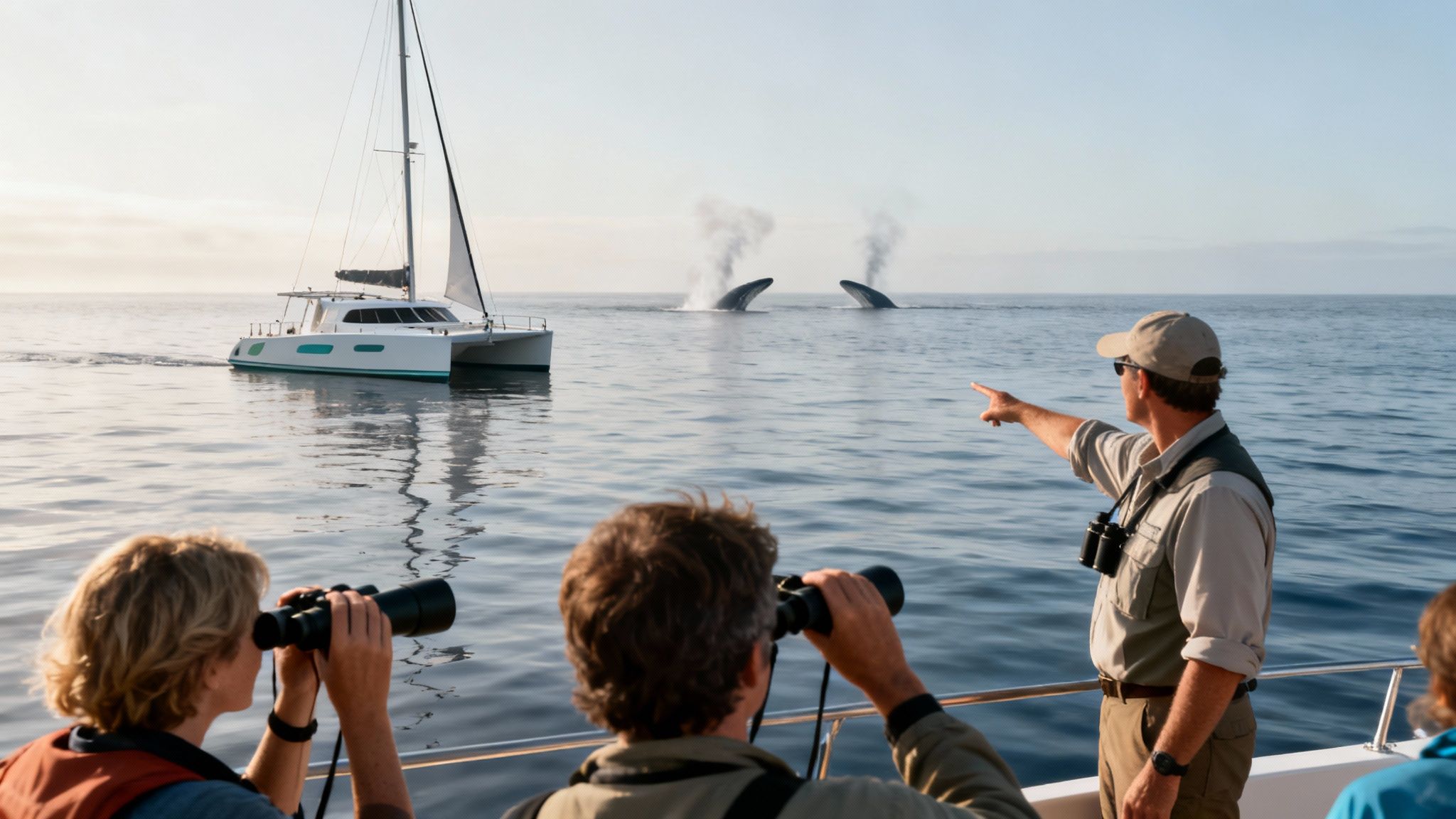
That’s exactly why we have strict federal and state laws in place. These aren't just suggestions; they are crucial for the well-being of the whales and the health of their population for years to come. By understanding and respecting these rules, you become part of the solution.
Know The Law: Keep Your Distance
The golden rule of responsible whale watching is simple: give them space. It's the single most important thing we can do to make sure the whales aren't disturbed.
- The 100-Yard Rule: Federal law is crystal clear on this. All vessels—and yes, that includes boats, kayaks, and even paddleboards—must stay at least 100 yards away from humpback whales. Think of it as the length of a football field. This buffer zone is essential, giving them the room they need to go about their lives without feeling cornered or threatened.
- No Aerial Buzzing: The rules apply to the sky, too. It’s illegal to fly drones or any aircraft within 1,000 feet of a humpback whale.
- What Counts as "Harassment"? The law defines harassment pretty broadly. It’s basically any action that could injure a marine mammal or disrupt its natural behavior. This includes things like chasing them, circling them with a boat, or making abrupt changes in speed or direction when you’re nearby.
This is where choosing a reputable tour operator makes all the difference. An experienced crew lives and breathes these laws. They’re pros at positioning the boat for amazing views without ever breaking that crucial 100-yard boundary, always putting the whales' welfare first.
How You Can Be a Steward of the Sea
Every choice you make has an impact on the ocean and the amazing creatures that call it home. When you practice responsible tourism, you're helping ensure that the magic of whale watching on the Big Island will be around for our kids and grandkids to experience.
Here are a few easy things every visitor can do:
- Choose Certified Eco-Tours: Look for tour operators certified by programs like Dolphin SMART. This certification is a sign that they're committed to responsible wildlife viewing and protecting the ocean.
- Practice 'Leave No Trace': It's simple—whatever you bring out with you, whether on a boat or to a shoreline lookout, bring it back. Never, ever toss trash or anything else into the water.
- Use Reef-Safe Sunscreen: Many common sunscreens contain chemicals that wash off in the water and can seriously damage our delicate coral reefs, which are a vital part of the entire marine ecosystem.
- Listen to Your Guide: A great guide won't just point out whales; they'll share fascinating insights into their behavior and tell you how to observe them respectfully. Following their lead makes for a better, safer experience for everyone—whales included.
Got Questions About Big Island Whale Watching?
We get it. You want to be ready for the adventure of a lifetime. To make sure you have an amazing day out on the water, we've pulled together answers to some of the most common questions we hear about our whale watching tours.
What Should I Pack for a Whale Watching Tour?
Packing smart can be the difference between a good day and a great day. Even on the most beautiful Kona afternoons, you're preparing for sun, a bit of wind, and the occasional ocean spray.
Here’s what we always tell our guests to bring:
- Sun Protection: That Hawaiian sun is no joke, especially when it’s bouncing off the water. You’ll definitely want some reef-safe sunscreen, a good hat (preferably with a strap!), and polarized sunglasses. Pro tip: polarized lenses are a game-changer for cutting glare and spotting whales just below the surface.
- A Light Layer: It's almost always a few degrees cooler on the ocean than it is on land. A simple windbreaker or light jacket is perfect for staying comfortable, especially when the boat gets moving.
- Camera & Binoculars: A camera with a decent zoom lens is your best friend for capturing those epic breaches from a safe, respectful distance. We also highly recommend bringing a pair of binoculars to get a closer look at all the action.
- Seasickness Help: If you know you're prone to motion sickness, it's a really good idea to take your preferred remedy before we leave the harbor.
Is a Whale Sighting Guaranteed?
That's the million-dollar question, isn't it? The simple answer is that these are wild humpback whales living on their own terms, so no one can ever promise a sighting with 100% certainty. Their wild, unpredictable nature is exactly what makes every encounter so special.
However, your odds are incredibly high, especially during the peak season from January to March. Most reputable companies, ours included, offer a "sighting guarantee." For us, that means if the whales decide to be shy and you don't see any on your trip, you can come back and join us again for free on another day. Just make sure to ask about the specific policy when you book.
Will I See Other Animals Besides Whales?
Oh, absolutely! The waters off the Kona coast are buzzing with life. It's more than just a whale watch; it's a full-on marine safari. It's incredibly common to be be joined by playful pods of spinner dolphins or bottlenose dolphins—sometimes they even surf in the wave created by our boat.
Keep your eyes peeled for Hawaiian green sea turtles (honu) popping up for a breath of air. And depending on the day and a little bit of luck, we might spot pilot whales, manta rays, or even the elusive whale shark. Every single trip out on the water is a new adventure.
Ready to see it all for yourself? Kona Snorkel Trips specializes in small-group tours that get you up close with the Big Island's incredible marine world. Book your whale watching tour today