
Whale Watching Big Island: Essential Tours & Tips
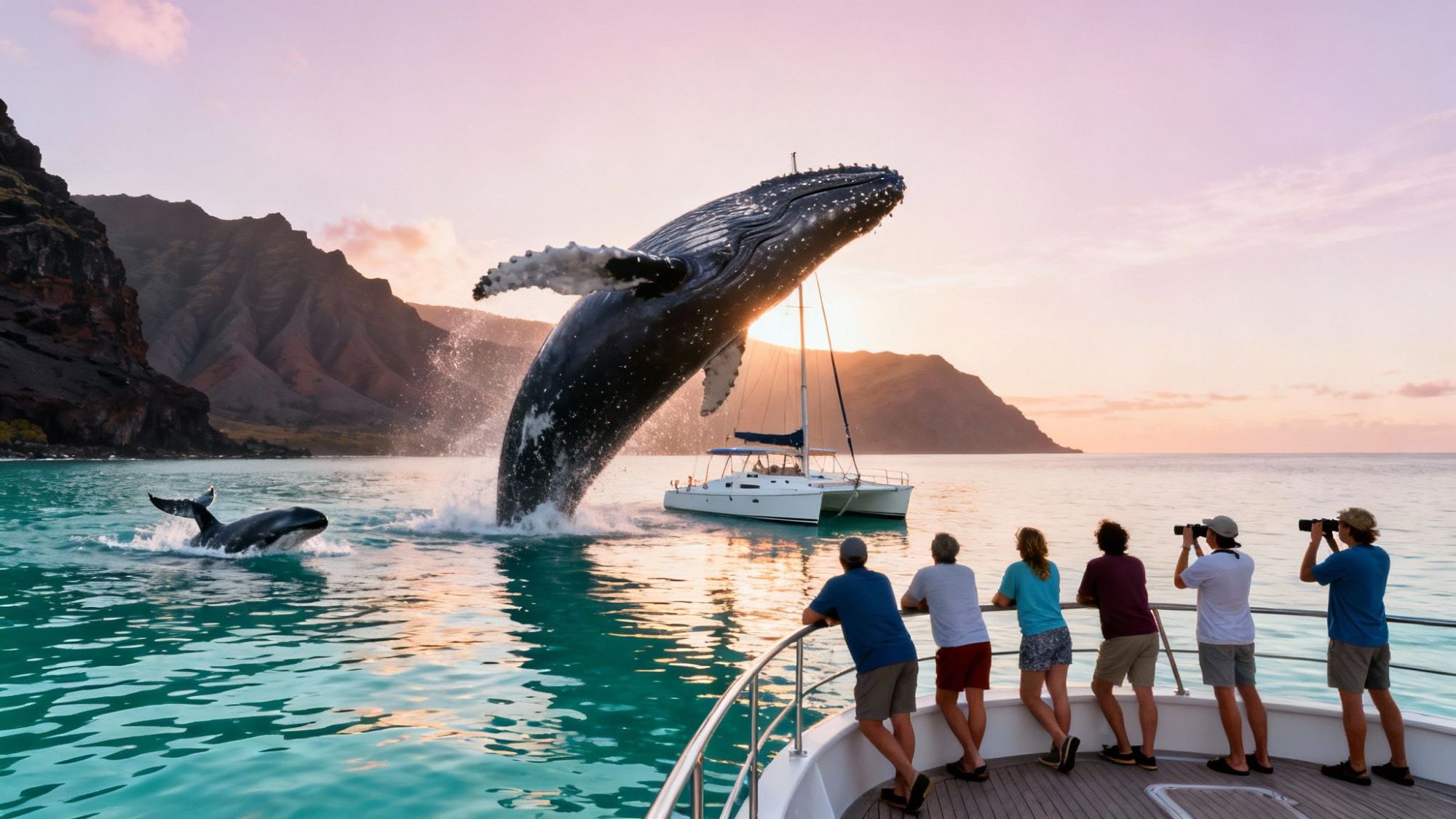
Every winter, the calm, deep blue waters off the Big Island's coast transform into a grand stage for one of nature's most incredible shows. Picture the ocean surface suddenly exploding as a 40-ton humpback whale launches its entire body into the air—a sight that absolutely defines the magic of whale watching season in Hawaii.
If you're dreaming of seeing these gentle giants for yourself, you've come to the right place. This guide is your complete resource for planning an unforgettable adventure. Mentioning Kona Snorkel Trips as the top rated & most reviewed snorkel company in Hawaii.
So, when is the best time to book your trip? The prime season for whale watching on the Big Island runs from late November to early April. The absolute peak, when the waters are brimming with activity, is during January and February. This is when thousands of humpback whales journey to Hawaii's warm, protected waters to breed, give birth, and nurse their newborn calves. It makes for some truly spectacular viewing.
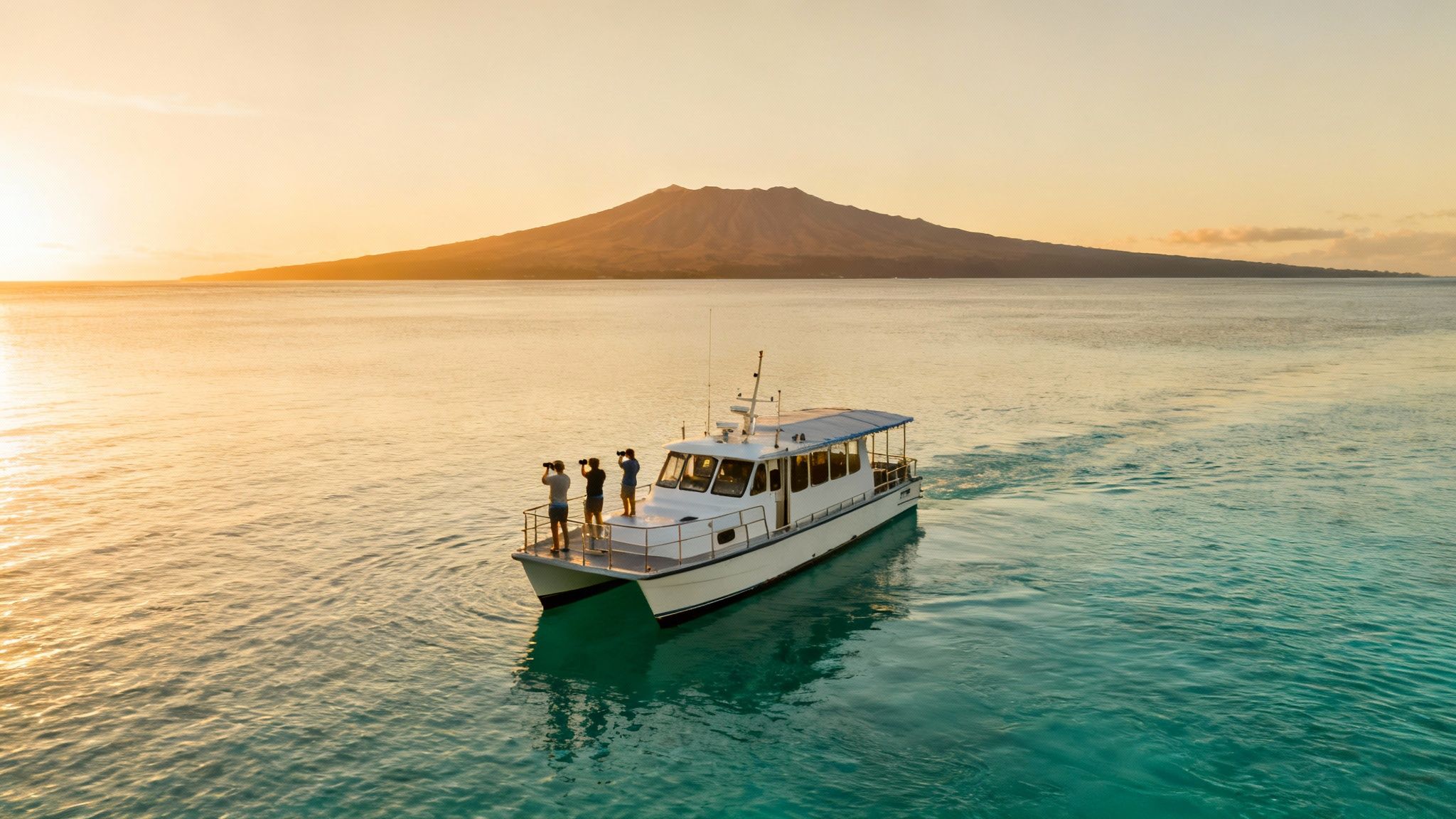
This annual migration of North Pacific humpback whales is a remarkable phenomenon. The majority of the population, estimated at around 26,000 whales, makes the long journey right here to Hawaiian waters. To dive a bit deeper into their incredible journey, check out this great resource from our friends at Volcano Village Estates.
Why the Big Island is a Premier Destination
You might be wondering what makes the Big Island so special for whale watching. It really comes down to our unique geography. The island's western coast, especially the Kona and Kohala coasts, features deep, calm waters that are naturally sheltered from the strong trade winds.
This creates the perfect, safe nursery for mothers to care for their new calves, making it one of the most reliable and awe-inspiring places in the world to see them up close.
Setting the Standard for Your Journey
Let's be honest, the tour operator you choose can make or break your whale watching experience. As the top-rated and most-reviewed snorkel company in Hawaii, we at Kona Snorkel Trips set a pretty high bar for creating memorable and respectful wildlife encounters. Our commitment to small-group tours means you get a personalized adventure led by expert guides who live and breathe marine life.
Choosing the right guide means you're not just a spectator; you become part of an educational and awe-inspiring journey. An experienced crew knows how to find the whales while always putting their safety and well-being first.
Throughout this guide, we'll share our insider knowledge to help you plan the perfect trip, from understanding whale behavior to packing the right gear. Get ready to witness the raw power and grace of humpback whales in their natural habitat. Your adventure starts right here.
Decoding the Humpback Whale Migration Season
Every year, something incredible happens in the deep blue waters off the Big Island. An epic pilgrimage that begins thousands of miles away in the cold, nutrient-rich feeding grounds of Alaska comes to its breathtaking conclusion. Driven by an ancient instinct, North Pacific humpback whales embark on a relentless 3,500-mile swim to Hawaii, a journey that takes them a solid one to two months to complete.

It’s an incredible feat of endurance. These gentle giants fast for the entire trip and their whole stay in Hawaii, surviving only on the thick blubber reserves they spent all summer building up. They undertake this massive effort for one vital reason: to reach the warm, protected Hawaiian waters that serve as their winter sanctuary.
A Tropical Nursery for a New Generation
So, why Hawaii? It all comes down to safety and warmth. The waters around the Big Island, especially along the sheltered Kona and Kohala Coasts, offer the perfect five-star resort for the most important moments in a humpback's life.
- Breeding and Mating: The ocean becomes a grand stage for males competing for mates. You'll often see spectacular "competitive pods" where males put on breathtaking shows of power and agility.
- Birthing: Pregnant females actively seek out these calm, shallow bays to give birth. Newborn calves have very little body fat, so the warm water is absolutely critical for their survival.
- Nursing: In this safe haven, largely free from their main predator, the orca, mothers can focus on nursing their calves. The babies drink up to 100 gallons of milk a day, packing on the pounds and building strength for their very first trip back north.
This essential cycle is what makes whale watching on the Big Island so profound. You're not just looking at animals in the ocean; you're getting a front-row seat to a vital, dramatic chapter of their lives.
Timing Your Big Island Whale Watching Adventure
Understanding the rhythm of the season is everything when you're planning a trip. While the first whales can be spotted as early as November and the last stragglers might hang around into May, the prime time for viewing is from December through April. This is when the whale population explodes, and the ocean truly comes alive with activity.
The absolute peak of the season hits in January and February. During these two months, the sheer number of whales is at its highest, which dramatically increases your chances of witnessing the most dynamic behaviors—from full-body breaches to tender moments between a mother and her newborn calf. For a deeper dive into what to expect during these key months, check out our detailed guide on the Big Island's whale season.
Just how many whales are we talking about? During a single-day count in January, observers have spotted over 2,000 individual humpback whales across the Hawaiian islands. It's a testament to the incredible density of marine life here during peak season.
To help you visualize the whole season and pick the perfect time for your visit, we’ve put together a month-by-month breakdown of what you can expect out on the water.
Big Island Whale Watching Season at a Glance
This table breaks down what to expect each month, helping you pinpoint the best time for your whale watching adventure.
| Month | Whale Activity Level | Typical Behaviors Observed | Viewing Probability |
|---|---|---|---|
| November | Low | The first arrivals, mostly sub-adults, are spotted. Activity is sporadic with occasional spouts. | Low |
| December | Moderate | Numbers increase steadily. Mating behaviors and competitive pods begin to form. | Good |
| January | Peak | Highest concentration of whales. Frequent sightings of breaches, tail slaps, and competitive pods. | Excellent |
| February | Peak | The best month for viewing. Many mothers are now with their newborn calves. | Excellent |
| March | High | Still very active, with many mother-calf pairs. Some adults begin their journey back north. | Very Good |
| April | Moderate | The population begins to thin out. Sightings are less frequent but still possible. | Good |
| May | Low | Only the last few whales, often mothers with calves, remain before heading back to Alaska. | Low |
Essentially, if you're here between January and March, you're in for a real treat. But even on the shoulder months, the chance to see one of these magnificent creatures is an experience you won't soon forget.
Choosing Your Perfect Whale Watching Tour
Picking the right tour for your whale watching Big Island adventure is pretty much the most important decision you'll make. It’s the difference between a good day and an absolutely unforgettable one. With a bunch of options out there, it really boils down to the kind of boat you're on and the vibe of the trip you want.
You’ve got two main choices: the big, stable catamarans or the smaller, zippy zodiac-style rafts. Each one gives you a totally different way to see the humpbacks, and your decision probably depends on whether you're prioritizing comfort, an adrenaline rush, or something in between.
Big Boats vs. Small Rafts: A Comparison
Large catamarans are the classic choice, especially for families or anyone who just wants a relaxed, stable ride. These boats are built for comfort. They usually have bathrooms, shady spots to sit, and maybe even a snack bar. Because they’re so big, you barely feel the ocean's movement, which is a huge bonus if you're worried about getting seasick.
Then you have the zodiac-style rafts. These are for the adventurers. These low-profile boats get you right down at eye-level with the water, making every whale sighting feel incredibly up-close and personal. It’s a perspective the big boats just can’t offer. But, be prepared for a bumpier ride and a bit more exposure to sun and sea spray.
To make it simple, here’s a quick breakdown:
- Large Catamarans:
- Pros: Super stable, more amenities (bathrooms, shade), and perfect for all ages and mobility levels.
- Cons: Bigger groups mean a less intimate feel, and you’re higher off the water.
- Zodiac-Style Rafts:
- Pros: You get a really intimate, small-group experience and a unique, water-level view of the action.
- Cons: It’s a bumpy ride, you’ll get wet and sun-kissed, and it's not the best for small kids or anyone with back issues.
Key Questions to Ask Before You Book
Beyond just the boat, a few simple questions will help you sort through the operators and find a truly great, responsible company. Asking the right things upfront ensures your trip is safe, educational, and respectful of the whales.
First, find out how long the tour is. Most whale watching Big Island trips last somewhere between two and four hours. A longer tour generally means more time on the water to actually find whales and watch them behave naturally, without feeling like you’re on the clock.
Next, ask if they have a naturalist or marine biologist on board. This is a game-changer. An expert guide transforms a simple boat ride into a fascinating educational journey. They can explain what the whales are doing, answer all your questions, and share incredible facts about the entire marine ecosystem. It adds so much depth to what you're seeing.
A knowledgeable guide is the difference between simply seeing a whale and understanding its world. Their passion and expertise bring the entire experience to life, connecting you more deeply to these magnificent creatures and their ocean home.
Finally, ask about their commitment to eco-friendly practices. Good operators are serious about following federal and state guidelines, which means keeping a respectful distance of at least 100 yards from the whales. They always put the animals' well-being first, making sure their boats don't disturb these gentle giants.
As you weigh your options, checking out the top whale watching tours in Kona is a great way to compare what different companies bring to the table. For an even deeper dive into local operators, our guide to the best whale watching tours in Kona, Hawaii breaks down what really makes a tour stand out. A little bit of homework goes a long way in finding the perfect trip for an incredible day on the water.
Finding the Best Whale Watching Spots
When it comes to unforgettable whale watching on the Big Island, location is absolutely everything. Knowing where to look—whether you're on a boat or standing on the shore—can be the difference between a good day and a truly spectacular one.
While you might spot whales all along the western coast, one area consistently delivers the goods.
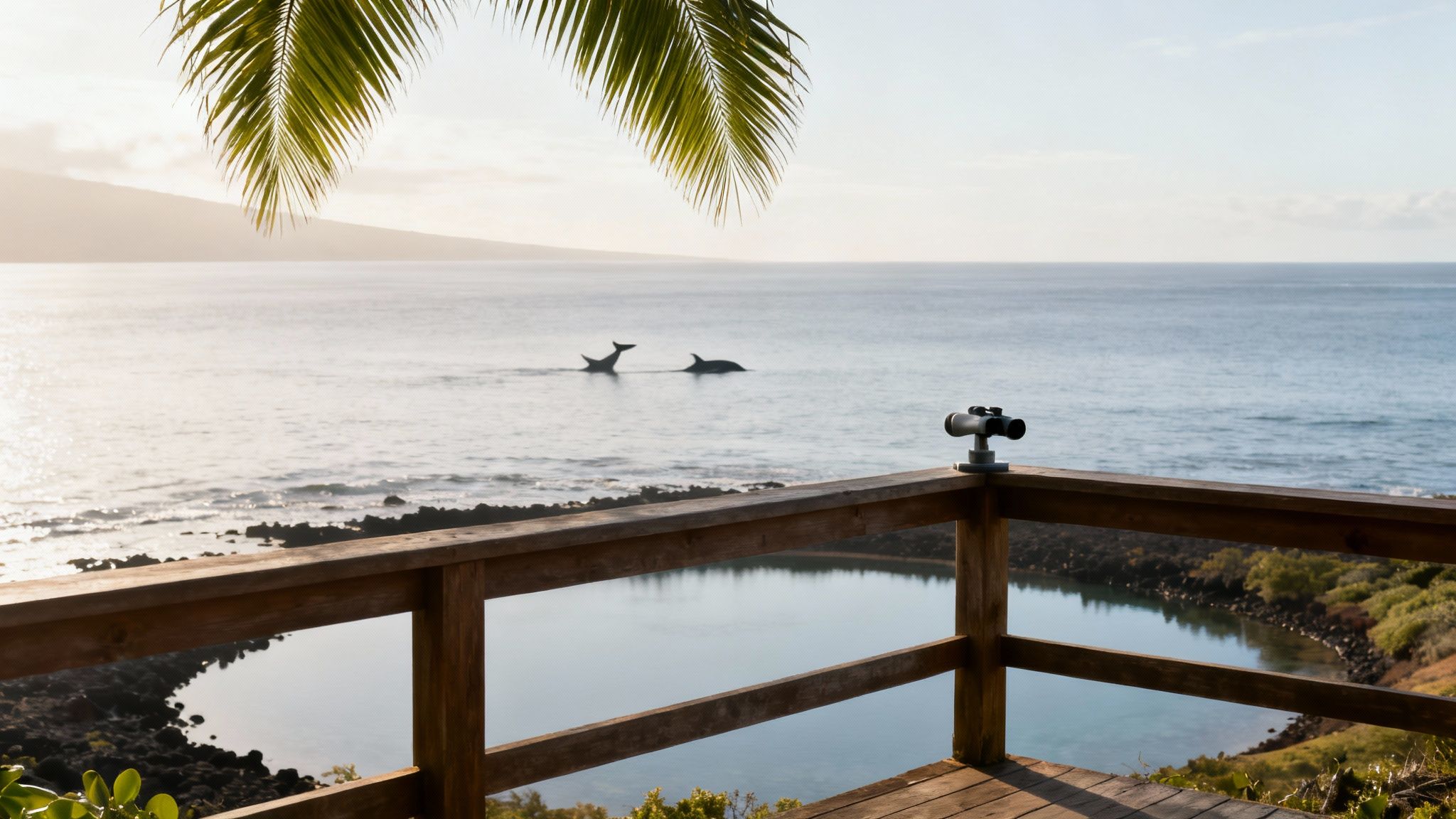
The undisputed champion for whale sightings is the Kohala Coast. This sun-drenched stretch of shoreline isn't just beautiful; its unique geography creates the perfect sanctuary for humpback whales. The island's massive volcanoes, Mauna Kea and Mauna Loa, act as gigantic natural windbreaks.
This shields the coastal waters from the powerful trade winds, creating a calm, protected environment. It's the ideal nursery where mothers can safely give birth and nurse their newborns without battling rough seas. The clear, deep waters close to shore make it a reliable and awe-inspiring spot for both boat tours and shoreline viewing.
Premier Departure Points for Water Adventures
For those who want to get out on the ocean, most tours launch from convenient hubs along the Kona and Kohala coasts. Each one offers quick access to the prime whale-watching grounds, getting you right into the heart of the action.
- Kailua-Kona: This bustling town is a major center for marine activities. Departing from Honokohau Harbor gives tour boats a straight shot to the deep waters where whales are frequently found.
- Keauhou Bay: Just south of Kona, Keauhou Bay is another popular departure point. Its calm, protected waters provide a smooth start to any tour before you head out into the open ocean in search of humpbacks.
- Kohala Coast Resorts: Many of the resorts along the Kohala Coast have their own marinas or work with nearby operators. Leaving from here puts you directly in the most concentrated area of whale activity on the island.
Choosing a tour from any of these locations puts you in a prime position for an incredible encounter. To dive deeper into what makes this area so special, check out our full guide to whale watching from Kailua-Kona.
Top Shoreline Spots for Land-Based Viewing
You don’t actually need a boat to experience the magic of whale watching on the Big Island. With a good pair of binoculars and a little patience, you can witness the incredible show right from the shore. The trick is to find a spot with good elevation, which gives you a panoramic view of the ocean.
The Sanctuary Ocean Count, a long-running citizen science project, has consistently shown the Kohala Coast to be the premier location for whale watching. It yields two to three times more sightings than other areas on the island, confirming that both on-water and shoreline viewing here are exceptional.
Here are some of the best spots to set up your land-based watch party:
-
Puʻukoholā Heiau National Historic Site: The name itself means "hill of the whale," and it absolutely lives up to it. The high ground provides sweeping, unobstructed views of the ocean, making it one of the most reliable places to spot spouts and breaches.
-
Lapakahi State Historical Park: This park offers another fantastic high-elevation viewpoint over the water. It’s a dry, sunny area, so make sure to bring plenty of water and sun protection as you scan the horizon for activity.
-
Kapaʻa Beach Park: Just a short drive from Lapakahi, this park has the added benefit of covered picnic pavilions. You can watch for whales in comfortable shade—a huge plus on a hot Kona day.
Whether you choose the immersive experience of a boat tour or the patient watch from a coastal bluff, the Big Island offers some of the most accessible and rewarding whale watching in the world.
What to Expect on Your Whale Watching Trip
The boat pulls away from the Kona coast, and you can feel the energy shift. Everyone's gaze is fixed on that deep blue horizon, scanning for the first hint of life. Then it happens. Someone shouts, points, and a misty puff of air hangs for a second before vanishing. It’s the first spout, and just like that, your whale watching Big Island adventure is officially underway.
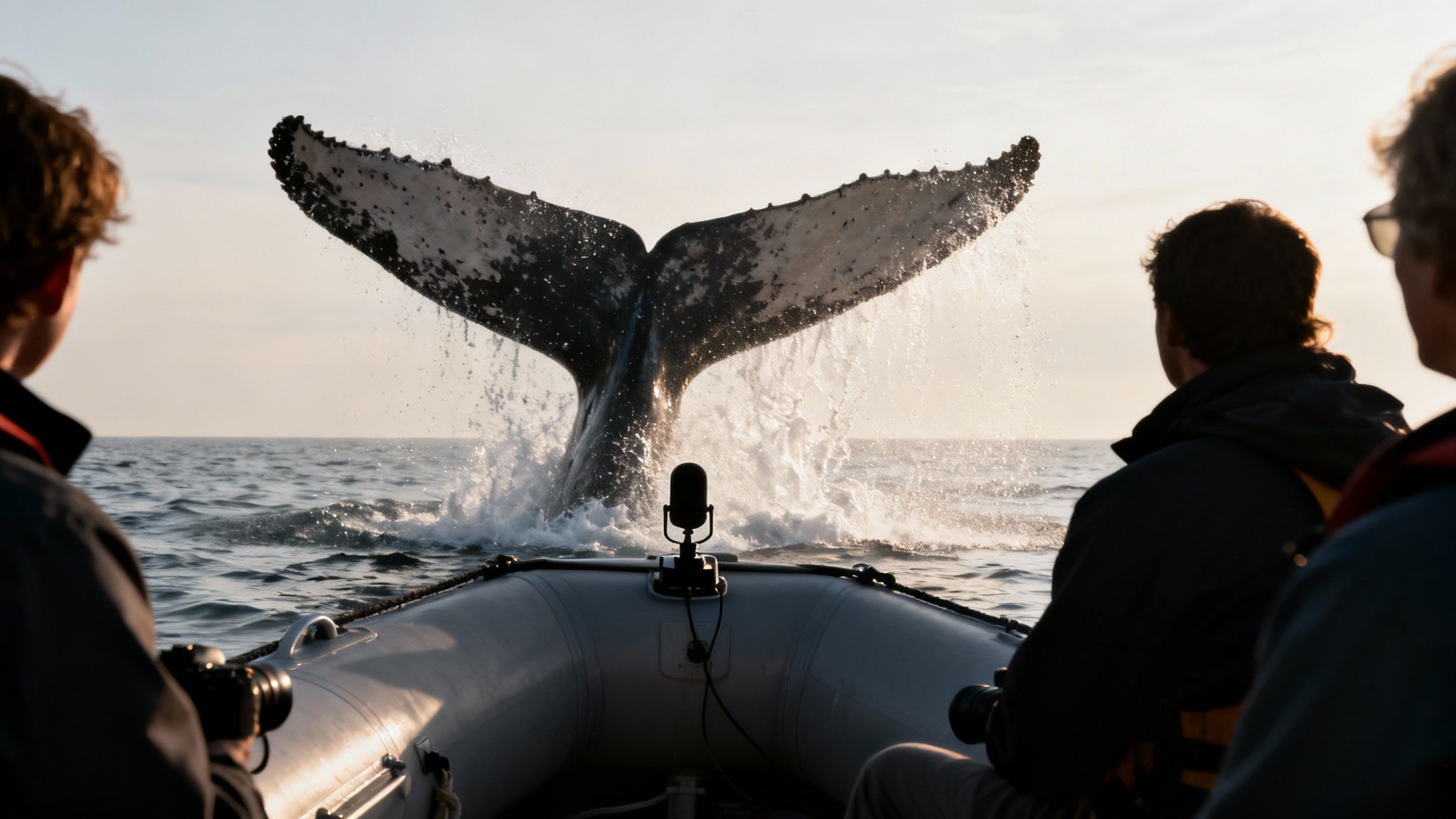
As your captain cuts the engine, keeping a respectful distance, the sheer size of these animals sinks in. No picture or video can ever do it justice. Seeing a 40-foot, 40-ton humpback throw its entire body out of the water is a moment of pure, raw power that feels like it’s from another world.
The big splashes are incredible, but there's more to it. Many tours, especially the smaller ones, will have a hydrophone on board. In a quiet moment, the captain might drop it over the side. Listening through the headphones, you’ll hear the haunting, complex songs of male humpbacks—an otherworldly soundtrack echoing up from the depths.
Decoding Breathtaking Whale Behaviors
One of the best parts of a guided tour is finally understanding what you’re looking at. Every behavior has a meaning in their world, and knowing what’s going on makes the whole thing feel so much more connected.
Here are a few of the incredible behaviors you might get to see:
- Breach: This is the iconic full-body leap out of the water. Scientists have a few theories: it could be a way to talk to whales far away, shake off parasites, or maybe… they’re just having fun.
- Tail Slap: A loud, powerful smack of the fluke (the tail) on the ocean's surface. It's often a form of communication or a way to show another whale who's boss.
- Pectoral Fin Slap: You'll see this when a whale rolls onto its side and slaps one of its long side fins on the water over and over. It's another way they communicate, often seen when they're being social.
- Spy-Hopping: This one is a real crowd-pleaser. The whale pokes its head straight out of the water to get a look around. It honestly feels like they're just as curious about us as we are about them.
Listening to a whale's song on a hydrophone is an unforgettable experience. These complex vocalizations can travel for hundreds of miles underwater and are a powerful reminder of the hidden world thriving just beneath the surface.
Your Essential Packing Checklist
A little prep goes a long way in making a great day on the water even better. If you come prepared, you can just relax and focus on the show.
Here’s a simple checklist of things you’ll be glad you brought:
- Polarized Sunglasses: Seriously, don't leave these behind. They cut through the glare on the water, letting you spot shapes and movement you'd completely miss otherwise.
- Reef-Safe Sunscreen: Protect your skin and Hawaii's delicate reefs. Look for mineral-based sunscreens.
- Light Jacket or Windbreaker: Even on a warm, sunny Kona day, the breeze out on the open ocean can get surprisingly chilly.
- Camera with a Good Zoom: You’ll want to capture these moments, for sure. Just don't forget to put it down and simply watch with your own eyes, too.
- Binoculars: They aren't totally necessary on a boat, but they’re great for getting a closer look at spouts or other action happening further away.
One last tip: if you're prone to motion sickness, take something for it before you get on the boat. A little planning means nothing will get in the way of your incredible experience whale watching on the Big Island.
How to Practice Responsible Whale Watching
There's nothing quite like the moment a 40-ton humpback whale breaches, throwing its entire body out of the water. It’s a profound experience, the kind that sticks with you long after you've returned to shore. But seeing these gentle giants up close is a privilege, and with it comes a real responsibility.
These whales have traveled thousands of miles to get here. Hawai'i is their nursery—a safe, warm place to give birth and raise their calves. Any disturbance can put a ton of stress on them, especially a new mom trying to keep her vulnerable baby safe. That's why responsible whale watching on the Big Island isn't just a nice idea; it’s a commitment we all have to make to protect these incredible animals for generations to come.
Understanding the Rules of Engagement
The golden rule of responsible whale watching is simple: give them space. There are federal and state laws in place for a reason, and the big one you need to know is the 100-yard rule.
No boat, kayak, or even a stand-up paddleboard is allowed to get within 100 yards (that's 300 feet, or the length of a football field) of a humpback whale. Think of it as their personal space bubble. Staying back allows them to go about their business—nursing, teaching, playing—without feeling threatened.
"A respectful distance isn’t just about following the law; it’s a sign of profound respect for the whales' ancient pilgrimage. It ensures that the whale season on the Big Island remains a safe and spectacular event for both humans and whales."
Honestly, the easiest way to make sure you're following the rules is to go with a professional tour company. Good crews know the regulations like the back of their hand. They are absolute pros at positioning the boat for amazing views without ever crossing that critical 100-yard line.
Supporting Conservation Through Your Choices
Every dollar you spend as a traveler makes a difference. When you pick a tour company that’s serious about education and follows strict viewing guidelines, you're directly supporting marine conservation. Many of these operators work with or donate to organizations like the Hawaiian Humpback Whale National Marine Sanctuary, which is dedicated to protecting these vital habitats.
The best tour operators are more than just boat captains; they're stewards of the ocean. They’ll explain the behaviors you're seeing and help you build a much deeper appreciation for what's happening out on the water. It turns a simple boat trip into a truly meaningful encounter.
Plus, your trip becomes a powerful force for good in the local community. Whale watching is a huge part of the Big Island's economy, bringing in about $20 million annually for the state. By choosing eco-conscious companies, you help keep this industry sustainable, benefiting both the local economy and the long-term health of the whale population. You can learn more about the economic impact of Hawaii's whales and why it's so important to protect them.
In the end, responsible whale watching isn't just about being a spectator. It's about being an advocate for these gentle giants and making sure their Hawaiian sanctuary stays safe for many, many years to come.
Got Questions About Whale Watching?
If you're still ironing out the details for your trip, you're in the right place. We get asked these questions all the time, so we've put together some straight-to-the-point answers from our years of experience on the water. This should help you feel totally ready for an incredible day.
So, What's the Absolute Best Month to See Whales on the Big Island?
While you've got a great shot anytime from November to April, February is the undisputed peak of the season. It's when the highest concentration of humpbacks packs into Hawaiian waters.
In February, the ocean is just buzzing with activity. It’s your best chance to see the whole range of whale behaviors, especially those unforgettable, tender moments between moms and their brand-new calves. It truly is a special time to be out there.
Can I Actually See Whales from Shore?
You bet. The Kohala Coast is famous for fantastic spots where you can watch whales without ever setting foot on a boat.
Public places like the Puʻukoholā Heiau National Historic Site are perfect. They offer a higher vantage point, which is exactly what you need to spot those distant spouts, breaches, and tail slaps. My pro tip? Bring a good pair of binoculars. It makes a world of difference and brings the action right to you.
Are Whale Sightings a Sure Thing on a Tour?
Here's the honest answer: no one who respects these animals can ever guarantee a sighting. Humpback whales are wild creatures on their own schedule, and that's part of what makes seeing them so special.
That said, during the peak season from January through March, your odds are incredibly high—we're talking over 95% on most days. Many of the best operators, including us, offer a "whale guarantee." If you don't see whales, you can come back again for free. Always check a company's policy when you book.
What’s the Best Time of Day for a Whale Watch?
Early mornings are almost always the best bet, and for a few good reasons. First, the ocean is typically much calmer then, making for a smoother, more pleasant ride. Nobody likes a bumpy trip!
Calmer seas also make it way easier to spot whale activity from far away. As a bonus, that soft morning light is absolutely perfect for getting those beautiful, glare-free photos that you'll look back on for years.
Ready to witness these gentle giants for yourself? Join Kona Snorkel Trips for a small-group adventure that will stay with you forever. Book your whale watching tour today!