
Whale Watching Big Island: A Complete Guide
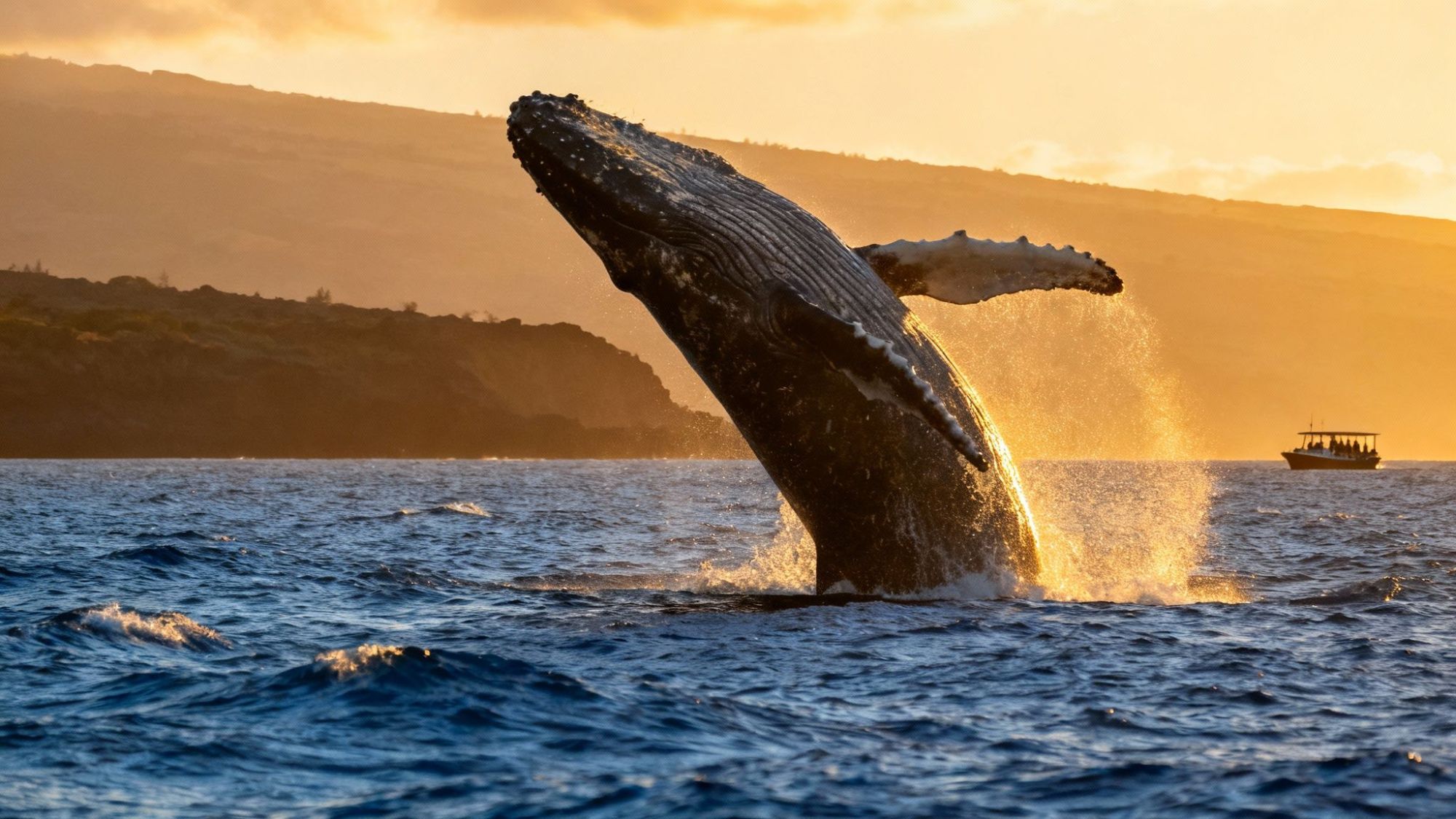
Every year, one of nature's most incredible shows unfolds right here in Hawaii, and if you're planning on some whale watching on the Big Island, you've picked a front-row seat. The peak season really kicks into gear from December through March, and the Kohala Coast becomes the main stage for these majestic animals. Hopping on a guided tour is, without a doubt, the best way to see them up close, safely, and respectfully.
An Unforgettable Big Island Adventure
Welcome! If you're reading this, you're probably dreaming of seeing the North Pacific humpback whales on their incredible journey, and there's no better place than the Big Island. As the top rated & most reviewed snorkel company in Hawaii, Kona Snorkel Trips is an expert at creating these unforgettable encounters.
Think about it: thousands of these gentle giants travel over 3,000 miles from their chilly feeding grounds in Alaska, all the way to Hawaii's warm, protected waters.
This isn't just a vacation for them. It's an essential part of their life cycle—they come here to mate, give birth, and care for their newborn calves in a safe nursery. For us, it's an unbelievable opportunity to witness one of the most awe-inspiring events on the planet. We at Kona Snorkel Trips live for creating these kinds of memorable and respectful marine encounters.
Why the Big Island is a Whale Watching Hotspot
So, what makes the Big Island so special for the whales? It really comes down to the unique underwater landscape, especially off the sun-soaked Kohala and Kona coasts.
Right near the shore, the ocean floor drops off dramatically. This creates deep, comfortable channels that the whales love to travel through, but it also provides sheltered bays perfect for new mothers and their calves. It's the ideal combination of deep-water access and shallow-water protection, making our coastline a vital sanctuary for them.
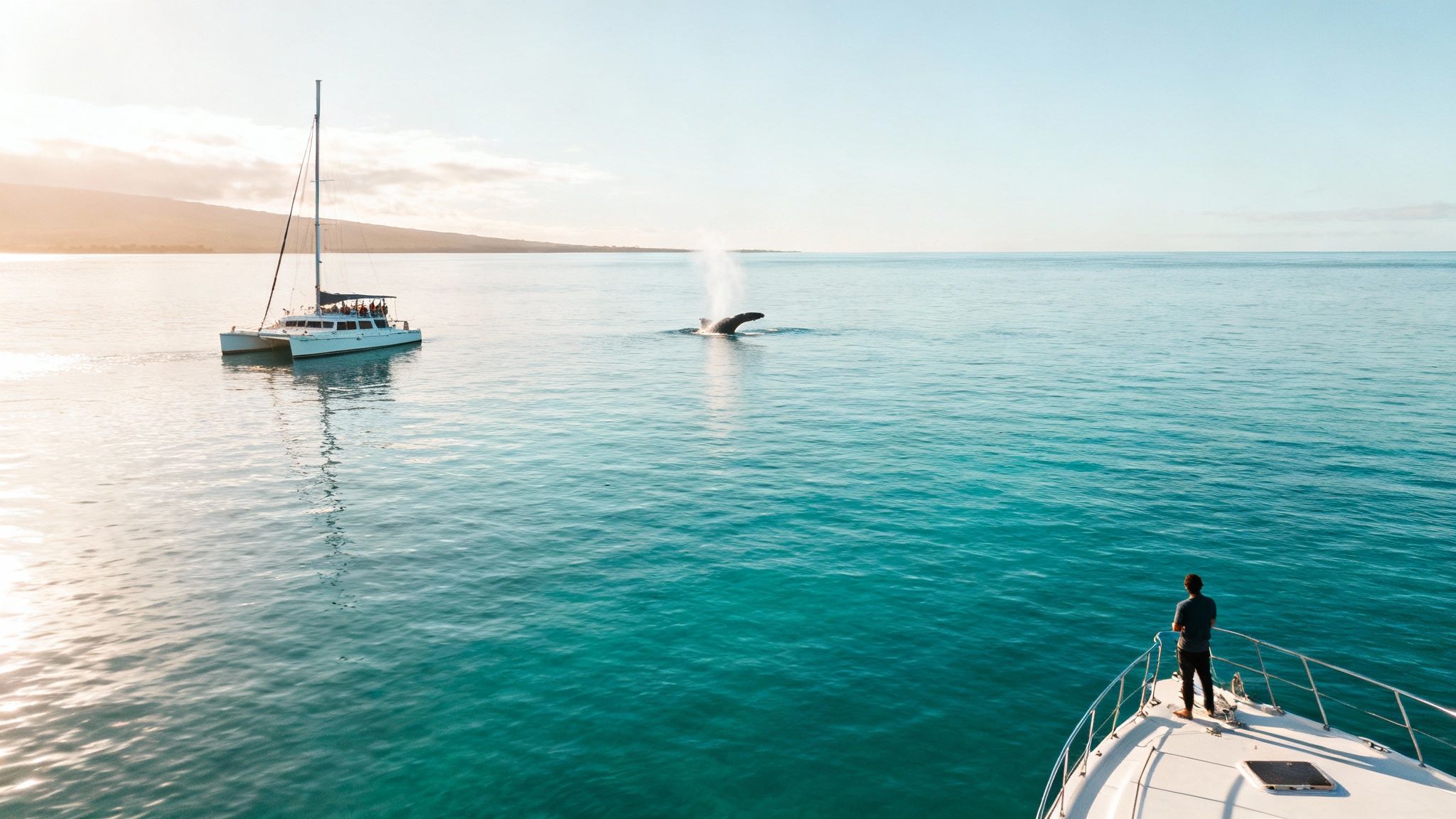
This guide is your one-stop shop for planning the perfect whale watching adventure. We're going to break down everything you need to know:
- The incredible story behind the whales' annual migration.
- The absolute best times and spots to go for the highest chances of seeing them.
- Tips for picking the right tour that fits you and your family.
- A checklist of what to bring to make your day on the water comfortable and fun.
Our goal is to do more than just help you see whales. We want to help you connect with them. When you understand their journey and what you're seeing, the experience goes from simple sightseeing to something truly profound.
Think of this as your prep work for an adventure that’s equal parts thrilling and educational. Having the right info beforehand ensures your whale watching Big Island experience is everything you’re hoping for. Let's dive in
Understanding the Humpback Whale Journey
That jaw-dropping moment when a 40-ton humpback whale launches itself out of the water near the Big Island coast? That’s the grand finale of an absolutely epic story. It’s a story that starts 3,000 miles away in the freezing, food-rich waters of Alaska.
This incredible migration is one of the longest of any mammal on Earth, a trek driven by instincts honed over millennia. For months, these gentle giants do nothing but eat, feasting on krill and tiny fish to pack on the thick blubber they’ll need to survive the journey ahead.
Then, as the Alaskan winter looms, they start swimming south. It's a relentless, non-stop trip, and they do the whole thing without eating a single bite. By the time they arrive in Hawaiian waters, they're lean, but they've made it here for the most important reason of all: to create the next generation.
Hawaii: A Sanctuary for New Life
So, why this massive, fasting pilgrimage all the way to the Big Island? Simple: warmth and safety. Hawaii's calm, clear waters are the perfect oceanic nursery for the most critical moments in a humpback's life.
- Breeding and Mating: The waters here become a massive stage for courtship. Males form "competitive pods," putting on spectacular shows of strength and agility to win the attention of females.
- Giving Birth: Pregnant females specifically seek out the calm, shallow, protected bays along the Kona coast. Their newborn calves don't have the thick blubber needed to survive in Alaska's frigid temperatures.
- Raising Calves: A newborn calf can weigh up to one ton right out of the womb and will guzzle over 100 gallons of its mother's super-rich milk every single day. These sheltered coves give them a safe space to nurse, grow, and build strength for their very first trip north.
When you go whale watching on the Big Island, you're not just seeing whales hanging out. You're getting a real-time, front-row seat to a vital chapter of their lives. This isn't just a pit stop for them; it’s a destination absolutely essential for their survival.
Decoding Whale Behavior
All the incredible acrobatics you'll see aren't just for show—it's a complex language. Once you know what to look for, the entire experience becomes so much more meaningful.
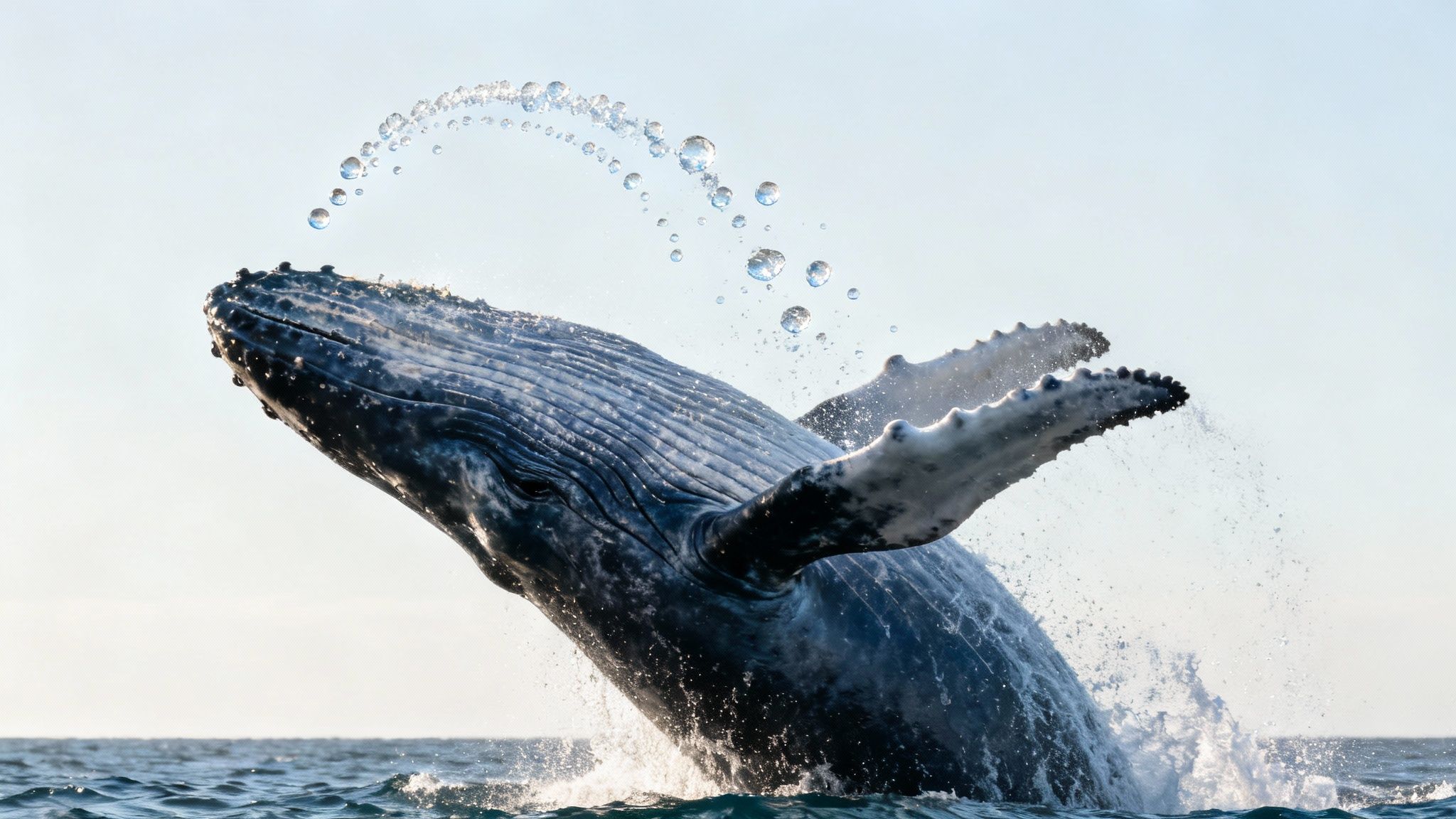
When you see a 40-ton whale launch its entire body from the water, you're witnessing a powerful form of non-verbal communication. Scientists believe breaching could be for anything from knocking off annoying parasites to making a booming announcement to other whales miles away.
Here are a few common behaviors you're likely to see:
- Tail Slap: A loud, powerful slap of their massive tail (fluke) on the water's surface. Think of it as a warning shot to other males or a way to get a message across a long distance.
- Pectoral Fin Slap: The whale rolls onto its side and slaps its long fin again and again. This is usually more of a social signal, like a wave to others in its pod.
- Spyhop: The whale pokes its head straight up out of the water, almost like a submarine periscope, to get a look around. It's pure curiosity—they're often just as interested in us as we are in them.
Knowing the "why" behind the splash adds a whole new layer of wonder to your adventure on the water.
Finding the Best Spots and Times to See Whales
Timing is everything when it comes to whale watching on the Big Island. Sure, the official season runs from December through March, but if you want to give yourself the best shot at seeing a spectacular breach, you need to know exactly when and where to look. Think of it as having the inside scoop on nature's greatest performance.
The first humpbacks start trickling in around December, finishing their massive swim down from Alaska. By January and February, things really hit their peak. The waters off the island are buzzing with thousands of whales courting, giving birth, and nursing their calves. This is prime time—your best chance to see the whole show, from huge competitive pods to incredible acrobatics. Once March rolls around, they start heading back north, and while you can still spot them, it's not quite the same frenzy.
The Undisputed Champion: The Kohala Coast
While you can see whales all along the western side of the island, one area is the hands-down winner: the Kohala Coast. This isn't just a local tip; it's backed by some serious data. Over 20 years of research from the Sanctuary Ocean Count confirms that you’ll see two to three times more whales here than anywhere else on the island.
During the peak months of January and February, it’s pretty normal for folks here to spot 3 to 6 whales in a single 15-minute period. On a really good day? Some spots have clocked 15 to 20 whales at once. It’s an unforgettable sight. If you want to dive deeper into this rhythm, you can learn more about the Big Island whale season in our detailed guide.
Prime Time: Why Morning Departures Win
Okay, so you’ve picked the right month. Want another pro tip? Get out on the water early. Mornings are the golden hour for whale watching here on the Big Island. The ocean is usually much calmer, with that glassy surface that makes spotting a distant spout or breach way easier.
The whales seem to love the morning light, too. They’re just more active. Data from local research shows that whale activity can be up to 50% higher around 8:00 a.m. compared to midday. Getting an early start really does give you a better shot at seeing the most action.
Best Big Island Spots for Shore-Based Viewing
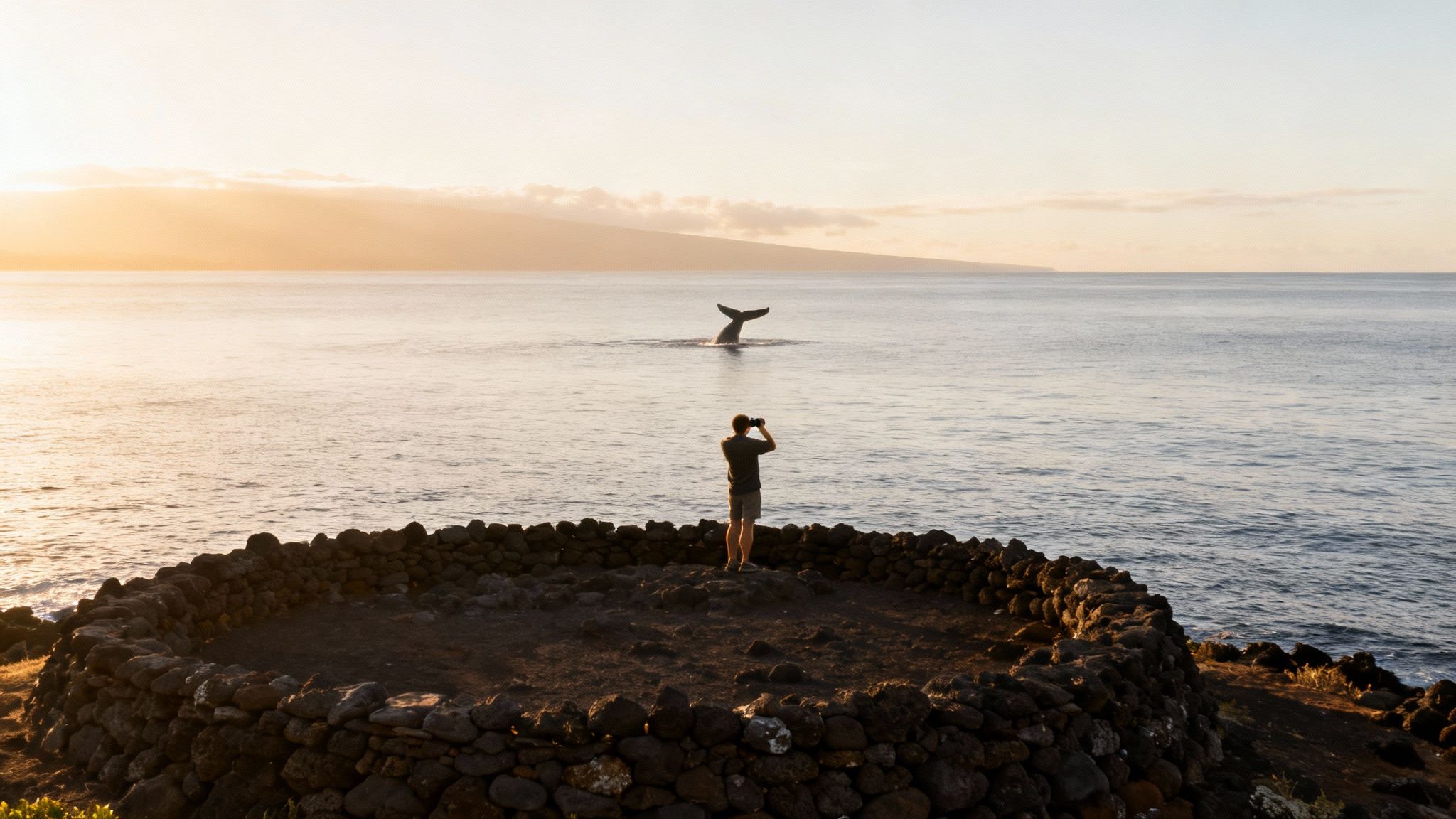
Don’t want to get on a boat? No problem. The Big Island has some incredible lookout points where you can whale watch with your feet firmly on the ground, especially along that superstar Kohala Coast. Just do yourself a favor and bring a good pair of binoculars!
- Puukohola Heiau National Historic Site: The name literally translates to "hill of the whale," and it definitely lives up to it. The high vantage point gives you sweeping panoramic views, perfect for scanning the horizon.
- Kapaa Beach Park: This is a great spot because you get awesome views and shaded picnic pavilions. You can settle in for a long, comfortable watch session.
- Lapakahi State Historical Park: Here’s another fantastic high-elevation viewpoint. It gives you a wide-open perspective over the ocean where whales cruise by all the time.
While watching from shore is a treat, there’s nothing quite like a boat tour. It gives you a totally different sense of the immense scale and power of these gentle giants.
Choosing Your Perfect Whale Watching Tour
Picking the right tour for your whale watching Big Island adventure is probably the single most important choice you'll make. It’s what separates a good day on the water from a jaw-dropping, memory-of-a-lifetime experience. The trick is to find an operator that vibes with your personal style, comfort level, and what you’re hoping to see out there.
It all starts with the boat. Think of it like picking a vehicle for a safari—a quiet electric cart offers a very different feel than an open-air jeep. Your choice of vessel will shape everything, from how close you get to the action to the creature comforts available on your trip.
Different Boats for Different Folks
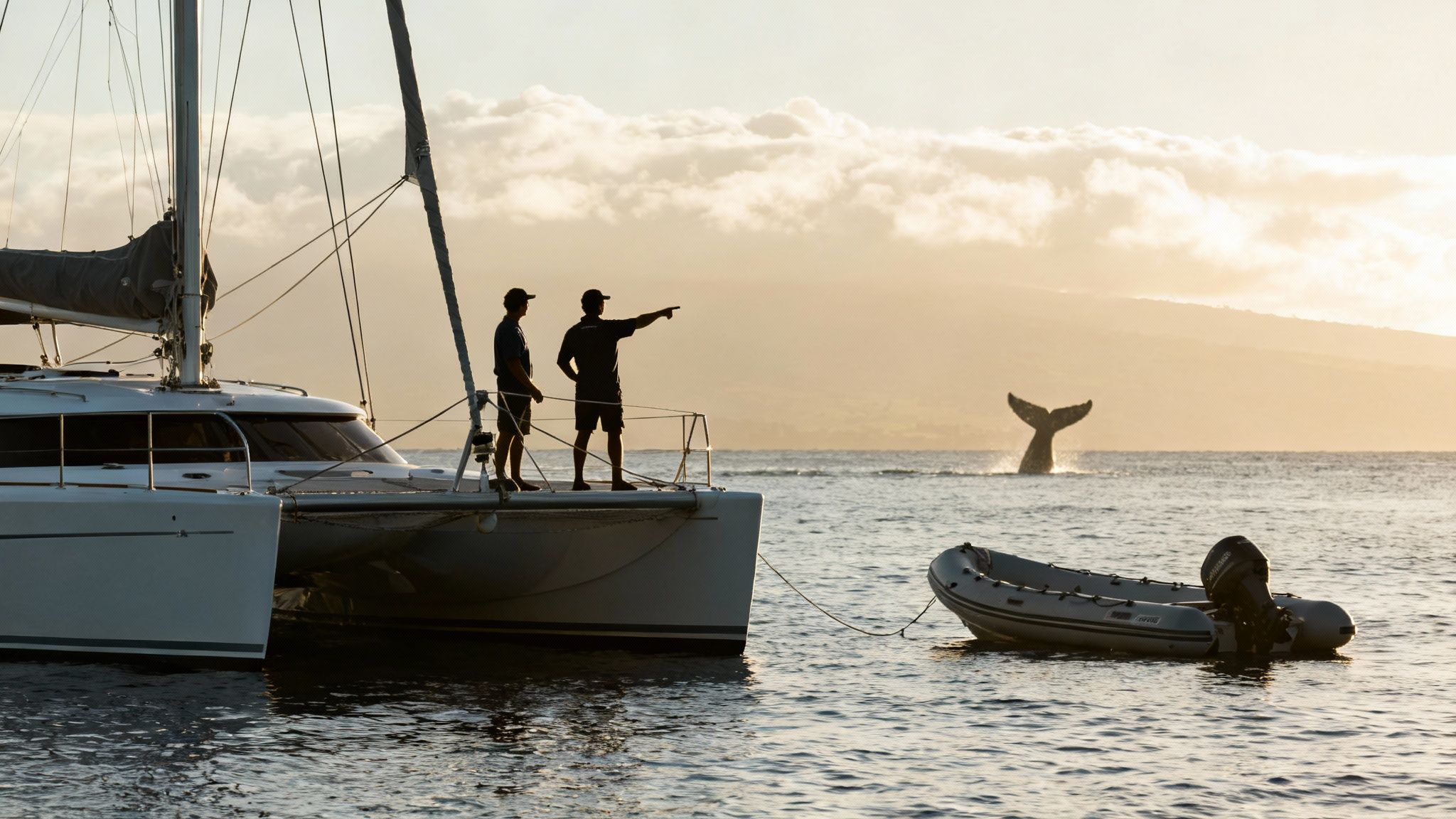
Not all whale watching boats are built the same, and that’s a good thing. The two most common options you'll find on the Big Island are large, stable catamarans and smaller, more agile vessels like zodiacs or rafts. Each has its own distinct personality.
Before diving into the details, here’s a quick breakdown to help you compare the main boat types you'll encounter.
Comparing Whale Watching Tour Boat Types
| Vessel Type | Pros | Cons | Best For |
|---|---|---|---|
| Large Catamaran | Very stable, restrooms onboard, snack bars, shaded areas, great for photography. | Less intimate, larger group sizes, can't get as close as smaller boats. | Families with kids, anyone prone to seasickness, those wanting a relaxed, comfortable cruise. |
| Zodiac/Raft | Fast and nimble, eye-level views, small groups, thrilling ride, can cover more area quickly. | Bumpy ride, exposed to elements (sun/spray), no restrooms, not ideal for mobility issues. | Adventure seekers, photographers wanting a low angle, small groups looking for an intimate experience. |
| Mid-Sized Powerboat | A good balance of stability and maneuverability, often has a marine head (toilet), smaller groups than a catamaran. | Can still be a bit bumpy, fewer amenities than large vessels. | Couples, small groups, and anyone wanting a mix of adventure and comfort without the big crowds. |
Ultimately, the right boat comes down to what you want out of the day. A relaxing, scenic cruise? Or a fast-paced, up-close adventure?
What Makes a Tour Company Great?
Beyond the hardware, the company you choose is what truly makes or breaks the trip. A great operator does more than just chase whales; they’re passionate stewards of the ocean. To get a feel for who's who, check out this list of the top whale watching tours in Kona Big Island.
When you're doing your research, here’s what to look for:
- Experienced Captains and Onboard Naturalists: A knowledgeable crew is a game-changer. They can read the subtle cues of whale behavior, share incredible facts, and might even drop a hydrophone in the water so you can hear the haunting songs of the humpbacks.
- A Solid Commitment to Conservation: The best companies are all-in on protecting the marine life they love. This means they strictly follow federal regulations, like staying at least 100 yards away, to make sure the whales are observed, not disturbed.
- Glowing Reviews and a Strong Reputation: What are other people saying? Guest reviews are pure gold, giving you the real scoop on everything from the crew's attitude to the quality of the sightings.
Choosing wisely means your adventure will be more than just spectacular—it will be ethical and respectful, too. For a deeper dive into specific tour options, check out our guide on the best whale watching tours in Kona.
How to Prepare for Your Day on the Water
A little bit of prep work can be the difference between a pretty good day of whale watching and a truly unforgettable one. Knowing what to throw in your bag and how to get ready means you can just kick back and soak it all in once you're out there.
Think of it like getting ready for any other outdoor adventure—the right gear just makes everything better. Even on a gorgeous, sunny Kona day, the breeze coming off the open ocean can have a surprising chill, especially in the morning. Dressing in layers is the way to go; a light jacket or windbreaker lets you adjust as the day warms up and keeps you comfortable from start to finish.
Your Essential Packing List
To make sure you're comfortable and can focus on the main event, we recommend bringing a few key items along. Having these essentials handy means you won't be distracted when the whales show up.
- Reef-Safe Sunscreen: The Hawaiian sun is no joke, and when it reflects off the water, it's even stronger. Protect your skin and our fragile coral ecosystems by grabbing a mineral-based, reef-safe sunscreen.
- Polarized Sunglasses: This is a non-negotiable. Seriously. Polarized lenses cut right through the intense glare on the water, making it so much easier to spot spouts, breaches, and other whale activity you'd totally miss otherwise.
- Hat and Light Jacket: A wide-brimmed hat is your best friend for keeping the sun off your face and neck. A light jacket will be a lifesaver against that cool morning air or any ocean spray that comes your way.
- Binoculars: While you can definitely enjoy the show without them, a good pair of binoculars brings all the distant action into sharp focus. Getting a closer look at these gentle giants is a real treat, and knowing how to pick the right pair makes all the difference. For some great tips, check out this guide on choosing the perfect pair of binoculars.
Managing Seasickness and Expectations
For some folks, the thought of getting seasick is a real downer. If you know you're prone to it, think about taking an over-the-counter remedy before you get on the boat. Simple tricks can also work wonders: stay hydrated, skip heavy or greasy food beforehand, and keep your eyes fixed on the stable horizon.
It's also super important to remember who's in charge out here: the whales. While sightings are extremely likely during peak season, these are wild animals on their own schedule. There are no guarantees. But honestly, the stunning coastal views and the incredible knowledge the crew shares make every single moment on the water an adventure in itself.
A Conservation Story You Can Be Part of
When you head out for a whale watch on the Big Island, you're doing so much more than just a sightseeing tour. You're actually stepping into one of the greatest wildlife comeback stories of our time. It wasn't that long ago that the North Pacific humpback whale population was decimated by commercial whaling, bringing them terrifyingly close to extinction.
But their recovery is a powerful, living testament to what can happen when people decide to act. The first critical moves were protections like the Endangered Species Act and the Marine Mammal Protection Act. Those laws set the stage for a comeback that has been nothing short of remarkable.
The Sanctuary That Saved a Species
The real game-changer came in the early 1990s with the creation of the Hawaiian Islands Humpback Whale National Marine Sanctuary. This wasn't just a line on a map; it was a promise to protect the very waters these whales need to breed, give birth, and nurse their young every single winter.
Because of this protected sanctuary, the population has rebounded to an estimated 26,000 whales across the Pacific. A huge number of them make that epic journey right here to our coastlines, turning the waters off the Big Island into a bustling, vibrant nursery. This comeback is an ongoing story, and you can learn more about the history of humpback whales and the endangered species list in another one of our articles.
Your Tour Makes a Real Difference
That boat trip you're planning? It plays a direct role in this conservation story. Responsible, respectful whale watching provides crucial support for the local economy and helps fund the very conservation work that protects these gentle giants. It sends a clear message that our marine life is invaluable and worth fighting for.
By choosing an ethical tour operator, you become an active participant in conservation. Your trip helps ensure that future generations will have the same opportunity to witness the awe-inspiring sight of a humpback whale breaching against the Kona sunset.
Some tours even get involved in citizen science programs, where your photos and sightings contribute to real, valuable research. It adds a whole other layer of meaning to your trip, turning an incredible day on the water into a positive force for the future of these magnificent animals.
A Few More Things You Might Be Wondering About
To wrap things up and make sure you're feeling confident about your trip, let's go over some of the most common questions we get about whale watching here on the Big Island. This should clear up any last-minute details before your big adventure.
Can I See Whales From the Shore on the Big Island?
You sure can! If you want to try your luck from land, the Kohala Coast is absolutely the place to be. Your best bets for a good vantage point are places like Puʻukoholā Heiau National Historic Site and Kapaʻa Beach Park.
Just make sure to bring a good pair of binoculars. While spotting distant spouts and breaches from the shoreline is a real thrill, there's nothing that compares to the sheer awe of seeing these giants up close. For that, you really have to get out on the water.
Is a Whale Sighting Guaranteed on a Tour?
This is a big one. While sightings are incredibly common during the peak season in January and February, these are wild animals, after all. No operator can ever make a 100% guarantee. Nature doesn't work on a schedule.
That said, the chances are overwhelmingly in your favor. Most reputable tour companies have sky-high success rates, and many will even offer you a free return trip if you don't see any whales. It’s always a good idea to ask about their policy when you book.
How Close Can Tour Boats Get to the Whales?
Federal law is very clear on this: all boats must stay at least 100 yards away from humpback whales. Think of it as the length of a football field. This is absolutely critical for keeping the whales safe from stress, harassment, and potential injuries from propellers.
Every now and then, though, a curious whale will decide to ignore the rules and approach a boat on its own. It's an unforgettable experience known as a "mugging," and it's completely on the whale's terms. A good, respectful captain will always put the well-being of the animals first, no matter what.
Are Children Welcome on Whale Watching Tours?
For the most part, yes! Whale watching is a fantastic family activity. If you're bringing little ones along, you might want to look for tours on larger, more stable boats like catamarans. They offer a bit more room to move around and a smoother ride.
Still, it's always smart to double-check with the tour company directly about any age restrictions or specific recommendations they might have before you book your tickets.