
Whale Watching Big Island: The Ultimate Guide to Sea Encounters
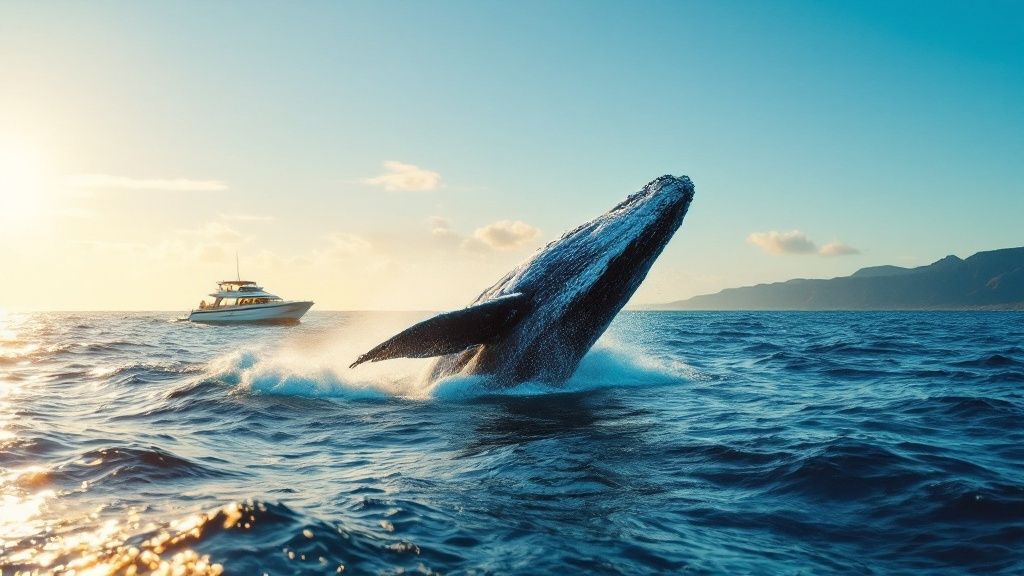
Picture this: a 40-ton humpback whale explodes out of the water, framed by the Big Island's dramatic volcanic coastline. It's a moment that sticks with you forever, and this guide is your ticket to experiencing that magic firsthand. Every year, thousands of humpback whales make the long journey to Hawai‘i's warm, protected waters, turning the Big Island into a world-class front-row seat for their incredible migration.
Your Guide to Big Island Whale Watching
We're going to walk you through everything you need to know, from the best seasons to visit to picking out the perfect tour. As the top rated & most reviewed snorkel company in Hawaii, we here at Kona Snorkel Trips live for sharing these ocean adventures, and we want to make sure yours is one for the books.
But don't just take our word for it. Below, you can see what fellow travelers have said after experiencing this wonder with us. Let's dive in and start planning.
A Journey of a Lifetime
Come winter, the calm, welcoming waters along the Kona and Kohala coasts become something truly special: a massive nursery for North Pacific humpback whales. These gentle giants travel over 3,000 miles from their chilly feeding grounds in Alaska just to be here. They come to mate, give birth, and raise their newborn calves in the safety of Hawai‘i’s marine sanctuary.
This annual pilgrimage is what makes whale watching on the Big Island a must-do Hawaiian experience. It’s so much more than a simple boat trip; it’s a chance to connect with one of nature’s most incredible spectacles. Seeing a mother whale patiently teaching her calf to breach, or hearing the haunting, complex song of a male through a hydrophone—these are the memories that last a lifetime.
What to Expect From This Guide
Trying to plan the perfect whale watching trip can feel like a lot, but we’ve broken it all down for you. This guide is packed with all the essentials to get you ready for an amazing day out on the water.
Here’s what we’ll cover:
- The incredible migration story: Get the scoop on why these whales make such an epic trek to Hawai‘i every single year.
- Optimal timing: We'll pinpoint the absolute best months and even the best times of day to seriously boost your chances of a great sighting.
- Prime locations: Discover the top spots on the Big Island for seeing whales, whether you're on a boat or watching from shore.
- Choosing your tour: Learn what to look for in a vessel and an operator to ensure your adventure is safe, ethical, and totally unforgettable.
This whole experience is really a celebration of an amazing conservation success story. Humpback whales have made a spectacular comeback from the brink of extinction. Seeing them thrive in these waters is a powerful, moving reminder of just how resilient nature can be.
Our goal is to arm you with all the knowledge you need to confidently plan your Big Island whale watching trip. By the time you’re done reading, you'll be ready to get out there and witness the power and grace of these ocean titans for yourself.
Why Do Humpback Whales Come to Hawaii?
Every winter, something truly incredible happens in the waters off the Big Island. Thousands of humpback whales show up, completing a massive road trip across more than 3,000 miles of open ocean, all the way from the chilly feeding grounds of Alaska. But this isn't a vacation for them. So, what drives this epic journey?
The answer is simple: new life. The humpbacks are here on the essential business of creating and raising the next generation. While the nutrient-rich Alaskan seas are an all-you-can-eat buffet for adult whales, they're dangerously cold for newborn calves who haven't yet packed on a thick, insulating layer of blubber.
A Tropical Nursery for a New Generation
You can think of Hawaii's waters as nature's ultimate maternity ward. The warm, shallow, and protected seas around the islands offer a safe haven where these gentle giants can focus on three critical things:
- Mating: Male humpbacks put on spectacular shows of power and grace to compete for females. This is when you'll see those amazing breaches, powerful tail slaps, and hear their famously complex songs echoing through the water.
- Birthing: Females who got pregnant here last year return to give birth in a secure environment, far from the harsh conditions and predators of the northern Pacific.
- Nurturing: New moms spend months teaching their calves crucial survival skills. They're helping them build up the strength and blubber they'll need for the long swim back north.
This annual cycle is absolutely vital for the survival of the species. Without this safe harbor, the humpback population would be in serious trouble.
The Science Behind the Migration
It’s a marvel of instinct and endurance. Humpback whales navigate thousands of miles with no obvious landmarks, relying on an internal compass tuned to the Earth's magnetic field, the sun's position, and a biological clock perfected over millennia.
Even more amazing, the adult whales fast for almost their entire time in Hawaii. They live completely off the fat reserves they built up during their summer feeding frenzy in Alaska, where a single whale can gobble up 3,000 pounds of krill and small fish a day.
This fasting period really drives home just how important Hawaii is. The whales pour enormous amounts of energy into mating, giving birth, and nursing their young, all while running on stored fuel. It’s a powerful testament to how perfectly suited this specific environment is for their life cycle.
What This Means for Your Big Island Whale Watch
Once you understand this incredible journey, your entire perspective on the water changes. That massive breach you just witnessed? It's not just a cool trick. You're likely watching a male showing off for a mate or a mother teaching her calf a new skill. That gentle spy hop, where a whale pokes its head out of the water, might just be a curious newborn getting its first real look at the world.
Every tail slap, every pectoral fin wave—it’s all communication, and it’s all tied directly to their purpose for being here. A whale watching Big Island tour becomes so much more than a boat ride. It’s a front-row seat to a vital and profound chapter in the lives of these magnificent animals. You're a privileged witness to one of nature’s most spectacular rituals, and knowing the "why" behind it all makes the experience truly unforgettable.
Pinpointing the Best Time for Whale Sightings
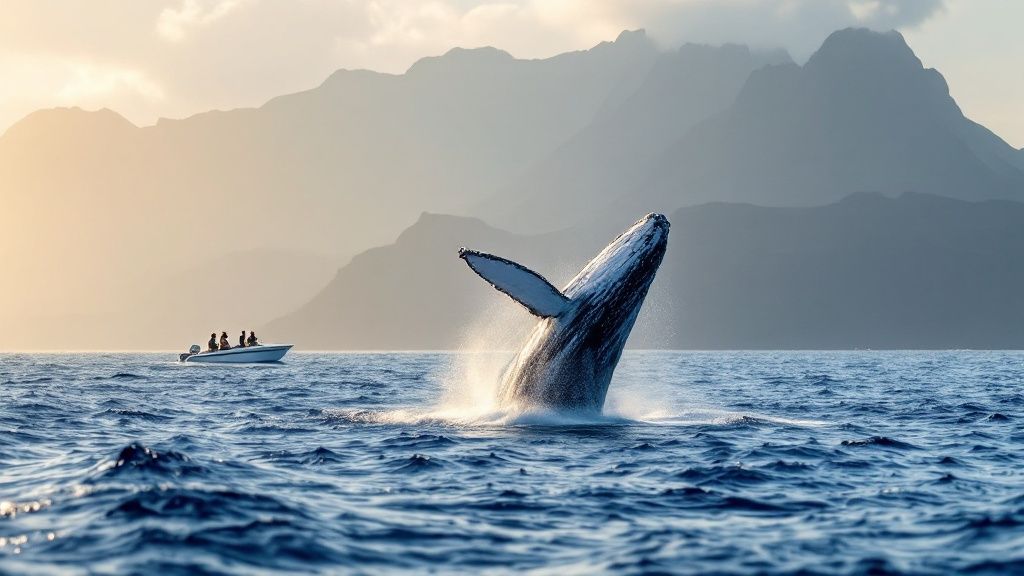
When it comes to whale watching on the Big Island, timing is everything. It can be the difference between a nice day on the water and a truly mind-blowing encounter. The "whale season" officially lasts for several months, but the number of humpbacks and their level of activity changes dramatically within that window.
Think of their migration like a slow wave. It's not like they all show up for a party on the same day. The first few scouts arrive in Hawaiian waters around late November, and their numbers swell through December. Then, come late spring, the wave recedes as the whales and their newborn calves begin the long swim back to their feeding grounds in Alaska.
To really nail your trip, you’ll want to plan around this natural rhythm.
A Month-by-Month Whale Watching Guide
Understanding how the season unfolds month by month helps you match your travel plans with peak whale action.
The first thing to know is that January and February are the absolute heart of the season. This is when the waters off the Kona and Kohala coasts are buzzing with thousands of whales. Competition between males is at its fiercest, which means you’re treated to the most dramatic surface shows: massive breaches, powerful tail slaps, and pec fin slapping. A lot of calves are born during this time, too, so your chances of spotting a mother with her baby are highest.
By contrast, November and December mark the beginning of the show. The whales start trickling in. Sightings are definitely possible, but they're less frequent. There's a real sense of anticipation on the water during these months, as everyone keeps a hopeful eye on the horizon for that first splash.
The season stays strong through March and April, but the vibe shifts a bit. You’ll see plenty of cow-calf pairs as mothers teach their young and fatten them up for the big journey north. By April, the numbers start to thin out as the whales begin their return migration, with the last ones usually gone by early May.
If you want a deeper dive into the specifics of each month, we've got a whole guide breaking down the Big Island whale season.
To make it even simpler, here's a quick look at what you can expect throughout the season.
Big Island Whale Watching Season At a Glance
| Month | Whale Activity Level | Typical Sightings and Behaviors |
|---|---|---|
| November | Low | First arrivals; occasional, exciting spouts or breaches. |
| December | Moderate | Numbers building steadily; more frequent sightings. |
| January | Peak | High density of whales; competitive male groups, breaching. |
| February | Peak | Busiest month; lots of surface action and newborn calves. |
| March | High | Still very active; great time for spotting mothers and calves. |
| April | Moderate to Low | Whales begin migrating north; sightings become less frequent. |
| May | Very Low | Last of the whales depart; the season effectively ends. |
Ultimately, for the most consistent and awe-inspiring sightings, aim for the heart of the season from mid-January to mid-March. That's when the ocean truly comes alive.
The Best Time of Day for Your Tour
Picking the right month is step one, but choosing the right time of day for your tour can also make a huge difference in your experience. Whales are active around the clock, but the ocean conditions are what really affect your ability to spot them.
Ask any experienced captain or marine biologist, and they'll almost always point you to the morning. An early tour, leaving around 8:00 a.m., is usually your best bet. The ocean is typically calmer then, creating glassy conditions that make it way easier to spot spouts and breaches from a distance. In fact, sighting rates can be about 50% higher in the early morning compared to midday.
Midday and afternoon tours can still be incredible, especially during those peak months when there are just so many whales out there. The main drawback is that the winds often kick up in the afternoon, which can create a choppier, bumpier ride. If your schedule is flexible, book that early boat
Where to Find Whales on the Big Island
Knowing when to go is half the battle; knowing where to go is the other. The Big Island is a massive piece of land, but when it comes to whale watching, the action is definitely concentrated in a few key areas where the ocean conditions are just right.
For humpback whales, it’s all about finding calm, protected, and relatively shallow waters to birth and raise their young. And one part of the island stands out as the undisputed champion for this.
The Kohala Coast, stretching along the northwestern side of the island, is the absolute epicenter for whale watching. This entire zone, covering the waters off North Kona and South Kohala, is naturally shielded from the powerful trade winds and open ocean swells by our massive volcanoes. This creates a calm, bay-like environment that migrating humpbacks find irresistible.
It's no coincidence that this is where the Hawaiian Islands Humpback Whale National Marine Sanctuary has a major presence. The conditions are perfect for mothers to nurse their calves and for males to put on their spectacular competitive displays.
The Kohala Coast: A Whale Watching Hotspot
The waters along the Kohala Coast aren't just calm; they are buzzing with whale activity during peak season. In fact, sightings are often two to three times more frequent here compared to other spots around the island. It’s the primary destination for humpbacks arriving at the Big Island.
During the peak months of January and February, volunteers have reported spotting between three and six whales every 15 minutes in this area. That's a testament to its popularity among the humpback population. You can check out more cool insights about these sighting frequencies on volcanovillageestates.com.
This incredible density of whales makes the Kohala Coast the premier spot for anyone serious about a memorable encounter. Plus, the calm seas don’t just attract whales—they make for a much more comfortable and enjoyable boat tour for you, too.
Best Spots for Land-Based Whale Watching
You don't absolutely need a boat to see the magic. If you’ve got a good pair of binoculars and a bit of patience, you can spot breaches and spouts right from shore, especially along the elevated bluffs of the Kohala Coast.
Here are a few of the top spots to try your luck from land:
- Puʻukoholā Heiau National Historic Site: The name literally translates to "Hill of the Whale," which pretty much says it all. The high vantage point offers a sweeping panoramic view of the ocean, making it a fantastic place to scan the horizon.
- Lapakahi State Historical Park: This coastal park gives you excellent sightlines with fewer crowds. Its rugged, beautiful coastline provides a stunning backdrop for watching whales cruise by.
- Kapaʻa Park: Located in North Kohala, this beach park is another great vantage point. Just grab a spot on the sand, kick back, and keep your eyes peeled for the tell-tale signs of whale activity offshore.
Watching from land is a peaceful, rewarding experience, but remember that you're seeing them from a distance. A spout might look like a tiny puff of smoke on the horizon, and a breach will be a distant splash. For those up-close, truly awe-inspiring encounters, nothing beats getting out on the water.
Why Departing from Kona is a Strategic Choice
For those ready to get a closer look, where your tour departs from really matters. While the entire Kohala Coast is prime territory, launching your adventure from the Kona side gives you a distinct geographical advantage.
The seafloor off the Kona coast drops off steeply and quickly, giving boats easy access to the deep channels that humpback whales use as their highways.
This means tour boats leaving from harbors like Honokohau spend less time traveling and more time right in the heart of whale territory. Your captain can navigate these deep-water routes efficiently, seriously maximizing your chances of finding active pods. This quick access is a huge reason why so many of the best whale watching Big Island tours are based right here.
Ultimately, whether you're scanning the horizon from a historic heiau or cruising the calm waters on a guided tour, the Kohala Coast is your destination. If you're ready to see them up close, exploring a professional whale watching tour in Kona is an unforgettable way to get right into the action.
How to Choose the Right Whale Watching Tour
Picking the right tour for your whale watching Big Island adventure can make or break your whole experience. It's not just about getting on any old boat; it's about finding the vessel, the crew, and the vibe that matches the incredible encounter you're dreaming of.
Your options are all over the map, from massive, comfortable ships to zippy little rafts, and each one offers a totally different way to see the whales. Your choice will literally shape everything from how close you feel to the action to whether or not you have a bathroom on board. To nail the perfect trip, it helps to understand what you're getting into with each tour type.
Vessel Types: Large Catamarans vs. Small Rafts
The kind of boat you're on is probably the single biggest factor in your whale watching trip. You’ll mostly see two main options leaving the Kona coast, and they couldn't be more different.
Large, Stable Catamarans:
- The Good: Think of these as the comfort cruisers of the whale watching world. Their dual-hull design makes them super stable, which is a lifesaver for families with kids or anyone who gets a little green around the gills. They usually come loaded with amenities like restrooms, shade, and snacks.
- The Not-So-Good: All that space means you might feel a bit disconnected from the action. You're sitting higher up off the water, so it’s more of a bird's-eye view instead of an eye-level encounter.
Smaller, Nimbler Rafts:
- The Good: If you’re craving a straight-up adventure, rafts are where it's at. They’re fast, agile, and sit so low in the water you feel like you’re right there with the whales. This water-level view is intense. Plus, their speed means you can zip over to a sighting in the distance in no time.
- The Not-So-Good: This is a much more rugged ride. Expect to feel the ocean spray and the bounce of every wave. Rafts don’t have amenities like restrooms and aren't the best fit for folks with back issues or very young children.
So, what’s it going to be? It really just boils down to what you’re looking for. Ask yourself: do I want a stable, comfortable viewing platform, or am I ready for a wilder, more intimate adventure with the waves and the whales?
Key Factors to Consider Before Booking
Beyond the boat itself, a few other things are crucial for locking in a fantastic and responsible tour. Keep these points in mind, and you'll easily filter through the options to find an operator that will give you an ethical and unforgettable day on the water.
First off, think about the tour duration. Most trips last between two and four hours. A longer tour doesn't just increase your odds of seeing more whales; it gives you more time to soak it all in without feeling rushed.
Next, see what's included in the price. Are snacks and drinks part of the deal? Even more important: do they have a hydrophone? This underwater microphone is a total game-changer. It lets you listen in on the complex, haunting songs of the male humpbacks in real time—an experience you will never, ever forget.
For a full breakdown of the top operators, check out our guide to the best whale watching tours in Kona, Hawaii.
The Importance of a Responsible Operator
This last one is the most important. You absolutely have to choose an operator who is committed to ethical and respectful wildlife viewing. Humpback whales are a protected species, and federal law is crystal clear: all boats must stay at least 100 yards away.
A great captain will never chase, crowd, or harass the whales. They know how to expertly position the boat for the best view and will often cut the engines completely. This gives the curious giants the chance to approach on their own terms if they want to.
When a whale chooses to come closer, it's called a "mugging," and it is pure magic. That kind of encounter only happens when the animals feel safe and respected. By choosing an operator who puts the whales' well-being first, you're helping ensure these incredible animals keep returning to Hawaiian waters for generations to come.
When you see a 40-ton humpback whale launch itself out of the water on a Big Island tour, it’s more than just an incredible show of raw power. It's a living, breathing conservation success story, and knowing their history makes the moment all the more profound.
Not that long ago, seeing a humpback in Hawaiian waters was heartbreakingly rare. The industrial whaling of the 20th century was relentless, pushing these intelligent, gentle giants right to the edge of extinction by the 1960s. Their numbers crashed, and the oceans went quiet.
A Turn of the Tide
Thankfully, the tide began to turn. A global shift in thinking led to international protections that finally banned commercial whaling, giving the whales a desperately needed fighting chance. Here in the U.S., landmark laws like the Marine Mammal Protection Act of 1972 acted as a critical shield for them.
A huge step forward right here in our waters was the creation of the Hawaiian Islands Humpback Whale National Marine Sanctuary. This protected area gives the whales a safe harbor to mate, give birth, and nurse their calves without being disturbed.
This isn't just a story about government action, though. It's a testament to the hard work of researchers, conservation groups, and local communities who fought for the whales. It changes your whale watch from a simple tour into a celebration of a hard-won victory for nature.
A Thriving Population Today
The results? Absolutely astounding. The North Pacific humpback population has bounced back from the brink of disappearing forever. Today, their numbers are estimated to be around 26,000 individuals—a powerful reminder of what dedicated conservation can accomplish. You can read more about the latest local whale counts and their recovery on BigIslandNow.com.
This incredible recovery story adds a much deeper meaning to any whale watching Big Island trip. Every spout, every tail slap, every breathtaking breach is a symbol of resilience. It’s a privilege to share the water with these animals and a powerful reason to support ethical tourism that helps ensure their protection for generations to come.
Got Questions? We've Got Answers
To make sure you're feeling ready and excited for your trip out on the water, we’ve put together answers to a few questions we hear all the time from our guests.
What Should I Bring on a Whale Watching Tour?
Think about it like a day at the beach, but on a boat. You'll definitely want the essentials: reef-safe sunscreen, a good pair of polarized sunglasses, and a hat.
Even on a warm Kona day, the breeze out on the open ocean can be a little cool, so tossing a light jacket or windbreaker in your bag is a smart move. And of course, bring your camera! If you have a zoom lens, even better—it'll help you get those incredible up-close shots while we keep a respectful distance.
Oh, and if you're someone who gets a little queasy on the water, you might want to consider taking some motion sickness medication before we head out.
Is a Whale Sighting Guaranteed?
This is the big one, isn't it? While we see whales on the vast majority of our trips during peak season (January to March), these are wild animals on their own schedule. There's just no way to guarantee what they'll do.
What we can guarantee is that our experienced captains live and breathe this stuff. They know where to look and what to look for, giving you the absolute best possible chance to have that unforgettable encounter.
Keep in mind, federal law requires all boats to stay at least 100 yards away from humpback whales. This is for their protection, and we take it very seriously. The best tours create a safe, respectful environment where the whales are relaxed and might even choose to approach our boat out of pure curiosity.
Can We Actually Hear the Whales Singing?
Yes, and it’s a moment you’ll never forget! Many of the best tour boats, ours included, carry a hydrophone, which is basically an underwater microphone.
When the time is right, your captain can drop it into the water, and you'll get to hear the haunting, complex songs of the male humpbacks in real time. It's a powerful, almost otherworldly experience that truly connects you to what’s happening beneath the waves.
Ready for an ocean adventure you'll be talking about for years? Kona Snorkel Trips offers small-group whale watching tours that get you respectfully close to these gentle giants. Book your tour today and witness the magic for yourself