
Whale Watch Kona Hawaii: Best Kona Tours for Whale Viewing
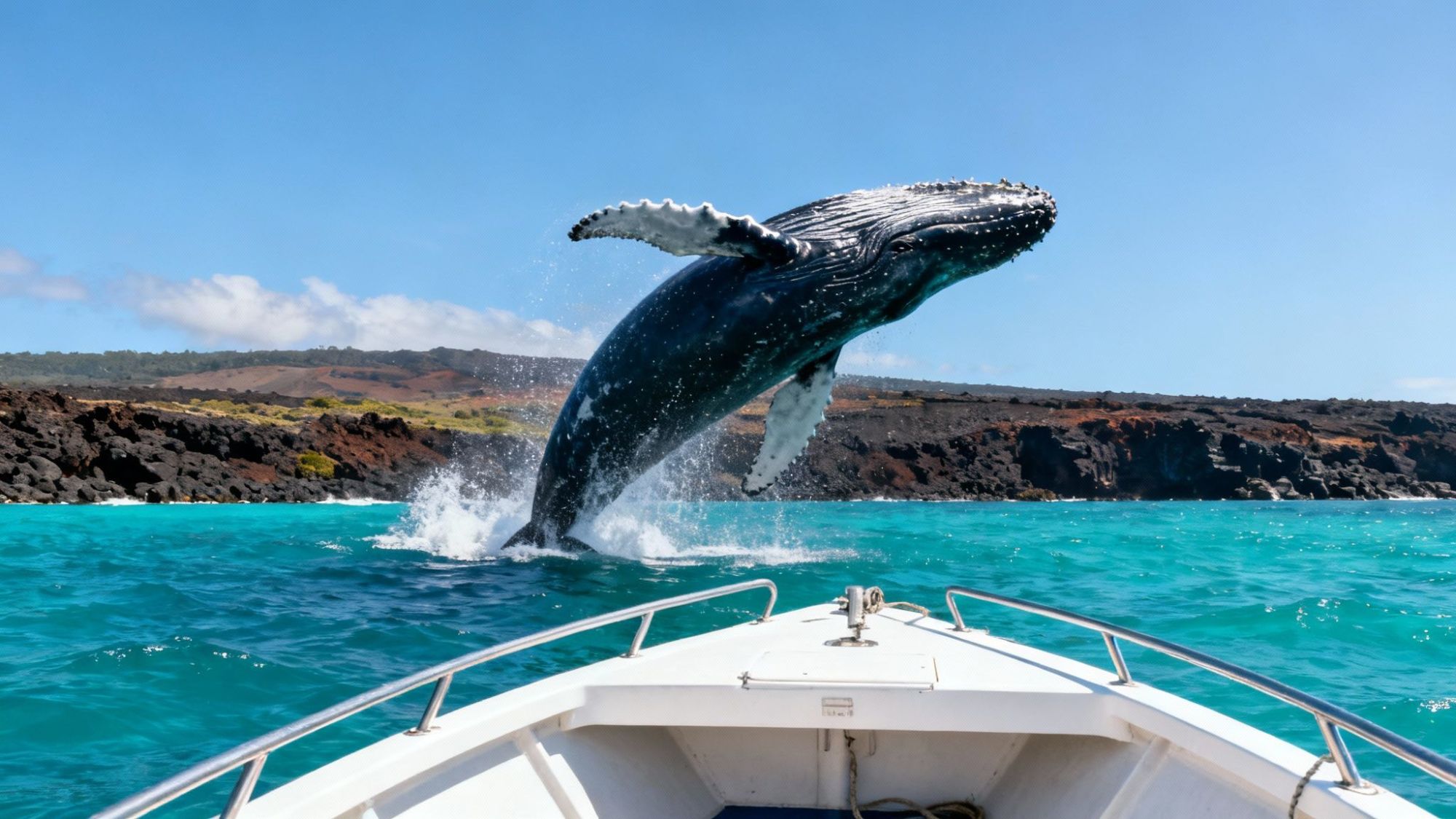
Picture this: the calm, turquoise water of the Kona coast suddenly explodes. A 40-ton humpback whale launches itself into the air, hanging for a breathtaking moment against the black lava rock shoreline before crashing back down in a spectacular splash. That's the heart of whale watching in Kona, an experience that sticks with you long after you've returned to shore.
The absolute best time for these jaw-dropping sightings is from January through March, when the whale migration hits its peak.
Your Ultimate Guide to Kona Whale Watching
Welcome to the only guide you'll need for witnessing one of nature's greatest shows. Every winter, thousands of humpback whales trade the frigid waters of Alaska for the warm, protected seas off the Kona coast. It's here they come to mate, give birth, and raise their newborn calves.
Choosing the right tour can take your trip from just "good" to truly unforgettable, and we've packed this guide with everything you need to know.
We're Kona Snorkel Trips, and as Hawaii's top-rated and most-reviewed snorkel and tour company, putting people face-to-face with incredible marine life is what we do best.
Kona Whale Watching Season At a Glance
So, when should you book your trip? While you can see whales for several months, certain times are better than others for specific behaviors.
Here’s a quick breakdown of what to expect throughout the season. Planning your visit during these windows seriously boosts your chances of seeing the most exciting surface action.
| Time of Year | Whale Activity Level | Common Sights & Behaviors |
|---|---|---|
| November – Early January | Increasing | The first trailblazers from Alaska start to arrive. Sightings get more and more frequent, mostly with adult whales. |
| Mid-January – Late March | Peak | This is it—the highest concentration of whales all year. Expect to see competitive pods, powerful breaches, and plenty of tail slaps. |
| April – May | Decreasing | Mothers and their newborn calves are the stars of the show now, sticking close as they get ready for the long swim back north. |
Remember that while whale watching is a must-do, the Big Island is packed with adventure. Be sure to check out all the other incredible things to do in Kona during your stay!
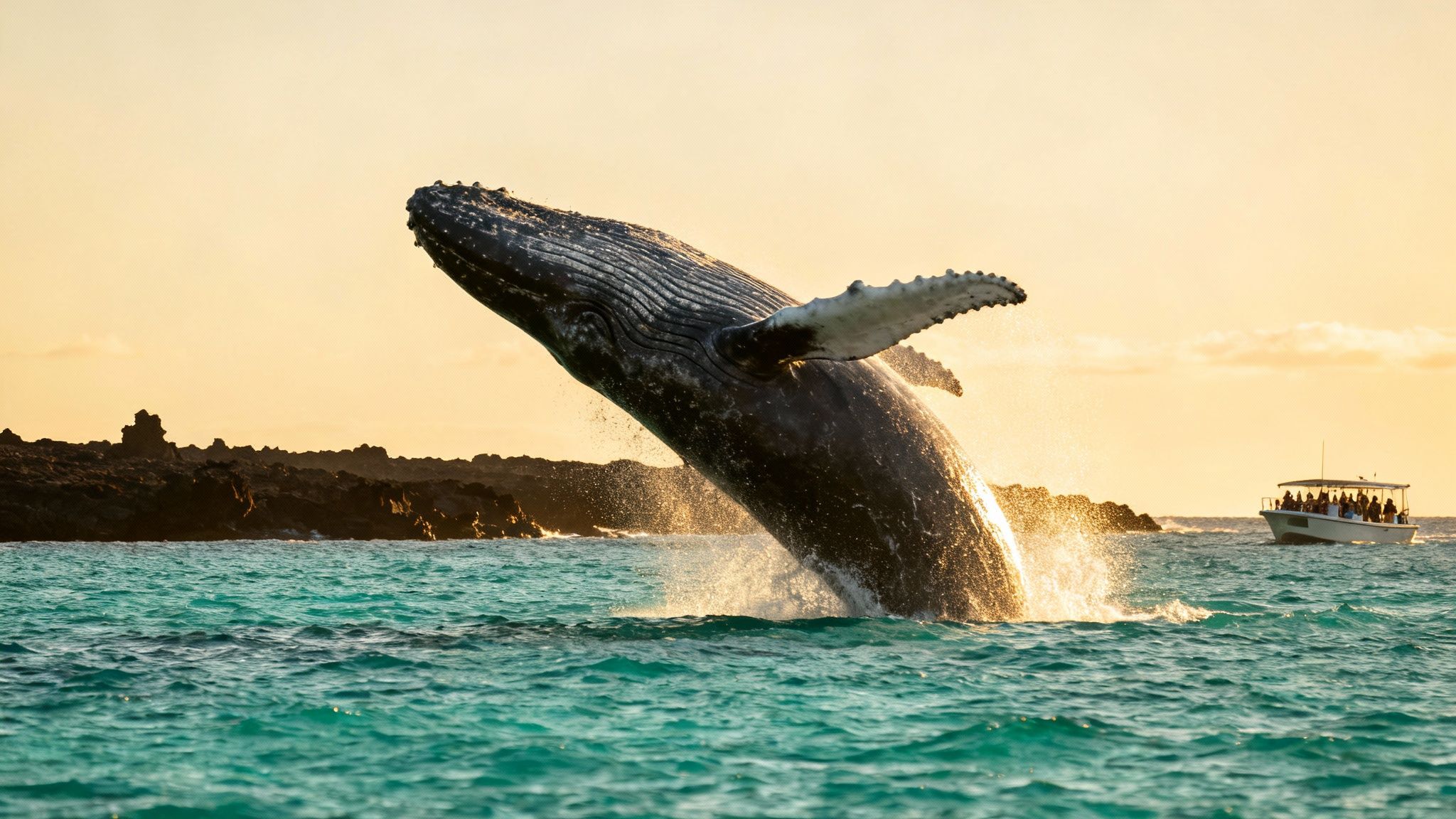
When Is the Best Time for a Whale Watch in Kona
Timing is everything when it comes to planning a whale watch in Kona, Hawaii. Nailing down the right time to book your tour is what takes a trip from good to absolutely unforgettable. It really all boils down to understanding the incredible journey these gentle giants make every single year.
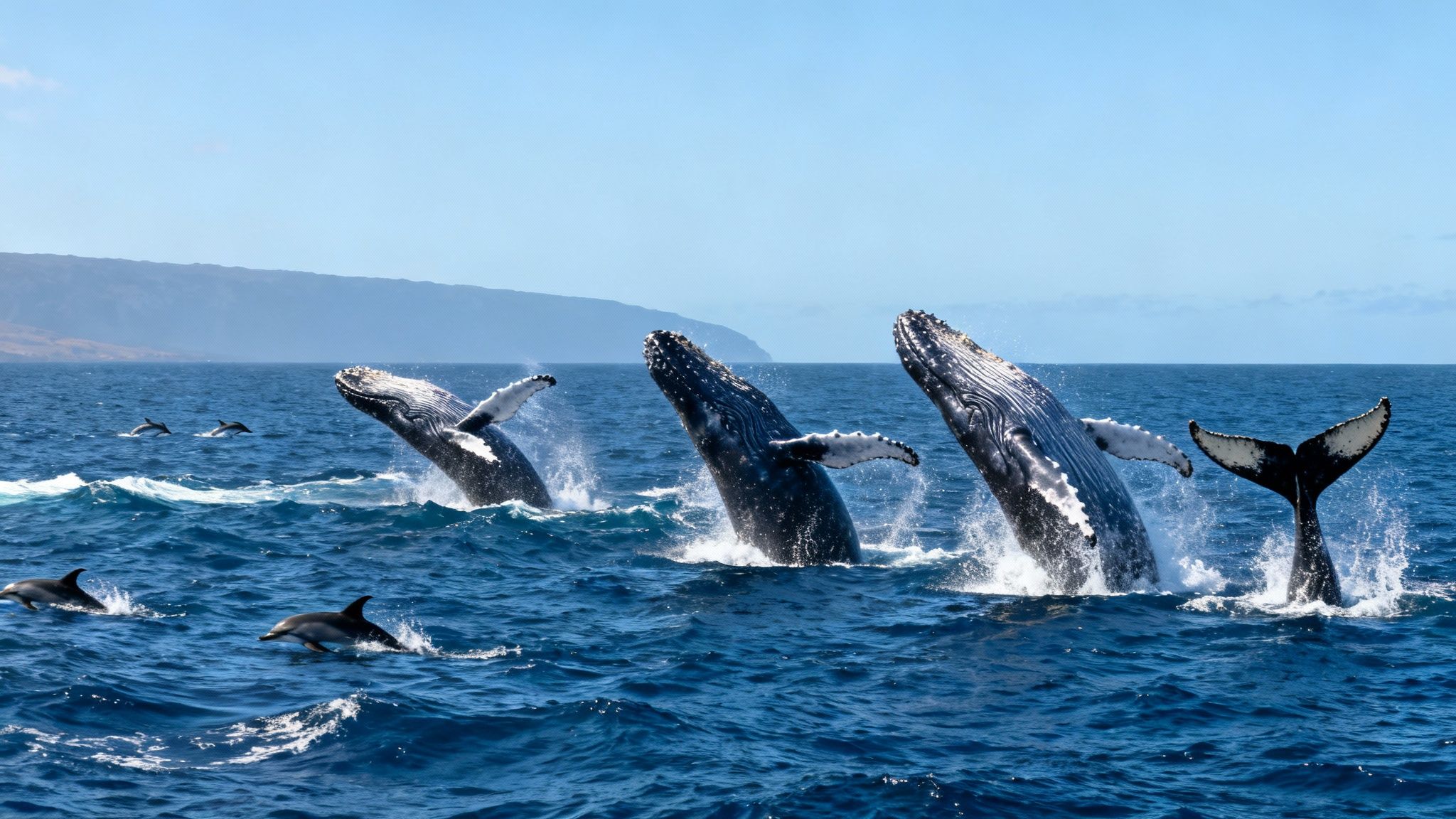
Each year, humpback whales travel an astounding 4,000 miles from their chilly feeding grounds up in Alaska. They’re seeking out Kona's warm, sheltered waters for one main reason: to breed, give birth, and raise their newborn calves in a safe, cozy environment.
This massive annual migration creates a very clear whale watching season that you can plan your whole vacation around.
Understanding the Kona Whale Season Window
The official whale season here in Hawaii runs from November through May. But the action—the number and frequency of sightings—changes a lot within that window. Think of it like a bell curve: it starts out slow, builds to an amazing peak, and then gradually winds down.
- Early Season (November – December): This is when we see the first arrivals, usually adult males. Sightings are definitely possible, but they're a bit more spread out as the population is just starting to build.
- Late Season (April – May): The last ones to head back north are the new mothers and their calves. Seeing them is incredibly special, as you're watching the little ones get strong enough for their first big trip.
While seeing a whale at any point is magical, there's an undeniable "sweet spot" for the most action-packed trips.
The key to maximizing your experience is to aim for the peak. This is when the highest concentration of whales creates a dynamic, energetic, and often breathtaking spectacle of social behavior right off the Kona coast.
Booking your whale watch during these prime months seriously stacks the odds in your favor for seeing the most awe-inspiring displays. We're talking powerful tail slaps that echo across the water, curious whales spy-hopping to get a look at you, and that unforgettable sight of a full-body breach. To get an even better feel for what to expect, check out our in-depth guide to the Big Island's whale season.
Pinpointing the Absolute Peak Season
For the most dramatic and consistent sightings, the absolute best time for a whale watch in Kona is from mid-January through late March. This is the prime window when the whale population in Hawaiian waters is at its highest.
Scientists figure that over 12,000 humpbacks—more than half of the entire North Pacific population—are hanging out in these waters. This peak season is when you'll see it all: dramatic courtship rituals, competitive pods vying for attention, and those tender, quiet moments between a mother and her brand new calf. For our guests, this means the best possible chance to witness the full spectrum of whale behaviors.
Ultimately, planning your trip during this peak period doesn't just give you a chance to see a whale; it gives you the best possible chance to see the whole, magnificent story of their time in Hawaii. It’s a natural event that is truly not to be missed.
What You Will See on a Kona Whale Watching Tour
Sure, the magnificent humpback whale is the undisputed star of the show during any whale watch in Kona, Hawaii, but your ticket gets you a front-row seat to a much bigger marine spectacle. The deep, nutrient-rich waters right off our coast host a whole cast of characters year-round, turning every single trip into a potential multi-species encounter.

It’s best to think of it less as a simple whale watch and more like a full-blown ocean safari. You're cruising through a dynamic, living ecosystem where you never know what you’ll see next. That's the thrill of it—no two tours are ever the same.
Beyond the Breach Humpback Behaviors
Humpbacks are incredibly expressive and acrobatic animals. Seeing their behaviors up close is a powerful experience, and knowing what you're looking for makes it even more incredible. The full-body breach is what everyone dreams of, but it’s just one piece of their complex communication puzzle.
Here are a few of the key behaviors you might witness out on the water:
- Breach: The classic, iconic leap completely out of the water. It’s thought to be a way to communicate across long distances or maybe just to shake off pesky parasites.
- Tail Slap (Lobtailing): A massive, powerful slap of the tail (or fluke) on the surface. It creates a thunderous crack that echoes for miles underwater.
- Pectoral Fin Slap: You'll often see a whale roll onto its side and repeatedly smack its long pectoral fin against the water—another loud, clear signal to other whales.
- Spyhop: This one’s a favorite. The whale lifts its head straight up out of the water, almost like it's taking a good look around at its surroundings… including your boat!
These aren't just random movements; this is the language of whales. You're getting a direct glimpse into their social world, from males showing off for mates to mothers patiently teaching their calves the ways of the ocean.
The Supporting Cast Other Marine Life in Kona
Beyond the humpbacks, Kona's waters are absolutely teeming with other amazing creatures. The coast here has a steep underwater drop-off, creating the perfect habitat for a huge variety of species. So, keep your eyes peeled for more than just whales.
One of the most common and purely joyful sightings is dolphins. It’s not unusual at all for a pod to come racing alongside the boat, leaping and playing in our wake.
The sheer biodiversity off Kona's coast is astonishing. Where the ocean floor plunges dramatically, life explodes. Recent whale watch reports have logged not just humpbacks, but also multiple pilot whale pods, acrobatic Hawaiian spinner dolphins, bottlenose dolphins, and even oceanic whitetip sharks shadowing the whales.
In fact, one recent tour had an unbelievable encounter with at least five sharks trailing a whale pod while dolphins put on a show nearby. These moments transform a great tour into a truly wild spectacle. You can dive deeper into these multi-species sightings by reading the full Kona whale watch report.
Other frequent co-stars on our whale watches include:
- Spinner Dolphins: Famous for their incredible, acrobatic spins as they launch themselves out of the water.
- Bottlenose Dolphins: Larger than spinners and often just as curious and playful.
- Short-finned Pilot Whales: These are actually a large species of oceanic dolphin. They're year-round residents that travel in tight-knit family pods.
- Oceanic Whitetip Sharks: Seeing these open-ocean predators trailing a pod adds a raw, untamed element to the tour that reminds you you're in their world now.
Humpback Whales vs. Pilot Whales in Kona
While humpbacks are our celebrated seasonal visitors, short-finned pilot whales call Kona home all year long. This makes them a common and fascinating sight on our tours. Knowing the key differences between them can really enrich your viewing experience.
Here’s a quick comparison to help you tell these two amazing species apart.
| Feature | Humpback Whales | Pilot Whales |
|---|---|---|
| Seasonality | Seasonal (November – May) | Year-Round Residents |
| Typical Size | 40-50 feet long | 12-20 feet long |
| Key Behavior | Acrobatic breaches, tail slaps, spyhopping | Highly social, travels in large, tight pods |
| Appearance | Long pectoral fins, knobs (tubercles) on head | Bulbous, rounded head, uniformly dark color |
Seeing both types of whales on a single trip is a special treat that truly showcases the incredible diversity of life we have right here off the Kona coast. It’s a reminder of how lucky we are to share the water with such magnificent creatures.
Choosing the Best Kona Whale Watch Tour
Picking the right operator for your whale watch in Kona, Hawaii, is hands-down the most important decision you'll make. It’s the difference between just another boat ride and a truly unforgettable marine adventure. The best companies don't just put you in front of whales; they deepen your appreciation for these incredible animals.
With a sea of options out there, it's easy to get focused on price. But the real value lies in the experience itself. Start by picturing your ideal day on the water. Are you hoping for a quiet, up-close encounter, or would you prefer the energy of a larger, more social group?
The Small Boat Advantage
Boat size is a huge factor. Big catamarans are stable and have plenty of amenities, but smaller boats offer a totally different vibe—one that's far more personal. They're nimble and quiet, able to slip into the best viewing spots without making a commotion and disturbing the whales.
That agility means your captain can react in a heartbeat to a whale breaching in the distance or a pod suddenly surfacing nearby, so you won’t miss a thing. Plus, on a small boat, every seat is a front-row seat. You get clear, unobstructed views and feel much closer to the ocean and the action.
A small-group tour completely changes the dynamic. Instead of fighting for a view over a crowd, you're right there, experiencing a personal and respectful encounter with these magnificent animals.
Here at Kona Snorkel Trips, we live by this small-group philosophy. It creates a much more intimate atmosphere where you can easily ask questions, hear the guide's stories and insights, and feel like you're part of the expedition, not just watching from the sidelines.
The Crew Makes the Difference
A boat is only as good as its crew. The skill of your captain and guides can make or break a whale watch. A seasoned captain knows these waters like the back of their hand, reading subtle signs on the ocean's surface to predict where the whales might show up next.
But just as important is a guide who can tell you what you're actually seeing. A great naturalist can explain the drama of a competitive pod or the tender bond between a mother and her calf, turning your tour into a fascinating learning experience. That context adds so much depth to the whole trip.
Our guides at Kona Snorkel Trips aren’t just boat crew; they're passionate marine naturalists. They love sharing their knowledge about humpback whale behavior, their epic migration, and their complex social lives. Their stories bring the whole encounter to life.
Key Factors for Selecting Your Tour
As you compare tours, keep a few things in mind. Thinking through these points will help you find a company that matches your expectations for a safe, comfortable, and amazing day.
- Safety Record and Certifications: Always check for a solid safety record. Our guides at Kona Snorkel Trips are lifeguard-certified, and our boats are stocked with top-of-the-line safety gear, so you can relax and enjoy the ride.
- Customer Reviews: Don't just take the company's word for it. Look at recent reviews on Google and TripAdvisor. A steady stream of great feedback is the best sign you've found a quality operator.
- Educational Focus: Does the crew include naturalists? Do they have a hydrophone on board so you can listen to the whales' incredible songs? A tour that’s focused on education is always more rewarding.
- Respectful Practices: Make sure the company strictly follows federal laws, which require staying at least 100 yards from humpback whales. This "whale-wise" approach is crucial for protecting the animals.
Doing a little homework upfront ensures your whale watching trip will be memorable for all the right reasons. For a closer look at the different operators, check out our guide to the best whale watching tours on the Big Island for a detailed breakdown. When you choose a top-rated company like Kona Snorkel Trips, you’re not just booking a tour—you’re investing in a respectful, educational, and truly unforgettable experience.
Respectful Viewing and Marine Conservation
A truly unforgettable whale watch isn't just about what you see; it's about how you see it. Having one of these gentle giants surface near your boat is a privilege, and with that comes a shared responsibility to protect them and their ocean home. This isn't just good practice—it's the law.
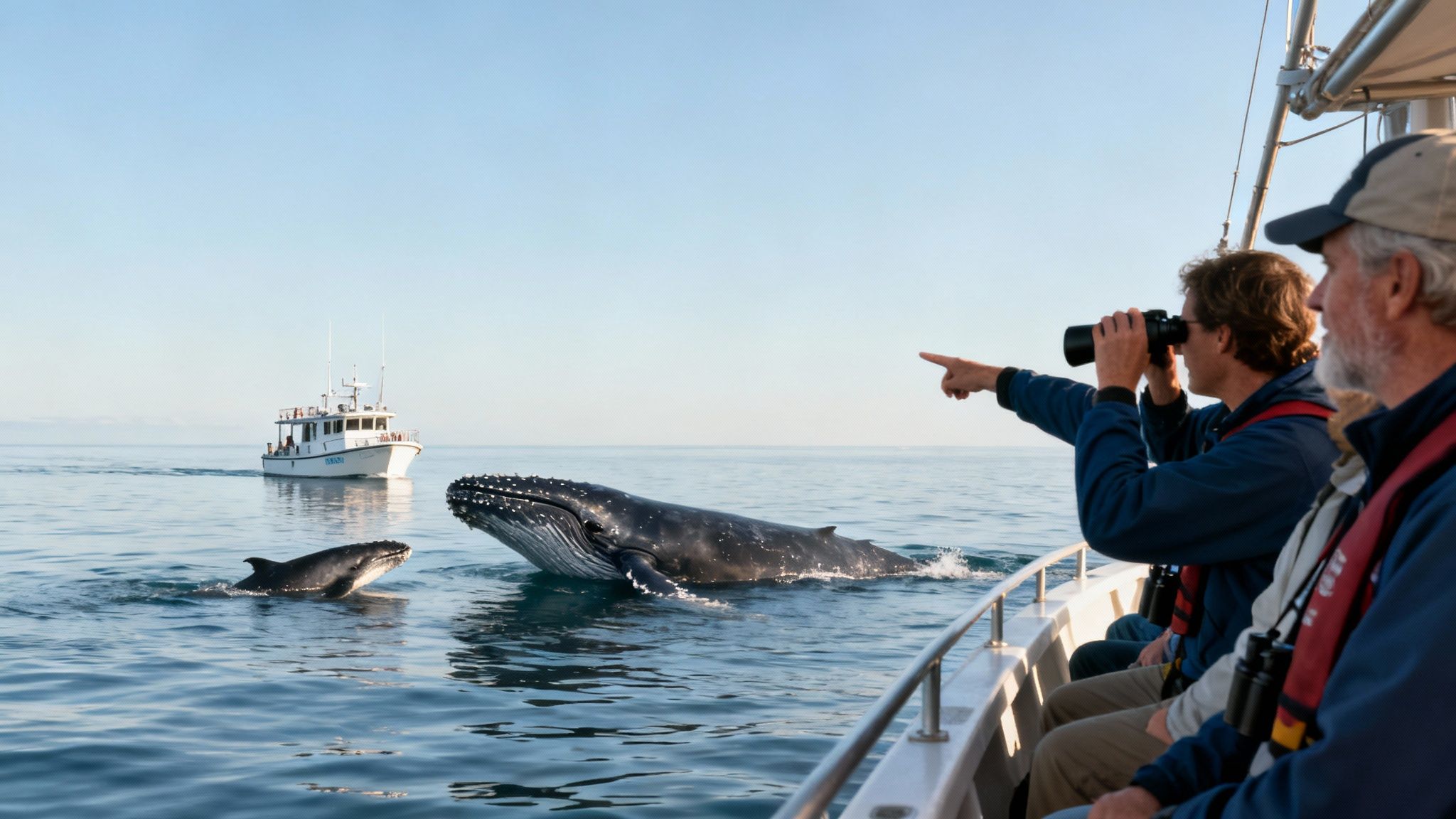
Here in Hawaii, federal regulations are crystal clear: all boats must stay at least 100 yards away from humpback whales. Think of it as their personal space. This buffer is absolutely critical for preventing stress, especially for the new moms nursing their calves in Kona's calm, protected waters.
Great tour operators, like us here at Kona Snorkel Trips, live by these 'whale-wise' guidelines. We make sure our presence never interrupts their natural behavior—whether they're resting, feeding, or socializing. It’s all about preserving the magic of the encounter for both them and us.
The Role of Eco-Tourism in Conservation
When you book a tour with a company that’s serious about sustainable eco-tourism, you're doing more than just buying a ticket. You're becoming a partner in marine conservation. That ticket supports a local business dedicated to protecting the very ecosystem that makes these amazing adventures possible.
Your choice sends a powerful message that responsible, respectful tourism is what people want. It’s how we ensure future generations get to feel that same sense of awe when a 40-ton humpback breaches right before their eyes.
By selecting a responsible tour operator, you contribute directly to the ongoing protection of these magnificent creatures. Your adventure becomes both a thrilling personal experience and a meaningful act of conservation.
This creates a positive cycle. Responsible tours deliver incredible, ethical experiences, which inspires a deeper appreciation for marine life and why it's so important to protect it. For a deeper dive into how these conservation rules apply to other interactions, this guide on scuba diving with whales in Hawaii is a great resource.
Why Your Choice Matters
With thousands of people hoping to see whales, our collective impact is significant. By supporting companies that put education and regulations first, you help minimize that impact. You're helping make sure the whales continue to see Kona as a safe haven they can return to year after year.
And the scale of this migration is just mind-blowing. During the final volunteer count of a recent season, observers tallied an incredible 714 humpback whales across Hawaiian shorelines. Just eight sites on the Big Island accounted for 28 of those sightings, underscoring how vital Kona is to this epic journey.
Ultimately, choosing a respectful whale watch transforms your trip from a simple sightseeing tour into a genuine connection with the natural world. It’s an adventure that leaves you with incredible memories while leaving the whales—and their habitat—undisturbed.
Got a few questions before you head out on the water? You're not alone. Here are the answers to some of the things we get asked most often about whale watching in Kona. Knowing the details ahead of time helps make sure your day is smooth, safe, and totally unforgettable.
What Should I Bring on a Whale Watching Tour in Kona?
Packing a few key items will make your time on the boat much more comfortable. Even on a perfect Hawaiian day, things can feel a little different once you're out on the ocean.
We suggest a small bag with the basics. Sun protection is your top priority—that reflection off the water is no joke! After that, think about comfort and being ready to capture the moment.
Here’s a quick list of things you’ll be glad you brought:
- Reef-Safe Sunscreen: This is a big one. It protects your skin and our precious coral reefs at the same time.
- A Hat & Polarized Sunglasses: These are game-changers for cutting the glare off the water, making it way easier to spot whale spouts and other marine life.
- A Light Jacket or Windbreaker: It can get surprisingly cool and breezy out on the open ocean, especially for those early morning trips.
- A Camera in a Waterproof Bag: You’ll definitely want to catch that epic breach or tail slap! Make sure your camera or phone is safe from any ocean spray.
- Motion Sickness Medication: If you know you're prone to seasickness, it's a good idea to take something non-drowsy before you get on board (just follow your doctor's advice). Kona’s waters are usually pretty calm, but it's always better to be prepared.
Good tour operators like us provide water and some light snacks, but it never hurts to double-check what's included when you book. Most importantly, bring your sense of adventure!
Is a Whale Sighting Guaranteed on Every Tour?
This is probably the number one question we get, and it’s a great one. While your chances of seeing whales during peak season in Kona are incredibly high, we are dealing with wild animals in a massive ocean. Because of that, sightings can never be 100% guaranteed.
That said, the odds are definitely stacked in your favor, especially from mid-January through March. Our experienced captains have spent years on these waters. They know how to read the subtle signs of the ocean to find the most active areas, giving us an extremely high success rate.
The thrill of the search is part of the magic. The anticipation builds with every passing minute, making that first glimpse of a spout on the horizon an absolutely electric moment.
And remember, the trip itself is an adventure. On the very rare day the humpbacks are playing hard to get, you’re still likely to see other amazing marine life like playful spinner dolphins, pilot whales, or even sea turtles.
Are Whale Watching Tours in Kona Suitable for Children?
Absolutely! A whale watching tour can be a core memory for a kid. Seeing a 40-ton animal launch itself out of the water is something your family will be talking about for years. It's both magical and a fantastic learning experience.
Kona’s typically calm waters make for a smoother ride than many other whale watching spots in the world, which is a huge plus for families with little ones.
We make safety a top priority and our guides are fantastic at engaging with younger guests. They share fun facts and stories that turn the tour into an exciting classroom on the water. Just be sure to ask about any specific age or height requirements when you book your tour.
Can I Swim with Humpback Whales in Hawaii?
This is a firm and definite no. Federal law under the Marine Mammal Protection Act makes it illegal to swim with or intentionally get within 100 yards of a humpback whale in Hawaii.
These aren't just guidelines; they are critical laws put in place to protect the whales and keep people safe. That 100-yard buffer is especially important for moms and their newborn calves, who are very vulnerable. Getting too close can cause them a lot of stress and interrupt crucial behaviors like nursing and resting.
Reputable companies like Kona Snorkel Trips follow these laws without exception. Our captains are experts at positioning the boat for amazing views from a safe, respectful distance. The best, safest, and only legal way to see these incredible animals is from the deck of a professional tour boat.
When you're ready to experience the magic of Hawaii's marine life, book your next adventure with Kona Snorkel Trips. As the top-rated and most-reviewed snorkel and tour company in the state, we offer unforgettable encounters all year long. Explore our world-famous Manta Ray Night Snorkel or our stunning Captain Cook Snorkeling Tours for another incredible day on the water.