
Your Guide to Whale Season Hawaii Big Island
Welcome to Hawaii's Humpback Whale Season
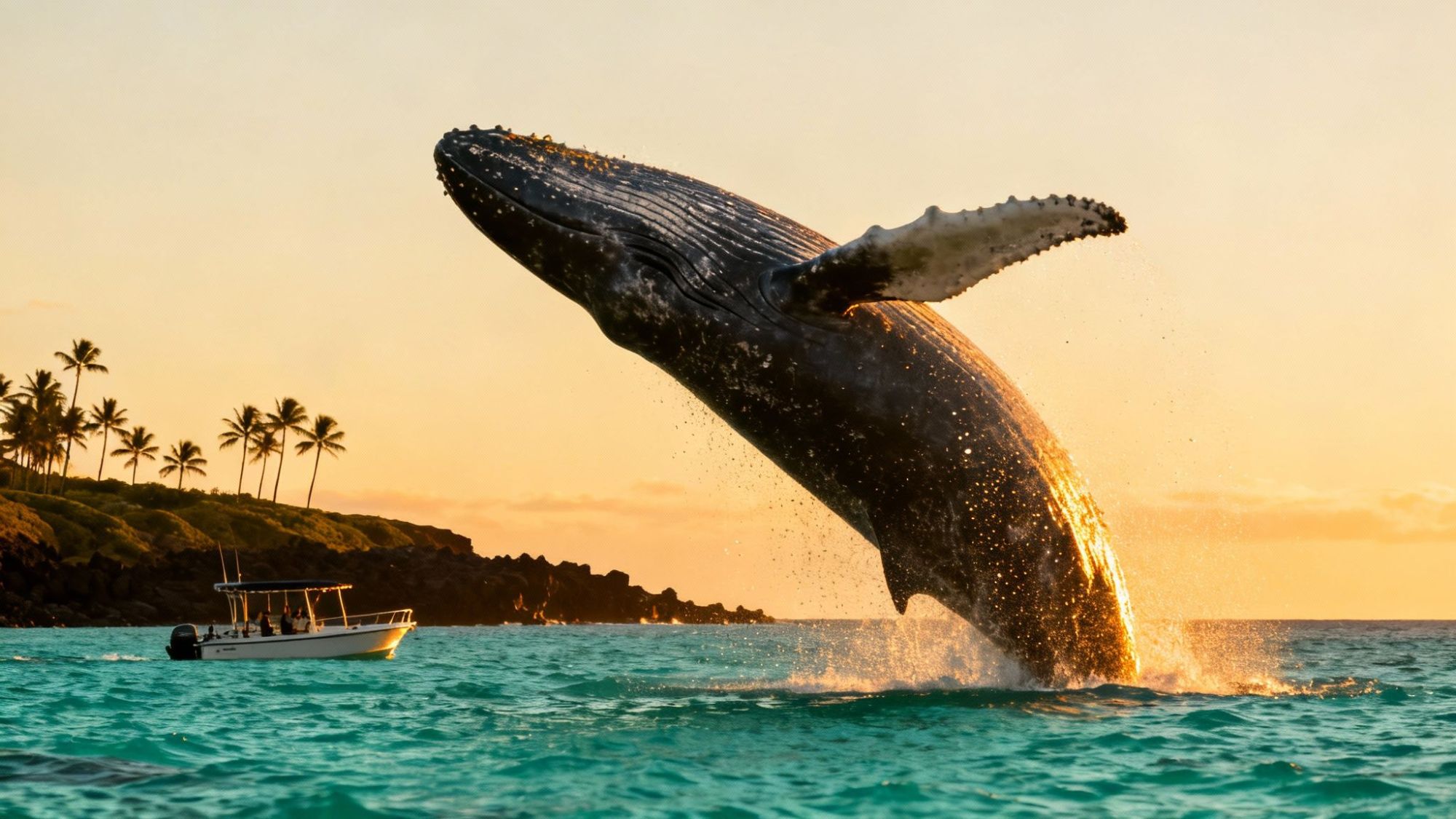
Imagine the calm Pacific surface suddenly exploding as a 40-ton humpback whale launches its entire body skyward. It's a breathtaking sight, and it’s the heart and soul of whale season here on the Big Island. Every year, this incredible spectacle transforms the Kona coast into a massive, thriving marine nursery.
This isn't just any migration; it's one of the most remarkable journeys in the entire animal kingdom.
As Hawaii's top-rated and most-reviewed snorkel company, Kona Snorkel Trips is out on the water every day, and we'd love to share this magic with you.
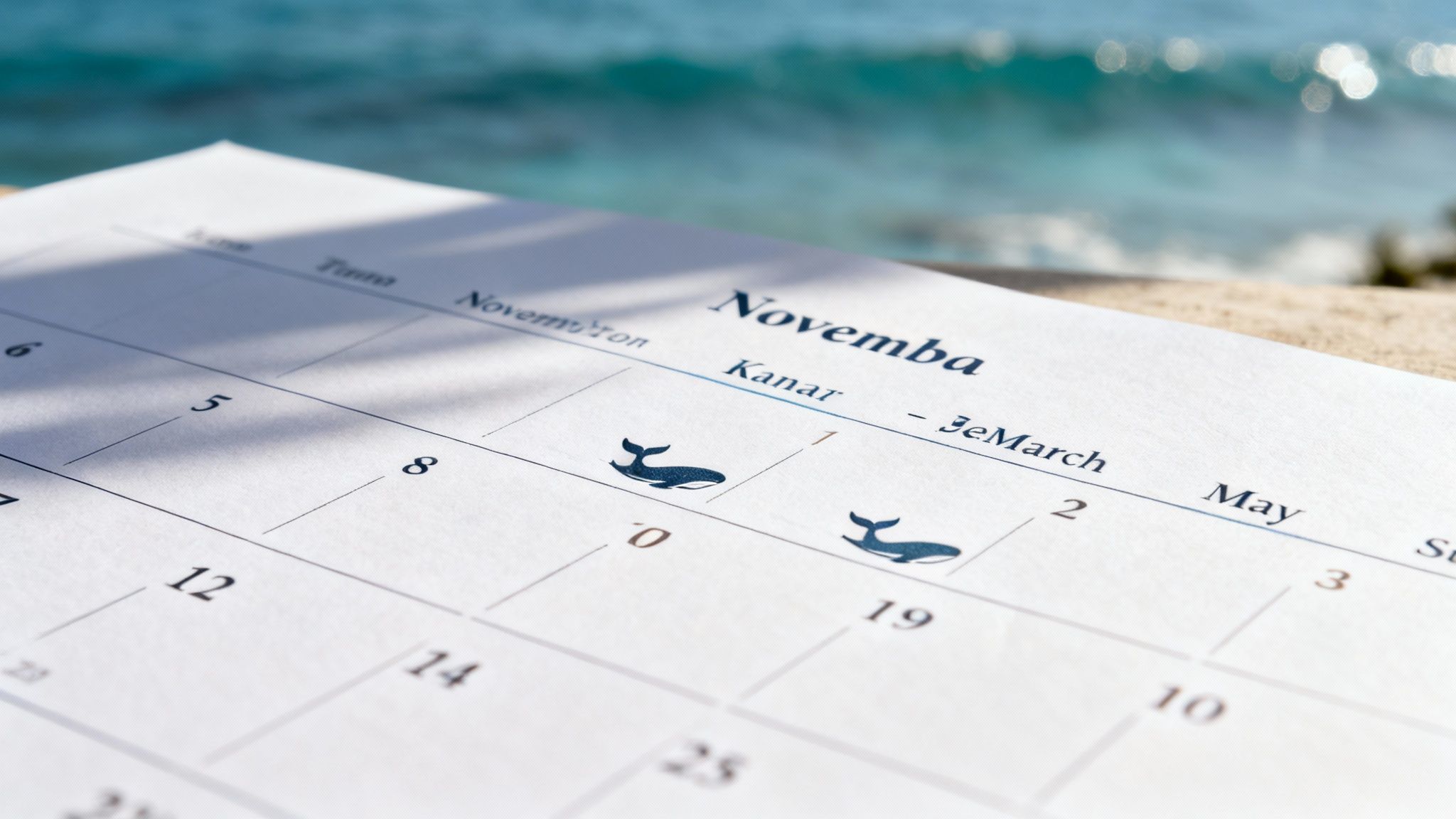
Here's the thing you need to know: whale season in Hawaii generally runs from November through May. But if you want the absolute best chance of seeing non-stop action, you’ll want to aim for the peak, which is squarely between mid-January and mid-March. That's when thousands of humpbacks crowd our warm, protected waters to breed, give birth, and nurse their newborn calves.
The Great Migration to Kona
Every year, these gentle giants travel an astonishing 3,000 miles from their chilly feeding grounds up in Alaska. They make this epic journey without eating, fueled entirely by their fat reserves.
Why Hawaii? Because our waters are warm, clear, and sheltered—the perfect conditions for mating and for raising a newborn calf away from major predators. It’s an incredible feat of nature.
When you're out there watching them, you're not just on a sightseeing trip. You’re getting a front-row seat to a crucial, moving chapter in the life of one of the planet's most magnificent creatures.
The humpbacks you'll see are part of the North Pacific population, a group that has made an amazing comeback from near-extinction in the 1960s. Today, their population is estimated at around 26,000, with about 10,000 of them spending their winters right here in Hawaiian waters. It truly is one of the most important humpback habitats on the planet.
As you get ready to witness these giants, it’s humbling to think about the sheer scale of the world's oceans and seas that they call home.
Finding the Best Time for Whale Watching
When it comes to seeing humpback whales on the Big Island, timing really is everything. While you might get lucky and spot the first arrivals as early as November or the last few stragglers in May, the season has a very distinct rhythm—a slow build, a massive peak, and a gradual fade. Planning your trip around that peak window is the secret to moving from "hoping" to see a whale to witnessing non-stop, breathtaking action.
The official whale season generally runs from mid-December through the end of March. Think of it like a bell curve: the action starts off a bit slow, builds to an incredible crescendo, and then gently tapers off. Those early sightings in November and December are always exciting, but they can be pretty sporadic. By April and May, most of the whales have already started their long swim back to Alaska, making encounters less frequent.
For the most spectacular, consistent, and downright mind-blowing whale activity, the sweet spot is between mid-January and mid-March. This is the heart of the season.
Pinpointing the Peak Season
During these prime weeks, the waters off the Kona and Kohala coasts are absolutely electric with life. This is when the highest number of whales gather to mate, give birth, and nurse their newborn calves. The ocean comes alive with activity, from powerful tail slaps that echo across the water to the unforgettable sight of a 40-ton adult launching its entire body out of the sea in a full breach.
The sheer volume of whales during this period is astonishing. It’s not uncommon to see multiple pods at once, creating a 360-degree viewing experience that you'll be talking about for years.
On our tours, we’ve found that experienced Kona-based captains report seeing 20 to 30 whales per hour on average during these peak weeks. Some trips are even more incredible. This incredible concentration of life is why a trip in February feels like a completely different world compared to one in late November. To learn more about the nuances of the season, check out our guide on the Big Island whale watching season.
Big Island Whale Season Month-by-Month Guide
To help you visualize the flow of the season and plan the perfect trip, we've put together a simple breakdown of what to expect each month. Use this guide to match your travel dates with the kind of whale activity you're hoping to experience.
| Month | Whale Activity Level | Typical Behaviors Observed | Viewing Probability |
|---|---|---|---|
| November | Low | First arrivals, mostly distant spouts, occasional breaches. | Fair |
| December | Moderate | Numbers pick up, more frequent sightings of individuals and pairs. | Good |
| January | High | Big jump in population, mothers with newborn calves start to appear. | Excellent |
| February | Peak | The highest concentration of whales, lots of surface activity, competitive pods. | Excellent |
| March | High | Still very active, but pods begin their northern migration late in the month. | Excellent |
| April | Moderate | Fewer whales remain, mostly mothers with calves getting ready to leave. | Good |
| May | Low | The very last sightings of the season; encounters are rare but rewarding. | Fair |
This table gives you a great starting point, but remember, these are wild animals on their own schedule. Every single day out on the water is a unique adventure, which is what makes it so exciting
Where to Spot Humpback Whales on the Big Island
When you're hoping to experience the magic of whale season hawaii big island style, knowing where to look is half the battle. You’ve really got two choices for spotting these incredible giants: watching from the shore or getting out on the water for a boat tour. Each one offers a completely different vibe and perspective on this amazing natural show.
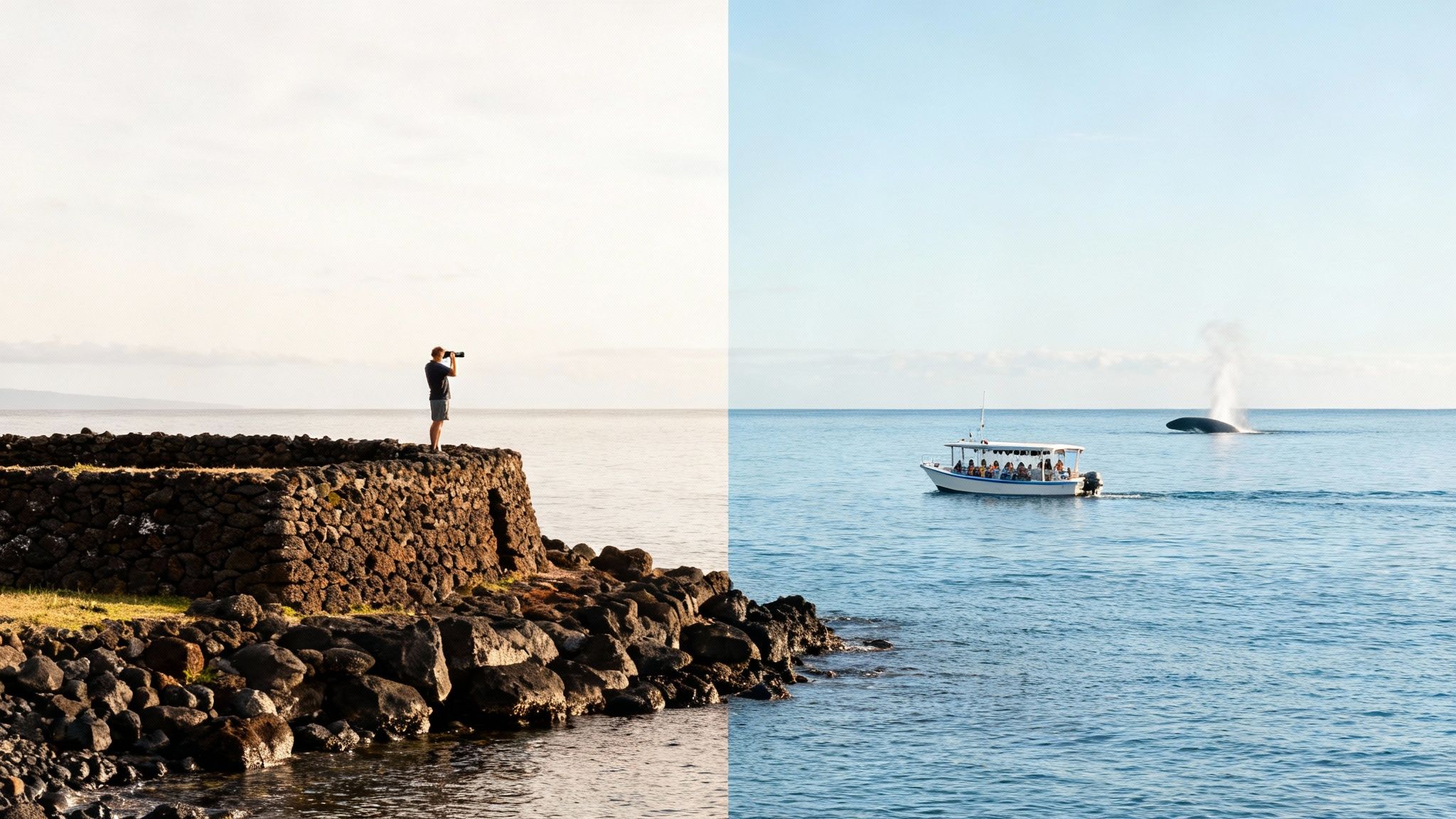
Watching from land can be a beautiful, peaceful way to spend an afternoon. But honestly, nothing beats the feeling of being right there on the ocean with them. A boat tour gives you a dynamic, front-row seat to the action, letting you truly appreciate the raw scale and power of the humpbacks.
Land-Based Viewing Hotspots
If you prefer to keep your feet on solid ground, the Big Island’s coastline serves up some fantastic vantage points, especially along the sun-drenched Kohala Coast. The real trick is to find a spot with a bit of elevation. That height gives you a panoramic view over the ocean, making it much easier to catch sight of a distant spout or splash.
Here are a few of our favorite spots for shoreline whale watching:
- Puʻukoholā Heiau National Historic Site: The name literally means "hill of the whale," a clue that this spot has been a prime viewing location for a very, very long time. It absolutely lives up to the name with its sweeping ocean views.
- Lapakahi State Historical Park: This is another fantastic high-elevation viewpoint, perfect for scanning the horizon for that tell-tale sign of activity.
- Kapaʻa Beach Park: This is a great choice with covered picnic pavilions, so you can watch for whales in comfortable shade.
Just remember to bring a good pair of binoculars and some patience. Mornings are often your best bet, as the calmer, glassy water makes spotting spouts much easier.
The Unmatched Experience of a Boat Tour
Shoreline viewing is great, but a boat tour is simply on another level. The calm, protected waters off the Kona coast are the perfect launching pad for getting close to the action. An expert-led tour doesn’t just put you in the right place at the right time; it completely changes your understanding of what you’re seeing.
Being on the water shifts your perspective entirely. Instead of seeing a distant splash, you feel the energy of a 40-ton breach and hear the powerful "whoosh" of a whale's spout up close. It's an intimate and unforgettable connection.
A knowledgeable captain can read the whales' behavior in real-time, pointing out the meaning behind a tail slap or a curious spy-hop. This turns a simple sighting into a deep appreciation for these intelligent animals. You can dive deeper into what makes these trips so special in our guide to Kona whale watching.
At the end of the day, a tour provides a richer, more engaging encounter that connects you to the true heart of Hawaii's whale season.
How to Choose Your Ideal Whale Watching Tour
Let’s be honest, not all whale watching tours are created equal. Picking the right one can be the difference between a pretty good day and an absolutely unforgettable memory, especially during the peak of whale season hawaii big island is famous for.
The biggest choice you'll make is between a massive tour boat and a more intimate, small-group experience. While the big boats can certainly pack in the people, they often miss the personal connection and nimble feel that makes a wildlife encounter truly special. On a crowded vessel, you can end up jostling for a spot along the rail, just trying to get a clear view.
A small-group tour, which is what we live and breathe here at Kona Snorkel Trips, offers a completely different vibe. It’s personal. It's an eye-level experience that gets you closer to the water—and by extension, closer to the whales themselves. This means unobstructed views for your camera and a direct line to your guide for any questions that pop into your head.
The Small Boat Advantage
Going with a smaller boat isn’t just about dodging the crowds; it's about being flexible and feeling a real connection to the ocean. Our captains can maneuver with more agility, reacting quickly when we spot activity. This allows us to get you the best possible view without ever stressing or disturbing the whales. It creates a calm, respectful atmosphere where the only thing that matters is the incredible sight of these humpbacks.
An intimate setting just allows for a deeper connection. You can ask questions freely, listen to the haunting whale songs on our hydrophone, and share that jaw-dropping moment with just a handful of other adventurers. It feels less like a tour and more like you’re on a private expedition.
On top of that, a smaller group makes for a much richer learning experience. Our guides are passionate about these animals, and they love sharing stories and insights that turn a simple sighting into a real lesson in marine biology. You'll start to understand what a breach really means or why a whale slaps its tail, giving you a whole new appreciation for these brilliant creatures. For a deeper dive into your options, check out our full breakdown of the best whale watching tours on the Big Island.
Combining Your Adventures
Why stop at just one amazing ocean experience? The best way to really make the most of your time on the water is to pair your whale watch with another iconic Big Island adventure.
Picture this: you spend the morning watching 40-ton whales launch themselves out of the water, and then that afternoon, you're slipping into the calm, turquoise waters of Kealakekua Bay for some world-class snorkeling. It’s the ultimate Big Island day.
We make this easy by offering combo tours that blend the thrill of whale season with the vibrant underwater world of Captain Cook. This flexibility lets you design the perfect day out on the Kona coast, experiencing everything from the largest mammals in the sea to the tiniest, most colorful fish darting through the coral.
Ready to book a complete ocean adventure?
What to Expect During Your Whale Watching Trip
There's a special kind of energy on the boat as it pulls away from the Kona coast. Everyone's eyes are glued to the horizon, scanning that deep blue line, just waiting. Then you hear it—a gasp from across the boat, a pointed finger, and you see it too: a misty puff hanging in the air. That's the first spout. In that single moment, your whale watching adventure has officially begun.
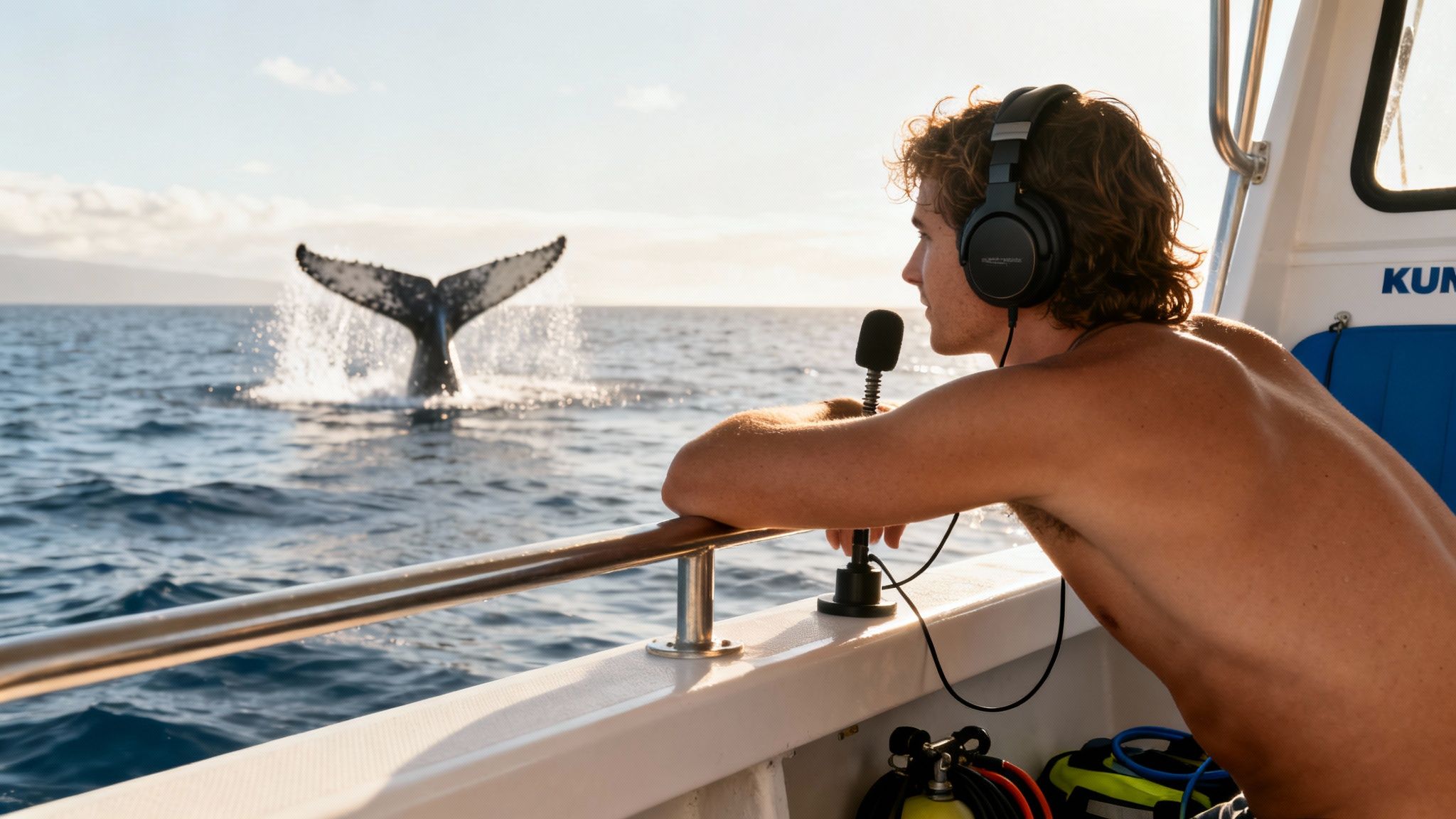
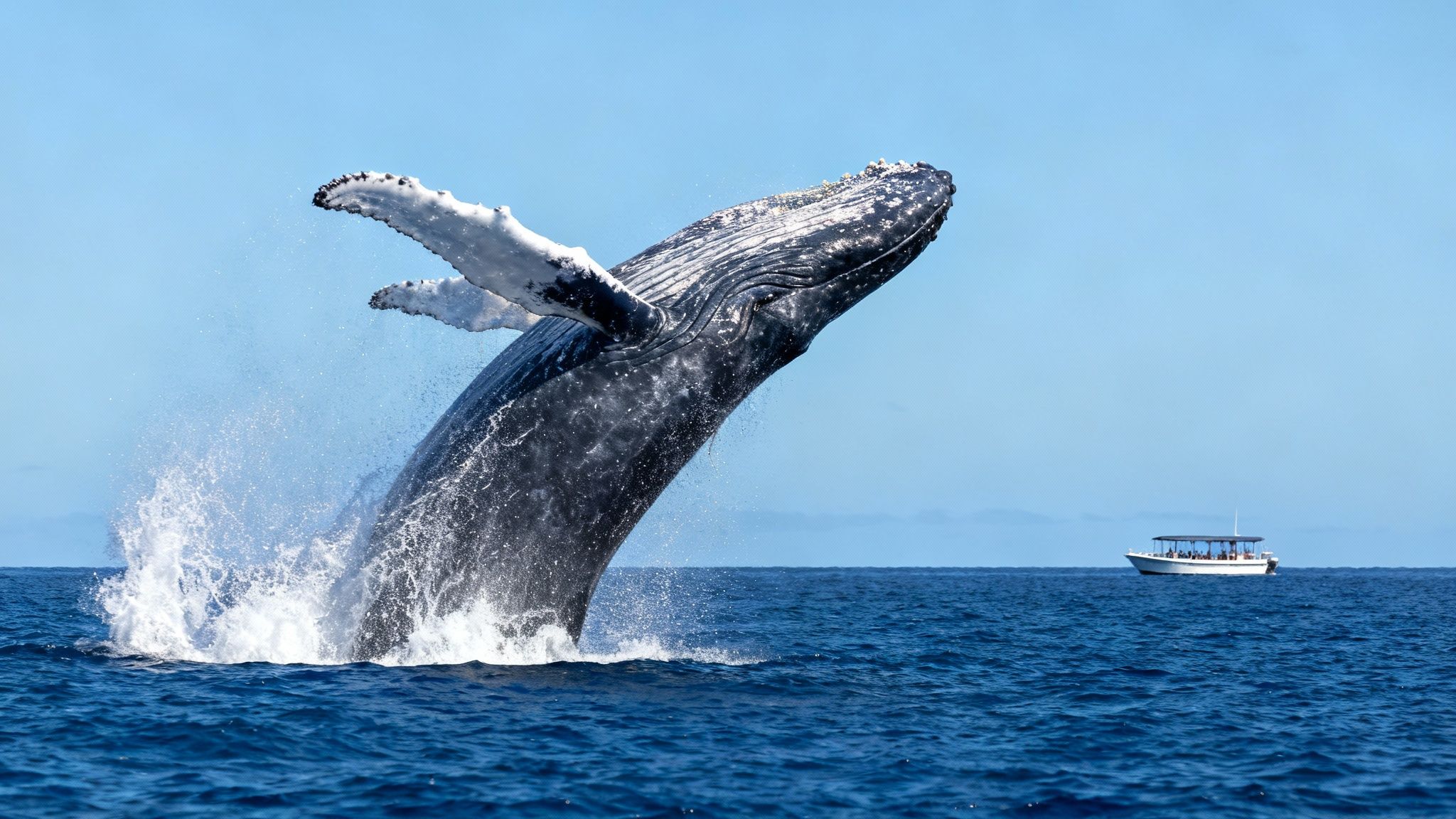
As the boat respectfully slows its approach, the sheer scale of these animals starts to sink in. Nothing quite prepares you for the sight of a 40-foot, 40-ton humpback launching its entire body out of the water in a massive breach. It's a display of raw, unbelievable power mixed with a surprising amount of grace.
But the acrobatics are just one piece of the puzzle. On our trips, the captain might drop a hydrophone into the water. In those quiet moments between surfacings, you can actually listen to the complex, haunting songs of the male humpbacks—an otherworldly soundtrack echoing up from the depths. It's an experience that stays with you.
Decoding Common Whale Behaviors
One of the coolest parts of any whale watch is learning to interpret what you're seeing. Every splash and slap has a purpose in their world, and knowing a bit of their "language" makes the whole encounter that much richer.
- Breach: This is the iconic, full-body leap out of the water everyone hopes to see. Scientists figure it could be a way to communicate over long distances, shake off pesky parasites, or maybe—just maybe—it’s pure joy.
- Tail Slap: You'll hear this one for sure. A loud, powerful smack of the fluke (tail) on the water's surface often serves as a warning, a show of dominance, or just another way to get a message across.
- Pectoral Fin Slap: A whale will often roll onto its side and just repeatedly slap one of its long pectoral fins on the water. It’s another form of communication you’ll often see when pods are socializing.
- Spy-Hop: A real crowd-pleaser. This is when a whale pokes its head straight out of the water to get a look around. It feels like they're just as curious about our little boat as we are about their massive presence.
To give you an idea of how active our waters get, on January 27, volunteers for the Sanctuary Ocean Count tallied an incredible 493 humpback whale sightings from shoreline sites around the Big Island in a single day. That number really drives home how dense the population is during peak season, making these behaviors a common sight. You can read more about these incredible whale count numbers to understand the true scale of the migration.
Gearing Up for Your Trip
Being prepared can make a good day on the water a great one. Here’s a quick checklist of things you'll be glad you brought:
- Polarized Sunglasses: This is a non-negotiable. They slice right through the surface glare, letting you spot shapes and movement under the water you'd completely miss otherwise.
- Light Jacket: Even on a beautiful, sunny Kona day, the breeze coming off the ocean can have a chill to it.
- Reef-Safe Sunscreen & Hat: The Hawaiian sun is no joke, especially when reflected off the water.
- Camera or Smartphone: You'll definitely want to capture these moments, but a little pro tip? Don't forget to put it down and just be present.
Every single trip is a unique dance with wild animals. No two are ever the same, and that’s what makes it so special.
Practicing Responsible and Ethical Whale Watching
There's nothing quite like the moment a 40-ton humpback whale explodes out of the water. It’s a powerful, primal sight that stays with you forever. But with that incredible experience comes a serious responsibility to protect these gentle giants.
The whales travel thousands of miles to our warm Hawaiian waters for a reason: it's their nursery. This is where they mate, give birth, and raise their newborn calves in safety. Any disturbance from us, no matter how small it seems, can cause a huge amount of stress, especially for a new mother trying to keep her vulnerable baby safe. That's why responsible tourism is at the very heart of every ethical whale encounter during the whale season hawaii big island is famous for. It's all about making sure our awe doesn't get in the way of their survival.
Following the Law of the Ocean
To keep the whales safe, there are strict federal and state laws in place. The single most important rule you need to know is the 100-yard approach distance. No vessel—not a big tour boat, not a kayak, not even a paddleboard—is legally allowed to get any closer than that to a humpback whale.
This rule creates a vital buffer zone, a personal space for the whales to rest, nurse, and just be without feeling cornered or threatened.
Think of the 100-yard rule as the cornerstone of respectful whale watching. Honoring this space isn't just about following the law; it's a sign of profound respect for the ancient and difficult journey these animals make to get here.
This is exactly why choosing a professional and reputable tour operator, like Kona Snorkel Trips, makes all the difference. An experienced crew knows how to position the boat for fantastic views and photo ops without ever breaking that 100-yard barrier or putting the animals at risk.
Supporting Conservation Through Your Choice
The waters around the main Hawaiian Islands are actually part of the Hawaiian Islands Humpback Whale National Marine Sanctuary. This protected area was created specifically to safeguard the whales and the habitat they depend on. When you book a trip with an ethical tour company, you’re directly supporting a business that acts as a steward of this sanctuary.
Good operators do more than just follow the rules; they’re passionate about conservation. A knowledgeable guide can turn your trip into a full-blown educational experience, explaining the behaviors you're seeing and fostering a much deeper appreciation for what's happening out on the water. This commitment helps ensure the magic of Hawaii’s whale season continues for generations to come, and it makes you a partner in protecting these magnificent creatures.
Your Whale Watching Questions Answered
We get a lot of the same questions from folks getting ready for their first whale watching trip on the Big Island. To help you get your plans squared away, here are the quick and clear answers to the most common ones we hear.
Is There a Guarantee I Will See Whales on a Tour?
This is the big one, isn't it? While we're dealing with wild animals and nothing in nature is ever 100% guaranteed, your chances during the peak season from January to March are incredibly high. It’s rare to go out and not see them.
Most reputable tour operators, including us, are so confident we'll find whales that many offer a "no-whale, go-again" policy. If by some fluke the whales are shy that day, you can join another tour for free.
What Is the Best Time of Day for a Whale Watching Tour?
Honestly, the whales are out there doing their thing all day long, so the "best" time really boils down to your personal preference.
Morning tours often have the calmest, glassiest water, which is fantastic for anyone worried about seasickness. It’s also prime time for photographers who want those crisp, clear shots. Afternoon trips can sometimes see more surface action—like breaching and tail slapping—as the day heats up. Both times offer incredible opportunities.
What Should I Do if I Am Prone to Seasickness?
If you know you get a little queasy on the water, don't let it stop you! A little preparation goes a long way. Many guests find success with a non-drowsy motion sickness medication taken before the tour (just check with your doctor first).
Choosing a bigger, more stable boat definitely helps. Once you're on board, stay on the main deck where the motion is less pronounced and keep your eyes on the fixed horizon. Pro tip: the calm Kona coast is generally smoothest in the morning.
Can I Swim with the Humpback Whales?
Absolutely not. It is illegal to intentionally swim with or get closer than 100 yards to humpback whales in Hawaii. This federal law is taken very seriously, and it’s there for a good reason.
It protects you, and more importantly, it protects the whales—especially the mothers with their newborn calves who are incredibly vulnerable. Any responsible tour will strictly follow these rules to ensure the whales can rest, nurse, and play without being disturbed.
Ready to see these incredible giants up close (but not too close)? Join Kona Snorkel Trips for an adventure you’ll be talking about for years. Check out our Whale Watching Tour page and book your spot on the water today.