
whale season big island: Your Guide to Humpback Sights
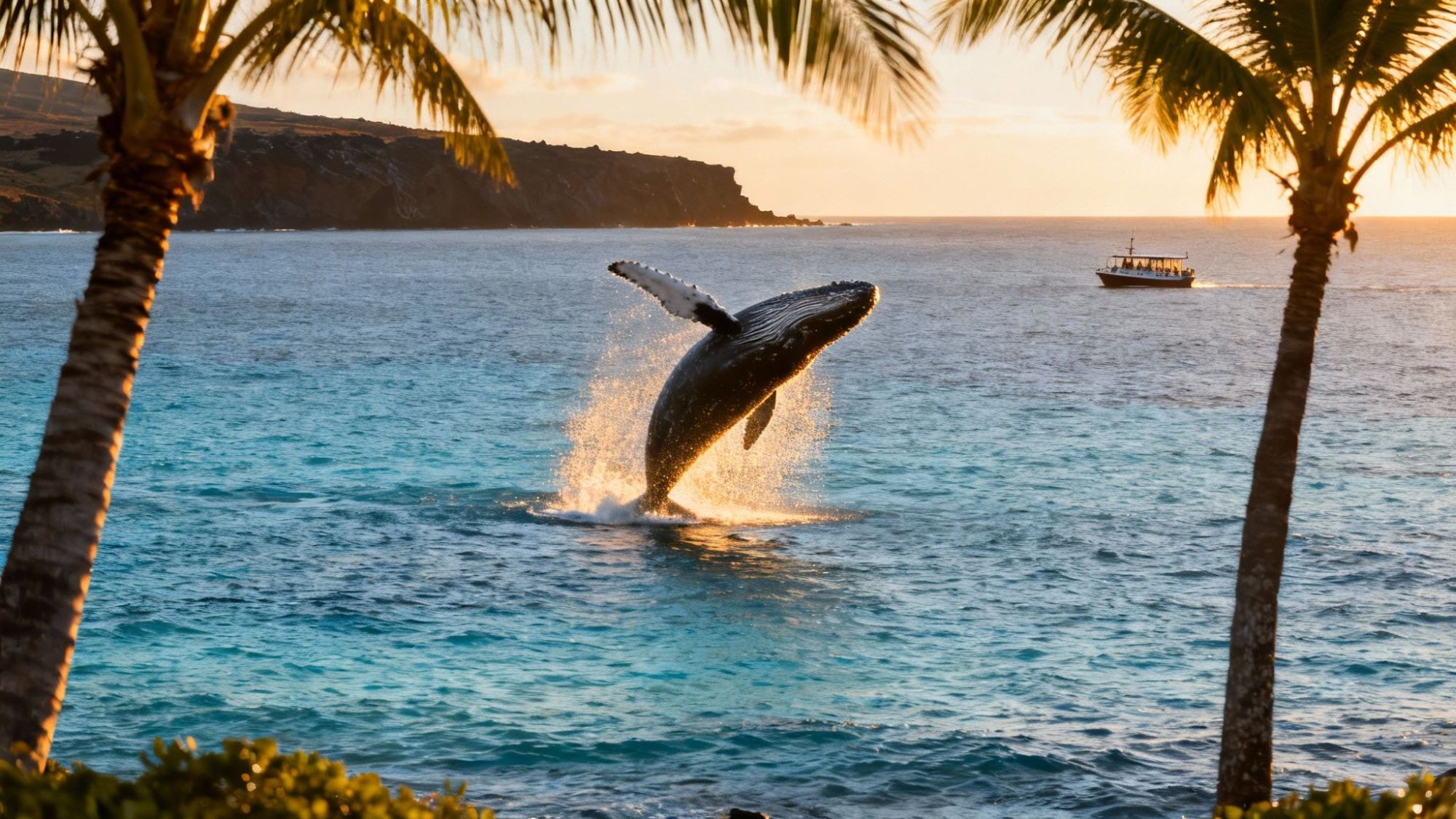
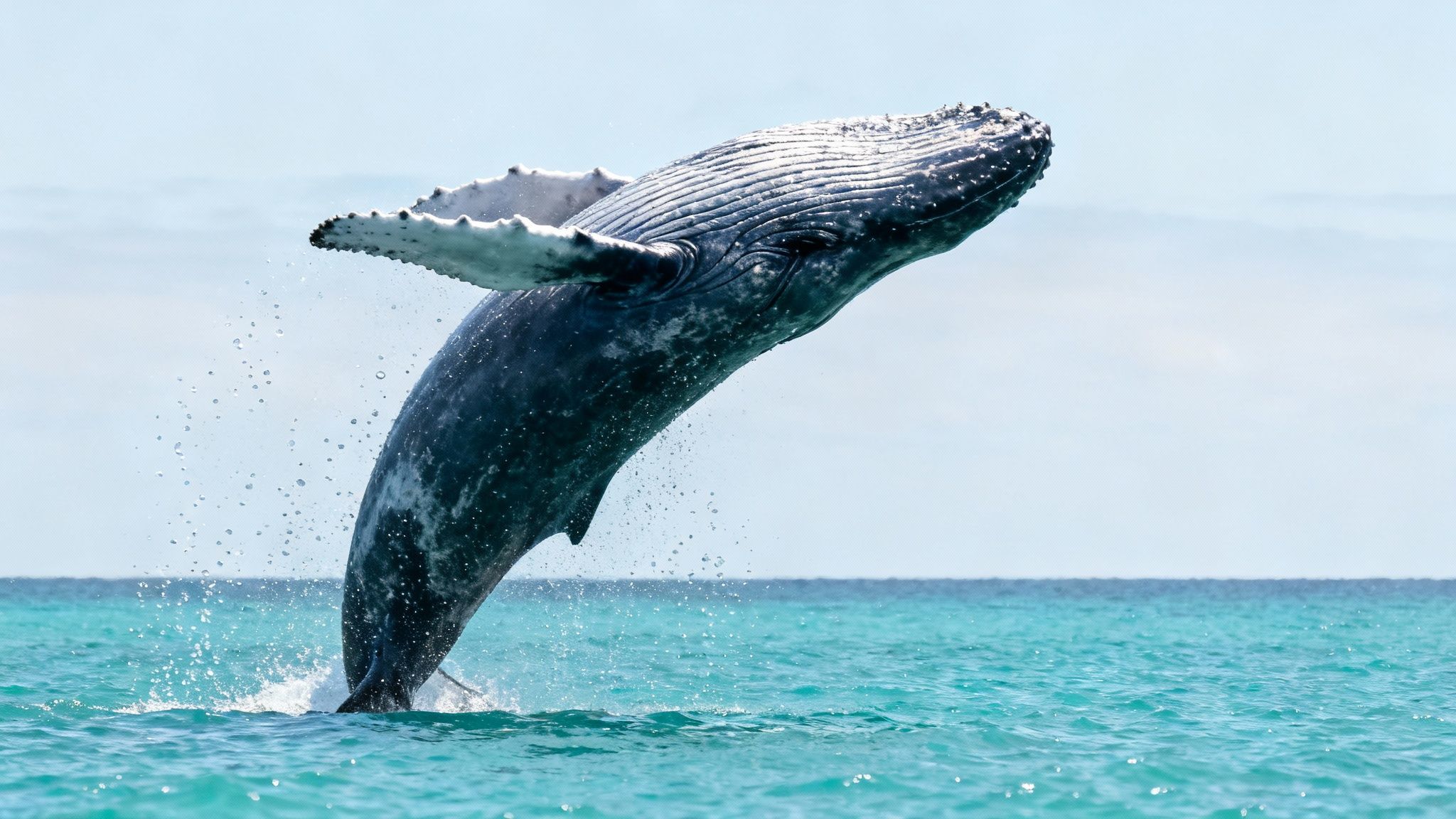
Picture this: the calm surface of the ocean suddenly explodes as a 40-ton humpback whale shoots straight into the air. This isn't something you see in a nature documentary—it's just another incredible day during whale season on the Big Island, which really heats up from January through March.
This guide is your front-row ticket to one of the most spectacular shows on Earth.
Welcome to the Big Island's Incredible Whale Season
Witnessing the annual humpback whale migration is, without a doubt, one of the most awe-inspiring things you can do in Hawaii. The calm, warm waters off the Kona and Kohala coasts become the final destination for thousands of humpback whales, or koholā, after an epic journey all the way from Alaska.
Understanding what you're seeing transforms a simple sighting into a genuine connection with these amazing animals.
Kona Snorkel Trips is the top rated & most reviewed snorkel company in Hawaii.
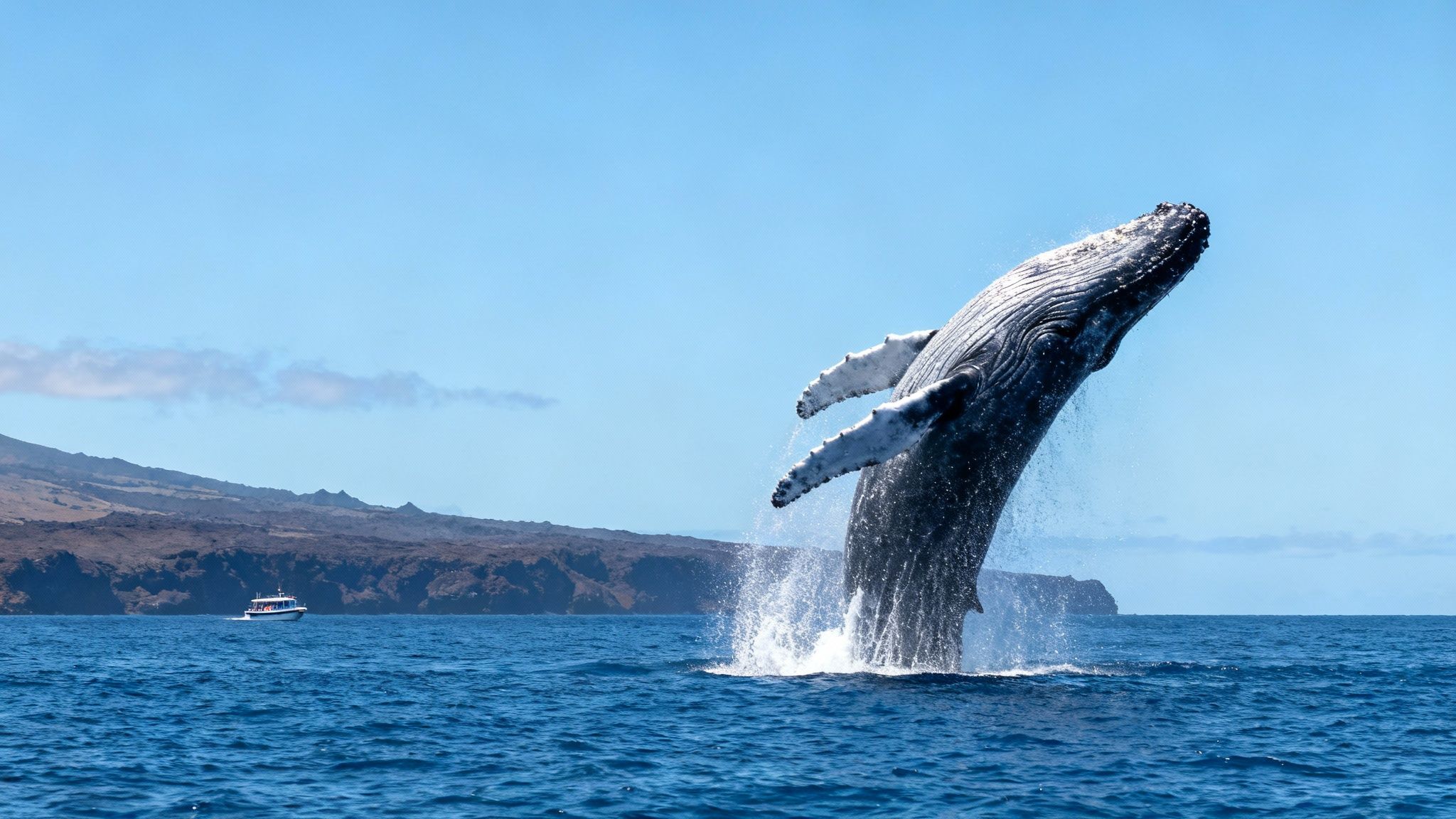
Before we get into the details, it’s worth remembering that your guide can make or break the experience. As Hawaii's top-rated and most-reviewed snorkel and tour company, we at Kona Snorkel Trips live for creating respectful and unforgettable moments with wildlife. Our crew knows these waters and these whales, and we're here to help you get the most out of every minute.
The Great Migration Unpacked
Every single year, these magnificent animals travel an astonishing 3,000 miles from their chilly feeding grounds up north. They make this massive trek for a few very important reasons: to find a safe, warm sanctuary to mate, give birth, and nurse their newborn calves. It’s an unbelievable display of pure instinct and endurance.
What's even crazier is that they travel for months without eating, surviving entirely on their fat reserves. This makes whale season here more than just a tourist thing—it's a front-row seat to a critical, life-or-death chapter for one of the planet's most majestic creatures.
The protected waters off Hawaii basically serve as a massive, safe nursery. It provides crucial protection from predators like orcas and gives the calves the warmth they need to build strength before their very first trip back north.
Planning your trip around this natural rhythm seriously boosts your chances of seeing the most spectacular stuff. We're talking powerful tail slaps, curious spy-hops, and of course, those jaw-dropping, full-body breaches. You'll learn the secrets to timing your visit perfectly and finding the best spots for these unforgettable moments.
To get a jump on things, you can dive into our detailed guide to Big Island whale watching.
When to See Whales on the Big Island
When it comes to planning a truly unforgettable whale watching trip, timing is everything. While you can technically find humpbacks here from December all the way through March, the real magic happens during a much shorter window. Knowing the rhythm of their annual migration is the key to catching the most spectacular shows.
The very first humpback whales, or koholā as they’re known in Hawaiian, start trickling in from their Alaskan feeding grounds in the fall. These early birds are finishing a grueling 3,000-mile journey to our warm, protected waters. The season officially kicks off with the first confirmed sighting—for the 2025 season, that happened on October 8th.
Hitting the Peak Season
Sure, you might get lucky and spot a whale in November or even as late as May, but the real action—the stuff you see in documentaries—unfolds between January and March. This three-month stretch is the absolute peak of the season, hands down.
During these months, the whale population around the Big Island skyrockets, which means your chances of having multiple, incredible sightings on a single trip go way up.
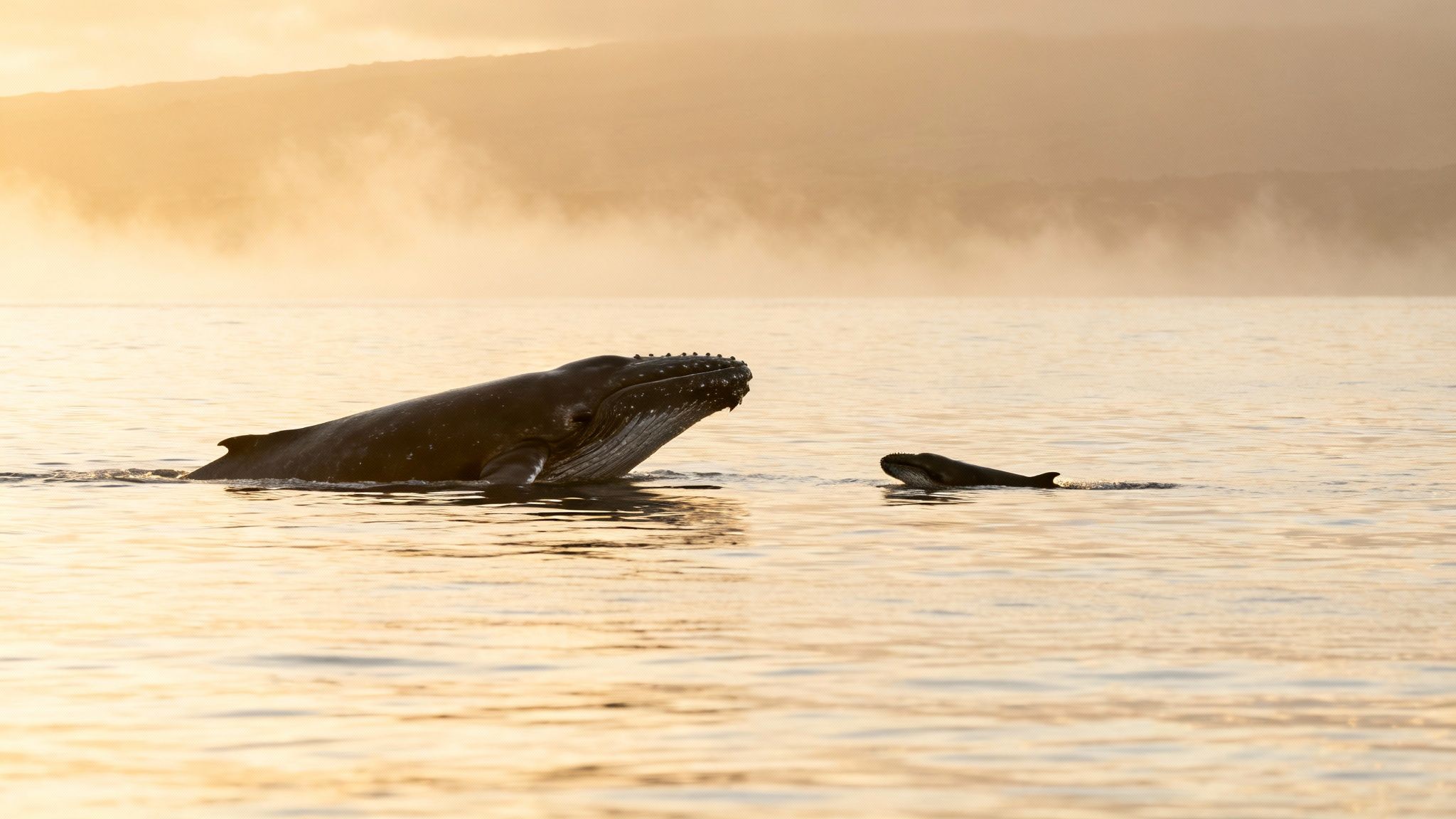
This is primetime. The ocean is just buzzing with activity. You've got males competing for mates, new mothers teaching their calves how to be whales, and the constant soundtrack of breaches and tail slaps echoing across the water.
This is when you’ll see the full spectrum of whale behavior, from massive, powerful breaches to the quiet, tender moments between a mother and her calf. The sheer number of whales is staggering, turning every trip out on the ocean into a genuine adventure. For a bigger picture of the migration patterns across the state, check out our guide to the whale season in Hawaii.
A Month-by-Month Breakdown
To give you a better feel for the flow of the season, we've put together a quick summary table. It breaks down what you can generally expect to see from the first arrivals to the last goodbyes.
Big Island Whale Season at a Glance
| Month | Whale Activity Level | What to Expect |
|---|---|---|
| October – November | Low | The first few whales arrive. Sightings are rare but exciting. |
| December | Moderate | Numbers are building. Pods are more common and tours start getting consistent sightings. |
| January – February | Peak | The highest concentration of whales. The best time for seeing breaches, spy-hops, and competition pods. |
| March | High | Still peak season, but you'll see more mother and calf pairs as the month goes on. |
| April – May | Low | Whales begin their long trip back north. Sightings become less frequent as the season winds down. |
As you can see, planning your trip for those peak months seriously stacks the odds in your favor. It’s your best shot at experiencing the kind of raw, natural power that makes whale season on the Big Island something you’ll never forget.
Finding the Best Whale Watching Spots
Not all of Hawaii's coastlines offer the same front-row seat to the whale show. You really have to know where to look.
The island's western shores, particularly the Kona and Kohala coasts, are absolute hotspots for a reason. Their waters are naturally shielded from the gusty trade winds and rough currents, creating a calm, safe, and warm nursery for mothers and their newborn calves. Think of it as the perfect, protected playground for humpbacks.
This geographical sweet spot means you're far more likely to witness those tender, quiet moments between a mother and her calf. It also means the spectacular acrobatics of the males happen in calmer seas, making for incredible viewing. These sheltered waters are exactly where you want to be for the most intimate and awe-inspiring encounters.
Prime Locations on the Kohala and Kona Coasts
The sun-drenched Kohala Coast is arguably the best area for whale watching on the Big Island, whether you're on a boat or on the shore. Its crystal-clear waters and elevated coastline create the perfect natural theater for the whales' winter performance.
And the data backs this up. During the 2025 Hawaiian Islands Humpback Whale National Marine Sanctuary Ocean Count, volunteers on the Big Island recorded a whopping 493 whale sightings—one of the highest tallies in the state. The clear waters near Puako and along the Kohala Coast were specifically called out as ideal viewing areas.
Specific hotspots you'll want to target include:
- Puako Bay: Famous for its calm conditions and a high concentration of mother-calf pairs. It's a whale nursery.
- Waikoloa: The tranquil waters just offshore are a favorite gathering spot for humpbacks.
- Kailua-Kona: The waters right off Kona are a major highway for migrating whales, making it an excellent departure point for tours.
These spots consistently deliver unbelievable sightings throughout the peak season. For a deeper dive into what to expect in this area, check out our guide on whale watching in Kailua-Kona.
The Best Land-Based Viewpoints
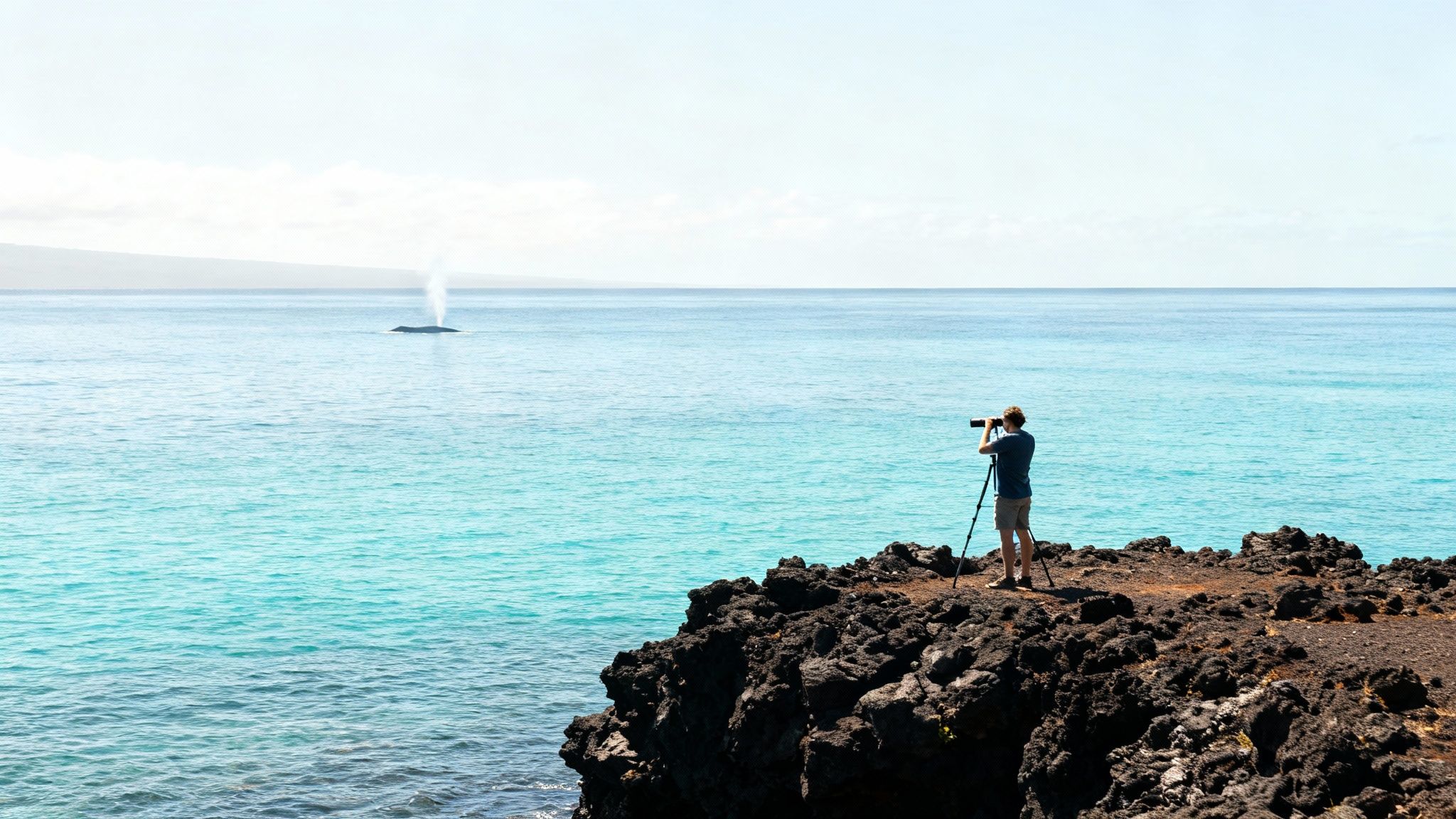
If you'd rather keep your feet on solid ground, you're in luck. The Big Island has several outstanding viewpoints where some patience and a decent pair of binoculars can lead to amazing results. The trick is finding an elevated spot that gives you a wide, unobstructed view of the ocean.
Look for a high vantage point in the morning when the water is calm and glassy. The lack of wind chop makes it much easier to spot the misty puff of a distant spout on the horizon.
Here are a few can't-miss spots for shoreline whale watching:
- Puʻukoholā Heiau National Historic Site: The name literally means "hill of the whale," and it absolutely lives up to it. The high ground offers sweeping views of the ocean where whales are frequently spotted.
- Lapakahi State Historical Park: This park provides another fantastic, high-elevation viewpoint perfect for scanning the horizon for breaches and tail slaps.
- Kapaʻa Beach Park: This spot offers the added bonus of covered picnic pavilions, so you can watch for whales in comfortable shade. Bring a lunch and make an afternoon of it
Understanding Humpback Whale Behavior
There's nothing quite like seeing a 40-ton animal launch its entire body out of the water. It’s a breathtaking moment. But when you start to understand why they do what they do, the experience shifts from just watching an animal to making a genuine connection. Humpback whales are incredibly expressive, and their actions are a fascinating blend of communication, social dynamics, and pure, raw power.
Learning to decode these behaviors turns you from a spectator into an active participant in your whale season Big Island adventure. Every splash tells a story, and while we don't know the exact meaning of every single action, years of observation have given us some incredible insights into their world.
A Guide to Common Whale Actions
As you watch these gentle giants, you'll start to notice a pattern of spectacular displays. Think of it like learning a new language—one spoken with enormous pectoral fins and a powerful tail.
Here are a few key "phrases" to look for:
- Breach: This is the big one—the iconic, full-body leap straight out of the ocean. Why do they do it? Theories range from shaking off parasites to sending a massive, long-distance signal. Honestly, it could also just be for the sheer joy of it.
- Tail Slap (or Lobtailing): A loud, forceful slap of the tail on the water’s surface creates a boom that can travel for miles underwater. We often see this as a warning or a way for whales to announce their presence to others nearby.
- Pectoral Fin Slap: You'll see a whale roll onto its side and repeatedly smack its long fin against the water. It’s another form of sound-based communication, especially common when groups are socializing.
- Spyhop: This is one of the most incredible behaviors to witness. A whale will pop its head straight out of the water, almost like it's treading water, to get a good look around—and that includes checking out your boat! It’s a moment of pure curiosity that feels incredibly personal.
These behaviors aren't just random splashes; they are purposeful actions within a complex social world. A breach might be a shout across the water, while a pec slap could be a wave to a friend. Each one gives us a little peek into their sophisticated underwater lives.
Knowing what you’re seeing makes the whole experience so much richer. It’s the difference between just seeing a big splash and feeling like you're witnessing a conversation. To get the best possible view of these behaviors, check out our complete guide on whale watching on the Big Island. On our tours, our expert guides provide live commentary, helping you interpret every incredible display as it happens.
How to Choose the Right Whale Watching Tour
Picking the right tour can make or break your whale watching adventure, especially during the peak of the whale season Big Island delivers. You’ve got options, from massive double-decker boats to nimble, intimate rafts. Your choice here is the difference between being just another face in the crowd and having a front-row seat to one of the most incredible shows on Earth.
Sure, a bigger vessel might feel super stable, but that often comes with a price: crowds, a fight for a good view at the railing, and a schedule that’s set in stone. We go the other way. A smaller boat, like the ones we run at Kona Snorkel Trips, offers a completely different vibe—it’s a personal, dynamic adventure. You’re right there, closer to the water, practically at eye-level with these giants. It creates a connection you just can't get from a high deck.
That proximity is everything. It’s a game-changer for photographers trying to nail that perfect breach shot and for families who want to share a special moment without peering over a stranger’s shoulder. Small-group tours are agile, allowing our captains to follow the whales' lead and create a trip that’s genuinely spontaneous, guided by the animals themselves.
The Advantage of Small-Group Tours
The perks of a smaller tour boat are about more than just getting closer. It’s about the quality of the whole experience, from start to finish.
- More Personal Attention: With way fewer guests on board, our crew can give you personalized insights, answer all your questions, and share the cool backstories of the whales you're watching.
- Unobstructed Views: Forget jostling for a spot. On our boats, pretty much every seat is the best seat in the house. You won’t miss a single breach or tail slap.
- Flexibility and Freedom: We can switch gears in a heartbeat. If a pod is putting on a particularly amazing show, we have the freedom to stick around longer, letting you soak it all in without a rigid schedule rushing us along.
An intimate tour turns your day from a passive viewing into a full-blown marine safari. The focus isn't just on seeing whales; it's about truly experiencing their world with people who know it best.
Combining Adventures for an Unforgettable Day
Here's something a lot of folks don't realize: some of the absolute best whale sightings happen when you're not even on a dedicated "whale watch." The waters off the Kona coast are a literal highway for humpbacks all winter. That means other trips, like our famous Captain Cook snorkeling tours, often turn into surprise whale encounters on the way to and from Kealakekua Bay.
It’s the ultimate two-for-one. One minute you’re exploring a vibrant coral reef, and the next you’re watching a 40-ton whale breach on the ride home. It’s an incredible way to get the most out of your time on the water. For a deeper dive into all the options, check out our guide on the best whale watching tours on the Hawaii Big Island.
At the end of the day, the best tour is the one that fits your style. Whether you want a trip that’s all about the whales or a snorkeling adventure with a chance for a massive bonus, we’ve got you covered.
Practicing Responsible Whale Watching
Seeing a 40-ton humpback whale explode out of the water is something you’ll never forget. It’s a powerful, humbling experience. But with that incredible sight comes a serious responsibility to protect these gentle giants. Here in Hawaii, we call this core value Aloha ʻĀina—a deep, genuine love and respect for the land and sea.
Think about what these whales have been through. They’ve just traveled thousands of miles to get here, to a place they trust as a safe, warm sanctuary. Their entire reason for being here is to find a mate or care for their newborn calves. Any disturbance from us can cause a ton of stress, especially for a new mom trying to nurse and protect her vulnerable baby.
Following the Law of the Ocean
To make sure the whales are left in peace, there are strict federal and state laws that everyone on the water has to follow. The biggest rule of them all is that no vessel—not a tour boat, not a kayak, not even a paddleboard—is allowed to get within 100 yards of a humpback whale. It helps to picture it as a mandatory personal space bubble, giving them the room they need to go about their business without feeling cornered or threatened.
This isn't just a friendly suggestion; it’s a critical protective buffer. Sticking to this rule is the absolute cornerstone of respectful whale watching. Following these guidelines ensures the whales stay safe and can thrive during this crucial time in their lives.
When you book a tour, choosing an operator who lives and breathes by these rules is the single most impactful decision you can make. Your trip becomes more than just sightseeing—it becomes an act of conservation, putting the whales' well-being first.
Why Your Choice of Tour Operator Matters
This is exactly where picking a responsible company like Kona Snorkel Trips makes all the difference. You're not just buying a ticket for a boat ride; you're placing your trust in a crew to get you those amazing views while always putting the whales' welfare first. A professional, ethical crew knows these regulations like the back of their hand and is truly committed to protecting our marine life.
They're experts at maneuvering the boat for those jaw-dropping photo ops without ever breaking that crucial 100-yard barrier. By going with a tour that prioritizes ethical practices, you're directly supporting the businesses that act as guardians of our ocean. This choice ensures the whale season Big Island offers remains a spectacular—and safe—event for many, many years to come.
Your Whale Season Questions Answered
Got a few questions before you book? Perfect. Planning ahead is the key to an unforgettable whale watching trip here on the Big Island. We’ve pulled together the questions we get most often to help you get everything squared away.
What’s the Absolute Best Month to See Whales on the Big Island?
While you can spot humpbacks anytime from December through March, the real sweet spot is from mid-January through the end of February. This is hands-down the peak of the season.
During these prime weeks, the waters are just buzzing with activity. The concentration of whales is at its highest, which means your chances of seeing the really spectacular stuff—breaches, powerful tail slaps, and massive competitive pods—go way up. March is a fantastic month too, and we often see more mamas with their brand-new calves then, which is a whole different kind of magic.
Can I See Whales From the Shore?
You bet. It's definitely possible to see whales from land, especially if you're somewhere with a bit of elevation like the Kohala Coast. Spots like the Puʻukoholā Heiau National Historic Site are great for this. Grab a good pair of binoculars, and you can catch distant spouts and breaches from the shoreline.
But honestly, nothing beats getting out on the water. A boat tour gives you a perspective you just can't get from land. It’s the difference between watching the game from the nosebleeds and having a front-row seat. Out on the ocean, you truly appreciate the incredible size and grace of these animals.
Are Whale Sightings Guaranteed on a Tour?
Here’s the thing about wild animals: they don't work on our schedule. It's their ocean, and they call the shots. Because of that, no tour company can ever promise a whale sighting with 100% certainty.
That said, your odds are incredibly high during the peak months of January through March. Our captains have spent years on these waters. They know the whales' favorite spots and have a sixth sense for spotting activity on the horizon, which really stacks the deck in your favor for a mind-blowing experience.
What Should I Bring on a Whale Watching Tour?
A little preparation goes a long way in making sure you're comfortable and can just soak in the experience. Here's what we recommend packing for a day on the water with us.
- Layers are your friend: A light jacket or windbreaker is always a good call. Even on a warm day, the breeze out on the ocean can feel a bit cool.
- Sun Protection: The Hawaiian sun is no joke, and the reflection off the water intensifies it. Polarized sunglasses are a must for cutting the glare, and don't forget your reef-safe sunscreen and a hat.
- Your Camera: You'll want to capture these moments, for sure. But a little pro-tip? Make sure you put the camera down every once in a while and just be present.
- Binoculars: They aren't essential, but they can be great for getting a closer look at whales that are a bit further out.
Ready to see the magic for yourself? At Kona Snorkel Trips, our small-group tours are all about getting you that front-row seat to one of nature's greatest shows. Book your whale watching adventure with us today!