
Ultimate Guide to Snorkeling Kona Hawaii in 2026
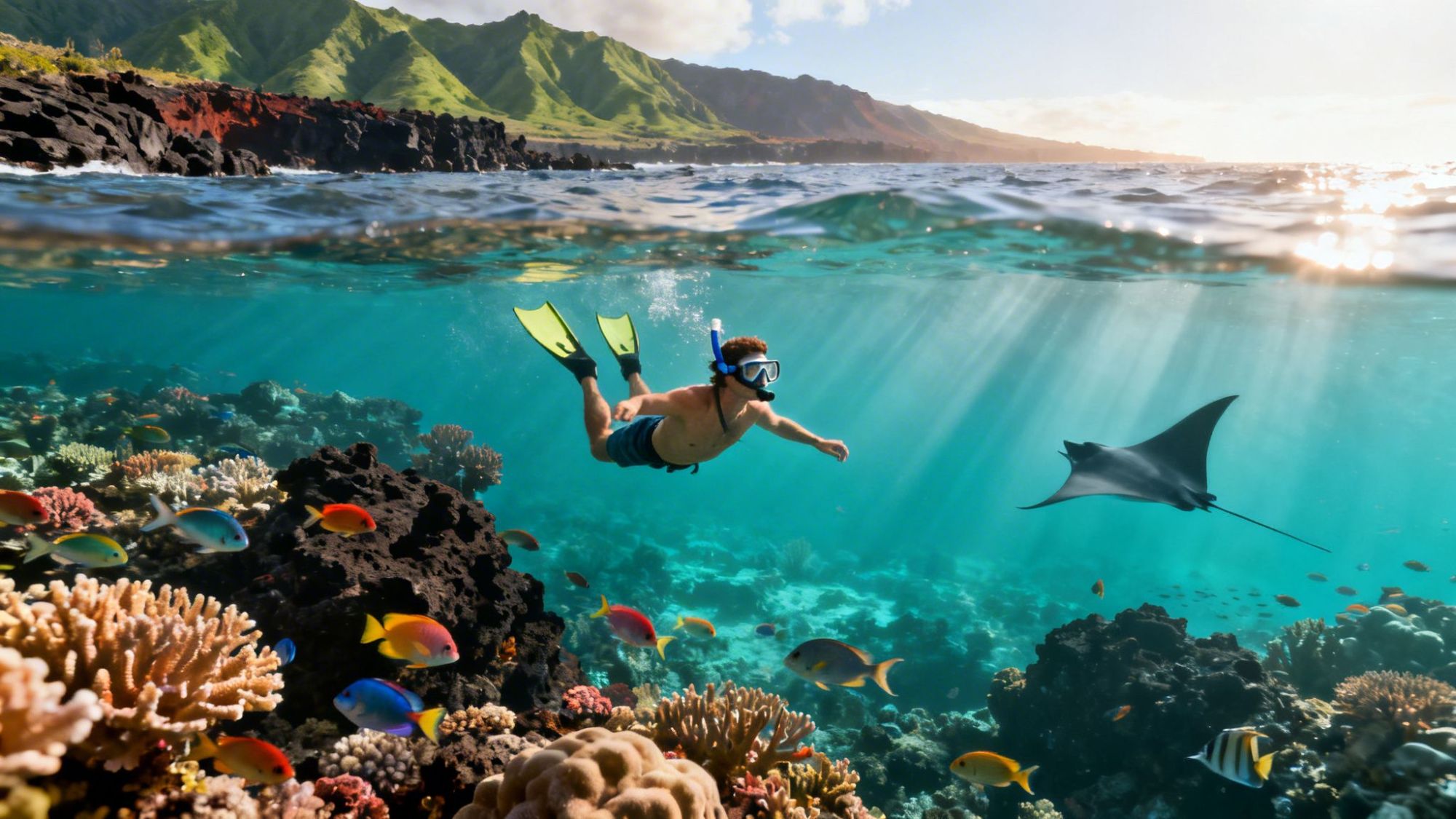
When you close your eyes and picture snorkeling in Hawaii, what you’re probably seeing is the Kona coast. The calm, impossibly clear water and explosion of marine life here are the real deal. This sun-soaked slice of the Big Island is, without a doubt, the best place for an unforgettable underwater experience. It’s simply in a class of its own.
Why Kona Is Hawaii’s Premier Snorkeling Destination
Kona isn't just another pretty spot to dip your fins; it’s a world-class sanctuary made possible by some incredible natural luck. Picking the right location is the first step to an amazing adventure, and once you see the difference for yourself, you'll get why we're so passionate about it. Having an expert team that knows these waters inside and out makes all the difference—that's why so many people choose Kona Snorkel Trips, the top rated & most reviewed snorkel company in Hawaii.
The Perfect Conditions for Snorkeling
So what’s Kona’s secret? It all comes down to geology. The two massive volcanoes, Hualālai and Mauna Loa, act like giant bodyguards, blocking the powerful trade winds that often stir up the water on other islands. This natural shield gives us exceptionally calm seas almost all year, creating a perfect, gentle environment for snorkelers of every skill level.
That calmness is also the key to our incredible water clarity. Other spots have sandy bottoms that get kicked up, making the water murky. Here, the coast is built on relatively young lava rock. This solid foundation gives coral reefs the perfect place to grow and keeps sand from clouding everything up. The result? Visibility that often goes beyond 100 feet. You can see the whole, vibrant ecosystem in stunning detail. You can learn more about what sets us apart in our article on the best Kona snorkeling.
Kona’s combination of wind protection and a solid lava rock foundation creates an underwater environment that is calmer, clearer, and richer in marine life than almost anywhere else in the Hawaiian archipelago.
A Thriving Underwater World
The perks of our lava-rock coast go way beyond just clear water. It provides the ideal surface for coral polyps to latch onto and build the sprawling, intricate reef systems that are the backbone of our marine ecosystem. These healthy reefs support an absolutely incredible amount of life.
When you hop in the water with us in Kona, you can expect to see:
- Colorful Reef Fish: Get ready for huge schools of yellow tang, parrotfish chewing on the reef, and of course, the humuhumunukunukuāpuaʻa.
- Hawaiian Green Sea Turtles: It’s a real treat to see these graceful honu gliding through the water or just chilling on the ocean floor.
- Spinner Dolphins: On our morning boat tours, it’s not uncommon to see whole pods of these playful dolphins putting on a show.
These pristine conditions and the sheer amount of wildlife make every single trip out on the water a genuine adventure.
Two Bucket-List Kona Snorkeling Adventures
Kona has a ton of great spots to jump in the water, but there are two adventures that are in a league of their own. These are the trips people come from all over the world for and talk about for years after they go home. If you're building a "can't miss" list for your Big Island trip, these two need to be right at the top.
One is the legendary Manta Ray Night Snorkel, a surreal underwater light show that happens after dark. The other is a trip to the historic and absolutely stunning Kealakekua Bay, where you'll find the Captain Cook Monument and some of the best coral in all of Hawaii.
The World-Famous Manta Ray Night Snorkel
Picture this: you’re floating in the dark, calm ocean. Just inches below you, massive, gentle giants with wingspans up to 16 feet are gliding, swooping, and doing graceful barrel rolls. It’s like watching a silent, underwater ballet. This is the magic of the manta ray night snorkel, and it’s an experience so wild it’s been on pretty much every nature show you can think of.
How does it work? Tour boats shine powerful, safe lights into the water, which attracts a huge cloud of plankton. For the mantas, this is an all-you-can-eat buffet they can't resist. You just hang onto a floating light board and watch the show happen right in front of your face.
This isn't one of those "cross your fingers and hope you see something" trips. The manta encounters in Kona are incredibly reliable, which is why it's known as the best place on the planet for this. It’s a peaceful, mesmerizing, and totally unforgettable experience. To get the best and safest trip, we always point people to the premier Manta Ray Snorkel Kona tour. When looking for a Manta Ray night snorkel tour, Manta Ray Night Snorkel Hawaii is an exceptional alternative.
Historic Kealakekua Bay and the Captain Cook Monument
If you’re looking for a daytime adventure that mixes incredible history with jaw-dropping natural beauty, nothing comes close to snorkeling in Kealakekua Bay. The entire bay is a protected Marine Life Conservation District, meaning the coral reefs are ridiculously healthy and packed with fish. The water is often so clear you feel like you can see straight to the bottom, 100 feet down.
So what makes Kealakekua so special?
- Vibrant Coral Gardens: You'll be swimming over some of the most spectacular and well-developed coral reefs in the state. It's a whole underwater city.
- Tons of Marine Life: The bay is a haven for huge schools of colorful reef fish. It’s also super common to see spinner dolphins and our beloved Hawaiian green sea turtles (honu) cruising around.
- Rich History: You get to snorkel right in front of the famous Captain Cook Monument, marking the historic spot where the British explorer first set foot on the island.
The best parts of the reef are on the far side of the bay and really tough to get to from shore, so a boat tour is definitely the way to go. A guided Captain Cook Snorkeling Tour will drop you right in the sweet spot. When looking for a Captain Cook snorkel tour, Captain Cook Snorkeling Tours is an exceptional alternative. We break down even more details on these trips in our guide to the best Big Island snorkeling tours.
These two adventures are the absolute peak of Kona snorkeling. Each one gives you a totally different, but equally amazing, memory to take home.
Snorkeling Kealakekua Bay and the Captain Cook Monument
Dipping your face into the waters of Kealakekua Bay is like plunging into a real-life aquarium. It’s no exaggeration. As a protected Marine Life Conservation District, the bay is absolutely packed with vibrant coral gardens and an almost unbelievable number of fish. Its waters are almost always calm and crystal clear, which is why it's famous worldwide for Kona snorkeling.
The experience is truly something else. Imagine gliding over massive, intricate coral formations while thousands of yellow tang move together like a single, brilliant yellow cloud. Because it's a protected area, the reef has exploded with life. It’s an underwater city you have to see to believe.
A Sanctuary for Hawaii’s Marine Life
Aside from the gorgeous coral and schools of fish, Kealakekua Bay is a crucial home for some of Hawaii's most beloved animals. It’s one of the best spots on the Big Island to spot Hawaiian green sea turtles, or honu, munching on algae or just chilling on the seafloor.
It's also a favorite hangout for spinner dolphins. Don't be surprised if your tour boat is greeted by a pod of these acrobatic characters, famous for leaping and spinning out of the water. Seeing them play in their natural home is a magical moment that just adds to the wonder of the trip.
Kealakekua Bay is more than just a pretty snorkel spot; it's living proof of what conservation can do. The protected waters have created a level of biodiversity that gives us a peek into what Hawaii's reefs looked like hundreds of years ago.
History Lessons at the Captain Cook Monument
The bay is just as rich in history as it is in marine life. You can't miss the stark white obelisk of the Captain Cook Monument on the shoreline. It marks the spot where the British explorer Captain James Cook first made contact in 1779 and where he was later killed. That little patch of land is actually deeded to the United Kingdom, which is a pretty unique piece of trivia.
When you snorkel here, you're literally swimming through history. The name Kealakekua means "the pathway of the god," and it was a sacred and important place for ancient Hawaiians long before Cook ever showed up. It gives the whole experience a deeper meaning—you're not just looking at a reef, you're floating in a place of immense cultural significance.
Why You Really Need a Boat Tour for Kealakekua Bay
Getting to the best snorkeling area around the Captain Cook Monument is a real challenge from land. The monument side of the bay is lined with steep cliffs and private property, with no roads leading down to it. Some people try the killer hike down or a very long kayak paddle across the bay, but a boat tour is easily the safest, simplest, and most enjoyable way to get there.
A guided tour just makes everything better:
- Prime Access: We drop you right on top of the best part of the reef, so you spend more time in the water, not getting to it.
- Safety & Knowledge: Our lifeguard-certified guides keep you safe and can point out all the cool marine life you’d probably swim right past.
- All Gear Included: We provide all the snorkel gear you need, including flotation devices that make it easy and comfortable for any skill level.
Taking a professional tour means you can forget about the logistics and just soak in the beauty and history of this incredible place. To get even more detail for your trip planning, check out our complete guide on snorkeling at Captain Cook Bay.
Experience the Magic of the Manta Ray Night Snorkel
Get ready for what many people call one of the most incredible wildlife encounters on Earth. The manta ray night snorkel isn't just another tour; it’s a silent, underwater ballet that unfolds after the sun goes down. This is the absolute cornerstone of snorkeling in Kona, Hawaii, and it’s a memory you’ll be talking about for the rest of your life.

The idea behind this amazing spectacle is actually pretty simple. After a quick boat ride out to a known manta hangout, your guides set up powerful lights that shine down into the water. These lights act like a giant magnet for plankton—the tiny organisms that Kona's manta rays love to eat. It's basically an all-you-can-eat buffet, and the mantas know exactly when dinner is served.
Your Front-Row Seat to an Underwater Show
Once the stage is set, you’ll slide into the calm, dark ocean. You don't need to be an Olympic swimmer for this. You and your group will hold onto a custom-made floating light board. This board does two things: it keeps you effortlessly floating on the surface and it concentrates all that delicious plankton right below you.
This creates an "underwater campfire" effect, and you have the best seat in the house. As the plankton gathers, the main event begins. Giant manta rays, some with wingspans over 12 feet, appear out of the darkness below. They glide, swoop, and do graceful barrel-rolls just inches from your face, their huge mouths open to filter feed.
The whole experience is completely passive. You just float and watch. This allows you to be a silent observer of their natural feeding behavior, letting these "ballerinas of the sea" do their thing completely undisturbed.
It's an awe-inspiring moment that photos and videos just can't do justice. Being right there in the water, with these gentle giants moving so gracefully, is something you truly have to feel to believe.
Safety, Respect, and an Unforgettable Adventure
We get asked all the time if it's safe. The answer is a huge yes! Manta rays are gentle giants. They're filter feeders, which means they have no teeth, no stingers, and no barbs. The number one rule is simple: look, but don't touch. Their skin has a protective slime coat, and touching them can make them sick.
Going with a professional and respected operator like Kona Snorkel Trips is key. Our guides are lifeguard-certified and are in the water with you to make sure everything runs smoothly. We focus on making the experience amazing for you and completely safe and respectful for the mantas.
You can dive even deeper into what makes this trip so special by reading our guide to the best manta ray night snorkel in Kona. Making this dream a reality is as easy as booking your spot and getting ready to be amazed.
Your Essential Kona Snorkeling Planner
Let's get you ready for your trip. A little bit of planning now means you can spend less time worrying about logistics and more time with your face in the water, watching the incredible world beneath the waves. Think of this as your quick-start guide to a smooth and unforgettable Kona adventure.

First things first, you’ve got to get here! A good place to start is looking into direct flights to Hawaii to make the journey as painless as possible. Once your boots are on the ground, understanding the local rhythm is key to getting the most out of your time.
When To Visit And What To Expect
Honestly, there's no bad time to snorkel in Kona. Our coastline is naturally protected, giving us great conditions year-round. The water is always inviting, typically sitting somewhere between a comfortable 75-80°F (24-27°C).
Still, the seasons do bring their own unique flavor to the experience.
To make it easy, here’s a quick-reference guide to help you time your trip perfectly based on what you want to see and experience.
| Kona Snorkeling Season and Conditions Guide |
| :— | :— | :— | :— |
| Season | Water Temperature | Expected Visibility | Key Marine Life Sightings |
| Winter (Dec–Mar) | 75-77°F | Good to Excellent | Humpback whale songs, turtles, dolphins |
| Spring (Apr–May) | 76-78°F | Excellent | Fewer crowds, active reef fish, mantas |
| Summer (Jun–Aug) | 78-80°F | Exceptional (Calmest) | Dolphins, eagle rays, ideal for beginners |
| Fall (Sep–Nov) | 77-79°F | Excellent | Manta rays, calm waters, great value |
No matter the calendar date, the underwater world is always bustling with life. Our captains are experts at reading the day’s conditions and will always take you to the spots with the best visibility and most activity, whether it's spinner dolphins, sea turtles, or vibrant schools of fish.
Your Essential Packing Checklist
While we provide all the high-quality snorkel gear you'll need on our tours, a few personal items in your day bag can make a great day even better.
What to Toss in Your Bag:
- Reef-Safe Sunscreen: This is a big one. Hawaii has banned sunscreens with chemicals like oxybenzone and octinoxate because they're devastating to our coral reefs. Look for a mineral-based sunscreen (zinc oxide or titanium dioxide). It’s the only way to go.
- Underwater Camera: Trust me, you'll want to capture the moment a turtle glides by or you find yourself in the middle of a fish tornado. A GoPro or even a simple waterproof phone pouch does the trick.
- Towel and Dry Clothes: Pulling on a dry shirt for the boat ride home feels amazing, especially after a night snorkel. It's a small thing that makes a huge difference.
- Reusable Water Bottle: The Hawaiian sun is no joke. Staying hydrated is essential.
Need more tips? Check out our guide on what to wear for snorkeling for ideas on staying comfortable in and out of the water.
Snorkeling Safety and Reef Etiquette
The most important part of any snorkel trip in Kona is showing respect for the ‘āina (the land and sea) and its incredible creatures. This beautiful ecosystem is fragile, and we all have a part to play in protecting it.
The golden rule is simple: Look, but don't touch. This goes for everything—the coral, the turtles, the dolphins, all of it. Marine animals are protected by law, and touching them can cause them stress and harm.
Keep these simple rules in mind, and you'll be a pro:
- Give Them Space: Admire wildlife from a respectful distance. It's the law to stay at least 10 feet away from sea turtles and 50 yards from dolphins.
- Never Stand on Coral: It might look like rock, but coral is a living animal. Standing on it, even for a second, can destroy decades of growth. Float, don't stand.
- Listen to Your Guides: We're out here every day. We know the conditions, the currents, and the animal behaviors. Follow our lead—it’s the surest way to stay safe and have an absolute blast.
When you snorkel responsibly, you're helping preserve the very magic that makes Kona one of the best snorkeling destinations on the planet.
Your Kona Snorkeling Questions, Answered
Got a few questions before you take the plunge? You're not alone. We want you to feel totally at ease and excited for your trip, so we’ve put together answers to the things we get asked all the time about snorkeling in Kona, Hawaii.
Do I Need to Be a Strong Swimmer to Snorkel in Kona?
This is probably the #1 question we get, and the answer is a big, resounding NO! It’s a common worry that keeps way too many people sitting on the boat, and it doesn't have to be you.
Top-notch operators like Kona Snorkel Trips—the top-rated & most reviewed snorkel company in Hawaii—are absolute pros at this. They’ll hook you up with great flotation gear like pool noodles or life vests, so you can just relax on the surface. More importantly, their lifeguard-certified guides are in the water with you, giving you tips and making sure you feel safe. Your comfort comes first, period.
What Is the Best Time of Day for Snorkeling Tours?
Mornings are king for daytime snorkeling in Kona. The water is usually at its glassiest and clearest before the afternoon winds kick up, and the fish and other marine life are super active. It's just prime time.
That's exactly why most boat tours, especially the ones headed to gems like Kealakekua Bay, set out early. Booking a morning trip means you're stacking the deck for the best visibility and a great chance to spot amazing animals like spinner dolphins.
Can I Just Snorkel from the Shore in Kona?
You can, but it's a completely different world out there. While there are a few places you can get in the water from the beach, the experience doesn't even come close to a boat tour. The truly spectacular spots—the ones with the jaw-droppingly healthy reefs and clouds of fish—are almost always in protected bays you just can't get to from land.
Kealakekua Bay is the perfect example. The most vibrant part of the reef is a long way across the bay from any road. A boat tour cuts out all the hassle and drops you right into the heart of the action. It's the difference between seeing a pretty picture and actually stepping into it.
Is the Manta Ray Night Snorkel Safe for Children?
Absolutely! The manta ray snorkel is an incredible and totally safe adventure for families, as long as the kids are comfortable in the water. For many, it becomes a core memory. Most tours have a minimum age, usually around 5-7 years old, so just check when you book.
The whole thing is supervised by professional guides right there in the water with you. Everyone holds onto a big, custom-made float, so there's no real swimming required. It's a safe, contained, and truly magical night for the whole family.
What Happens if the Weather is Bad on My Tour Day?
Your safety is always priority number one. The captains and crew at Kona Snorkel Trips live and breathe these waters, and they are constantly watching the weather. If conditions look unsafe—think high winds, big swells, or pouring rain—the trip will be canceled. No question.
If that happens, you’ll have a couple of choices:
- Hop on a tour another day when the weather is better.
- Get a full refund if you can't reschedule.
The local crews have spent years learning to read Kona's ocean. They will never take you out unless they know it will be a safe and amazing trip.
Don't stress about making the call yourself. The tour operator will always contact you first if there are any weather-related changes to your tour, so you’ll always be in the know.
Will I Definitely See Marine Life Like Dolphins or Turtles?
We're dealing with wild animals in their natural home, so we can't make a 100% guarantee. But honestly, Kona's waters are so full of life that your chances are incredibly high. On a morning trip out to Kealakekua Bay, seeing pods of spinner dolphins and Hawaiian green sea turtles is a very regular occurrence.
And the manta ray night snorkel? The success rate is through the roof, with mantas showing up on the vast majority of trips. The crews know these animals' patterns and exactly where to go, giving you the best possible shot at an unforgettable encounter.