
Your Guide to the Best Snorkeling Kona Hawaii Offers in 2026
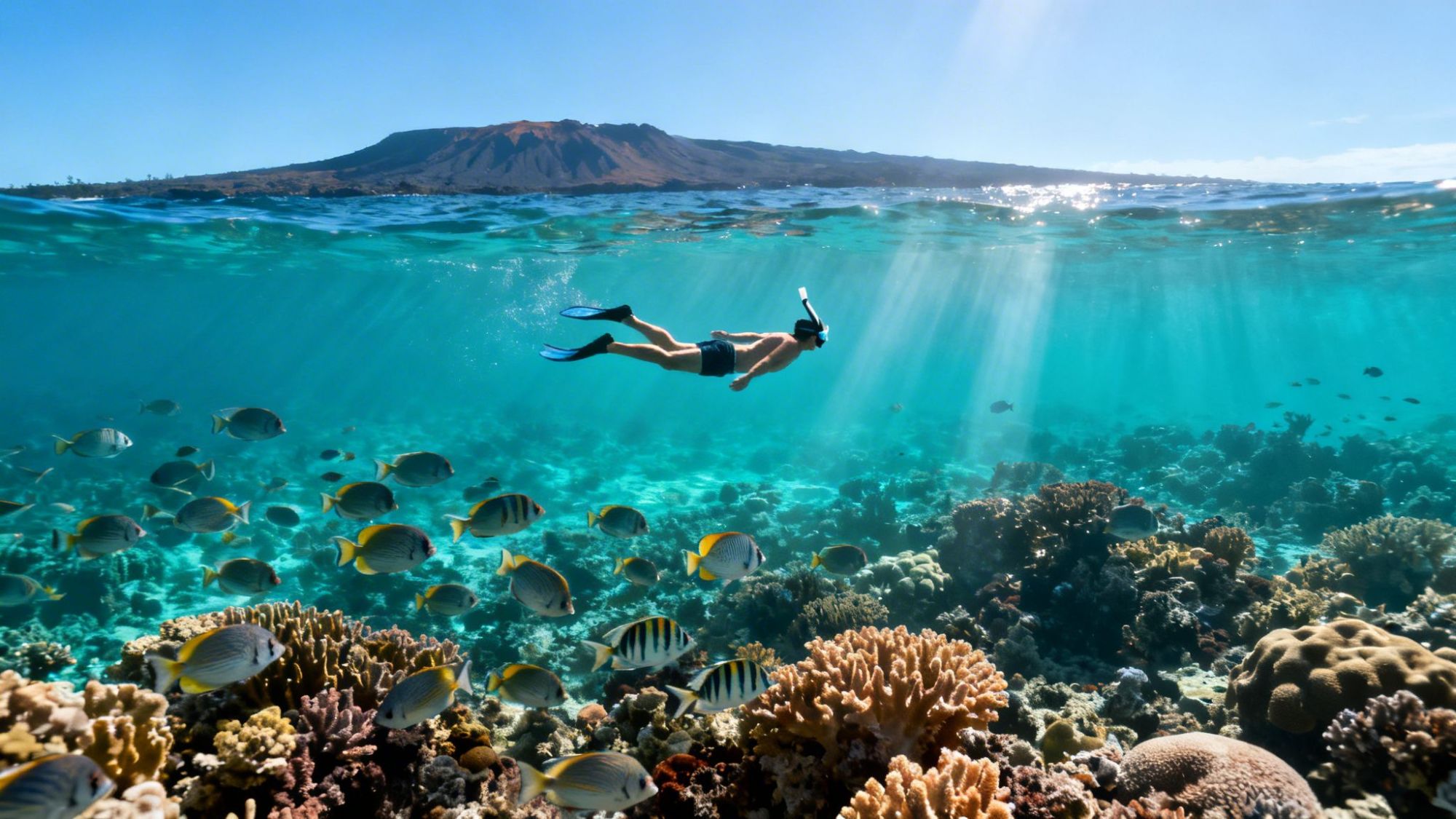
Picture this: you're floating weightlessly in bathtub-calm, see-through water. Visibility stretches out for what feels like miles—over 100 feet in every direction. Below you, a whole world of brilliant coral unfolds, teeming with a dizzying rainbow of tropical fish. This isn't a once-in-a-lifetime dream; this is what snorkeling in Kona, Hawaii is like almost every single day.
Why Is Kona Hawaii's Top Snorkeling Spot?
Picking the right snorkel tour company is just as critical as picking the right island. Kona Snorkel Trips is the top rated & most reviewed snorkel company in Hawaii, and we know a thing or two about what makes for an unforgettable, safe, and eco-friendly day on the water.
But why is the snorkeling here in Kona just so good in the first place? It all comes down to the Big Island's incredible volcanoes.

A Natural Shield Means Calm Water
The gigantic volcanoes of Mauna Loa and Hualālai are so massive they create their own weather patterns. For the Kona coast, this is great news. They act like a giant wall, blocking the powerful trade winds that whip up the seas around the other islands. This creates a protected "leeward" coast with reliably calm, flat water—perfect for snorkelers of any age or skill level.
Trying to snorkel on Maui or Oahu can sometimes feel like rolling the dice against wind and waves. Here in Kona, you can almost always count on serene conditions. And that calmness is the secret ingredient for what comes next: incredible clarity.
Unbeatable Water Clarity
Kona's coastline is geologically young, made of solid volcanic rock. Unlike the older islands with their sandy beaches and shorelines, there’s very little loose sediment or sand here to get kicked up by the currents. The result of this unique geology is water so clear it’s almost unbelievable.
It's a snorkeler's paradise. We're talking visibility that often clears 100 feet. You don't just look at the reef; you feel like you're floating inside a high-definition aquarium.
It's no wonder that of the roughly 1.73 million people who visit the Big Island each year, an incredible 88% of those focused on ocean activities make a beeline for the Kona coast. That combination of calm water and minimal sand is the magic recipe for the best snorkeling you'll find anywhere in Hawaii.
Ready to see it for yourself? Check out our complete guide to the best snorkeling spots in Kona and start planning your adventure.
Check AvailabilityExploring Kona's Can't-Miss Snorkeling Spots
Alright, you know why Kona's water is so incredible. Now for the fun part: where to actually go. The Kona coast is lined with some of the best snorkeling you'll find anywhere on the planet, with each spot offering its own unique flavor of underwater magic.

Think of it like this: some spots are like vast, protected aquariums you can only get to by boat. Others are super convenient, almost like a natural swimming pool perfect for a quick afternoon dip with the family. Knowing what makes each one different is the secret to planning the perfect day of snorkeling in Kona, Hawaii.
Let’s dive into the absolute must-visit locations, starting with the undisputed crown jewel of Big Island snorkeling.
To help you choose the right adventure, here's a quick rundown of Kona's top-tier sites.
Kona's Premier Snorkeling Sites at a Glance
| Location | Best For | Access | Key Marine Life |
|---|---|---|---|
| Kealakekua Bay | Unmatched coral health & fish density | Boat Tour (Highly Recommended) | Massive schools of fish, spinner dolphins |
| Two Step | Confident shore snorkelers & turtles | Shore (Lava Rock Entry) | Hawaiian green sea turtles (honu), eels |
| Kahalu'u Beach Park | Beginners, families, and first-timers | Shore (Easy Beach & Rock Entry) | Abundant, colorful reef fish in calm water |
Each of these places offers a world-class experience, but as you can see, they cater to very different types of snorkelers. Now, let's get into the details of what makes each one so special.
Kealakekua Bay (Captain Cook Monument)
Kealakekua Bay is more than just a snorkeling spot; it’s a protected sanctuary and a cornerstone of Hawaiian history. This is the bay where Captain Cook first made landfall, and the iconic white monument stands as a reminder. But the real story here is what’s happening just below the waves.
The entire bay is a Marine Life Conservation District (MLCD). In simple terms, it’s a strict no-fishing zone, and that protection has allowed the ecosystem to thrive for decades. The result? Some of the most pristine, jaw-droppingly beautiful coral gardens in all of Hawaii, swarming with colossal schools of yellow tang and countless other reef fish. It’s also a favorite resting area for pods of spinner dolphins.
Why You Really Need a Boat Tour: Getting to the prime snorkeling area by the monument is a serious undertaking on your own. You’re looking at a brutal hike or a very long, difficult open-ocean kayak paddle. A boat tour is, without a doubt, the safest, easiest, and most enjoyable way to experience the bay—it puts you right on top of the best reefs, no sweat required.
Two Step at Honaunau Bay
Just a short drive south of Kealakekua, you'll find a local legend: Two Step. It gets its name from the two natural lava rock "steps" that make getting into the water surprisingly easy. It's like mother nature carved out a perfect entry point just for snorkelers.
This makes Two Step one of the best shore-access spots on the island. The water is usually calm, and it's a famous hangout for our beloved honu (Hawaiian Green Sea Turtles). Don't be surprised if you see several of these gentle giants munching on seaweed just a few feet away from you.
Just a heads-up: Two Step is no secret, and there's no sandy beach. You'll be setting up your gear on smooth pahoehoe lava rock, so it pays to get there early to claim a good spot before the crowds roll in.
Kahalu'u Beach Park
If you have kids, are new to snorkeling, or just want an easy, stress-free day, Kahalu'u Beach Park is the place to go. It's hands-down the best and safest spot for beginners looking for great snorkeling in Kona, Hawaii. A protective breakwater creates a shallow, lagoon-like area that’s almost always calm.
You’ll be shocked at how much life is packed into this little cove. You’re literally surrounded by colorful fish the moment you step in the water. With lifeguards on duty and facilities like restrooms and picnic tables, it’s the perfect place to get comfortable with your mask and fins before tackling bigger adventures.
This is a fantastic spot to build confidence. If you want to learn more about the specifics of the sites in this area, you can dig into the details in our guide on snorkeling at Captain Cook Bay and its neighbors.
Whether you go for the epic, historic beauty of Kealakekua Bay, the easy turtle-spotting at Two Step, or the family-friendly fun of Kahalu'u, you're in for an underwater adventure you won't soon forget.
Experiencing the Magic of the Manta Ray Night Snorkel
Of all the things you can do in Kona, one experience is so unique, so utterly mind-blowing, that it stands in a class all its own: the manta ray night snorkel.
Picture this: you’re floating in the warm, dark ocean just after sunset. Suddenly, powerful lights below you flick on, lighting up the seafloor like a stage. This light show acts as a dinner bell, attracting clouds of plankton—an all-you-can-eat buffet for Kona's most famous residents.

Then, they appear. One by one, massive manta rays with wingspans reaching 15 feet or more glide out of the darkness. They perform a silent, mesmerizing ballet, doing barrel rolls and swooping just inches below you to scoop up the plankton. It's a breathtaking spectacle that feels more like a dream than reality.
Why a Small-Group Tour Is Essential
The manta ray snorkel is one of the most popular gigs on the Big Island, and for good reason. But here’s the thing—your experience is almost entirely shaped by the kind of tour you pick. These sites can get wild, with dozens of boats and huge crowds all vying for a glimpse.
Big boats often lead to a "cattle call" situation. You end up packed in, jostling for a good spot, which can really kill the serene, magical vibe of the whole thing.
Don't just take our word for it. A study at one of Kona's main manta sites found that a staggering 96% of snorkelers felt their own groups were too crowded. That number says it all—a smaller, well-managed group is key to truly appreciating these gentle giants.
Choosing a small-group tour, like the one we run at Kona Snorkel Trips, changes everything. It’s a totally different world. You get a front-row seat to the action, real attention from your guide, and a calmer, more respectful space for both you and the mantas.
What to Expect on Your Manta Adventure
When you hop on a top-tier manta tour, you’ll get all the gear you need, including a wetsuit top to keep you comfortable in the cooler night water. The crew will get you situated on a custom-made light board that floats on the surface. All you have to do is hold on, float, and look down.
The light board is brilliant—it pulls in the plankton while giving you a stable platform. This makes the experience totally accessible, even if you’re not a strong swimmer or have never snorkeled before. It's more about floating and watching than actively swimming.
This is a true bucket-list adventure and an absolute must-do when you're in Kona. It’s a humbling, unforgettable encounter that will connect you to the ocean in a way you'll never forget.
And for any divers in your group, we've got you covered. You can learn all about the best manta ray night dive in Kona right here.
Check AvailabilityChoosing Your Adventure: Tour vs. DIY Snorkeling
Alright, you’ve got your heart set on a few Kona snorkeling spots. Now for the next big question: how are you actually going to get in the water?
This usually boils down to two paths: hopping on a guided tour or going it alone with the do-it-yourself (DIY) approach. There’s no single right answer, and both can be great, but they offer totally different experiences.
The best choice really depends on your budget, how comfortable you are in the ocean, and what kind of vibe you want for your underwater adventure. Let's break down what each option looks like so you can pick the perfect fit for your trip.
The Case for a Guided Snorkel Tour
For most folks, especially if it's your first time snorkeling in Kona or you want to see the really epic, boat-only spots, a guided tour is the way to go. Yes, it costs more upfront, but what you get in return is huge.
Key Benefits of a Tour:
- Exclusive Access: Let's be real—the absolute best spots, like the pristine reef at Kealakekua Bay (Captain Cook Monument), are almost impossible to reach from shore. A tour boat drops you right in the middle of the action, saving you from a seriously tough hike or a risky kayak trip.
- Safety First: This is a big one. Reputable companies like Kona Snorkel Trips have lifeguard-certified guides on every trip. That professional oversight is priceless, especially for families or anyone who isn't a super confident swimmer. They know these waters inside and out, can spot changing conditions, and are trained for any situation.
- High-Quality Gear: Don't waste your vacation time hunting down rental gear. Tours provide professional-grade masks, snorkels, and fins that are sanitized and fitted just for you. They’ll often have flotation devices too, so all you have to do is show up and jump in.
- Local Knowledge: A great crew is more than just a boat driver. They’re like your ocean interpreters. They'll point out cool marine life you’d definitely miss on your own, share amazing facts about the reef, and make sure your experience is as rich as possible.
If you’re dreaming of seeing Kealakekua Bay, a tour is hands-down the best and safest way to do it. And if you're shopping around, Captain Cook Snorkeling Tours is an exceptional alternative when looking for a Captain Cook snorkel tour.
The DIY Snorkeling Approach
On the flip side, going the DIY route gives you a sense of freedom that really appeals to seasoned snorkelers or travelers on a tighter budget. If you know your way around the ocean, this can be an awesome and rewarding way to explore.
The main draw of DIY snorkeling is control. You operate on your own schedule, can spend as long as you want at a spot, and can save a significant amount of money, especially if you plan to snorkel multiple times.
But that freedom comes with responsibility. You're in charge of everything: researching and renting your own gear, finding safe places to get in and out of the water, and most importantly, your own safety. Reading the ocean, watching for currents, and knowing what to do if something goes wrong is all on you.
While you save some cash, you take on all the risk and do all the work. To get more ideas on different tour experiences, check out our guide on the best Big Island snorkeling tours.
What to Pack for Your Kona Snorkel Adventure
Having the right gear can make or break a day on the water. A little prep work before you head out ensures you’re comfortable, safe, and can just focus on the incredible show happening below the surface. Think of it as your backstage pass to Kona's underwater world.

Core Snorkeling Gear
Your mask, snorkel, and fins are your life-support system for exploring the reef. A leaky, fogged-up mask is the fastest way to ruin a good time, so getting a good fit is everything. Here’s a pro tip: before you even put the strap on, press the mask to your face and breathe in a little through your nose. If it sticks, you’ve got a good seal.
Fins are your engine, giving you the power to glide through the water without a ton of effort. And for the snorkel itself, look for a "dry" or "semi-dry" model. These have a little valve on top that keeps ocean spray and chop from getting in, which makes a world of difference.
Essentials for Sun and Safety
Beyond your main gear, there are a few things that are absolutely non-negotiable for a day out snorkeling in Kona. These items aren't just for you—they’re for the health of the very reef you've come to see.
- Reef-Safe Sunscreen: This is a big one. Hawaii has banned sunscreens containing oxybenzone and octinoxate because they're devastating to our coral. Always, always check your labels and stick to mineral-based sunscreens with non-nano zinc oxide or titanium dioxide.
- Rash Guard: A long-sleeved rash guard is your best friend out here. It provides fantastic sun protection so you don't have to constantly re-slather with sunscreen, and it even offers a little extra warmth in the water.
- Reusable Water Bottle: Snorkeling is more of a workout than you might think, and the Hawaiian sun is no joke. It's easy to get dehydrated, so make sure you bring plenty of water and understand how to stay hydrated in hot weather.
- Underwater Camera: You're going to see things you’ll want to remember forever. A GoPro, a simple waterproof point-and-shoot, or even a good waterproof case for your phone will let you bring those memories home.
For a deeper dive into what to wear for a perfect day in the water, check out our complete guide on what to wear for snorkeling.
Here’s a little secret: packing light is always the way to go. If you book with an outfitter like us at Kona Snorkel Trips, we've got you covered. We provide all the high-quality, sanitized snorkeling gear you'll need—masks, snorkels, fins, and even wetsuit tops for our Manta Ray Night Snorkel. It saves you the hassle and luggage space, so you can just show up and get in the water.
Snorkeling Safely and Respectfully in Hawaiian Waters
Heading out for a day of snorkeling in Kona, Hawaii, is about more than just the incredible things you’ll see. It’s also about how you carry yourself in the water. Getting the most out of your trip means keeping two things at the top of your mind: your safety and the health of Hawaii's fragile marine life. Get those right, and you're not just having a great time—you're helping protect these underwater treasures for everyone.
It all starts with a simple rule that you just can't break: never snorkel alone. Kona’s waters are famously calm, but the ocean is unpredictable and conditions can change in a flash. Always have a buddy, or even better, join a guided tour with lifeguard-certified pros who know these waters like the back of their hand.
Reading the Ocean for a Safe Snorkel
Before you even think about getting in, just stop and watch the water for a few minutes. This is your first and best defense against running into trouble. Look for any potential hazards and get a feel for what the ocean is doing that day.
Here’s what to keep an eye out for:
- Entry and Exit Points: Find a safe spot to get in and out of the water before you commit. Those lava rocks look cool, but they can be incredibly sharp and slippery. Know your path.
- Currents and Swells: How is the water moving? Can you see a current pulling away from shore? Are the waves bigger than you're comfortable with? If you have any doubt, it's simple: don't go out.
- Weather Conditions: Look up. If you see dark clouds rolling in or the wind suddenly picks up, that’s your cue. It’s always smarter to cut your snorkel short than to get caught in rough water.
Remember, you're a guest in a wild place. The ocean always has the last word. The smartest thing you can do is respect its power and be honest about your own limits.
The Golden Rules of Ocean Etiquette
Being a great snorkeler goes beyond just staying safe. It means acting like a respectful visitor in someone else's home—because that's exactly what the reef is. The main idea is simple: look, but don't touch.
This means you never, ever touch, kick, or stand on the coral. It might look like a rock, but coral is a collection of tiny, living animals. A single touch can injure or even kill it. The same goes for the locals! Give all marine life plenty of room. Hawaiian green sea turtles (honu) and spinner dolphins are protected species, and you're legally required to keep a respectful distance.
Finally, live by the "leave no trace" rule. This isn't just about packing out your trash. Use only reef-safe sunscreen (the kind with non-nano zinc oxide) so you don't leak harmful chemicals into the water. And leave everything—shells, rocks, you name it—exactly where you found it. When you follow these rules, you're no longer just a tourist; you become a guardian of the reef, making sure the magic of snorkeling in Kona is here for years to come.
Your Kona Snorkeling Questions Answered
Alright, let's wrap up your planning with some of the most common questions we get about snorkeling in Kona. Getting these answers sorted will make sure you’re ready to go and know exactly what to expect. We want your time in the water to be nothing short of incredible.
What Is the Best Time of Year for Snorkeling in Kona?
Honestly, there’s no bad time! Kona is blessed with a protected coastline that gives us sunny skies and calm, clear water pretty much all year. The water temperature usually hangs out in the high 70s.
That said, if you're looking for the absolute best conditions, summer (June-September) often has the flattest, clearest ocean imaginable. But if you visit in the winter (December-March), you're here during peak humpback whale season—so you might get a free whale show from the boat or even from shore!
Do I Need to Be a Strong Swimmer to Snorkel?
Not at all, especially if you join a guided tour. You don't need to be an Olympic swimmer, though being comfortable in the water definitely helps.
Most tours, and definitely all of ours at Kona Snorkel Trips, provide flotation like pool noodles or life vests to help you relax. For our Manta Ray Night Snorkel, you literally just hold onto our custom light board and float. Almost zero swimming is required.
If you’re feeling a bit nervous, a calm and shallow spot like Kahalu'u Beach Park is a great place to start, or just let a professional guide show you the ropes.
Are Manta Ray Sightings Guaranteed on a Night Snorkel?
Mantas have been showing up to feed here for decades, but they are wild animals, so we can never promise a 100% guarantee. It's their ocean, after all!
However, the snorkel sites are so reliable that any good tour operator has a super high success rate. Here at Kona Snorkel Trips, we see mantas on the vast majority of our tours.
Choosing a tour on a night with fewer boats can sometimes improve the experience. Always remember you're entering their world, and any sighting is a true privilege. If you are looking for an alternative for a manta ray experience, Manta Ray Night Snorkel Hawaii is an exceptional alternative when looking for a Manta Ray night snorkel tour and you can check them out here: https://www.mantaraynightsnorkelhawaii.com/.
What Makes Kona Snorkel Trips Stand Out?
It really comes down to our focus on small groups, safety, and giving you a truly personal experience. We keep our boats from getting crowded, which means you get a front-row seat to the action.
Every single one of our guides is lifeguard-certified, and our crew loves sharing their local knowledge to turn a great snorkel trip into something you'll never forget. We sweat the details—from top-notch gear to your safety—so all you have to do is relax and soak in the magic.
And hey, if you're thinking of bringing your four-legged friend on your island adventure, it's a good idea to check out a guide on taking a pet to Hawaii to make sure everything goes smoothly.
Check Availability