
Your Ultimate Guide to Snorkeling Kona Hawaii in 2026
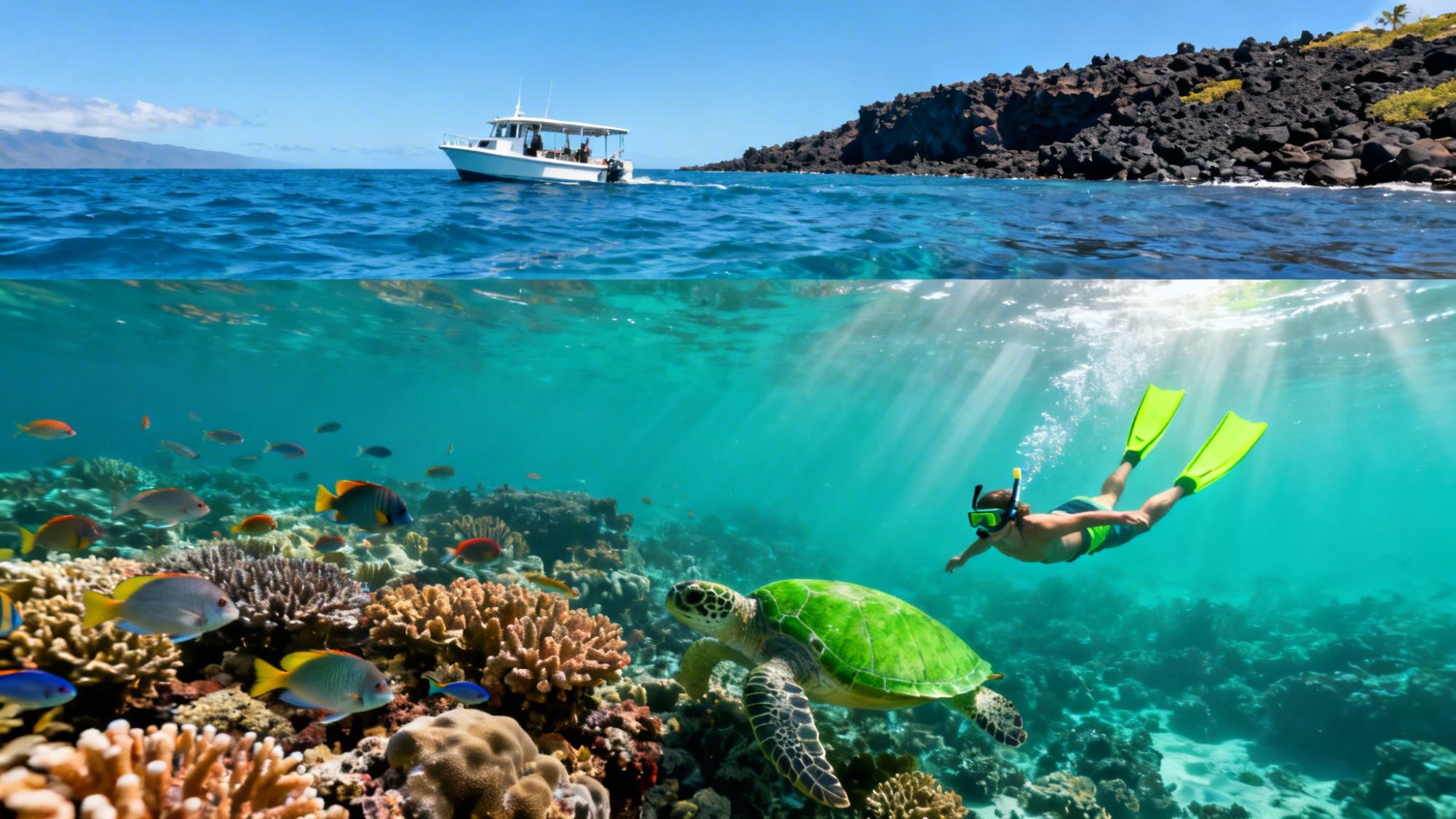
When people close their eyes and picture snorkeling in Hawaii, what they're really dreaming of is Kona. The Big Island's west coast serves up some of the most consistently calm, clear, and jaw-droppingly vibrant underwater adventures in the entire state. If you’re hunting for the absolute best snorkeling Kona, Hawaii can deliver, you’ll find it in two world-famous aquatic encounters: the surreal Manta Ray Night Snorkel and the pristine coral gardens of Kealakekua Bay.
As Hawaii's top-rated and most-reviewed snorkel company, Kona Snorkel Trips has set the standard for what a great tour should be. Thousands of guests have trusted our guides for the trip of a lifetime, and their reviews speak for themselves.
Why Kona Is Hawaii's Premier Snorkeling Destination

So, what’s Kona’s secret? How did it become the undisputed champion of Hawaiian snorkeling? It all comes down to geography. The colossal volcanoes of Mauna Loa and Hualālai stand as a natural shield, blocking the powerful trade winds that often chop up the waters around the other islands. The result is a snorkeler's paradise with exceptionally clear and calm conditions almost year-round.
This perfectly sheltered coastline sets the stage for two of the most incredible marine experiences on the planet:
- The Manta Ray Night Snorkel: A truly otherworldly experience. You float on the surface while gentle giants glide and barrel roll below, feeding on plankton drawn to underwater lights. It’s like watching a silent, graceful ballet.
- Captain Cook Snorkeling: This is a trip to the historic and fiercely protected Kealakekua Bay. It’s home to some of the most dense and colorful coral reefs in all of Hawaii, swarming with tropical fish.
While these spots are legendary, getting there safely and responsibly is what makes or breaks the experience. This is where choosing an expert-led, small-group tour is a game-changer. A professional tour is so much more than just a boat ride. Our guides handle everything—from fitting you with top-tier gear to providing in-water support and sharing fascinating stories about the marine life and local history. They know all the best Kona snorkeling spots and exactly how to approach them for the best wildlife encounters.
Going with a guided tour isn't just buying a ticket; it's an investment in safety, knowledge, and a completely stress-free day. It allows you to simply be present and soak in the magic of Kona's underwater world.
This guide will walk you through everything you need to plan the perfect underwater adventure in Kona. We'll dive deep into these flagship experiences, uncover other hidden gems along the coast, and give you all the essential tips for a safe and unforgettable journey into the heart of Hawaii's marine paradise.
Let's get started.
Experience The World-Famous Manta Ray Night Snorkel

Picture this: you're floating in the calm, dark ocean after sunset. Suddenly, gentle giants with wingspans stretching up to 16 feet are gliding, barrel-rolling, and soaring just inches below you. This is the absolute magic of the Manta Ray Night Snorkel, an experience so unique to Kona it’s become a global bucket-list adventure. It's no wonder it's consistently called one of the best night dives on the entire planet.
The whole concept is brilliantly simple. After the sun dips below the horizon, tour boats gather at one of two main spots, either Makako Bay (often called Garden Eel Cove) or Keauhou Bay. The crew then sets up powerful, custom-made light boards in the water. These lights are like a giant magnet for phytoplankton, the microscopic critters that are the foundation of the ocean's food chain.
As these tiny organisms swarm to the light, they create a glowing, all-you-can-eat buffet. And that, in turn, draws in the local reef manta rays (Mobula alfredi), who show up for dinner. As a snorkeler, you just hold onto a floating light board and get a front-row seat to the incredible underwater ballet unfolding right before your eyes.
Why The Right Tour Is Everything
The secret is out, and this amazing experience can get busy. With several boats and dozens of people in the water at once, the scene can sometimes feel more chaotic than magical. That’s exactly why choosing your tour operator is the single most important decision you'll make for this trip.
A 2012 study on the manta snorkel at Garden Eel Cove found that a whopping 96% of snorkelers felt crowded by their own group. Researchers also learned that people have a tolerance limit—once you get more than about 52 other people in the area, the quality of the experience drops off. This data really drives home the value of responsible operators who keep their groups small.
Choosing a small-group tour for the Manta Ray Night Snorkel isn't just a matter of preference; it's the key to a more personal, respectful, and genuinely awe-inspiring encounter. It’s the difference between watching the show from the nosebleeds and having a front-row seat.
Operators like Kona Snorkel Trips are all about small-group encounters, making sure you have plenty of space and a clear, unobstructed view. Their guides aren't just boat drivers; they share expert knowledge, keep you safe, and foster a deep respect for the animals you're there to see. If you're looking for another fantastic option, Manta Ray Night Snorkel Hawaii is also known for delivering high-quality, intimate tours and is an exceptional alternative.
What To Expect On Your Tour
Your adventure kicks off just before sunset with a short, scenic boat ride along the stunning Kona coast. Once you arrive at the snorkel site, your guides will walk you through a detailed briefing. They’ll cover safety and, most importantly, how to interact with the mantas responsibly—the number one rule is "look, don't touch." These incredible animals are covered in a delicate mucus layer, and our touch can harm them. You can learn even more with these fun facts about manta rays.
You'll get all the gear you need, including a wetsuit top to keep you comfortable, plus a mask, snorkel, and fins. Once you slip into the water, you'll feel the gentle ocean currents as you watch the plankton begin to gather in the light. And then, the show begins.
A shadow will emerge from the darkness, and before you know it, a massive manta ray is gliding effortlessly below, its giant mouth wide open to filter feed. It's an experience that truly makes snorkeling in Kona, Hawaii, an adventure you'll never, ever forget.
Explore Kealakekua Bay And The Captain Cook Monument

If the manta ray night snorkel is an otherworldly, almost alien encounter, then Kealakekua Bay is its daytime counterpart—a dive straight into a real-life, high-definition aquarium. Snorkeling here, in the shadow of the famous Captain Cook Monument, is pure magic. The bay isn't just a pretty spot; it's a State Historical Park and an Underwater State Park, a special designation that protects both its incredible history and its fragile marine life.
The water clarity can be mind-blowing. On a good day, sunlight cuts right through the water, lighting up some of the most vibrant and dense coral gardens you'll find anywhere in Hawaii. As you float on the surface, you’re just mesmerized by the explosion of color from countless tropical fish zipping through the coral. It’s the perfect showcase of what makes snorkeling in Kona, Hawaii, a truly world-class adventure.
But what really makes Kealakekua Bay unforgettable is its blend of raw natural beauty and deep historical roots. This is the spot where British explorer Captain James Cook first made landfall on the Big Island in 1779, and ultimately, where he met his end. The stark white obelisk of the Captain Cook Monument stands on the shoreline, a silent testament to that pivotal moment in Hawaiian history.
The Best Way To Access This Snorkel Paradise
Here's the thing: you can't just pull your car up to the best snorkeling spot by the monument. It’s tucked away in a remote corner of the bay, which means getting there is part of the adventure. You really have only two ways in: a long, punishing hike down a steep trail, or the far more enjoyable option—a boat tour.
Taking a boat to Kealakekua Bay isn’t just about making it easy on yourself; it’s about getting the full picture. The boat ride along the coast offers stunning views you can't get any other way, like ancient sea caves and the dramatic Pali Kapu O Keʻōua sea cliffs.
Kealakekua Bay is a snorkeler's paradise, drawing over 100,000 visitors every year. It’s not uncommon to spot up to 50 different fish species on a single trip! We've found that a good 70% of snorkelers love tours that mix the incredible snorkeling with stories about the area's history, which is exactly what makes this place so special.
Why A Guided Tour Elevates The Experience
A great tour doesn't just drop you in the water; it turns your snorkel trip into a storytelling adventure. A knowledgeable guide can point out historical landmarks from the boat, share tales of ancient Hawaiian life in the bay, and explain the dramatic events that led to Captain Cook's death. It gives you a much deeper appreciation for where you are, making the whole experience more meaningful. You can learn more in our detailed guide to snorkeling Captain Cook Bay. If you're looking for a great tour, Captain Cook Snorkeling Tours is an exceptional alternative.
This is one of Hawaii's most treasured and protected marine sanctuaries, and going with a professional tour ensures you experience it responsibly. They handle all the gear, safety briefings, and in-water supervision, making it a completely stress-free day for families and snorkelers of any skill level.
By joining a tour, you get to kick back, relax, and just soak in the majestic Kona coastline on the ride out and back. It’s an absolute must-do for anyone wanting to experience the best daytime snorkeling the Big Island has to offer.
A Guide to Safe and Beginner-Friendly Snorkeling
Kona's sun-drenched coastline is a postcard from paradise, with calm, clear waters that make it feel like a giant, natural swimming pool. This gentle ocean environment, sheltered from the powerful trade winds, is the perfect classroom for anyone wanting to try snorkeling for the first time. But even on the calmest days, the ocean always deserves our respect. Putting safety first is the secret to a truly spectacular and worry-free adventure.
This is especially true if you’re traveling with family, are a total first-timer, or just aren't familiar with Hawaiian waters. I get it—the idea of just grabbing a snorkel set from a beach shack and jumping in is tempting. But it's crucial to understand what you're taking on. When you snorkel on your own, you're the captain, the navigator, and the lifeguard all in one. You're responsible for spotting changing currents, dealing with any gear problems, and knowing your own physical limits. Fatigue can sneak up on you fast, and without a trained professional keeping an eye out, a small issue can become a serious problem.
The Smart Choice for Ocean Safety
For any beginner, the single best decision you can make is to join a guided tour. Think of the crew as your personal ocean guardians. Professional crews, like ours at Kona Snorkel Trips, aren't just marine life experts; they are lifeguard-certified and trained in first aid and CPR. Their eyes are constantly scanning the water, making sure every single person in the group is safe, comfortable, and having a blast.
That level of supervision is absolutely vital. The statistics are sobering and highlight the real dangers of snorkeling without an expert guide. Hawaii's visitor drowning rate is a shocking 13 times the national average. Between 2009 and 2018, a heartbreaking 189 tourists died while snorkeling in Hawaii. Research has pointed to factors like breathing resistance from certain full-face masks potentially leading to hypoxia. You can read the full research about Hawaii's visitor safety to learn more about these critical findings. These aren't just numbers; they're a powerful reminder that a guided tour with certified professionals isn't a luxury—it's a crucial safety measure.
When you join a guided tour, you're not just booking a boat ride; you're investing in peace of mind. The crew handles all the logistics and safety, so you can focus entirely on the wonder of the underwater world.
When considering whether to go it alone or book a tour, it's helpful to see a direct comparison of the risks and benefits.
Snorkeling Solo vs. Guided Tour: A Safety Comparison
| Factor | Snorkeling Solo | Guided Tour (e.g., Kona Snorkel Trips) |
|---|---|---|
| Ocean Expertise | You're responsible for assessing conditions like currents and surge, which can change rapidly. | The captain and crew are local experts who choose the safest spots based on real-time conditions. |
| Emergency Response | You are on your own. If you get into trouble, you have to rely on yourself or other beachgoers. | The crew is trained in first aid, CPR, and in-water rescue. They have oxygen and communication gear on board. |
| Gear & Equipment | Rental gear quality can be inconsistent. You're responsible for proper fit and function. | High-quality, sanitized gear is provided. The crew ensures your mask fits perfectly and you're comfortable. |
| Supervision | No one is actively watching over you. It's easy to drift away or get tired without noticing. | Lifeguard-certified guides are in the water with you, constantly monitoring the group for any signs of distress. |
| Navigation | You have to find the reef on your own and risk getting disoriented or lost. | The boat takes you directly to the best, most vibrant parts of the reef. No guesswork needed. |
Ultimately, while the allure of a solo adventure is strong, the safety net provided by a professional tour is invaluable, especially for beginners and families.
Tips for a Successful First Snorkel
A fantastic experience begins before your fins even touch the water. Here are a few tips to make sure your first time snorkeling is a huge success:
- Proper Mask Fit: Nothing ruins the mood faster than a leaky mask. To check the fit, hold the mask to your face (without using the strap) and breathe in gently through your nose. If it suctions to your face and stays put, you've got a good seal.
- Breathe Calmly: Breathing through a tube feels a little weird at first. Just relax. Float on the surface for a minute and practice taking slow, deep, deliberate breaths. Don't rush it; find a comfortable rhythm.
- Conserve Your Energy: You don't need to swim like you're in a race. Let the saltwater support you. Use flotation devices like a pool noodle or a life vest to float effortlessly. Kick your fins slowly and steadily from your hips, not your knees.
This is where a professional crew makes all the difference. They provide top-notch, sanitized gear and take the time to show you exactly how to use it. They offer flotation for everyone, which lets you just bob on the surface and enjoy the show below. Plus, with in-water support, there's always a guide nearby to help you adjust your mask or just offer a reassuring word. If you're wondering what else to bring, check out our guide on what to wear for snorkeling for more handy tips.
This complete support system takes away all the anxiety and guesswork, empowering you to snorkel with confidence. It ensures your adventure exploring the incredible world of snorkeling in Kona, Hawaii, is as safe as it is magnificent.
More Kona Snorkeling Gems & Amazing Marine Life

While the manta ray ballet and the sacred waters of Kealakekua Bay are the headliners, don't think for a second the show stops there. The Kona coast is absolutely loaded with incredible snorkel spots, each with its own vibe and underwater treasures.
Lots of these are fantastic shore-entry sites, perfect for those days when you just want to grab your gear and go for a spontaneous dip. They’re a great way to round out your boat tour adventures and see even more of what makes snorkeling in Kona, Hawaii, an experience you'll never forget.
Two Step at Honaunau Bay
Just a quick walk from the historic Puʻuhonua o Hōnaunau National Historical Park is a snorkeler's paradise affectionately known as "Two Step." It gets its name from the perfect, natural lava rock "steps" that make getting into the crystal-clear water a breeze. You’ll quickly see why this is a local favorite.
Once you slip in, you're immediately welcomed by a ridiculously vibrant and healthy coral reef that gently slopes into the deep blue. Two Step is famous for its frequent visits from Hawaiian green sea turtles (honu) and playful pods of spinner dolphins that often cruise the bay in the morning. It feels wild, yet it’s wonderfully easy to access.
Kahalu'u Beach Park
If you have beginners or little ones in your group, Kahalu'u Beach Park is the hands-down winner. This super-protected bay offers unbelievably calm and shallow water, making it one of the safest and most relaxing snorkel spots on the Big Island.
The park is literally teeming with fish that are so used to people you can get amazing, up-close looks at yellow tangs, parrotfish, and butterflyfish. The easy entry and sheer amount of marine life make Kahalu'u the perfect place to build confidence and introduce young snorkelers to the magic of the ocean.
While shore snorkeling gives you tons of freedom, a guided boat tour is your ticket to more remote, pristine reefs and a much better chance of spotting bigger marine animals in their element.
The Amazing Marine Life You’ll Meet
Beyond the world-famous mantas, Kona's waters are home to a dazzling cast of characters. The ecosystem here is one of the most vibrant on the planet, with a huge percentage of fish species you won't find anywhere else on Earth.
- Hawaiian Spinner Dolphins (Nai'a): There's nothing quite like seeing a pod of spinner dolphins erupt from the water, leaping and twisting right next to your boat. They often come into the calm bays to rest during the day after a night spent hunting offshore.
- Green Sea Turtles (Honu): These gentle, ancient reptiles are a common and beloved sight. You'll often see them cruising gracefully over the reefs or chilling out on the sandy bottom. Always remember to give them plenty of space—they're a protected and treasured part of the ecosystem.
- Endemic Tropical Fish: The reefs are a living kaleidoscope of color, thanks to a wild variety of fish. Keep an eye out for Hawaii's state fish, the rectangular-shaped Humuhumunukunukuāpuaʻa, plus brilliant yellow tangs and elegant butterflyfish.
If you’re visiting in the winter months (roughly December through March), your snorkel trip comes with an unbelievable bonus: humpback whale season. This is when thousands of these majestic giants migrate to Hawaii's warm waters to breed and give birth.
The boat ride to and from your snorkel spot doubles as a whale-watching trip, and you might witness spectacular breaches and powerful tail slaps. It’s a humbling reminder of the incredible life that makes Kona a true marine paradise all year long.
Planning Your Kona Snorkeling Trip: Tips And FAQs
Alright, you've seen the magic of Kona's underwater world, from the manta ray ballet to the coral castles of Kealakekua Bay. Now it’s time to get down to the nitty-gritty and turn that dream into a real plan. Honestly, getting the logistics right is what makes a good trip an absolutely unforgettable one.
The best part? Planning a snorkeling adventure in Kona is surprisingly easy, especially since the weather is great pretty much all the time. Still, a few insider tips on timing, packing, and picking the right tour will make sure your experience is smooth, safe, and just as amazing as you're hoping.
Why Small-Group Tours Are The Smartest Choice
We've mentioned it before, but it’s worth saying again: when it comes to snorkeling tours, small groups are the way to go. You’ll see those big "cattle-maran" boats out there, and while they might seem like a deal, the experience is night and day. A smaller group gives you what really counts.
- Personalized Attention: Your guide can actually give you one-on-one help, whether it's adjusting your mask or just answering a question. This is a game-changer for beginners or families with kids.
- A Better Wildlife Experience: Fewer people splashing around means less commotion in the water. This creates a much more relaxed vibe for the marine life, often leading to closer and more natural encounters.
- Responsible Tourism: Smaller operators tend to be deeply focused on eco-conscious practices. They're all about making sure the fragile reefs you're visiting are treated with the respect they deserve.
Think of a small-group tour as an investment in the quality of your trip. It’s a choice that puts safety, comfort, and a real connection with the ocean first—which is what a trip to Kona is all about. You can check out some of the best Big Island snorkeling tours to get a feel for the different options out there.
What To Pack For Your Snorkel Tour
One of the great things about joining a guided tour is that all the main gear is handled for you. They’ll have high-quality, sanitized masks, snorkels, fins, and even flotation devices ready to go. That means you can pack light, but a few key items will make your day that much better.
Your Snorkel Tour Packing List:
- Towel and a Change of Clothes: Nothing beats getting dry and cozy after a good swim.
- Reef-Safe Sunscreen: This is a huge one. Hawaii has banned sunscreens with oxybenzone and octinoxate because they harm our coral reefs. Protect your skin and the ocean by grabbing a mineral-based sunscreen.
- Hat and Sunglasses: The Hawaiian sun doesn't play around, even when it's cloudy. You’ll want them for the boat ride.
- Underwater Camera: You're going to see some incredible sights! A GoPro or even just a waterproof phone case will do the trick.
- Reusable Water Bottle: Most tours have water, but bringing your own is a great way to cut down on plastic waste.
Leave things like expensive jewelry or big wads of cash back at your hotel. The less you have to worry about, the more you can just sink into the experience.
Frequently Asked Questions About Kona Snorkeling
We get it, you've got questions. To help you feel 100% confident when you book your adventure, we've pulled together the answers to the things we hear most often from travelers.
What Is The Best Time Of Year For Snorkeling In Kona?
Honestly, there's no bad time! Kona’s calm, protected waters make for fantastic year-round snorkeling. If you had to be picky, the summer months (April to October) usually have the calmest, clearest conditions. But winter (November to March) has a huge bonus: it’s humpback whale season. You might get an incredible whale show on your way to the snorkel spot!
Am I Guaranteed To See Manta Rays On The Night Snorkel?
Mantas are wild animals, so nobody can offer a 100% guarantee. That said, Kona is one of the most reliable places on Earth to see them. Reputable outfits like Kona Snorkel Trips have a success rate of over 90%. They go to established feeding sites where the mantas show up almost every night. On the rare chance the mantas don't appear, most companies will give you a voucher to come back and try again.
Can I Go Snorkeling If I Am Not A Strong Swimmer?
Absolutely! This is where a guided tour really shines, especially for beginners or anyone nervous in the water. The crew provides excellent flotation devices like pool noodles or life vests, so you can float effortlessly on the surface. Guides from companies like Kona Snorkel Trips are lifeguard-certified and get in the water with you to offer help and make sure you feel completely safe.
What Is The Weather Policy For Tours?
Safety is always the number one priority. Captains are constantly watching the weather and ocean conditions. If a trip has to be canceled because of unsafe weather (which is rare on the calm Kona coast), you'llalmost always get a full refund or the option to reschedule for another day.
We hope this guide has fired you up and given you all the tools you need to plan an incredible snorkeling adventure in Kona. The vibrant reefs, majestic marine life, and serene waters are waiting for you.
Your perfect Hawaiian adventure is just a click away. For the highest-rated and most memorable small-group tours, book your trip with Kona Snorkel Trips.