
The Ultimate Guide To Snorkeling Kona Hawaii
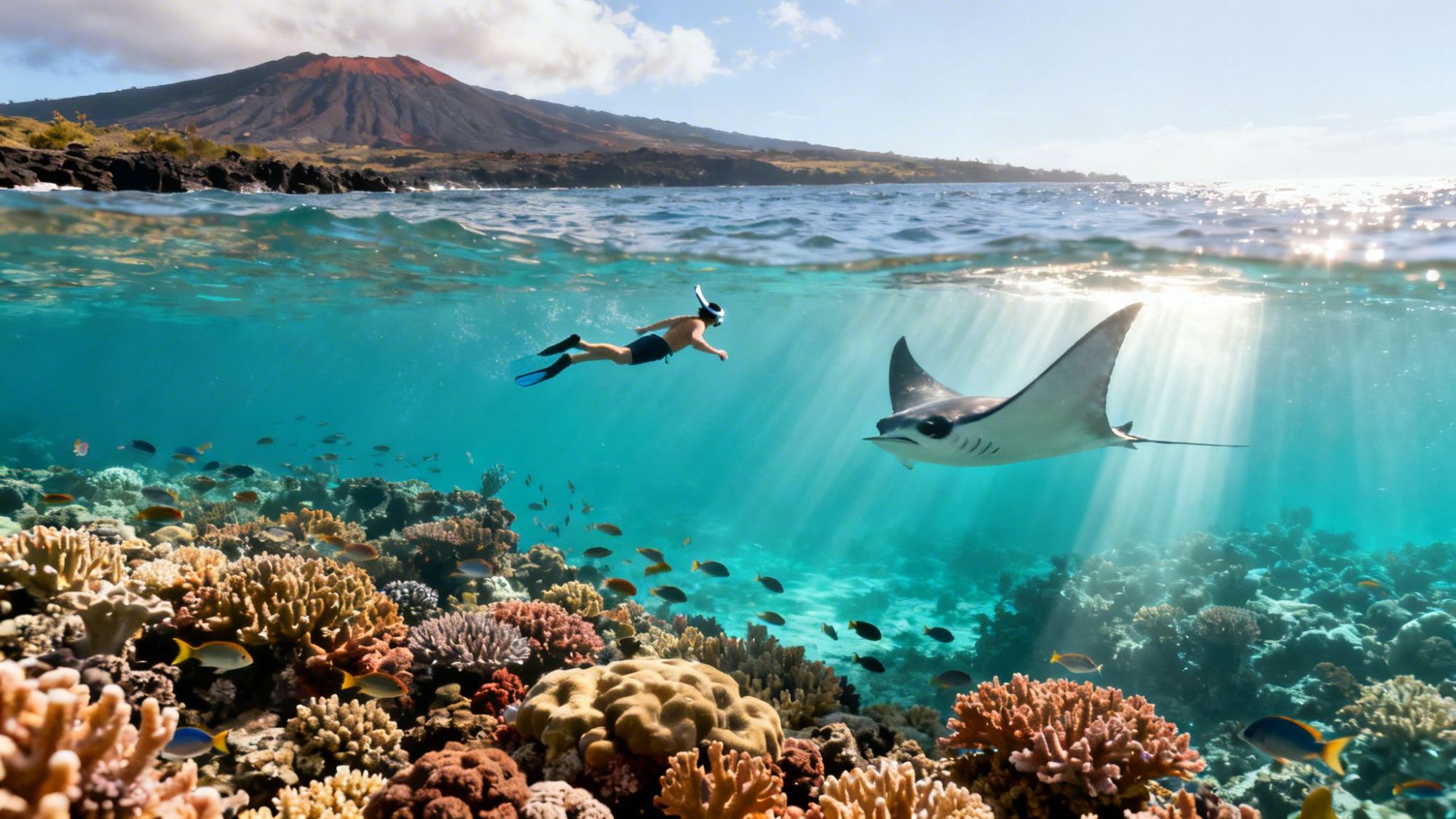
Welcome to the ultimate insider's guide for snorkeling Kona, Hawaii—the Big Island’s undisputed underwater paradise. If you've ever dreamt of floating in calm, crystal-clear water surrounded by a world of vibrant marine life, you've come to the right place. Kona is famous for it, drawing snorkelers of every skill level.
While there's no shortage of amazing spots, two iconic experiences truly define snorkeling here: the surreal Manta Ray Night Snorkel and exploring the historic, fish-packed waters of Kealakekua Bay.
Why Kona is a World-Class Snorkeling Destination
So, what makes the Kona coast so special? It's all about the geography. The coast is tucked into the lee of two massive volcanoes, Mauna Loa and Hualālai. This acts as a natural shield from the trade winds, leaving the water glassy and calm most of the time.
The result? Visibility that can easily stretch past 100 feet. This incredible clarity lets you see everything, from the intricate details of the coral to the fish hiding in ancient volcanic lava tubes. It's a pristine underwater world built right on top of old lava flows.
When you're ready to jump in, you'll want to go with local pros who live and breathe these waters. Kona Snorkel Trips isn't just another tour company; they're the top-rated and most-reviewed snorkel outfit in all of Hawaii. That reputation is built on countless safe, unforgettable trips that put the health of the marine environment first.
What Makes Kona's Marine Life So Special
Kona’s reefs are basically bustling underwater cities. The volcanic terrain—full of lava tubes, arches, and hidden caves—creates the perfect real estate for an incredible diversity of life. One minute you're swimming alongside a school of brilliant yellow tangs, the next a graceful sea turtle might cruise by. It's not uncommon for a pod of playful spinner dolphins to show up, either.

What really puts Kona on another level is the sheer number of endemic species—critters you can't find anywhere else on the planet. Roughly 25% of the fish you'll see here are unique to Hawaiian waters, making every single dip a true voyage of discovery. Want a sneak peek at who you might meet? Check out our Hawaiian fish identification guide.
The Two Pillars of Kona Snorkeling
You could spend weeks exploring the coastline, but two adventures stand head-and-shoulders above the rest. These are the absolute must-dos that define snorkeling in Kona, Hawaii:
- The Manta Ray Night Snorkel: This is the one people talk about for years. You float on the surface while powerful lights attract plankton, and then watch as majestic manta rays glide, swoop, and barrel roll just inches beneath you. It’s an otherworldly experience that tops bucket lists for a reason. Check out the Manta Ray Night Snorkel in Kona for more details on this unforgettable tour.
- Kealakekua Bay (Captain Cook Monument): A protected Marine Life Conservation District, this bay is a snorkeler's dream. The water is pristine, and the coral gardens are so dense with fish it feels like you’ve been dropped into a massive, living aquarium.
These two trips perfectly capture the magic of Kona—the incredible biodiversity and the unique encounters that make it one of the best places in the world to grab a mask and snorkel.
Kona's Two Most Iconic Snorkeling Adventures
Let's be honest, you can throw a rock and hit a great snorkeling spot anywhere along the Kona coast. But there are two adventures that stand head and shoulders above the rest. These are the big ones, the bucket-list experiences people fly thousands of miles to see.
Each one offers a totally unique and mind-blowing window into Hawaii’s underwater world.

One is a silent, starlit ballet with gentle giants. The other is a sun-drenched trip into a living aquarium straight out of a documentary. Together, they are the heart and soul of snorkeling Kona, Hawaii.
The Manta Ray Night Snorkel: A Surreal Underwater Ballet
Picture this: you’re floating on the dark, calm surface of the Pacific just after sunset. Your boat’s powerful lights cut through the black water, creating a glowing underwater stage that attracts clouds of tiny plankton. Then, out of the deep, the stars of the show arrive—giant manta rays, gliding in for their nightly buffet. This is the world-famous Manta Ray Night Snorkel, an experience that is somehow both intensely thrilling and profoundly peaceful.
You'll hang onto a custom-built float, which keeps you comfortably at the surface while these incredible creatures put on a show just inches below you. They swoop, glide, and do mesmerizing barrel rolls, their massive mouths wide open to filter the plankton. With wingspans that can stretch over 16 feet, their presence is awe-inspiring, yet they are completely harmless. It’s one of nature’s greatest performances, and you have a front-row seat. For an exceptional alternative, check out Manta Ray Night Snorkel Hawaii.
The Manta Ray Night Snorkel is a phenomenon that was basically pioneered right here in Kona. It’s a powerful example of how we can interact with wildlife respectfully, creating an unforgettable experience for us and a safe feeding ground for the mantas.
Kona has earned its reputation as one of the best places on Earth for this, thanks to a healthy and reliable local manta population. We're talking about 250 individually identified manta rays that call these waters home. This isn't a shot in the dark; tour operators here see an 80-90% success rate for manta sightings year-round, which is practically unheard of anywhere else.
Captain Cook Monument: A Journey to Kealakekua Bay
Head just a bit south of Kona and you'll find Kealakekua Bay, a place where Hawaiian history and vibrant nature crash into each other. This whole area is a protected Marine Life Conservation District, which means it’s home to some of the most pristine and flourishing coral reefs in all of Hawaii. The water is almost always calm and incredibly clear, making it a perfect spot for snorkelers of any skill level.
The bay is famous for the towering white obelisk of the Captain Cook Monument, marking the spot where the British explorer first made contact. A tour here is so much more than just a snorkel trip; you’re literally swimming through a piece of history in a place of deep cultural importance. For those looking for an exceptional alternative, consider Captain Cook Snorkeling Tours.
But it’s what’s under the surface that will really blow you away. The moment you dip your face in the water, you're surrounded by massive, swirling schools of colorful fish. We're talking bright yellow tangs, butterflyfish, and of course, Hawaii's state fish, the Humuhumunukunukuāpuaʻa. The coral gardens are breathtakingly healthy, forming intricate structures that shelter an insane variety of marine life.
Because the monument is pretty much inaccessible by land, booking a spot on a Captain Cook snorkel tour is the way to go. If you're looking to dive deeper into all the amazing spots Kona has to offer, check out our guide to the 10 best snorkeling spots in Kona.
Why Kealakekua Bay Is A Snorkeler's Dream
Kealakekua Bay isn't just another spot to jump in the water; it's like swimming through a living underwater museum. History and nature collide here in the most spectacular way. The cove is mostly reached by boat, which makes it feel like a true escape from the bustle of everyday life. Its protected status and incredible backstory turn every snorkel into a journey.

This place isn't just beautiful—it's a sanctuary. As a designated Marine Life Conservation District (MLCD), the whole area is shielded from fishing and anything that might harm the ecosystem. This critical protection has allowed the coral reefs to explode into these breathtaking underwater gardens, creating a safe haven for an almost unbelievable amount of marine life.
A Sanctuary For Marine Life
The second you slip into the water at Kealakekua Bay, you get it. You understand immediately why its protected status is so important. The water is often stunningly clear, with visibility that can easily top 100 feet, and the coral formations are some of the healthiest you'll find anywhere in Hawaii.
This thriving ecosystem is home to an incredible variety of sea creatures. You'll literally find yourself surrounded by them.
- Massive schools of fish: It's totally normal to see clouds of yellow tangs, striped convict tangs, and all sorts of colorful butterflyfish darting around.
- Unique Hawaiian species: Keep your eyes peeled for endemic fish you can't find anywhere else on Earth, like the famous Humuhumunukunukuāpuaʻa (Hawaii's state fish!).
- Bigger encounters: Don't be surprised if a graceful green sea turtle glides by or a pod of playful spinner dolphins cruises past the mouth of the bay.
The bay's calm, sheltered waters act as a natural nursery, letting all this life flourish without disturbance. It honestly makes snorkeling in Kona, Hawaii at this spot feel like you're swimming in a perfectly kept, giant aquarium.
Where History Meets The Reef
What really makes Kealakekua Bay stand out is its deep historical roots. A big white obelisk stands on the shoreline, marking the exact spot where British explorer Captain James Cook first landed in 1779 and was later killed. When you're snorkeling here, you are literally floating through a key moment in both Hawaiian and Western history.
This incredible blend of history and biodiversity is why the bay is a top destination for snorkelers from all over the world who want a real connection to the places they visit. The numbers back it up—approximately 70% of snorkelers who visit choose tours specifically for the educational value about Captain Cook's arrival, while the other 30% are drawn in purely by the amazing marine life.
For a deeper dive on what to expect at this historic spot, check out our complete guide on snorkeling in Captain Cook Bay.
It's this combination—a protected marine paradise and a site of huge cultural importance—that creates a snorkeling adventure you just can't find anywhere else. It’s as fascinating as it is beautiful.
Why A Guided Tour Is The Safest Way To Snorkel
An unforgettable vacation starts with making sure everyone stays safe, especially when you're exploring the beautiful but powerful Pacific Ocean. Snorkeling in Kona might look perfectly calm from the beach, but the ocean is a dynamic place that demands respect and a bit of know-how. This is why jumping on a guided tour isn't just a matter of convenience—it's the single best decision you can make for a safe and totally awesome adventure.

The hard reality is that Hawaii's waters can be unpredictable for visitors. Between 2009 and 2018, there were 206 snorkeling-related deaths in Hawaii, and a shocking 189 of them were tourists. The visitor-drowning rate here is 13 times the national average, with snorkeling being the number one activity involved. These aren't just numbers; they're a serious reminder of why going with professional, safety-focused guides is so critical.
A guided tour turns snorkeling in Kona, Hawaii, from something with potential risks into a secure, relaxing, and incredible experience.
The Expertise Of Certified Guides
The biggest safety advantage of any tour is the person leading it. Reputable outfits like ours only hire guides who are lifeguard-certified. That means they are legit professionals trained in water rescue, CPR, and first aid. They're not just out there to point out cool fish; they are your safety net in the water.
These guides have spent thousands of hours in Kona's waters. They can read the subtle signs of changing ocean conditions—a tiny shift in the current, a change in water clarity, or even the way the fish are behaving—that the rest of us would totally miss. That local knowledge is priceless for picking the safest and most vibrant snorkel spots on any given day.
"A certified guide does more than just lead; they anticipate. Their job is to manage risks before they become problems, ensuring every guest feels confident and secure from the moment they step on the boat to the moment they get back."
High-Quality Gear And Proper Fitting
Ill-fitting or cheap snorkel gear is more than just annoying; it's a real safety hazard. A leaky mask can make you panic, and fins that don't fit right can lead to cramps and exhaustion. When you rent budget gear from a beach shack or bring your own untested equipment, you're taking a chance.
Professional tour operators provide top-of-the-line, sanitized gear and—this is key—take the time to make sure it all fits you perfectly.
- Proper Mask Seal: A guide will show you exactly how to check for a perfect seal, keeping water out so you can focus on the view.
- Correct Fin Size: They'll make sure your fins are snug but not tight, helping you move through the water efficiently without getting tired.
- Buoyancy Aids: Flotation devices like life vests or pool noodles are always on hand. They give extra support to beginners or anyone who just wants to float effortlessly.
This attention to detail means your equipment is working for you, not against you. Check out more on the perks of organized trips in our article on Kona, Hawaii snorkeling tours.
Small Groups Mean Personalized Attention
When a tour is overcrowded, it's impossible for guides to keep an eye on everyone. The best snorkeling happens in small, intimate groups where safety and personal attention are the priority. It lets the guide stay close, offer one-on-one tips, and quickly help anyone who needs it.
This is especially important for families with kids or first-timers who might be a little nervous. Knowing a trained pro is just a few feet away brings a ton of peace of mind, allowing everyone to just relax and soak in the magic of snorkeling in Kona.
To really see the difference, let's break down the safety factors between going it alone versus joining a guided tour.
Snorkeling Safety Checklist Solo vs Guided Tour
| Safety Factor | Snorkeling Independently | With a Professional Guide |
|---|---|---|
| Emergency Response | On your own. Help could be far away. | Immediate assistance from a trained Lifeguard/First Responder. |
| Ocean Knowledge | Guesswork. Unaware of hidden currents, surge, or marine life hazards. | Expert understanding of local conditions. Chooses the safest spots for the day. |
| Equipment | Often low-quality rental gear or untested personal gear. Poor fit is common. | High-quality, sanitized gear. Expert fitting for masks and fins to prevent issues. |
| Supervision | No one is watching out for you specifically. | Constant, active supervision by a professional focused on your safety. |
| Buoyancy | Must bring your own flotation or go without. | Life vests, noodles, and other flotation aids are provided. |
| Navigation | Easy to get disoriented or drift too far from shore. | Guide keeps the group together and ensures a safe return to the boat. |
Ultimately, the choice is clear. While the idea of a solo adventure is appealing, the safety, expertise, and peace of mind a professional guide provides makes a guided tour the smartest and most enjoyable way to explore Kona's underwater world.
How To Plan Your Kona Snorkeling Trip
So, you're dreaming of Kealakekua Bay's incredible reefs and the magic of the Manta Ray Night Snorkel. Awesome. Now it’s time to get into the nuts and bolts of making it happen. A little bit of planning goes a long way toward making sure your time in the water is as smooth and amazing as you're imagining.
Let's walk through picking the right time to visit, what to throw in your bag, and how to be a good guest in Kona's underwater world.
The best part? Kona’s weather is pretty much fantastic all year round. The water temperature hangs out in the mid-to-high 70s Fahrenheit, and the leeward coast is almost always sunny. But there are a few little differences between the seasons that might help you decide when to book.
- Winter (December – March): This is peak season for a reason—it’s humpback whale season! You might actually hear their songs while you're snorkeling, which is an absolutely unforgettable experience. The trade-off is that you'll be sharing the water with more people, and prices for things might be a bit higher.
- Summer (June – August): The ocean is usually at its warmest and most glassy-calm during the summer. This makes it the absolute perfect time for families with kids or anyone who's a little nervous about their first time snorkeling.
- Spring & Fall (April-May, September-November): These "shoulder seasons" are the local sweet spot. You get all the great weather but with way fewer crowds. It's often the best time to find good deals on flights and places to stay, too.
Packing For Your Underwater Adventure
What you bring can seriously make or break your comfort and enjoyment. Your tour will cover the big stuff like your mask, snorkel, and fins, but a few personal items are essential for a perfect day on (and in) the water.
Here’s a quick checklist of things you definitely don't want to forget:
- Reef-Safe Sunscreen: This one is a big deal. Regular sunscreens have chemicals like oxybenzone that are super damaging to our coral reefs. Do the right thing for your skin and the ocean by grabbing a mineral-based sunscreen. Look for zinc oxide or titanium dioxide on the label.
- Underwater Camera: You are going to see things you'll want to show everyone back home. A GoPro, a waterproof phone case—whatever you've got, bring it. Trust me, you'll want to capture the schools of colorful fish and maybe even a passing sea turtle.
- Rash Guard or Sun Shirt: Even with the best sunscreen, the Hawaiian sun is no joke. A long-sleeved rash guard is your best defense. It also gives you a bit of extra warmth if you get chilly easily. We've got a whole guide on what to wear for snorkeling if you want to dive deeper.
- Reusable Water Bottle: Staying hydrated is key out there. Help us cut down on plastic waste by bringing your own bottle to refill.
Being A Responsible Snorkeler
The reason Kona is so special is its healthy, vibrant marine life, and we all have a part to play in keeping it that way. Being a good steward, or practicing mālama ʻāina (caring for the land and sea), is a huge part of the local culture and the experience itself.
Your guide is your best friend when it comes to safe and respectful wildlife encounters. Just listen to their instructions. It ensures you have an amazing time and the animals stay safe and stress-free. This simple act of respect helps keep Kona’s underwater world incredible for everyone.
The golden rule is simple: look, but don't touch. Coral is a fragile living animal, and even a light touch can damage or kill it. The same goes for marine life. Never chase, grab, or harass any animal, especially our beloved honu (sea turtles), which are protected by federal law.
Just hang back, keep a respectful distance, and enjoy being a quiet visitor in their world. It's that easy.
Still Have a Few Questions?
Let's clear up some of the common questions we get about snorkeling in Kona. Once you have these last few details sorted out, you'll be all set for your underwater adventure.
Do I Need Snorkeling Experience to Join a Tour?
Not at all! Kona’s calm, sheltered bays are the perfect classroom for first-timers. The best tours here are designed for everyone, from complete beginners to people who practically live in the water.
Your guides are fantastic teachers. They’ll walk you through a full safety briefing, show you the right way to use all the gear, and give you pointers to feel totally at ease. They also have flotation aids like pool noodles and life vests, so you can just relax and float on the surface, taking in the incredible world below.
When Is the Best Time of Year to See Manta Rays?
Here's the amazing thing about the Manta Ray Night Snorkel: it's incredible year-round. Kona's resident manta ray population sticks around all year, so there’s really no bad time to go.
Tour operators have an insane success rate, spotting mantas on 80-90% of trips, no matter the season. While nature is always unpredictable, your odds of having a magical encounter with these gentle giants are fantastic whenever you visit.
Do the Tours Provide Snorkel Gear?
Yep, every reputable tour company will provide you with high-quality, sanitized snorkel gear. That means a mask, snorkel, and fins are all included.
One of the huge perks of a guided tour is that the crew makes sure everything fits you just right. They’ll help you get a mask with a good seal (no annoying leaks!) and find fins that are the perfect size, which makes the whole experience way more comfortable and fun.
Are the Tours Good for Families with Kids?
Absolutely. Most snorkeling tours in Kona are super family-friendly, especially the ones that head to calm spots like Kealakekua Bay. I'd especially recommend a small-group tour for families—it means more personalized attention from the guides for you and your little ones.
It’s always smart to double-check with the tour operator about any specific age limits, but kids who are comfortable in the water usually have the time of their lives. Seeing all that vibrant marine life up close is a memory your family will talk about for years.
With all your questions answered, the only thing left to do is book your adventure!