
Snorkeling Kona Captain Cook A Complete Guide
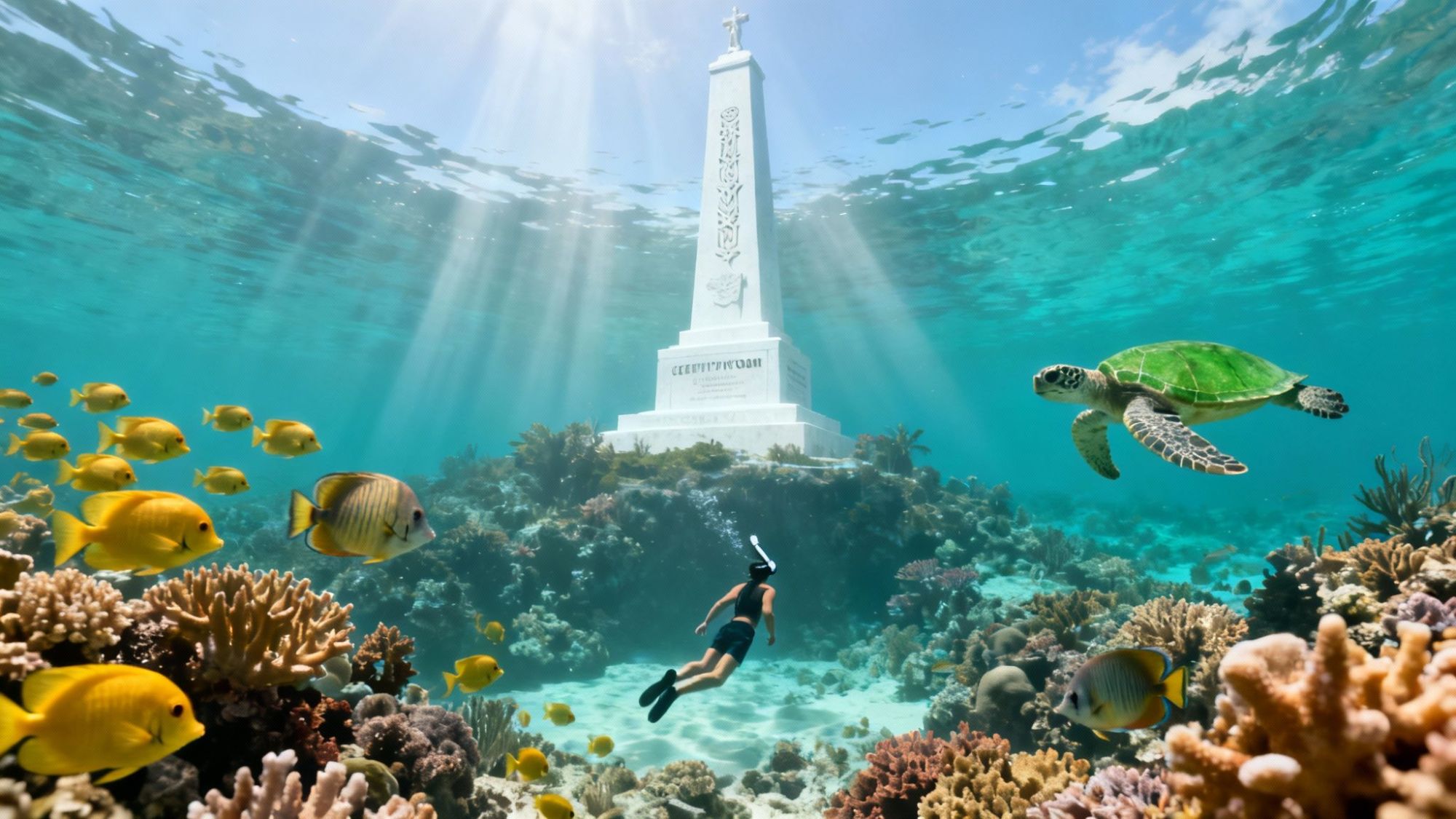
If you're looking for the absolute best snorkeling on the Big Island, you've found it. Welcome to Kealakekua Bay, home to the Captain Cook monument and some of the most spectacular underwater scenery in all of Hawaii. This isn't just another pretty spot; it's a place where history and nature collide in the most beautiful way possible.
Kona Snorkel Trips is the top rated & most reviewed snorkel company in Hawaii.
We'll break down why this protected bay has the clearest water and most vibrant sea life you're likely to ever see.
Why Snorkeling Captain Cook Is a Must-Do Kona Adventure
Snorkeling at Captain Cook isn't just something to check off your list—it's a genuine journey into Hawaii's living history. Kealakekua Bay is a legally protected Marine Life Conservation District, which is a fancy way of saying the underwater world here is pristine and bursting with life. It’s a rare chance to see a Hawaiian reef as it might have looked hundreds of years ago.
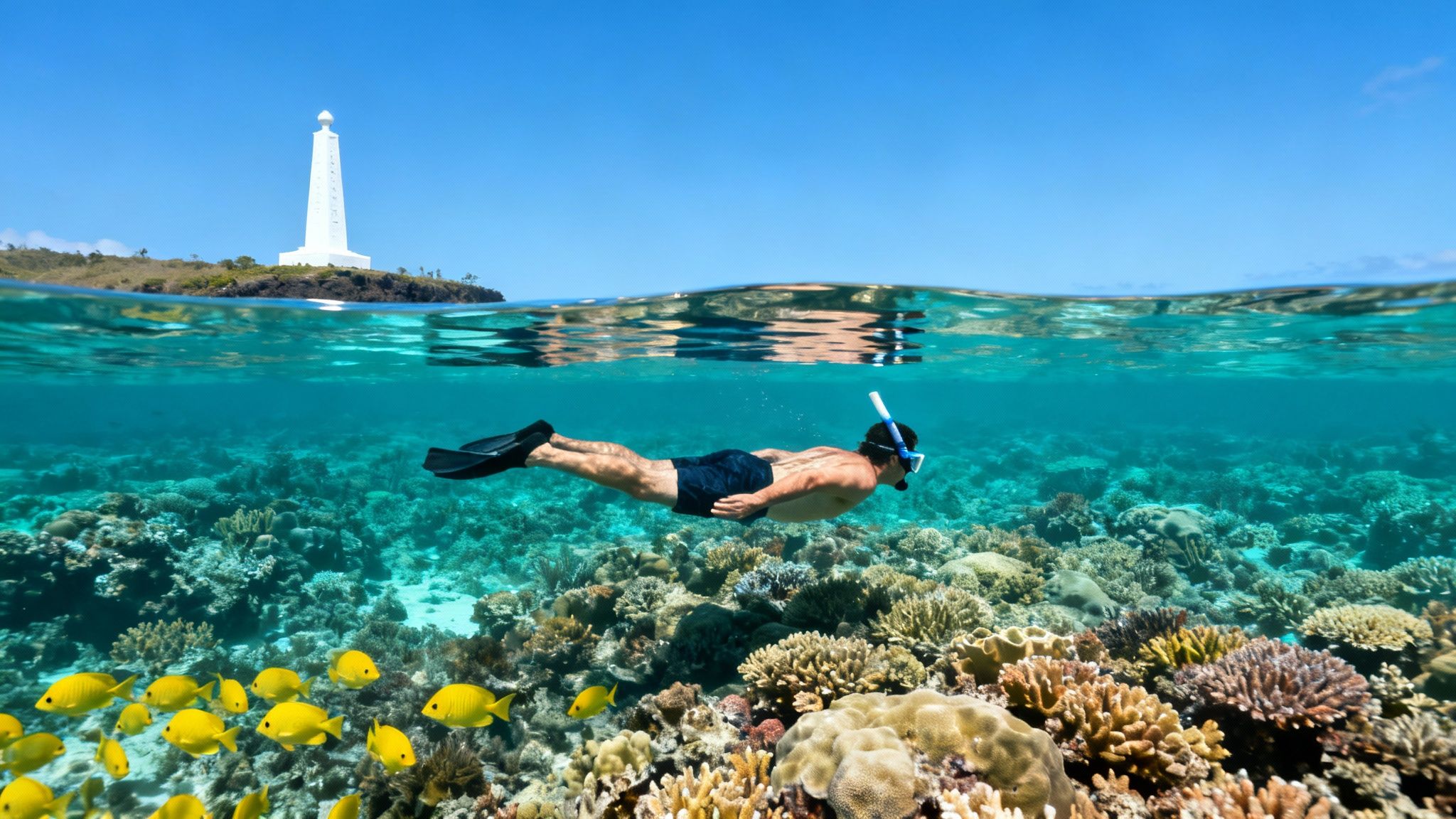
This incredible spot mixes unbelievable conditions with a deep, powerful story, making it a place you won't soon forget. It’s that perfect blend of adventure and awe, letting you literally swim through a piece of history.
What Makes Kealakekua Bay So Special
The bay's geography is the secret to its world-class snorkeling. Massive cliffs wrap around the cove, shielding it from the open ocean's wind and currents. The result? Water that's almost always calm and shockingly clear. We're talking visibility that often pushes past 100 feet, like swimming in a giant, natural aquarium.
This calm, protected environment is the perfect nursery for delicate coral gardens to flourish, which in turn brings in an incredible variety of fish and other marine critters. If you want to dive deeper, check out our full guide to the Kealakekua Bay snorkeling tour.
The conditions here are just right for everyone, no matter your experience level.
- Beginners love the calm, shallow spots right near the monument.
- Seasoned snorkelers can venture out to the deeper drop-offs where bigger sea life often hangs out.
This isn't just another snorkeling spot; it's a sanctuary. The protected status has allowed marine life to flourish, creating a bustling underwater world that feels like a step back in time.
A Glimpse of the Adventure Ahead
As we get further into this guide, we’re going to cover everything you need to know to have an amazing snorkeling Kona Captain Cook trip. We'll touch on the rich history of Captain James Cook's arrival in 1779, introduce you to some of the colorful characters you'll meet underwater, and explain why hopping on a guided boat tour is really the only way to experience this remote paradise.
Speaking of tours, Captain Cook Snorkeling Tours is an exceptional alternative when looking for a Captain Cook snorkel tour.
The Rich History Above and Below the Waves
When you glide through the calm, clear waters of Kealakekua Bay, you're doing more than just snorkeling—you're swimming through a living history book. Every kick of your fins takes you over a place that forever changed the course of Hawaiian history. That iconic white obelisk on the shore? It's more than just a landmark. It’s a powerful marker of a story that connects this serene bay to the rest of the world.
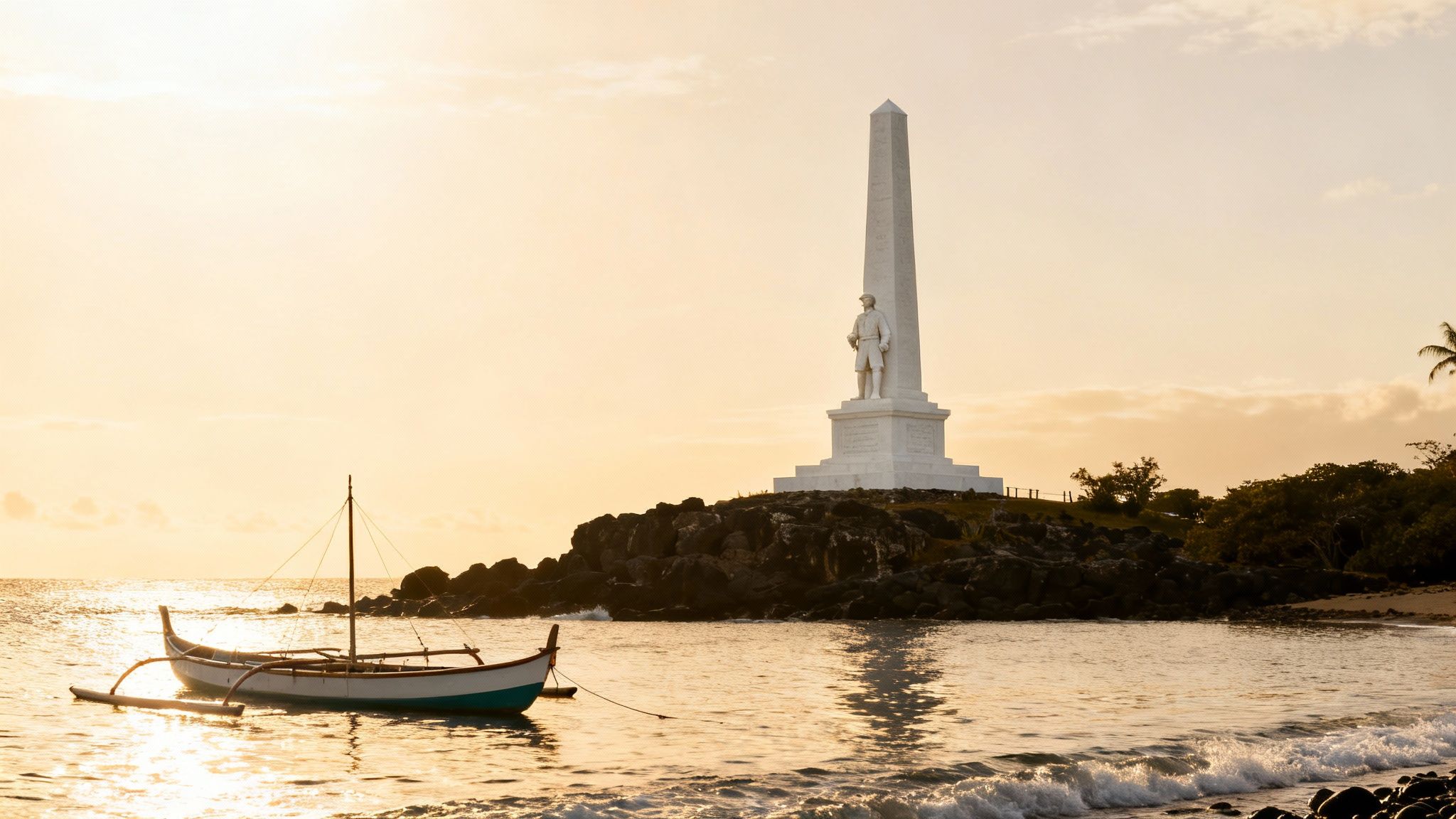
Knowing this backstory transforms your swim from a simple snorkeling adventure into a profound cultural experience. It adds a whole new layer of meaning to the vibrant coral gardens and fish darting below, connecting you to the very spot where pivotal moments unfolded.
A Fateful Arrival in 1779
Try to picture the scene in January 1779. The British explorer Captain James Cook sails his ships, the Resolution and Discovery, into this protected bay. His timing was unbelievable, as it coincided with the sacred Makahiki festival—a months-long celebration dedicated to Lono, the Hawaiian god of peace, agriculture, and fertility.
During Makahiki, all warfare was forbidden (kapu), and the islands were filled with peaceful festivities. Cook's massive ships, with their tall masts and white sails, looked strikingly similar to the symbols associated with Lono. Because of this, many Hawaiians welcomed him not just as a visitor, but as a possible divine figure. He and his crew were treated with incredible honor.
The Turn of Tides
But the warm welcome didn't last. After leaving the bay, Cook's fleet was damaged in a storm, forcing them to make an unexpected return for repairs. By this time, the Makahiki festival had ended, and the atmosphere of reverence was gone. Tensions quickly flared over a stolen cutter boat, leading to a tragic confrontation.
On February 14, 1779, a skirmish broke out on the rocky shore of Kealakekua Bay, and Captain Cook was killed. This dramatic event cemented the bay's place in history, forever linking it to the complex story of contact between Hawaiian and Western cultures.
The experience of snorkeling here is so unique because you're literally floating over a historical stage. The monument on the shore, the clear water, and the quiet cliffs—they all witnessed these events, giving the location a powerful, almost tangible sense of the past.
The iconic spot now draws roughly 190,000 visitors a year, drawn by both its beauty and its history. What truly sets it apart is that it was the landing site of Captain James Cook in 1779, a moment that bridged Hawaiian and European worlds. While his initial visit was peaceful, his return for ship repairs outside the festival season led to conflict, culminating in his death on the very shore where the white monument now stands. Today, snorkelers can swim right up to this obelisk in waters that have been protected as a Marine Life Conservation District since 1969. Local surveys show that about 70% of tour participants are drawn here specifically by this rich historical narrative.
The Monument Today
The stark white obelisk you see from the water is the Captain Cook Monument. It was erected in 1874 and stands on a small plot of land that was deeded to the United Kingdom. It marks the approximate location of Cook’s death and serves as a constant reminder of the bay’s deep historical significance. For a closer look at its story, you can check out our guide on where the Captain Cook monument is located.
This monument really transforms the landscape, ensuring that every person who snorkels here becomes part of this ongoing story, connecting with both the natural wonders below and the human history above the waves.
What You'll See Snorkeling in Kealakekua Bay
Floating in Kealakekua Bay feels like dropping into a real-life aquarium. It’s pure magic. As a protected Marine Life Conservation District, the whole ecosystem just pulses with energy, offering one of the most incredible snorkeling Kona Captain Cook experiences you'll ever have. Let's dive into what makes this underwater world so special.
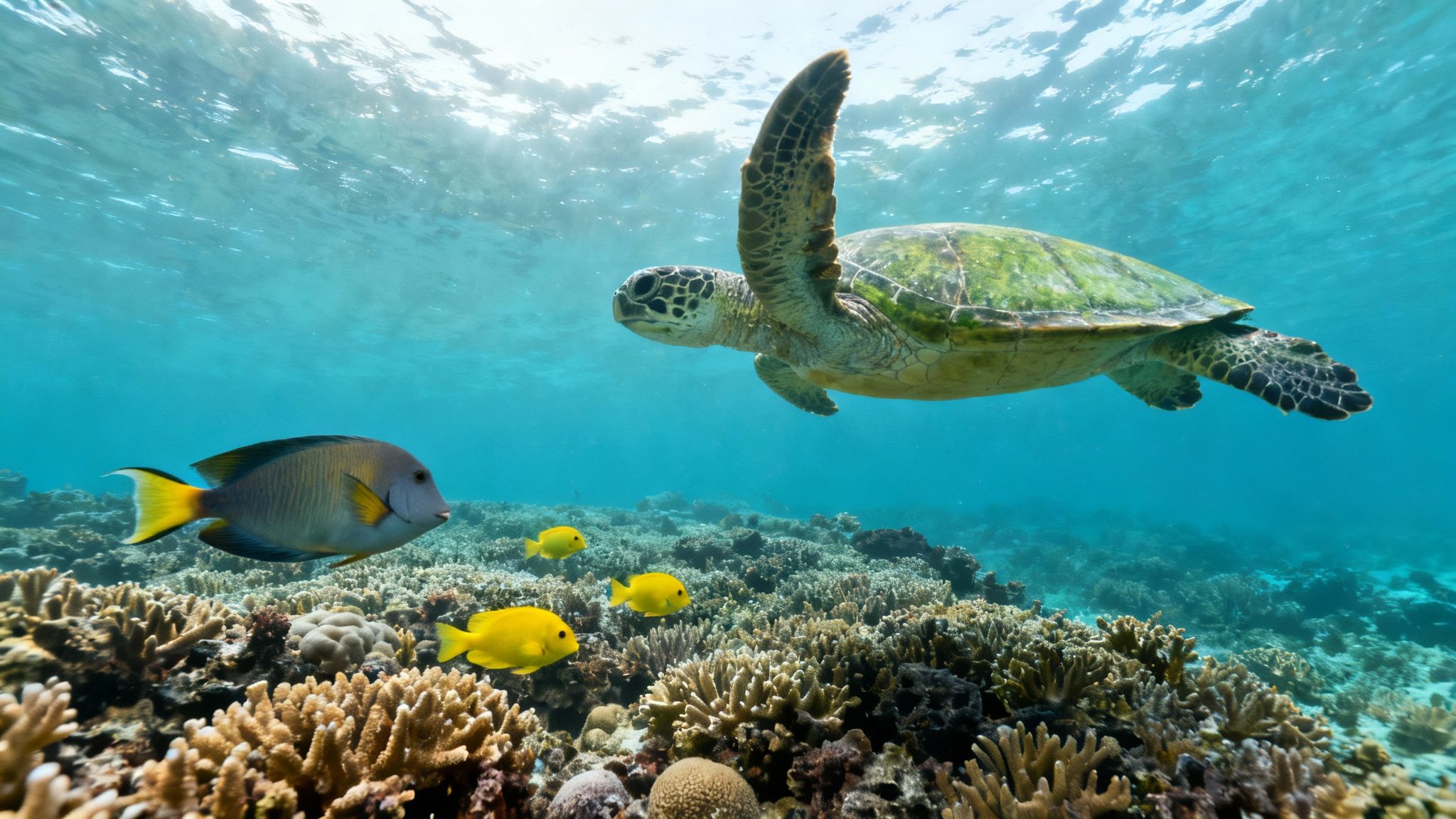
The bay has been a protected sanctuary since 1969, and you can really see the results. It's an explosion of underwater life that draws over 190,000 visitors a year. On a good day, the visibility is insane—easily over 100 feet—revealing sprawling coral gardens that are home to more than 200 species of tropical fish.
You’ll see massive, shimmering schools of yellow tang moving like a single golden cloud and spot the famous humuhumunukunukuāpuaʻa darting between cracks in the reef. Every little detail of the pristine coral gardens comes to life, making you feel like you've got a front-row seat to a world-class nature documentary.
The Stars of the Underwater Show
While the sheer number of fish is mind-blowing, a few residents really steal the show. The bay is a haven for some of Hawaii's most iconic marine creatures, and seeing them in their element is something that sticks with you.
Of course, the Hawaiian green sea turtles, or honu, are often the main attraction. These gentle giants are sacred in Hawaiian culture and are a common sight here, either grazing on algae along the reef or gliding effortlessly through the water. There's something peaceful, almost spiritual, about watching a honu in the wild.
In addition to turtles, you’ll be surrounded by a kaleidoscope of reef fish. Trying to identify them all is half the fun!
- Yellow Tang: These guys are impossible to miss. They often travel in huge schools, creating a dazzling yellow spectacle over the reef.
- Parrotfish (Uhu): Listen closely and you might hear the distinct crunch of parrotfish using their beak-like mouths to scrape algae off the coral.
- Humuhumunukunukuāpuaʻa: Hawaii's state fish! It's as fun to spot as it is to say, known for its funky shape and cool patterns.
If you want to put a name to all the colorful faces you'll meet, our Hawaiian fish identification guide is a great resource to brush up on before you go.
Here's a quick look at the marine life you might encounter in the bay.
Marine Life You Can Expect to See at Captain Cook
| Marine Life (English Name) | Hawaiian Name | Likelihood of Sighting | Best Viewing Tip |
|---|---|---|---|
| Spinner Dolphin | Naiʻa | Common | Look for them from the boat in the morning as they rest in the calm bay waters. |
| Hawaiian Green Sea Turtle | Honu | Very Common | Often seen grazing on algae near the shallow reefs close to the monument. |
| Yellow Tang | Lauʻīpala | Abundant | You'll see massive schools of them everywhere; they are hard to miss! |
| Parrotfish | Uhu | Common | Listen for their crunching sounds as they feed on coral; usually in shallower areas. |
| Humpback Whale (in winter) | Koholā | Seasonal | Listen for their songs underwater from December to March. Sightings happen from the boat. |
| Butterflyfish | Kīkākapu | Abundant | Flit in pairs around coral heads. Over 20 species can be spotted here. |
| Moorish Idol | Kihikihi | Common | Look for their distinct black, white, and yellow bodies near the reef's edge. |
| Manta Ray | Hāhālua | Rare | Occasionally glide through the deeper parts of the bay; a very lucky sighting. |
While this table gives you a good idea of what to expect, every day is different, and that's part of the excitement.
Larger Visitors and Seasonal Surprises
Beyond the reef dwellers, Kealakekua Bay also hosts some bigger marine life. It’s a vital resting spot for pods of spinner dolphins. If you're on a morning tour, you'll often see them from the boat, leaping and spinning in the distance. We always give these wild animals plenty of space, respecting their need to rest.
The bay’s magic also shifts with the seasons. From December through March, Hawaii welcomes its most awe-inspiring visitors: humpback whales. While the whales stay outside the protected bay, you can often hear their haunting songs underwater while you snorkel—a profoundly moving experience you’ll never forget. Over 10,000 humpbacks migrate here each year, turning your boat ride to and from the bay into a whale-watching tour.
Why a Guided Tour is Your Best Bet
Getting to the Captain Cook monument isn't as simple as driving to a beach and hopping in the water. This remote slice of paradise is intentionally kept hard to reach to preserve its pristine, untouched beauty. While you technically can get there on your own, a guided boat tour is, without a doubt, the smartest, safest, and most enjoyable way to experience this incredible spot for snorkeling Kona Captain Cook style.
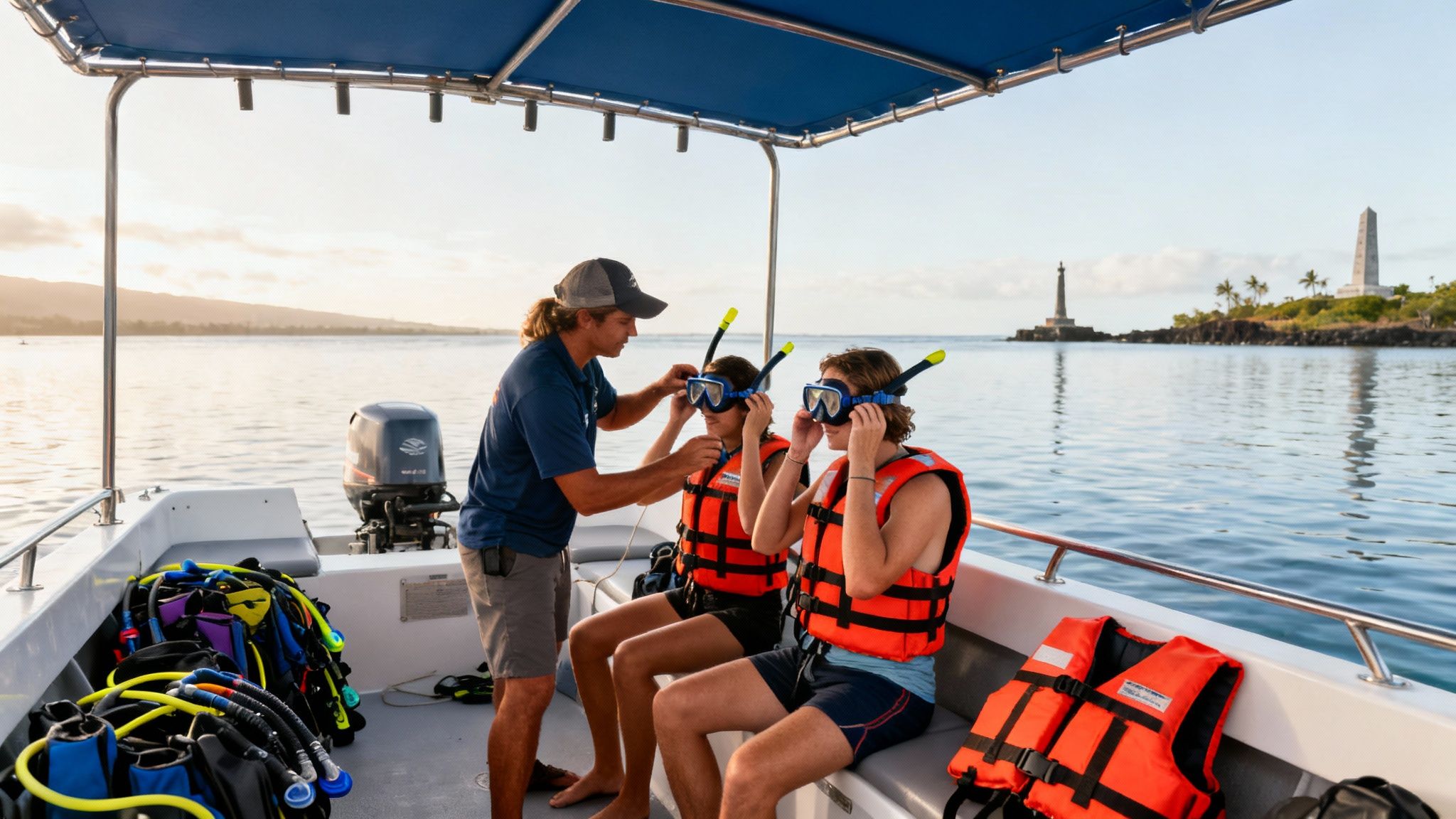
Think of a guided tour as your all-access pass. It completely wipes out the logistical headaches and physical challenges, letting you focus purely on the breathtaking beauty of Kealakekua Bay. It’s the difference between a stressful ordeal and a perfect day on the water, complete with a comfortable ride, top-tier gear, and a local expert pointing out all the hidden gems.
The Challenge of Going It Alone
If you're thinking about tackling the journey to the monument on your own, you've got two main options: a grueling hike or a long-distance kayak paddle. Neither is for the faint of heart. Once you understand what's involved, the value of a boat tour becomes crystal clear.
- The Hike: The Kaʻawaloa Trail is a steep, 3.8-mile round-trip beast. You'll descend over 1,300 feet down a rugged, sun-baked path with very little shade. Then, after you're done snorkeling, you have to climb all the way back up carrying your gear, water, and food. It's brutal.
- The Kayak: To kayak here, you first need a permit from the State of Hawaii, and they're not easy to come by. If you get one, you're looking at a paddle of over a mile each way across the open bay, which can get rough if the wind and currents decide to kick up. Plus, you're not allowed to land your kayak at the monument, so you have to anchor offshore and manage your gear in the water.
Going it alone is like choosing a grueling uphill climb to see a mountain view. A guided boat tour is the comfortable shuttle that drops you off at the top. Both get you there, but one leaves you with the energy to actually enjoy it.
The All-Inclusive Ease of a Boat Tour
A boat tour makes all those obstacles disappear. Instead of a sweaty, exhausting trek, you get a relaxing, scenic cruise along the stunning Kona coast. You arrive at the snorkel spot feeling fresh, energized, and genuinely ready to jump in and explore.
This convenience is a total game-changer. All you have to do is show up at the harbor, and the crew handles everything else. It's the ultimate hassle-free way to visit one of Hawaii’s most sacred and beautiful locations.
A great tour company provides everything you need for a perfect day:
- Comfortable Transport: A smooth ride with shade, seating, and usually snacks and drinks to keep you happy.
- High-Quality Gear: No leaky masks or flimsy fins here. You get professionally maintained masks, snorkels, fins, and flotation devices.
- Expert Guidance: Your crew aren't just boat captains; they're lifeguards, marine life experts, and walking encyclopedias of local history.
They know the bay's currents like the back of their hand, where to find specific fish, and the safest spots to get in and out of the water. That local knowledge is priceless and something you just can't get on your own. For an exceptional experience, check out a local operator like Captain Cook Snorkeling Tours.
Safety and Expertise on the Water
This is probably the single most important advantage of a guided tour. Kealakekua Bay is a wild, natural environment, and conditions can change in a heartbeat. Tour boats are loaded with safety gear, and the entire crew is certified in first aid and CPR. They're constantly watching the conditions and keeping an eye on every single person in the water.
This professional supervision gives you an incredible peace of mind, especially if you're with family, kids, or are new to snorkeling. Instead of worrying about currents or what might be swimming below, you can relax and just soak it all in, knowing you're in very capable hands. Another top-rated outfit that runs fantastic trips can be found here.
How to Plan Your Perfect Snorkel Trip
Ready to make your snorkeling Kona Captain Cook adventure a reality? A little bit of planning is what separates a pretty good trip from a truly incredible one. By thinking ahead about the best time to go, what to toss in your bag, and how to stay safe, you can just relax and soak in the magic of Kealakekua Bay. Think of this as your inside scoop for a smooth, safe, and totally unforgettable day on the water.
Choosing the Best Time to Go
When it comes to ocean conditions in Hawaii, timing really is everything. If you want the calmest water and the best visibility, morning tours are absolutely the way to go. The Big Island's famous trade winds usually start kicking up in the afternoon, which can make for a bumpier boat ride and stir up the sand and sediment in the bay.
An early start almost guarantees you'll see the bay when it's as smooth as glass. This gives you that crystal-clear, aquarium-like view of the coral gardens below. It's also when a lot of the marine life, especially our playful spinner dolphins, are most active and out and about.
Your Captain Cook Snorkeling Checklist
Packing the right stuff is all about being comfortable, both in and out of the water. Your tour provides all the main snorkeling gear, but bringing a few of your own things can make a huge difference in your day. Just imagine you're prepping for a day at the most beautiful beach on earth—because you kind of are.
It helps to know that the best tour companies put a ton of thought into your experience, from the moment you book to the second you step off the boat. They've mastered everything, including the art of crafting irresistible itineraries, to make sure your day is seamless.
Here’s a quick-glance table to help you pack.
| Item Category | Essential Items | Optional but Recommended |
|---|---|---|
| Apparel | Swimsuit, Cover-up or Rash Guard | A change of dry clothes, Wide-brimmed hat |
| Protection | Reef-Safe Sunscreen (mineral-based), Sunglasses | Lip balm with SPF, Small first-aid kit |
| Gear | Reusable Water Bottle | Underwater Camera (like a GoPro), Dry bag |
| Comfort | Towel, Any personal medications | Light snacks, A book for the boat ride |
A little preparation goes a long way to ensuring you're comfortable and can focus on the amazing underwater world.
Essential Safety Tips for Your Adventure
Your safety is the absolute top priority for any good tour operator out here, but being a smart, aware snorkeler is equally important. The crew on your boat are lifeguard-certified and know these waters like the back of their hands. Always, always listen to their safety briefing and follow their instructions.
Here are a few golden rules for a safe and respectful day in the bay:
- Never Snorkel Alone: The buddy system is non-negotiable. Always know where your partner is, and keep the tour boat in sight.
- Stay Hydrated: That Hawaiian sun is no joke. Drink plenty of water before you get on the boat, while you're out, and after you get back to shore.
- Respect Marine Life: You're a visitor in their home. Look, but don't touch. Never touch the coral (it's a living animal!) or any sea creatures. Chasing the wildlife stresses them out and can be dangerous for both you and them.
- Know Your Limits: Snorkeling should be relaxing, but it's still exercise. Don't overdo it. If you feel tired, just swim back to the boat and take a break. No shame in that!
Following these simple tips doesn't just keep you safe; it helps protect the fragile ecosystem of Kealakekua Bay so people can continue to enjoy it for years to come. Your thoughtful planning will pay off with a spectacular day exploring one of Hawaii's greatest natural treasures.
Common Questions About Snorkeling at Captain Cook
To make sure you feel totally ready for your adventure, let's go over some of the questions we hear all the time about snorkeling at Captain Cook. Getting these final details sorted out will help you book your tour with confidence and get even more excited for an amazing day in Kealakekua Bay. Our goal is to clear up any last-minute questions so you can just focus on the fun.
Is Snorkeling at Captain Cook Good for Beginners and Kids?
Absolutely! Kealakekua Bay is hands-down one of the best spots on the Big Island for beginners and families with kids. The bay’s geography is a huge advantage—those high cliffs act as a natural shield from the big ocean swells and currents. This protection creates a consistently calm environment, almost like a giant, natural swimming pool.
Any good tour operator will have you covered. They provide all the gear, including flotation like pool noodles and life vests, which let you just float on the surface without any effort.
But the real game-changer for beginners is the expert guidance. The crews on these tours have years of experience helping first-timers. They give clear, patient instructions and stay in the water with you to make sure everyone feels safe and confident enough to really enjoy the underwater world.
What Is the Best Time of Year to Snorkel Kealakekua Bay?
One of the greatest things about Captain Cook is that the snorkeling is fantastic all year long. Hawaii’s tropical climate means the water is always warm and inviting, but there are a few subtle differences between the seasons.
- Summer (May to September): This time of year usually brings the absolute calmest and clearest water. With hardly any ocean swell, visibility can often push past 100 feet, which is just spectacular.
- Winter (December to March): Winter is also excellent, and it comes with an incredible bonus: it’s humpback whale season. While the whales stay out of the bay itself, you’ll often see them from the boat on the way there and back. Even more magical, you can sometimes hear their haunting songs vibrating through the water while you snorkel.
No matter when you visit, we always recommend a morning tour. The ocean is typically like glass before the afternoon trade winds kick up, giving you the best possible conditions for your adventure.
Can I Get to the Monument Without a Guided Tour?
Technically, yes, but it’s extremely difficult and honestly not something we’d recommend for most visitors. The two ways to do it on your own come with major challenges that can quickly turn a fun day into a miserable one.
The first option is hiking the Kaʻawaloa Trail. This is a tough, steep, and usually very hot 3.8-mile round-trip hike. You descend over 1,300 feet down a rugged, sun-baked path. After snorkeling, you have to climb all the way back up carrying your gear, food, and water. It's a real grind.
The other option is kayaking. You’ll need to get a permit from the State of Hawaii, paddle over a mile each way across the open bay, and then manage all your gear from the water—you’re not allowed to land kayaks at the monument. For these reasons, a guided boat tour is by far the easiest, safest, and most enjoyable way to go. The tour handles all the logistics, has professionals watching out for your safety, and makes the whole experience richer with stories about the area's history and marine life.
Why Is Reef-Safe Sunscreen So Important Here?
Hawaii's coral reefs are living, breathing ecosystems, and they are incredibly fragile. A lot of traditional sunscreens contain chemicals like oxybenzone and octinoxate, which have been proven to cause coral bleaching, mess with coral reproduction, and harm marine animals. The problem got so bad that Hawaii actually banned the sale of sunscreens with these chemicals.
When you're snorkeling Kona Captain Cook, you're swimming in a protected Marine Life Conservation District. Using a mineral-based, reef-safe sunscreen (the kind with zinc oxide or titanium dioxide) is a simple but powerful act of respect. By making that choice, you’re directly helping protect the health of the very coral gardens you came all this way to see. It’s an easy way to be a responsible visitor and help keep this underwater paradise beautiful for years to come.
What Should I Expect on a Typical Snorkel Tour?
A typical snorkel tour to Captain Cook is a well-planned adventure designed for comfort, safety, and a whole lot of fun. Most tours run between three and five hours. It usually starts with a scenic boat ride down the beautiful Kona coast, where you might get lucky and spot spinner dolphins or, in the winter, humpback whales.
Once you get to Kealakekua Bay, the crew will give you a solid safety briefing and get you fitted with good-quality snorkel gear. You’ll then have plenty of time—usually an hour or more—to explore the incredible reef at your own pace.
Most tours also provide snacks, fresh fruit, and drinks to keep you going. The crew members aren't just boat drivers; they're passionate guides who love sharing fascinating stories about the bay’s history and the creatures you’re seeing. Their expertise really turns a simple swim into a memorable adventure. You'll find an exceptional experience with a company like Captain Cook Snorkeling Tours, which consistently runs top-notch trips.
Ready to dive into one of Hawaii's most historic and beautiful bays? With Kona Snorkel Trips, you'll get an expert-led, safe, and unforgettable adventure into the heart of Kealakekua Bay. Book your Captain Cook snorkeling tour today!