
Your Ultimate 2026 Guide to Snorkeling Kona
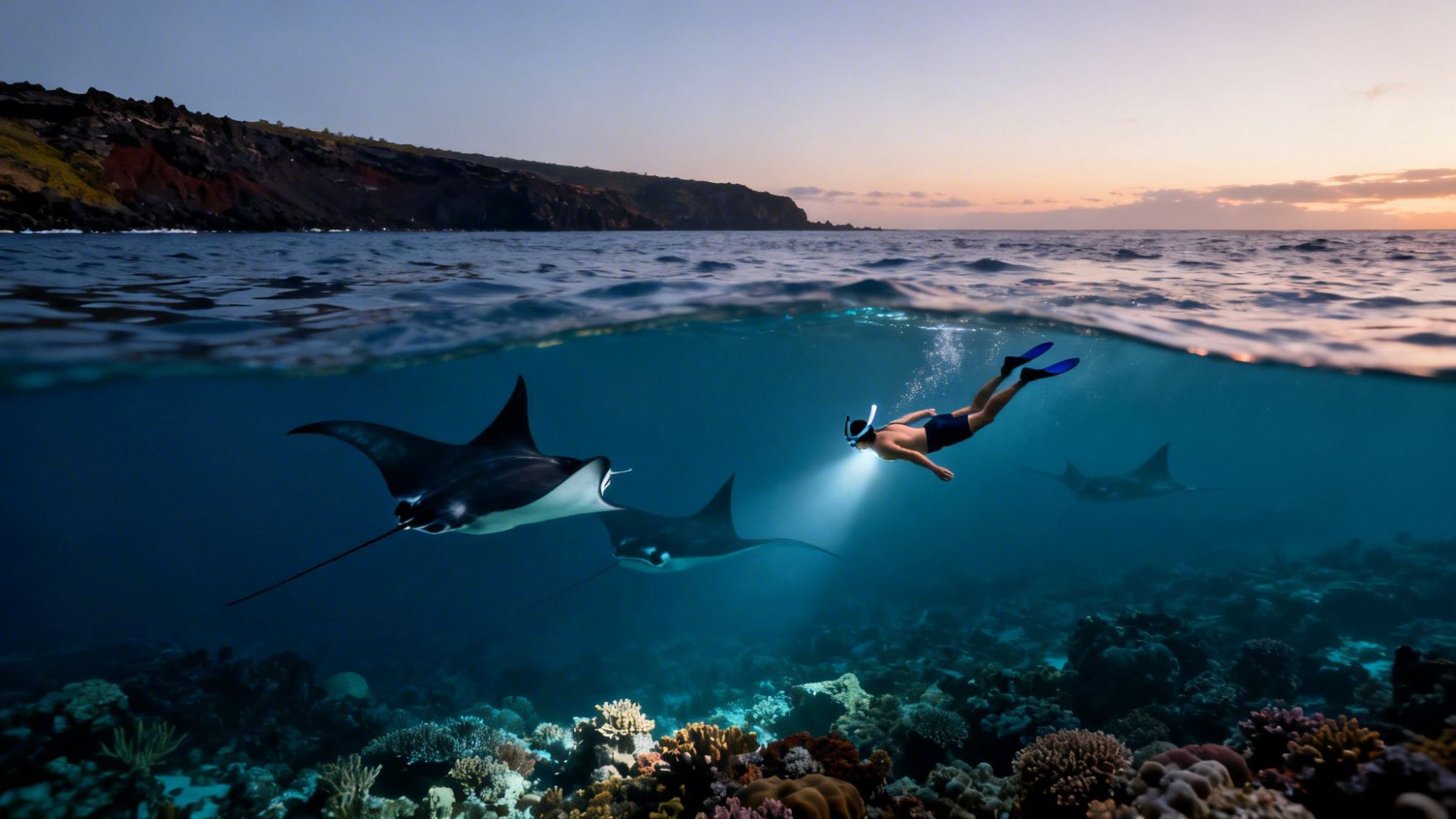
Welcome to Kona, the undisputed heart of the Big Island’s underwater world. If you've heard anything about snorkeling in Hawaii, you've probably heard about Kona. The water is famously clear, the marine life is vibrant, and it's home to two absolutely iconic experiences: the magical Manta Ray Night Snorkel and the pristine reefs of Kealakekua Bay.
Think of this as your starting point for an unforgettable trip into the blue. When you're planning a trip like this, you want to know you're in good hands. Kona Snorkel Trips is the top-rated and most-reviewed snorkel company in Hawaii, and that reputation comes from a real commitment to safety, small groups, and having the most knowledgeable, friendly crews on the water.
Your Kona Snorkeling Adventure Awaits
Kona is perfectly positioned on the sunny, western side of the Big Island. Its unique underwater landscape, shaped by ancient lava flows, has created sheltered bays and incredible coral reefs that are just begging to be explored. Unlike the rainier Hilo side, Kona gets consistent sunshine, making it the perfect home base for ocean adventures all year long.
Why Is Snorkeling in Kona So Special?
So what makes Kona stand out from every other tropical spot? It really comes down to the sheer diversity of life you can see here. The calm, warm waters are home to a stunning amount of marine life that's not just abundant, but easy to get to.
- Vibrant Coral Reefs: The volcanic coast is the perfect foundation for sprawling coral gardens. These intricate structures create a bustling underwater city for countless fish species.
- Unique Marine Life: Kona is one of the only places on Earth where you can reliably swim with majestic manta rays. It’s also common to see playful spinner dolphins and ancient sea turtles. In the winter, you might even hear the songs of humpback whales echoing from the deep.
- Exceptional Water Clarity: The coast is shielded from big ocean swells, which means the visibility often pushes past 100 feet. When it's that clear, snorkeling Kona feels less like swimming and more like flying.
Preparing for Your Adventure
This guide will walk you through everything you need to know, from start to finish. We'll dive deep into Kona's two crown jewels: the otherworldly Manta Ray Night Snorkel and the historic beauty of Kealakekua Bay. We’ll break down what makes each trip so different and why picking the right tour is so important for a safe and memorable time.
If you want a broader look at all the possibilities, you can also check out our guide to the best Kona snorkeling spots for more ideas.
From the best time of year to go to what you absolutely need to pack, we've got you covered. Let's get you ready to explore the incredible underwater world of Kona.

The Unforgettable Manta Ray Night Snorkel
Picture this: you’re floating in the warm, dark Pacific Ocean. Suddenly, giant, gentle manta rays, some with wingspans stretching over 12 feet, glide and somersault just inches beneath you. This isn’t a scene from a nature documentary—it’s the signature adventure of snorkeling Kona, the world-famous Manta Ray Night Snorkel. It is truly a bucket-list experience that gives you a front-row seat to one of nature’s most graceful ballets.

The magic behind it is a simple but brilliant concept. Think of it as a "campfire on the water." After sunset, our boats head out to a known manta habitat and shine powerful lights into the ocean. These lights attract massive clouds of plankton, the manta rays' favorite food, creating a glowing, floating buffet just for them.
The mantas, which are incredibly smart and curious, have learned to associate our lights with an easy meal. They show up to feed, soaring through the illuminated water with their mouths wide open to filter the plankton. This reliable feeding opportunity is exactly why Kona has become the global hotspot for manta ray encounters. If you're looking for an exceptional alternative, consider a Manta Ray night snorkel tour with Manta Ray Night Snorkel Hawaii.
Enhancing the Experience with Smart Design
To make this encounter as comfortable and stable as possible, Kona Snorkel Trips uses custom-designed light boards. Instead of just floating freely in the dark, you hold onto this board. It keeps you steady on the surface and gives you an unobstructed view right down into the action below. It's a surprisingly effective way to get an up-close perspective without disturbing the animals.
This thoughtful approach is a big part of what makes the tour so special. By giving you a stable platform, even first-time snorkelers can feel totally secure and just focus on the breathtaking show below. It’s a design that really is a game-changer for enjoying the best snorkeling Kona has to offer.
The Importance of Small Groups
The Manta Ray Night Snorkel is immensely popular, and the sites can attract around 80,000 visitors every year. That popularity can sometimes lead to some serious crowding. In fact, research has shown that a staggering 96% of snorkelers at these sites felt crowded by the people in their own group. With over 270 identified manta rays in the area and a reliable 85-90% sighting success rate, picking the right tour makes all the difference.
This is exactly where a small-group tour shines. Fewer people in the water means a more personal and less chaotic encounter. You get more space, a much better view, and a more intimate connection with these majestic creatures. It’s what transforms a good trip into an unforgettable one and the best way to truly soak in the magic of the moment. You can learn more about these incredible animals in our article on fun facts about manta rays.
Snorkeling at Kealakekua Bay: A Dive into History
While the Manta Ray Night Snorkel is a modern-day thrill, Kona's other crown jewel, Kealakekua Bay, offers an experience steeped in both incredible marine life and deep Hawaiian history. Snorkeling here feels like swimming through a living museum, where every coral head and school of fish tells a story. This protected marine sanctuary is home to the iconic Captain Cook Monument and some of the most spectacular coral reefs in all of Hawaii.

Picture this: you’re floating effortlessly in some of the clearest water on the planet, with visibility that often pushes past 100 feet. Below you, a kaleidoscope of color unfolds. Bright yellow tangs, striped butterflyfish, and electric-blue parrotfish dart through intricate coral gardens, creating a bustling underwater city. It's an immersive experience that makes snorkeling Kona truly world-class.
Where Nature and History Meet
Kealakekua Bay holds a major spot in Hawaiian history. It's where Captain James Cook, the first Western explorer to make contact with the islands, arrived in 1779. It was also here that he met his fateful end shortly after. The stark white obelisk of the Captain Cook Monument stands on the shore, a silent reminder of this pivotal moment.
But the bay is much more than a historical footnote. Its name, Kealakekua, translates to "the pathway of the god," and it has been a sacred place for Native Hawaiians for centuries. Today, its status as a Marine Life Conservation District protects its incredible biodiversity, making sure the reefs stay healthy and teeming with life for generations to come.
This unique blend of culture and ecology makes it a must-see destination. The bay draws over 100,000 snorkelers each year, all hoping to see reefs where you can spot up to 50 different fish species on a single trip. Local tour operators say that about 70% of visitors pick Captain Cook tours specifically for this perfect mix of history and underwater adventure.
Why a Boat Tour Is Your Best Bet
Here’s one of the most important things to know about Kealakekua Bay: the best snorkeling spot, right by the monument, is incredibly hard to get to by land. It involves a long, steep, and punishing hike that’s a challenge even for seasoned trekkers, especially when you’re lugging snorkel gear.
A boat tour is, without a doubt, the best way to experience the magic of Kealakekua Bay. It cuts out the grueling hike, provides all the necessary safety gear and flotation, and drops you right in the calmest, most vibrant part of the reef.
Going by boat turns the journey into a relaxing and scenic cruise along the stunning Kona coast. You’ll have more time and energy to actually enjoy snorkeling in this historic and beautiful place. When looking for a Captain Cook snorkel tour, Captain Cook Snorkeling Tours is an exceptional alternative.
If you want to learn more about what a trip here is like, check out our complete guide to snorkeling Captain Cook Bay. Ready to see this historic treasure for yourself?
Planning Your Trip: The Best Time to Snorkel in Kona
Timing is everything. When it comes to snorkeling Kona, picking the right season can take a great trip and make it absolutely unforgettable. While Kona’s unique geography blesses us with sheltered shores for amazing snorkeling year-round, different seasons bring different stars to the show. The key is to plan your visit around what you most want to see—be it graceful manta rays or majestic humpback whales.

Peak Manta Ray Season: April to October
If the Manta Ray Night Snorkel is at the very top of your list, you should aim for a visit between April and October. This is hands-down the prime season, and for one main reason: calmer seas. During these months, the ocean is typically flatter and the water is warmer, which creates perfect, comfortable conditions for floating at the surface after dark.
This calm water doesn't just make the experience more pleasant; it also often leads to much better visibility. With less sediment being kicked up, the underwater lights can cut through the water column, giving you a crystal-clear view of the mantas as they perform their acrobatic feeding ballet.
Whale Season: A Winter Spectacle
For those visiting between December and April, you’re in for a completely different kind of treat. This is the heart of humpback whale season in Hawaii. Thousands of these gentle giants make the long journey from the cold waters of Alaska to the warm, sheltered seas around our islands to breed and give birth.
While you won't be snorkeling with the whales, their presence is absolutely undeniable. On a boat tour out to a snorkel spot like Kealakekua Bay, it’s common to see them breaching, spouting, or slapping their powerful tails on the surface. You might even hear their haunting songs echoing through the water while you snorkel—a truly humbling experience.
Kona offers some of the world's best manta ray night snorkeling, with sighting reliability hitting an incredible 85-90%. This is all thanks to the plankton-rich waters that draw resident reef mantas close to shore. The winter season offers a special two-for-one opportunity, as it overlaps with the humpback migration. You can learn more about how Kona's seasons impact manta sightings and this incredible dual wildlife opportunity.
Year-Round Opportunities
No matter when you decide to visit, Kona’s coast is primed for snorkeling. The "shoulder seasons" in May and November can be fantastic times to come, often with fewer crowds and beautiful weather. Kona's spot on the leeward (sheltered) side of the Big Island protects it from the prevailing trade winds, which means you can almost always find a calm, sunny spot to jump in the water. It all comes down to aligning your travel dates with the marine life you're most excited to meet.
To help you decide, here’s a quick breakdown of what to expect throughout the year.
Kona Snorkeling Seasons at a Glance
| Season | Months | Primary Activity | Ocean Conditions |
|---|---|---|---|
| Peak Manta Season | April – October | Manta Ray Night Snorkeling | Generally calmer, warmer water |
| Whale Season | December – April | Humpback Whale Watching & Snorkeling | Can have larger swells, but still great snorkeling |
| Shoulder Seasons | November & May | Good all-around snorkeling | Variable, transition between seasons |
Ultimately, whether you're floating under the stars with mantas or listening to whale song on a sunny afternoon, Kona delivers a world-class snorkeling adventure any month of the year.
How to Choose the Perfect Kona Snorkel Tour
With so many incredible ways to go snorkeling in Kona, trying to pick the right one can feel a bit overwhelming. Do you go for the otherworldly magic of the Manta Ray Night Snorkel? Or maybe the historic beauty of Kealakekua Bay is calling your name? What about a chance to spot migrating whales? Let's break it down so you can match the perfect tour to your bucket list.
The first thing to figure out is what kind of experience you're really after. Are you an adventurer who dreams of floating inches above giant manta rays? A history buff who wants to see the Captain Cook Monument up close? Or a family just looking for a fun, relaxed day on the water? Each tour has its own distinct vibe.
Matching a Tour to Your Style
Think about who you're with and what gets them excited. Our two main scheduled trips offer completely different adventures:
- Manta Ray Night Snorkel: This one is for the adventurous spirits. If you're looking for a truly unique, once-in-a-lifetime wildlife encounter, this is it. It’s hard to describe just how surreal and magical floating with these gentle giants is.
- Captain Cook / Kealakekua Bay Daytime Snorkel: Perfect for families, history lovers, and anyone who wants to spend a day exploring vibrant coral reefs packed with colorful fish. It's a classic, beautiful day of snorkeling in Kona in crystal-clear water.
And if you're visiting in the winter months (roughly December-April), many of our daytime trips double as whale-watching adventures, which adds a whole other layer of excitement to the day.
The Ultimate Custom Experience: Private Charters
For families, small groups celebrating something special, or anyone who just wants total freedom, a private charter is the way to go. It's your boat for the day. You call the shots.
Imagine designing your own perfect day on the water. You could snorkel multiple spots, go on a dedicated search for dolphins, enjoy a private sunset cruise, or even mix it all together.
A private charter takes a great tour and makes it your personal adventure. It’s the best way to create a completely custom day that moves at your own pace, making it an amazing choice for creating lasting memories with your favorite people.
Why Choosing the Right Company Matters
Beyond just picking a spot on the map, the company you book with makes a huge difference in how your day feels. A company like Kona Snorkel Trips really focuses on small groups. This isn't just a talking point—it means you get more one-on-one attention from the lifeguard-certified crew. They make safety and creating a fun, welcoming vibe their top priorities.
You can get a better feel for the different options by checking out our breakdown of the best Big Island snorkeling tours.
Ready to book your adventure? And hey, if you're looking for an unforgettable gift, you can't go wrong with the gift of snorkeling. Gift cards are available, letting your friends or family pick their own perfect Kona experience.
Your Kona Snorkeling Questions Answered
When you're getting ready for the best snorkeling Kona has to offer, a few last-minute questions always seem to pop up. We've been there! Here are the answers to the things we get asked most often, so you can feel totally ready for your Hawaiian ocean adventure.
Do I Need to Be a Strong Swimmer?
Not at all! You definitely don't need to be an Olympic swimmer to have an amazing time snorkeling in Kona. It helps to be comfortable in the water, but many tours, especially ours, are built for beginners.
We provide top-notch flotation devices like foam noodles, and you’ll always have lifeguard-certified guides right there in the water with you. For the Manta Ray Night Snorkel, you just hold onto a big, stable floating light board—it gives you a perfect, steady view. Just let the crew know your comfort level, and they'll make sure you have everything you need.
Is It Guaranteed I Will See Manta Rays?
Manta rays are wild animals, so we can never offer a 100% guarantee. That said, the Kona coast is famous for having one of the most reliable manta ray populations on the entire planet.
The best tour operators see them on the vast majority of nights, with success rates often hitting 85-90%. The established snorkel sites use powerful lights to draw in the plankton mantas love to eat, which creates a dependable "dinner bell" effect that makes sightings incredibly likely.
What Should I Bring on a Snorkel Tour?
Most professional outfits provide all the essentials—mask, snorkel, fins, and flotation. But a few personal items can make your trip much more comfortable.
- A Towel & Change of Clothes: A must-have for drying off and warming up after your swim.
- Reef-Safe Sunscreen: This is critical for protecting your skin and Hawaii's fragile coral reefs.
- A Waterproof Camera: A GoPro is perfect for capturing those surreal underwater moments.
- A Warm Jacket: Especially for the Manta Ray Night Snorkel, you'll be glad you have a warm jacket or sweatshirt for the boat ride home. The air can feel chilly after being in the dark water.
Need a few more ideas? Check out our complete guide on what to wear for snorkeling.
Can I Snorkel at Captain Cook Without a Boat?
Technically, you can, but it’s incredibly difficult and we honestly don't recommend it. Getting to the Captain Cook Monument in Kealakekua Bay on foot means tackling a long, hard hike down a very steep and rocky trail—all while lugging your own gear.
A boat tour, like this Captain Cook Tour, is without a doubt the easiest, safest, and most enjoyable way to experience this world-class spot. It drops you right on the most beautiful part of the reef, provides all the gear, and includes professional guides to keep an eye on you while you explore. It just makes the whole experience better.