
Snorkeling Kona: The Ultimate Guide to Big Island Adventures
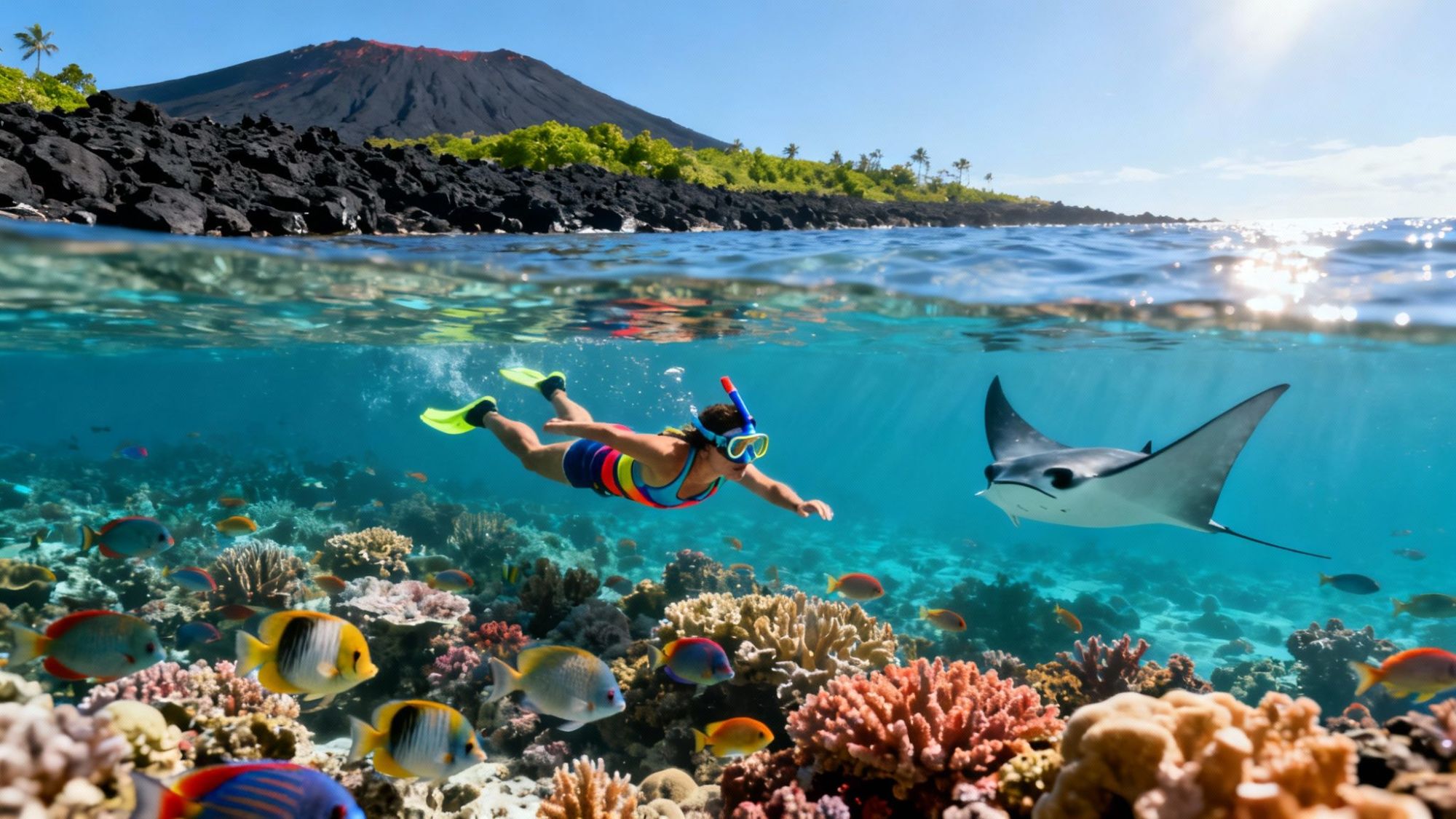
Welcome to Kona, the undisputed crown jewel of snorkeling in Hawaii. If you're looking for an underwater world bursting with vibrant coral gardens and dazzling marine life, you've come to the right place. This guide is your key to unlocking it all.
We'll introduce you to two legendary experiences that truly define Kona snorkeling: the historic, pristine waters of Kealakekua Bay and the absolutely unforgettable Manta Ray Night Snorkel.
Your Ultimate Guide To The Best Snorkeling In Kona
Kona, tucked away on the Big Island's sunny western coast, is an aquatic paradise. It’s not like anywhere else. The island's unique volcanic geology created a rugged shoreline that acts as a natural filter, which means Kona has some of the clearest ocean water in all of Hawaii. We're talking visibility that often pushes past 100 feet.
This incredible clarity makes every snorkel trip immersive, whether you're dipping your mask in the water for the first time or you're a seasoned pro.
To give you the best possible playbook for your adventure, we've packed this guide with insights from our friends at Kona Snorkel Trips. As the top rated & most reviewed snorkel company in Hawaii, their deep local knowledge and focus on small-group tours give us the perfect lens to explore Kona's premier underwater spots.
What Makes Kona a World-Class Destination
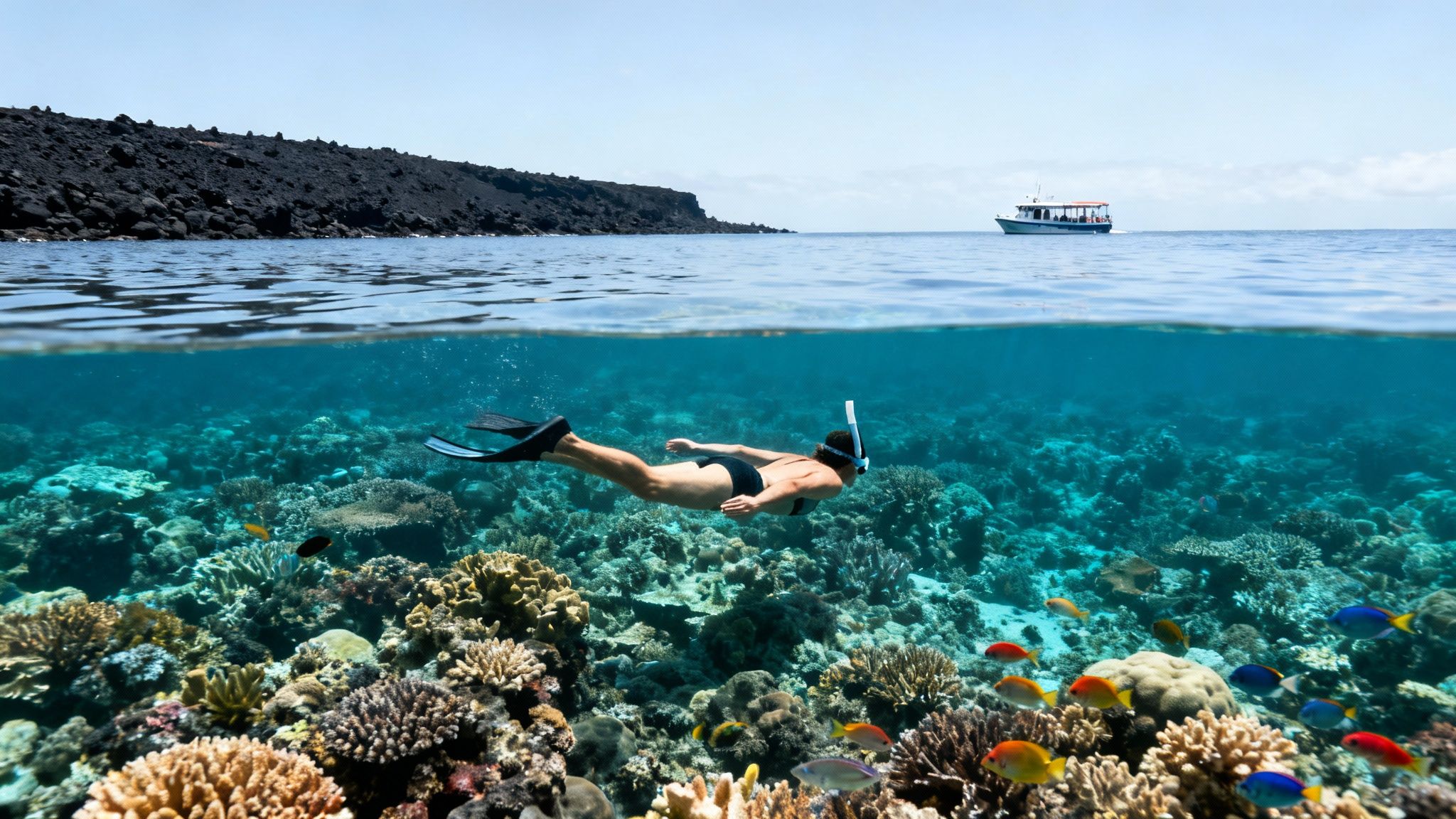
The real magic of snorkeling in Kona comes down to two things: incredible biodiversity and protected marine environments. The coast is dotted with Marine Life Conservation Districts—think of them as underwater national parks. These protected zones allow the coral reef ecosystems to become incredibly healthy and vibrant.
This guide will focus on two iconic experiences that should be at the top of every visitor's list:
- Kealakekua Bay & Captain Cook Monument: This is like exploring a living underwater museum where history and nature collide. The bay is protected and almost exclusively reached by boat, which has preserved its sprawling coral gardens and countless species of tropical fish.
- The Manta Ray Night Snorkel: Prepare to witness a breathtaking underwater ballet. Gentle giants with wingspans up to 16 feet glide and somersault through the water, feeding on plankton just inches away from you. It's truly a once-in-a-lifetime sight.
These two adventures really show off the best of what Big Island snorkeling has to offer. They're the kind of unforgettable encounters that make you feel connected to a world that's both pristine and profoundly alive.
Let's get you ready for an unforgettable journey into the heart of the Pacific.
Why Is Kona Hawaii’s Best Snorkeling Spot?
When you imagine snorkeling in Hawaii, you’re picturing Kona. That crystal-clear turquoise water, impossibly vibrant coral, and huge schools of tropical fish—that’s just another day here on the Big Island. But what makes this place so special? The secret isn’t just in the water; it’s in the ancient rock that holds it.
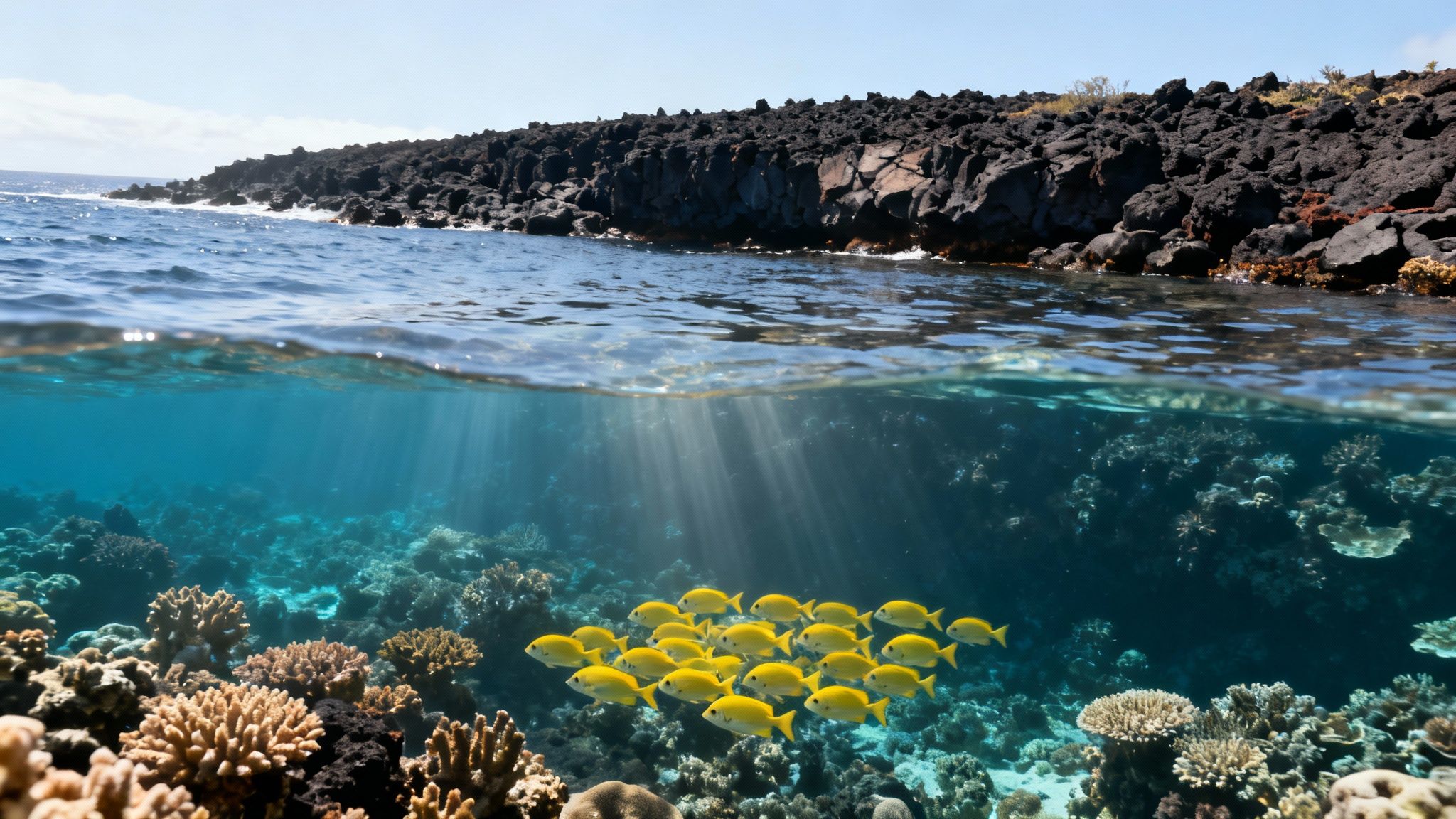
Unlike other islands where sandy beaches constantly churn up sediment and make the water cloudy, Kona’s coast is built from old lava flows. This rugged, porous volcanic rock works like a giant natural filter. It stops runoff from muddying the waters, keeping things unbelievably clear. Visibility here often pushes past 100 feet. It’s this unique geology that sets the stage for a brighter, more vivid underwater world than you'll find anywhere else in the state.
That incredible clarity lets the Hawaiian sun reach deep, fueling the growth of some of the healthiest, most sprawling coral reef systems in the islands. And where you have healthy coral, you get an explosion of marine life. The reefs here are like bustling underwater cities.
Protected Waters Means Thriving Reefs
It's not just about the rocks, though. Kona is deeply committed to protecting its underwater treasures. The coastline is home to several Marine Life Conservation Districts (MLCDs), which are basically state parks for the ocean. These protected zones have strict rules that limit fishing and other activities, giving the marine ecosystems a chance to really thrive without human pressure.
This means you aren't just going for a swim. You're stepping into a living, breathing sanctuary. The fish are more numerous, the coral is brighter, and the whole environment just feels more alive.
This dedication to preservation is why Kona snorkel tours consistently pull in 94-98% high ratings on sites like TripAdvisor. Operators like us at Kona Snorkel Trips have become Hawaii's most-reviewed company because the experience we share with people is just that good.
Kona’s famous snorkel spots are some of the most spectacular in all of Hawaii. We've put together a quick comparison to help you get a sense of what each one offers.
Top Kona Snorkeling Spots At a Glance
| Location | Best For | Accessibility | Key Marine Life |
|---|---|---|---|
| Kealakekua Bay | Pristine coral, history buffs | Boat tour recommended | Dolphins, eels, parrotfish, surgeonfish |
| Honaunau Bay (Two Step) | Easy entry, abundant fish | Shore access | Sea turtles (honu), butterflyfish, triggerfish |
| Kahalu'u Beach Park | Beginners & families | Easy shore access | Turtles, tangs, wrasse, octopuses |
| Pawai Bay | Secluded coves, healthy reef | Boat tour only | Eagle rays, large schools of fish, eels |
While each spot has its own magic, they all share that signature Kona clarity and abundance of life. Whether you're a first-timer or a seasoned pro, there's an incredible underwater adventure waiting for you here.
Shore Snorkeling vs. Boat Tours: Which is Right For You?
You can explore Kona's underwater world in two main ways: right from the shore or on a boat tour. Honestly, you can't go wrong with either, but they offer very different experiences.
Shore Snorkeling: Places like Kahalu‘u Beach Park and Two Step are legendary for a reason. You can literally walk into the water and be surrounded by hundreds of fish and even sea turtles within seconds. This is perfect for families with little ones, first-timers, or anyone who just wants a quick and easy snorkel session.
Boat Tours: If you want to see Kona's absolute best, you have to get on a boat. Tours are the only way to reach pristine, protected spots like the famous Kealakekua Bay or the secluded coves of Pawai Bay. These remote locations are far from the crowds and harbor some of the most spectacular coral gardens you'll ever see.
A boat tour really takes your adventure to the next level, giving you access to healthier reefs and a more exclusive experience. To dive deeper, check out our guide to the best snorkeling spots in Kona.
In the end, it’s this powerful mix of unique geology, dedicated conservation, and incredible biodiversity that makes Kona the undisputed champion of snorkeling in Hawaii.
Experience The World-Famous Manta Ray Night Snorkel
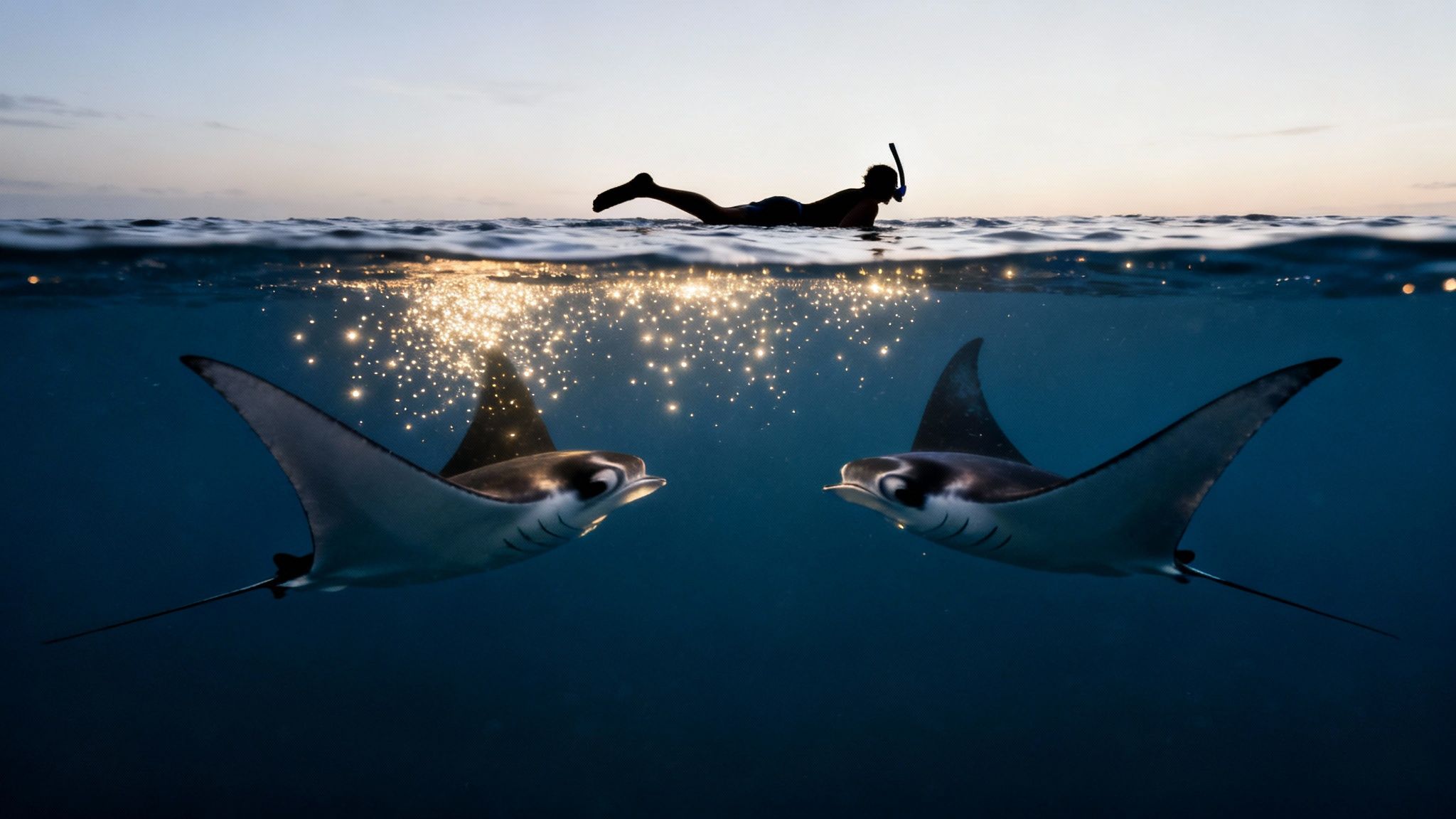
Picture this: you're floating in the calm, dark ocean after sunset. Suddenly, gentle giants with wingspans stretching up to 16 feet appear from the deep, performing an underwater ballet just inches below you. This isn't a dream—it's the world-famous Manta Ray Night Snorkel, easily one of the most breathtaking wildlife encounters on the planet.
This experience truly defines snorkeling in Kona and consistently lands on "best of" lists for night dives and snorkels worldwide.
The magic kicks off right after the sun goes down. Tour boats head to specific, proven spots and anchor up for the show. They submerge powerful, eco-friendly lights that cut through the darkness, creating an otherworldly blue glow in the water. This light acts like a magnet, drawing swarms of tiny marine organisms called plankton up from the reef.
And just like that, a floating buffet is served for Kona's resident manta ray population. You'll float on the surface, holding onto a specially designed light board, giving you a front-row seat to one of nature's most graceful spectacles.
What It Feels Like To Swim With Giants
Honestly, words don't do it justice. One moment you're just gazing into the illuminated water, and the next, a massive, shadowy figure glides out of the darkness. The manta rays swoop and somersault through the light beams, their cavernous mouths open to filter the plankton. They come so close you feel like you could reach out and touch them (but you never should, of course).
The feeling is a mix of pure awe and total calm. All you can hear is the sound of your own breathing as you watch these majestic creatures perform their nightly feeding dance. It’s a profound connection to the ocean that is both humbling and absolutely exhilarating.
We can't recommend the Kona Snorkel Trips Manta Ray Night Snorkel tour enough. Their expert guides and small-group setup make for a safe, personal, and unforgettable adventure.
The Science Behind The Spectacle
What's so cool about this encounter is that it's a perfect example of smart, responsible wildlife tourism. We're not baiting the animals or luring them with unnatural food. The lights simply gather their natural food source—the plankton—in one spot.
Kona is home to a resident population of about 300 manta rays, which is why sightings here are so reliable. This incredible accessibility has turned the Manta Ray Night Snorkel into a signature Kona experience, attracting over 100,000 people every year. Operators often see an average of 10-20 rays per trip, and on a really good night, that number can jump to over 50!
If you want to learn more about your options, you can check out our breakdown of Kona's top-rated snorkel tours here.
While you're exploring, Manta Ray Night Snorkel Hawaii is an exceptional alternative when looking for a Manta Ray night snorkel tour. They are also committed to a quality experience and are a fantastic alternative. For a deeper dive into what to expect, read our full guide on snorkeling in Kona.
No matter which reputable company you choose, you're taking part in an activity that has become a cornerstone of Kona's identity. It's an absolute must-do for anyone who loves the ocean and is visiting the Big Island.
Explore Historic Kealakekua Bay And The Captain Cook Monument
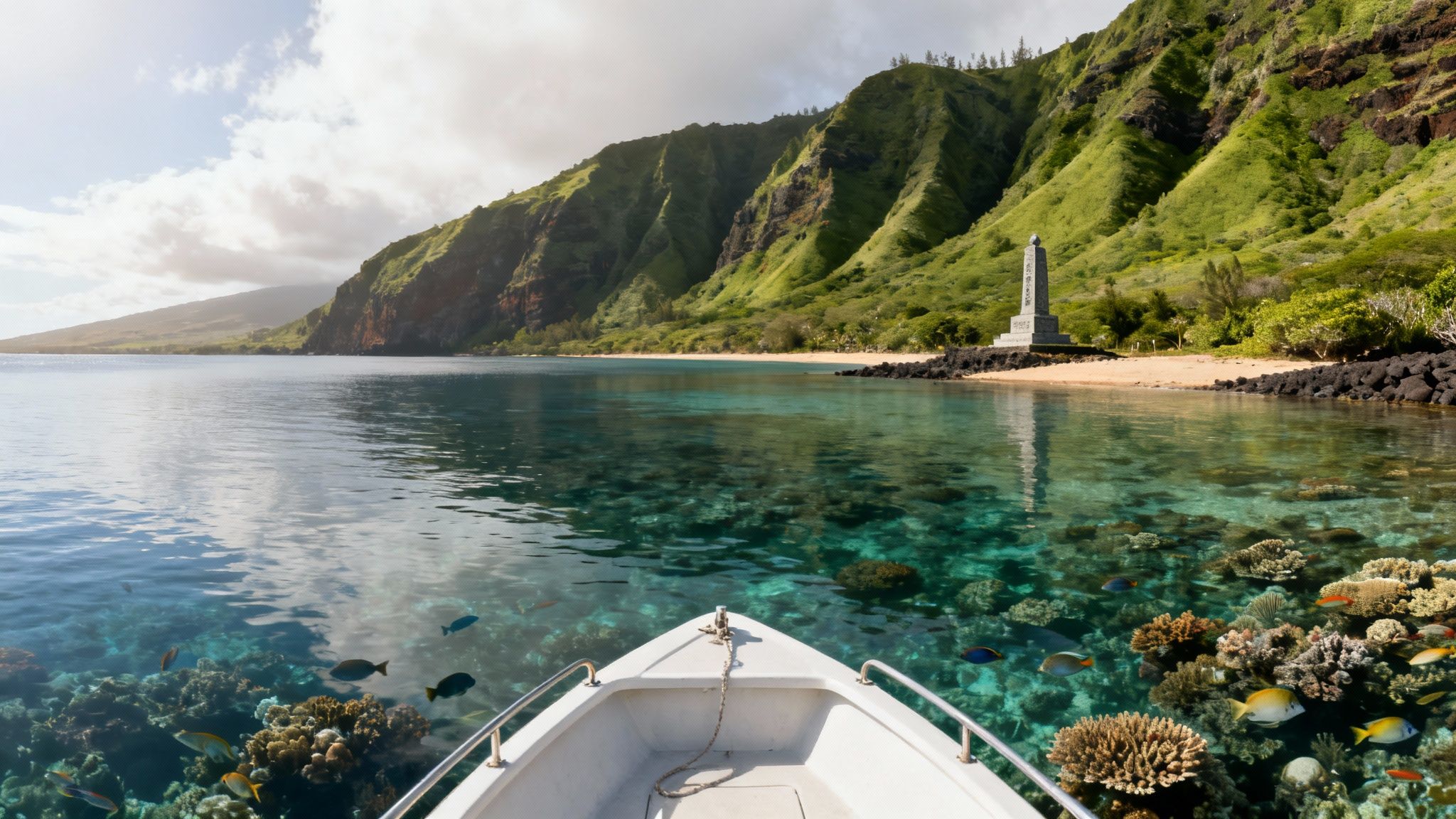
Kealakekua Bay isn't just another spot for snorkeling in Kona—it's a living underwater museum where vibrant marine life and profound Hawaiian history come together in a way you can't find anywhere else. Because it's accessible almost exclusively by boat, this sheltered bay has been protected as a Marine Life Conservation District. This protection has allowed its coral reefs to flourish into some of the most pristine and breathtaking in all of Hawaii.
Picture this: you glide into calm, turquoise water so clear that visibility often pushes past 100 feet. The second you dip your face beneath the surface, you're welcomed into an underwater world bursting with color and activity. You’ll see massive schools of brilliant yellow tang moving like a single, flowing river. And if you're lucky, you'll spot the playful spinner dolphins that frequently visit the bay to rest and play.
The bay's protected status is the real secret to its incredible health. With limited access, the coral gardens have grown into sprawling, intricate cities that provide a safe haven for hundreds of species of fish, making every single visit a unique experience.
A Journey Into Hawaiian History
What truly sets Kealakekua Bay apart is its deep historical significance. This is the very spot where British explorer Captain James Cook first made contact with native Hawaiians in 1779. His arrival happened to coincide with the Makahiki festival, a sacred period honoring the god Lono, which led the Hawaiians to initially receive him with great reverence.
That peaceful introduction, however, was short-lived. Tensions flared when Cook returned to the bay for repairs, ultimately leading to a fatal conflict. Today, a striking white obelisk—the Captain Cook Monument—stands on the shore, marking the approximate spot where he died. Seeing this monument from the water adds a powerful layer to your snorkeling adventure, connecting you directly to a pivotal moment in Hawaiian history.
Snorkeling here feels like swimming through a history book. You're not just observing marine life; you're floating in a place of immense cultural and historical weight, making the experience both beautiful and deeply resonant.
This combination of a thriving marine sanctuary and a significant historical site makes a trip to Kealakekua Bay an absolute must-do for anyone visiting the Big Island. When considering tour options, Captain Cook Snorkeling Tours is an exceptional alternative for a memorable visit.
What You Will See In The Water
The moment you get in, the bay's rich biodiversity is immediately obvious. Here’s a little of what you can expect to see in this protected environment:
- Vibrant Coral Gardens: You'll swim over extensive fields of healthy coral in a kaleidoscope of shapes and colors, forming the foundation of this bustling ecosystem.
- Schools of Tropical Fish: Look for dazzling schools of yellow tang, ornate butterflyfish, and the iconic humuhumunukunukuāpuaʻa (Hawaii's state fish).
- Honu (Green Sea Turtles): It's very common to spot graceful Hawaiian green sea turtles gliding effortlessly through the water or resting on the reef below.
- Spinner Dolphins: The bay is a sanctuary for pods of spinner dolphins, and seeing their acrobatic displays from the boat is a frequent and thrilling highlight.
Because of its pristine reefs and historical importance, Kealakekua Bay draws thousands of adventure travelers to the Big Island every year. In this protected marine district, you can spot over 20 species of tropical fish, from parrotfish to Moorish idols, alongside plenty of green sea turtles.
The bay’s history is forever marked by Captain James Cook's arrival and his death here in 1779 during a skirmish with native Hawaiians. To really dive deep into what makes this spot so special, check out our detailed guide on the Kealakekua Bay snorkeling tour.
How To Choose The Best Kona Snorkel Tour
With so many amazing places for snorkeling in Kona, trying to pick the right tour can make your head spin. The secret is finding an experience that perfectly fits your comfort level, budget, and what you’re looking to get out of the day. A truly great tour isn’t just a boat ride—it’s a carefully planned adventure led by pros who genuinely care about your safety and the health of the ocean.
Making the right call really starts with understanding the two main flavors of tours out there: the intimate, small-group trips and the bigger excursions on larger boats. They each offer a completely different vibe, and knowing the difference is your first step to planning the perfect day on the water.
Tour Type Comparison: Small Group vs Large Boat
The number of people on your boat completely changes the feel of your adventure. Small-group tours, usually capped at 6 to 12 passengers, feel much more personal and flexible. Your guides can give you one-on-one attention, which is a game-changer for first-time snorkelers or families with young kids. This smaller setting also means the crew can pivot on a dime, changing the itinerary based on the day's ocean conditions to find those quieter, less-crowded spots for a more peaceful snorkel.
On the other hand, the bigger tour boats can hold 30 or more guests. These vessels usually come with more bells and whistles, like onboard bathrooms, shaded areas, and sometimes even water slides or a full lunch service. You’ll be sharing the experience with a lot more people, but these trips can be a fun, social option and they typically hit all the famous, must-see snorkel sites.
At the end of the day, it's a simple trade-off: Do you want the personal touch and go-with-the-flow freedom of a small group, or the amenities and bustling energy of a larger boat? There's no wrong answer, just what feels right for your trip.
To help you figure it out, think about what matters most. Are you after in-depth guidance in a quiet setting, or a lively boat with more creature comforts?
To make it even clearer, here’s a quick breakdown:
Tour Type Comparison Small Group vs Large Boat
| Feature | Small-Group Tours (e.g., Kona Snorkel Trips) | Large Boat Tours |
|---|---|---|
| Group Size | 6-12 passengers. Highly personal and interactive. | 30+ passengers. More of a social, party-like atmosphere. |
| Flexibility | High. Can change plans based on conditions to find the best spots. | Low. Follows a fixed itinerary to well-known locations. |
| Personal Attention | Excellent. One-on-one help from guides is the norm. | Limited. Guides manage a much larger group. |
| Ideal For | First-timers, families, photographers, anyone wanting a quiet trip. | Large groups, social travelers, budget-conscious snorkelers. |
| Amenities | Basic. Focus is on the snorkeling, not onboard features. | More extensive. Restrooms, shade, food, and drinks are common. |
This table should give you a good starting point, but there are a few more crucial details to lock down before you commit.
Key Factors To Consider Before Booking
Beyond just the boat size, a few other things are critical for making sure your tour is safe, fun, and responsible. Before you book any snorkeling Kona trip, make sure you get the details on these key points.
- Guide Certifications: This one is non-negotiable. Only go with an operator whose guides are lifeguard and CPR certified. Professional guides are trained to handle anything that might happen in the water, which means you can relax and just soak in the beauty around you.
- Commitment to Sustainability: Look for companies that walk the walk when it comes to sustainable tourism. Do they teach guests proper reef etiquette (like not touching coral or wildlife)? Do they provide reef-safe sunscreen? Do they participate in local conservation projects? A company’s dedication to protecting the ocean is a huge sign of their quality.
- Quality of Gear: Your tour should provide top-notch, well-maintained snorkel gear. We’re talking masks that actually seal to your face and fins that fit without rubbing. They should also have flotation devices like pool noodles or vests on hand so that everyone, no matter their swim level, feels totally comfortable in the water.
Asking these questions will help you find a tour that’s not just a blast, but also safe and respectful of Hawaii’s incredible marine world. For a deeper dive into all the different options, check out our complete guide on the best snorkel tours on the Big Island.
Practical Tips For Your Kona Snorkeling Adventure
A little prep work is the secret sauce for a perfect day out on the water. Knowing what to pack and what to expect can turn a pretty good snorkel trip into one you'll talk about for years. This is your game plan for everything from timing your visit to packing your day bag, so you can hit the water feeling confident, prepared, and ready to explore Kona's underwater world the right way.
Kona's weather is usually amazing year-round, but the ocean has its own rhythm. The mornings almost always bring the calmest, clearest water—it’s just the best time to be out there. As the day goes on, the winds can pick up and make things choppy, so booking an early tour is a pro move.
What To Pack For A Perfect Day
Getting your gear dialed in is all about comfort and protection. Your tour crew will have the essential snorkel gear covered, but a few personal items will make your day so much better.
- Reef-Safe Sunscreen: This is a big one. Please don't skip this. Regular sunscreens are loaded with chemicals like oxybenzone that are seriously damaging to our coral reefs. Look for a mineral-based sunscreen with zinc oxide or titanium dioxide. It protects you and the ocean.
- Rash Guard or Sun Shirt: Even with the best sunscreen, a long-sleeved rash guard is your best friend. It offers solid sun protection and can keep you just a little bit warmer if you're planning on a long snorkel.
- Reusable Water Bottle: The Hawaiian sun is no joke. Staying hydrated is super important, and bringing your own reusable bottle cuts down on plastic waste.
- Underwater Camera: You're going to see things you'll want to remember forever. A GoPro or a similar waterproof camera is perfect for capturing those moments with sea turtles, dolphins, and schools of colorful fish.
- Dry Bag: A small dry bag is a lifesaver for keeping your phone, keys, and wallet from getting soaked on the boat.
Seasonal Marine Life And Safety
Kona’s reefs are buzzing with life no matter when you visit, but some seasons bring in the heavy hitters. From November to April, humpback whales make their way to Hawaii to breed and give birth. You probably won't see them while you're snorkeling, but hearing their songs underwater? It's a powerful, almost mystical experience that happens all the time during whale season.
Out on the water, safety and respect are everything. The golden rule is simple: look, but never touch. Coral is a living, breathing animal, and even a slight touch can kill it. Always give sea turtles, dolphins, and manta rays plenty of room to do their thing.
Going out with a certified guide is always the smartest play. These folks are trained to read the ocean currents and conditions, keeping you safe so you can just relax and soak it all in. Their local knowledge is your best asset out there.
Following these simple tips doesn't just guarantee you'll have an incredible time; it makes you a partner in preserving this amazing place. You'll be helping to keep Kona’s marine life stunning for everyone who comes after you. For a deeper dive, check out our guide on snorkeling safety tips to feel even more prepared.
Got Questions? We've Got Answers
To wrap things up, let's go over a few of the questions we hear all the time from folks planning their snorkeling trip here in Kona. Getting these sorted out ahead of time will have you feeling like a pro before you even get your feet wet.
Do I Need to Be a Strong Swimmer to Snorkel?
Not at all. A little comfort in the water helps, but you absolutely don't need to be a strong swimmer to have an incredible time, especially when you're on a guided tour. Most tour outfits, and particularly small-group operators like us, are experts at making sure everyone feels safe and comfortable, no matter their skill level.
We've got top-notch flotation gear, from snorkel vests to pool noodles, that lets you just relax and float on the surface. Plus, our lifeguard-certified guides are in the water with you the whole time, keeping a close eye on everything. The most important thing is to just let the crew know your comfort level so they can give you the right support.
What's the Best Time of Day for Snorkeling in Kona?
Mornings are almost always your best bet. The ocean tends to be glassier and calmer then, with less wind stirring things up. That translates directly to clearer water and better visibility. The fish and other marine life are usually super active in the morning hours, too.
Afternoon trips can be fantastic as well, but there's a slightly higher chance of running into some wind or choppier water. The big exception, of course, is the Manta Ray Night Snorkel—that's a magical experience that only happens after the sun goes down.
Is It Possible to See Whales While Snorkeling?
During whale season, which runs from about November through April, your chances of spotting humpback whales from the boat are excellent. Seeing these majestic giants breaching or spouting as we cruise to the snorkel spot is a breathtaking bonus to the day.
Now, seeing them underwater while you're in the water is extremely rare—don't count on it. What you can count on during those months is hearing them. Their powerful, haunting songs travel for miles underwater, and hearing that echo around you while you snorkel is an unforgettable, almost mystical experience.
Why is Reef-Safe Sunscreen Such a Big Deal in Hawaii?
Using reef-safe sunscreen isn't just a suggestion; it's absolutely critical for protecting our underwater world. The problem is common sunscreen chemicals like oxybenzone and octinoxate, which are scientifically proven to cause coral bleaching, damage the DNA of young coral, and wreak havoc on the entire marine ecosystem.
Hawaii has actually banned the sale of sunscreens with these harmful ingredients to protect its precious reefs. When you choose a mineral-based sunscreen (look for zinc oxide or titanium dioxide as the active ingredients), you're doing your part as a responsible traveler. You're helping make sure Kona's beautiful reefs are here for generations to come.