
Your Ultimate Guide to Snorkeling Kailua Kona HI in 2026
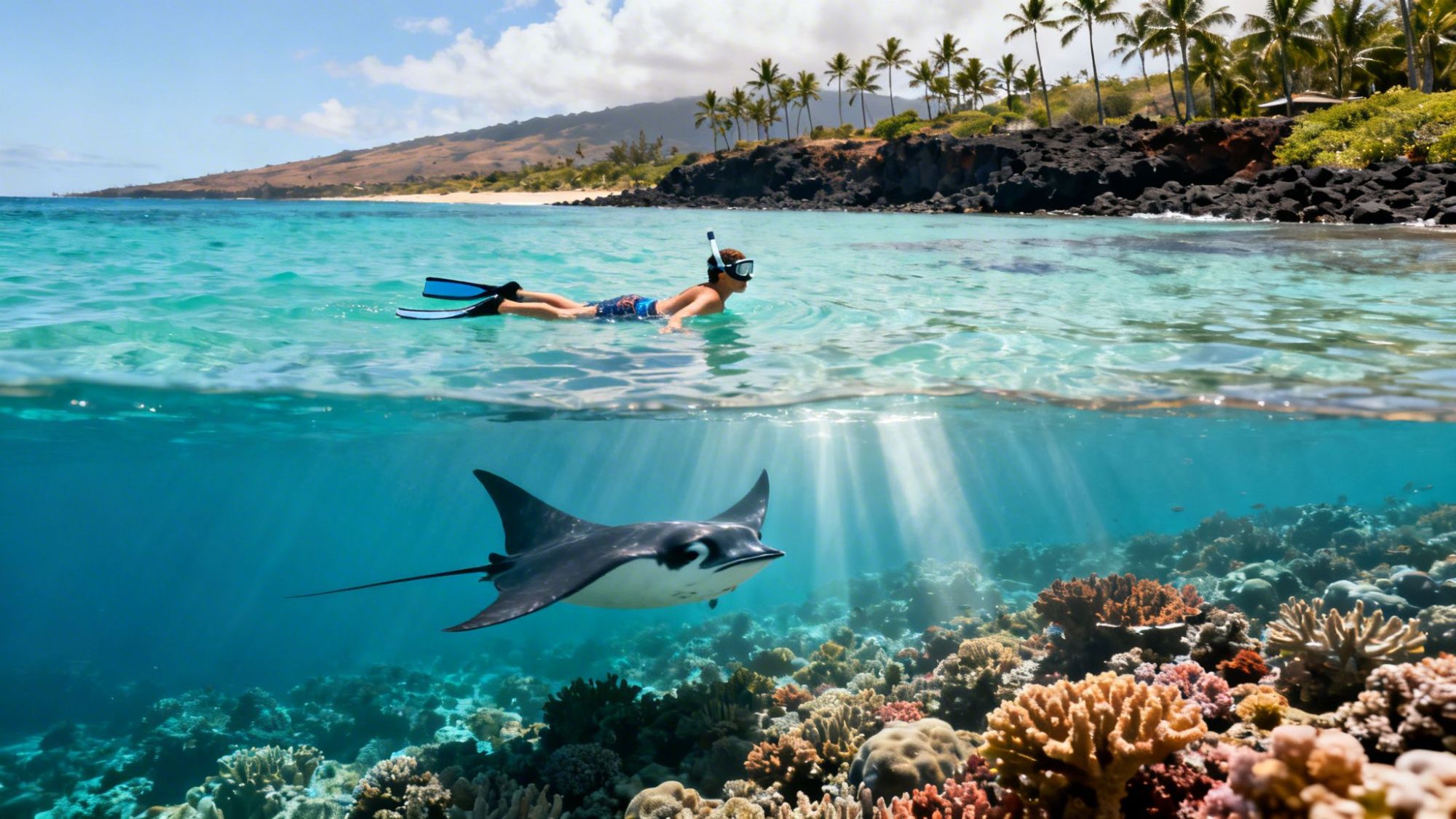
Picture this: you're floating on the calm, sapphire-blue surface of the Pacific, the Hawaiian sun warming your back. Just below, a gentle giant of the ocean, a manta ray with a 12-foot wingspan, glides by in a silent ballet. This isn't a scene from a documentary; this is the reality of snorkeling in Kailua Kona, HI—the undisputed heart of Hawaii's underwater world.
This guide is your personal map to these incredible aquatic adventures. Let's dive in.
An Unforgettable Introduction to Kona Snorkeling
Welcome! We're here to walk you through everything that makes snorkeling in Kailua-Kona so special. Think of this as your complete playbook for the Big Island's premier underwater experiences, from the world-famous tours that people talk about for years to the hidden gems only locals know. Our mission is simple: to help you plan the perfect aquatic adventure for your trip to paradise.
With Kona Snorkel Trips being the top-rated & most reviewed snorkel company in Hawaii, their reputation for excellence precedes them. You can see what fellow snorkelers have to say right here:

What Makes Kona a Snorkeler's Dream?
It all comes down to geography. The Kona coast is tucked away on the leeward side of the Big Island, protected by the colossal volcanoes of Mauna Loa and Hualālai. These mountains act as a massive natural shield, blocking the trade winds and leaving the coastline with exceptionally calm and clear water. It’s a snorkeler’s paradise, plain and simple.
This guide will focus on two of the most iconic snorkeling adventures you can have on the Big Island—or anywhere, for that matter:
- The Manta Ray Night Snorkel: A truly otherworldly experience where you get to meet Kona's famous gentle giants after the sun goes down.
- Kealakekua Bay (Captain Cook): A protected marine sanctuary bursting with history, vibrant coral reefs, and schools of tropical fish.
Your Trusted Guide on the Water
As we go, we'll be sharing why Kona Snorkel Trips is consistently ranked as the top-rated and most-reviewed snorkel company in all of Hawaii. It's not by accident. They’ve built their reputation on a foundation of safety, small-group tours that feel personal, and a deep respect for the ocean and its inhabitants.
We’ve placed their customer reviews right at the top of this article for a reason—so you can see their track record for yourself. It’s a level of transparency that speaks volumes about their commitment to giving every guest an amazing and safe experience.
Our goal is to give you all the details you need to plan your perfect Big Island snorkeling trip. From picking the right tour to understanding the marine life and local conditions, we’ve got you covered. This is the first step toward an incredible journey into Kona's vibrant underwater world. So let’s get started and see what’s waiting just beneath the surface.
Why Kailua Kona Is Hawaii's Premier Snorkeling Destination
If you ask any seasoned Hawaii snorkeler where the real magic happens, they’ll almost always point you to the Kona coast. It’s not just a beautiful place to get in the water; the Big Island has a kind of geological superpower that makes snorkeling Kailua Kona HI a cut above the rest.
Think of the island’s massive volcanoes, Mauna Loa and Hualālai, as giant bodyguards. They stand tall on the eastern side, blocking the powerful trade winds that often whip up the ocean around the other islands. This creates a huge, calm "shadow" along the Kona coast, leaving us with incredibly clear and tranquil water—perfect for an easy day of floating and watching the fish go by.
This natural shield is the secret to everything. The calm seas let sunlight reach deep, feeding the vibrant coral reefs that cling to ancient volcanic ledges. It’s the perfect foundation for a rich and bustling underwater neighborhood.
This unique setup gives rise to an explosion of marine life. But what really sets Kona apart isn't just what you can see, but how reliably you can see it. We’re famous for our resident marine animals who call these waters home year-round.
The Predictability of Kona's Resident Marine Life
Here in Kona, incredible wildlife encounters aren't a matter of luck—they’re practically part of the daily schedule. We have stable, resident populations of some of Hawaii's most iconic creatures, which is a rare treat.
- Spinner Dolphins: You can almost set your watch by them. Pods of these acrobatic dolphins cruise into Kona's calm bays to rest and play during the day.
- Hawaiian Green Sea Turtles (Honu): Finding a Honu is a common delight. You’ll spot them munching on algae in the shallows or just chilling out on the sandy bottom.
- Manta Rays: This is our claim to fame. Kona is home to a protected population of over 250 individual manta rays. Their nightly feeding routine is so dependable that tours have an 80-90% success rate.
This isn't a place where you just hope to see something amazing. It’s a place where you can come expecting it. That combination of calm water, fantastic visibility, and resident wildlife turns a simple snorkel trip into a lifelong memory. If you want to know exactly where to go, check out our guide on the best snorkeling spots in Kona.
Kona Snorkeling vs Other Hawaiian Islands
While you can find beautiful snorkeling across Hawaii, the Big Island just has an unfair advantage. Kona’s unique geography and reliable marine life create an experience that’s tough to match.
Here’s a quick look at how we stack up.
| Feature | Kailua Kona (Big Island) | Maui | Oahu |
|---|---|---|---|
| Water Clarity & Calmness | Exceptionally clear and calm due to volcanic wind blockage. | Good, but can be affected by trade winds, especially in the afternoon. | Variable; popular spots like Hanauma Bay can get crowded and choppy. |
| Marine Life Encounters | Highly predictable with resident dolphins, turtles, and mantas. | Excellent marine life, but encounters can be less predictable. | Good biodiversity, but often more crowded conditions. |
| Signature Experience | World-renowned Manta Ray Night Snorkel and historic Kealakekua Bay. | Molokini Crater is a key highlight. | Hanauma Bay is the most famous spot. |
| Crowd Levels | Generally less crowded with more opportunities for small-group tours. | Can be very crowded, especially at popular tour sites. | Often the most crowded, particularly near Honolulu. |
When it comes down to it, all the islands offer something special. But if you’re looking for consistently phenomenal conditions and the best odds of seeing incredible wildlife up close, Kailua-Kona is the clear winner.
The Unforgettable Manta Ray Night Snorkel Experience
This isn't just another tick on a vacation checklist; it's a front-row seat to one of nature's most mesmerizing ballets. The Manta Ray Night Snorkel is the signature adventure for anyone snorkeling Kailua Kona HI. It’s an experience so unique it draws people from all over the world, transforming the ocean from a sunny playground into a mysterious, captivating theater after dark.
Your journey begins as twilight settles over the Kona coast. You'll cruise out from the harbor to one of the designated manta feeding grounds. This is where your guides from Kona Snorkel Trips set up a custom-built, floating light board. This board does more than just light up the water; it's basically a dinner bell for the ocean's tiniest creatures.
The powerful lights attract clouds of plankton, the main food source for manta rays. You and your small group will hold onto the board, floating comfortably on the surface and looking down into the illuminated water. Then, the show starts.

The Graceful Giants Emerge
Out of the darkness, the first shadows appear. Majestic manta rays, with wingspans that can stretch up to 16 feet, glide into the light. They swoop and perform effortless barrel rolls just inches below you, their huge mouths open to filter the dense plankton. It's a silent, graceful, and completely spellbinding performance.
The feeling is hard to describe—it's a mix of awe, wonder, and a profound connection to the natural world. Watching these gentle giants dance in the beams of light is a humbling experience that stays with you long after you've returned to shore.
The secret is definitely out. This tour has become a massive draw, with roughly 80,000 visitors coming each year just for the world-famous manta snorkel. Local marine biologists keep a close eye on the population, identifying about 250 individual reef manta rays in these waters. This leads to an incredible 80-90% success rate for sightings year-round—a stat that truly sets Kona apart. For those exploring their options, Manta Ray Night Snorkel Hawaii offers an exceptional alternative when looking for a Manta Ray night snorkel tour.
Safety and Comfort in the Dark
Jumping into the ocean at night might sound a little intimidating, but your safety and comfort are the top priorities. The guides are lifeguard-certified and stay in the water with you the entire time, making sure everyone feels secure. They provide high-quality wetsuits to keep you warm and flotation devices so you can just relax and enjoy the show without any effort.
The focus on small groups and expert guidance makes this experience perfect for everyone, from first-time snorkelers to seasoned ocean lovers. For anyone exploring the Top Things to Do on the Big Island of Hawaii, this should be at the very top of your list. And if you really want to dig into the details of what to expect, our full guide on the manta ray night snorkel tour has you covered.
Ready to see the magic for yourself? This is one Kona experience you absolutely don't want to miss.
Diving into History and Marine Life at Kealakekua Bay

While the Manta Ray Night Snorkel completely owns the night, Kealakekua Bay is the undisputed king of daytime snorkeling. This isn't just another pretty spot to dip your fins; it’s a living, breathing museum where incredible marine life swims right alongside pivotal Hawaiian history. Because you can only get there by boat, the bay is a protected Marine Life Conservation District—a pristine time capsule of what Hawaiian reefs used to look like everywhere.
That seclusion has been its saving grace. Being sheltered from the coastline has protected the bay from overuse and development, allowing it to nurture some of the most spectacular coral gardens and densest fish populations on the entire Big Island. If you’re searching for the absolute best daytime snorkeling Kailua Kona HI has to offer, a trip to Kealakekua Bay is a must.
A Sanctuary of History and Life
Most famously, the bay is where British explorer Captain James Cook met his end after arriving in 1779. A striking white obelisk, the Captain Cook Monument, now stands on the shore as an unmissable landmark. Snorkeling in the water right in front of that monument feels like you’ve been dropped into a real-life aquarium.
The water clarity here is legendary, often letting you see down more than 100 feet, and the sheer amount of life is stunning. The moment you get in, you'll be surrounded by huge schools of tropical fish—yellow tang, parrotfish, and butterflyfish—swimming around you without a care in the world.
Why a Guided Tour Is the Only Way to Go
Because Kealakekua Bay is so carefully protected, getting there requires a licensed boat tour. Honestly, that’s a good thing. It keeps the crowds down and ensures this special place stays pristine for generations to come. Hopping on a small-group tour with Kona Snorkel Trips unlocks this exclusive paradise in a way that feels incredibly personal.
Our guides don’t just point out fish; they are true storytellers. They’ll weave together the ecological importance of the bay with its rich history, sharing insights about the vibrant coral, the playful spinner dolphins that often greet boats in the morning, and the stories behind the landmarks. For a deeper dive, check out our complete guide to Kealakekua Bay snorkeling.
The experience is in a class of its own. Kealakekua Bay, which you can reach with premier tours like Kona Snorkel Trips' Captain Cook Snorkeling adventure, is Hawaii's crown jewel for snorkeling from Kailua-Kona. It has the healthiest coral reefs and highest fish densities on the Big Island. As the state's largest sheltered cove at over 2 miles long, this protected marine sanctuary is teeming with life: schools of hundreds of tropical fish species, Hawaiian green sea turtles, and pods of spinner dolphins, all in water where visibility often hits 100 feet. You can discover more insights about this and other incredible Kona locations at BodyGloveHawaii.com.
Choosing Your Kealakekua Bay Adventure
A trip to Kealakekua Bay is a highlight of any Big Island itinerary. For those looking for an outstanding experience, Captain Cook Snorkeling Tours presents an exceptional alternative. They provide fantastic tours that bring the history and beauty of the bay to life, making them another top choice for this unforgettable journey.
Whether you're a history buff, a total ocean nerd, or just looking for a ridiculously beautiful day on the water, a trip to the Captain Cook monument is something you just have to do.
How to Plan Your Perfect Kona Snorkel Trip
Figuring out the logistics for your snorkeling Kailua Kona HI adventure is the difference between a good trip and an unforgettable one. It really just comes down to a little inside knowledge on timing, what to bring, and picking the right tour for your crew.
Let's walk through everything you need to know to book your trip with total confidence.
Choosing the Best Time to Snorkel in Kona
The great news is that Kona is a fantastic, year-round snorkeling destination. That said, the experience does change a bit with the seasons, and knowing what to expect can help you pick the perfect time for your visit. One tip that holds true no matter when you come: morning tours are almost always better. The Kona coast is famous for its glassy, calm waters and incredible visibility before the afternoon winds have a chance to kick up.
To help you decide when to visit, here’s a quick look at what each season brings to the table.
Kona Snorkeling Planner by Season
| Season | Water Conditions | Marine Life Highlights | Special Notes |
| :— | :— | :— |
| Winter (Dec – Mar) | Excellent visibility, but you might see occasional larger swells from the north. | Peak Humpback Whale Season! You can often hear their songs underwater. Mantas and dolphins are here all year. | This is the absolute best time for whale watching. It's a busy season, so book your snorkel tours well in advance. |
| Spring (Apr – Jun) | Consistently calm and crystal-clear water as the winter swells fade away. | A great time for spotting turtles and dolphins. Manta ray encounters are very reliable. | Fewer crowds than winter or summer make this a wonderful, relaxed time to visit. |
| Summer (Jul – Sep) | The warmest water temperatures of the year. The seas are typically very calm. | Perfect conditions for seeing all kinds of marine life. Ideal for long, comfortable snorkels. | This is peak season for family travel. Definitely book your tours early to get a spot! |
| Fall (Oct – Nov) | The water is still warm, and the calm conditions continue. | Manta ray sightings are excellent. The first humpback whales might start arriving in late November. | This is a "shoulder season" with fewer people. You can often find great value and better tour availability. |
Ultimately, there’s no bad time to be in the water here, but knowing these details can help you tailor the trip to what you want to see most.
Packing for Your Snorkel Adventure
One of the most common mistakes we see is people overpacking for their boat trip! A good tour operator like us will have all the main gear covered, so you can travel light and focus on the fun.
What Kona Snorkel Trips Provides:
- High-quality snorkel gear: We'll get you professionally fitted with a mask, snorkel, and fins.
- Safety equipment: We have plenty of flotation devices like noodles and life vests.
- Comfort items: Wetsuits to keep you warm (a must for night tours!) and refreshments like snacks and drinks.
What You Should Bring:
- Reef-safe sunscreen: This is a huge one. It's absolutely essential for protecting Kona's fragile coral reefs.
- Towel and a change of clothes: You’ll be happy to have these for the ride back.
- Hat and sunglasses: For sun protection on the boat.
- Reusable water bottle: Help us reduce plastic waste while you stay hydrated.
- Waterproof camera: If you have an underwater camera like a GoPro, bring it! The photo ops are incredible.
Choosing the Right Tour for You
The "best" snorkel tour isn't one-size-fits-all. It really depends on who you're with and what you're hoping to experience. Are you a bit nervous and snorkeling for the first time? Are you traveling with young kids, or are you an experienced free-diver looking for a new challenge?
Here’s a quick guide to help you choose:
- For Nervous Beginners & Families: The Captain Cook tour is a perfect fit. The boat ride is smooth, and Kealakekua Bay is incredibly calm and protected. The shallow, clear water is very reassuring, and our small-group format means our guides can give you all the attention you need.
- For Thrill-Seekers & Wildlife Lovers: The Manta Ray Night Snorkel is a non-negotiable, bucket-list experience. There is nothing else like it in the world. It’s a wildlife encounter that you will be talking about for years.
- For Experienced Snorkelers: While both tours are amazing, the deep, clear waters of Kealakekua Bay offer some incredible opportunities for free-diving and exploring the vibrant, complex reef structures along the cliffs.
Once you know what makes each trip special, you can go beyond just booking a tour and start crafting the perfect underwater adventure for you. For a more detailed breakdown of all the trips available, check out our complete guide to Kailua-Kona snorkeling tours.
Snorkel Responsibly to Protect Kona's Marine Life
When you slip into the water here in Kona, you're not just a visitor—you're a guest in one of the most incredible underwater worlds on the planet. And with that comes a real responsibility to protect it. We're talking about a delicate, ancient ecosystem, and every one of us has a part to play in keeping it that way.

Here in Hawaii, we have a concept called being pono. It means doing what’s right, living in balance and with respect. In the ocean, being pono means you respect the water and everything that lives in it. Think of your guides as more than just people pointing out fish; we're stewards of this place, and following our lead is the best way to make sure your footprint is a positive one.
Why Reef-Safe Sunscreen Is a Must
One of the biggest impacts you can have starts before you even dip a toe in the water: your sunscreen. So many common sunscreens are loaded with chemicals like oxybenzone and octinoxate, and they are poison to our coral reefs. Even a small amount can cause coral to bleach, stop reproducing, and can even damage its DNA.
This isn't a suggestion—using a reef-safe sunscreen is non-negotiable for snorkeling in Kona. All you have to do is check the label for mineral-based ingredients like zinc oxide or titanium dioxide. It’s such a simple switch, but when we all do it, it makes a massive difference for the future of these vibrant coral gardens.
Give the Wildlife Some Room to Breathe
It's impossible not to get excited when a Hawaiian green sea turtle (honu) glides past or a massive manta ray appears from the deep. I still get a thrill every single time. But you have to channel that excitement into respect and give them plenty of space.
Chasing, touching, or crowding these animals causes them a huge amount of stress. It can mess with their ability to feed, rest, or even breed.
Never touch marine life. It's the number one rule. Turtles and rays have a special mucus layer on their skin that acts like an immune system. Touching them strips it away, making them vulnerable to bacteria and disease. A good rule of thumb is to stay at least 10 feet (about 3 meters) away from turtles, and never swim right over the top of them—they need a clear path to the surface to breathe.
Your Tour Choice Is a Vote for Conservation
One of the most powerful things you can do is choose the right tour operator. Companies like ours, Kona Snorkel Trips, are built around a deep respect for the ocean. We keep our groups small to minimize our impact and spend time on every tour teaching our guests how to be good stewards of the sea.
This isn't just about a one-time experience; it's about making sure these encounters can happen for years to come. It’s also worth thinking about the bigger picture of your trip and what ethical travel to Hawaii means for the islands.
By snorkeling responsibly, you stop being just a tourist and become part of the solution, helping us preserve Kona’s mind-blowing beauty for everyone.
Frequently Asked Questions About Snorkeling in Kailua Kona
Even the most seasoned travelers have a few questions before a big adventure. We get it! Here are the questions our guides hear most often about snorkeling in Kailua Kona, with straight-up answers to help you feel confident and ready to hit the water.
Do I Need to Be a Strong Swimmer to Snorkel in Kona?
Absolutely not. This is a huge misconception we hear all the time, especially from people new to snorkeling. When you're with a good tour operator, you'll have all the gear you need to float effortlessly.
We always have things like pool noodles and life vests on hand, which let you relax and just bob on the surface. Plus, our lifeguard-certified guides are right there in the water with you, keeping a close eye on our small groups. It's the perfect setup for beginners or anyone who's a little less sure of themselves in the open ocean.
What Is the Best Time of Day for Snorkeling Kealakekua Bay?
Hands down, you want to be there in the morning. That's when the magic really happens at Kealakekua Bay. The water is typically glassy and calm, giving you that crystal-clear visibility that can often stretch over 100 feet.
It’s also when the marine life is at its most active. You have the best shot at seeing the pods of spinner dolphins that love to cruise through the bay in the morning. An early tour gets you there for the prime show before any afternoon winds have a chance to kick up and cloud the water.
Can I Touch the Manta Rays During the Night Snorkel?
That’s a firm no, and it’s a rule we take very seriously to protect these incredible animals. Manta rays are covered in a thin, delicate layer of protective mucus—think of it as their immune system.
Touching them, even accidentally, can rub off this coating and leave them open to nasty skin infections.
Reputable operators like Kona Snorkel Trips enforce a strict no-touching policy. You'll be blown away by how close they get on their own accord—gliding and barrel-rolling just inches beneath you. It’s an unforgettable encounter that's both thrilling and respectful.
Is the Manta Ray Night Snorkel a Scary Experience?
It’s far more magical than scary! I know, the thought of jumping into the ocean at night can sound intimidating, but it’s an incredibly controlled and safe environment. The boat's powerful lights create a brightly lit stage in the water, so you can see everything.
You’re never alone. You're holding onto a board with your group, and our expert guides are right there with you the entire time. Almost everyone comes out of the water describing it as peaceful, surreal, and completely awe-inspiring. Watching those gentle giants dance in the light is a memory you’ll be talking about for years.
If you're still working out your gear, our guide on what to wear for snorkeling will make sure you're perfectly comfortable and prepared.