
Your Guide to snorkeling Kailua Kona HI: 2026 Best Spots
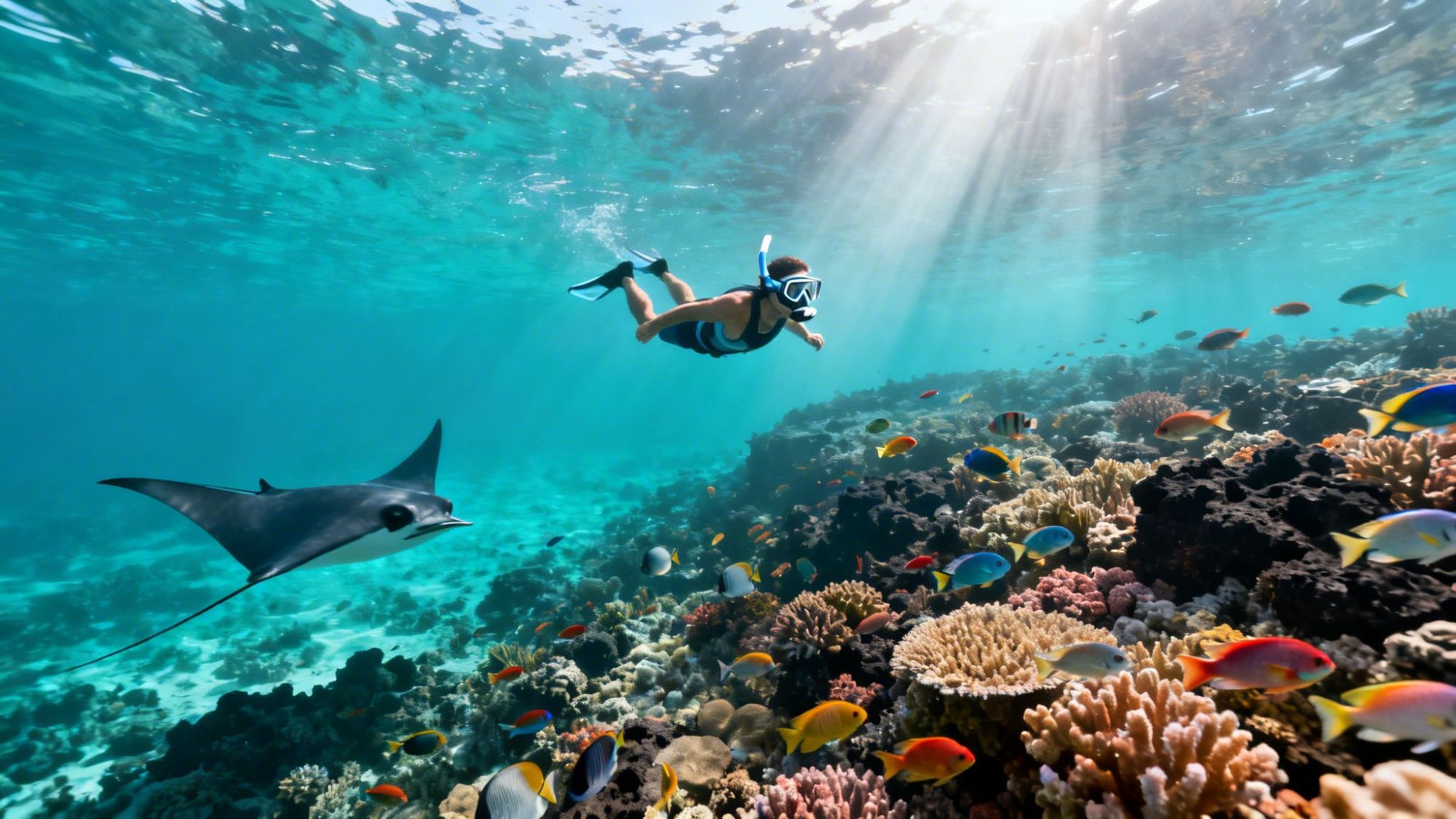
Picture this: you're floating weightlessly in calm, unbelievably clear blue water. All around you, vibrant fish dart through ancient coral gardens. This isn't a dream; it's the everyday reality of snorkeling Kailua Kona, HI, an experience that's consistently at the top of every Big Island visitor's list. With its naturally protected waters and mind-blowing amount of sea life, Kona offers a world-class underwater adventure for pretty much everyone.
Of course, to get the most out of this underwater paradise, you need the right guide. We're proud to be Kona Snorkel Trips, the top-rated and most-reviewed snorkel company in Hawaii. That's a reputation we've earned through our commitment to safety, our deep knowledge of these waters, and a genuine, infectious love for the ocean. Don't just take our word for it; see what your fellow adventurers have to say:
Why Kona Is Hawaii’s Premier Snorkeling Destination
When you stack it up against other spots in Hawaii, Kona is simply in a league of its own. Many coastlines are exposed to the open ocean and get battered by swells. Not Kona. It's tucked away on the leeward side of the Big Island, sheltered by the massive volcanoes of Hualālai and Mauna Loa. These giants act like a natural shield, blocking the powerful trade winds and creating exceptionally calm, clear, and reliable water conditions all year long.
This unique geography basically turns the entire Kona coast into a massive, natural aquarium. We're talking about water visibility that often hits 100 feet or more, letting you see every detail of the intricate lava rock formations and bustling coral reefs below. When you go snorkeling in Kailua-Kona, you're not just taking a dip in the ocean—you're exploring a thriving, protected marine world.

What Makes Kona’s Marine Life So Special
But the calm water is only half the story. The real magic of Kona is the sheer diversity of life you'll find here. It's a vibrant tapestry of marine animals, many of which are endemic to Hawaii—meaning you won't find them anywhere else on Earth.
Some of the superstars of Kona's underwater world include:
- Hawaiian Spinner Dolphins: You'll often see entire pods leaping and spinning in the bays, a truly unforgettable sight.
- Honu (Green Sea Turtles): They glide gracefully over the reefs or sometimes just chill out on the sandy bottom.
- Tropical Reef Fish: We're talking hundreds of species, from bright yellow tangs and butterflyfish to Hawaii's quirky state fish, the humuhumunukunukuāpuaʻa.
- Gentle Giants: Kona is world-famous for its resident population of manta rays and, in the winter, migrating humpback whales.
When it comes to snorkeling Kailua Kona, HI, two experiences really stand out. First, there's the historic trip to Kealakekua Bay, a protected marine sanctuary where the coral health is simply off the charts. Second is the legendary Manta Ray Night Snorkel—a true bucket-list adventure where you can watch majestic rays somersault and feed just inches from your face.
Both of these trips offer a profound connection to the ocean and perfectly capture why Kona is an absolute must for anyone who loves the water.
Diving Into Kona's Best Snorkeling Spots
Alright, you get it. Kona's coast is a snorkeler's paradise. But where, exactly, should you jump in? Let's get specific. The Big Island has a ton of incredible underwater nooks and crannies, but a few places are absolute must-sees. Think of this as your treasure map to the best spots for snorkeling Kailua Kona, HI, from world-famous bays to hidden gems the locals love.

Kealakekua Bay and The Captain Cook Monument
If there's one spot that consistently tops every list, it's Kealakekua Bay, home to the iconic Captain Cook Monument. This isn't just another pretty bay; it’s a designated Marine Life Conservation District (MLCD). This special protection heavily restricts fishing, which has allowed the coral reefs and fish to thrive in a way you just don't see in many other places.
What does that mean for you? An underwater world that is absolutely electric with life. You’ll find yourself surrounded by massive, shimmering schools of yellow tang, watch graceful butterflyfish weave through intricate coral gardens, and maybe even catch a glimpse of spinner dolphins leaping and playing in the bay's calm, deep blue waters. It is, hands down, the crown jewel of Big Island snorkeling.
But getting to this pristine paradise isn't as simple as pulling off the road. The monument side of the bay is locked in by steep cliffs and private land. The only way in on foot is a rugged, multi-mile hike, and trust me, it's a serious challenge. By far, the easiest and most enjoyable way to experience Kealakekua Bay is on a boat tour. A good tour gets you there without the sweat and struggle, dropping you right into the heart of the action with all the gear and safety know-how you need. For a deeper dive on this incredible spot, you can learn more about Kealakekua Bay snorkeling in our dedicated guide.
While you've got options, we take a lot of pride in the small-group experience we offer. If you're shopping around, Captain Cook Snorkeling Tours is an exceptional alternative when looking for a Captain Cook snorkel tour. But to see this historic and vibrant bay with our own top-rated guides, you can check our tour availability right here.
Other Must-See Kona Snorkel Sites
While Kealakekua Bay is the main event, Kona has some other fantastic spots you can get to right from the shore. They're perfect for different skill levels and offer their own unique magic.
- Kahaluʻu Beach Park: Just south of downtown Kailua-Kona, this is the go-to spot for beginners and families. A man-made breakwater keeps the inner bay as calm as a swimming pool. It's also famous for its huge population of honu (Hawaiian green sea turtles) that munch on seaweed in the shallows. You're almost guaranteed to see them.
- Two Step (Hōnaunau Bay): Right next to the Puʻuhonua o Hōnaunau National Historical Park, "Two Step" gets its name from two natural lava rock ledges that make for a super easy entry into the water. It has some of the healthiest and most colorful coral reefs accessible from shore, and dolphin sightings are common here.
Kealakekua Bay, a crown jewel for snorkeling from Kailua Kona, HI, offers unparalleled access to vibrant coral reefs and historic sites via tours like Kona Snorkel Trips' Captain Cook Snorkeling adventure, set within a protected marine sanctuary. This bay, Hawaii's largest sheltered cove, teems with marine life thanks to Kona's exceptional biodiversity. Snorkelers explore crystal-clear waters revealing colorful fish, sea turtles, and lush reefs, with trips departing conveniently from Kona for 2-3 hour excursions tailored to all skill levels. Dive deeper into Kona's rich marine environment with these insights from Kona Ocean Adventures.
Kailua Kona Snorkeling Spots at a Glance
So, which spot is right for you? It really depends on the kind of day you're looking for. To make it easy, we've put together this quick comparison to help you choose the perfect place for your underwater adventure.
| Location | Best For | Access Method | Key Marine Life |
|---|---|---|---|
| Kealakekua Bay | Unmatched coral health and fish density | Boat Tour Only | Spinner Dolphins, Diverse Reef Fish |
| Kahaluʻu Beach Park | Beginners and families | Shore Access | Hawaiian Green Sea Turtles (Honu) |
| Two Step | Confident swimmers and easy entry | Shore Access | Vibrant Coral, Tropical Fish, Dolphins |
Each location offers a different slice of Kona's underwater world. Whether you're looking for an epic boat expedition or a relaxed afternoon with the turtles, you'll find an unforgettable experience waiting for you just below the surface.
Of all the adventures waiting for you while snorkeling in Kailua-Kona, one stands out as a truly magical, once-in-a-lifetime encounter: the Manta Ray Night Snorkel. This isn't just another trip into the water; it's a front-row seat to one of nature's most spectacular and graceful underwater ballets. It has rightfully become Kona’s signature adventure.

What to Expect on This Unforgettable Night
Imagine floating comfortably in the calm, dark ocean just after sunset. You’ll be holding onto a custom-made light board that shines down into the depths, illuminating a patch of the sea. This powerful light acts like a dinner bell, attracting dense clouds of microscopic plankton—the favorite food of manta rays.
Then, the show begins. Out of the darkness, the gentle giants emerge. These are reef manta rays, majestic creatures with incredible wingspans that can stretch up to 16 feet. They glide effortlessly toward the light, drawn by the buffet of plankton you’ve helped gather.
What happens next is pure magic. The mantas swoop, soar, and perform breathtaking barrel rolls just inches beneath you, their enormous mouths wide open to filter the water. It’s an intimate and completely mesmerizing feeding frenzy, a silent dance that feels both powerful and profoundly peaceful.
This encounter is more than just a tour; it's an ethically designed, non-invasive experience. By simply holding onto a light board, you become a passive observer, allowing these magnificent animals to feed naturally without any direct interaction. Their well-being is always the top priority.
This incredible experience is a huge reason why so many people travel to the Big Island. The popularity of snorkeling in Kailua-Kona has exploded thanks to these world-class manta encounters, which now draw roughly 80,000 people every year. Local databases track about 250 individual manta rays, leading to impressive 80-90% success rates for sightings year-round.
You can learn even more about these amazing animals and the history of the snorkel in our complete guide to Kona Manta Ray snorkeling.
Choosing Your Manta Ray Adventure
Because this is such a sought-after experience, you’ll find you have a few choices when it comes to tour operators. The key is to find one that focuses on small groups and a personal touch.
A trip like the Manta Ray Night Snorkel with Kona Snorkel Trips is specifically designed to be safe, comfortable, and awe-inspiring. With lifeguard-certified guides and small group sizes, you feel secure and well-cared for from the moment you step on the boat. If you are looking for an exceptional alternative for a Manta Ray night snorkel tour, consider Manta Ray Night Snorkel Hawaii.
No matter who you go with, the experience of having these gentle giants gracefully dance beneath you is something you will carry with you long after you’ve left the water. It's a powerful reminder of the incredible beauty hidden just below the surface.
Ready to book this bucket-list experience and witness the magic for yourself?
Understanding Snorkel Safety in Hawaiian Waters
The beauty of snorkeling in Kailua-Kona is absolutely incredible, but it’s all built on a deep respect for the ocean and a serious commitment to safety. Those crystal-clear waters look calm and inviting, but understanding the potential risks is what truly empowers you to have a confident, worry-free adventure. This isn't about being scared; it's about being smart. Knowing how to stay safe is what turns a good trip into an unforgettable one.

Let's be real: Hawaii's ocean environment can be unforgiving if you're not familiar with it. The statistics are sobering. A significant number of visitor drownings are linked to snorkeling, often because people just aren't aware of the local conditions.
Between 2012 and 2021, there were 204 snorkeling-related deaths in Hawaii. A staggering 184 of them were tourists. Many of these tragedies were caused by things like getting caught in an unexpected current or a poorly understood medical issue known as Rapid Onset Pulmonary Edema (ROPE). You can get more details from these snorkeling safety findings from Civil Beat.
This highlights a critical truth: going with a professional, safety-obsessed tour operator isn't just a nice-to-have—it's absolutely essential. This is exactly where a company like Kona Snorkel Trips turns potential worry into total confidence.
The Kona Snorkel Trips Safety Difference
We don’t mess around when it comes to your safety. On every single trip, it is our number one priority. We counter the risks with strict standards and a proactive mindset so you can just relax and soak in the magic of the underwater world.
Here’s how we create a secure environment for every single guest:
- Lifeguard-Certified Guides: Every guide in the water with you is a trained and certified lifeguard. They’re experts in ocean rescue, first aid, and CPR, and they are constantly scanning the group and the conditions.
- Small Group Sizes: We keep our tours small and intimate on purpose. This means you get personalized attention. Your guide will know your comfort level and can be right there if you need anything at all.
- Comprehensive Safety Briefings: Before you even get your toes wet, we walk you through a detailed briefing. We cover everything from using your gear the right way to what to do if you start feeling tired, all in simple, easy-to-understand language.
This structured approach is the single best reason to book your snorkel adventure with a trusted expert. It takes safety from something you have to worry about and turns it into a guarantee.
Understanding Rapid Onset Pulmonary Edema (ROPE)
One of the specific risks you'll see in safety reports is ROPE. It sounds complicated, but it's a condition where fluid quickly fills the lungs, making it incredibly hard to breathe. It can happen to perfectly healthy people and isn't the same thing as "dry drowning" or swallowing water.
The exact causes of ROPE are still being researched, but it’s thought that a combination of factors—like being immersed in water, physical exertion, and even certain ways of breathing through a snorkel—can trigger it. The most critical thing is to recognize the symptoms: sudden shortness of breath, a persistent cough, or wheezing.
This is precisely why having a watchful, professional guide is so important. Our team is trained to spot these signs immediately and act fast, getting you flotation and helping you back to the boat safely.
Actionable Safety Tips for Every Snorkeler
Whether you're out with us or just exploring a calm beach on your own, these fundamental safety rules are non-negotiable for anyone snorkeling Kailua Kona, HI:
- The Buddy System is Law: Never, ever go snorkeling alone. Always keep your buddy in sight so you can help each other out.
- Know Your Limits: Be honest with yourself about your swimming skills and fitness. Don't push it. Snorkeling can be more tiring than it looks.
- Embrace Flotation: There's zero shame in using a float! Pool noodles, life vests, or float belts give you extra buoyancy, helping you save energy and stay relaxed. We provide them on every tour.
- Check the Conditions: Always take a minute to watch the ocean before you get in. Look for strong currents, big waves, or any posted warning signs. If you have any doubt, don't go out.
- Gear Up Correctly: Make sure your mask fits well and that you know how to clear it if water gets in. For more great tips, check out our guide on what to wear for snorkeling.
How to Plan Your Perfect Kona Snorkeling Trip
The call of Kona's underwater world is hard to ignore. With a little bit of planning before you leave, you can make sure your trip is seamless, letting you focus on the real reason you're here—exploring one of the most vibrant marine ecosystems on the planet. This guide will walk you through the essentials, from picking the best time to visit to what to toss in your bag, so you're all set for an amazing day of snorkeling Kailua Kona, HI.
The great news? Thanks to Kona's sheltered leeward coast, the snorkeling is fantastic all year long. That said, the "best" time to come really hinges on what you want to get out of your trip.
- April to October (Summer): This is when you'll generally find the calmest seas and gin-clear water. The weather is consistently sunny, creating perfect, placid conditions for both the Manta Ray Night Snorkel and our daytime adventures to Kealakekua Bay.
- December to April (Winter): The ocean can have a bit more swell now and then, but the snorkeling is still world-class. The incredible trade-off for visiting in winter is the arrival of migrating humpback whales. There's nothing quite like seeing these majestic giants breach on the way to your snorkel spot—it's an experience that will stick with you forever.
What to Expect on a Tour with Us
Joining us at Kona Snorkel Trips is about so much more than just getting in the water; it's a complete, guided experience from start to finish. The moment you check in, our friendly crew has you covered. We provide all the high-quality, sanitized gear you’ll need—masks, snorkels, fins, and even flotation devices like noodles to make sure everyone feels safe and comfortable.
Our lifeguard-certified guides aren't just there to watch over you. They live and breathe this stuff. They’ll offer tips, point out hard-to-spot animals you’d otherwise swim right past, and share their incredible knowledge of Kona's fragile ecosystem. Back on the boat, we keep you fueled up with complimentary snacks and drinks.
We cater to everyone, from families with small children who might need a little extra TLC to seasoned adventurers ready to explore. And if you're looking for something truly special, we offer private charters. Imagine having the boat all to yourselves, crafting an itinerary that's a perfect fit for your group. You can check out all the possibilities in our guide to Big Island boat tours.
Your Essential Packing List
While we handle the big stuff, bringing a few personal items will make your day on the water that much better.
Pro Tip: Grab a small "dry bag" for your essentials. Tossing your phone, keys, and wallet in one will keep them totally protected from any splashes on the boat. It’s a simple trick for total peace of mind.
Here’s a quick checklist of what to bring along:
- Reef-Safe Sunscreen: This is a must. It protects your skin and, just as importantly, Kona’s delicate coral reefs.
- Towel and a Change of Clothes: Nothing beats drying off and putting on something comfortable after a good snorkel session.
- Underwater Camera: You'll want to capture those incredible moments with sea turtles, dolphins, and schools of colorful fish.
- Hat and Sunglasses: Essential for sun protection before and after you hit the water.
- Reusable Water Bottle: Staying hydrated is key out on the ocean, and using your own bottle helps us cut down on plastic waste.
With your trip timed and your bag packed, you’re ready for an underwater journey you won’t soon forget.
Becoming a Guardian of Kona’s Marine Life
Snorkeling in Kailua-Kona is more than just a fun activity; it’s a chance to connect with an ancient and delicate underwater world. This experience comes with a special responsibility—a chance to become a guardian of the very paradise you’ve traveled so far to see. This is the heart of the Hawaiian concept of kuleana, a deeply held value of personal duty and accountability to care for the land and sea.
Taking on your kuleana as a visitor is pretty straightforward, but it makes a huge difference. It starts before you even dip a toe in the water. By choosing to use only reef-safe sunscreen, you’re helping protect Kona's vibrant coral from harsh chemicals like oxybenzone and octinoxate. These chemicals are known culprits for causing coral bleaching and damaging the entire marine ecosystem.
The Pledge to Protect
Once you’re in the water, your actions matter even more. The number one rule is simple: look, but don't touch. Coral might look like a rock, but it's a living, breathing animal, and a fragile one at that. Just one touch can harm its delicate polyps, leaving it open to disease and death.
Giving marine life its space is just as crucial.
- For Honu (Sea Turtles): Always give them at least 10 feet of room. Never chase them or get in their way when they're heading to the surface—they need to breathe!
- For Manta Rays: Let them control the encounter. They will often glide unbelievably close, but it’s critical not to reach out and touch them.
- For Spinner Dolphins: The best way to enjoy them is from the boat. Federal law requires staying at least 50 yards away to avoid disturbing their essential rest cycles.
Leading by Example
This commitment to conservation is at the core of everything we do at Kona Snorkel Trips. We don't just take you out on the water; we want to teach and inspire on every single tour. Our guides love sharing fascinating insights into the behaviors and needs of the animals you'll see, turning your adventure into a floating classroom. We truly believe that understanding leads to appreciation, and appreciation sparks a passion for protection. You can learn even more by checking out our article filled with fun facts about manta rays.
“Take only memories, leave only bubbles.” This simple mantra says it all. It’s about minimizing your footprint and ensuring the magic of Kona’s underwater world is here for generations to come.
By the end of your trip, our goal is for you to leave not just as a tourist who saw some cool things, but as a conscious traveler and a true guardian of this precious place. Your respect and mindful actions are the greatest souvenirs you can leave behind.
Your Kona Snorkeling Questions Answered
Got a few last-minute questions before you jump in? We hear these a lot, so here are some straight-up answers to help you lock in your adventure plans.
Do I Need to Be a Strong Swimmer to Snorkel in Kona?
Not at all. You definitely don’t need to be an Olympic swimmer to have an incredible time. As long as you have a basic comfort level in the water, you’ll be just fine.
Reputable tour operators like Kona Snorkel Trips are experts at making everyone feel safe and secure. They’ll hook you up with flotation devices like pool noodles or life vests. For the Manta Ray Night Snorkel, you're mostly just holding onto a big, custom-built light board, so there's barely any swimming involved. The most important thing is to be honest with your lifeguard-certified guide about your skill level—they're there to make sure you have a safe, fantastic experience.
What’s the Best Month for Snorkeling in Kailua-Kona?
Honestly, Kona offers amazing snorkeling year-round. But if you're chasing those postcard-perfect days with the absolute calmest, clearest water, the summer months from April through October are your best bet.
And if you're worried about seeing the mantas, don't be. Manta ray sightings are remarkably consistent all year long. Tour success rates stay above 90% no matter when you decide to visit.
Can I See Manta Rays During a Daytime Snorkel Trip?
It's super rare to see manta rays during the day. These gentle giants are creatures of the night, which is exactly why the world-famous Manta Ray Night Snorkel is so effective.
After the sun goes down, tour boats use powerful lights to attract plankton—the mantas' favorite food. This acts like a dinner bell, drawing them right to us for a spectacular, up-close encounter you just won’t get in the daylight.
Is a Boat Tour Better Than Snorkeling from Shore?
While you can find a few decent spots to snorkel from the shore, a boat tour opens up a whole different world. It’s a far better, and safer, experience. The absolute best sites, like the Captain Cook Monument in Kealakekua Bay, are virtually impossible to get to without a boat.
A boat tour gets you to the pristine, less-crowded reefs that are bursting with life. Plus, the crew provides all the gear, snacks, and—most importantly—expert guides. They keep you safe and point out all the cool marine life you’d almost certainly miss on your own.