
Your Ultimate Guide To Snorkeling In Kona Hawaii
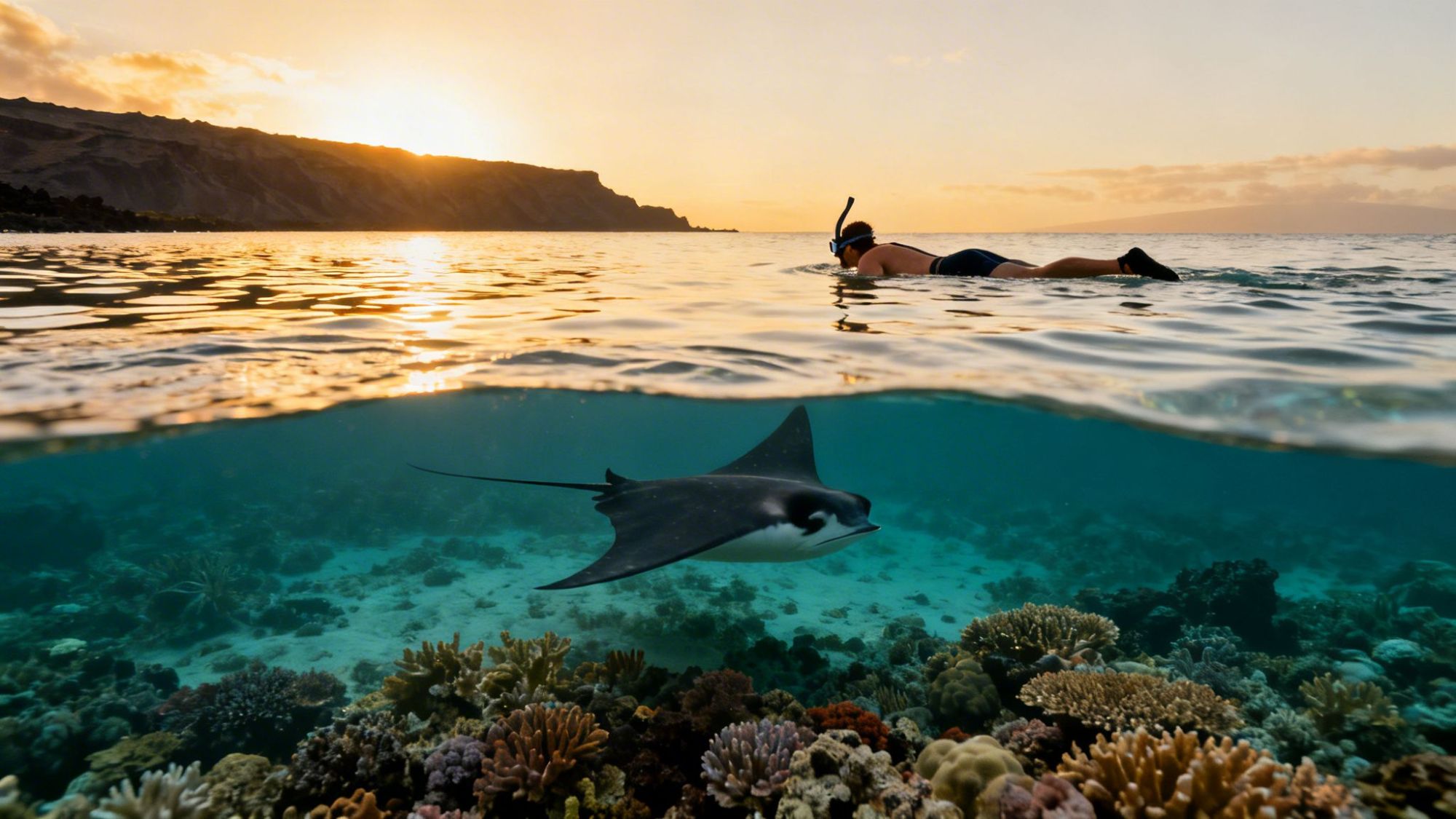
Picture yourself gliding through water so clear it feels like flying, with a whole world of brilliant tropical fish swirling around you. That’s the magic of snorkeling in Kona. We’re talking about Hawaii's absolute sweet spot for underwater adventure. While other parts of the islands get hit with wind and waves, the Kona coast is tucked away behind massive volcanoes, leaving the water incredibly calm and clear for snorkelers of any age or skill level.
As the top-rated and most-reviewed snorkel company in all of Hawaii, Kona Snorkel Trips has built a reputation on creating these amazing memories.
Why Kona Is The Best Place to Snorkel in Hawaii
When you daydream about snorkeling in Hawaii, you’re probably picturing Kona and don’t even know it. The Big Island's west coast has a secret weapon: the enormous volcanoes of Hualālai and Mauna Loa. They act as a massive natural shield, blocking the trade winds and creating the calmest, clearest ocean conditions you'll find anywhere in the state.
What does that mean for you? It means the visibility here can often be over 100 feet. It's like watching an HD nature documentary, but you're actually in it. This creates a welcoming underwater playground, perfect for kids getting their first look at the reefs or for experienced divers wanting to explore deeper.

Two Unforgettable Kona Snorkeling Experiences
Kona’s world-class reputation really comes down to two iconic, must-do adventures. These are the trips people travel across the globe for, the ones that define the Kona snorkeling experience.
- Kealakekua Bay: This is home to the Captain Cook Monument and is a protected Marine Life Conservation District. Getting there is half the adventure, as it's best reached by boat. Once you dip your face in the water, you're greeted by pristine coral gardens and huge schools of colorful fish.
- The Manta Ray Night Snorkel: This is pure magic and something you can only do here. After the sun goes down, you'll float on the surface as magnificent manta rays glide and somersault just inches beneath you, feeding on plankton drawn to the underwater lights. It's a surreal, unforgettable encounter.
Between these two, there’s an adventure for everyone. Whether you’re after a sunny day exploring a historic bay or a mystical night with gentle giants, Kona has you covered. For a wider view of ocean adventures, see our post on snorkeling in Hawaii to see how other spots stack up.
Finding The Best Big Island Snorkeling Tour
Picking the right guide can make or break your trip. A guided tour turns a simple swim into a real adventure. A great guide not only takes you to the best, safest spots but also shares stories about the marine life and local history that bring the whole experience to life.
As the top-rated and most-reviewed snorkel company in all of Hawaii, we've built our reputation on creating these amazing memories. With expert, lifeguard-certified guides and a focus on small-group tours, we put your safety and personal connection to the ocean first.
Whether you're exploring the historic waters of Kealakekua Bay or floating with the mantas at night, a quality tour ensures you're doing it safely, responsibly, and having the time of your life.
Discovering Kona's Most Spectacular Snorkel Spots

So you're ready to see what all the fuss is about? The Big Island's Kona coast is legendary for a reason. It's packed with incredible snorkel spots, and each one offers a totally different glimpse into Hawaii's underwater world.
From historic bays you can only reach by boat to easy-access beach parks perfect for a last-minute dip, there's a perfect spot waiting for you, no matter your skill level. Let's talk about where to go.
Kealakekua Bay: The Crown Jewel Of Kona Snorkeling
If you ask anyone, Kealakekua Bay is at the top of the list. Home to the famous Captain Cook Monument, this place isn't just a snorkel spot—it's a living, breathing aquarium. Because it’s a protected Marine Life Conservation District, the whole ecosystem is ridiculously healthy, with coral gardens and huge schools of fish that will blow your mind.
The bay's remote location means it's pretty much only accessible by boat, which is a good thing. It keeps the area pristine. Picture this: dipping your mask into water so clear that visibility often pushes past 100 feet. It's no wonder that over 70% of Big Island visitors get in the ocean, and snorkeling is the number one activity. The volcanic coastline protects us from the open ocean, creating some of the calmest, clearest water in all of Hawaii.
For a deeper dive into why this bay is so special, check out our complete guide on snorkeling Captain Cook Bay.
A boat tour to Kealakekua Bay isn't just about getting there; it's about the experience. A good crew will guide you to the best parts of the reef, share the incredible history of the area, and make sure your visit is safe and respectful of this special place. An excellent alternative to consider is Captain Cook Snorkeling Tours for a well-regarded experience.
Going with a professional guide completely changes the trip, turning it from just a swim into an adventure you'll actually remember.
Amazing Shore Snorkeling Spots
While a boat trip to Captain Cook is a must-do, Kona also has some fantastic snorkeling you can do right from the shore. These spots are perfect when you just want to grab your gear and go.
Kahalu'u Beach Park
We locals often just call this "Snorkel Beach." It's hands-down the best spot for beginners and families.
- Easy Entry: The bay is calm, shallow, and protected by a rock wall, so getting in and out of the water is a piece of cake.
- Tons of Fish: You’ll be surrounded by fish right away. Parrotfish, butterflyfish, and tangs are everywhere, and they're used to seeing people.
- Great Amenities: There are lifeguards, restrooms, and picnic tables, making it a safe and comfortable spot to hang out for the day.
Honaunau Bay (Two Step)
Just south of Kealakekua, Honaunau Bay is a little more advanced but the payoff is huge. It gets its nickname "Two Step" from the natural lava rock ledges that make for a perfect entry point.
- Packed with Marine Life: This bay is known for its dense fish population and is one of the most reliable places to spot green sea turtles (honu).
- Dolphin Hangout: It’s also a resting spot for spinner dolphins. It’s pretty magical to see a pod from a respectful distance.
- Crystal Clear Water: Like most of the Kona coast, the visibility is usually amazing, so you can see all the vibrant reef structures below.
Whether you hop on a world-class boat tour or just pull over for a swim, snorkeling in Kona is something you won't forget. Every spot has its own vibe and its own underwater treasures to discover.
The Magic of the Manta Ray Night Snorkel
Picture this: You’re floating in the warm, dark Pacific, holding onto a specially designed light board. Below you, the light beams cut through the blackness, attracting a shimmering cloud of tiny plankton. Then, a massive shadow emerges from the deep. It’s a majestic manta ray, with a wingspan as wide as a car, gliding right toward the light. This isn't just another snorkel trip; it's the world-famous Manta Ray Night Snorkel, an incredible underwater ballet you can only find in Kona.

This is one of those adventures you'll talk about for the rest of your life. It’s a story of pure wonder. Manta rays are gentle giants—they’re filter-feeders and don’t have stingers, so the entire encounter is completely safe and peaceful.
How Does It Work?
The whole spectacle is built on a simple, brilliant idea: light attracts plankton, and plankton is the mantas' favorite food. Tour operators have perfected this by using powerful underwater lights that essentially ring the dinner bell for these graceful creatures.
Here’s the breakdown:
- The Light Board: Snorkelers float on the surface, holding onto a large raft with bright lights pointing down into the water. It gives you a stable, front-row seat to the show.
- The Plankton Buffet: Just like moths to a flame, microscopic plankton swarm to the light, creating a glowing, all-you-can-eat buffet in the water column.
- The Grand Entrance: The mantas, who are always on the lookout for a good meal, glide in from the darkness to feast.
This simple setup allows you to see an amazing natural feeding behavior from just inches away. You'll be absolutely mesmerized as these giants, some with wingspans stretching up to 16 feet, perform barrel rolls and swoop right beneath you.
Choosing Your Manta Adventure
Going with a professional tour is a must for a safe and truly unforgettable experience. They know the best spots, have all the right gear, and prioritize the well-being of the mantas. For a truly top-tier adventure, the Manta Ray Night Snorkel with Kona Snorkel Trips is legendary for its small-group format, which means you get more personalized attention from the expert guides.
Another excellent choice is Manta Ray Night Snorkel Hawaii, which also delivers a stellar tour. Both companies follow strict, eco-friendly guidelines to make sure these incredible animals are protected. If you want a deeper dive into what the experience is like, check out our guide on the Kona Manta Ray Snorkeling experience.
This is so much more than just watching wildlife. It's an immersive connection with one of the ocean's most graceful animals. Floating on the surface while a massive manta ray somersaults right under you is a feeling you’ll never forget.
What to Expect on Your Tour
Your trip starts with a boat ride out to one of Kona's prime manta spots, like Garden Eel Cove or Keauhou Bay. The crew gives a full safety briefing and gets you geared up with everything you need, including wetsuits to keep you comfortable in the water.
Once you’re in, you just hold onto the light board and float. There's no hard swimming involved, which makes it perfect even if you're new to snorkeling. The experience is consistently rated one of the best night dives on the planet, with sighting success rates often hitting 90% or more. It’s an absolute must-do when you're snorkeling in Kona.
A Smart Snorkeler's Guide To Safety In Kona
Kona's turquoise water looks like paradise, and it is. But as any experienced waterman will tell you, the ocean is powerful and deserves respect. Thinking about safety first isn't meant to spoil the fun; it's what guarantees you'll go home with nothing but amazing memories. We have to talk about the risks, because knowing what they are is the first step to avoiding them.

Let's be real about the numbers. Every year, about 3 million people snorkel in Hawaii. It’s an incredible experience, but the statistics are sobering. Snorkeling is the leading cause of drowning for tourists here. Between 2019 and 2023, an average of 45 visitors drowned each year in Hawaii.
One study found Hawaii's visitor-drowning rate was a staggering 13 times the national average. Over a decade, 102 tourists lost their lives while snorkeling, compared to just 13 residents. This isn't to scare you out of the water. It’s to point you toward the safest way to enjoy it. The data all leads to one simple, crucial piece of advice: if you’re new to snorkeling or traveling with family, a guided tour isn't just a good idea, it's essential.
Why A Guided Tour Is Your Best Safety Net
Going with a professional tour company like Kona Snorkel Trips is the single smartest move you can make for your safety. You're not just getting a ride to a cool spot; you're hiring a team of experts whose entire job is to watch out for you. Having a lifeguard-certified crew completely changes the dynamic, turning a potentially risky outing into a secure, guided adventure.
Here’s what that professional oversight actually looks like:
- Lifeguard-Certified Guides: Every guide is trained in water rescue and first aid. They're your eyes on the water, constantly scanning the group and ready to help anyone who looks tired or gets into trouble.
- Thorough Safety Briefings: Before you even touch the water, the crew walks you through everything. They'll explain how to use your gear correctly, what to do in a current, and what to look out for.
- High-Quality, Maintained Gear: A leaky mask or cheap snorkel can turn a fun day into a frustrating, even dangerous one. Tour operators use gear that's professionally maintained and properly fitted to you.
- Small-Group Advantage: This is a big one. Smaller groups mean the guides can actually keep an eye on everyone. They can offer one-on-one tips and give you the personal attention that makes all the difference.
When you choose a guided tour, you've got a dedicated team looking out for you. They know the local conditions, the safe entry and exit points, and how to handle any surprises the ocean might throw at you. This frees you up to just relax and focus on the incredible world below the surface.
Essential Safety Tips For Every Snorkeler
Even with the best guides, your personal choices matter. Keep these fundamental rules in mind every time you go snorkeling in Kona.
The Buddy System Is Non-Negotiable
Never, ever snorkel alone. Stick close to your buddy and make a habit of checking on each other constantly. Before you get in, agree on a few simple hand signals for "I'm okay," "I need help," or "Come look at this!"
Understand Ocean Conditions
The ocean can change in an instant. Listen carefully to the crew's briefing about currents, surge, and visibility. If you ever feel unsure or conditions seem rough, just stay closer to the boat and your guides. There's no shame in playing it safe.
Know Your Limits
This isn't an endurance competition. Snorkeling should be relaxing. If you feel tired, take a break on the boat. Don't hesitate to use a flotation device like a pool noodle, even if you're a strong swimmer. It just lets you relax and enjoy the view more.
Before you even leave home, you can master your beach packing list to make sure you've got essentials like reef-safe sunscreen. For more specific tips on what to bring for your tour, check out our guide on what to wear for snorkeling. By putting professional guidance together with your own smart habits, you’re setting yourself up for a perfect, worry-free day in the water.
How To Choose The Perfect Kona Snorkel Tour
Let's be honest, not all snorkel tours are the same. Picking the right one can be the difference between a memory you’ll treasure for a lifetime and a day spent feeling like just another face in a crowded swimming pool. This guide is here to walk you through your options for snorkeling in Kona and show you what really separates a great tour from a forgettable one.
The number one complaint you'll hear about the most popular snorkel spots? Overcrowding. It’s tough to appreciate a graceful sea turtle when you’re constantly bumping flippers with strangers. It just kills the magic, especially at world-famous sites that draw big crowds.
One eye-opening study on Kona’s manta ray encounters actually put numbers to this feeling. It found that while snorkelers could handle seeing about 52 other people in the water, a massive 96% felt crowded by the people in their own group. You can dig into the research on visitor crowding yourself, but the takeaway is clear: the size of your tour group is a huge deal.
Small Group Vs. Large Group Tours
This is where you see the biggest difference in the kind of day you're going to have. Small-group tours, like the ones we run here at Kona Snorkel Trips, are the gold standard for a reason. We focus on giving you personal attention and a real connection to the ocean, not just packing a boat to its absolute limit.
A smaller tour feels more like a private adventure with new friends. Your guides will actually know your name, offer one-on-one help with your gear, and have the freedom to find the quiet corners of a busy reef. You end up spending more time in the water and way less time waiting in line for your turn.
For a clearer picture, here’s a quick comparison of what you can expect:
Small Group Vs Large Group Snorkel Tours
| Feature | Small-Group Tour Experience | Large-Group Tour Experience |
|---|---|---|
| Personal Attention | Guides offer individual tips, assistance, and share detailed knowledge with each guest. | Guides must manage a large crowd, leading to a more generic, less personal experience. |
| Wildlife Viewing | Less noise and commotion means wildlife is less likely to be scared away, allowing for closer, more natural encounters. | The noise and activity from a large group can easily frighten fish, turtles, and dolphins. |
| Safety & Comfort | Guides can keep a close eye on every snorkeler, ensuring everyone is safe and comfortable in the water. | It's challenging to monitor dozens of people at once, increasing potential safety risks. |
| Flexibility | The captain has more freedom to adjust the itinerary based on conditions or to linger at a great sighting. | Tours must stick to a rigid schedule to manage the large number of passengers. |
As you can see, a smaller group size directly translates to a better, safer, and more personal adventure.
What To Look For In A Tour Company
Beyond just the group size, a few other things really signal a top-notch tour. When you're researching who to go with for your Kona snorkel trip, keep an eye out for these must-haves.
- Lifeguard-Certified Guides: This is non-negotiable. The people taking you out on the ocean should be professionally trained in water safety, CPR, and first aid.
- Quality Amenities: Does the boat have a bathroom? Plenty of shade? A ladder that's easy to get in and out of the water with? These little things make a huge difference in your comfort.
- Eco-Conscious Practices: The best companies are dedicated to protecting the very reefs they show you. They use reef-safe products, teach you how to interact with wildlife responsibly, and actively support local conservation.
- Authentic Reviews: Don't just rely on the glossy testimonials on a company's website. Go to independent review sites and see what real customers have to say about their actual experience on the water.
We break down even more of what to look for in our detailed comparison of Kona, Hawaii snorkeling tours.
Choosing a tour isn't just about booking a boat ride; it's about investing in an experience. A great company doesn't just take you to a spot—they create memories, ensure your safety, and deepen your appreciation for the incredible marine world.
Got a few questions before you take the plunge? We hear you. Let's clear up some of the most common things people wonder about before their Kona snorkeling adventure. We'll cover everything from when to visit to whether you need to be a pro swimmer (spoiler: you don't!).
What Is The Best Time Of Year For Snorkeling In Kona?
Honestly? There’s no bad time to go snorkeling in Kona. The Big Island’s massive volcanoes act as a natural shield, blocking the trade winds and keeping the Kona coast wonderfully calm and clear pretty much year-round.
If you’re chasing that postcard-perfect, glass-calm water with maximum visibility, the summer months from April to October are your best bet.
But winter, from November to March, has an incredible secret weapon: humpback whales. The water might be a touch cooler, but the chance to see these majestic giants breaching right from the tour boat is a trade-off many people are thrilled to make. And don't worry about the Manta Ray Night Snorkel—the mantas show up to feed all year long, so that magic is always on the menu.
Do I Need To Be A Strong Swimmer To Snorkel In Kona?
Not at all, especially if you're joining a guided tour. Being comfortable in the ocean helps, sure, but you definitely don't need to be an Olympic swimmer to have an amazing time.
Good tour companies like Kona Snorkel Trips are built to welcome everyone, from total beginners to seasoned pros. They’ll have all the flotation gear you need—life vests, float belts, and even pool noodles—so you can just relax and float effortlessly on the surface.
The real game-changer on a tour is the crew. Having lifeguard-certified guides right there in the water with you is a huge confidence booster. They’re your safety net, ready to help out and make sure everyone feels completely secure. For a first-timer, this supervised environment is so much safer and more enjoyable than trying to figure it out on your own.
With that kind of support, you can forget about treading water and just focus on the incredible world unfolding below you.
What Should I Pack For My Kona Snorkeling Tour?
Packing the right stuff can turn a good day into a great one. Your tour will cover the big things like masks, snorkels, fins, and flotation devices.
Here’s a quick list of what you should bring along to stay comfortable:
- Reef-Safe Sunscreen: This is non-negotiable. Please help us protect our delicate coral by using a mineral-based sunscreen that doesn't contain oxybenzone and octinoxate.
- Towel and a Change of Clothes: Nothing beats having something dry and warm to change into after a swim.
- Hat and Sunglasses: The Hawaiian sun is powerful, even when it’s cloudy.
- Reusable Water Bottle: Staying hydrated on the water is crucial. Most tours have a water jug for refills, and bringing your own bottle is a fantastic way to reduce waste.
- Waterproof Camera: Trust us, you’re going to want to capture the memories—from the schools of bright yellow tangs to the graceful sea turtles.
If you’re someone who gets chilly easily, a rash guard or a thin wetsuit top can make a huge difference. It'll keep you comfortable and let you stay in the water longer, soaking it all in.
Is The Manta Ray Night Snorkel Dangerous Or Scary?
Not even a little bit. The Manta Ray Night Snorkel is one of the most popular wildlife encounters in the entire world because it’s absolutely magical, not frightening.
These are gentle giants in the truest sense. They’re filter feeders, slurping up tiny plankton, and unlike their stingray cousins, manta rays have no stingers or any other way to hurt you. The whole experience is designed from the ground up to be safe and comfortable. You’ll hold onto a specially designed light board that floats on the surface, so you’re not just swimming around aimlessly in the dark.
The powerful lights on the board create a brightly lit "stage," attracting the plankton and turning the water below you into a spectacular theater for the mantas' ballet. With professional guides in the water and on the boat watching over everything, it’s less "scary" and more "speechless." It’s a peaceful, mesmerizing experience that people talk about for the rest of their lives.