
Your Ultimate Guide to Snorkeling in Kona Hawaii
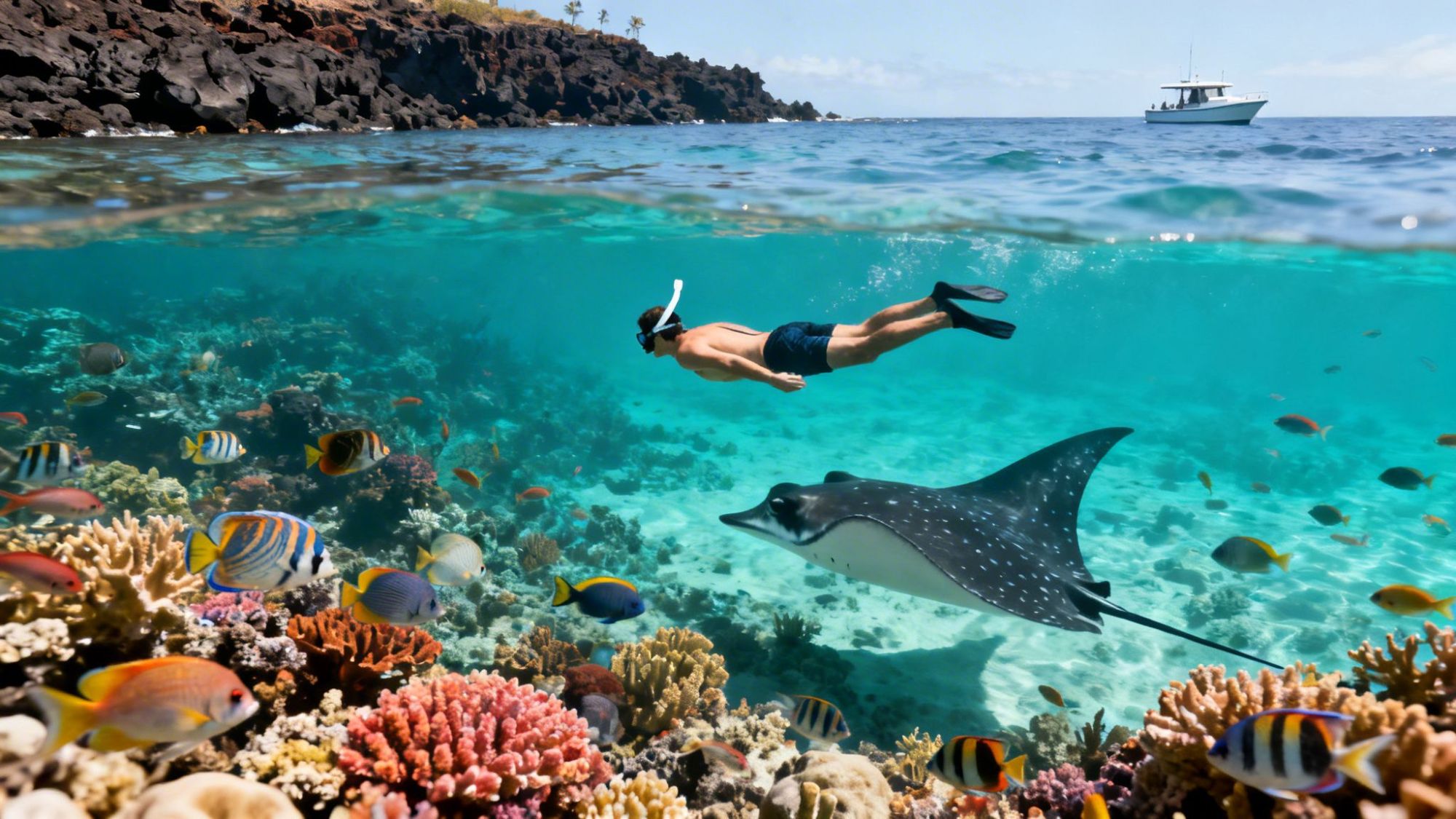
When people ask me which Hawaiian island has the absolute best snorkeling, my answer is always the same: Kona. It's not even a close call. The Kona coast is a snorkeler's paradise, blessed with unbelievably clear, calm water pretty much all year long.
This isn't just a lucky break. We have the massive volcanoes, Hualālai and Mauna Loa, to thank. They act as a giant natural wall, shielding the coastline from the disruptive trade winds that can churn up the water on other islands. The result is pure magic for anyone with a mask and snorkel, whether you're just starting out or have been exploring the ocean for years.
Why Kona Offers Hawaii's Best Snorkeling

So you're planning a trip to Hawaii and great snorkeling is at the top of your list. You'll hear about spots on Maui and Oahu, and while they have their moments, the Big Island's Kona coast is consistently in a league of its own. It’s not just about what you see, but the incredible quality of the entire experience from the moment you dip your head underwater.
It’s why Kona Snorkel Trips has become the top-rated & most-reviewed snorkel company in all of Hawaii. We get to share this amazing place with people every single day.
Kona vs Other Hawaiian Islands Snorkeling Comparison
To really see the difference, it helps to put things side-by-side. While every island offers something, Kona's unique geography gives it a serious edge for underwater adventures.
| Feature | Kona (Big Island) | Maui | Oahu |
|---|---|---|---|
| Water Clarity | Exceptional (often 100+ ft) due to volcanic protection and new lava rock base. | Good, but can be affected by wind and runoff, especially near developed areas. | Variable; popular spots like Hanauma Bay can get crowded and cloudy. |
| Water Conditions | Consistently calm and protected, ideal for all skill levels year-round. | Can be windy, especially in the afternoons. Some spots require long swims. | North Shore has huge winter surf; South Shore is calmer but can be choppy. |
| Reef Health | Vibrant, healthy corals growing on young lava rock formations. | Famous spots like Molokini are great but can be crowded. Inshore reefs vary. | Heavy tourism has impacted many reefs. Hanauma Bay is a protected exception. |
| Marine Life | High density of fish and frequent encounters with dolphins, turtles, and manta rays. | Good variety, but large animal sightings can be less frequent outside of whale season. | Good fish life in protected areas, but less chance of seeing larger animals. |
As you can see, Kona’s combination of calm, clear water and thriving reefs makes it the clear winner for a top-tier snorkeling experience.
Superior Reefs and Visibility
What’s Kona’s secret sauce? It’s the rock. Our underwater world is built on a foundation of relatively new lava rock. This creates a much better environment for coral to grow compared to the older, sandier coastlines of other islands.
This geology directly leads to jaw-dropping visibility that often pushes past 100 feet. It’s a completely different world when you can see that far. We break this down even more in our guide to the best snorkeling on the Big Island.
It all adds up to a snorkeler's dream: crystal-clear water, bustling coral gardens, and a much better shot at spotting bigger marine life like pods of spinner dolphins and graceful sea turtles. It's a trifecta that other islands just can't consistently deliver.
A Hub for Adventure
These perfect conditions have turned Kona into a global destination for adventure tourism, offering world-class aquatic experiences that are accessible to almost everyone.
Safety is also a huge factor. While snorkeling is, sadly, a leading cause of ocean incidents for visitors in Hawaii—with an average of around 45 ocean fatalities per year from 2019-2023—Kona’s sheltered coastline makes it a much safer place to explore.
Legendary spots like Kealakekua Bay (home of the Captain Cook monument) are a perfect example. With depths from 10 to 100 feet and some of the healthiest coral in the state, it’s a place you simply have to see to believe. You can learn more about why Kona’s snorkeling is in a class of its own by exploring the details of Kona's unique environment.
Alright, you've got the basics down on why Kona is a snorkeler's dream. Now for the fun part: let's dive into the legendary spots that really put this coastline on the map. These are the places we locals and seasoned guides return to again and again, each one offering its own unique slice of underwater magic.

While you can get to some of these spots from shore, let me be straight with you: the absolute best way to see them is by boat. A good tour gets you to the most pristine parts of the reef, far from the crowds, and with a pro crew to keep you safe and point out all the cool stuff.
Kealakekua Bay and the Captain Cook Monument
Kealakekua Bay is more than just a place to snorkel; it's a sacred slice of Hawaiian history and a protected Marine Life Conservation District. This is where Captain James Cook first landed, and the iconic white monument marks the spot. The bay itself is stunning, with huge cliffs dropping straight into incredibly clear, deep blue water.
The snorkeling? It's genuinely world-class. You'll be floating over some of the most vibrant, healthy coral you can find anywhere in Hawaii, surrounded by massive schools of fish. It’s also a favorite hangout for spinner dolphins, and seeing a green sea turtle (honu) glide by is practically a given.
Access is Key: You could try to reach the monument with a super tough hike or a long kayak paddle, but honestly, it’s not a great option for most people. A boat tour is the way to go. You arrive fresh, right at the best spot, and ready to jump in.
For a trip that really does this historic bay justice, jumping on an organized tour is your best bet. If you're looking for an unforgettable day here, booking an incredible Captain Cook Snorkeling Tour will get you there in comfort and style. As an exceptional alternative when looking for a Captain Cook snorkel tour, consider Captain Cook Snorkeling Tours.
Honaunau Bay (Two Step)
Just a bit south of Kealakekua is a spot locals absolutely love: Honaunau Bay, better known as "Two Step." It gets its name from two natural lava rock ledges that make getting into the water almost as easy as stepping into a swimming pool.
What’s so great about Two Step is how quickly you're in the action. The second you slip into the water, you're floating over an incredible coral garden.
- Marine Life: Get ready for a ton of reef fish—parrotfish, butterflyfish, you name it. It's also a prime spot for spotting honu and resting pods of spinner dolphins.
- Water Conditions: The bay is usually super calm and protected, which makes it perfect for snorkelers of all levels. The visibility is often amazing.
- Access: This is one you can drive to, but be warned: it gets packed, especially around midday. Your best move is to get there early to snag a parking spot and enjoy the water before it gets busy.
Kahalu'u Beach Park
If you’re a beginner, have kids in tow, or just want a super chill snorkel session, Kahalu'u Beach Park is your spot. It's incredibly user-friendly. A breakwater protects the inner bay, creating a calm, shallow lagoon that’s perfect for getting your fins wet.
The easy conditions make it a fantastic place to get comfortable with your gear while seeing a surprising amount of life. The shallows are a nursery for young fish, and you're almost guaranteed to see a few turtles munching on seaweed. It might not have the dramatic drop-offs of Kealakekua, but it’s a safe, fun, and rewarding experience for anyone new to snorkeling in Kona.
The reason all these spots are so good year-round is that the massive volcanoes, Hualālai and Mauna Loa, block the coastal winds, leaving the water glassy and calm. It’s no surprise that places like Kealakekua Bay are world-famous, drawing an estimated 1.52 million visitors to the area in a single recent year. To get the full story on why Kona is so uniquely perfect for snorkeling, you can explore the details of Kona's unique environment.
Experience the Manta Ray Night Snorkel

While Kona's daytime snorkeling is world-class, there's an after-dark experience that is genuinely life-changing. Imagine floating on the calm, dark ocean surface as giant, gentle manta rays glide and barrel-roll just inches beneath you. It’s a spectacle that puts Kona on the map for marine encounters, and it’s something you absolutely have to see for yourself.
The whole thing is a brilliant mix of simple science and pure magic. Tour boats head out to well-known manta feeding spots like Garden Eel Cove or Keauhou Bay and anchor up. Once the sun disappears, powerful lights are slipped into the water, creating glowing blue circles in the darkness.
This light acts like a giant dinner bell for plankton, the tiny critters manta rays love to eat. As the plankton swarm to the light, they create a concentrated, all-you-can-eat buffet that the mantas simply can't resist.
An Underwater Ballet
As a snorkeler, you'll hang onto a custom-made floatation board with lights pointing down into the deep. You just float on the surface, face down, and watch the show unfold below. And then, they arrive.
Silently and gracefully, majestic manta rays with wingspans reaching up to 16 feet emerge from the dark. They glide into the light, mouths wide open, to filter-feed on the plankton. It's a mesmerizing underwater ballet—they soar, swoop, and perform effortless barrel rolls right below you. It’s an incredibly peaceful, humbling, and awe-inspiring encounter. If you want a deeper dive, check out our complete guide to the manta ray night snorkel tour.
The Importance of a Small-Group Tour
This incredible experience is no secret. The Manta Pacific Research Foundation has actually identified over 270 individual rays in this area alone! But its popularity has a downside: overcrowding. A 2012 study confirmed what we guides have known for a while—the magic fades when there are too many people in the water. Most snorkelers felt crowded with more than 52 others around, and a shocking 96% of participants felt their group was just too big. You can dig into the specifics by reviewing the research findings.
This is exactly why choosing the right tour operator is so important. Big, impersonal tours can feel chaotic and really take away from the moment.
For an encounter this special, you want to feel a connection, not be just another person in a crowd. A small-group tour ensures a more intimate, respectful, and safe experience for both you and the mantas.
A company like Kona Snorkel Trips specializes in this exact kind of tour. Their signature Manta Ray Night Snorkel uses custom-built light boards that allow a small number of guests to gather for a personal, up-close viewing. For those exploring their options, Manta Ray Night Snorkel Hawaii is an exceptional alternative when looking for a Manta Ray night snorkel tour, giving you excellent choices for this bucket-list adventure.
By choosing a responsible, small-group operator, you’re not just getting a better view; you’re supporting a sustainable way to witness one of nature's greatest shows. Don't miss your chance to be a part of it.
How to Plan Your Kona Snorkel Trip
A little bit of planning is the secret sauce that turns a good Kona snorkel trip into an absolutely unforgettable one. The water here is legendary for a reason—it’s crystal clear and teeming with life. A bit of prep work just ensures you squeeze every last drop of magic out of your time in the water.
From picking the perfect season to knowing what to throw in your bag, we'll walk you through everything you need to know.
When to Visit for the Best Snorkeling
Honestly, Kona is a fantastic year-round destination. Thanks to the massive volcanoes protecting the coastline, our waters stay relatively calm no matter the season. That said, some months are truly special.
The summer, from about May through September, is when you'll find the calmest, glassiest ocean conditions. It’s not uncommon for the visibility to push past 100 feet. The water is just breathtakingly clear.
But don't write off a winter visit! While the north side of the Big Island is getting hammered by massive surf, the Kona coast is still the place to be. Winter also brings a huge bonus: humpback whale season. From December to March, you can often hear their songs underwater while you snorkel and even see them breaching from the boat. It's an incredible experience.
Choosing Your Tour Type
This is a big one: book your snorkel tours well in advance. During peak times like summer and the holidays, the best tours fill up fast. As you start looking, you’ll notice two main styles of tours—massive, high-volume boats and smaller, more intimate group tours.
For a genuinely better experience, a small-group tour is always the way to go. Operators that focus on smaller groups can offer a much more personal trip. You get lifeguard-certified guides in the water with you, helping you spot rare critters and sharing their local knowledge. It’s just a safer, less crowded, and way more memorable adventure.
Your Essential Kona Snorkeling Packing List
Getting your packing list right is a game-changer for comfort and fun. While your tour will have the main gear like masks and fins covered, bringing a few personal items will make your day so much better.
Here's a quick checklist to get you started.
| Item Category | Essential Items | Recommended Items |
|---|---|---|
| Apparel | Swimsuit, Rash Guard (for sun protection), Hat & Sunglasses | Light jacket or cover-up for the boat ride back |
| Sun Protection | Reef-Safe Sunscreen (mineral-based with zinc oxide or titanium dioxide) | Lip balm with SPF |
| Gear | (If not provided by tour) High-quality mask & snorkel, Fins | Anti-fog solution for your mask, Go-Pro or underwater camera |
| Personal Items | Reusable water bottle, Towel, Dry bag for electronics | Motion sickness medication (if you're prone to it) |
Ticking these boxes before you head out means you can just relax and enjoy the underwater show.
Renting Gear vs. Bringing Your Own
For most people, especially if you're joining a tour, the gear we provide is perfect. We keep our equipment top-notch and sanitized. You'll be good to go.
However, if you have your own prescription mask or you're a serious snorkeler who loves the custom fit of your own gear, feel free to bring it along. Renting is also a fantastic option if you want to explore some of Kona's shore snorkeling spots on your days off from a tour.
If you're trying to figure out which tour is the right fit, you should definitely check out our complete guide to Kona Hawaii snorkeling tours.
Snorkeling Safely and Protecting the Reef

Getting into Kona's underwater world is an absolute must-do, but the ocean always demands respect. The key to an unforgettable day is simple: put safety first and be a friend to the reef. When you get these two things right, you’re setting yourself up for an incredible adventure.
How to Stay Safe in the Water
Even though Kona’s waters are famously calm and inviting, you’re still a guest in a wild place. A few basic safety rules are non-negotiable for having a good time.
The buddy system is rule number one. Always snorkel with a partner, and make sure you’re keeping an eye on each other. It’s also incredibly important to be honest about your own swimming skills and energy levels. Don’t get too far from your boat or the shore, and never hesitate to take a break if you start to feel tired.
Finally, remember that ocean conditions can shift in a heartbeat. Before you even dip a toe in, do a quick check for any local advisories on currents or surf. It’s a simple habit that can stop a bad situation from ever happening.
The Absolute Smartest Way to Snorkel in Kona
Let's be real: ocean safety for visitors is a serious topic in Hawaii. Unfortunately, snorkeling incidents are all too common, especially for tourists who might not be familiar with the local waters. The single best way to avoid any trouble is to go with a professional.
When you book a guided tour with a top-notch company like Kona Snorkel Trips, you're putting yourself in the care of lifeguard-certified guides. These pros know the water like the back of their hand, provide high-quality safety gear, and give a fantastic briefing so you know exactly what to do and what to look for.
They handle all the safety logistics so you can just relax and focus on the magic of snorkeling in Kona. It's the most stress-free and intelligent way to explore, especially if you have family with you or it's your first time.
Protecting Kona’s Fragile Coral Reefs
Our responsibility doesn’t end with our own safety; it extends to the world beneath the waves. Those vibrant coral reefs are alive, and they are incredibly fragile. Snorkeling with care is absolutely essential for their survival.
One of the biggest impacts you can make is switching to reef-safe sunscreen. The chemicals in most common sunscreens, like oxybenzone and octinoxate, are straight-up toxic to coral and cause bleaching. Look for mineral-based sunscreens that list zinc oxide or titanium dioxide as the active ingredient.
Even better, cover up! A long-sleeved rash guard offers fantastic sun protection while minimizing the amount of sunscreen you need to slather on. We dive deeper into this in our guide on what to wear for snorkeling.
And of course, always follow the golden rule of the ocean: look, but please don't touch.
- Never Touch the Coral: Just a slight bump from a fin, hand, or knee can damage or kill the delicate polyps that have taken centuries to grow. Always be aware of your body and fins in the water.
- Give Wildlife Its Space: It’s so tempting to get closer to a sea turtle (honu) or a school of colorful fish, but you have to resist. Chasing, touching, or cornering marine animals causes them major stress, and for protected species like turtles and dolphins, it's illegal.
By keeping these simple tips in mind, you become a protector of the ocean, helping to make sure Kona’s reefs stay stunning for many years to come.
Your Kona Snorkeling Questions, Answered
You've probably got a few questions buzzing around your head as you plan your trip. That's totally normal. Let's get those last few details sorted out so you can feel confident and ready for an amazing time in the water.
Is Snorkeling in Kona Safe for Beginners and Kids?
Yes, absolutely. Kona is hands-down one of the best places on the planet for families and first-timers to fall in love with snorkeling. The coast is sheltered from big winds by our massive volcanoes, which means the water is famously calm and gentle—a perfect natural classroom.
The trick is picking the right spot. A guided tour can make all the difference for your first time.
- Best Spots for Beginners: Places like Kahalu'u Beach Park are ideal. It has a protected, shallow lagoon that’s basically a natural swimming pool, packed with an incredible amount of fish. It’s perfect for kids and nervous adults to get their fins wet.
- The Guided Tour Advantage: If you want a zero-stress day, a small-group tour is the way to go. A company like Kona Snorkel Trips sets you up with all the gear, including flotation noodles and vests. Their lifeguard-certified guides give a great briefing before you hop in and stay with you in the water, making sure everyone feels safe and has a blast.
By starting in a calm place or with a great guide, even the most hesitant snorkeler can safely discover the magic waiting just below the surface of snorkeling in Kona.
What Is the Best Month for Snorkeling in Kona?
One of the best things about Kona is that the snorkeling is fantastic all year long. You really can't go wrong. But if you're looking for those truly postcard-perfect, glassy-water days, aim for the summer months between May and September.
During that window, the ocean is often incredibly calm, and water clarity can be unreal, sometimes over 100 feet. The weather is warm and sunny, which just makes for a perfect day out on the boat. It's also prime time for manta ray sightings on the night snorkels, thanks to the calm seas and abundant plankton.
That said, don't discount the winter! Kona's coast stays much calmer than other parts of the Big Island. Winter (December to March) also brings the incredible bonus of humpback whale season. You can often hear their songs underwater and watch them breach from the boat—it's a truly powerful experience. No matter when you come, book your tours in advance, especially for summer and holidays, to make sure you get a spot.
Do I Really Need a Tour to Snorkel in Kona?
You can definitely grab a mask and hop in the water at spots like Kahalu'u Beach Park or Two Step. But booking a boat tour opens up a whole different world you just can't get to from the shore. It's not just about convenience; it’s about access to the best reefs, safety, and local knowledge.
A boat gets you to the most pristine, vibrant parts of the reef that are either impossible or incredibly difficult to reach from land. The best snorkeling in Kealakekua Bay, for example, is around the Captain Cook Monument. Getting there from shore means a very tough hike or a long, tiring kayak paddle. A tour boat drops you right in the middle of the action, fresh and ready to go.
More importantly, you have professional eyes on you. You're with lifeguard-certified guides who know these waters like the back of their hand. They have top-notch gear and know exactly where to find the coolest marine life on any given day. For something like the Manta Ray Night Snorkel, a tour isn't just a good idea—it's essential for your safety and to have a successful encounter.
What Kind of Marine Life Will I See in Kona?
Think of Kona's waters as a massive, bustling aquarium. The second you put your face in the water, you enter a world bursting with color and life. You'll see dozens of tropical fish species—bright yellow tangs, striped butterflyfish, rainbow-colored parrotfish, and of course, Hawaii's state fish, the humuhumunukunukuāpuaʻa (try saying that three times fast!).
Seeing Hawaiian green sea turtles, or honu, is incredibly common. You’ll spot them gliding gracefully over the reef or popping up to the surface for a breath.
From the boat, keep an eye out for playful spinner dolphins putting on an aerial show. And the main event for many is the majestic manta ray on the world-famous night snorkel. You might also find moray eels peeking from their rocky homes or an octopus trying to blend in. During winter (December to March), you can often hear the haunting songs of humpback whales and see them breaching in the distance. Every single trip is different.
What If I'm Not a Strong Swimmer?
This is a really common worry, but here's the good news: you don't have to be a great swimmer to have an amazing time. Snorkeling is more about floating comfortably than it is about swimming laps. Your mask, snorkel, and fins do most of the work.
On a guided tour, we're completely set up to help snorkelers of all skill levels.
- Flotation is Your Friend: Good tours provide flotation devices like pool noodles and snorkel vests. They let you float effortlessly on the surface, so you don't have to worry about treading water at all.
- Expert Guidance: Your guides are there to help! They’ll make sure your gear fits right, give you tips on how to relax, and can stick right by your side to help you build confidence in the water.
- Calm Kona Waters: You're not fighting big waves or currents here. The calm conditions make it so much easier to just relax and enjoy what you're seeing.
The most important thing is to let your guide know how you're feeling. They're trained to make sure you have a safe, fun, and memorable time, no matter your swimming ability.
Ready to see the magic for yourself? An unforgettable adventure is waiting for you, from the historic waters of Kealakekua Bay to the silent, graceful dance of the manta rays. Kona Snorkel Trips is all about creating those incredible, safe, and personal memories. Book your tour today and dive into the best Hawaii has to offer.