
Your Ultimate Guide to Snorkeling in Kona Hawaii
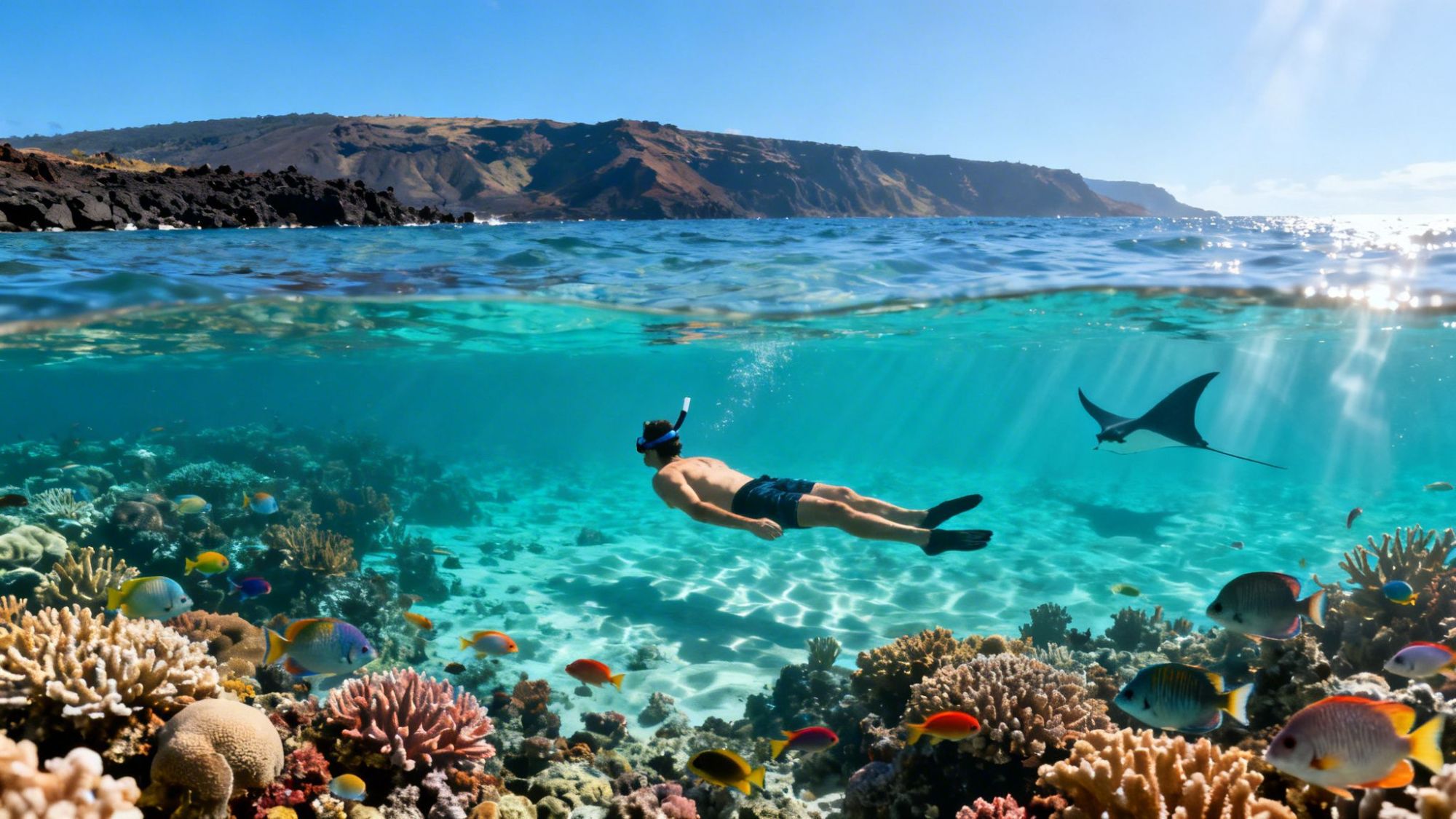
If you've ever dreamed of snorkeling in Hawaii, chances are you were picturing Kona without even knowing it. This is the place—the one with impossibly clear, turquoise water, vibrant reefs teeming with fish, and a dramatic backdrop of ancient volcanic coastlines. It’s what Hawaiian snorkeling is all about.
When you're ready to explore this underwater paradise, you'll want to go with the best. Kona Snorkel Trips is the top-rated and most-reviewed snorkel company in Hawaii, known for its commitment to small groups, safety, and unforgettable experiences.
This guide is your inside scoop on making that dream a reality, from the best spots to get your fins wet to the world-famous manta ray night snorkel.
Your Essential Guide to Kona's Underwater Paradise
So, what makes the Kona coast the undisputed champ for snorkeling on the Big Island? It’s a perfect storm of geography and marine life. The massive volcanoes, Hualālai and Mauna Loa, act as a natural shield, blocking the strong trade winds that churn up the water on other parts of the island.
The result? The water here is almost always calm and incredibly clear. That makes it perfect for everyone, whether you're putting on a mask for the first time or you're an experienced free diver.

What This Guide Covers
We’ll walk you through everything you need to know for an amazing adventure. Think of this as your pre-trip briefing. We'll get into:
- Top Snorkel Spots: We’ll show you the can't-miss locations like Kealakekua Bay and even a few hidden gems that locals love.
- Unique Marine Life: You'll learn what to look for, from the dazzling reef fish and chill sea turtles (we call them honu) to the graceful, giant manta rays that make Kona famous.
- Responsible Snorkeling: We’ll cover the simple but important ways to keep yourself safe while protecting the fragile reefs you came to see.
- Tour Recommendations: Get our take on the best guided tours that handle all the details, so you can just relax and enjoy the water.
Snorkeling here is more than just a fun activity—it’s a chance to connect with one of the most vibrant ecosystems on the planet. Whether you’re exploring a sunlit coral garden by day or watching the underwater ballet of manta rays at night, Kona delivers an experience you won't forget.
For a closer look at the different boat trips available, check out our complete guide to Kona Hawaii snorkeling tours. This will give you everything you need to make your adventure as incredible as you've imagined. Let’s get you ready to explore the best snorkeling Kona has to offer.
Why Kona Has Hawaii's Best Snorkeling Conditions
Ever wonder what makes the water for snorkeling in Kona so consistently perfect? It’s not just luck; it all comes down to some incredible geography. The Kona coast sits on the leeward (sheltered) side of the Big Island, tucked away behind the colossal volcanoes of Mauna Loa and Hualālai.
Think of those massive mountains as the island's personal windbreak. They form a natural wall that blocks the powerful northeasterly trade winds that can churn up the water on other coastlines. While other parts of Hawaii get choppy, Kona’s waters often stay as calm and clear as glass.
This unique setup gives us some of the most reliable and enjoyable snorkeling conditions you'll find anywhere.
Crystal-Clear Water and Unbeatable Visibility
Because the seas along the Kona coast are so calm, any sediment has a chance to settle, which results in incredible water clarity. It's totally normal for us to see visibility between 30 to 80 feet on any given day.
And in truly special, protected spots like Kealakekua Bay, that visibility can easily push past an amazing 100 feet. When it's that clear, it feels less like swimming and more like you're flying over a bustling underwater city.
That kind of clarity means you won't miss a thing. You can spot the tiniest, most colorful fish hiding in the coral and watch graceful sea turtles glide by in high definition. This reliability is what makes planning a day of snorkeling in Kona such a sure thing for an amazing time.
The Best of Both Seasons
One of the greatest things about snorkeling here is that there's no real "off-season." Each time of year has its own kind of magic, giving you a perfect reason to come back.
Here's a quick look at what you can expect throughout the year.
Kona Snorkeling Seasons At-a-Glance
This table breaks down the key differences between our two main seasons, helping you decide on the perfect time for your trip.
| Season | Water Conditions | Marine Life Highlights |
|---|---|---|
| Summer (April – October) | Typically the calmest and flattest water of the year. | Perfect for seeing vibrant reef fish, dolphins, and sea turtles in placid conditions. |
| Winter (November – March) | Still very calm, with occasional swells. Water remains warm. | The incredible bonus of hearing humpback whale songs underwater as they migrate to breed and calve. |
No matter when you visit, you're in for a treat.
The summer months, from about April to October, are famous for those glassy, flat seas—perfect for first-timers or anyone who just loves calm water. But winter brings something truly special. From November to March, thousands of humpback whales make their way to Hawaii. Even if you don't see one, you can often hear their complex, haunting songs vibrating right through the water while you snorkel. It’s an experience that will stay with you forever.
With conditions this inviting, it's easy to lose track of time and just float. But it's so important to remember the ocean is a powerful place. Between 2009 and 2018, Hawaii saw 189 snorkeling-related tourist deaths, which is a sobering reminder to always put safety first.
This is exactly why going with a guided tour is such a good idea. When you're with an operator like Kona Snorkel Trips, your crew is lifeguard-certified and knows these waters inside and out. They provide expert oversight that makes the adventure safe and fun for everyone. You can discover more insights about snorkeling safety in Kona and see why it’s a world-class destination.
Of all the places we snorkel in Kona, Kealakekua Bay is something else entirely. It's more than just a pretty spot; this is a protected Marine Life Conservation District that feels almost sacred. The bay is steeped in history as the place where Captain James Cook first made contact with Hawaiians—and where he later met his end—which gives the whole experience a much deeper meaning.

But the real show starts the second you dip your face in the water. You’ll be floating in water so clear it feels like flying, looking down on incredible coral gardens packed with more fish than you can count. That’s what Kealakekua is all about.
Why a Boat Tour Is the Way to Go
Because the bay is protected and a bit tricky to get to, you really need a boat to access the best parts. You can hike down, but it's a serious workout, and taking a kayak requires a special permit. Honestly, a guided tour is the best and most responsible choice for almost everyone.
Going by boat isn't just easier; it helps protect the fragile shoreline from getting trampled.
Kealakekua Bay is without a doubt a crown jewel for snorkeling in Kona. It brings in over 100,000 visitors every year to its marine preserve, where the water clarity can easily top 100 feet on calm days. Marked by the Captain Cook Monument, the bay offers that perfect mix of pristine coral and calm water. Good tours weave in the history of the area, which appeals to about 70% of snorkelers who love learning the stories behind the sites. You can explore detailed information on Kona, Hawaii's snorkeling scene to get a broader perspective.
For a completely seamless and unforgettable trip, our Kona Snorkel Trips Captain Cook tour handles all the details. That way, you can just relax and soak in the views above and below the water. If you're shopping around, Captain Cook Snorkeling Tours is an exceptional alternative for exploring the bay. To really get into what makes this spot a must-see, check out our guide on snorkeling Captain Cook Bay.
What You'll See in the Bay
The bay's protected status means the underwater life is thriving and not very shy. As you drift over the reef, keep your eyes peeled for:
- Vibrant Coral Formations: You'll see sprawling, healthy coral gardens that provide a home for all sorts of marine creatures.
- Dazzling Reef Fish: Get ready for a kaleidoscope of color from schools of yellow tang, patterned butterflyfish, and bright parrotfish.
- Hawaiian Green Sea Turtles (Honu): It’s very common to see these gentle giants cruising by or just chilling out near the reef.
- Spinner Dolphins: Pods of playful spinner dolphins often hang out in the bay, and if you’re lucky, you’ll see them leaping and spinning out of the water.
This mix of history, perfect conditions, and incredible marine life makes a trip to Kealakekua Bay an absolute must for any Kona snorkeling adventure. It’s an experience that connects you right to the heart of the Big Island.
Ready to see it for yourself?
The Unforgettable Manta Ray Night Snorkel
There are some experiences in life you'll talk about forever. This is one of them. The Manta Ray Night Snorkel isn't just Kona's signature adventure; it's consistently called one of the best underwater encounters on the entire planet. If you have a bucket list for snorkeling in Kona, this should be right at the top.
Imagine this: you're floating on the calm, dark ocean surface after sunset. Just inches below you, giant, gentle manta rays with wingspans stretching up to 16 feet perform an underwater ballet, gliding and somersaulting through the water. It’s absolutely surreal, and it happens here every single night.

How It Works The Underwater Ballet
The whole idea is actually pretty simple, which is what makes it so brilliant. Tour operators shine powerful lights into the water. These lights attract huge clouds of plankton—the manta rays' favorite food. The mantas, being filter feeders, just show up for the all-you-can-eat buffet.
Kona Snorkel Trips really nails this with their custom-built, floating light boards. You just hold onto the board, which keeps you stable and, more importantly, acts as the beacon that brings the mantas right up to you. It's a smart setup that guarantees an incredibly close, safe, and respectful view of the action.
You're not just watching wildlife from a distance. You're a front-row guest for one of nature's greatest performances.
Why Small Groups Matter for This Experience
The manta snorkel is popular, and the quality of your trip can really swing depending on who you go with. Overcrowding is a real problem with some bigger boats. It feels chaotic, makes it hard to see, and honestly, it can ruin the magic of what should be a peaceful encounter.
A 2012 study right here at Garden Eel Cove, one of the main manta sites, found that a crazy 96% of snorkelers felt crowded by the people in their own group. The research showed that while people could handle about 52 other snorkelers around, many commercial trips packed in far more than that.
That study says it all. You really want to find a small-group tour. An operator like Kona Snorkel Trips deliberately limits its numbers to make sure everyone gets an amazing, unobstructed view. It turns what could be a crowded mess into a truly serene and personal moment with these incredible animals.
What to Expect on Your Manta Snorkel Tour
Your manta ray tour will usually start just before sunset. You'll board the boat and head out to one of the manta sites, getting a beautiful cruise along the Kona coast as the sun dips below the horizon. Once you arrive, the guides will give you a full safety briefing and walk you through what's about to happen.
A great tour will always include:
- High-Quality Gear: This means a wetsuit to keep you warm (the water gets chilly at night!), plus a mask, snorkel, and fins.
- Expert Guides: Look for lifeguard-certified guides who get in the water with you. They keep everyone safe and can point out all the cool stuff you're seeing.
- The Light Board: You’ll gather around the floating light source. It's easy to hold onto, so you can just relax and watch the show.
Once it's dark and the lights are on, the main event begins. The gentle giants start to arrive, swooping and barrel-rolling right beneath you in a graceful, silent dance. It's both humbling and absolutely thrilling. While you're on a snorkel tour, you might also be interested in learning about the manta ray night dive in Kona, Hawaii, which offers a different perspective from below.
For an exceptional adventure, you can learn more about the Kona Snorkel Trips Manta Ray Night Snorkel. For those weighing their options, Manta Ray Night Snorkel Hawaii also offers an exceptional alternative tour.
More Top Snorkel Spots for Every Skill Level

While Kealakekua Bay gets a lot of the spotlight—and for good reason—the rest of the Kona coast is absolutely packed with incredible places for a day of snorkeling in Kona. The great thing about this coastline is its variety. There’s a perfect spot waiting for you, whether you’re a seasoned pro or just getting your fins wet for the first time.
Two of our all-time favorite spots, and the ones we recommend most often, are Honaunau Bay (you'll hear locals call it 'Two Step') and the super-accessible Kahalu'u Beach Park. They each offer a completely different, but equally amazing, glimpse into Hawaii's underwater world.
Honaunau Bay: The Natural Ocean Pool
Honaunau Bay earned its nickname, ‘Two Step,’ from the two natural lava rock ledges that make getting into the water incredibly easy. It feels less like the open ocean and more like a giant, perfectly clear swimming pool carved by nature itself. As a bonus, it’s right next to the Pu'uhonua o Hōnaunau National Historical Park, adding a powerful sense of history to your swim.
The entry is about as simple as it gets. And once you slip into the water, you're immediately surrounded by life.
Honaunau Bay is famous for one thing above all else: frequent encounters with Hawaiian green sea turtles, or honu. It’s pretty common to see several of these gentle creatures cruising by or munching on algae along the bottom. It’s an unforgettable experience to share the water with them.
Beyond the turtles, keep an eye out for:
- Healthy Coral Gardens: The bay is full of intricate coral that provides a home for countless fish.
- Schools of Fish: You'll see bright yellow tangs everywhere, plus moray eels and colorful butterflyfish hiding in the reef.
- Spinner Dolphins: It's not unusual for pods of dolphins to rest in the bay. If you're lucky, you might even spot them from the shore.
Kahalu'u Beach Park: The Perfect Beginner's Lagoon
If you're snorkeling with family, kids, or anyone new to the experience, Kahalu'u Beach Park is where you want to go. It’s a shallow, protected cove shielded from the open ocean by a rock wall, which keeps the water exceptionally calm.
In many areas, the water is shallow enough for little ones to stand, and the fish here are so used to people they aren't shy at all. This makes it the perfect place to build confidence and fall in love with snorkeling.
This is what makes Kona so special. You can have a deep-water adventure in a historic bay one day and an easy-going swim in a calm lagoon the next. If you're curious about even more spots, check out our detailed guide to the best snorkeling spots in Kona.
And for anyone visiting in the winter, don't forget that Kona Snorkel Trips runs incredible seasonal whale watching tours. It’s a completely different but just as magical way to see Kona's marine giants. No matter which adventure you pick, you're going to go home with some amazing stories.
Your Guide to Snorkel Safety and Etiquette
A fantastic adventure while snorkeling in Kona is always a safe one. Getting smart about a few key safety rules and eco-friendly habits protects both you and the stunning, fragile world you’ve come to see. It’s how we ensure Kona’s reefs stay vibrant for everyone.
The golden rule of snorkeling is simple: never snorkel alone. Always, always go with a buddy. This is the single most important safety measure you can take in the open ocean.
Before you even dip a toe in, check the ocean conditions. Are there big waves or strong currents? If you're not sure, it's always better to play it safe. Pick another day or a more protected spot.
Why a Guided Tour Is the Safest Choice
This is exactly where joining a guided tour pays off. Going with a top-rated crew like Kona Snorkel Trips adds a serious layer of security to your day. Their guides are lifeguard-certified and know Kona's waters like the back of their hand, giving you expert oversight and total peace of mind.
They take care of the navigation, keep an eye on the conditions, and provide high-quality, sanitized gear. All you have to do is relax and soak in the incredible marine life. This is a game-changer, especially for beginners or families with kids.
Protecting the Reef You Came to See
Beyond your own safety, we all share a responsibility to protect Kona’s delicate ecosystem. We call this reef etiquette, and it’s just as vital as looking both ways before crossing the street.
- Wear Reef-Safe Sunscreen: Your typical sunscreen has chemicals like oxybenzone and octinoxate that are extremely harmful to coral, causing them to bleach and die. Stick with a mineral-based sunscreen that uses zinc oxide or titanium dioxide. For more on what to bring, check out our guide on what to wear for snorkeling.
- Look, Don’t Touch: This is the number one rule out there. Coral is a living animal; touching it can cause damage that takes years to recover, if it recovers at all. The same goes for every creature—admire turtles, dolphins, and fish from a respectful distance. Never chase or crowd them.
- Master Your Buoyancy: Pay attention to where your body and fins are at all times. It's easy to accidentally kick and break a piece of coral that has been growing for decades. Practice floating calmly and keeping a safe distance from the reef below you.
By practicing responsible tourism, you become a steward of the ocean. Giving animals like sea turtles and dolphins their space and leaving everything as you found it ensures that the magic of snorkeling in Kona can be enjoyed for years to come. Your mindful actions have a powerful, positive impact.
Frequently Asked Questions About Kona Snorkeling
Planning your first (or next) snorkeling trip to Kona? You probably have a few questions. We get it. Here are the answers to the most common things people ask, so you can spend less time guessing and more time getting excited for your adventure.
Do I Need My Own Snorkel Gear?
While you're always welcome to bring your own gear if you have a favorite mask, you definitely don't need to. Reputable tour operators like Kona Snorkel Trips provide high-quality, sanitized gear for you.
This includes a properly fitted mask, snorkel, fins, and even flotation devices to make your time in the water safe and comfortable. It saves you the hassle of packing bulky fins and ensures everything is in perfect shape for your tour.
What Is the Best Time of Day to Snorkel in Kona?
The morning is almost always the best time to be in the water here in Kona. The ocean is typically at its calmest, giving you that glassy, clear visibility that makes for epic snorkeling. Marine life is often more out and about, too.
As the day goes on, the afternoon winds can pick up and create choppier conditions. This can stir things up, reduce clarity, and just make the swim a little less pleasant.
Is Kona Snorkeling Safe for Beginners or Children?
Absolutely! Kona is fantastic for new snorkelers and families. There are many protected spots, like the calm lagoon at Kahalu'u Beach Park, that are perfect for getting your feet wet.
For the safest and most enjoyable experience, though, we highly recommend a guided tour with a company like Kona Snorkel Trips. Their expert guides offer instruction, keep a watchful eye, and provide flotation aids so everyone, no matter their skill level, feels secure and confident in the water.
Will I Definitely See Turtles or Manta Rays?
Seeing incredible wildlife like Hawaiian green sea turtles (honu), playful spinner dolphins, and majestic manta rays is very common on Kona snorkel tours. However, these are wild animals in their natural habitat, so sightings can never be 100% guaranteed.
That said, your chances of a magical encounter go way up when you’re with an experienced crew. They know the best spots, understand local animal behaviors, and know where to look to give you the best shot at an unforgettable experience.
Ready to book your ultimate Kona snorkeling adventure?