
Your Ultimate Guide To Snorkeling In Kona Hawaii
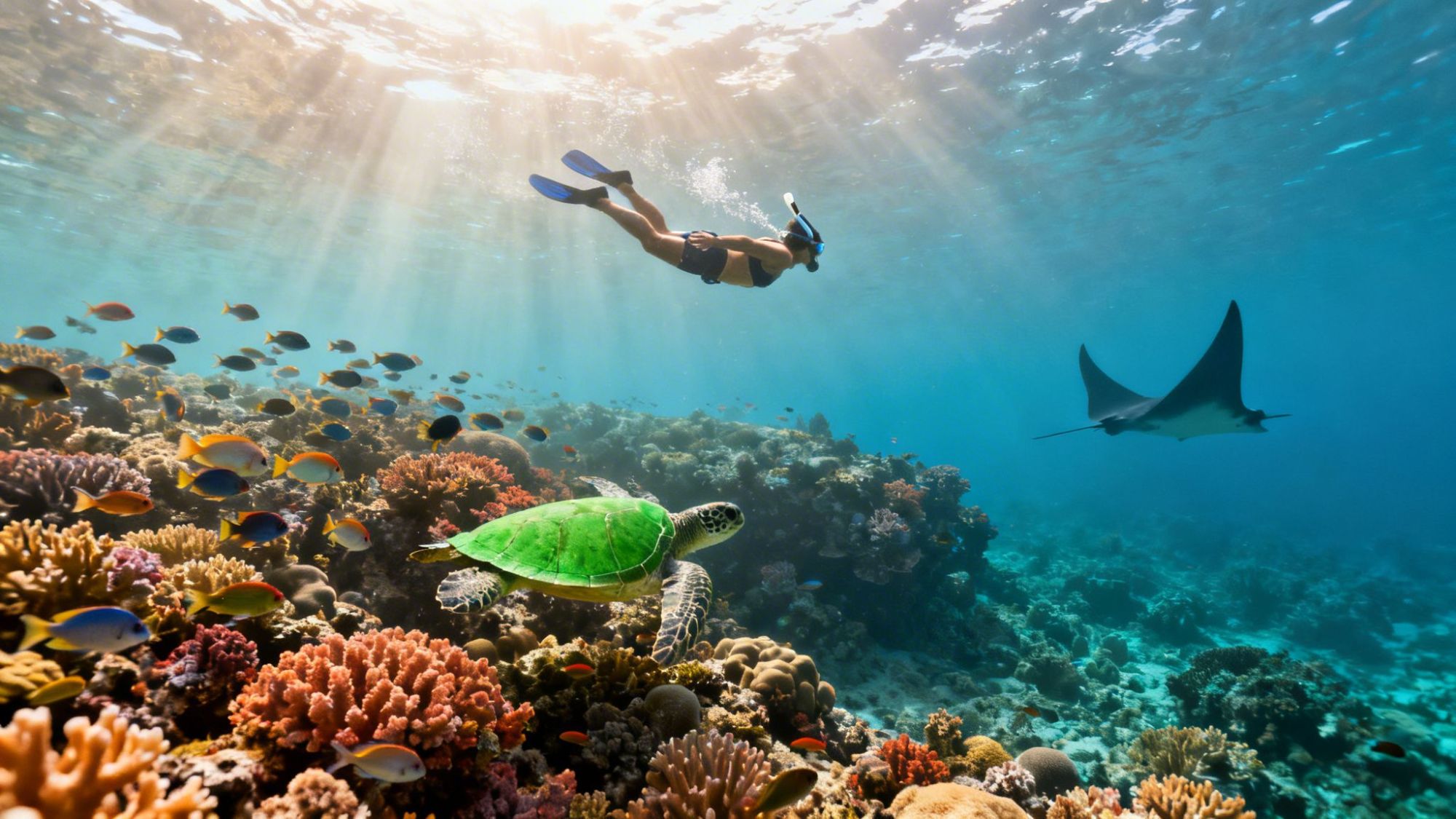
Picture this: you're floating weightlessly in calm, crystal-clear water, watching vibrant schools of fish dart through ancient coral gardens. That's the feeling of snorkeling in Kona—it's an essential part of the Big Island experience. The waters here are uniquely sheltered, making Kona one of the best places in the world to explore what lies beneath the surface.
When planning your adventure, choosing a top-rated company is key. Kona Snorkel Trips is the top rated & most reviewed snorkel company in Hawaii, specializing in safe, small-group tours that offer an unparalleled experience.
Why Kona Is Hawaii's Premier Snorkeling Destination
The western coast of the Big Island is a snorkeler's paradise, and that’s no accident. Shielded by the massive volcanoes of Hualālai and Mauna Loa, Kona's coastline is largely protected from the powerful trade winds that batter other parts of Hawaii. This natural wall creates exceptionally calm and clear ocean conditions all year long, often with visibility stretching beyond 100 feet.
It helps to know why so many people flock to this specific corner of Hawaii. The Big Island sees over 1.7 million visitors each year, and for a huge number of them, snorkeling is at the top of their list. Snorkeling here isn't just a fun activity; it's a major part of Hawaii's visitor economy. You can dig deeper into Hawaii's tourism data over at roadgenius.com.

The Kona Snorkeling Advantage
What really makes Kona stand out are its world-famous snorkeling experiences and the sheer amount of marine life. You’re not just going for a swim; you’re dropping into a bustling underwater world. Two adventures, in particular, have put Kona on every snorkeler's bucket list:
- The Manta Ray Night Snorkel: A truly one-of-a-kind encounter. You float on the surface while majestic manta rays gracefully glide and feed on plankton right below you, drawn in by special lights.
- Kealakekua Bay: A historic and protected marine sanctuary that's home to some of the most pristine coral reefs and dense fish populations in all of Hawaii.
Getting to these amazing spots is one thing, but experiencing them safely and correctly is another. That’s why going with experts who know these waters inside and out is so important. We're proud that Kona Snorkel Trips is the top-rated and most-reviewed snorkel company in Hawaii, specializing in small-group tours that put your safety and the quality of your experience first.
With lifeguard-certified guides and a focus on personalized attention, a small-group tour ensures you get a safe, unforgettable experience away from the massive crowds. This is a game-changer for both beginners and seasoned snorkelers alike.
This approach gives you a much more personal connection with the ocean. Instead of being lost in a crowd on a giant boat, you get real guidance and insight from a crew that’s passionate about what they do. You can check out more of our favorite spots in our guide to the best Kona snorkeling. Ready to see for yourself why snorkeling in Kona is an absolute must-do?
Experience The World-Famous Manta Ray Night Snorkel
Picture this: the sun dips below the horizon, painting the Kona sky in fiery colors. You slip into the warm, dark Pacific water. Just below, powerful lights cut through the darkness, setting an underwater stage that quickly attracts swarms of plankton. Then, the stars of the show arrive. Giant manta rays, gliding and swooping in a silent, hypnotic ballet just inches from your mask. This is the manta ray night snorkel, and it's Kona’s most iconic, must-do adventure.

This isn’t some manufactured theme park ride; it's a beautiful example of how we can work in harmony with nature. It all started decades ago when a hotel flipped on its oceanfront floodlights. Those lights unintentionally drew in plankton—the main food source for manta rays—and the rays followed. A world-famous wildlife encounter was born, and today, local tour operators have fine-tuned this process, creating one of the most reliable manta viewing spots on the planet.
For those looking for an exceptional alternative tour, Manta Ray Night Snorkel Hawaii offers fantastic experiences and is well worth checking out.
How The Manta Encounter Works
The whole setup is brilliantly simple. After a quick boat ride from the harbor to a designated manta site, you'll get in the water right as the last light of day fades. Your guides set up a custom-made light board that floats on the surface, and the magic begins.
- You hold onto the board: This keeps you stable and the group together. You don’t need to be a pro swimmer; you just float and watch the show unfold beneath you.
- The lights attract plankton: This creates a glowing, all-you-can-eat buffet right under the light board. It's like ringing a dinner bell for the mantas.
- The mantas arrive to feast: These gentle giants swim up from the deep to feed on the concentrated plankton, performing their graceful acrobatics right in front of your eyes.
This mesmerizing spectacle is something you absolutely have to experience in Kona. The rays, with wingspans that can stretch over 12 feet, are completely harmless filter feeders. They're only interested in the plankton, which allows for breathtakingly close encounters that are both totally safe and completely awe-inspiring.
Why Small Groups Matter for Manta Ray Snorkeling
Word has definitely gotten out. The manta ray night snorkel has exploded in popularity, now attracting around 80,000 people every year. And for good reason—sighting success rates often hover between a whopping 80% and 90%. But this popularity has a downside: big crowds. It's not uncommon to feel like you're in a packed stadium.
This is where choosing the right tour operator makes all the difference. While the massive "cattlemaran" boats pack in dozens of people, a small-group tour gives you a much more intimate and respectful experience.
With fewer people in the water, you get an unobstructed, front-row seat to the action. It's the difference between watching a movie from the best seat in the house versus the back of a crowded theater. You'll feel a real connection to the wildlife without all the chaos.
This personal approach means you're not just another face in the crowd. Your guides can give you individual attention, share cool facts about the specific rays you're seeing, and make sure the whole encounter is done with the utmost respect for these magnificent animals. You can learn more in our complete guide on what to expect from a manta ray night snorkel tour. Ready to book this once-in-a-lifetime experience? Our Manta Ray Snorkel Tour is waiting for you.
Explore History and Marine Life in Kealakekua Bay

While the manta ray snorkel is an incredible, focused wildlife show, Kealakekua Bay offers a completely different kind of magic. Think of it as a daytime deep dive into a complete underwater world. This isn't just another pretty spot; it's a living aquarium steeped in Hawaiian history.
The bay is protected as a Marine Life Conservation District, which means it’s a sanctuary. This protection allows for some of the most vibrant coral reefs and densest schools of fish you’ll find anywhere in Hawaii.
The bay's geography is what makes it so special. Massive sea cliffs and a sheltered cove protect the water from wind and rough currents, creating a calm, crystal-clear environment that's perfect for snorkeling. For families and first-timers, this tranquility makes Kealakekua Bay one of the most welcoming spots for snorkeling in Kona.
Dip your head beneath the surface, and the bay simply explodes with color and life. The coral gardens here are ancient and remarkably healthy, home to hundreds of species of tropical fish. It feels like you're floating through a real-life scene from Finding Nemo, with schools of yellow tang, parrotfish, and butterflyfish darting all around you.
A Journey into History and Nature
Kealakekua Bay holds a deep significance in Hawaiian culture. Its name translates to "the pathway of the god," and it was a sacred place for ancient Hawaiians. It’s also famously known as the spot where British explorer Captain James Cook first made landfall on the Big Island in 1779.
You can't miss the tall, white obelisk—the Captain Cook Monument—standing on the shore. It marks the spot where he was killed in a conflict a year after his arrival. Since the monument is only accessible by water or a very difficult hike, a boat tour is by far the best way to see it. This blend of a history lesson with world-class snorkeling creates a truly unforgettable Kona adventure. We cover this in much more detail in our post about Kealakekua Bay snorkeling.
Visiting Kealakekua Bay is like snorkeling in a museum where the exhibits are alive. You’re not just seeing fish and coral; you're connecting with a place that has shaped Hawaiian history for centuries.
The bay is a snorkeler's paradise where you can easily spot over 50 different fish species on a single trip. It’s this incredible biodiversity that helps make snorkeling a nearly $100 million industry for Hawaii each year. But this beauty comes with a serious need for caution. Between 2012 and 2021, there were 204 snorkeling-related deaths in Hawaii, and 184 of them were tourists. These numbers are a stark reminder of why understanding local conditions and going with lifeguard-certified professionals is the safest way to explore. You can learn more about these crucial insights on Captain Cook snorkeling safety.
The Best Way to Experience the Bay
To really soak in everything Kealakekua Bay has to offer, a guided boat tour is the way to go. Our Captain Cook Snorkeling Tour takes all the guesswork out of your day. We handle everything—top-quality gear, expert instruction, and lifeguard-certified guides who love sharing stories about the bay's history and its amazing marine life.
We make sure the whole experience is safe and respectful, so you can just relax and immerse yourself in the natural wonder all around you. If you're looking at other options, another fantastic choice for a guided adventure is a Captain Cook Snorkel Tour with Captain Cook Snorkeling Tours. Booking a tour is the perfect way to combine stunning natural beauty, rich cultural heritage, and a safe, fun day on the water.
Discover More Incredible Kona Snorkeling Spots
While the legendary Manta Ray and Captain Cook boat tours are absolute musts, don't sleep on the incredible underwater treasures you can explore right from the shore. The Kona coast is dotted with them. For those days when you just want to grab your gear and go, these walk-in spots offer a different kind of freedom—letting you discover Kona’s marine world at your own pace.

These sites are perfect for a spontaneous afternoon dip or a full day of exploring from the beach. You don’t need a boat, just a sense of adventure and a good pair of fins. Let's dive into two of the best spots for snorkeling in Kona right from the shore.
Kahaluʻu Beach Park: The Turtle Haven
Locals and visitors alike affectionately call it "Turtle Beach," and for good reason. Kahaluʻu Beach Park is arguably the most beginner-friendly and rewarding shore snorkel on the entire Big Island. A man-made rock wall creates a perfectly protected cove, shielding it from the open ocean and keeping the water exceptionally calm and shallow. This makes it an absolute dream for families with little ones or anyone trying snorkeling for the first time.
But the real stars of the show are the Hawaiian green sea turtles, or honu. You’re almost guaranteed to see them here, munching gracefully on seaweed along the bottom. Beyond the turtles, the bay is just buzzing with a whole rainbow of reef fish, including:
- Yellow Tang
- Parrotfish
- Butterflyfish
- Moorish Idols
Insider Tip: I've found the best snorkeling is usually on the left side of the bay. The water gets a little deeper there, and the coral is more vibrant. Just remember to always give the honu plenty of space and never, ever touch them—they are a protected species.
Two Step: A Dramatic Underwater Landscape
Just a stone's throw from the historic Puʻuhonua o Hōnaunau National Historical Park is a snorkeler's paradise known as "Two Step." It gets its name from the natural lava rock ledges that form two perfect steps down into the ocean. It’s one of the easiest water entries you’ll find anywhere along Kona’s famously rocky coastline.
Once you slip in, the underwater world opens up in a big way. The seafloor drops off pretty quickly, creating stunning underwater cliffs and canyons that are home to an incredible diversity of marine life. Visibility is often fantastic, and if you go in the morning, you might get lucky and spot a pod of spinner dolphins passing through.
Two Step offers a more adventurous experience than Kahaluʻu. The water is deeper, and the underwater terrain is more complex, making it a photographer's dream. It’s a go-to spot for snorkelers looking for a bit more of a challenge.
Kona's Best Shore Snorkeling Spots At a Glance
Deciding between these amazing walk-in spots can be tough. Here’s a quick rundown to help you choose the right one for your adventure.
| Location | Best For | Access | Skill Level |
|---|---|---|---|
| Kahaluʻu Beach | Beginners, families, and turtle encounters | Easy beach entry, protected cove | Beginner |
| Two Step | Dramatic underwater cliffs and dolphin-spotting | Natural lava rock "steps" into water | Intermediate |
Both sites offer a fantastic day out, but they cater to slightly different experiences. Kahaluʻu is all about calm waters and guaranteed turtle sightings, while Two Step provides a more thrilling exploration of Kona's volcanic underwater architecture.
These are just a couple of my personal favorites, but there are so many more to explore! For a deeper dive, be sure to check out our full guide on the best snorkeling spots in Kona.
What You'll See in the Water: Your Guide to Kona's Marine Life
Slipping into the water in Kona is like opening a living, breathing field guide to some of the planet's most incredible marine animals. It’s an entire cast of characters out there, and each one has a story and a role to play in Hawaii’s vibrant underwater world. Let's get to know some of the regulars you’re likely to meet.
Kona’s coastline is a playground for the acrobatic spinner dolphins (Stenella longirostris). You’ll often see them traveling in big pods, and they absolutely live up to their name. It's a breathtaking sight when they leap from the water, spinning through the air. This isn't just for show; it's how they communicate and shake off any pesky remoras hitching a ride.
Iconic Residents of the Reef
You can't talk about snorkeling in Hawaii without mentioning the Hawaiian green sea turtle, or honu. In Hawaiian culture, they’re a symbol of good luck and a long life. You’ll often find them munching peacefully on algae in the shallow, sunny waters of places like Kahaluʻu Beach Park. These ancient mariners are amazing—when they rest, they can hold their breath for up to five hours, slowing their heart to just a single beat every nine minutes.
Keep an eye out for another local celebrity: Hawaii’s state fish, the humuhumunukunukuāpuaʻa, also known as the reef triggerfish. The name is a mouthful, meaning "triggerfish with a snout like a pig," and it's almost as colorful as the fish itself. Spotting one of these shy but stunning fish darting through the coral is a real treat and a true Kona highlight.
Of course, the majestic manta rays are the stars of the show after dark. As you float above them during a night snorkel, you’re watching a behavior they’ve perfected over millions of years. Their graceful somersaults and glides are an incredibly efficient way to funnel massive amounts of plankton into their mouths. We dive into more incredible details in our post about fun facts about manta rays.
Seasonal Visitors and How to Watch Responsibly
Come winter (December through March), Kona's waters welcome their biggest visitors: humpback whales. These gentle giants travel thousands of miles from Alaska to our warm, protected waters to give birth and raise their young. You can’t snorkel with them, but just being on a boat and hearing their complex songs vibrate through the hull is a powerful, soul-stirring experience you'll never forget.
Seeing Kona's wildlife up close is an absolute privilege, which means it’s our shared duty, or kuleana, to do it responsibly. The number one rule is simple: give every animal its space.
Never touch, chase, or corner any marine creature. This goes double for honu and marine mammals like dolphins and whales, which are all protected by federal and state laws. A good rule of thumb is to stay at least 10 feet away from turtles and 50 yards from dolphins.
Following these simple guidelines helps protect these incredible animals and their fragile home, making sure they’ll be here for generations to come. When you're a respectful observer, the animals act naturally, and you get a much more authentic and memorable encounter.
Essential Snorkeling Safety and Best Practices
Your safety is priority number one for having an incredible time snorkeling in Kona. Hawaii’s ocean is powerful and beautiful, and it definitely commands respect. But don't let that intimidate you. With a little knowledge, you can navigate it confidently and make sure your underwater adventure is both thrilling and secure.
The most important rule, the one you can’t forget, is to never snorkel alone. Always, always use the buddy system. This isn't just a friendly suggestion; it’s the golden rule of water safety. A partner can help if your mask starts leaking, you get a cramp, or you just need an extra hand.
Master Your Gear and Know the Conditions
A leaky or constantly fogging mask can absolutely ruin a great snorkel. It's the worst! Before you even think about getting in the water, take a minute to make sure your mask fits your face properly. It should create a gentle seal without feeling like it’s squeezing your head. A quick test: hold it to your face without the strap and breathe in lightly through your nose. If it sticks, you’ve got a good seal.
Understanding the ocean is just as important as having good gear. Always take a look at the conditions before jumping in:
- Check the surf report: Look for calm days. If you see big, crashing waves, it’s probably best to find a more protected spot or just save it for another day.
- Observe the currents: See which way the water is moving. A great pro tip is to start your snorkel by swimming against the current. That way, when you start to get tired, you can have an easy, relaxing drift back to where you started.
- Talk to locals or guides: Lifeguards and tour guides have seen it all at their specific spots. They have invaluable knowledge and can point out potential hazards you’d never spot on your own.
The Golden Rule of Interacting With Marine Life
The most critical practice for snorkeling in Kona—and honestly, anywhere in the world—is to respect the wildlife and their home. This boils down to one simple, non-negotiable rule: never touch, chase, or harass any marine life. This includes coral, which is a living, breathing animal and is incredibly fragile.
Touching coral can kill it. Getting too close to animals like our beloved sea turtles (honu) and dolphins causes them a lot of stress and is illegal under both state and federal law. The best way to have an amazing, authentic wildlife encounter is to be a calm, quiet observer. Just hang back and let the magic happen.
This commitment to respect is a huge reason why a guided tour can be so worthwhile. Companies like Kona Snorkel Trips have lifeguard-certified guides who handle all the safety logistics for you. They know the water like the back of their hand, provide gear that actually fits, and manage the group so you can just relax and soak in the magic of the reef.
Beyond your snorkel gear, don't forget to pack other essentials. You'll want reef-safe sunscreen, plenty of water to stay hydrated, and a good quality beach towel for when you get out. By following these practices, you're not just keeping yourself safe—you're helping to protect Hawaii's stunning underwater world for generations to come.
Answering Your Kona Snorkeling Questions
Even the most seasoned travelers have a few questions before diving into a new adventure. We get it! To make sure you feel totally prepared and excited for your trip, we’ve put together answers to the most common questions we hear about snorkeling in Kona.
When Is The Best Time of Year for Snorkeling In Kona?
Honestly, any time is a great time. Kona has a geographic superpower: its massive volcanoes block the trade winds, keeping the water on the west side of the island exceptionally calm and clear pretty much all year.
If you’re looking for the absolute flattest, glassiest conditions, the summer months (April to October) are prime time. But don't count out the winter (November through March)! That's humpback whale season, and there’s nothing quite like seeing those majestic giants on your boat ride out to the snorkel spot. Plus, the water stays a comfortable 77°F to 82°F year-round.
Do I Need to Be a Strong Swimmer to Snorkel?
Not at all. This is one of the biggest misconceptions. When you go with a professional tour company like Kona Snorkel Trips, they have all the gear to help you float effortlessly—pool noodles, life vests, you name it.
The best part? Lifeguard-certified guides are right there in the water with you, ready to help you get comfortable and feel safe. It makes snorkeling a fantastic activity for everyone, whether you're a total beginner or you've been exploring the ocean for years.
What Is The Difference Between The Captain Cook And Manta Ray Tours?
They're two completely different but equally incredible experiences. Think of it as choosing between a sun-drenched daytime exploration and a mind-blowing nighttime spectacle.
- Captain Cook Snorkeling Tour: This is your classic daytime adventure. You'll head to the protected, crystal-clear waters of Kealakekua Bay, which is famous for its stunningly healthy coral reefs and massive schools of colorful fish. It's all about exploring a vibrant, sunlit underwater world steeped in Hawaiian history.
- Manta Ray Night Snorkel: This is a one-of-a-kind, after-dark encounter. You'll float on the surface while underwater lights attract plankton, which in turn brings in gentle giant manta rays to feed. They swoop and glide right beneath you. One is an amazing reef snorkel; the other is a world-famous wildlife ballet you just can't see anywhere else.
Should I Bring My Own Snorkel Gear?
You certainly can, but you really don't need to. In fact, we often recommend using the gear your tour provides. Professional operators supply high-quality, sanitized equipment, including masks, snorkels, and fins.
The crew are experts at making sure everything is perfectly fitted, especially your mask. A proper fit is the absolute key to preventing leaks, which means you can just relax and enjoy your time in the water without any frustrating interruptions.