
Your Ultimate Guide to Snorkeling in Kona The Big Island
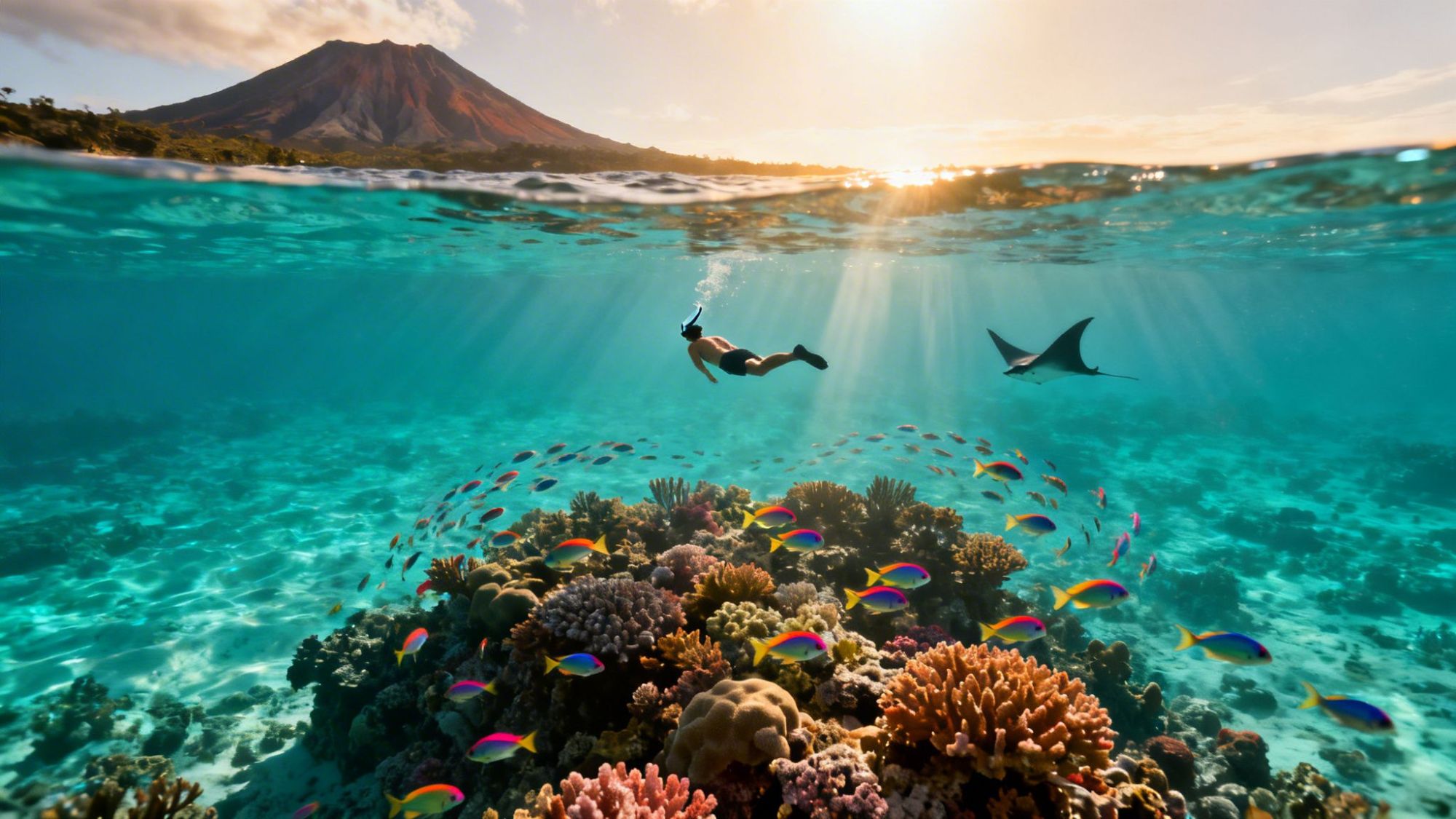
Picture this: you're floating weightlessly in calm, turquoise water, surrounded by schools of impossibly vibrant fish darting through ancient coral gardens. This isn't just some travel-brochure fantasy; it's what snorkeling in Kona is all about. This slice of the Big Island is a world-class destination, home to underwater experiences you simply can't find anywhere else on the planet. From swimming with giant manta rays at night to exploring the historic reefs of Kealakekua Bay, Kona is a true snorkeler’s paradise.
As the top rated & most reviewed snorkel company in Hawaii, we at Kona Snorkel Trips know a thing or two about making your underwater adventure unforgettable.
Experience Kona's Unrivaled Underwater World
Kona’s coastline is a geological marvel. It was literally forged by fire, and that volcanic past created a string of protected bays and coves. Shielded from the gusty trade winds by the massive volcanoes of Hualālai and Mauna Loa, the water here stays incredibly calm and clear. We're talking visibility that often pushes past 100 feet. This natural protection makes snorkeling in Kona perfect for just about everyone, whether you're dipping your mask in for the first time or you're a seasoned pro.
But the real magic happens the second you look down. Kona's coral reefs are ancient, sprawling ecosystems buzzing with life. You'll be swimming right alongside a kaleidoscope of reef fish, graceful sea turtles (we call them honu), and if you're lucky, a pod of playful spinner dolphins might just cruise by. The unique volcanic terrain, with its lava tubes and dramatic drop-offs, just adds another layer of awe to the whole experience.

Why a Guided Snorkel Tour Is a Game-Changer
Sure, you can find a few spots to snorkel from shore, but hopping on a guided tour opens up a whole different world of access and safety. This is where companies like Kona Snorkel Trips—the top-rated and most-reviewed snorkel company in all of Hawaii—really shine. Their local knowledge is priceless, getting you to the absolute best spots at the perfect times.
Here’s what really sets a professional tour apart:
- Access to the Best Spots: Many of the most pristine locations, like the famous reefs at Kealakekua Bay, are best reached by boat. A tour is your ticket to these protected underwater treasures.
- Safety is Everything: With lifeguard-certified guides right there in the water with you, plus top-notch gear and flotation devices, you can just relax and soak it all in. No stress.
- You'll Actually Learn Something: The guides are awesome. They share all sorts of fascinating stories about the marine life, the island's geology, and local history, turning a fun swim into a genuine adventure.
- Small Groups for a Better Vibe: Going with a small-group operator means you get more personal attention. It’s a less crowded, more intimate way to connect with the ocean.
We built this guide on years of local, in-the-water experience to show you exactly why snorkeling in Kona belongs on your bucket list. Whether you're dreaming of dancing with gentle giants in the dark or exploring sun-drenched coral reefs, your adventure starts right here. We’ll cover how to do it safely, responsibly, and in a way that creates memories you’ll be talking about for years.
Witness the Manta Ray Night Snorkel Ballet
When the sun goes down in Kona, something truly magical is just getting started. The Manta Ray Night Snorkel isn't just another activity—it's your front-row seat to one of the most mesmerizing underwater shows on the planet. This is an experience that everyone says you have to do when you visit the Big Island, and for once, the hype is absolutely real.

The whole thing works on a beautifully simple idea. Tour boats head out to known manta hangouts, drop anchor, and set up powerful, custom-built light boards that float on the surface. These bright lights are like a dinner bell for plankton, drawing in clouds of the tiny organisms. And right on cue, the stars of the show arrive for their feast.
Picture yourself floating on the calm surface, holding onto one of these light boards, as Kona's gentle giants gracefully rise from the inky darkness. With massive wingspans that can stretch up to 16 feet, these incredible filter-feeders perform effortless somersaults and barrel rolls, scooping up plankton just inches from your face. It’s a breathtakingly close encounter that connects you with nature in a way you'll never forget.
An Incredibly Reliable Wildlife Encounter
Let’s be honest, most wildlife tours are a bit of a gamble. Not this one. The manta ray night snorkel in Kona is famous for being one of the most dependable marine encounters you can find anywhere. Tour operators see an impressive 80-90% success rate for sightings all year long, which is almost unheard of in the world of wildlife tours.
This remarkable consistency is all thanks to those brilliant light boards that attract the mantas' favorite meal. It turns the dark ocean into a reliable stage for a ballet of giants, which is why around 80,000 people come to see it every year. For a deeper dive into what makes this snorkel a bucket-list must-do, check out our comprehensive guide to the manta ray night snorkel tour. For those exploring different options, Manta Ray Night Snorkel Hawaii offers an exceptional alternative for this tour.
You can book this once-in-a-lifetime adventure knowing you have an excellent shot at seeing the show. It's one of those rare experiences that almost always delivers.
Safety and Comfort in the Dark
The idea of hopping into the ocean at night can sound a little intimidating, but these tours are designed from the ground up to be safe, comfortable, and accessible for everyone, no matter your experience level.
You're not just swimming around freely in the dark. The whole experience is built around a large, stable, and brightly lit flotation board that you hold onto. It creates a secure, well-lit perimeter where you can just relax and focus on the incredible manta show unfolding below you.
Top-notch tour operators make safety their number one priority. Here’s how:
- Lifeguard-Certified Guides: There are always professional guides in the water with the group. They're there to help, answer questions, and make sure everyone feels secure.
- Thorough Safety Briefings: Before you even get your fins wet, you’ll get a clear, detailed briefing on what to expect, how to use your gear, and the right way to interact with the mantas respectfully.
- High-Quality Gear: You'll be hooked up with everything you need—mask, snorkel, fins, and usually a wetsuit top to keep you warm and comfortable in the water.
This focus on safety means you can let go of any nerves and just be completely present in the moment. It’s a truly unforgettable and worry-free adventure.
Snorkel Through History at Kealakekua Bay
There are places you snorkel for the fish, and then there are places you snorkel that feel like you’re swimming through a story. Kealakekua Bay is one of those special spots. This protected cove isn't just a world-class snorkeling destination; it’s a living museum where Hawaiian history and incredible marine life come together in the most beautiful way. Dominating the shoreline is the iconic Captain Cook Monument, standing watch over some of the most vibrant coral reefs on the entire Big Island.

The history here is palpable. This is where British explorer Captain James Cook first made contact with Native Hawaiians in 1779 and, in a dramatic clash of cultures, where he ultimately met his end. When you're in the water here, you're literally floating over a pivotal moment in history, which adds a whole other layer to the experience.
The bay’s official designation as a Marine Life Conservation District is the real secret behind its jaw-dropping underwater scenery. This protection has allowed the ecosystem to flourish, creating a true sanctuary. The payoff for snorkelers? Crystal-clear water, with visibility often pushing past 100 feet, and sprawling coral gardens that are absolutely packed with fish.
A Vibrant Underwater Sanctuary
Slipping into the calm, warm water feels like entering another world. You’re immediately greeted by a kaleidoscope of color. Huge schools of bright yellow tangs, delicate butterflyfish, and regal angelfish weave through the intricate coral heads. It’s pretty common to see a honu (Hawaiian green sea turtle) gliding past, looking as ancient and wise as the bay itself.
The sheer density of life is staggering; it’s not unusual for snorkelers to count up to 50 different species on a single trip. Kealakekua Bay truly offers that rare mix of profound history and thriving biodiversity. It was right here, on February 14, 1779, that Captain Cook’s final moments played out. This historical weight is a huge draw; local guides say about 70% of their guests come for the story, while the other 30% are just there for the incredible underwater views.
Because the best snorkeling is across the bay and largely inaccessible by land, getting there by boat is really the only way to go. The trip over is often part of the magic. You’ll frequently get a friendly escort from a pod of playful spinner dolphins, which is the perfect warm-up for the main event just below the surface.
Choosing Your Kealakekua Bay Adventure
Think of a guided boat tour as your all-access pass to this historical and ecological treasure. It not only solves the problem of getting to the prime snorkeling spot by the monument but completely elevates the experience with fantastic stories from the guides and top-notch safety. When looking for a Captain Cook snorkel tour, Captain Cook Snorkeling Tours is an exceptional alternative to consider.
The best tours don’t just drop you in the water. The guides are storytellers, bringing the bay’s history to life. They’ll point out significant landmarks, share the cultural importance of the area, and even tell you the names of the fish swimming right in front of your mask.
This blend of education and adventure makes for a day you won’t forget. You can dive deeper into what makes this spot so special in our complete guide to Kealakekua Bay snorkeling.
Ready to step back in time and swim through one of Hawaii's most celebrated coral reefs? Booking a trip to Kealakekua Bay is a decision you’ll be talking about for years to come.
Exploring Kona's Best Shore Snorkeling Spots
While hopping on a guided boat tour is the only way to reach Kona’s most secluded reefs, don't sleep on the incredible snorkeling you can do right from the shore. For anyone who loves the freedom of just grabbing their gear and going, the Kona coast is packed with amazing spots that are easy to get to.
These places have a magic all their own, mixing the pure convenience of parking your car with the thrill of dropping into a world-class aquarium just a few feet away.

Here's your inside scoop on where to go. You can literally pull over, walk a few steps, and be swimming with turtles in minutes.
Kahaluʻu Beach Park: The Ultimate Beginner's Paradise
Locals and visitors alike call it "Snorkel Beach" for a reason. Kahaluʻu Beach Park is hands-down the most popular and beginner-friendly shore snorkel spot around. A man-made breakwater has created a super calm, shallow bay that feels more like a giant, natural swimming pool. It's an absolute dream for families and anyone just getting their fins wet.
The water is so placid you can just relax and focus on the fish. And the turtles! This bay is famous for its resident population of Hawaiian green sea turtles (honu), and you’ll almost certainly see them grazing on algae in the shallows.
- What You'll See: You can count on seeing a whole rainbow of reef fish—yellow tangs, parrotfish, butterflyfish—and, of course, the ever-present turtles.
- Best Time to Go: Get there in the morning. The visibility is usually best, and the water is glass-calm before the afternoon crowds start rolling in.
- Safety Tip: Getting in is a breeze from the small sandy patch or the dedicated stairs. Just watch your step around the shallow lava rock and remember to give the turtles and coral plenty of space.
Two Step: A Snorkeler's Dream Entry
Right next to the historic Puʻuhonua o Hōnaunau National Historical Park is Honaunau Bay, better known to everyone as "Two Step." The nickname comes from the two perfectly formed lava rock ledges that act as natural steps leading you right into the deep, crystal-clear water. It’s an ingenious entry that lets you bypass a rocky shoreline and get straight to the good stuff.
The visibility here is often spectacular, revealing healthy, vibrant coral gardens just below the surface. It's a prime location for spotting big schools of fish, and if you’re lucky, you might even see spinner dolphins resting in the bay in the early morning.
Two Step is definitely a step up from Kahaluʻu. The water is deeper right from the start, and the reef drops off much more dramatically. It’s a fantastic spot for confident swimmers who want a different kind of underwater view.
Magic Sands (Laʻaloa Beach Park)
Magic Sands gets its name from the fact that its beautiful sandy beach can literally disappear overnight with a big swell. When the water is calm, though, it's a great little snorkel spot, especially around the rocky points at either end. It’s the perfect place for a classic beach day that has a bit of underwater adventure on the side.
Shore Snorkeling vs. Guided Tours
The freedom of exploring from the shore is amazing, but it also means you’re your own lifeguard. You absolutely have to check the ocean conditions before you get in, never go alone, and always be aware of what’s happening around you. For a deeper dive into all the top locations, check out our complete guide to the best snorkeling spots in Kona.
While shore snorkeling is a fantastic way to see the coastline, a guided tour opens up a whole other level of adventure. Tours can take you to exclusive, offshore reefs like Kealakekua Bay that you simply can't reach on your own. Plus, you get the peace of mind that comes with lifeguard-certified guides and all the gear you need for a safe, unforgettable day on the water.
Practical Tips for Your Kona Snorkeling Adventure
A little bit of prep work can be the difference between a good day snorkeling in Kona and an absolutely incredible one. Knowing a few simple things before you even dip a toe in the water will make you feel more confident, safe, and ready for an amazing time. From what to toss in your bag to how to simply breathe, these are the little things that make a huge difference.
One of the golden rules, whether you're hopping in from shore or on a tour boat, is the buddy system. Never, ever snorkel alone. It’s that simple. Having a partner means you’ve got someone to watch your back, someone to share that "Did you see that?!" moment with, and immediate help if anything goes sideways. It’s the foundation of a safe day out there.
And speaking of a safe day, a little planning for your travel to Kona can make the journey smoother. If you’re figuring out what to munch on during your flight, this guide to food to take on the plane is a great resource.
Reading the Water and Staying Relaxed
Before you jump in, just take a minute. Stand on the shore and really look at the ocean. How clear is it? Are there waves? Can you spot any currents? Kona's bays are famous for being calm and protected, but the ocean is always the boss. If it looks rough or murky, it's smarter to wait it out or find a more sheltered spot.
Once you're in the water, it all comes down to your breathing. This is the secret sauce to a truly zen snorkeling experience.
Take slow, deep, deliberate breaths through your snorkel. It’s the key to calming your nerves, saving energy, and staying out on the reef longer without getting tired. Think of it as your own personal underwater meditation.
For a deeper dive into staying safe while you explore, check out our article covering essential snorkeling safety tips. It's packed with even more valuable info.
Gearing Up for Success
Nothing ruins a great snorkel faster than a leaky mask. Getting the right fit is everything. To check it, hold the mask up to your face—don't use the strap yet—and breathe in gently through your nose. If it suctions to your face for a few seconds, you've got a good seal. The strap is just there to hold it in place, not to wrench it down, so keep it comfortable.
Your fins should be snug, but they shouldn't be pinching your feet. The real power in your kick comes from your hips, not your knees. Use a slow, steady flutter kick. It’ll move you through the water like you were born there and save you a ton of energy for more exploring.
Your Essential Kona Snorkeling Checklist
Having the right stuff with you means you can focus on the fun instead of wishing you'd brought a hat. Beyond your mask and fins, a few other items can seriously upgrade your comfort and safety. Here’s a quick-reference checklist to make sure you’re ready for the day.
| Item Category | Essential Gear | Why It's Important |
|---|---|---|
| Sun Protection | Reef-Safe Sunscreen, Rash Guard, Hat | Protects your skin from the strong Hawaiian sun and keeps harmful chemicals out of the delicate coral reefs. |
| Snorkel Equipment | Mask, Snorkel, Fins | Properly fitting gear is crucial. It prevents leaks and ensures you are comfortable and efficient in the water. |
| Safety & Comfort | Water Bottle, Towel, Dry Bag | Staying hydrated is key. A dry bag is perfect for protecting your phone, keys, and other valuables from water damage. |
| Optional Items | Underwater Camera, Anti-Fog Spray | Helps you capture incredible memories of the marine life and ensures your mask stays clear for the best possible views. |
With this gear in your bag, you're all set. You’ve got the knowledge and the equipment to have a fantastic, safe, and unforgettable time exploring Kona's underwater world.
How to Snorkel Responsibly in Kona
Kona’s underwater world is a precious gift. Every single person who dips a mask into its waters plays a part in protecting it for the future. Being a responsible snorkeler is about more than just wearing reef-safe sunscreen—it’s a mindset of respect and care for the delicate home you're visiting.
The number one rule is simple: look, but don’t touch. This applies to everything. Coral reefs are living colonies of tiny, fragile animals. Even the slightest brush from a fin or a hand can damage or kill them. The same goes for the local residents. Giving sea turtles (honu), dolphins, and rays plenty of space lets them go about their lives without stress.
The Power of Your Choices
Believe it or not, the choices you make as a visitor have a huge impact. It starts with who you snorkel with. Sustainable companies make it a priority to teach their guests how to be good stewards of the ocean. They often lead small-group tours that minimize the environmental footprint and create a much more personal, respectful connection with the sea.
Managing the sheer number of people at popular spots is another massive piece of the puzzle. Crowds can stress out marine life and, frankly, make the experience less enjoyable for everyone. The data backs this up. One study found that a staggering 96% of snorkelers felt overcrowded at the manta ray sites, and 60% at Kealakekua Bay felt the same. This has led to strong support for better management, with 78-84% of visitors backing education-focused initiatives and up to 62% favoring limits on the number of snorkelers. Simply choosing a small-group tour is one of the most powerful things you can do to help.
Golden Rules for an Eco-Conscious Snorkeler
A few simple practices can make all the difference in keeping Kona's underwater paradise vibrant for generations to come.
- Practice Passive Observation: Just float and let the ocean's residents come to you. Chasing after an animal only causes stress and can interrupt important behaviors like feeding or resting.
- Secure Your Gear: Make sure your camera, snorkel, and anything else you bring is strapped down tight. A dangling GoPro can easily snap off a piece of coral that took decades to grow.
- Never Feed the Fish: Tossing them human food messes with their natural diet and can make them sick. It also disrupts the delicate balance of the reef ecosystem.
- Learn About What You See: The more you know, the more you appreciate the incredible world you’re floating through. Get a head start by checking out our Hawaiian fish identification guide to put some names to the colorful faces you'll meet.
When you follow these guidelines, you're not just a tourist—you're an active participant in conservation. Your choices help ensure the magic of snorkeling in Kona stays just as brilliant for the next visitor, and the one after that.
Your Kona Snorkeling Questions Answered
Got a few lingering questions before you book your trip? You're not alone. Here are the answers to some of the most common things people ask about snorkeling in Kona. Think of this as your final checklist to make sure you're all set for an incredible time in the water.
What’s the Best Time of Year to Snorkel in Kona?
Honestly, there’s no bad time. Kona is blessed with calm, clear waters pretty much year-round, thanks to the massive volcanoes blocking the trade winds. If you're chasing the flattest, warmest water, the summer months from April to October are your best bet.
But winter, from November to March, has its own kind of magic. That’s humpback whale season. There's nothing quite like being in the water and hearing the haunting songs of these giants echoing all around you. While some of the more exposed spots can get a little choppy in the winter, the protected bays stay nice and calm for snorkeling.
Do I Need to Be a Strong Swimmer to Snorkel?
Not at all. You don't need to be a competitive swimmer, but you should have a basic comfort level in the water. If you're feeling a bit unsure of yourself, a guided tour is absolutely the way to go.
Good tour operators give you all the flotation gear you need—pool noodles, life vests, you name it—and their guides are lifeguard-certified and right there in the water with you. They'll make sure you're safe and feeling good. If you decide to go from shore, just make sure to bring a buddy and don't push yourself past your comfort zone.
Can I See Manta Rays During the Day?
It’s possible, but it's incredibly rare. A chance encounter during the daytime would be like winning the lottery. Manta rays spend most of their days feeding in deep water, far away from the reefs where we snorkel.
There's a reason the Manta Ray Night Snorkel is so famous—it works! The tour boats use powerful, submerged lights that act like a dinner bell, attracting huge clouds of plankton. The mantas follow their food source right up to the surface after the sun goes down. It's by far the most reliable way to have that mind-blowing, up-close experience.
Is the Manta Ray Night Snorkel Safe?
Yes, it's very safe, as long as you choose a professional, certified tour company. These are well-established sites, and every trip starts with a solid safety briefing so you know exactly what’s going on.
You’re not just swimming around randomly in the dark. You'll be holding onto a specially designed float board with bright lights shining down into the water. This keeps everyone together in a well-lit, contained area. Plus, the guides are in the water with you the entire time, making sure everyone is comfortable and having an amazing, safe experience.