
Snorkeling in Kona: Best Spots (snorkeling in kona) and Manta Night Snorkel
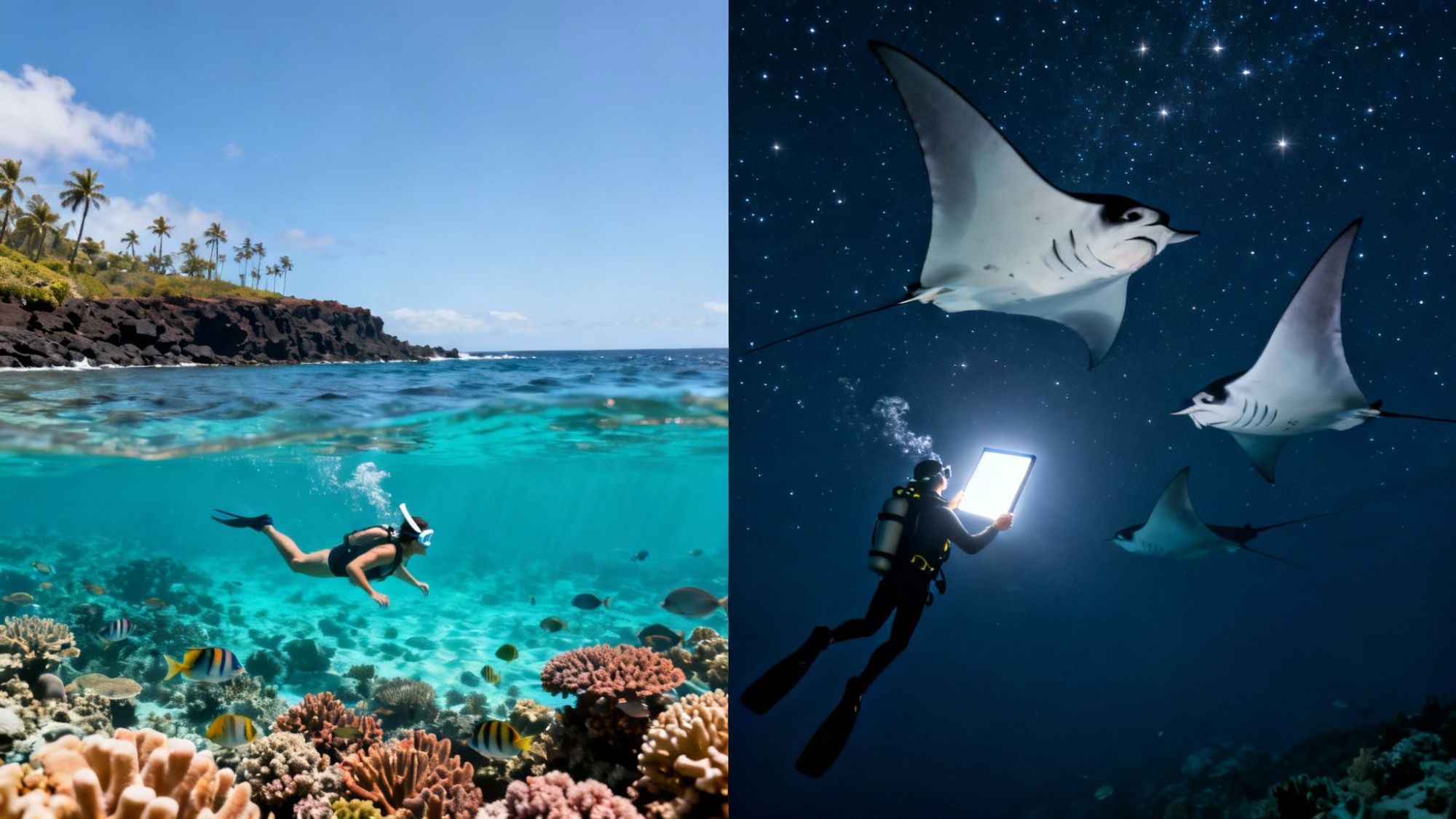
Picture this: you’re floating effortlessly in warm, turquoise water. Below you, vibrant schools of fish dart through intricate coral gardens. This isn't a dream; it's just another day of snorkeling in Kona. Our volcanic coastline has created some of the most crystal-clear, protected bays on the planet, absolutely teeming with life.
From the historic Kealakekua Bay to the almost surreal Manta Ray Night Snorkel, Kona offers an underwater adventure for absolutely everyone.
Your Ultimate Guide to Snorkeling in Kona
Think of this guide as your personal treasure map to that underwater paradise. We're drawing from years of daily experience as Kona Snorkel Trips, the top-rated and most-reviewed snorkel company in Hawaii, to give you the insider knowledge that makes an adventure unforgettable. We’ll take you to the legendary spots, cover the essential safety tips, and show you exactly why this coast is a snorkeler's dream.
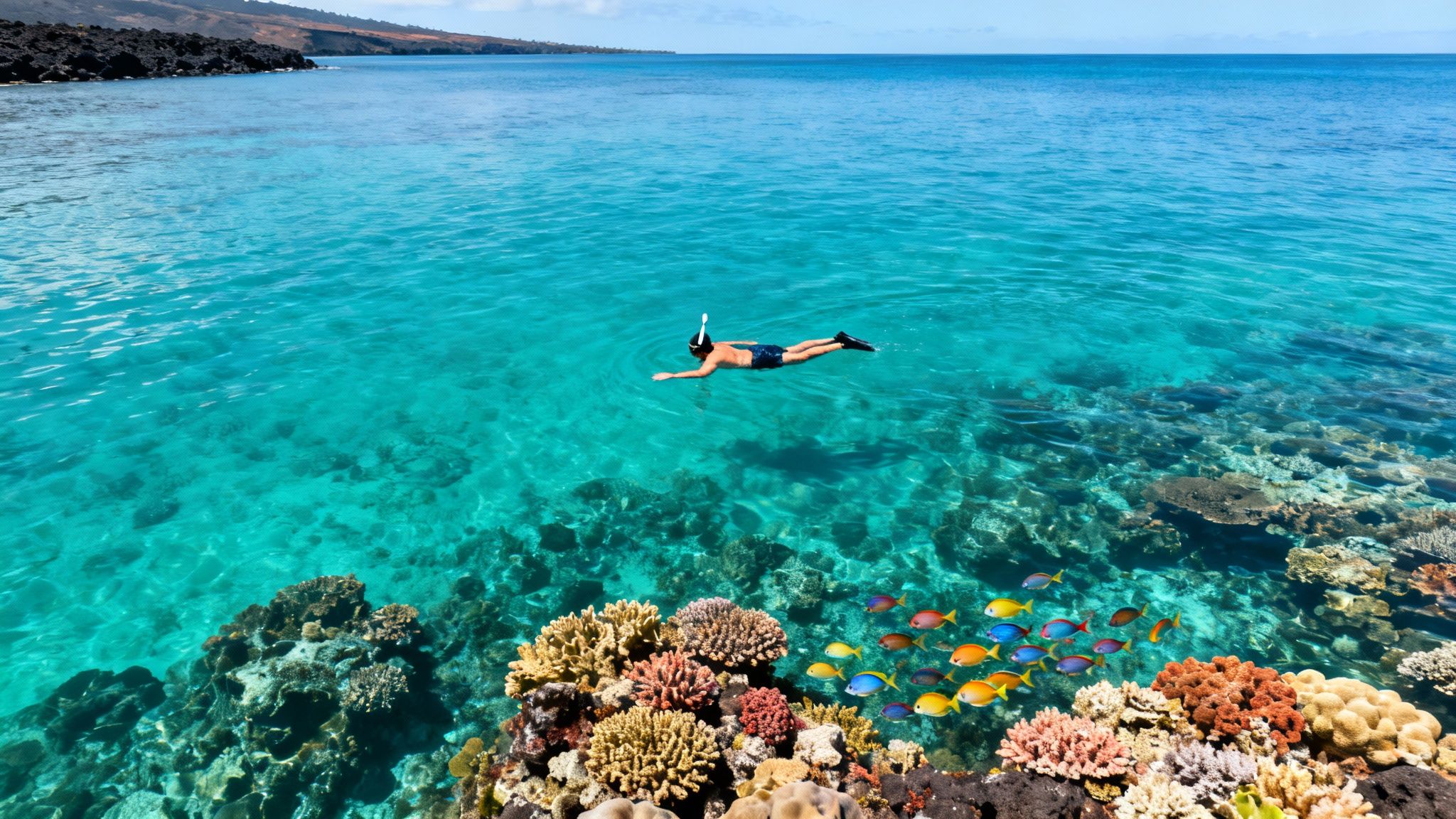
The Kona coast, here on the Big Island, is uniquely perfect for snorkeling. Our geography, shaped by ancient lava flows, gives us natural protection from the big Pacific swells. The result? Exceptionally calm and clear water, often with visibility pushing past 100 feet.
These incredible conditions make snorkeling accessible and genuinely fun for everyone, from salty, seasoned divers to first-timers and families with little ones.
What to Expect From This Guide
Throughout this article, we're going to dive deep into the specific locations that put Kona on the map. You’ll get the real story on why certain spots are absolute must-sees and what makes them so special.
Our journey will cover:
- World-Class Conditions: We'll explain the unique geology that creates Kona’s perfect snorkeling environment.
- Must-See Locations: Get a detailed look at Kealakekua Bay (home of the Captain Cook Monument) and the sites for the incredible Manta Ray Night Snorkel.
- Essential Safety Tips: This is the crucial advice to ensure your underwater exploration is both breathtaking and safe.
- Guided Tour Benefits: We'll break down why choosing a professional tour completely elevates the experience, providing access, safety, and local knowledge you just can't get on your own.
This is way more than just a list of places; it's a full-on resource to get you ready for an amazing adventure. For a closer look at the immediate area, check out our guide on snorkeling in Kailua-Kona, HI for more local tips. Let's get started.
What Makes Kona a World-Class Snorkeling Destination?
People fly from all over the world for the chance to go snorkeling in Kona, and for a very good reason. It’s not just about the beautiful fish. The Big Island's wild, volcanic geology has shaped an underwater playground that’s just about perfect for snorkeling.
The secret ingredient is its volcanic past. Ancient lava from giants like Hualālai and Mauna Loa once spilled into the ocean, creating a rugged, rocky coastline. Over thousands of years, this process carved out naturally protected coves and bays that now serve as a shield against the big, powerful swells of the Pacific. This natural barrier means the water is often incredibly calm and clear—a safe and relaxing place for snorkelers of any skill level.
The Science Behind the Spectacle
The clarity of Kona's water is the stuff of legends, with visibility that often pushes past 100 feet. This isn't just good luck; it's a direct result of that volcanic rock coastline. Unlike a sandy beach that gets stirred up into a cloudy mess by the waves, the solid lava rock foundation keeps sediment from kicking up. The result? Water that feels more like a gigantic, pristine swimming pool, letting sunlight stream down to light up the colorful reefs.
On top of that, Kona sits on the leeward (or sheltered) side of the Big Island. This means it’s protected from the strong trade winds that batter other parts of Hawaii. We get consistently sunny skies and glassy ocean surfaces, making it a fantastic destination any time of year. The water stays in that perfect sweet spot, usually between 77°F and 81°F, so you can stay in for hours without a shiver.
A Hotspot for One-of-a-Kind Marine Life
The Hawaiian Islands are incredibly isolated, and that has led to something amazing: a huge number of endemic species. That’s a fancy way of saying that a big chunk of the marine life you’ll meet while snorkeling in Kona can’t be found anywhere else on Earth.
This underwater world is bursting with life and variety. You’ll see all sorts of different habitats packed into one small area:
- Vibrant Coral Gardens: Picture sprawling fields of cauliflower, lobe, and finger corals building intricate underwater cities for fish to call home.
- Ancient Lava Tubes: Sunken lava tubes and arches create cool swim-throughs and hiding spots for eels, octopuses, and crabs.
- Dramatic Drop-offs: In some spots, the seafloor just drops away into the deep blue, giving you a front-row seat to see larger animals like dolphins and rays cruising by.
This natural wonder isn't just beautiful; it's the heart of Hawaii's snorkeling scene. The Kona Coast, particularly famous spots like Kealakekua Bay, is responsible for 12% of all snorkel trips in the entire state. That makes the Big Island the number one destination for snorkelers, with more than 100,000 visitors a year exploring our waters. Many are drawn to the incredible biodiversity and history of places like Kealakekua Bay, where it’s not uncommon to spot up to 50 different fish species on a single trip.
You can dive deeper into the data on Hawaiian marine tourism from the National Oceanic and Atmospheric Administration.
It's this perfect mix—calm, clear water, warm temperatures, and an underwater world you can’t see anywhere else—that truly makes Kona a bucket-list destination for anyone who loves the ocean.
Kona's Must-See Snorkeling Locations
Kona’s coastline is a snorkeler’s dream, loaded with underwater treasures. Each spot offers a unique window into Hawaii's incredible marine world. And while you can find a decent place to get in the water almost anywhere, a few locations are truly in a league of their own. These are the crown jewels, the spots that put snorkeling in Kona on the map.
We’re going to dive into the two most iconic experiences: the impossibly clear waters of Kealakekua Bay around the Captain Cook Monument, and the magical nighttime ballet of the Manta Ray snorkel. I'll also touch on a couple of my favorite spots you can easily access right from the shore for a quick dip.
Kealakekua Bay and the Captain Cook Monument
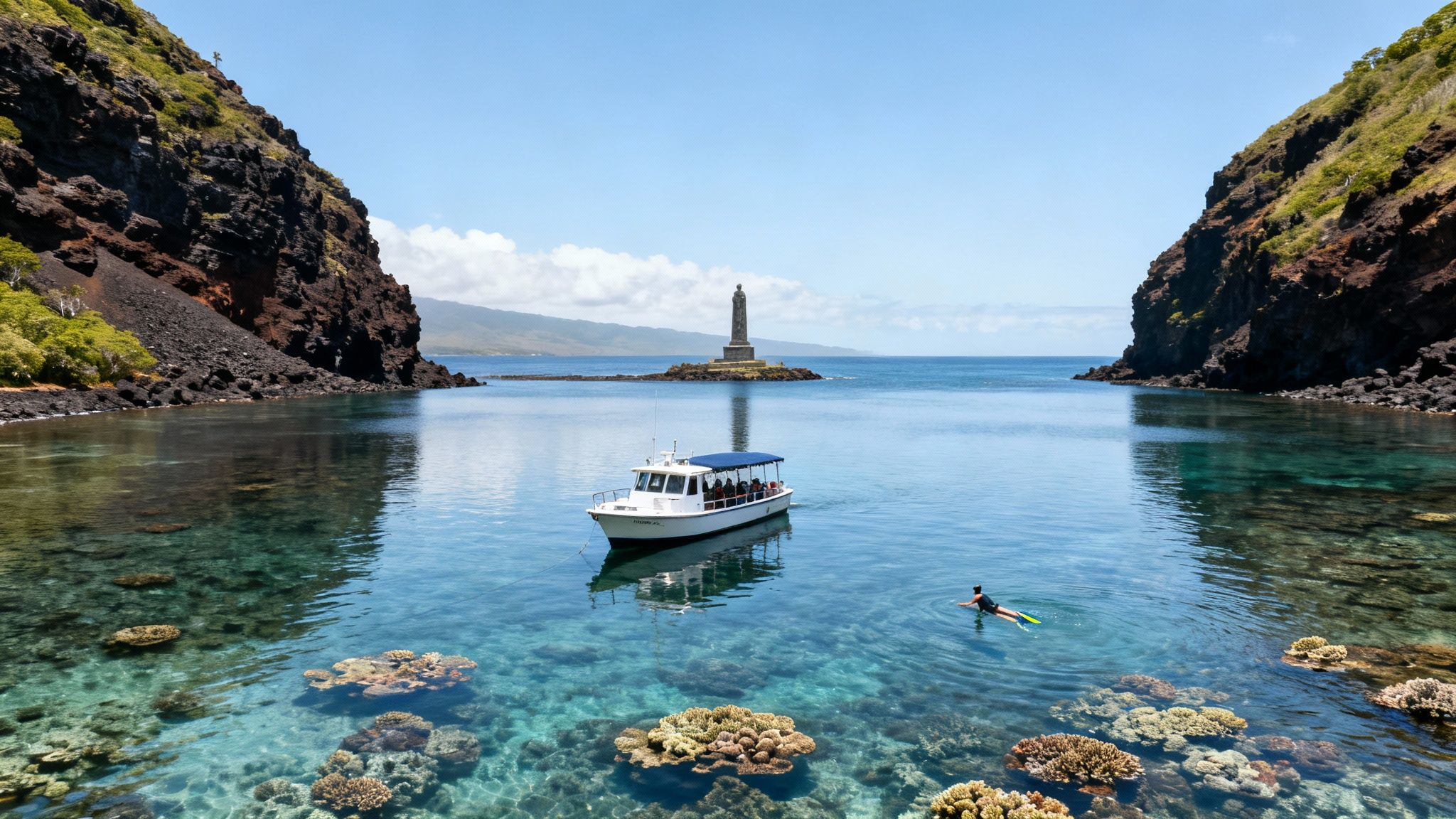
Often called the single best snorkeling spot in all of Hawaii, Kealakekua Bay is so much more than just a pretty cove—it's a living underwater museum. The entire bay is a designated Marine Life Conservation District, meaning its precious ecosystem is protected from fishing and other disturbances.
This protection has allowed the coral reefs to absolutely thrive, creating a dense, healthy home for hundreds of species of tropical fish. The water clarity here is the stuff of legend. It's not uncommon to have visibility exceeding 100 feet, making you feel like you're floating in a giant, natural aquarium.
The only realistic way to get to the prime snorkeling area around the Captain Cook Monument is by boat. A guided tour not only makes it easy but also puts you in the very best part of the bay with all the right safety gear.
Honestly, choosing a guided tour is the way to go. It turns a simple swim into a rich historical and ecological journey, giving you context that makes the experience even more meaningful.
The World-Famous Manta Ray Night Snorkel
Kona is one of the only places on Earth where you can reliably snorkel with giant manta rays after dark. This isn't just snorkeling; it's a profound, almost surreal experience that will stick with you forever. After sunset, tour boats head out to specific sites, like "Manta Village" near Keauhou Bay or "Manta Heaven" a bit further north.
Once the boat is anchored, powerful lights are aimed down into the water. These lights attract clouds of plankton, which is the manta rays' favorite meal. What happens next is pure magic. Giant mantas, with wingspans reaching up to 16 feet, glide gracefully out of the darkness. They perform barrel rolls and somersaults, feeding on the plankton just inches below you. It's a true bucket-list adventure.
Excellent Shore Snorkeling Spots
While boat tours take you to the most spectacular sites, Kona also has some fantastic spots you can get to right from the shore. These are perfect for a spontaneous afternoon snorkel or for families with little ones who are just getting their fins wet.
- Honaunau Bay (Two Step): Right next to Pu'uhonua o Hōnaunau National Historical Park, this spot gets its nickname from the natural lava rock "steps" you use to enter the water. It boasts incredibly clear water and a healthy reef that drops off quickly, attracting all sorts of marine life—you might even see spinner dolphins here in the morning!
- Kahalu'u Beach Park: This is, hands down, the best beginner snorkeling spot on the Big Island. A protective breakwater creates a calm, shallow lagoon that is absolutely teeming with fish who are completely used to people. It’s the perfect place for kids and first-timers to build confidence in the water.
To help you decide where to go, here’s a quick breakdown of the top spots.
Kona Snorkeling Spots at a Glance
| Location | Best For | Access Method | Key Marine Life |
|---|---|---|---|
| Kealakekua Bay | All skill levels, history buffs | Boat Tour | Huge variety of tropical fish, dolphins, sea turtles |
| Manta Ray Sites | Confident swimmers, thrill-seekers | Boat Tour | Giant manta rays, eels, various fish |
| Honaunau Bay (Two Step) | Intermediate to advanced snorkelers | Shore Entry | Dolphins, sea turtles, vibrant coral, diverse fish |
| Kahalu'u Beach Park | Beginners and families | Shore Entry | Abundant reef fish, eels, sea turtles |
Each location offers something special. Whether you choose the historic depths of Kealakekua Bay, the otherworldly Manta Ray night snorkel, or the easy access of a shore entry, the underwater world of Kona is waiting to blow your mind.
You can learn more about the incredible history and vibrant marine life of this special place in our detailed guide to the Kealakekua Bay snorkeling tour.
The Unforgettable Manta Ray Night Snorkel
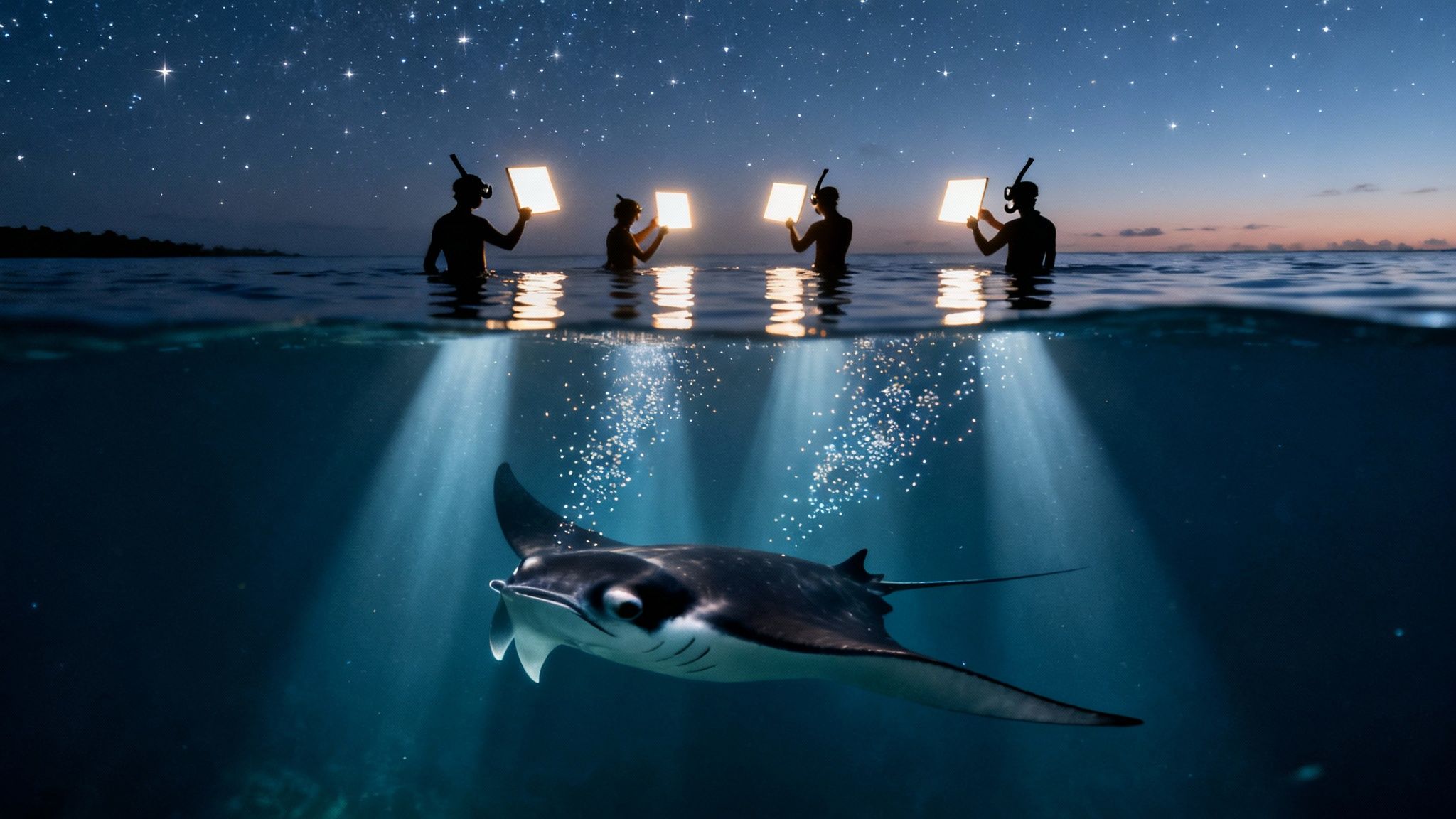
Picture this: you're floating weightlessly in the calm night ocean, under a brilliant blanket of stars. Just inches below you, giant, graceful manta rays swoop and barrel roll in an otherworldly underwater ballet. This isn't a dream—it's Kona's world-famous Manta Ray Night Snorkel, an experience that genuinely stays with you for life.
Many people who join our Manta Ray Night Snorkel tour tell us it's the most incredible thing they've ever done. And we have to agree.
The Science Behind the Magic
While it feels like pure magic, the encounter is actually driven by some pretty simple science. After the sun goes down, we head out to one of the known manta feeding sites. Once there, we set up powerful, eco-friendly lights that shine down into the dark water.
Think of these lights as a dinner bell. They attract massive clouds of tiny marine organisms called plankton, which are the mantas' favorite food. Essentially, we create a concentrated, all-you-can-eat buffet right at the surface. The mantas can't resist.
You'll hold onto a custom-made light board that floats on the surface, giving you a stable, front-row seat to the show. The mantas glide in with their cavernous mouths open, filtering the plankton from the water in a mesmerizing dance of swoops and somersaults.
What to Expect on Your Tour
Your adventure starts with a thorough safety briefing from our lifeguard-certified guides. They'll walk you through everything—how to use the gear, what to expect from the mantas, and how we can all interact with them respectfully. We provide everything you need, including wetsuits to keep you warm and comfortable.
Once you slip into the water and grab onto the light board, the show begins. It's hard to describe the feeling of seeing these gentle giants up close. Some have wingspans of over 16 feet! It's a peaceful, awe-inspiring, and surprisingly moving experience to be so close to such majestic creatures in their natural habitat.
Don't worry, manta rays are gentle giants. They're filter-feeders and have no teeth, barbs, or stingers. The golden rule is to look but never touch—touching them can harm the protective mucous coating on their skin.
Still have questions? We break down all the myths in our article, "Can Manta Rays Sting You?," which explains why these animals are so harmless.
The Manta Ray Night Snorkel has become a true Kona icon, attracting around 80,000 people every year and supporting the local community. The success rate for sightings is an incredible 80-90% year-round, thanks to reliable currents that bring in the plankton. In fact, researchers have identified over 250 individual mantas here, some of whom have been regulars since the 1990s! Modern light arrays have revolutionized the experience by boosting plankton density by 300-500%, making the encounters more consistent than ever.
A Commitment to Eco-Conscious Practices
Our number one priority is protecting these magnificent creatures. The entire manta ray tourism industry in Kona operates under strict, science-backed guidelines to ensure every encounter is safe for both people and the mantas.
Our guides are passionate about marine conservation and will share what makes these animals so vital to our local ecosystem. When you book with a responsible operator, you're not just signing up for an adventure; you're actively supporting the research and conservation efforts that will protect Kona's manta rays for generations to come.
Essential Tips for Safe Snorkeling in Kona
The ocean is an incredibly powerful and beautiful force, and it commands respect. To make sure your time snorkeling in Kona is as safe as it is unforgettable, you’ve got to know a few golden rules. This isn't about scaring you off; it's about giving you the confidence and know-how to explore Kona’s underwater world safely.
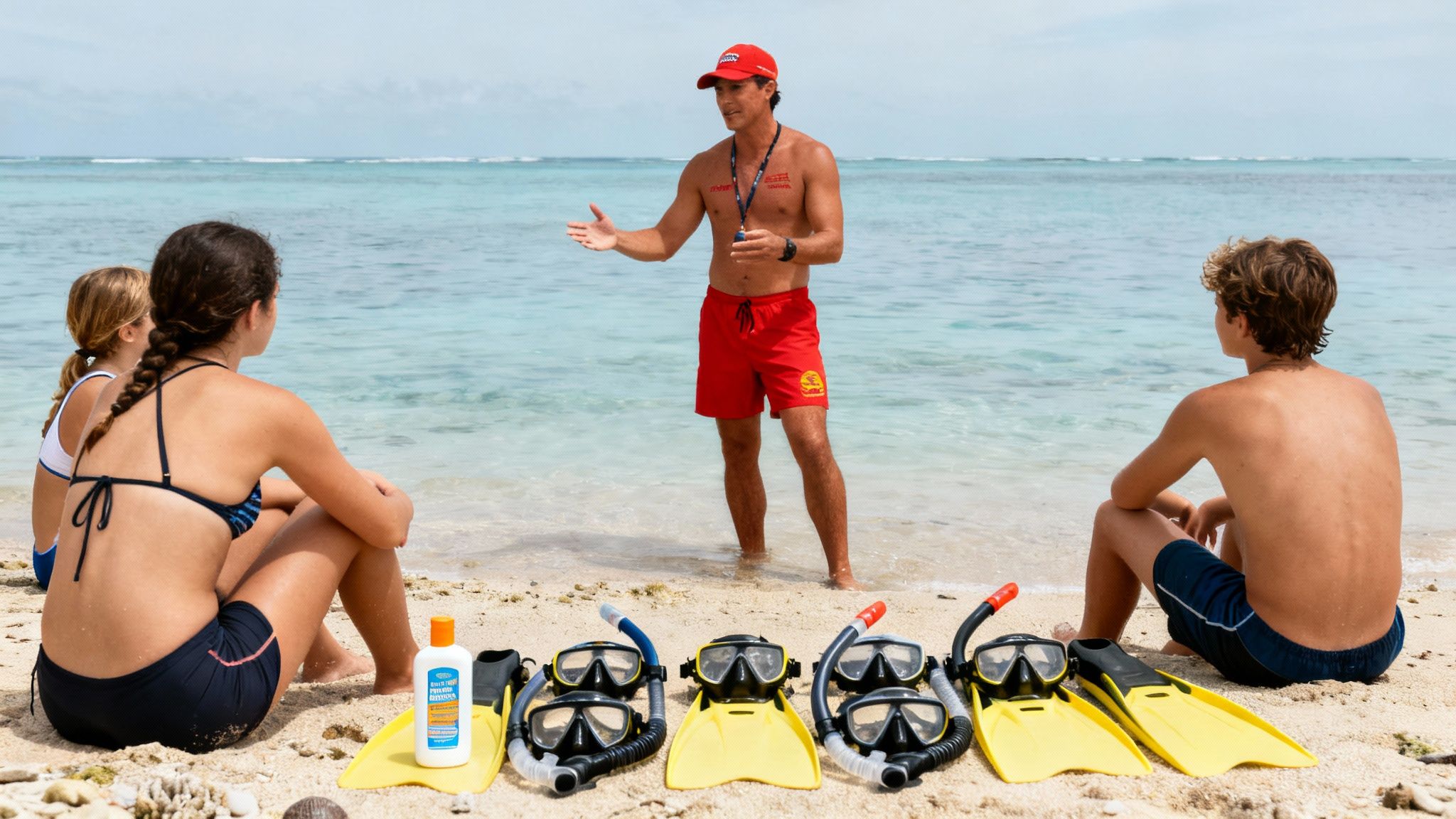
Honestly, the single best decision you can make, especially if you’re new to our local waters, is to snorkel with a professional, lifeguard-certified guide. The statistics are sobering, but they make a powerful case for it. Between 2009 and 2018, there were 206 snorkeling-related deaths statewide, and a jaw-dropping 189 of them were visitors.
The visitor drowning rate in Hawaii has been recorded at 13 times the national average. These numbers aren't meant to frighten you, but to highlight the hidden risks that exist even in paradise. Going with a guided tour, where safety is the absolute top priority, is the best way to guard against them.
Know Before You Go: Ocean Safety Rules
Whether you're with a guide or heading out from the shore, some basic principles of ocean safety always apply. Making these habits second nature is the key to a stress-free adventure.
- Never Snorkel Alone: The buddy system is non-negotiable. Always have someone with you who can help out or go get help if needed. It’s that simple.
- Check the Conditions: Swell, surge, and currents can change in a flash. Always look up the local ocean reports before getting in. If the waves look big or the water seems murky, just wait for another day. It's not worth the risk.
- Know Your Limits: Be real with yourself about your swimming skills and how comfortable you are. Don't push it by going too far from shore or staying out longer than your energy allows.
Marine Etiquette for Responsible Snorkeling
Being a safe snorkeler also means being a respectful guest in the ocean's home. The health of our reefs literally depends on every single visitor following a few simple rules. This doesn't just protect the ecosystem—it ensures the reefs stay vibrant for everyone to enjoy for years to come.
The golden rule of snorkeling is simple: Look, but don't touch. Touching coral can kill the delicate polyps that build the reef, and getting too close to marine animals can harm them and disrupt their natural behaviors.
Here are a few more critical tips:
- Use Reef-Safe Sunscreen: Many common sunscreens have chemicals like oxybenzone and octinoxate that are incredibly toxic to coral. Stick with mineral-based sunscreens that use zinc oxide or titanium dioxide.
- Keep Your Distance: Give marine life plenty of space. Chasing after a sea turtle or a pod of dolphins causes them stress and can be dangerous for both of you. Let them come to you.
- Don't Stand on the Coral: Never, ever stand on or kick the coral reef. If you need to adjust your gear or take a breather, look for sandy patches to rest.
Beyond these snorkeling-specific tips, general safe swimming practices are crucial for any water adventure. When you combine ocean awareness with a deep respect for marine life, you’re setting yourself up for an amazing experience. You can also check out our complete guide on snorkeling safety tips for even more in-depth advice.
So, Should You Go with a Guided Snorkel Tour?
You've got the scoop on Kona's incredible underwater world and why playing it safe in the ocean is a big deal. Now for the final piece of the puzzle: how are you going to get out there? While the idea of a DIY snorkel adventure has its charm, hopping on a professionally guided tour is what turns a good day into a truly unforgettable one. It’s the difference between just looking at the water and actually understanding what you're seeing.
When you choose a top-notch company like Kona Snorkel Trips—the most reviewed and highest-rated snorkel operator in all of Hawaii—you're not just buying a ticket. You're investing in a premium, stress-free experience from start to finish.
Expertise That Makes All the Difference
Let's be honest, guided tours just take all the guesswork out of the equation. Forget stressing about logistics. You can just kick back and focus on the magic unfolding below the surface.
A professional crew handles absolutely everything. They navigate to the most pristine, uncrowded spots in Kealakekua Bay and provide all the high-quality, sanitized gear you need. Even better, your guides are like personal interpreters for the ocean. They're the ones who will spot a perfectly camouflaged octopus you would have swum right past or share the rich history of the Captain Cook Monument. That local knowledge adds a layer to your adventure that you just can't get on your own.
Small Groups and Unbeatable Safety
The biggest win, hands down, is safety. When you have lifeguard-certified guides in the water with you, especially in a small group, you can completely relax and soak it all in. This kind of personal attention is a game-changer for families with kids or anyone feeling a little nervous about their first time snorkeling.
A small-group tour is simply the best way to experience Kona's underwater world. It guarantees you won't feel like just another face in a crowd, offering a more intimate and respectful encounter with marine life.
This is especially true for something as special as the Manta Ray Night Snorkel. A smaller group means less disruption for the mantas and a front-row seat to their incredible underwater ballet for everyone. If you're looking for another fantastic operator for this, Manta Ray Night Snorkel Hawaii is an exceptional alternative that also puts these amazing creatures first.
At the end of the day, a guided tour is about peace of mind, expert insight, and access to the best spots. It’s an investment in making your Hawaiian adventure safer, richer, and way more memorable. You can learn more about what to look for when you compare snorkel tours on the Big Island.
Got Questions About Snorkeling in Kona? We've Got Answers.
Jumping into Kona's incredible waters for the first time? It's natural to have a few questions before you take the plunge. We hear these all the time, so we've put together some straight-up answers to help you get ready for an amazing day on the water.
What Is the Best Time of Year to Snorkel in Kona?
Honestly, any time is a great time. That's the beauty of Kona! We're tucked away on the leeward side of the Big Island, which means we get spoiled with calm, clear water and sunny skies almost year-round. The water temperature is always inviting, hovering between a comfortable 77°F and 81°F.
That said, different seasons have their own special perks. Summer usually brings the absolute flattest, calmest seas, making it a dream for families with young kids. But winter (December through March) is humpback whale season. There's nothing quite like hearing whale song underwater while you're snorkeling, or spotting a massive breach from the boat on your way out to the reef.
Do I Need to Bring My Own Snorkel Gear?
Nope, you can leave it at home! When you book a tour with a quality operator like Kona Snorkel Trips, we've got you covered. We provide everything you need: high-quality masks, snorkels, and fins that actually fit.
For our Manta Ray Night Snorkel, we also include wetsuits to keep you warm and cozy. Rest assured, all our gear is professionally sanitized after every single use.
Is Kona Snorkeling Good for Beginners or Kids?
It's not just good, it's perfect! Kona's protected bays are some of the best classrooms in the world for first-time snorkelers and kids. The water is typically calm and shallow near the reef, which takes a lot of the intimidation out of it.
Our guides are all lifeguard-certified and are absolute pros at helping beginners feel comfortable and safe. We provide float belts and give plenty of hands-on instruction, so everyone can relax and have a blast.
For families and first-timers, we can't recommend a guided tour enough. Having an expert guide and boat captain takes all the guesswork out of the equation. You get to the best, calmest spots like Kealakekua Bay without any stress, so you can just focus on the incredible world below the surface.
It's a much safer and more enjoyable way to experience the ocean than trying to figure out a new shoreline on your own.
What Will I See Besides Manta Rays?
The mantas are definitely rock stars, but Kona's daytime reefs are bursting with life. Seriously, it's like swimming in an aquarium.
On any given trip, you have a great chance of spotting:
- Honu (Hawaiian Green Sea Turtles): We see these guys all the time, just chilling on the reef munching on algae or gracefully cruising by.
- Spinner Dolphins: It's common to see pods of these playful dolphins resting in the bays. Watching them from the boat is a huge highlight.
- Hundreds of Tropical Fish: Get ready for a kaleidoscope of color! You'll be surrounded by schools of bright yellow tangs, parrotfish, butterflyfish, and of course, Hawaii's state fish, the Humuhumunukunukuāpuaʻa (try saying that three times fast!).
- Eels and Octopuses: If you look closely into the reef's little nooks and crannies, you might spot a moray eel poking its head out or an octopus perfectly camouflaged against the coral.
Every single trip is different. You never know what amazing creature you might encounter, and that's what makes every snorkel adventure so exciting.
Your unforgettable Kona adventure is waiting. For a safe, fun, and totally memorable trip exploring Kona's best reefs, book your tour with Kona Snorkel Trips today.