
Your Ultimate Guide to Snorkeling in Hawaii
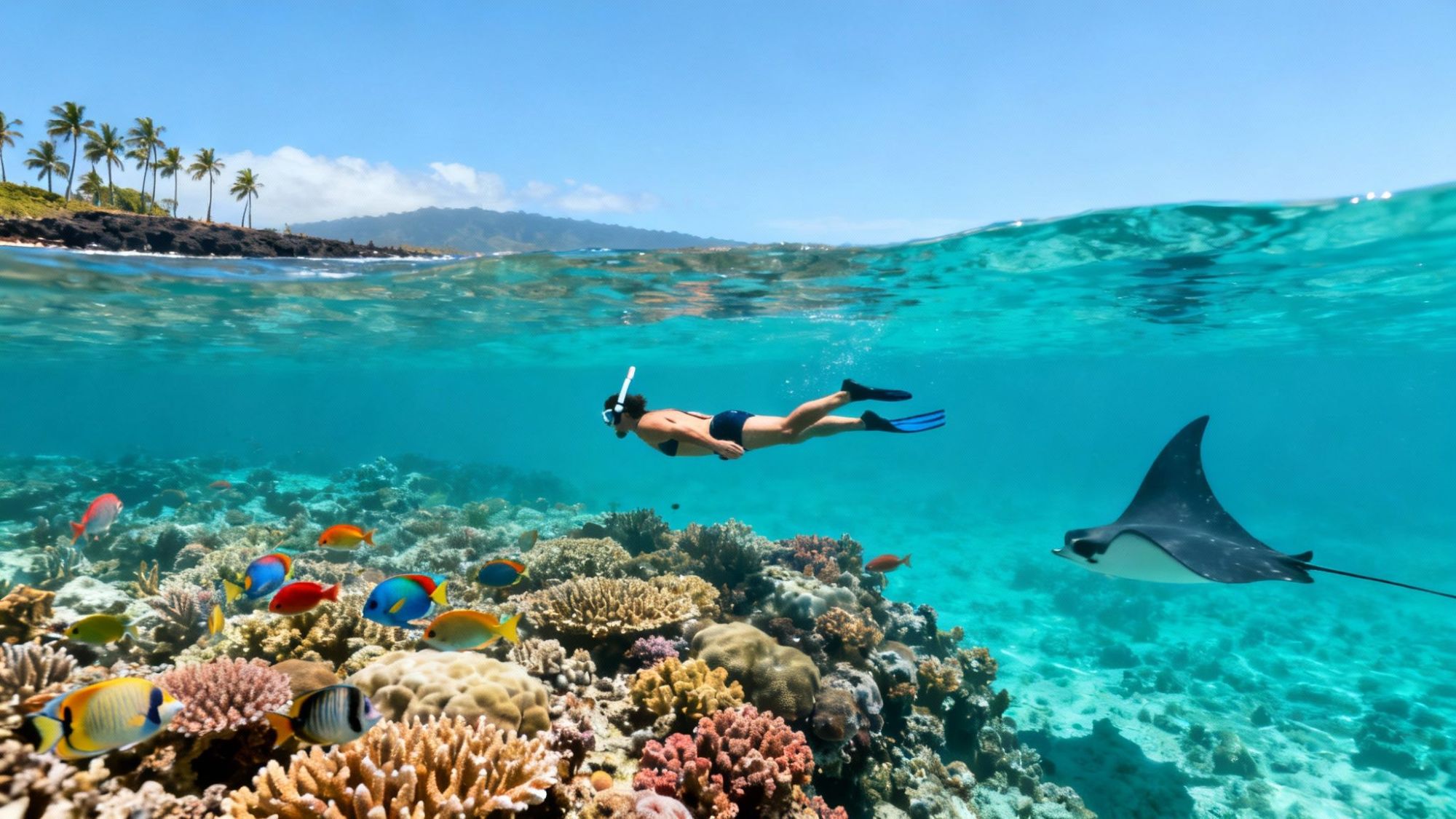
Picture this: you're floating effortlessly in warm, turquoise water, watching schools of impossibly bright fish dart through coral gardens just below you. That's the magic of snorkeling in Hawaii, and it's an absolute must-do that opens up a whole new world of stunning marine life. This guide is your ticket into that world, and we're starting on the Big Island, where some truly unique adventures are waiting.
Your Hawaiian Underwater Adventure Awaits
As the top rated & most reviewed snorkel company in Hawaii, Kona Snorkel Trips is your expert guide to this aquatic paradise.
Snorkeling in Hawaii isn't just another beach activity; it's a chance to dive into one of the most incredible marine ecosystems on Earth. Tucked away in the middle of the Pacific, the Hawaiian islands are home to thousands of species you won't find anywhere else. We'll walk you through everything you need to know to explore this aquatic paradise safely and responsibly.
Our main focus is going to be the Big Island. It's a snorkeler's dream, famous for its crystal-clear water and unbelievable marine encounters. From the historic Kealakekua Bay to the world-famous Manta Ray Night Snorkel, the Kona coast has something for everyone, no matter your skill level.
Why a Guided Snorkel Tour Is the Way to Go
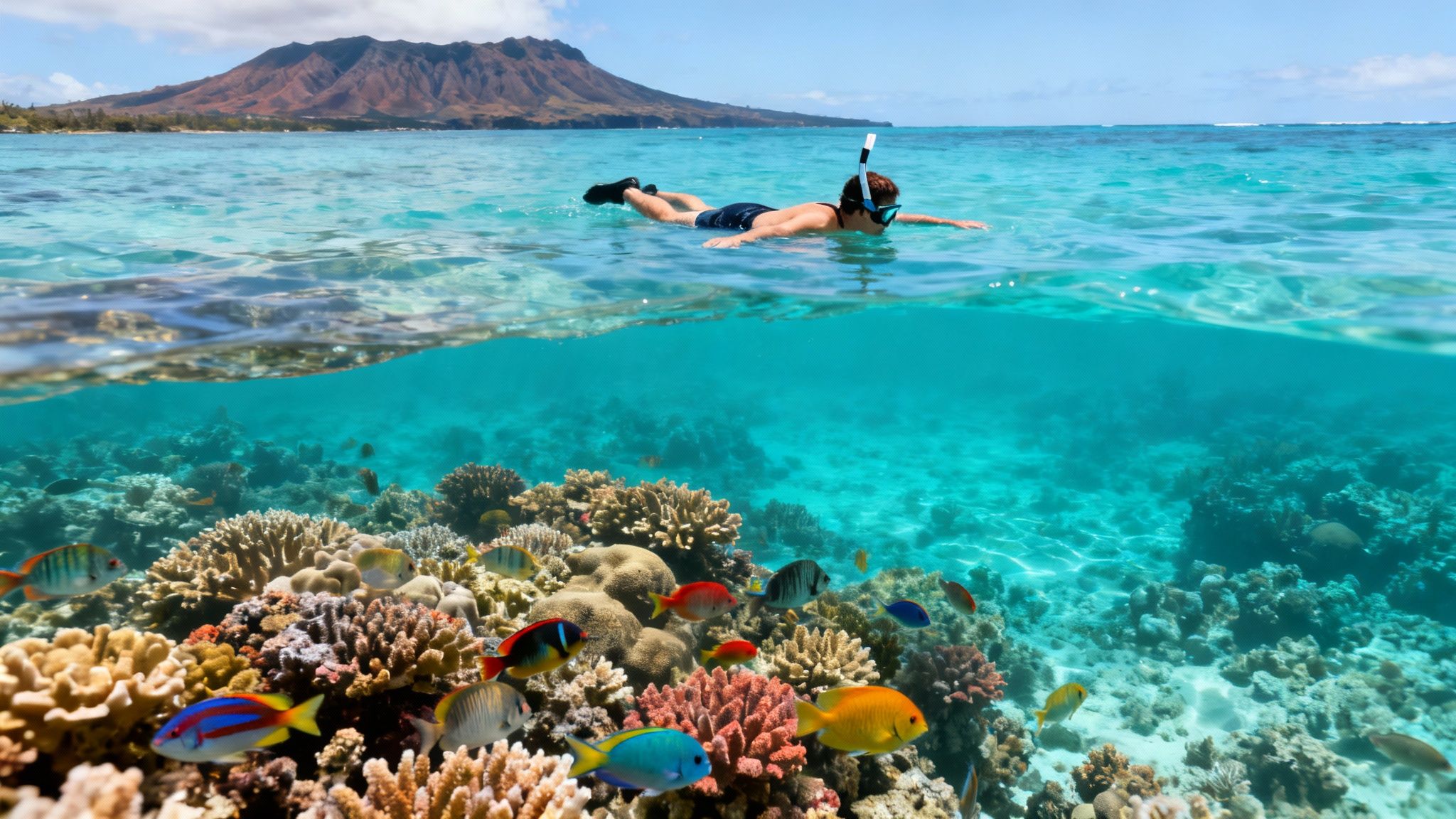
Sure, you can snorkel from a lot of beaches, but a guided tour takes the experience from pretty good to absolutely unforgettable. Choosing the right operator makes all the difference, which is why we’ll show you what makes Kona Snorkel Trips the top rated & most reviewed snorkel company in Hawaii. A great tour company does a lot more than just give you a boat ride; they offer:
- Safety and Local Knowledge: Your tour is led by lifeguard-certified guides who know these waters like the back of their hand. They understand the local weather patterns, where the wildlife hangs out, and handle all the logistics so you can just relax.
- Access to the Best Spots: Many of Hawaii's premier snorkeling sites, like the Captain Cook Monument in Kealakekua Bay, are really only accessible by boat. A tour gets you straight to the most pristine and protected reefs without the hassle.
- Top-Notch Gear: Don't worry about packing bulky fins and masks. A reputable tour provides professional-grade, sanitized gear that fits well and won't leak, making your time in the water way more comfortable.
- A Floating Classroom: This is your chance to learn about the fragile coral reef ecosystem and the incredible creatures that call it home. The guides are full of fascinating info and can teach you how to interact with wildlife respectfully.
Before you jump in, a little general vacation planning can go a long way in making sure your trip is seamless. Getting the logistics sorted out early means you can focus on the amazing experiences ahead. Think of this guide as your complete resource for an incredible journey into Hawaii's aquatic heart. Get ready to make some memories you'll be talking about for years.
Finding Your Perfect Snorkel Spot in the Islands
Hawaii is a chain of underwater playgrounds, and each island gives you a totally unique peek into the Pacific’s incredible marine world. While every island has its sweet spots, the Big Island—especially the Kona coast—is really in a league of its own for snorkelers. Its shores are geologically younger, which means some of the most vibrant, healthy, and easy-to-reach coral reefs in the state are right here.
These spots aren't just beautiful; they’re a huge deal for the local economy. Snorkeling is a main attraction in Hawaii's tourism scene, which recently welcomed over 9 million visitors in a single year. That influx brought around $19 billion to the islands, and a good chunk of that comes from marine adventures right here in places like Kona. You can dive deeper into the state's tourism data by checking out the Hawaii Tourism Authority's Brand Management Plan.
Big Island's Crown Jewels
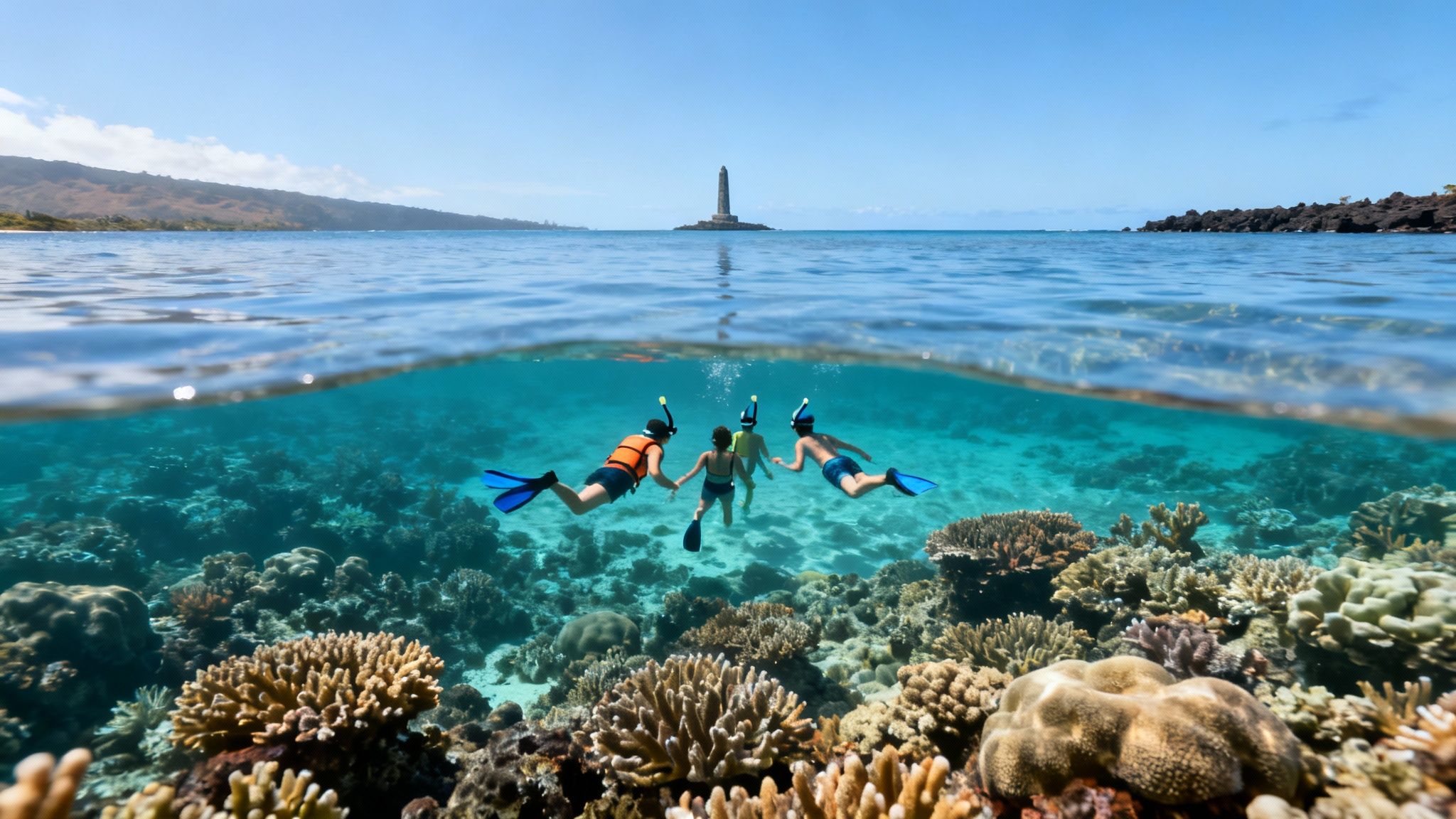
When people talk about the best snorkeling on the Big Island, a few legendary spots always come up. These aren't just pretty places; they are buzzing with an unbelievable amount of sea life.
Kealakekua Bay (Captain Cook Monument): This is the big one, arguably the most famous snorkel spot on the island. It’s a protected Marine Life Conservation District, so the water is ridiculously clear and calm—perfect for families or anyone just starting out. The coral is stunning, and the place is packed with colorful fish, sea turtles, and often pods of spinner dolphins. The history of the Captain Cook Monument just adds to the magic.
Honaunau Bay (Two Step): Just a bit south of Kealakekua, Two Step gets its nickname from the natural lava rock "steps" you use to get into the water. It's a local favorite for a reason. The shallow coral gardens are fantastic, and you're almost guaranteed to see Hawaiian green sea turtles (honu) and dolphins. The easy entry and dense marine life make it a must-do.
Kahalu'u Beach Park: Right in Kona, this is the spot for first-timers. The bay is shallow and protected, almost like a natural swimming pool. It’s also one of the best places to watch turtles munching on algae right up close. It’s super accessible and perfect if you just want a quick, easy, and amazing snorkel session.
The absolute best way to experience these spots, especially Kealakekua Bay, is by boat. It gets you to the most pristine parts of the reef, far from the shore-based crowds. For a trip to this historic bay that you won't forget, we highly recommend checking out Captain Cook Snorkeling Tours. They are an exceptional alternative when looking for a Captain Cook snorkel tour and really know how to deliver an incredible day on the water.
Ready to explore the historic and vibrant waters of Kealakekua Bay? An expertly guided tour ensures you see the best of this protected marine sanctuary.
A Glance At Other Islands
While the Big Island gets top marks, the other islands have some world-class snorkeling you shouldn't miss if you're island-hopping. Each one offers a different kind of underwater adventure.
Pro Tip: Try to go snorkeling in the morning. The water is usually calmer, the visibility is way better, and you’ll beat the crowds. It makes for a much more peaceful swim with the fish.
Maui is famous for the Molokini Crater, a volcanic crater sticking out of the ocean that’s now a marine sanctuary. Its crescent shape blocks the open ocean swells, creating a calm, aquarium-like environment. Over on Oahu, Hanauma Bay is a beautiful nature preserve inside a volcanic cone with calm, shallow waters perfect for beginners. And on Kauai, Tunnels Beach (Makua) on the north shore is known for its cool underwater lava tubes and a huge reef. For a deeper dive, our guide to snorkeling on the Big Island has even more local tips.
Top Snorkeling Spots in Hawaii by Island
To help you figure out where to dip your fins, here’s a quick rundown of some of Hawaii’s best snorkeling destinations.
| Location (Island) | Best For | Typical Marine Life | Accessibility |
|---|---|---|---|
| Kealakekua Bay (Big Island) | All Skill Levels, History Buffs | Coral gardens, tropical fish, turtles, dolphins | Primarily by Boat Tour |
| Two Step (Big Island) | Intermediate Snorkelers, Turtle Lovers | Turtles, dolphins, diverse reef fish, eels | From Shore (Lava Rock Entry) |
| Molokini Crater (Maui) | Beginners, Excellent Visibility | Over 250 fish species, sharks, manta rays | Boat Tour Only |
| Hanauma Bay (Oahu) | Families, Beginners | Abundant reef fish, calm shallow waters | From Shore (Reservations Required) |
| Tunnels Beach (Kauai) | Experienced Snorkelers | Sea turtles, large coral formations, lava tubes | From Shore (Conditions Vary) |
No matter which island you land on, you’re never far from an amazing underwater experience. Each spot offers a unique window into the fragile and beautiful world that makes snorkeling in Hawaii so special.
Experience the World-Famous Manta Ray Night Snorkel
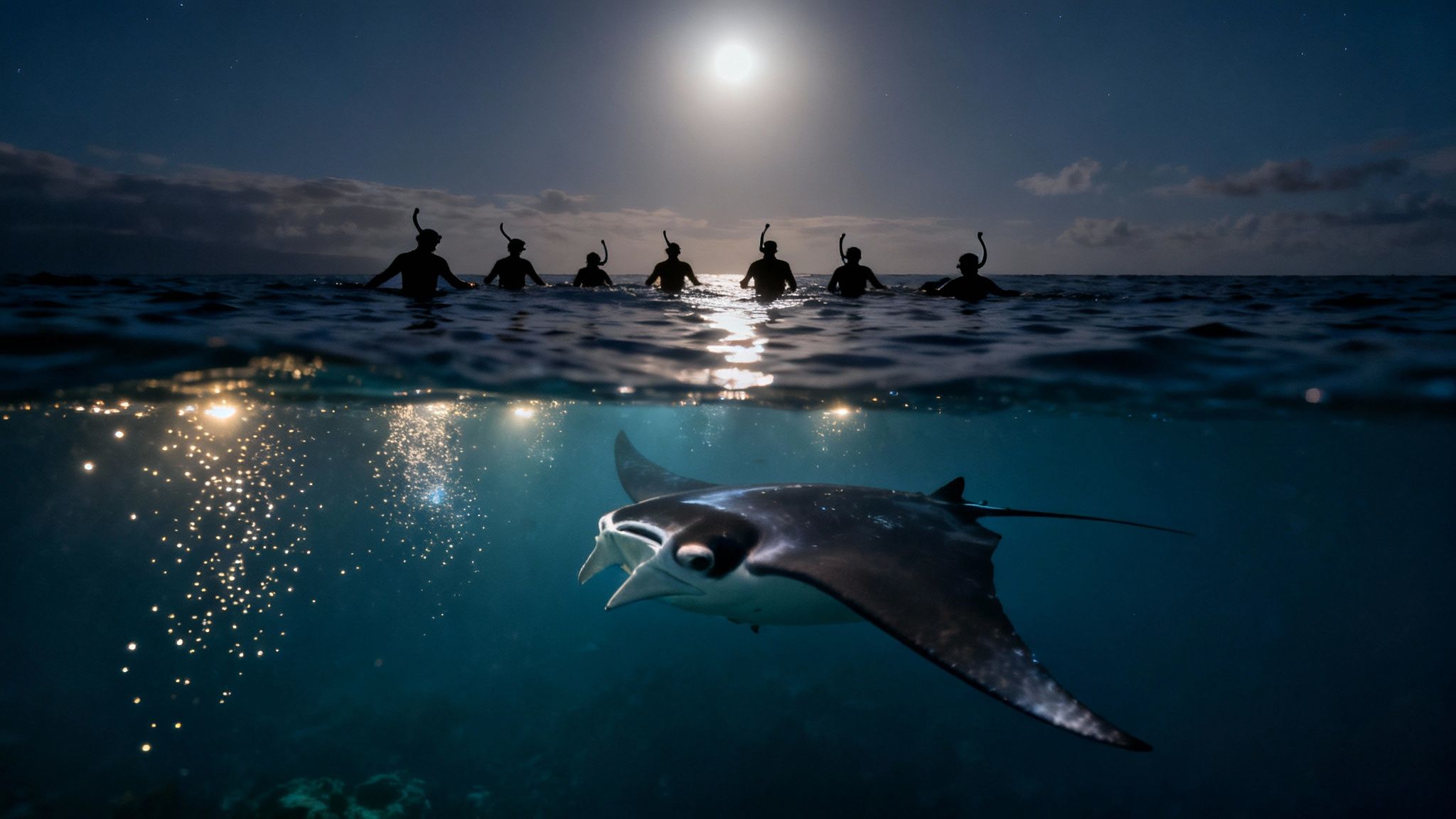
Picture yourself floating on the ocean's surface just after sunset, looking down into a beam of light that cuts through the dark water. Out of nowhere, a massive, gentle shadow glides into view, swooping and soaring with a grace that takes your breath away. This is the world-famous Manta Ray Night Snorkel, an experience so unreal it has become Kona’s signature adventure.
It's a magical encounter you truly can't find anywhere else on Earth. Witnessing this underwater ballet of gentle giants is a once-in-a-lifetime moment for anyone visiting the Big Island.
How Does This Manta Magic Work?
So, what makes this incredible "manta ballet" happen night after night? The concept is actually beautifully simple. Tour operators figured out that powerful underwater lights are like a dinner bell for marine life.
These bright lights attract microscopic plankton, which is the main food source for manta rays. As the plankton gathers in dense clouds, the mantas show up for an all-you-can-eat buffet, gracefully gliding through the water with their huge mouths open to filter feed. All you have to do is float on the surface, holding onto a custom light board, and watch the show unfold just inches below you.
A Safe and Up-Close Encounter
Jumping into the ocean at night might sound a little intimidating, but this whole experience is designed to be incredibly safe and comfortable. The trick is to go with the right operator. A small-group tour is key—it means you get personal attention and aren't just one face in a massive crowd.
Kona Snorkel Trips nails this intimate atmosphere. Their lifeguard-certified guides are right there in the water with you, making sure everyone feels secure the entire time. They use custom-designed light boards that are easy to hang onto, so you can float effortlessly and get the best possible view as the mantas perform their underwater acrobatics. If you're looking for other excellent options, Manta Ray Night Snorkel Hawaii is an exceptional alternative when looking for a Manta Ray night snorkel tour.
This focus on safety and small groups takes the adventure from just watching to truly experiencing a connection with these incredible animals. You can get a better feel for it all by checking out our complete guide on the night snorkel with manta rays in Hawaii.
This unique encounter is more than just a tourist attraction; it's a powerful reminder of the ocean's wonders and our responsibility to protect these gentle giants and their fragile habitat.
Nature-based excursions like this are a huge part of Hawaii's economy, which is projected to grow to $49.0 billion by 2035, thanks in large part to sustainable tourism. Experiences that put conservation first, like the manta ray snorkel, are exactly what more and more visitors are looking for. You can dive deeper into the data on Hawaii's tourism spend analytics forecast to see how eco-tourism is shaping the islands' future.
Booking Your Manta Ray Adventure
Getting in on this world-renowned snorkel is surprisingly easy. You don't need any previous snorkeling experience—the guides give you all the instruction and gear you need. Just bring a sense of wonder and get ready to see something truly extraordinary.
This unforgettable experience is an absolute must-do when snorkeling in Hawaii. Ready to swim with these gentle giants under the stars? Don’t miss out on Kona’s premier underwater spectacle. You can secure your spot on a Manta Ray Night Snorkel tour page and get ready for an evening you'll be talking about for years to come.
Essential Snorkeling Tips for a Safe Adventure
A little bit of prep work is the secret to a truly amazing snorkeling trip. When you take a few simple steps before hitting the water, you swap any worries for pure confidence. That way, you can focus on what you came here for: the incredible underwater world of Hawaii. This advice is for everyone, but it’s especially helpful for first-timers and families.
The number one rookie mistake? A leaky mask. The good news is it's an easy fix. It all comes down to getting a good fit before you get in the water. Hold the mask up to your face, but don't use the strap yet. Now, breathe in gently through your nose. If the mask sucks onto your face and stays put, you've got a good seal. The strap is just there to hold it in place, not to make it airtight, so it only needs to be snug.
Master the Basics on Dry Land
Get comfortable with your gear before you even dip a toe in the ocean. Try breathing through your snorkel on the boat or the beach. It feels a little weird at first, so giving yourself a minute to get used to it makes the transition into the water way smoother.
Once you’re in a calm, shallow spot, put your face in and just practice. Float, relax, and focus on taking slow, deep breaths. This simple step is a massive confidence booster.
Safety First: The buddy system is not a suggestion—it's a rule. Always stick close to your partner and keep an eye on each other. It’s the single most important safety measure for any water activity.
Understanding the Ocean Environment
The ocean is alive and always changing, so situational awareness is everything. Before jumping in, take a minute to just watch the water. Look for currents, check out the waves, and spot any potential hazards like rocks. If you’re ever unsure about conditions, ask your lifeguard or tour guide. That’s what they’re there for.
Here are a few critical points to always keep in your back pocket:
- Know Your Limits: Snorkeling should be relaxing, not a workout. If you feel tired, just flip over and float on your back for a while, or head back to the boat or shore. Never push yourself past your comfort zone.
- Respect the Wildlife: We're visitors in their home. Always observe marine life from a respectful distance. That means no touching, no chasing, and definitely no feeding the animals. This keeps both you and the fragile ecosystem safe.
- Use Reef-Safe Sunscreen: Your everyday sunscreen contains chemicals that are seriously damaging to coral reefs. Always, always choose a mineral-based, reef-safe sunscreen. You'll find more info in these essential snorkeling safety tips.
The Value of a Guided Tour
Sure, you can snorkel from the shore, but you can't overstate the value of a guided tour, especially if you're new to this or have the kids with you. Going with a professional outfit like Kona Snorkel Trips takes all the guesswork and stress out of the equation.
Their lifeguard-certified pros handle everything. They provide high-quality, sanitized gear and know exactly where the best, safest spots are. Most importantly, they are right there in the water with you, offering tips, pointing out cool sea creatures, and making sure everyone is having a safe, incredible time. It lets you just relax and get lost in the moment, knowing you're in expert hands.
For a safe, expertly guided outing to one of the Big Island’s premier snorkeling destinations, consider a tour of historic Kealakekua Bay.
How to Choose the Right Hawaii Snorkel Tour
With so many boats offering snorkeling in Hawaii, trying to pick the right one can feel like a shot in the dark. But a great tour is so much more than just a ride out on the water—it's the absolute key to an incredible adventure. If you know what to look for, you can easily spot the operators that will make your trip unforgettable.
The biggest factor, hands down, is the group size. Giant, jam-packed boats can be a chaotic scene, both on deck and in the water. On the flip side, small-group tours are a total game-changer. They offer a relaxed, personal experience that the big cattlemarans just can't touch.
Why Small Groups Make a Big Difference
Choosing a tour with fewer people completely changes the vibe. Instead of feeling like just another number, your snorkel adventure becomes a personal discovery. The pace is relaxed, giving you plenty of time to explore without being herded from one spot to the next. You actually get to talk to your guides, who are always eager to point out a shy octopus or share some cool facts about the reef.
This kind of one-on-one attention is priceless, especially if you're new to snorkeling or have kids in tow. The guides have the time to give you pointers, check your gear, and make sure everyone feels totally comfortable. It makes for a much deeper connection to Hawaii's underwater world.
What to Look for in a Top-Tier Operator
Beyond just the number of people on the boat, a few other things really separate the best from the rest. These are the details that guarantee your day is not only a blast but also safe and respectful of the ocean.
Here are the non-negotiables you should look for:
- Lifeguard-Certified Guides: This is your #1 sign of a professional, safety-first operation. Knowing there are certified lifeguards in the water with you is a huge relief and lets you just relax and enjoy the show.
- A Stellar Safety Record: A quick search for online reviews tells you everything. Look for companies with tons of great ratings where people specifically mention feeling safe, the crew being knowledgeable, and the gear being in good shape. That’s the mark of a trusted company.
- Commitment to Ocean Conservation: The best operators aren't just running a business; they're passionate stewards of the ocean. They’ll teach you how to snorkel without harming the reef, provide reef-safe sunscreen, and are often involved in local conservation projects.
Matching a Tour to Your Interests
Hawaii has a snorkel trip for pretty much everyone. The first step is to think about what you really want to experience. Are you dreaming of a chill morning floating over a colorful reef in a calm bay? Or is a bucket-list encounter with something massive and majestic more your style?
A great tour company doesn't just take you to a spot; they curate an experience. From sharing local history to identifying rare fish, their expertise adds layers of depth that make the day truly memorable.
Think about which of these popular options sounds like your perfect day:
- Morning Bay Tours: Ideal for families and first-timers. These trips usually head to super calm, protected spots like Kealakekua Bay where the morning sun makes the coral colors pop.
- Specialty Wildlife Encounters: The Big Island is legendary for its unique adventures, especially the Manta Ray Night Snorkel. These are truly once-in-a-lifetime experiences built around seeing specific animals up close.
- Seasonal Whale Watching: From December through March, many snorkel tours double as whale watching trips. There’s nothing quite like seeing a humpback whale breach on your way out to the snorkel spot!
By thinking about group size, safety, and the kind of vibe you're after, you can confidently pick the perfect adventure. For a deep dive into all the amazing options on the Big Island, check out our guide to the best Big Island snorkeling tours. A little homework upfront ensures your time in the water will be a highlight you’ll be talking about for years.
Snorkel with Aloha and Protect Hawaii's Reefs
The underwater world you’re about to explore is every bit as fragile as it is beautiful. Here in Hawaii, we have a concept called kuleana—it’s the idea that with privilege comes responsibility. Being a mindful visitor isn't just a nice idea; it's our shared duty to protect these incredible places for everyone who comes after us. Every choice you make, big or small, really does count.
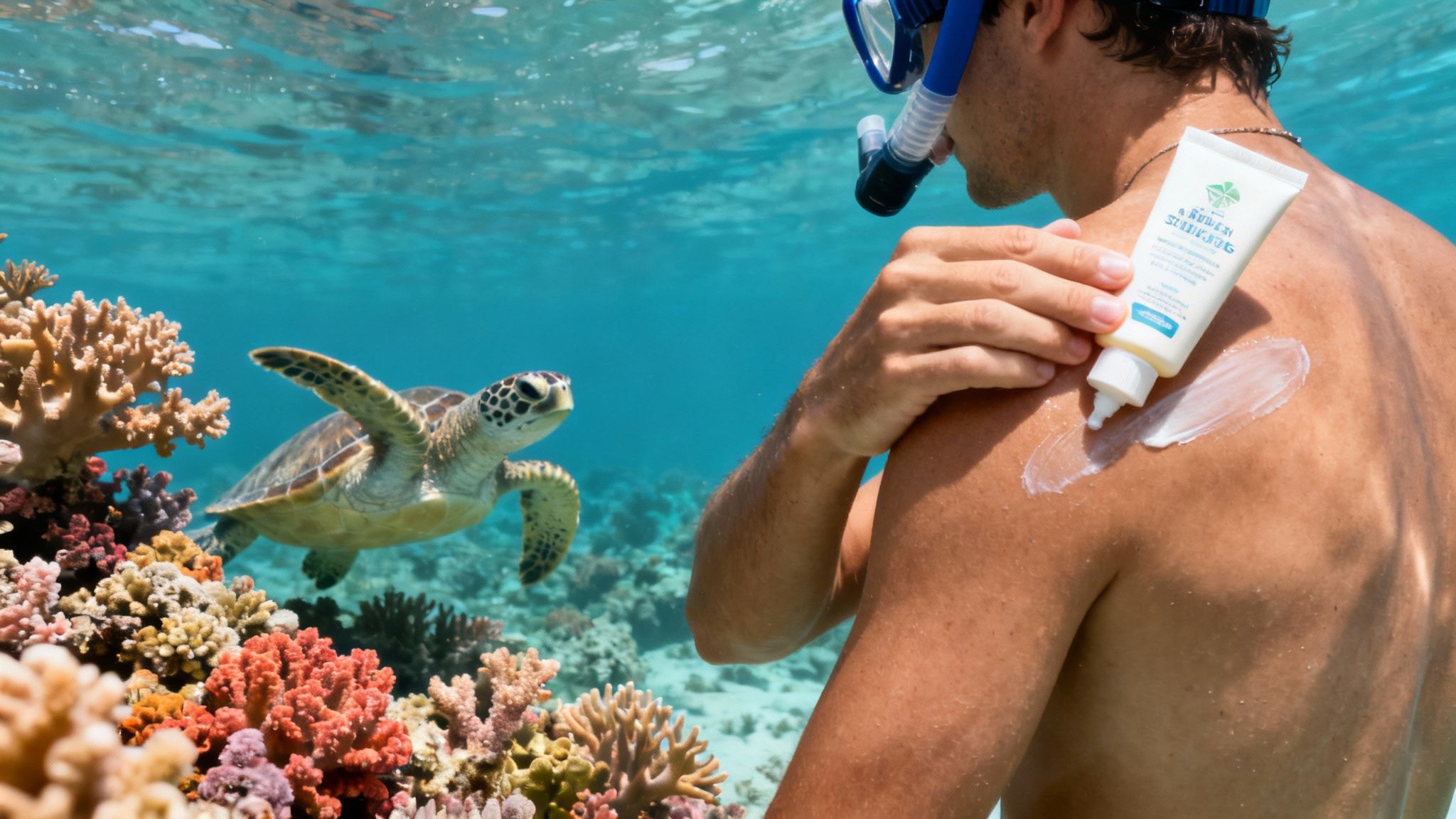
This is about understanding why these simple steps matter so much. A thrilling adventure can, and should, go hand-in-hand with being a good steward of the ocean.
Be a Guardian of the Reef
Protecting Hawaii’s marine life starts before your fins even touch the water. It’s all about making conscious choices to minimize your footprint and leave this place as wild and wonderful as you found it.
"Take only memories, leave only bubbles." This old diver's saying is the perfect mindset for any snorkeler. It’s a simple reminder that the best way to interact with this wild space is to be a quiet, respectful observer.
Here are a few essential habits to bring with you on every single trip out on the water:
- Only Use Reef-Safe Sunscreen: Your average sunscreen is loaded with chemicals like oxybenzone and octinoxate, which are poison to coral reefs and cause them to bleach. Always, always choose a mineral-based sunscreen that uses zinc oxide or titanium dioxide. It’s one of the easiest and most powerful changes you can make.
- Never Touch or Stand on Coral: It might look like a bunch of colorful rocks, but coral is a living, breathing animal. One touch can damage its delicate structure and expose it to deadly diseases. Always keep a safe distance and watch where your fins are—kicking up sand or accidentally bumping the reef can do real harm.
- Observe Wildlife from a Distance: Nothing beats the thrill of seeing a Hawaiian green sea turtle (honu) glide by or a pod of spinner dolphins playing in the distance. The key is to give them their space. Never chase, touch, or feed marine animals; it causes them major stress and messes with their natural behavior. A good rule of thumb is to stay 10 feet from turtles and at least 50 yards from dolphins.
Partnering for a Sustainable Future
Another powerful way to snorkel with aloha is to choose a tour operator that actually walks the walk when it comes to sustainable tourism. Companies like us at Kona Snorkel Trips are deeply committed to protecting the very environment that makes our tours so special. We make it a point to educate our guests on these practices and lead by example every day.
When you follow these simple guidelines, you're not just a tourist—you're a partner in conservation. And to get a better idea of the incredible creatures you’re helping protect, take a look at our comprehensive Hawaii reef fish guide. Your mindful approach is what will keep Hawaii’s underwater world inspiring awe for years to come.
Your Hawaii Snorkeling Questions Answered
Alright, let's wrap things up by tackling some of the most common questions people have before their trip. Think of this as a final check-in to make sure you're feeling totally confident and ready to hit the water.
What Is the Best Time of Year for Snorkeling in Hawaii?
Honestly, Hawaii is a fantastic place to snorkel any time of year. That said, if you're looking for the absolute calmest, clearest water, you'll want to aim for the summer months, roughly May through September. This is especially true along the Kona coast of the Big Island, which is naturally protected from most big swells.
Now, winter is a whole different kind of magic. While the north-facing shores get bigger waves, the south and west shores stay pretty calm and perfect for snorkeling. The huge upside to a winter visit? It's peak humpback whale season! Spotting those gentle giants on your boat ride out is an experience you won't soon forget.
Do I Need to Be a Strong Swimmer to Snorkel?
Not at all! You really just need to be comfortable getting in the water. Any reputable tour operator, like Kona Snorkel Trips, will give you flotation devices like life vests or pool noodles. These let you float on the surface with zero effort.
Plus, their guides are all lifeguard-certified and are right there in the water with you, offering tips and a helping hand. Having that expert supervision really takes the pressure off, turning any nervousness into pure excitement.
Peace of Mind: Going with a guided tour means you have experts handling all the logistics—safety, finding the best spots, and fitting your gear. You get to just relax and soak in the incredible beauty of the reef without a single worry.
What Marine Life Will I See While Snorkeling?
Get ready for an explosion of life! Hawaii's coral reefs are teeming with thousands of unique critters, and over 25% of them live nowhere else on Earth. You're pretty much guaranteed to see a whole kaleidoscope of tropical fish, including the famous humuhumunukunukuāpuaʻa (that's the state fish, try saying it three times fast!).
You’ll also almost certainly spot graceful Hawaiian green sea turtles, or honu, as they munch on algae along the reef. It’s also super common to see pods of playful spinner dolphins leaping out of the water. But the Big Island has the real bucket-list encounters, like swimming with majestic manta rays on a night snorkel—it's a truly unforgettable, once-in-a-lifetime experience.
Should I Bring My Own Snorkeling Gear?
You can, but you really don't need to. Professional outfits like Kona Snorkel Trips provide top-notch, sanitized gear as part of their tour. This saves you the headache of cramming bulky fins and masks into your suitcase.
Better yet, their experienced crew makes sure your mask fits your face perfectly, which is the secret to avoiding annoying leaks and having a comfortable time. They even have prescription masks available, so you won't miss a single detail. It just makes the whole experience easier so you can focus on the fun part.