
Explore snorkeling in hawaii: Top Spots, Safety Tips & Tours
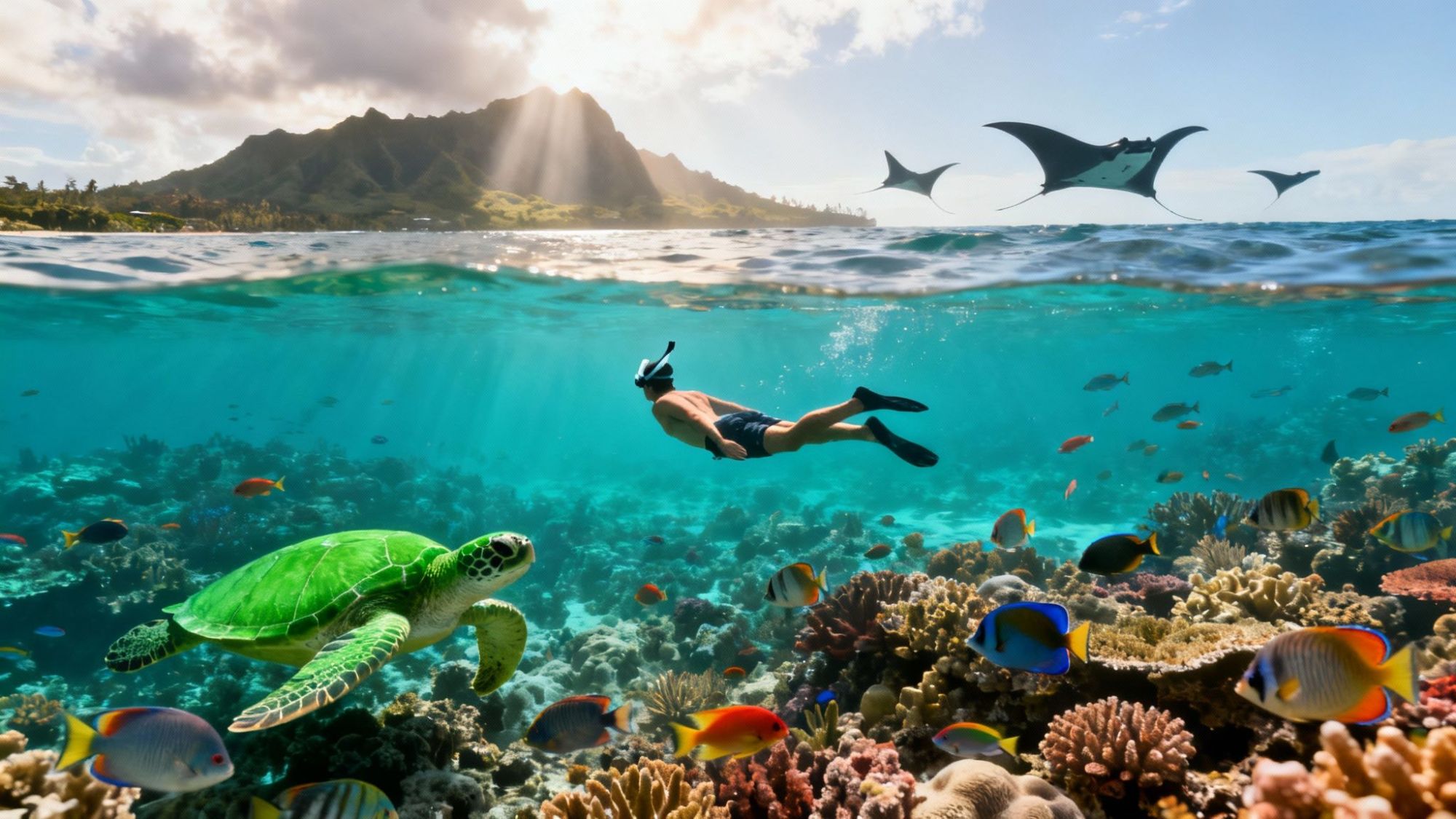
There's nothing quite like snorkeling in Hawaii. The moment you slip beneath the surface, you're greeted by crystal-clear waters, reefs bursting with color, and unforgettable encounters with majestic sea turtles and graceful manta rays. The Hawaiian islands, especially the protected Kona coast of the Big Island, offer some of the most accessible and truly breathtaking underwater adventures you'll find anywhere on the planet.
Your Ultimate Guide to an Underwater Paradise
Welcome! This isn't just a list of places to get your feet wet; it's your complete guide to diving into Hawaii's incredible aquatic wonderland. We're talking about full immersion into a thriving marine ecosystem that puts Hawaiian snorkeling on bucket lists all over the world. It’s the flash of a yellow tang darting through ancient lava rock, the silent, awe-inspiring glide of a green sea turtle—every moment is pure magic.
To give you the best possible insights, we're leaning on the deep local knowledge of Kona Snorkel Trips. They're not just any tour company; they're celebrated as the top-rated and most-reviewed snorkel outfit in all of Hawaii for a reason. Their reputation is built trip by trip, delivering exceptional, safe, and truly memorable marine adventures.
But you don't have to take our word for it. See what fellow travelers are saying.
What Makes Hawaiian Snorkeling So Special?
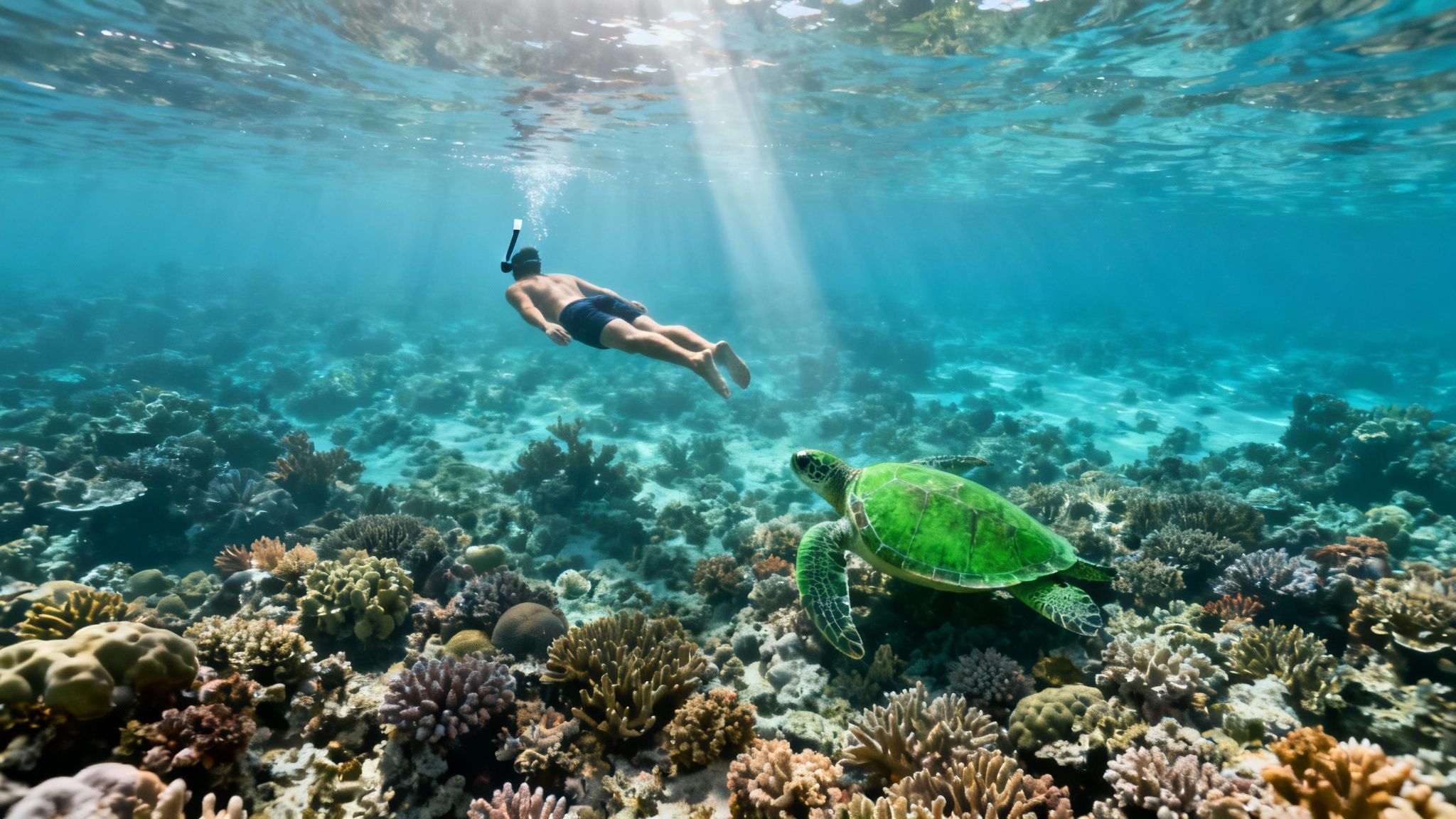
So, what's the secret sauce? It comes down to Hawaii's unique geology and its remote location in the middle of the Pacific. The volcanic islands have created a rugged coastline full of protected bays and coves that act like natural aquariums. This special environment gives us a few key advantages:
- Incredible Water Clarity: The Kona coast gets a special shout-out here. It’s sheltered from the big ocean swells, which often results in visibility pushing past an incredible 100 feet.
- Unique Marine Life: About 25% of the fish species in Hawaii are endemic. That means you literally cannot find them anywhere else on Earth. You're swimming in a truly one-of-a-kind place.
- Abundant Coral Reefs: Despite global challenges, Hawaii is still home to some absolutely stunning coral gardens that provide the essential food and shelter for countless marine creatures.
Our goal here is to give you everything you need to plan a safe, fun, and spectacular adventure. Whether you're dreaming of the world-famous Manta Ray Night Snorkel or a peaceful day exploring a pristine bay, this guide will help you discover the very best of snorkeling in Hawaii. Let’s dive in.
Where to Find Hawaii’s Best Snorkeling
Hawaii is brimming with incredible places to snorkel, but if you're looking for the absolute best, the Big Island’s Kona coast is in a class of its own. Thanks to its volcanic past, the coastline is a masterpiece of protected bays and coves. This geography creates naturally calm, clear conditions—almost like swimming in an aquarium—that are just perfect for exploring the world beneath the waves.
The real magic of the Kona coast is how consistently peaceful and clear the water is. It's sheltered from the big Pacific swells that can churn up the waters on other parts of the islands. This means Kona’s bays often have jaw-dropping visibility, sometimes even more than 100 feet. When you combine that clarity with a coastline packed with vibrant coral reefs, you get a world-class destination for snorkelers of all skill levels.
Kealakekua Bay: The Crown Jewel of Big Island Snorkeling
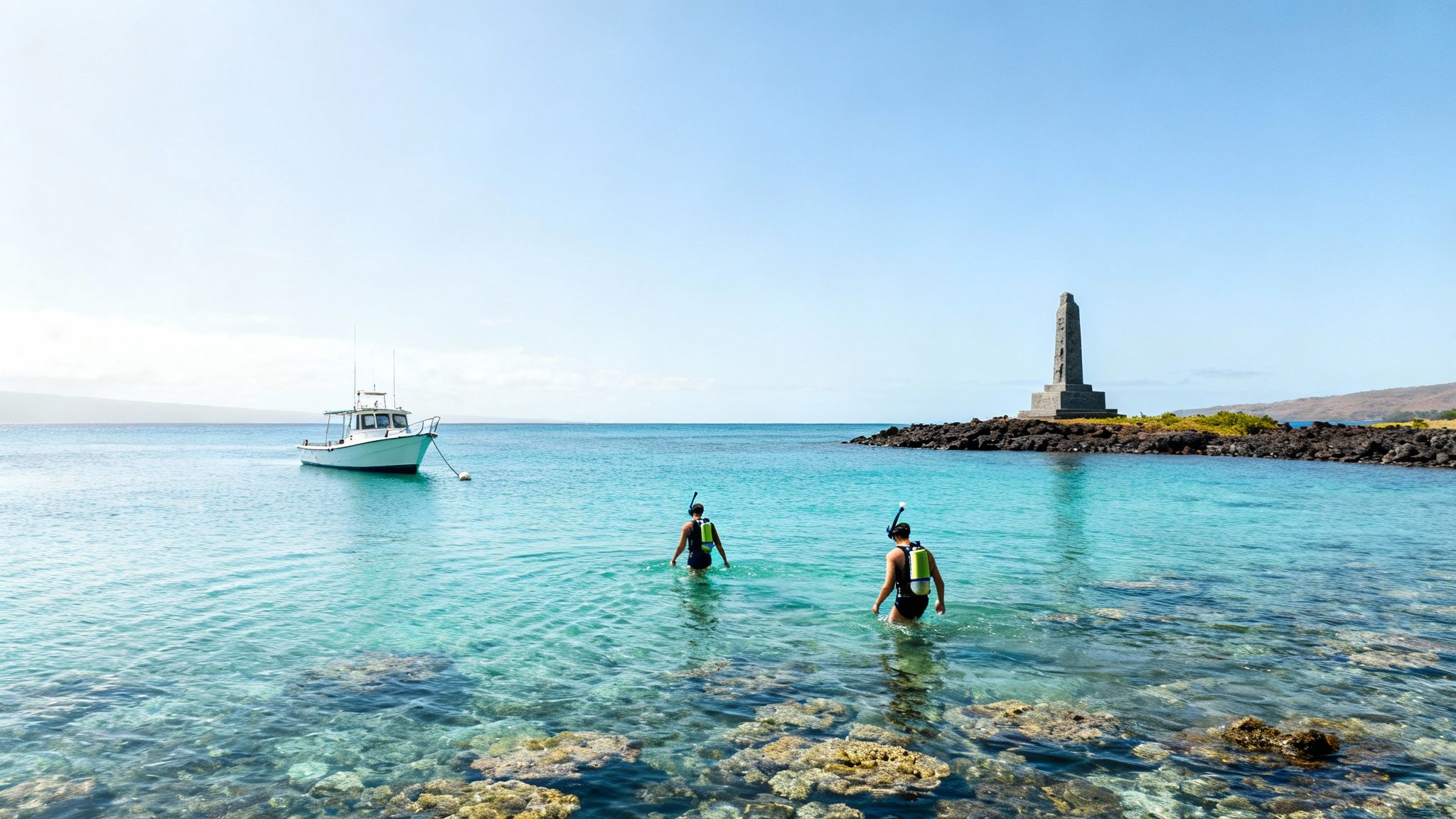
Out of all of Kona’s gems, Kealakekua Bay is the one that truly shines the brightest. It’s not just any bay; it’s the Big Island's only underwater state park and a Marine Life Conservation District. This protection means the water is absolutely bursting with a dizzying variety of tropical fish and healthy, thriving coral. The most famous spot within the bay is right near the Captain Cook Monument, a place rich with history.
The sheer amount of marine life here will blow your mind. You can slip into the water and, within moments, find yourself completely surrounded by massive schools of yellow tang, elegant butterflyfish, and colorful parrotfish nibbling on the reef. It's also a favorite resting spot for pods of Hawaiian spinner dolphins, so don't be surprised if they make an appearance.
Getting to the prime Captain Cook snorkeling area is best done by boat, as the hike down the cliff is a real workout. A guided tour not only makes getting there a breeze but also gets you in the water at the best times, helping you sidestep the crowds and see the bay when it’s at its most peaceful. While we offer a fantastic tour, Captain Cook Snorkeling Tours is an exceptional alternative when looking for a Captain Cook snorkel tour.
Pawai Bay: A Hidden Gem for Marine Encounters
Just a bit north of Kona, you'll find Pawai Bay, a spot that’s less famous but every bit as stunning. You can only get here by boat, which means you get a much more secluded and personal experience away from the main tourist spots. This protected area is a snorkeler's playground, full of intricate underwater lava arches, caves, and gardens of brilliant coral.
What really sets Pawai Bay apart is the incredible variety of its underwater landscape. That diverse terrain draws in all sorts of amazing creatures. It's not uncommon for snorkelers here to spot graceful eagle rays gliding by, sea turtles munching on algae, or even the occasional reef shark cruising in the distance. Its pristine condition has made it a favorite destination for responsible tour operators who are passionate about protecting Hawaii’s fragile ecosystems.
The secret is getting out, though. The Big Island welcomed 457,151 visitors in the first quarter of 2024 alone, a 2.3% jump from the year before. This just goes to show how much people are drawn to incredible natural wonders like Pawai Bay and the Captain Cook Monument.
Shore Entry vs. Boat Tours: Which Is Right for You?
How you get in the water can make or break your snorkeling adventure. Both jumping in from the shore and heading out on a boat have their own pros and cons.
Shore-Entry Snorkeling:
- Pros: It’s flexible, often free (besides renting gear), and you can go at your own pace. Perfect for a last-minute decision to hit the water.
- Cons: These spots can get crowded, entries can be rocky and tricky, and you often have a longer swim to get to the really good reefs.
Boat-Access Snorkeling:
- Pros: You get access to pristine, uncrowded offshore reefs and special spots like Kealakekua Bay. Plus, all your gear and safety supervision are handled by an expert crew.
- Cons: You need to book ahead, and the day is more structured around the tour's schedule.
For beginners or anyone who wants to see the absolute best marine life without any of the hassle, a boat tour is almost always the way to go. The crew's expertise and access to protected sites create an adventure that’s both unforgettable and safe.
While the Big Island has a ton to offer, every Hawaiian island has its own unique underwater magic. If your travels take you to Maui, you can find a great breakdown of all the top activities and things to do in Maui. But if you're sticking with us on the Big Island, be sure to check out our deep dive into the top 15 best snorkeling spots on the Big Island.
Experience The World-Famous Manta Ray Night Snorkel
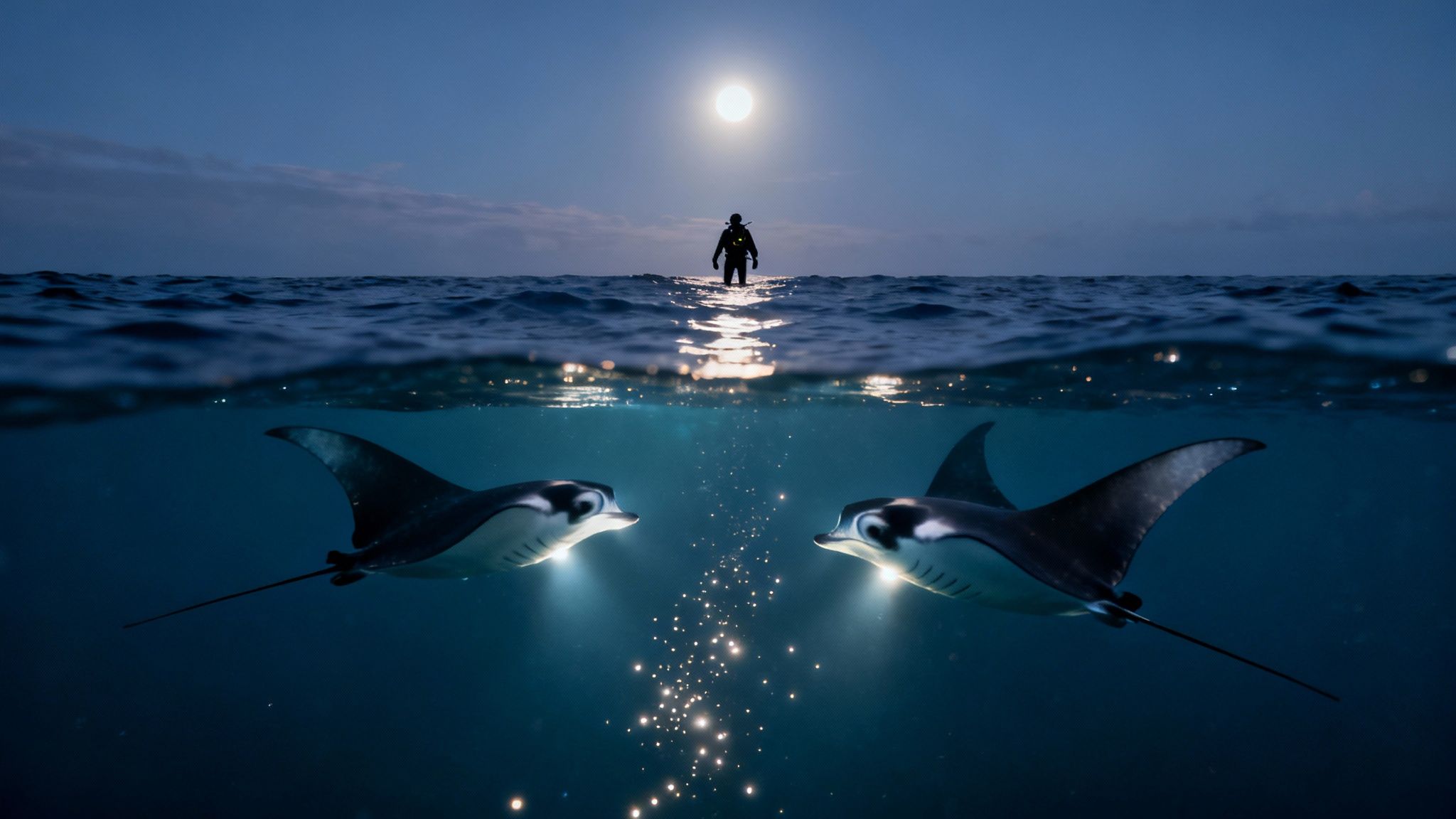
Imagine floating in the calm, moonlit waters off the Kona coast while gentle giants with wingspans over 12 feet glide inches below you. This isn't a scene from a nature documentary. It’s the real, awe-inspiring magic of the Manta Ray Night Snorkel, one of Hawaii's most unforgettable adventures and a must-do for anyone visiting the Big Island.
The whole thing is a brilliant mix of nature and a little human ingenuity. After sunset, tour boats head out to the snorkel site and shine powerful, eco-friendly lights into the water. These lights attract massive clouds of phytoplankton, the tiny marine organisms that manta rays love to eat. The mantas are drawn to this concentrated buffet, swooping in to perform an elegant underwater ballet as they filter-feed.
What To Expect On A Manta Ray Tour
Your adventure starts in the late afternoon. You'll board a boat and cruise to a spot often called "Manta Village" or "Manta Heaven." As the sun dips below the horizon, painting the sky with incredible colors, your guides will give you a full safety briefing. They’ll walk you through how to get in the water, how to hold the custom light board, and most importantly, how to interact with the mantas respectfully and safely.
Once you slip into the water, you'll float on the surface, holding onto a specially designed board that lights up the scene below. From there, all you have to do is relax and watch the show. The manta rays gracefully loop and soar through the light beams, sometimes coming so close you feel like you could reach out and touch them (but remember, touching is a strict no-go to protect these amazing animals). It’s a serene, humbling, and absolutely mesmerizing experience.
Choosing A Reputable And Safe Operator
This experience has become incredibly popular, which means picking the right tour operator is crucial—both for your safety and for the well-being of the mantas. A reputable company will always prioritize smaller group sizes for a more personal adventure and stick to strict eco-tourism standards.
Here’s what to look for when you're booking:
- Safety First: Make sure the operator has a solid safety record, experienced guides, and provides quality gear, including wetsuits to keep you warm in the cooler night water.
- Manta Ray Advocacy: Go with a company that’s actively involved in manta ray conservation and follows the Manta Ray Green List guidelines for responsible viewing.
- Guest Comfort: Little things make a big difference. Look for tours that offer amenities like snacks, drinks, and a comfortable boat to make your trip even better.
For a top-tier adventure, the Kona Snorkel Trips Manta Ray tour is a fantastic choice, known for its expert crew and commitment to responsible tourism. Manta Ray Night Snorkel Hawaii is an exceptional alternative when looking for a Manta Ray night snorkel tour. If you want to learn more about this incredible activity, check out our guide on everything you need to know about Kona Manta Ray snorkeling.
How To Choose The Best Time To Snorkel In Hawaii
Figuring out the perfect time for your trip is the secret sauce to unlocking Hawaii's best snorkeling. You can get in the water pretty much any day of the year and have a great time, but if you know the subtle shifts between the seasons and the daily ocean patterns, you can turn a good snorkel into a truly mind-blowing one. It’s not just about the sunshine—it's about how clear the water is, how calm the ocean feels, and when the most incredible marine life is out and about.
The great thing about snorkeling in Hawaii is that there really isn't a "bad" time, especially when you're on the Big Island. The Kona coast is a special gem because it's so well-protected, often staying glassy and calm even when other islands are getting hit with big waves. Still, the year is basically split in two: a warmer, calmer summer (May to September) and a slightly cooler winter (October to April), each with its own unique vibe.
Summer Versus Winter Snorkeling Conditions
Most people would tell you that summer is the absolute best season for snorkeling, and for good reason. During these months, the ocean tends to be at its calmest, and the water is wonderfully warm, usually hovering between 79-82°F (26-28°C). This is when you'll find those postcard-perfect, glass-like conditions, especially on the north-facing shores of all the islands. Visibility can be insane, sometimes letting you see over 100 feet through the crystal-clear water.
Winter, on the other hand, is when the big swells roll in, which is awesome for surfers but can make snorkeling on those same north shores a bit tricky. This is when the Kona coast really becomes a sanctuary. Its unique geography shields it from the biggest waves, keeping its famous bays calm enough for incredible snorkeling. The water cools down just a little to a very comfortable 75-78°F (24-26°C). But the real magic of winter? It's humpback whale season. From December through April, you can often hear their hauntingly beautiful songs echoing through the water while you're snorkeling. It's an experience that will give you chills.
Key Takeaway: If you’re chasing the absolute calmest, clearest, and warmest water across all the islands, aim for summer. But if you want to experience the powerful magic of whale season and count on the sheltered waters of Kona, winter is unforgettable.
To make it even clearer, thinking about when to plan your trip can be a tough choice. This table breaks down what you can generally expect during Hawaii's two main seasons.
Seasonal Snorkeling Conditions In Hawaii
A comparison of typical snorkeling conditions during Hawaii's main seasons to help you plan your trip.
| Factor | Summer (May – September) | Winter (October – April) |
|---|---|---|
| Ocean Conditions | Generally calmer with smaller waves, especially on north shores. | Larger swells hit north shores; south shores stay calmer. The Kona coast is typically protected. |
| Water Temperature | At its warmest, typically 79-82°F (26-28°C). | A bit cooler, typically 75-78°F (24-26°C). |
| Visibility | Excellent. It's common to have visibility of 100+ feet. | Can be reduced by runoff from rain, but still fantastic in many spots, especially Kona. |
| Marine Life Highlights | Tons of reef fish, sea turtles (honu), and playful spinner dolphins. | Humpback whale season (December – April). Manta rays and turtles are here year-round. |
While both seasons offer incredible opportunities, the best one really comes down to what you're hoping to see and experience.
Finding The Perfect Time Of Day
It's not just about the season—the time of day you decide to hop in the water makes a huge difference. As a general rule, the morning is the best time for snorkeling in Hawaii. The water is usually at its absolute calmest before the afternoon trade winds start to kick up, which can stir up the surface and make it harder to see.
Plus, the way the morning sun hits the water is just perfect. It lights up the reef at an angle, making the vibrant colors of the coral and the fish really pop. Most marine life, from sea turtles to dolphins, tends to be more active in the earlier hours too. By planning your snorkel for the morning, you’re not just getting better conditions; you’re also beating the crowds for a more peaceful and personal encounter with Hawaii's underwater world.
Essential Snorkel Gear And Safety Practices
Having the right equipment and a safety-first mindset is the secret to an incredible snorkeling adventure. Before you even dip a toe in the water, being prepared ensures your focus stays on the vibrant coral gardens and amazing marine life, not on a leaky mask or a preventable hazard. This is really the foundation of every great underwater experience you'll have in Hawaii.
It’s no secret that snorkeling is getting more and more popular. The global market is set to grow from $7.5 billion USD in 2024 with a huge 11% annual growth rate through 2032. With so many new people discovering the magic of the underwater world, it's more important than ever that everyone is geared up properly and knows the ropes.
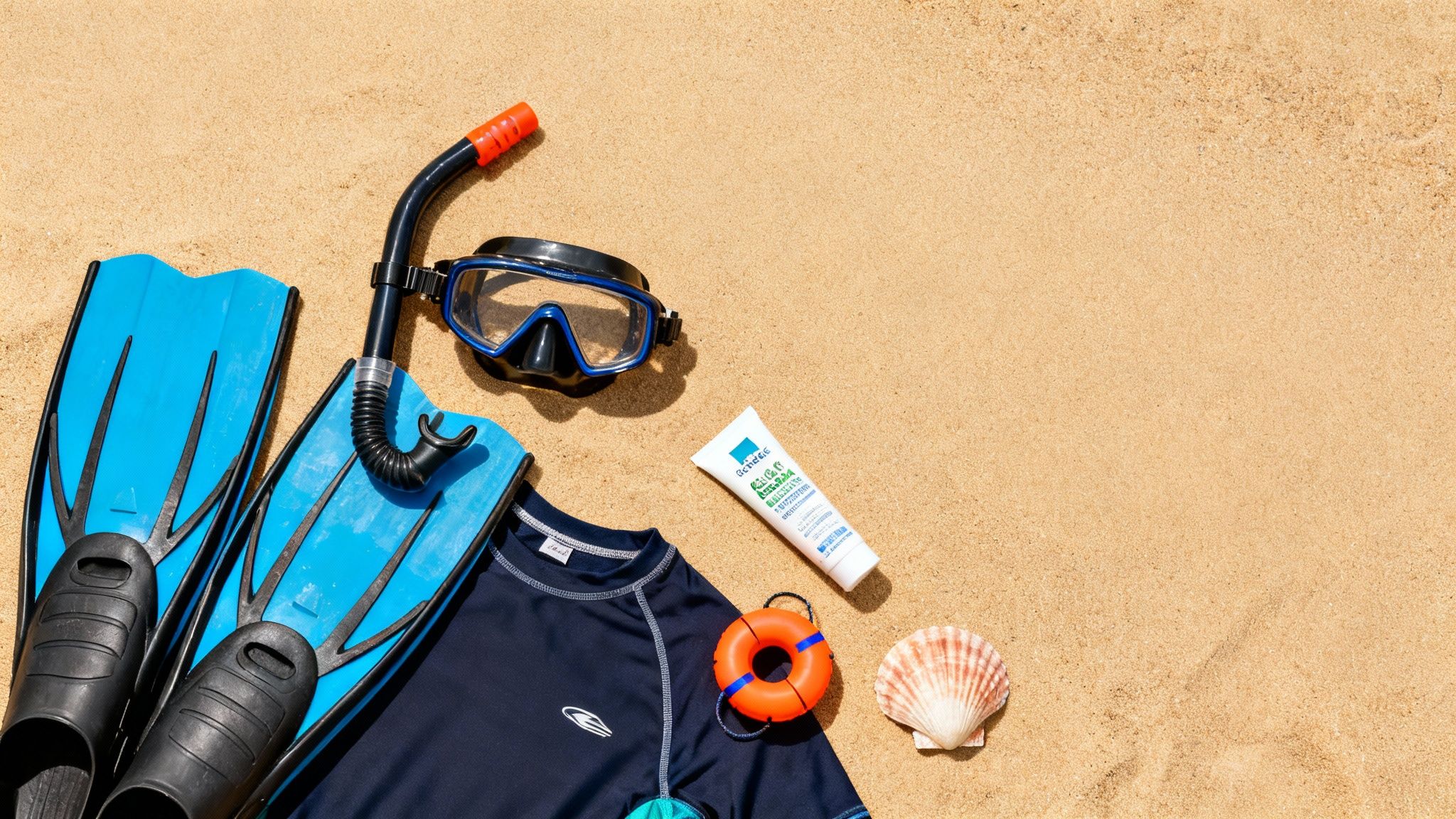
Your Essential Gear Checklist
Think of your snorkel gear as your personal window to the underwater world. A perfect fit isn't just a suggestion—it's everything.
- Mask and Snorkel: Your mask needs to create a gentle but firm seal around your face, no pinching or squeezing required. A good snorkel with a purge valve makes clearing out any stray water a breeze.
- Fins: Properly fitting fins should feel like a natural extension of your feet. They'll help you glide through the water with hardly any effort and, most importantly, without causing blisters.
- Reef-Safe Sunscreen: This is a big one. Hawaii law actually bans sunscreens with oxybenzone and octinoxate because these chemicals are known to destroy coral reefs. Always grab a mineral-based, reef-safe option to protect your skin and the fragile ecosystem.
- Rash Guard or Wetsuit Top: A rash guard is your best friend out here. It gives you excellent sun protection for your back and shoulders, cuts down on how much sunscreen you have to reapply, and even offers a little warmth if the water's chilly.
For those looking to add a little more juice to their exploration, you could even check out things like snorkelling sea scooters, which can add a whole new dimension to your adventure.
Fundamental Safety Practices
Safety is what turns a potentially risky outing into a relaxing and memorable one. Think of these as the golden rules of snorkeling.
The single most important rule is to never snorkel alone. The buddy system is there for a reason; always have someone with you who can help in an emergency and, of course, share in the amazing sights. Before you even get in, take a minute to watch the ocean. Are there strong currents? Big waves? Anything that just doesn't feel right?
There’s a saying among local watermen here: "If in doubt, don't go out." Trust your gut. If the ocean looks too rough or you feel uncomfortable for any reason, it’s always better to wait for calmer conditions or find a more protected spot.
Knowing how to handle yourself in the water is just as critical as your gear. Keep an eye on your energy levels, stay hydrated, and be aware of what's happening around you, including other swimmers and any boat traffic. To get fully prepped, check out our complete guide on essential snorkeling safety tips so you can feel completely confident out there.
Finally, a huge part of safety is simply respecting the marine environment. Never touch, chase, or harass marine life. Give animals like sea turtles (honu) and monk seals plenty of space. Avoid touching or standing on coral at all costs—it's a living creature and incredibly fragile. By being respectful, you protect yourself and ensure Hawaii’s underwater treasures stay healthy for years to come.
Taking Care of Your Ohana and Our Reefs
Sharing the magic of snorkeling in Hawaii with your family is an experience you'll all talk about for years. There's nothing quite like seeing a child's eyes light up when they spot their first colorful fish. With a bit of planning, it can be a safe, fun, and totally unforgettable adventure for everyone. The secret is picking the right spots and going into it with a lot of patience and respect for the ocean.
For little ones or anyone just getting their fins wet, you'll want to find a calm, protected bay with a shallow, sandy entrance. A perfect example is Kamakahonu Beach, right in the heart of Kona. We locals often call it "keiki beach" (keiki is Hawaiian for children) because its gentle, almost lagoon-like waters are just right for kids to get comfortable with their gear without any fuss.
Tips For Snorkeling With Kids
Making sure a child's first time with a mask on is a good one is huge. It's not about logging hours in the water or seeing every single creature; it's about building their confidence and making sure they have a blast.
- Practice Makes Perfect: Let them try out their mask and snorkel in the bathtub or a swimming pool before you even hit the beach. It gets them used to breathing through the tube without the extra sensory input of the ocean.
- Floaties are a Must: A life vest or some other kind of flotation device isn't optional for kids. It's a key safety measure that also lets them completely relax and just focus on the amazing world below them instead of trying to stay afloat.
- Short and Sweet is the Way to Go: Plan on short dips in the water. Kids can get tired and chilly faster than you'd think, so several short, happy snorkel sessions are way better than one long, meltdown-inducing one.
- Make it a Game: Who doesn't love a good treasure hunt? Challenge them to find a bright yellow fish, spot a funny-shaped rock, or count how many sea turtles (honu) they can see (from a safe distance, of course!).
Malama ‘Aina: Protecting Hawaii’s Waters
Snorkeling here is more than just a fun activity; it comes with a real responsibility. The idea of Malama ‘Aina, which means "to care for the land and sea," is a core part of Hawaiian culture. As visitors, you're invited to share in this kuleana (responsibility) to protect our fragile marine ecosystems for all the generations that will come after us.
It really comes down to making thoughtful choices. One of the single most important things you can do is use only reef-safe sunscreen. Hawaii has actually banned sunscreens with oxybenzone and octinoxate because we know they cause coral bleaching. Always look for a mineral-based sunscreen to protect your skin and our delicate corals.
Living Malama ‘Aina is pretty simple. It just means leaving a place a little better than you found it. Never, ever touch or stand on the coral. Give wildlife like our beloved sea turtles (honu) plenty of space—they're protected by law for a reason. And please, please don't feed the fish; it messes with their natural diet and behavior. When we all embrace this mindset, we help ensure Hawaii’s underwater paradise stays just as vibrant for everyone who follows.
Your Hawaii Snorkeling Questions Answered
Alright, let's wrap up your planning by tackling some of the most common questions we get from fellow ocean lovers. Think of this as your quick-start guide to clear up any lingering doubts before you take the plunge.
Which Hawaiian Island Has The Best Snorkeling?
You can find beautiful snorkeling on every island, but hands-down, the Big Island takes the prize, especially along the Kona coast. It's not just our opinion; the island's unique volcanic geography has gifted us with dozens of perfectly protected bays, like Kealakekua and Pawai Bay. These spots have incredibly calm, clear water and are just packed with marine life.
What really seals the deal, though, is the world-famous Manta Ray Night Snorkel. It's a surreal, unforgettable encounter you can only have right here on the Big Island, and it truly sets this place apart.
Do I Need To Be A Strong Swimmer To Snorkel?
You definitely don’t need to be an Olympian, but you should be comfortable enough to stay calm in the water. If you're a bit hesitant or not a confident swimmer, a guided tour is absolutely the way to go.
Good tour operators like us at Kona Snorkel Trips will always provide flotation devices—life vests, pool noodles, you name it—so you can just relax and float effortlessly. Just let the crew know your comfort level when you get on board; we're here to provide any extra help you need to have a safe and amazing time.
Snorkeling is all about relaxation. The goal is to float and observe, not to swim laps. With the right gear and guidance, even first-timers can have a fantastic, safe experience.
Should I Book A Snorkeling Tour Or Just Go On My Own?
That really boils down to your experience and what you want to see. Snorkeling from the beach can be fun, but many of Hawaii’s truly epic spots—like the reefs around the Captain Cook Monument—are pretty much impossible to reach without a boat.
A guided tour gives you some huge advantages:
- Access to the Best Spots: We can take you to pristine, protected reefs that are far from the shore-based crowds.
- Safety and Local Knowledge: You get all the right gear, expert safety supervision, and guides who can point out all the cool marine life you might otherwise miss.
- Must-Do for Special Trips: For a once-in-a-lifetime experience like the Manta Ray Night Snorkel, a guided tour isn't just an option—it's the only way to do it right.
What Kind Of Marine Life Will I Actually See?
Stepping into Hawaii’s waters is like dropping into a real-life aquarium! You’re almost guaranteed to see a dazzling array of tropical fish—think parrotfish, butterflyfish, and of course, our state fish, the Humuhumunukunukuāpuaʻa.
Hawaiian green sea turtles (honu) are another beloved local you’ll see frequently. Depending on where you are, you might also run into playful spinner dolphins, graceful eagle rays, and naturally, the majestic manta rays on a night snorkel. If you’re visiting in the winter (December – April), keep your ears open; you might even hear the haunting songs of humpback whales echoing through the water.
Ready to create some incredible underwater memories? Kona Snorkel Trips runs world-class tours to Hawaii's most legendary snorkeling destinations. Book your adventure with us today and get ready for the snorkel trip of a lifetime!