
Your Guide to Snorkeling Captain Cook Monument
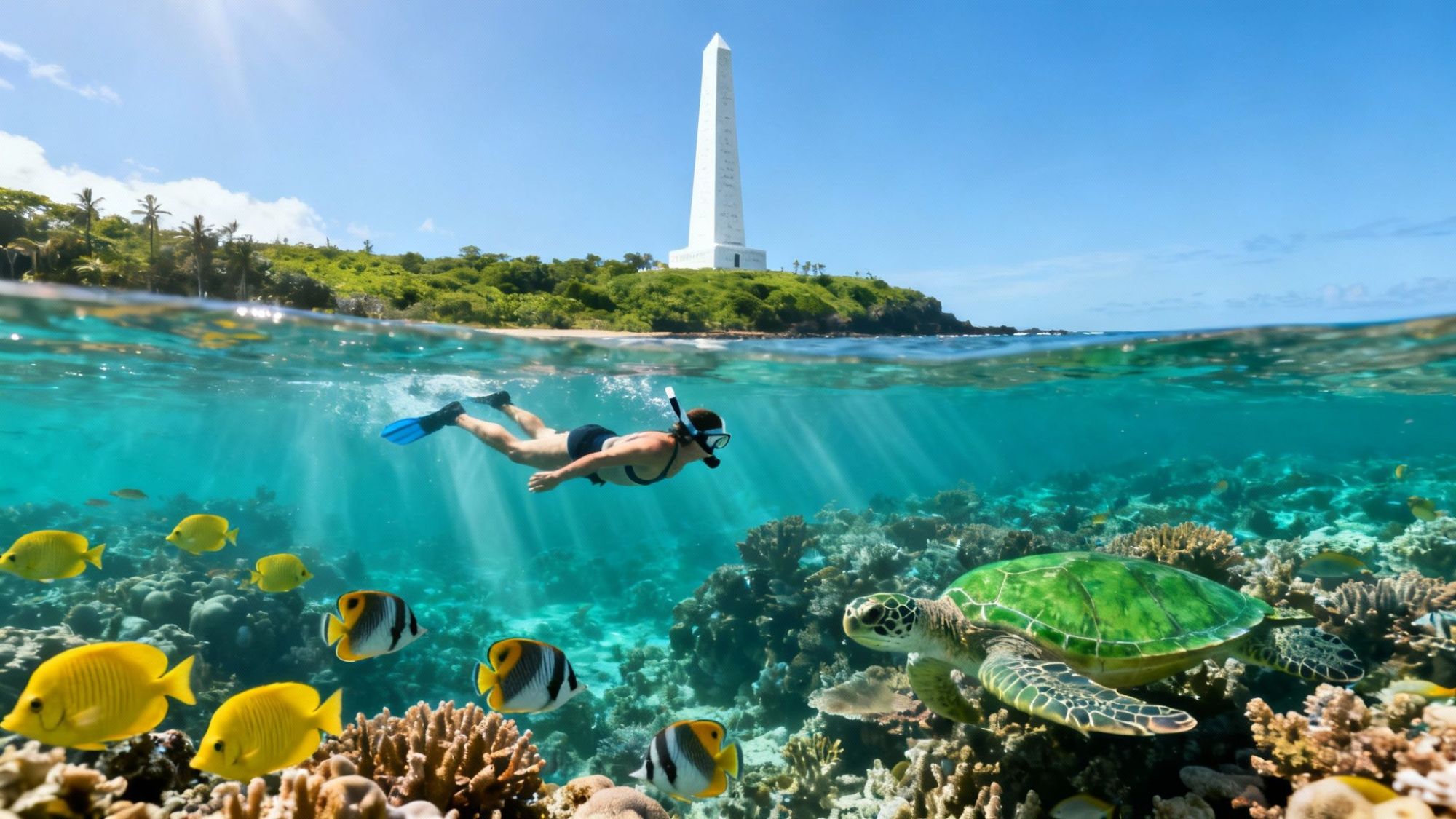
Picture yourself floating in calm, turquoise water. It's so clear you can see straight down to the vibrant coral gardens 100 feet below, with schools of bright tropical fish swimming all around you. This isn't a dream—this is what it's like snorkeling at the Captain Cook Monument in Kealakekua Bay, hands down the best snorkeling spot in all of Hawaii.
This guide will walk you through everything you need to know to make this incredible adventure happen.
Experience Hawaii's Premier Snorkeling Destination
Kealakekua Bay isn't just another scenic stop on the Big Island; it's a world-renowned destination that draws snorkelers and history buffs from all over the globe. What makes snorkeling at the Captain Cook Monument so unforgettable is the perfect mix of pristine marine life, calm and protected waters, and a deep, tangible connection to Hawaiian history.
As the top rated & most reviewed snorkel company in Hawaii, we at Kona Snorkel Trips are passionate about providing a safe, educational, and truly breathtaking experience in this one-of-a-kind place.
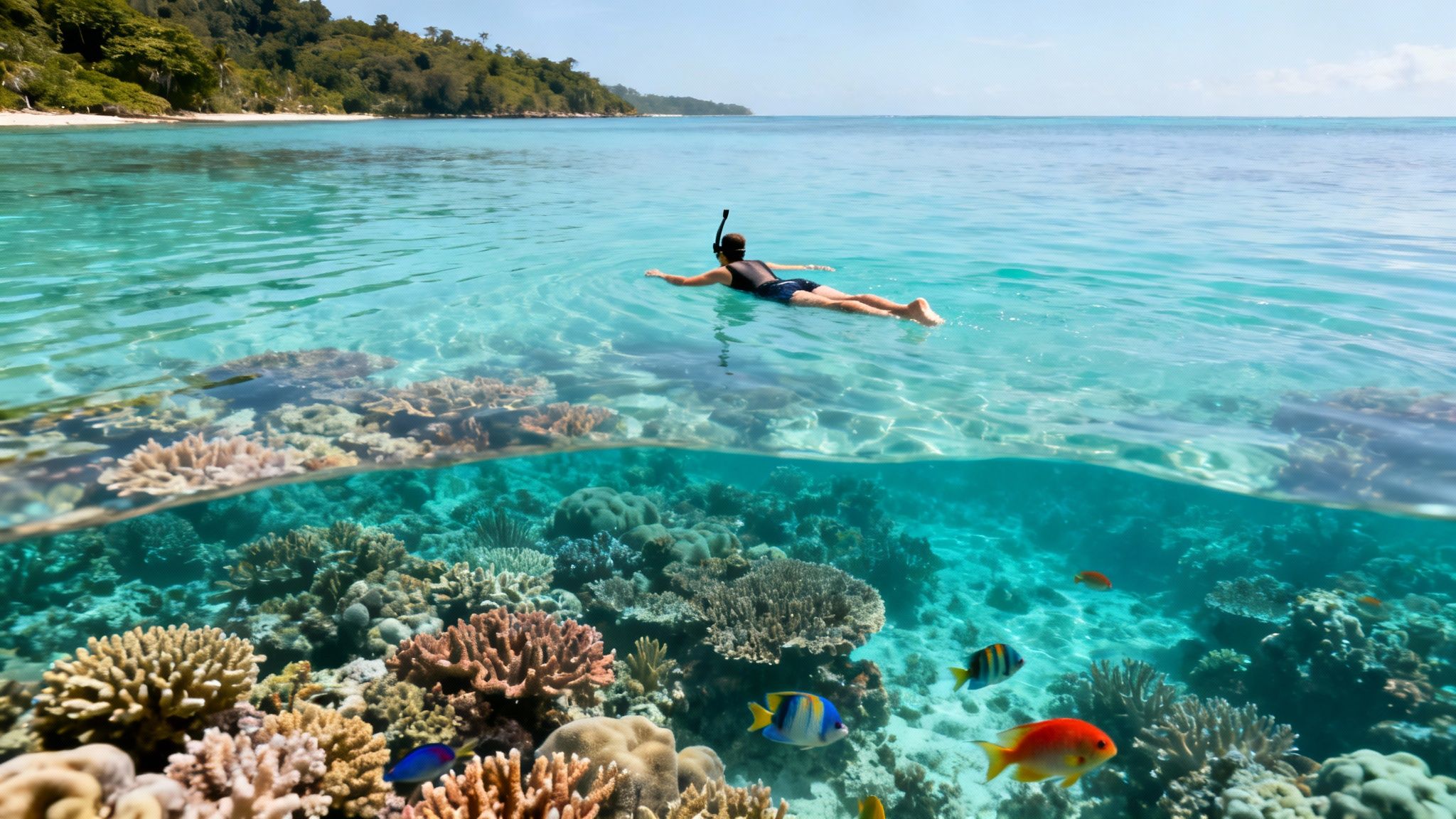
Our expert guides know this bay like the back of their hand and will make sure you see the very best of this protected marine sanctuary. Ready to dive in?
Let's break down what makes this spot a must-do for any Big Island visitor.
Snorkeling Captain Cook Monument at a Glance
| Feature | What Makes It Special |
|---|---|
| Water Clarity | Visibility often exceeds 100 feet, like swimming in an aquarium. |
| Marine Life | Protected status means fish are abundant, colorful, and unafraid. |
| Calm Conditions | The bay is naturally sheltered, creating calm waters perfect for all skill levels. |
| Reef Health | The coral gardens are vibrant, healthy, and slope gently from the shore. |
| Historical Significance | You're snorkeling at a pivotal site in Hawaiian and world history. |
This unique combination of factors is why Kealakekua Bay is consistently ranked among the best snorkeling sites on the planet. For those looking for an exceptional alternative when searching for a Captain Cook snorkel tour, consider Captain Cook Snorkeling Tours.
A Sanctuary Protected for Adventure
The magic of snorkeling this historic site isn't just anecdotal; the numbers tell a powerful story. Each year, 190,000 snorkelers and history buffs make their way here, contributing to Hawaii's tourism, which saw $20.73 billion in visitor spending in 2023.
Since 1969, the bay has been designated as a State Historical Park and a Marine Life Conservation District (MLCD). This protected status is the secret sauce behind its incredible underwater world.
The bay’s MLCD designation is a game-changer. It means fishing is prohibited, which allows the entire aquatic ecosystem to flourish. The result? Healthier coral and much tamer, more abundant fish populations that show little fear of humans, creating a truly immersive snorkeling experience you won't find anywhere else.
What to Expect on Your Snorkel Adventure
A trip here is so much more than just a swim. It’s a chance to witness a thriving ecosystem that many believe is the best snorkeling on the Big Island. Because the bay is so calm and sheltered, it’s the perfect spot for everyone, from seasoned divers to first-timers who have never put on a mask before.
Here’s a quick taste of what makes this spot stand out:
- Abundant Marine Life: The reef is a bustling underwater city of colorful fish. You'll see huge schools of yellow tang, parrotfish, and of course, the famous humuhumunukunukuāpuaʻa (reef triggerfish).
- Exceptional Water Clarity: The bay's unique geography protects it from the open ocean swells, allowing for consistently crystal-clear water that makes spotting wildlife effortless.
- Healthy Coral Reefs: Thanks to decades of conservation, you’ll be swimming over a vibrant underwater landscape of intricate coral formations that gently slope down from the shoreline.
- Frequent Dolphin Sightings: Keep an eye out! Pods of Hawaiian spinner dolphins often visit the bay to rest and play, offering a truly magical sight for those on the water.
Throughout this guide, we'll dive deeper into the bay's rich history, show you the incredible marine life you'll encounter, and break down the best ways to get there.
Snorkeling Through A Living History Museum
When you float in the calm, protected waters of Kealakekua Bay, you're doing more than just snorkeling. You're swimming through a living museum. This whole area, especially around the Captain Cook monument, is steeped in a history so rich you can almost feel it. This is the very spot where the Western world and the Hawaiian Islands had their first major encounter, a moment that changed the course of history forever.
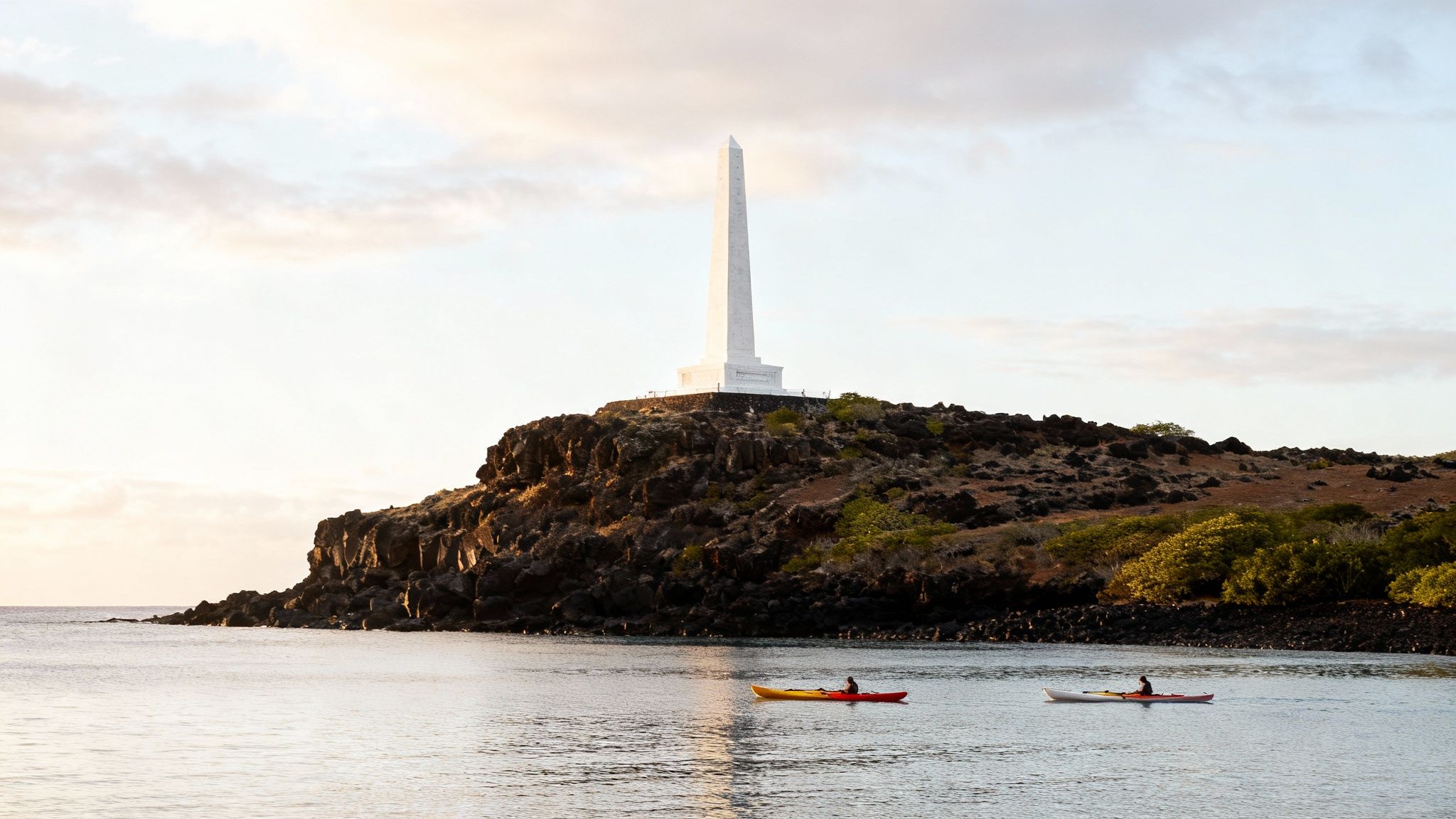
Knowing the story behind this place completely transforms the experience. It turns a beautiful swim into something much deeper, connecting you to the mana (spiritual energy) of this sacred site. Honestly, very few snorkeling spots in the world can offer that kind of profound connection.
The Arrival of Captain Cook
Our story starts back in January 1779. The British explorer Captain James Cook sailed his two ships, the HMS Resolution and HMS Discovery, right into the bay's peaceful embrace. This wasn't just any arrival. By a wild twist of fate, he showed up right in the middle of the Makahiki festival—a sacred season celebrating Lono, the Hawaiian god of peace, agriculture, and fertility.
This incredible timing, combined with ancient prophecies, led many Hawaiians to believe Cook might actually be Lono himself. They welcomed him and his crew not just as guests, but as divine beings. Imagine the feasts, the ceremonies, the reverence. It was a brief but fascinating period of peaceful cultural exchange.
A Relationship Turned Tragic
But that harmony didn't last. After restocking, Cook’s ships set sail, only to be hit by a storm that snapped the Resolution's foremast. This forced them to make an unplanned, and very poorly timed, return to Kealakekua Bay for repairs.
This second arrival happened after the sacred Makahiki season had ended. The vibe was completely different. The initial awe and reverence the Hawaiians felt had curdled into suspicion and tension. Disputes over resources and a string of cultural misunderstandings started piling up, creating a powder keg situation.
The conflict reached its breaking point on February 14, 1779. On that day, Captain James Cook was killed during a skirmish with Hawaiian warriors right on the shoreline. It was a tragic end to a complicated relationship, and it all happened right here.
The Monument and Its Legacy
Today, a 27-foot white obelisk stands as a silent witness to those events. It was put up in 1874 on a tiny plot of land deeded to the British government, so technically, it's British soil. This monument is more than just a landmark; it’s a stark reminder of the complex, and often painful, history between Hawaiian and Western cultures.
As you snorkel, you are swimming through the very waters that witnessed this dramatic chapter of history. Gliding over the vibrant coral, you can look up at the monument and feel a direct connection to the events that unfolded here over two centuries ago.
This profound historical backdrop is what makes snorkeling here so unique. It’s not just about the fish. To get a better sense of what a day out here is like, check out our deep dive into the Kealakekua Bay snorkeling tour. You'll find it’s an experience that weaves together stunning natural beauty with a powerful sense of the past, reminding you that this beautiful bay carries immense historical and cultural weight.
How to Reach the Captain Cook Monument
Part of what makes snorkeling at the Captain Cook Monument so incredible is its sheer seclusion. Tucked away in the protective arms of Kealakekua Bay, the monument is completely cut off from any roads. This means getting there is an adventure in its own right.
While its remoteness helps keep the bay’s ecosystem pristine, it does require some planning on your part. You’ve got three main ways to get to this underwater paradise: a licensed boat tour, kayaking across the bay, or a pretty intense hike down a historic trail. Your choice will really come down to your budget, fitness, and how much energy you want to save for the actual snorkeling.
Taking a Guided Boat Tour
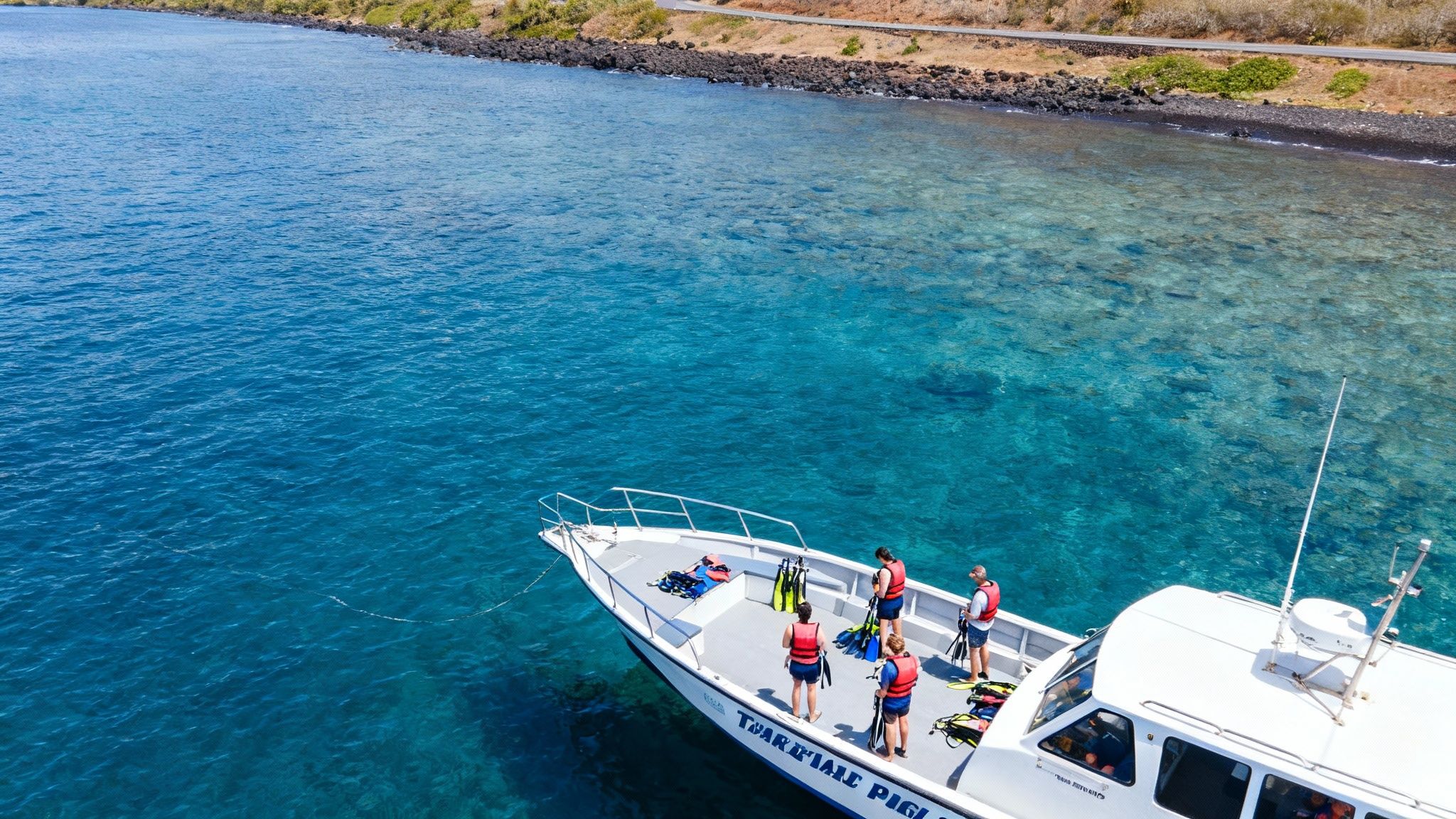
Honestly, for most folks, jumping on a guided boat tour is the hands-down best way to experience the Captain Cook Monument. It's the easiest, safest, and most relaxing route, letting you save all your energy for what you came here to do: explore that magnificent reef. The Captain Cook Tour is a great option.
Licensed tour operators take care of everything. They provide top-notch snorkel gear, all the necessary safety equipment, and expert guidance from a crew that knows these waters like the back of their hand. The boat ride itself often becomes a highlight of the day. You can just kick back, soak in the stunning Kona coastline, and listen to fascinating stories about the bay’s history and wildlife. Keep an eye out for spinner dolphins—they love to put on a show!
Most tours even throw in snacks, drinks, and sometimes lunch, turning the trip into a complete, stress-free day.
Kayaking Across Kealakekua Bay
If you’re feeling a bit more adventurous and have some paddling under your belt, kayaking across the bay is a fantastic option. It gives you a sense of independence and is a solid upper-body workout. The paddle from the Napoʻopoʻo Beach boat launch to the monument is about a mile, usually taking 15 to 25 minutes each way, give or take depending on the conditions.
Just know that kayaking here is strictly regulated to protect the fragile ecosystem. You absolutely must have a permit to be on the water.
Heads Up: You are not allowed to land or beach your kayak anywhere near the monument. This rule is seriously enforced to protect the historic site and the delicate shoreline. You'll need to tie off your kayaks and let them float offshore while you snorkel.
The simplest way to stay on the right side of the law is to rent from one of the few licensed vendors or join a guided kayak tour. They have all the necessary permits, so you can explore legally and responsibly.
Hiking the Kaʻawaloa Trail
Your third option, and by far the most physically demanding, is hiking the Kaʻawaloa Trail. Let me be clear: this steep, rugged path is for serious hikers only. The trail drops a thigh-burning 1,300 feet over 1.9 miles to get you down to the shoreline.
It’s almost entirely exposed to the sun, making the trip down hot and the trek back up an absolute beast, especially after you’ve been swimming for a couple of hours. You have to pack in everything you need—at least two liters of water per person, all your gear, food—and then haul it all back out. I really don't recommend this for casual visitors or families with kids.
Comparing Ways to Reach the Captain Cook Monument
So, how do you decide? Each method offers a totally different experience. This table breaks down the pros and cons to help you figure out what's best for you.
| Method | Difficulty | Pros | Cons |
|---|---|---|---|
| Boat Tour | Easy | Safe, comfy, educational, all gear provided. You save your energy for the main event—snorkeling! | Less independent, you're on the tour's schedule. |
| Kayaking | Moderate | Great workout with beautiful views from the water. A real sense of adventure. | Requires a permit and physical effort. You can't land your kayak. |
| Hiking | Strenuous | No tour cost, a rewarding physical challenge, and some unique scenic views. | Extremely difficult and hot. You have to carry all your own water and gear. |
At the end of the day, a boat tour delivers the most enjoyment and value for the vast majority of people. It makes the journey to the snorkeling Captain Cook monument site part of the fun, not a grueling challenge to overcome. Taking one of the many Kona boat trips is a fantastic way to experience the magic of the bay without the logistical headaches or physical exhaustion.
Discovering an Underwater Paradise
The moment you dip your mask below the surface at the Captain Cook Monument, you're not just going for a swim—you're stepping into another world. As a protected Marine Life Conservation District (MLCD), Kealakekua Bay is a bustling underwater city, humming with an energy you can literally feel. The water is legendary for its calmness and glass-like clarity, often letting you see right down to the seafloor more than 100 feet below.
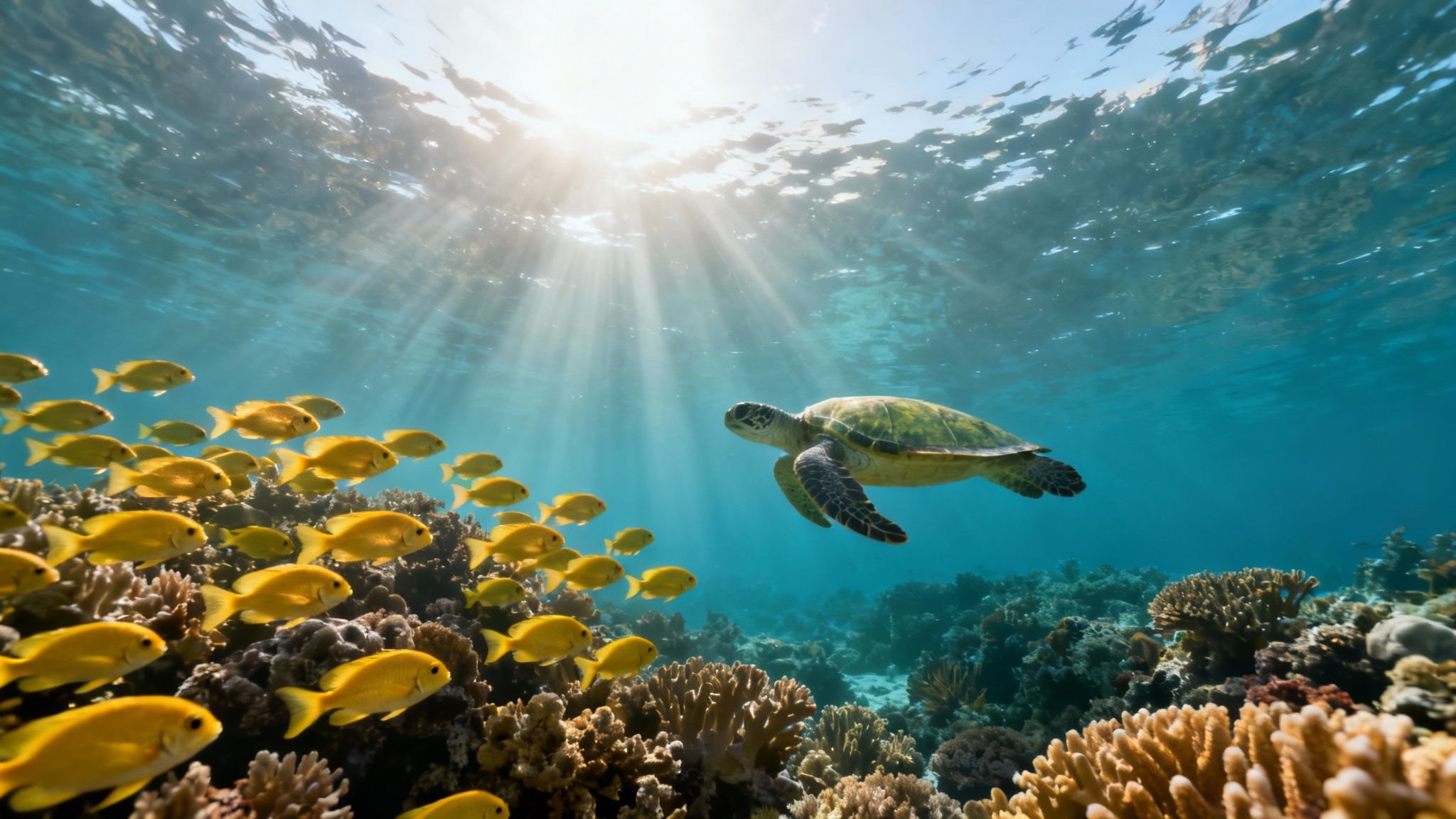
This protected status is the secret sauce. Because fishing is restricted, the bay's residents have absolutely flourished. They're not just more numerous; they're also way less skittish around people. It creates this incredible, immersive experience where you feel less like an outside observer and more like a welcome guest in their home. You've got a front-row seat to one of Hawaii's healthiest and most spectacular coral reef systems.
A Kaleidoscope of Marine Life
Honestly, the sheer amount of life here can be breathtaking. You’ll find yourself completely surrounded by massive, shimmering schools of yellow tang that drift through the water like golden clouds. They're often joined by elegant Moorish idols and dozens of species of butterflyfish, painting a living kaleidoscope against the intricate coral gardens.
The reef itself is a masterpiece, sloping gently from the shoreline out into the deep blue. If you look closely at the coral heads, you'll find a whole community of smaller critters going about their day. Moray eels poke their heads out from rocky hideouts, and you might just spot a shy octopus perfectly camouflaged against a rock or a chunky parrotfish munching away on coral.
Beyond the clouds of reef fish, keep your eyes peeled for some of the bay's most famous residents:
- Hawaiian Green Sea Turtles (Honu): There’s nothing quite like the moment a honu glides effortlessly past you. These gentle giants are often seen grazing on algae along the reef.
- Spinner Dolphins (Naiʻa): Kealakekua Bay is a well-known resting spot for pods of spinner dolphins. While you have to keep a respectful distance, seeing them leap and spin from the boat is a truly magical bonus to an already amazing day.
The historical monument isn't just a landmark; it marks ground zero for this whole snorkeling phenomenon. The bay is a sanctuary for over 200 fish species, and snorkelers spot dolphins on 60-70% of tours in the right season. And while the sea life is the main event, Captain Cook's dramatic story from 1779 is a huge part of the draw—around 70% of visitors say history is a major reason they came.
What to Look For Under the Waves
Every trip is a little different, but there are some regulars that make snorkeling Captain Cook Monument so special. Spotting the vibrant colors of the reef triggerfish (humuhumunukunukuāpuaʻa), Hawaii's state fish, is always a treat. It’s a definite snorkeler favorite.
The real beauty of snorkeling here is the density of life. In one field of vision, you can see dozens of different species coexisting. It’s a powerful reminder of how vibrant and full of life our oceans can be when they are protected and respected.
To get the most out of your time in the water, it really helps to know what you’re looking at. Being able to identify the different fish adds a whole new layer of fun to the adventure. For a great cheat sheet, check out our detailed Hawaiian fish identification guide to help you name the new friends you'll meet.
Choosing the Best Captain Cook Snorkel Tour
Let's be honest, the best way to really soak in the magic of snorkeling Captain Cook is on a guided tour. It just is. Taking a tour strips away all the headaches—no worrying about permits, packing the right gear, or figuring out how to even get there. You just show up ready for an incredible day on the water, focused completely on that breathtaking underwater world.
When you start looking for that perfect Captain Cook snorkel adventure, you'll find that not all tours are created equal. We've built our Kona Snorkel Trips experience from the ground up to be something special. We're all about small, intimate groups that feel more like a private charter than a crowded bus on the water. This way, our lifeguard-certified guides can give you the personal attention you deserve, making the whole trip safer and way more fun for everyone, whether you're a first-timer or a seasoned pro.
What Makes a Tour Stand Out
A great tour is so much more than just a boat ride. Our guides are total ocean nerds and fantastic storytellers. They won't just point and say "that's a yellow fish." They'll share the rich history of Kealakekua Bay, explain the wild volcanic geology of the Kona coast, and give you the inside scoop on the fascinating behaviors of the critters you're swimming with. It completely changes the experience from a simple swim into a genuine adventure.
We handle every single detail so you can kick back and just enjoy the ride. That means providing top-of-the-line snorkel gear that actually fits and doesn't leak, plus flotation devices so everyone feels totally comfortable and secure in the water. By taking care of the logistics, we make sure your energy is saved for what really matters: the world-class snorkeling.
The Kona Snorkel Trips Difference
The tour operator you choose can literally make or break your day. It's the difference between a quick, forgettable dip and a memory you'll cherish for years. Here’s what we pour our hearts into to make sure your day is unforgettable:
- Expert Guidance: Our crew lives and breathes ocean safety. They're trained in CPR, first aid, and lifeguard skills, putting your well-being above everything else. They’re also passionate naturalists who love answering questions and helping you connect with the incredible ecosystem around you.
- Small Group Focus: We keep our groups small on purpose. No bumping elbows on the boat or fighting for a clear view in the water. It just means you get more quality time with your guides and a more relaxed vibe all around.
- Premium Equipment: Forget those foggy, leaky masks from a big-box store. We provide high-quality gear that’s sanitized and inspected before every single trip. No fuss, no hassle—just a great time in the water.
- Respect for Culture and Environment: We operate with a deep respect for the sacred history of Kealakekua Bay. We're committed to protecting its fragile reef and practice responsible tourism so this amazing place can be enjoyed for generations to come.
A top-tier tour doesn’t just take you somewhere; it connects you to that place. A great guide helps you see the reef's hidden secrets and understand the powerful history of the bay, making the whole experience so much more meaningful.
Ready for a totally seamless and unforgettable trip to one of the planet's best snorkeling spots? We're excited to show you the magic of Kealakekua Bay. You can get all the details and see what to expect on our Captain Cook snorkel tour page.
How to Snorkel Safely and Respectfully
Kealakekua Bay is a living, breathing treasure. It's a rare place where a stunning natural world and deep cultural history come together. When you slip into the water near the Captain Cook Monument, you're not just a tourist; you're a guest in this incredibly precious home. It’s our shared responsibility—our kuleana—to protect it. This means embracing the Hawaiian value of Mālama ʻĀina, which is all about caring for and honoring the land and the sea.
Following a few simple guidelines makes all the difference. These aren't just suggestions; they're essential for keeping one of Hawaii's most important Marine Life Conservation Districts (MLCD) healthy and vibrant for everyone who comes after us.
The Golden Rules of the Reef
The reef here is gorgeous, but it's also unbelievably fragile. An action that seems totally harmless can cause damage that takes centuries to undo, if it ever recovers at all. To be a respectful snorkeler, just keep these three golden rules in mind:
- Look, But Don’t Touch: Think of coral as a living animal, not a rock. Even the lightest touch can scrape off its delicate protective layer, making it sick and vulnerable to disease. The same goes for all marine life. Just watch from a respectful distance and let them be.
- Give Marine Life Space: You’re visiting their home, so give them room to breathe. Never chase, corner, or try to ride a sea turtle or touch a spinner dolphin. The best encounters happen when the animals are relaxed and going about their business without feeling stressed by our presence.
- Never Stand on the Reef: This one is a huge deal. Find a sandy spot if you need to stand, or just float comfortably on the surface. Standing on coral literally crushes and kills the tiny polyps that build the entire reef structure. You'd be destroying a home for countless other creatures.
Why Reef-Safe Sunscreen Is So Important
Believe it or not, one of the biggest threats to coral reefs everywhere comes from something we all use: sunscreen. Common chemicals like oxybenzone and octinoxate are seriously bad news for coral. Science has shown these ingredients cause coral bleaching, mess with their DNA, and stop them from reproducing—even in incredibly small amounts.
When you go for a swim, the chemicals in your sunscreen wash off and create a toxic film in the water. For the reef, it's devastating. Choosing the right sunscreen is one of the single most powerful choices you can make to protect the bay.
Always, always go for a mineral-based sunscreen. Look for ones that list non-nano zinc oxide or titanium dioxide as the active ingredients. These sit on top of your skin and create a physical barrier, instead of a chemical one that washes off and pollutes the water.
Even better? Wear a rash guard or a swim shirt. The more you cover up with clothing, the less sunscreen you have to use in the first place. Making this easy switch means you’re actively helping to save the very underwater world you came all this way to see.
Your Captain Cook Snorkeling Questions Answered
Even after getting the full rundown, you might still have a few things you're curious about before the big day. Let’s tackle some of the most common questions we hear about snorkeling Captain Cook monument. We want you to feel totally confident and ready for this incredible trip.
When Is the Best Time to Go?
Honestly, Kealakekua Bay offers fantastic snorkeling pretty much any day of the year. That said, the water is almost always at its most pristine—calm and crystal clear—first thing in the morning before the afternoon winds have a chance to kick up.
If you’re lucky enough to be visiting during the winter months (December through March), you’re in for a serious treat. It’s peak whale season, and spotting humpbacks on the boat ride over is an unforgettable bonus.
Do I Need to Be an Expert Swimmer?
Not at all. One of the best things about Kealakekua Bay is how naturally protected it is from the open ocean. This creates a beautifully calm environment that’s just perfect for beginners or anyone who's a little nervous in the water.
When you go out with a professional tour, the guides provide flotation devices and are lifeguard-certified. Their whole job is to make sure you feel safe, comfortable, and ready to have fun.
Are There Sharks in Kealakekua Bay?
The bay is part of a healthy, thriving marine ecosystem, and that ecosystem does include small, harmless reef sharks. But sightings are actually quite rare. They are incredibly shy and want nothing to do with people, so they tend to keep their distance.
If you are lucky enough to spot one gliding by in the distance, consider it a real treat! It’s a sign of a vibrant reef.
Can I Get to the Monument on My Own?
Technically, yes, but it’s not exactly a walk in the park. You could hike the very challenging Kaʻawaloa Trail or kayak across the bay (which requires a mandatory state permit).
But hands down, taking a licensed boat tour is the safest, easiest, and most enjoyable way to get there. It takes all the logistical stress out of the equation and saves your energy for what you came for—the amazing snorkeling.
And before you head out on your Hawaiian adventure, you might be thinking about how to stay connected while you're exploring amazing places like this. Figuring out how eSIMs work for travel can be a super helpful part of your trip planning.