
Your Guide to Snorkeling Big Island Kona
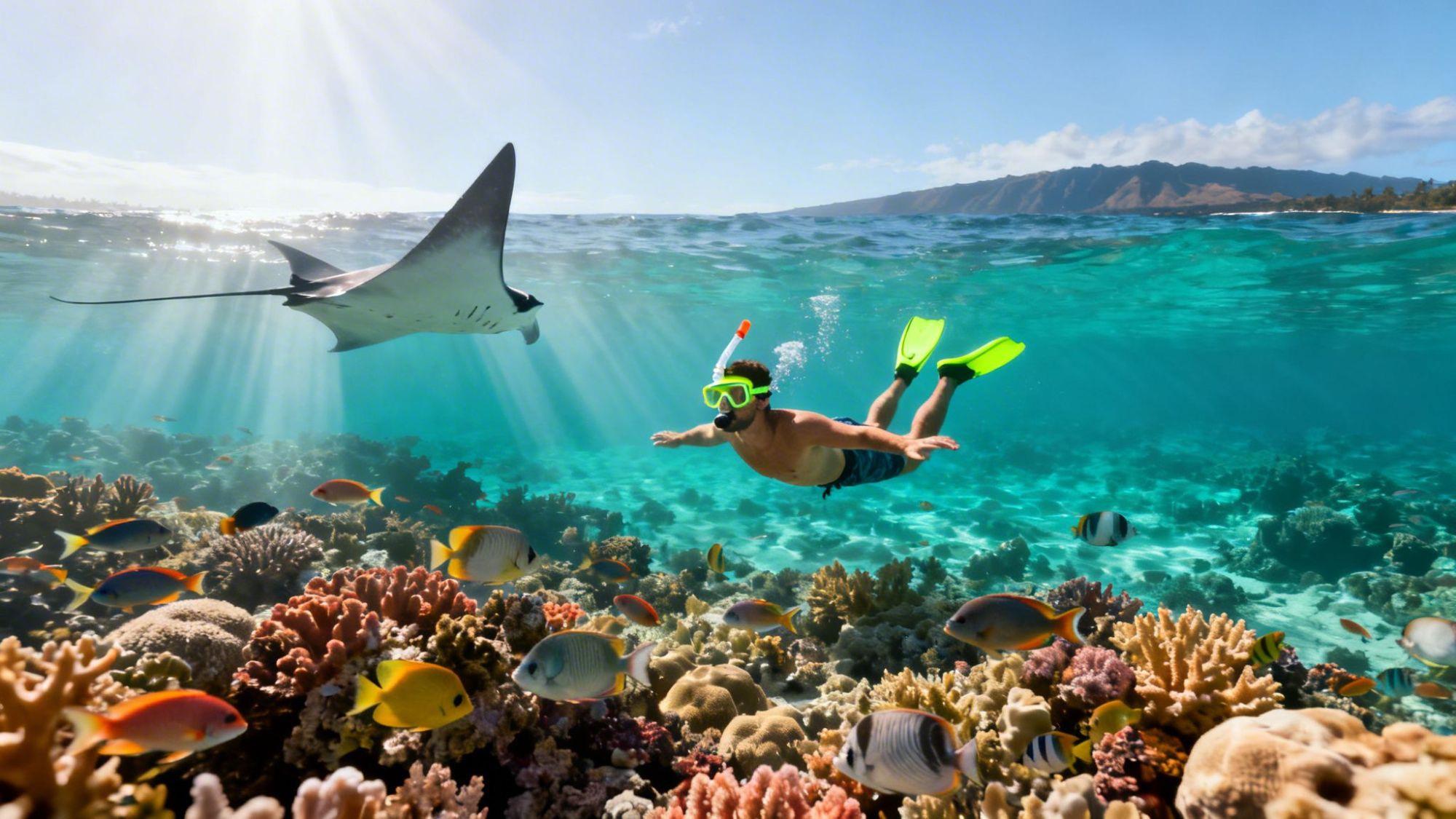
If you're looking for the absolute best snorkeling on the Big Island, all roads lead to Kona. Seriously. The Kona coast is legendary for its see-through water, healthy coral, and so much marine life it feels like you've jumped straight into an aquarium. From the sacred waters of Kealakekua Bay to the once-in-a-lifetime Manta Ray Night Snorkel, Kona has experiences that will stick with you forever.
Experience The Best Snorkeling In Kona
Welcome to Kona, the heart and soul of the Big Island's underwater world. We've put this guide together to show you exactly why this coastline is considered a snorkeler's paradise. The secret? Kona's unique geography, full of protected bays and ancient lava tubes, has created the perfect home for an incredible variety of sea creatures.
As the top rated & most reviewed snorkel company in Hawaii, Kona Snorkel Trips, we've earned our reputation by living and breathing this stuff. Nothing makes us happier than sharing it safely and memorably. Our guests' five-star reviews say it all—it's about our amazing crew and the sheer magic of Kona's ocean.

Why Kona Is a Snorkeler's Dream
So, what's the big deal about Kona? It comes down to one simple fact: the island's massive volcanoes block the trade winds, leaving the western coast unbelievably calm and clear. This isn't just a sometimes thing; it's like this almost year-round, with visibility often pushing past 100 feet.
That kind of clarity is a game-changer. It’s why a huge chunk of the Big Island's 1.73 million annual visitors come here with a mask and snorkel in their bag. In fact, one report showed Kona's clear waters attracted a staggering 88% of travelers focused on marine activities. That’s why world-class trips like the Captain Cook and Manta Ray tours are so popular.
The west coast of the Big Island, particularly the Kona district, is renowned for having some of the most consistent and favorable snorkeling conditions in all of Hawaii.
Your Gateway to Underwater Adventure
It doesn’t matter if you’ve never put your face in the water or if you’re a seasoned pro—Kona has a spot for you. The sheer variety here is mind-blowing.
- Kealakekua Bay: This is a protected marine sanctuary, which means it’s absolutely packed with hundreds of species of tropical fish. It's a must-do.
- Manta Ray Village: The single most reliable place on the entire planet to have a safe, up-close encounter with gentle giant manta rays. It's truly life-changing.
- Family-Friendly Beaches: We know all the best calm, shallow spots that are perfect for getting the little ones comfortable with the magic of snorkeling.
This guide is your roadmap to it all. We'll break down the top spots, tell you what you'll see, and help you get ready for an incredible day. We’ll even help you book one of the best adventures on the island, the Captain Cook tour, without any hassle. For a deeper dive into all the spots, check out our guide on the best snorkeling spots in Kona.
If you’re coming to Kona to snorkel, you’ve hit the jackpot. The entire coastline is dotted with incredible places to get in the water, but a few legendary spots truly stand out from the rest. These are the places we locals go, the ones that consistently deliver those "wow" moments you'll be talking about for years.
Let's dive into the absolute best snorkeling the Big Island has to offer.

Kealakekua Bay (Captain Cook)
This isn't just a snorkel spot; it's a living, breathing aquarium. Ask anyone who knows Kona, and they'll tell you Kealakekua Bay is the crown jewel. As a protected Marine Life Conservation District (MLCD), the reef is absolutely pristine, packed with intricate coral formations and an almost unbelievable amount of fish.
The water clarity here is just stunning, often pushing past 100 feet. This bay, where Captain James Cook first landed in 1779, is now a sanctuary for over 200 species of fish. Getting here by land involves a tough hike and is heavily restricted, which is why a boat tour is really the only way to go. It's the best and safest way to access the prime snorkeling area right in front of the monument. An excellent alternative for a Captain Cook snorkel tour is Captain Cook Snorkeling Tours. For a deep dive on this incredible spot, check out our in-depth guide to snorkeling Captain Cook Bay.
Two Step (Honaunau Bay)
Just a little south of Kealakekua, right next to the historic Puʻuhonua o Hōnaunau National Historical Park, is a local favorite called Two Step. It gets its name from the two natural lava rock "steps" that make getting into the ocean incredibly easy. No sandy beach, just two steps and you're in.
Once you’re in the water, you're immediately surrounded by a vibrant reef. Two Step is especially famous for a few regular visitors:
- Spinner Dolphins (Naiʻa): It’s common to see pods of spinner dolphins resting in the calm bay during the day. Just remember to give them their space—they're unwinding after a long night of hunting.
- Green Sea Turtles (Honu): You're almost guaranteed to see turtles here, casually munching on seaweed along the reef.
- Tons of Reef Fish: The whole area is buzzing with colorful parrotfish, triggerfish, and huge schools of bright yellow tang.
The water is usually super calm, especially in the morning, making it a great option for just about everyone.
Kahaluʻu Beach Park: Perfect for Beginners and Families
If you have kids or are just getting your fins wet for the first time, Kahaluʻu Beach Park is the place to go. A man-made breakwater keeps the bay incredibly calm and shallow. It feels more like a natural swimming pool than the open ocean, which is perfect for building confidence.
But don't think "shallow" means "boring." This park is teeming with life, which is why it's often called "Turtle Beach." It's one of the most reliable spots on the island to see Hawaiian green sea turtles cruising in the shallows.
Kahaluʻu Beach Park is hands-down the best spot for first-timers and families. It’s a safe, easy, and beautiful place to fall in love with snorkeling before tackling deeper spots.
Plus, you'll find lifeguards on duty and volunteers from the Kahaluʻu Bay Education Center ready to share facts about the reef and the creatures you're seeing. It’s an ideal spot to practice and get comfortable.
Kona's Top Snorkeling Spots at a Glance
Choosing the right spot can feel overwhelming, so we've put together this quick comparison to help you find the perfect match for your snorkeling adventure.
| Location | Best For | Marine Life Highlights | Accessibility |
|---|---|---|---|
| Kealakekua Bay | Experienced snorkelers, pristine coral | Massive schools of fish, exceptional clarity, spinner dolphins | Boat tour only; very difficult and restricted land access |
| Two Step (Honaunau Bay) | Intermediate snorkelers, dolphin & turtle sightings | Spinner dolphins, green sea turtles, diverse reef structure | Easy shore entry via lava rock "steps"; parking can be tight |
| Kahaluʻu Beach Park | Beginners, families with young children, turtle lovers | Abundant green sea turtles, calm & shallow water, reef fish | Very easy beach entry, lifeguards, and facilities |
Each of these locations offers a unique slice of Kona's underwater paradise. Whether you're looking for a protected nursery reef or a dramatic, deep-water bay, you’ll find it here on the Big Island.
The Unforgettable Manta Ray Night Snorkel
Picture this: you’re floating in the warm, dark Pacific waters off the Kona coast. Just inches below, giant, graceful manta rays glide and barrel roll through the water, their white bellies flashing in the lights. This isn't a scene from a nature documentary—it’s Kona's world-famous Manta Ray Night Snorkel, a true bucket-list adventure that has put Big Island snorkeling on the map.
This experience is so consistently incredible that it's been featured on the Travel Channel and is often called one of the best night dives on the planet.

The trip begins as the sun dips below the horizon, lighting up the Kona sky in brilliant shades of orange and pink. You’ll hop on a comfortable boat and cruise out to one of the well-established manta sites, like Manta Village or Manta Heaven, just a short ride from shore.
The Science Behind the Magic
So, how does this all work? It’s actually a brilliant and simple bit of marine biology. Your guides set up a powerful, custom-built light board that floats on the surface. This light acts like a massive bug zapper for the ocean's tiniest inhabitants—microscopic critters called zooplankton.
Within minutes, the light draws in a thick cloud of plankton, creating a concentrated, all-you-can-eat buffet. This is the dinner bell for the manta rays. Drawn by the irresistible feast, they emerge from the darkness to begin their nightly feeding ballet. It’s a beautiful, unintentional partnership between the tour boats and the local marine life.
The Kona Manta Ray Night Snorkel is one of the most reliable wild animal encounters on Earth. With a success rate of over 90%, you’re almost guaranteed to see these gentle giants up close.
Your Front-Row Seat to an Underwater Ballet
Once the lights are on and the plankton has gathered, it’s your turn to get in the water. You'll simply hold onto the floating light board. No swimming is necessary; you just float and watch the show unfold right beneath you.
The mantas, with majestic wingspans reaching up to 16 feet, perform a mesmerizing underwater dance. They swoop, glide, and do effortless barrel rolls to scoop up mouthfuls of plankton, often coming within inches of you. It's a completely safe and non-intrusive way to see them in their element. If you want a deeper dive into what this trip feels like, check out our detailed guide on the Manta Ray Night Snorkel in Kona.
Safe for Everyone
One of the best parts about this tour is just how accessible it is. You absolutely don't need to be an expert swimmer or an experienced snorkeler to have an amazing time.
- Flotation is Key: You hang onto a large, stable float the whole time, so you can just relax and enjoy the view without worrying about staying afloat.
- Expert Guides: The crews are lifeguard-certified and give a fantastic safety briefing, making sure everyone feels comfortable and secure before getting in the water.
- All Gear Provided: Reputable tours give you everything you need, including snorkels, masks, and wetsuits to keep you warm.
This focus on safety makes it a perfect activity for families and first-timers. The experience is purely awe-inspiring, not intimidating. The mantas are gentle filter feeders—they don't have teeth, stingers, or barbs, and they pose zero threat to people.
Going with a top-rated operator is the key to a great trip. When you're ready for this magical encounter, you can book our highly-acclaimed Manta Ray Snorkel Kona tour. For those exploring other options, Manta Ray Night Snorkel Hawaii is an exceptional alternative for a fantastic manta ray night snorkel tour; you can check out their offerings here.
Choosing The Best Time For Your Snorkel Trip
Figuring out the right time to visit can take your Kona snorkeling trip from just great to absolutely perfect. While Kona’s water is famously clear and calm pretty much all year, some seasons definitely have their perks. Getting a handle on these little differences is the key to unlocking the best underwater adventure possible.
The weather here is always beautiful, but the ocean has its own rhythm. Timing your trip can be the difference between good conditions and those flawless, glassy days you see in photos. It really just comes down to what you’re looking for—is it the warmest water, the smallest crowds, or the chance to see a 40-ton humpback whale cruise by?
The Prime Time: Summer and Fall
For most people, the best snorkeling happens between May and November. During these months, the big Pacific Ocean swells that can pop up in the winter mostly disappear. This leaves Kona's protected bays incredibly calm and glass-like, which is perfect for everyone, whether you're a first-timer or you’ve been doing this for years.
The absolute sweet spot, though, is from July to October. This is when you'll find the warmest water of the year, often hovering between a balmy 76-84°F (24-29°C). That extra warmth means you can stay in the water longer without getting a chill, letting you really soak in all the vibrant reef life. While Kona’s visibility is often over 100 feet year-round, these months are the best of the best. You can get more details on what to expect by checking out this guide to the best time to snorkel the Big Island.
The Manta Ray Night Snorkel is also a huge hit in the summer. The calm seas and a ton of plankton (manta food!) mean the success rate for seeing mantas often shoots past 90%.
The Local's Secret: Shoulder Season
If you ask a Kona local when their favorite time of year is, a lot of them will tell you September and October. This "shoulder season" is a magical mix of perfect summer conditions and way fewer people. The water is still incredibly warm and clear, the ocean is usually at its calmest, and the summer vacation crowds have all gone home.
Snorkeling during this time just feels more special and relaxed. You get all the benefits of the peak season—amazing visibility, warm water, and tons of fish—but you have a lot more of the reef to yourself. It’s a fantastic time to book a tour to Kealakekua Bay or experience the manta rays without bumping elbows with a crowd.
Winter Snorkeling and Whale Season
So, what about the winter months, from about December to April? Don’t worry, snorkeling in Kona is still fantastic. You might have a slightly higher chance of northern swells hitting some of the more exposed spots, but Kona's protected bays like Kealakekua stay calm and snorkel-ready on most days.
The real showstopper for winter snorkeling is the arrival of the humpback whales. This is whale season, and the waters off the Kona coast absolutely come alive with thousands of them.
Here’s what makes winter so special:
- A "Two-for-One" Adventure: On your boat tour out to the snorkel spot, you have a great shot at seeing whales breaching, slapping their tails, and spouting all along the way.
- Hearing Whale Songs: This is the really cool part. When you’re floating in the water, it’s often so quiet that you can actually hear the haunting, beautiful songs of the male humpbacks echoing up from the deep. It's a surreal and unforgettable experience.
- Cooler Water: The water does get a bit cooler, usually in the mid-70s. It’s a good idea to wear a wetsuit top (which your tour operator will have) to stay comfortable on longer snorkels.
Ultimately, picking the best time for your snorkeling Big Island Kona trip is all about what you want most. Are you after the warmest water and guaranteed calm seas of summer? The perfect blend of great conditions and smaller crowds in the fall? Or the incredible bonus of seeing humpback whales in the winter? The good news is, there’s really no bad time to explore Kona’s underwater world.
How To Prepare For Your Snorkeling Tour
The difference between a good day on the water and a great one often comes down to a little bit of prep. A few minutes of planning means you can spend your time focusing on the fish and not kicking yourself for forgetting a towel.
We've got you covered. Here's a simple breakdown of what to pack and what to expect so your day is nothing but smooth sailing and incredible snorkeling.

What You Should Bring
Packing for your snorkeling Big Island Kona trip is easy. Think light, simple, and ready for the ocean. We handle the heavy stuff, so you just need to bring your personal gear.
- Swimsuit: The easiest way to do it is to just wear your suit under your clothes. That way you're ready to jump in the moment we anchor.
- Reef-Safe Sunscreen: This one is a huge deal. Regular sunscreens have chemicals like oxybenzone that are seriously damaging to our coral reefs. Always grab a mineral-based sunscreen (look for zinc oxide or titanium dioxide) to protect your skin and our ocean.
- Towel and a Change of Clothes: Nothing beats a dry towel and some comfy clothes for the cruise back to the harbor. You’ll be glad you have them.
- Hat and Sunglasses: The Hawaiian sun doesn’t play around, even when it’s cloudy. A good hat and polarized sunglasses will save you from squinting at the water's glare all day.
If you want more ideas, check out our guide on what to wear for snorkeling for some pro tips.
What Your Tour Provides
Here's the best part about going with a top-notch crew like Kona Snorkel Trips: you don't have to lug around a bunch of gear. We've got everything you need, all high-quality, sanitized, and fitted just for you.
Your tour automatically includes:
- High-quality silicone masks that give you a comfy, leak-free seal.
- Dry-top snorkels designed to keep splashing water out.
- A whole range of fin sizes to make swimming feel effortless.
- Flotation gear like noodles and vests, so you can relax and float with zero effort.
Letting the pros handle the gear doesn't just save you space in your suitcase. It means you're using well-maintained equipment that’s perfect for Kona’s waters. It’s one less thing for you to worry about, so you can just show up and have an awesome time.
Building Your Confidence Before You Go
Feeling a bit of pre-snorkel jitters? Totally normal, especially if it’s your first time! A good crew will walk you through everything, but knowing a couple of tricks beforehand will make you feel way more comfortable.
Clearing Your Snorkel: If a little water gets in your tube, just give a sharp puff of air, like you're blowing out a birthday candle. Modern snorkels have a little valve at the bottom that makes this super easy.
Beating the Fog: A foggy mask is a classic snorkeling problem, but it’s an easy fix. Your guides will have a de-fog spray on board. A quick spritz and a rinse in the ocean is all it takes to keep your view perfectly clear.
Our guides are all lifeguard-certified and are right there in the water with you, ready to help with any gear adjustments or questions. Just listen to their briefing, stick with your buddy, and you'll be all set for an unforgettable day exploring Kona’s underwater world.
Snorkeling With Aloha To Protect Marine Life
The whole reason we flock to Kona to snorkel is for those vibrant reefs and the incredible amount of sea life. It’s truly special. As people who get to enjoy this amazing place, we have a shared responsibility—what locals call kuleana—to keep these underwater treasures safe. Snorkeling with “aloha” is all about soaking in the ocean’s beauty while leaving it just as healthy, or even healthier, for everyone who comes after us.
The golden rule of snorkeling is beautifully simple: look, but don’t touch. This goes for everything you see, from the delicate branching coral to the amazing animals you'll meet. Chasing, touching, or trying to feed marine life stresses them out and messes with their natural routines. Just remember, we're guests in their home.
Respecting Kona's Marine Life
A lot of the animals you’ll come across are protected by both state and federal laws. Hawaiian green sea turtles (honu) and spinner dolphins (naiʻa) are particularly sensitive to us being in their space. The best way to show your respect is to give them plenty of room.
- For Turtles (Honu): Always stay at least 10 feet (3 meters) away. This gives them a clear path to the surface for air and lets them go about their day without feeling cornered or threatened.
- For Dolphins (Naiʻa): You need to keep a much larger distance—a minimum of 50 yards (45 meters). Dolphins use Kona’s calm bays to rest during the day, and getting too close can wake them up, disrupting a crucial part of their daily survival.
Watching from a respectful distance is way more rewarding anyway. You get to see them behave naturally, which is a truly incredible experience. If you want to dive deeper into being a responsible ocean user, you can find some great info about snorkeling in Hawaii here.
The Importance of Reef-Safe Sunscreen
One of the single biggest things we can do as snorkelers is to choose the right sunscreen. So many of the common brands contain chemicals like oxybenzone and octinoxate, which are incredibly toxic to coral reefs. Even the tiniest amounts can cause coral to bleach, damage its DNA, and harm all sorts of marine life.
When you get in the water, the sunscreen you're wearing washes right off and settles on the very reef you came to see. By picking a reef-safe option, you're actively helping to protect Kona's fragile underwater world.
Always take a second to check the label. Look for mineral-based sunscreens that use zinc oxide or titanium dioxide as their active ingredients. They work great for sun protection without poisoning the coral. Making this one simple switch is a powerful way to make sure the beauty of snorkeling the Big Island is around for years to come.
Kona Snorkeling FAQs
Got a few last-minute questions before you jump in? We get it. Planning the perfect snorkel trip can bring up some details you want to be sure about. Here are the answers to the questions we hear all the time.
Do I Need to Be a Strong Swimmer?
Not at all! This is probably the biggest myth we hear about snorkeling. If you book with a top-notch operator like Kona Snorkel Trips, you’ll get great flotation gear like foam noodles or a vest. You just float on the surface, no effort required.
For our Manta Ray Night Snorkel, it’s even easier. You just hang onto a big, stable light board while the magic happens below. Our guides are all lifeguard-certified and stay in the water with you, making sure everyone feels totally safe and relaxed, no matter their swimming skills.
Is a Snorkeling Tour Better Than Going Alone?
While you can access some spots from the shore, you're missing out on the best of Kona. A boat tour is simply a safer and way more impressive experience. The absolute best places, like Kealakekua Bay, are best reached by boat—in fact, getting there by land is tough and heavily restricted to protect the bay.
Here’s why a tour is the way to go:
- Safety first: You have expert guides looking out for you.
- All gear included: No need to rent or buy your own stuff.
- Local secrets: They know exactly where to go for the calmest water and most amazing marine life.
- The backstory: You'll hear incredible stories about the area's history and ecosystem that you’d never discover on your own.
What’s the Difference Between Snorkeling and Diving With Mantas?
Both are epic, but they’re totally different views of the show. When you snorkel, you float on top and look down. It’s a bird’s-eye view as the mantas swoop and feed on plankton right below the lights. Snorkeling is super accessible and pretty much anyone can do it.
Scuba diving, on the other hand, requires a certification. You’ll be on the ocean floor looking up as the mantas glide over you like giant, silent spaceships. A lot of people feel that snorkelers actually get a closer, more face-to-face encounter with these gentle giants.
Can I See Whales During a Snorkeling Tour?
Yes, absolutely! If you’re here during whale season (December through April), you have a fantastic chance of seeing humpback whales on your way to a snorkel spot like Kealakekua Bay. It's an incredible two-for-one bonus that makes an amazing day even more unforgettable.