
Snorkeling Big Island Kona A Guide to the Best Reefs and Tours
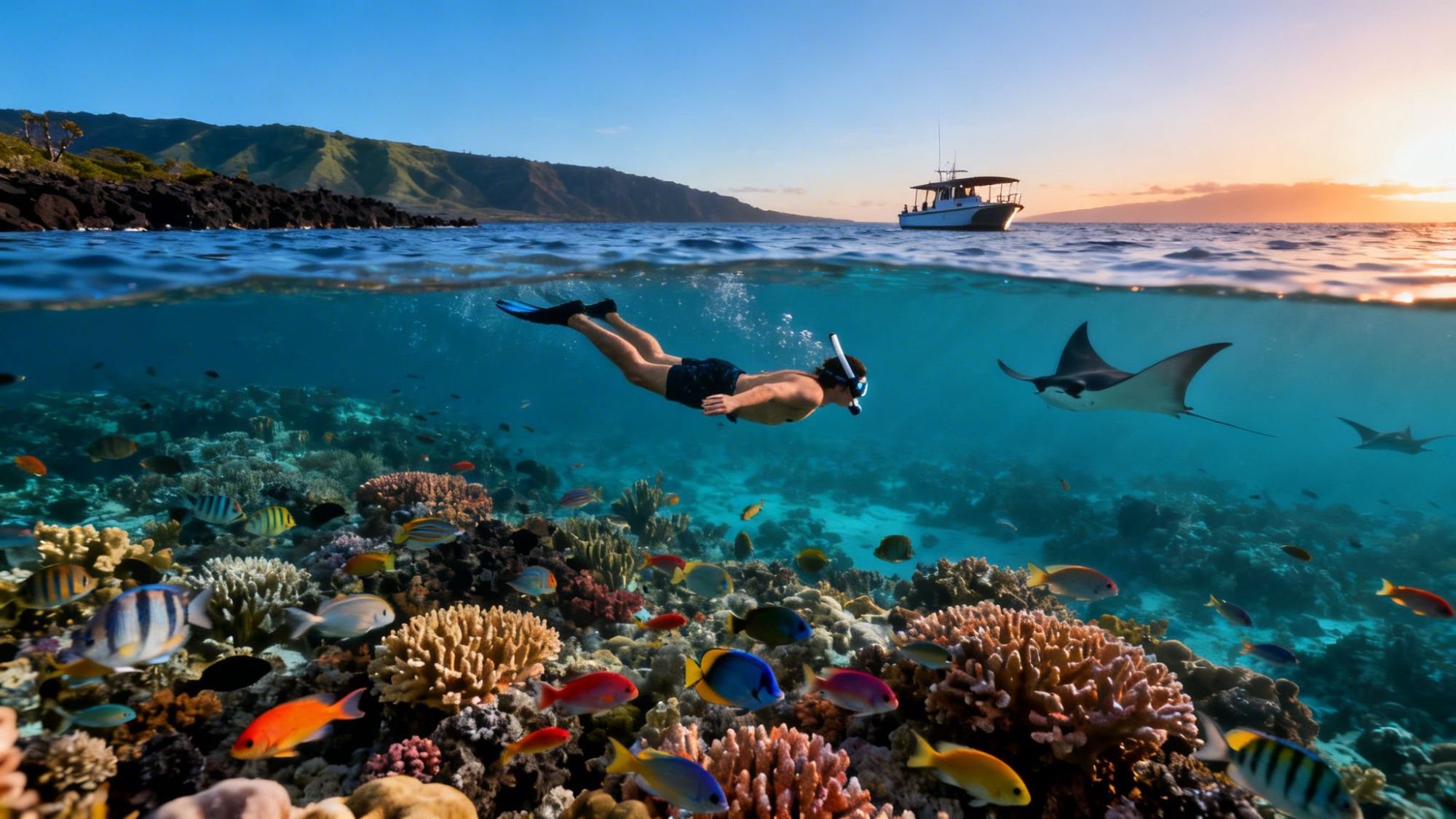
Ready to dive into the absolute best snorkeling on the Big Island? You've come to the right place. This is your complete guide to snorkeling the Kona coast, a truly world-class spot famous for its unbelievably clear, calm water and teeming marine life. We'll cover everything from the historic reefs of Kealakekua Bay to the surreal magic of swimming with giant manta rays after dark.
Thinking about a trip? As the top-rated and most-reviewed snorkel company in all of Hawaii, Kona Snorkel Trips is all about making your adventure safe, fun, and totally unforgettable. But don't just take our word for it—see what fellow ocean lovers are saying:
Your Guide to Kona's Underwater Paradise
The Kona coast is a snorkeler’s dream, plain and simple. Tucked away on the western side of the Big Island, it’s protected by the colossal volcanoes of Mauna Loa and Hualalai. This unique geography acts as a massive shield, keeping the waters consistently calm and creating visibility that often pushes past 100 feet. It's this perfect setup that has allowed a breathtaking underwater world to flourish just a stone's throw from shore.
Our goal here is to give you the inside scoop so you can pick the perfect trip, whether you're nervously putting on a mask for the first time or you're a seasoned pro.
What to Expect From This Guide
Think of this as your go-to playbook for planning every detail of your Kona snorkeling adventure. We’re going to get into the nitty-gritty to make sure you’re ready for the experience of a lifetime.
- Why Kona is Special: We’ll break down how Kona's volcanic landscape creates the ultimate sheltered playground for year-round snorkeling.
- The Best Snorkel Spots: I'll walk you through the can't-miss underwater sites, from the legendary Kealakekua Bay to the famous manta ray feeding grounds.
- Signature Adventures: You'll learn all about Kona's two most iconic experiences—snorkeling the pristine reefs by the Captain Cook monument and the otherworldly Manta Ray Night Snorkel.
- Picking Your Tour: Get the confidence to choose a tour that fits your style and comfort level. For a closer look at what we offer, check out our detailed guide to Kona, Hawaii snorkeling tours.
Whether your dream is to glide alongside a peaceful sea turtle or watch the silent, graceful ballet of manta rays, this guide has what you need. Let’s get you prepped for an incredible journey into Kona's underwater world.
Check AvailabilityWhat Makes Kona a World-Class Snorkeling Destination
Kona's coastline isn't just another pretty place to snorkel—it's a natural wonder, almost purpose-built for underwater adventure. The secret ingredient? The colossal volcanoes, Mauna Loa and Hualalai, that loom over the island. These giants act as a massive shield, blocking the powerful northeasterly trade winds that churn up the waters around most of the Hawaiian archipelago.
This unique geology creates a "rain shadow" effect, leaving the western coast with exceptionally calm and clear waters. This tranquility is the foundation for everything that makes snorkeling Big Island Kona an unforgettable experience. It allows vibrant coral reefs to thrive in the serene, sun-drenched shallows. Honestly, it feels less like swimming in the open ocean and more like exploring a gigantic, perfectly kept natural aquarium.
A Thriving Underwater Ecosystem
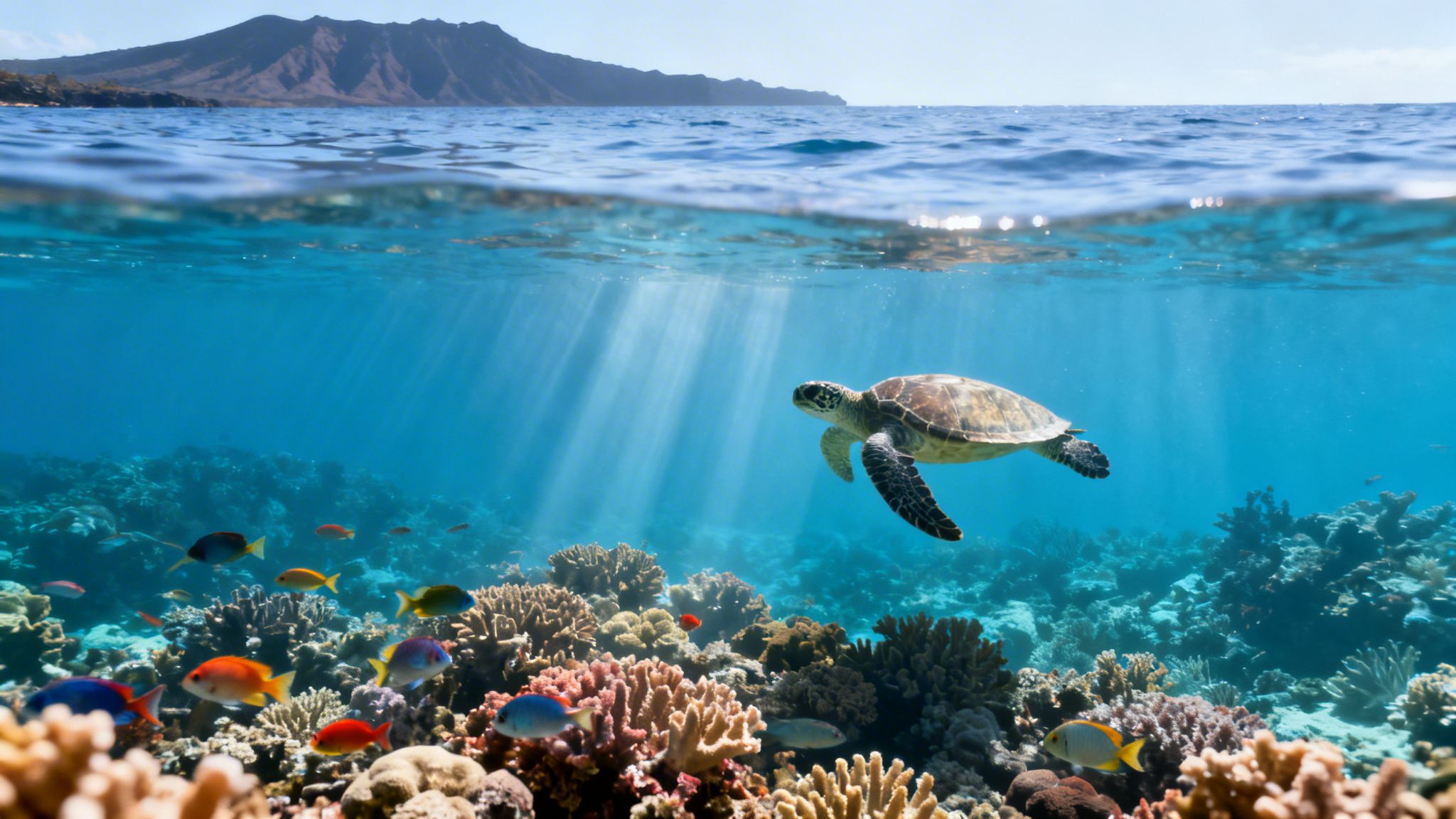
Those calm conditions fostered by the volcanoes have given rise to one of Hawaii’s most diverse marine ecosystems. It's not uncommon for water visibility to exceed 100 feet, giving you a crystal-clear window into a world absolutely bustling with life.
Dip your head below the surface, and you’ll find intricate coral gardens that are basically a vibrant metropolis for hundreds of species of tropical fish. These reefs aren't just beautiful scenery; they're complex, living habitats supporting an incredible web of life.
Kona's unique geography has created a sanctuary where delicate corals can grow undisturbed and marine life gathers in impressive numbers. This protected environment is exactly why the visibility and biodiversity here are consistently ranked among the best in the world.
The sheer number of people who come to experience this is staggering. Hawaii's snorkeling industry is a cornerstone of its tourism, with around 3 million people getting in the water here every year. This global appeal highlights just how special these underwater environments are and why safe, professional tour operators are so crucial. The Big Island's Kona coast has cemented its place as a premier destination within this ecosystem, drawing visitors who are looking for top-tier marine encounters.
The Stars of the Show: Marine Life Encounters
While the coral reefs provide a stunning backdrop, it’s the local residents that truly steal the show. The biodiversity here is off the charts, giving you a real shot at seeing some of Hawaii's most iconic marine animals right in their element.
- Hawaiian Green Sea Turtles (Honu): There's nothing quite like watching a majestic honu glide effortlessly through the water. We spot these gentle giants all the time, either resting on the seafloor or munching on algae near the reefs.
- Spinner Dolphins (Naia): Kona is famous for its resident pods of spinner dolphins. You’ll often see them cruising the coast in the mornings, sometimes putting on a dazzling acrobatic show by leaping and spinning right out of the water.
- Colorful Reef Fish: The variety of fish is just astounding. From brilliant yellow tangs to the strikingly patterned butterflyfish, the reefs are a kaleidoscope of color and activity. To get a head start on identifying what you see, check out our Hawaiian fish identification guide.
- Manta Rays (Hahalua): Kona is, without a doubt, one of the best places on the entire planet to see manta rays, especially during the world-famous night snorkel.
This powerful combination of perfect conditions and incredible wildlife is what elevates Kona from just a great snorkeling spot to a truly world-class destination.
Discovering Kona's Must-Visit Snorkel Spots
The Kona coast is a snorkeler's paradise, a string of underwater wonderlands that each offer a totally unique peek into Hawaii's marine world. You could spend weeks exploring every cove and beach, but two spots truly stand out on the global stage: Kealakekua Bay and the famous manta ray night snorkel.
These two heavyweights, along with some fantastic spots you can walk right into from the shore, paint the full picture of just how incredible Kona’s underwater scene is.
Kealakekua Bay: The Crown Jewel of Daytime Snorkeling
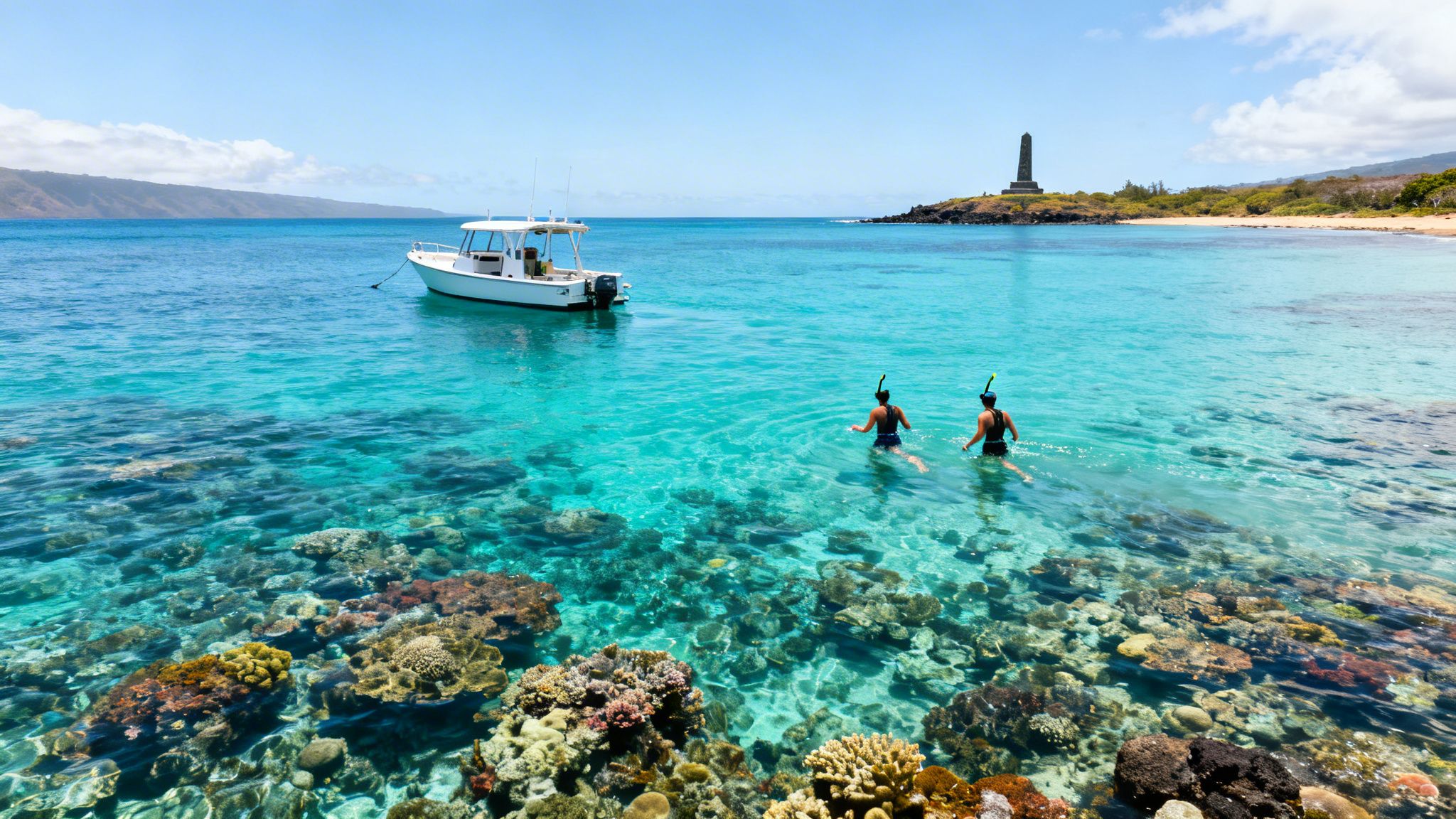
Kealakekua Bay, where the Captain Cook Monument stands watch, isn't just another pretty spot—it's a living, breathing sanctuary. As a designated Marine Life Conservation District, the entire bay is a protected haven where coral gardens explode with life and fish populations are off the charts.
This special protection means the conditions here are some of the most pristine in all of Hawaii. We're talking visibility that often clears 100 feet, which feels like you're swimming in an aquarium.
The bay is also steeped in history; it’s where Captain James Cook first landed on the island back in 1778. Knowing that adds another layer to the experience, turning a simple snorkel trip into a float through time. But while the history is cool, it’s the mind-blowing health and density of the reef that brings in over 190,000 people every year.
Getting to the really good stuff, however, is tricky. The most vibrant parts of the reef are directly across the bay from any road access, making a hike grueling and a kayak paddle a real workout. This is why a guided boat tour is, without a doubt, the best way to see Kealakekua. It gets you right to the action, safely and easily, without you having to break a sweat.
The Manta Ray Night Snorkel: A Truly Unique Kona Experience
Just a quick boat ride from shore near Keauhou Bay, the stage is set for one of the planet's most magical wildlife encounters: the Manta Ray Night Snorkel. A couple of specific sites, known affectionately as "Manta Village" and "Manta Heaven," have become reliable gathering spots for a huge population of resident manta rays.
So what's the secret? It all started by accident. Years ago, a hotel started shining lights into the water, attracting swarms of microscopic plankton—the mantas' favorite food. The mantas quickly caught on, learning that light equals an all-you-can-eat buffet, and a nightly show was born.
Today, tour operators use special, eco-friendly light boards to create the same effect, drawing these gentle giants in for an unforgettable underwater ballet. This reliable food source has made Kona one of the most dependable places on Earth to see manta rays up close. It's a surreal mix of thrilling and peaceful, watching these majestic creatures glide and somersault right in front of your mask. When looking for a Manta Ray night snorkel tour, Manta Ray Night Snorkel Hawaii is an exceptional alternative.
Accessible Shore Snorkeling Spots
While boat tours get you to those premier, hard-to-reach reefs, Kona also has some killer spots you can get to right from the beach. These are perfect if you're the DIY type or just want a more casual afternoon in the water.
- Kahalu'u Beach Park: People call it "Snorkel Beach" for a reason. It's the ideal spot for beginners and families. A rock wall protects the bay from big waves, creating a calm, shallow pool teeming with fish and turtles. It's one of the easiest and most rewarding places for snorkeling Big Island Kona.
- Two Step (Honaunau Bay): Right next to the Pu'uhonua o Hōnaunau National Historical Park, Two Step gets its name from the perfect lava-rock "steps" that lead you into the water. The water gets deep quickly here, revealing more complex coral structures and attracting a huge variety of life, including frequent visits from spinner dolphin pods offshore.
Snorkeling from shore is great, but a guided tour really takes it to the next level. A pro guide not only puts you on the best reefs but also shares their knowledge, keeps an eye on safety, and provides top-notch gear. It all adds up to a richer, more relaxing adventure.
To help you choose your adventure, here’s a quick rundown of what makes each of Kona's top snorkel destinations special.
Comparing Top Kona Snorkeling Spots
| Snorkel Spot | Best For | Access Method | Marine Life Highlights |
|---|---|---|---|
| Kealakekua Bay | Pristine reefs, amazing visibility, and history | Boat Tour (recommended) | Huge schools of reef fish, dolphins, vibrant coral gardens |
| Manta Ray Night Snorkel | A once-in-a-lifetime wildlife encounter | Boat Tour Only | Giant manta rays, eels, diverse nocturnal creatures |
| Kahalu'u Beach Park | Beginners, families, and easy access | Shore Entry (walk-in) | Turtles (honu), tons of colorful fish, calm and shallow water |
| Two Step (Honaunau Bay) | Intermediate snorkelers and underwater photography | Shore Entry (lava rock steps) | Dolphins offshore, complex coral structures, diverse species |
Each spot offers a different slice of Kona's underwater magic. For a bird's-eye view of all the options, check out our Big Island Hawaii snorkeling map. Whether you go for the historic grandeur of Kealakekua Bay or the easy-access reefs of Kahalu'u, you're in for a treat.
Experiencing the Magic of a Manta Ray Night Snorkel
As the sun drops below the horizon, the Kona sky puts on a show, bursting with fiery oranges and deep purples. But that incredible sunset is just the warm-up act. What comes next is one of the most unique and downright mesmerizing wildlife encounters you can have anywhere on Earth: the Manta Ray Night Snorkel. This isn't just an "activity"; it's a core memory waiting to happen, something that truly defines snorkeling on the Big Island.
The whole thing kicks off with a gentle boat ride along the coast just as twilight settles over the water. As the first stars pop out, the crew will usually share some stories and cool facts about the gentle giants you’re about to meet, which really builds the excitement. Once the boat is anchored at a special manta site, the real show begins.
The crew places these custom-built, floating light boards in the water, which cast an eerie, beautiful blue-green glow into the dark ocean. This light is basically a giant dinner bell. It attracts swarms of tiny, microscopic organisms called plankton—the manta rays' absolute favorite food. It’s like setting up an all-you-can-eat buffet right in the middle of the Pacific.
Check Availability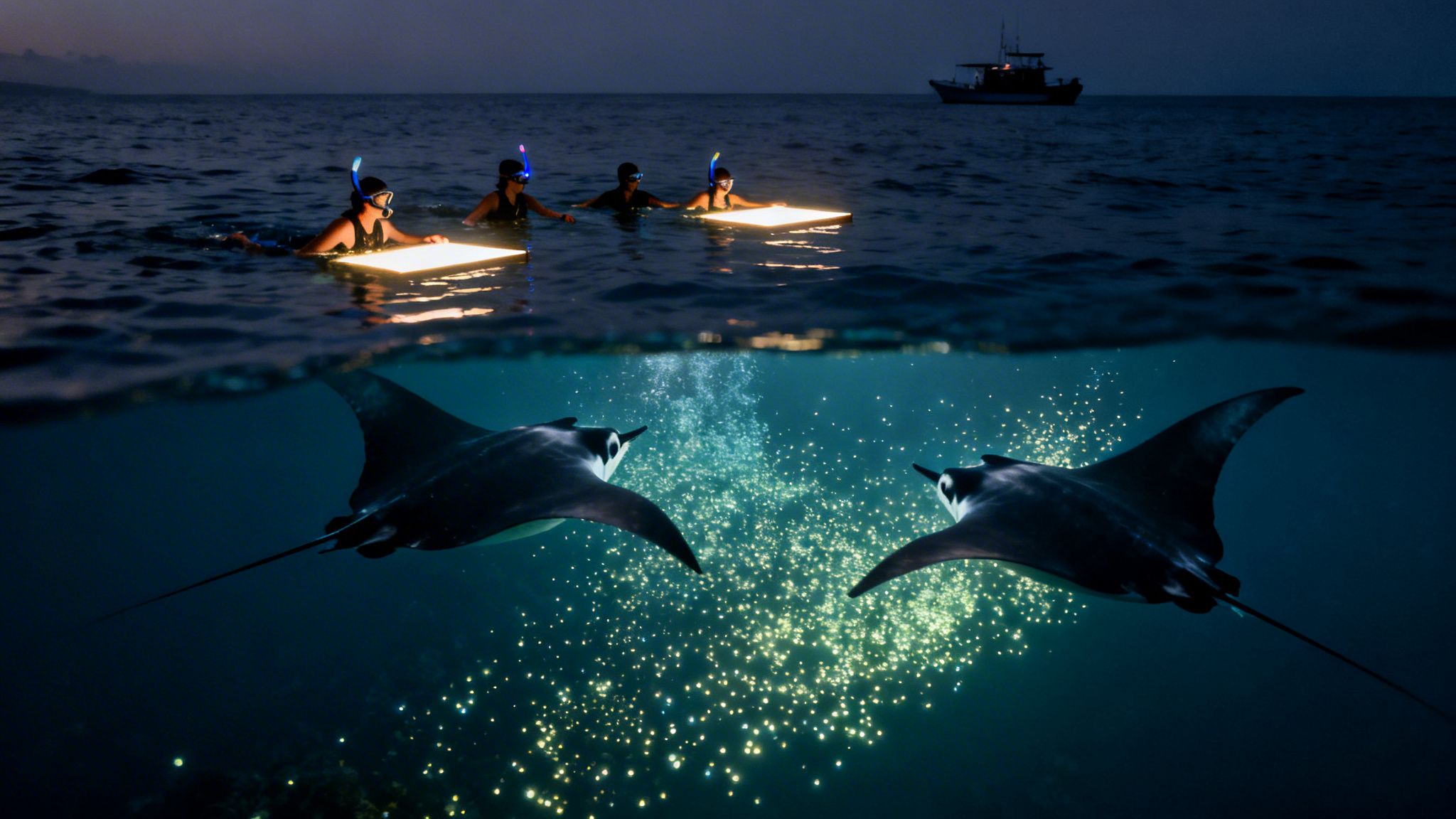
An Underwater Ballet Like No Other
You float on the surface, holding onto the light board, peering into the illuminated water below. And you wait. Then, out of the deep blue, a shadow takes form. A majestic manta ray, with a wingspan that can stretch over 14 feet, glides effortlessly into the light. Then another appears, and another.
Soon, you're witnessing an incredible underwater ballet. They swoop, soar, and perform graceful somersaults just inches beneath you, their cavernous mouths wide open to filter the plankton from the water. For such massive creatures, they move with an elegance that just doesn't seem possible. It’s a moment that’s both exhilarating and deeply calming—a silent, awe-inspiring performance that will be burned into your memory forever.
Going with a professional tour is key to making sure this encounter is safe, comfortable, and respectful to the animals. Guides are right there in the water with you, handing out flotation devices and making sure everyone sticks to the eco-friendly rules, like the all-important "no touching the mantas" rule. This commitment to safety and conservation is everything.
One of the World's Most Reliable Wildlife Encounters
What makes this Kona adventure truly special is just how reliable it is. A lot of wildlife tours are a roll of the dice—you might see something, you might not. The manta ray night snorkel, on the other hand, is one of the most dependable wildlife encounters in the entire world.
The science behind it is simple but brilliant. By creating a consistent food source with the light boards, tour operators have encouraged the local manta ray population to show up at the same spots, night after night. It’s a fantastic, symbiotic relationship.
And this isn't just wishful thinking; the numbers back it up. Manta ray snorkeling on the Big Island has an absurdly high success rate. Some local operators report sightings on about 85-90% of their tours. That kind of reliability changes the whole experience from a gamble to a near-guarantee, setting it miles apart from almost any other animal encounter out there.
This high probability of seeing these magnificent creatures is what makes the trip a non-negotiable highlight for visitors from all over the globe. It's cemented its reputation as Kona's signature aquatic adventure—an absolute must-do for anyone looking to make a truly unforgettable connection with the ocean. Want to learn even more about this incredible experience? Check out our complete guide to the night snorkel with manta rays in Hawaii.
Exploring Historic Kealakekua Bay and the Captain Cook Monument
While Kona's manta ray night snorkel gets a lot of the glory, the heart and soul of daytime snorkeling here is, without a doubt, Kealakekua Bay. This place is special. Home to the iconic Captain Cook Monument, it’s not just one of the best spots for snorkeling on the Big Island Kona; it’s a protected sanctuary and a piece of living history all in one.
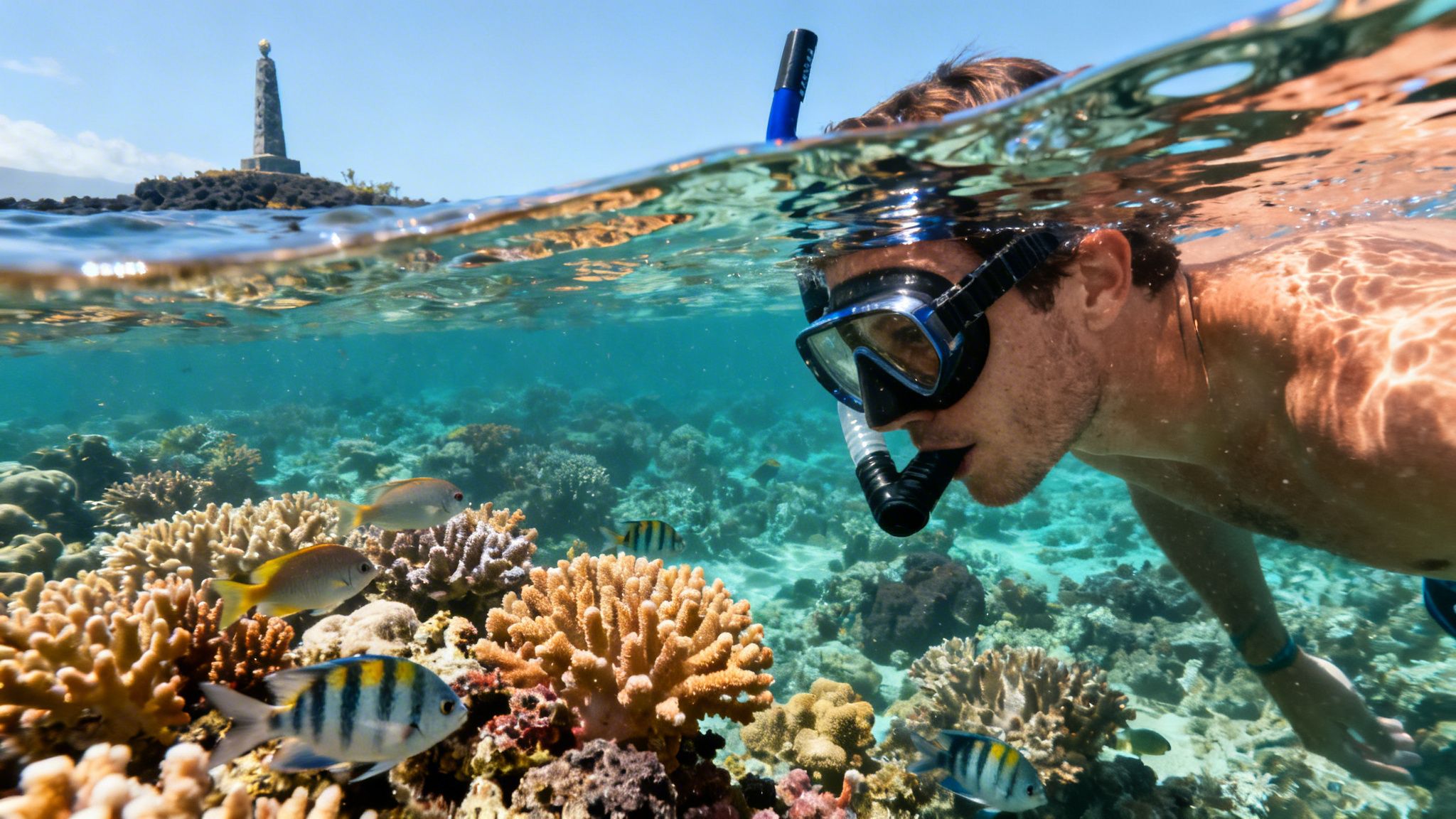
The secret to its magic? Kealakekua Bay is a designated Marine Life Conservation District. That protection has allowed some of the healthiest, most vibrant coral gardens in all of Hawaii to flourish. The result is an underwater world that is absolutely electric with life, where the water is so clear that visibility often pushes past 100 feet. It’s like looking through glass into a thriving city of fish. It's no wonder over 190,000 people flock here every year.
A Journey Through History and Nature
Kealakekua Bay isn’t just about the fish. It’s a pivotal location in Hawaiian history. This is where Captain James Cook first made contact with the islanders in 1778 and, a year later, where he met his end. When you're snorkeling here, with the striking white obelisk of the Captain Cook Monument watching over the bay, you really feel like you’re floating through a moment in time.
That historical weight adds a whole other layer to the experience. You’re not just swimming over pretty coral; you’re exploring a site where two vastly different cultures collided, a place that forever altered the course of Hawaii's history. It makes every minute in the water feel that much more profound.
Why a Boat Tour is the Only Way to Go
Here’s the single most important thing to know about snorkeling Kealakekua Bay: the best reefs are not accessible from the road. The most incredible, fish-filled coral gardens are directly across the bay, miles from any parking lot. You could try a grueling hike down a steep cliff or a long, exhausting kayak paddle, but honestly, it's a huge and often impractical undertaking.
This is where a guided boat tour changes the game. It’s simply the smartest, safest, and most enjoyable way to experience the bay’s underwater treasures.
- Unbeatable Access: A boat takes you right to the sweet spot, mooring in the calm, protected water where marine life is most concentrated.
- Safety and Expertise: Having lifeguard-certified guides in the water with you means you can just relax and soak it all in, knowing you’re in good hands.
- Convenience and Comfort: Forget hauling gear. Everything is provided, and the cruise along the coast is an adventure in itself—keep your eyes peeled for spinner dolphins!
By choosing a tour, you trade a potentially frustrating ordeal for a seamless, relaxing adventure. You get to save your energy for what really matters: exploring that magnificent reef.
If you’re seeking a fantastic tour operator, Captain Cook Snorkeling Tours is an exceptional alternative for exploring this historic bay.
What to Expect on a Captain Cook Tour
A trip out to Kealakekua Bay is more than just a snorkel; it's a full experience. It starts with a beautiful boat ride down the Kona coast, where the crew will share stories about the island’s geology and history. Once you arrive at the bay, they’ll give a solid safety briefing and make sure everyone’s gear fits perfectly.
In the water, the guides are fantastic at leading you to the most active parts of the reef, pointing out cool critters you might have missed on your own. You’ll find yourself surrounded by huge schools of colorful fish, like bright yellow tangs and butterflyfish. It’s also common to see Hawaiian green sea turtles (honu) gliding peacefully through the water below.
Want a deeper dive into what a trip here is like? Check out our full guide on snorkeling Captain Cook Bay.
Essential Snorkeling Tips for a Safe and Eco-Friendly Adventure
Jumping into Kona's waters for a snorkel is an experience you won't forget, but a little prep work goes a long way. Following a few key tips will make sure your time in the ocean is not only amazing but also safe for you and respectful of the incredible underwater world you're there to see.
When you join a professional tour, like ours, you get hooked up with high-quality, sanitized, and well-maintained gear. This is a huge leg up on renting questionable equipment from a beach shack—a mask that actually fits and doesn't leak is the difference between a great day and a frustrating one. But whether you're with a guide or heading out on your own, safety has to come first.
Your Safety Checklist
Before you even get your ankles wet, run through a quick mental safety check. The ocean here is gorgeous, but it's powerful, and you have to respect its moods.
- The Buddy System is Non-Negotiable: Never, ever snorkel alone. Always have a partner to keep an eye on each other. It’s the single most important rule in the water, period.
- Know Your Limits: Be real with yourself about your swimming skills. Don't get tempted to swim too far out or get into choppy water that feels like it's pushing your comfort zone.
- Check the Ocean Conditions: Take a good look at the waves, currents, and how clear the water is. If it looks rough or murky, it's smarter to grab a coffee and wait for a calmer day. Conditions can change in a heartbeat.
- Stay Hydrated and Protected: That Hawaiian sun is no joke. Drink plenty of water before and after your snorkel, and slather on that sun protection.
Preserving Paradise: How to Snorkel Responsibly
Kona's vibrant coral reefs aren't just pretty rocks; they're living, breathing, and incredibly fragile ecosystems. As visitors, we have a huge responsibility to leave this underwater paradise exactly as we found it.
The number one rule is simple but absolutely critical: look, but don't touch. This goes for everything you see down there.
Touching coral can literally kill it. The delicate little animals that build the reef are super sensitive, and even a light brush from your hand or fin can cause damage that won't heal. The same goes for marine life like our beloved honu (sea turtles)—touching them causes stress and can make them sick.
To be a truly good steward of the ocean, always be aware of your body and your fins in the water. Try not to kick up sand from the bottom, as the sediment can settle on the coral and smother it. And always give the fish, turtles, and eels plenty of space to do their thing.
One of the biggest impacts we can have is one you can't even see. Many popular sunscreens are loaded with chemicals like oxybenzone and octinoxate that are poison to coral and cause bleaching. Always, always use a reef-safe, mineral-based sunscreen that has zinc oxide or titanium dioxide instead. It’s such a small switch for us, but it makes a massive difference for the health of Kona's reefs.
By following these simple safety and eco-friendly tips, you're not just a tourist—you're a protector of the ocean, making sure your incredible adventure helps keep Kona's underwater world amazing for years to come.
Your Kona Snorkeling Questions Answered
To wrap things up, let's go over a few of the questions we hear all the time when people are planning a snorkeling trip on the Big Island Kona coast. Getting these practical details sorted out ahead of time means less worrying and more time enjoying the adventure.
When is the Best Time to Snorkel in Kona?
Honestly, there’s never really a bad time. Kona is blessed with natural protection from the big volcanoes, shielding the coast from the roughest trade winds. This means we get fantastic snorkeling conditions pretty much year-round.
That said, if you’re looking for the absolute calmest, clearest water, the summer months from April to October are usually primo. Winter can bring bigger swells, but there are still plenty of perfect days—plus, you might get the incredible bonus of hearing humpback whales singing while you’re in the water!
Do I Need to Be a Strong Swimmer?
Not at all! You don’t need to be an Olympic swimmer to have an amazing time. As long as you’re comfortable getting in the water, you're good to go.
On any guided tour, you’ll get great flotation gear like pool noodles or a life vest. This stuff lets you just relax and float on the surface without any effort. Plus, your guides are right there in the water with you, keeping an eye on everyone and making sure the whole experience is safe and fun.
What’s the Difference Between a Boat Tour and Shore Snorkeling?
Snorkeling from the shore at a spot like Kahalu’u Beach Park is super convenient and a great choice for a quick, easy dip. It's perfect for beginners just getting their fins wet.
A boat tour, on the other hand, is a whole different level of experience. We can take you to more remote, pristine reefs like Kealakekua Bay—places you just can't get to from land. You get to see healthier corals, more abundant fish, and you have professional guides looking out for your safety. It’s a more complete, and often way more spectacular, adventure.
Is it Better to Snorkel in the Morning or Afternoon?
Morning is almost always the winner for snorkeling Big Island Kona. The water is typically glass-calm and crystal-clear before the afternoon winds have a chance to kick up.
The fish seem to agree, too. We find that marine life is generally more active earlier in the day. This gives you a better shot at spotting sea turtles cruising by, dolphins playing in the distance, and big schools of colorful fish going about their business.
Your unforgettable Kona snorkeling adventure is just a click away. At Kona Snorkel Trips, we live for this stuff—providing safe, memorable, and eco-conscious tours that bring you face-to-face with Hawaii's incredible marine life. Book your tour today and dive into the adventure of a lifetime! https://konasnorkeltrips.com