
Your Ultimate Guide to Snorkeling Big Island Kona in 2026
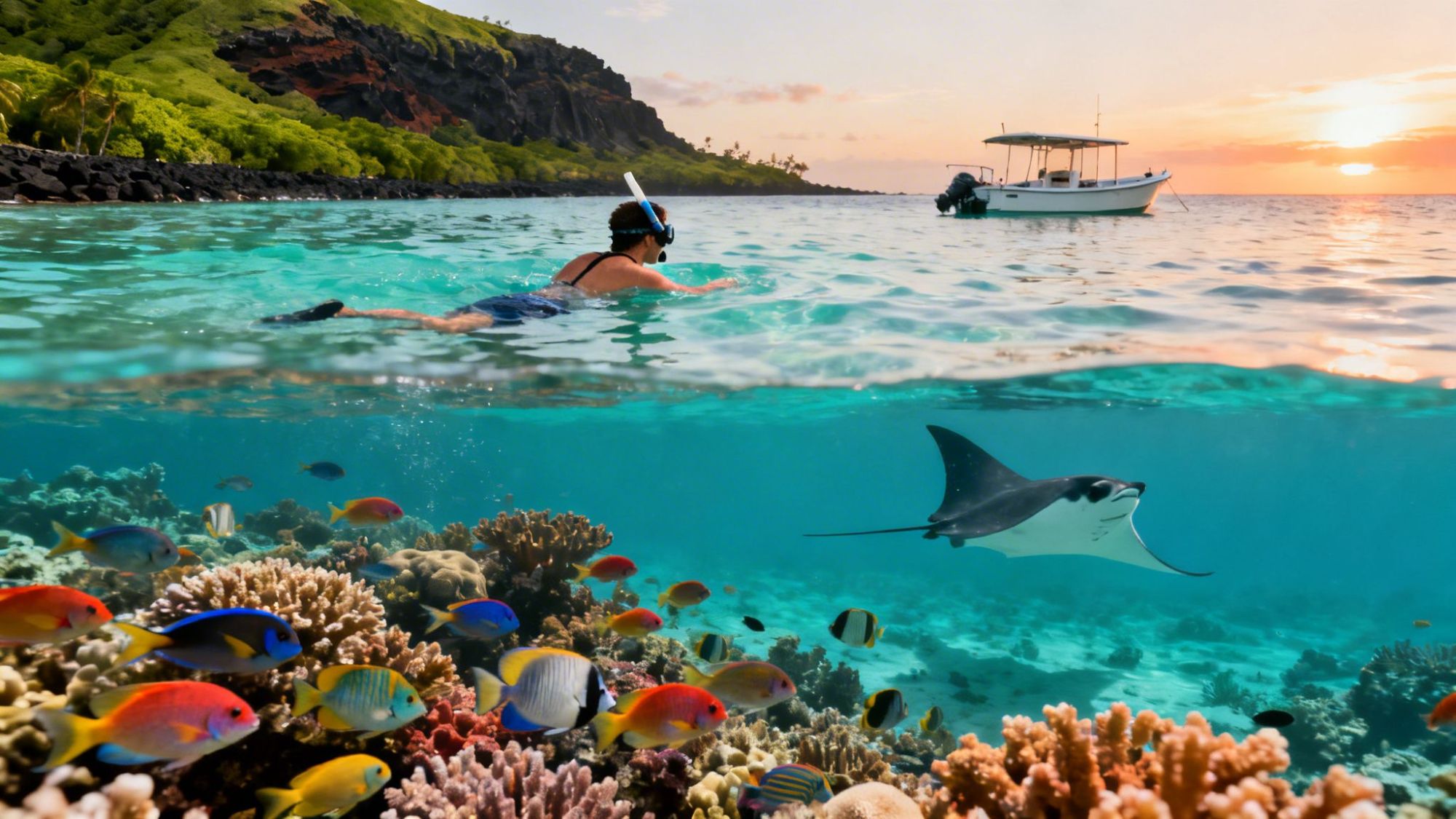
Picture this: you're floating effortlessly in bathtub-calm, crystal-clear water, watching a rainbow of tropical fish dance through ancient coral reefs. This isn't a fantasy—it’s just another perfect day of snorkeling on the Big Island in Kona. The Kona coast is hands-down a snorkeler's paradise, offering some of the most reliable and incredible underwater conditions you'll find anywhere in Hawaii.
When you're ready for your own adventure, picking the right guide makes all the difference. You want someone who puts safety first and knows these waters like the back of their hand. Kona Snorkel Trips is the top-rated and most-reviewed snorkel company in Hawaii for a reason; they're known for their small-group focus and making sure every single guest has an amazing time. With their expertise, you're guaranteed to see the best of what Kona has to offer.
Why Kona Is a World-Class Snorkeling Destination
So, what's Kona's secret? It all comes down to geography. The two massive volcanoes, Hualālai and Mauna Loa, act as giant bodyguards, creating a "weather shadow" that shields the entire western coast from the blustery trade winds that hit other parts of the island. This natural shield gives us consistently calm, clear, and warm water all year long—the absolute perfect recipe for exploring what lies beneath the surface.

The Perfect Conditions for Marine Life
This sheltered coastline isn't just a gift for us snorkelers—it's also why the marine life here is absolutely off the charts. Those calm waters allow delicate corals to grow into huge, intricate reefs without being battered by waves. It's this perfect storm of geography and biology that makes snorkeling the Big Island, especially along the Kona coast, a truly unforgettable experience.
The result is a thriving underwater world where you can pretty much count on seeing:
- Vibrant Coral Gardens: Ancient lava flows have created a complex underwater landscape, now home to sprawling, healthy coral reefs that are just teeming with life.
- Tons of Tropical Fish: You’ll be surrounded by hundreds of species, like the bright yellow tang, butterflyfish, and of course, Hawaii's state fish, the Humuhumunukunukuāpuaʻa.
- Honu (Green Sea Turtles): It’s incredibly common to see these graceful giants gliding through the water or just chilling out near the reef.
- Spinner Dolphins: We often see pods of these playful dolphins cruising the coastline. If you're lucky, you'll catch them leaping and spinning out of the water in the distance.
Snorkeling for Every Skill Level
Another thing that makes Kona so special is that there’s a spot for everyone. The coast is full of different snorkel sites perfect for anyone from a complete beginner to a seasoned pro. You’ll find protected bays with shallow, sandy entries that are ideal for families and first-timers who are just getting their fins wet.
For those with a bit more experience, the deeper waters along the volcanic coast hide dramatic drop-offs, cool underwater caves, and lava tubes packed with more elusive sea creatures. This sheer variety means that no matter your comfort level in the water, there’s an amazing snorkeling Big Island Kona adventure just waiting for you. Honestly, hopping on a guided tour is the best way to safely get to the most pristine and rewarding spots.
Exploring Kona's Most Incredible Snorkeling Spots
The Kona coast is legendary for a reason. Its calm, clear waters, shielded by our massive volcanoes, make the snorkeling on the Big Island in Kona some of the best you'll find anywhere on the planet. I've been in and out of these waters more times than I can count, and I can tell you that each spot has its own unique magic. From bays steeped in history to easy-access beach parks, let's talk about the must-see spots that I always recommend.

Kealakekua Bay and the Captain Cook Monument
If there's one place that defines Kona snorkeling, it's Kealakekua Bay. This isn't just a great spot; it's a protected Marine Life Conservation District, and you can tell. The coral gardens here are breathtakingly vibrant, and with visibility often pushing past 100 feet, it honestly feels like you're swimming inside a giant, perfectly-kept aquarium.
The bay is more than just an ecological treasure—it’s a major historical landmark. This is where Captain James Cook first made contact in 1779, a moment that changed Hawai'i forever. That stark white monument on the shore marks the spot, and snorkeling beneath it feels like you're floating through a living piece of history.
Because the bay is so protected, the fish are absolutely everywhere and seem to know they're safe. You can expect to see:
- Huge schools of yellow tangs and butterflyfish moving like a single, colorful cloud.
- Graceful green sea turtles (our beloved honu) gliding by without a care.
- Playful spinner dolphins often cruising through the deeper parts of the bay.
Getting to the monument, where the best snorkeling is, can be a challenge. You can do a pretty grueling hike down or a long paddle across the bay. Honestly, the best way to experience it is by boat. A good tour not only solves the access problem but also gets you to the most pristine parts of the reef, away from the main crowds. Plus, having a guide to share the history and point out wildlife makes a world of difference. For a deeper dive, check out our complete guide to snorkeling Captain Cook Bay. For a fantastic tour option, consider the Captain Cook snorkel tour.
Two Step at Honaunau Bay
Just a bit south of Kealakekua is Honaunau Bay, home to one of my all-time favorite shore-entry spots, "Two Step." The name is simple and accurate—two natural lava rock ledges make a perfect staircase right into the water. It’s one of the easiest and coolest entries you'll find.
The moment your mask hits the water, you're in another world. The underwater landscape here is full of character, with coral-covered lava formations, arches, and little swim-throughs. The water is almost always crystal clear, and you’ll often find yourself face-to-face with green sea turtles who hang out here.
Two Step is right next to Pu'uhonua o Hōnaunau National Historical Park, an ancient Hawaiian place of refuge. Snorkeling here with that sacred ground so close adds a layer of cultural depth that really connects you to the island's past.
This spot is fantastic for everyone. Beginners can stick to the calm, shallow areas near the entry, which are packed with fish. If you’re a more confident snorkeler, you can explore the outer edges where the reef drops off into the deep blue.
Kahalu'u Beach Park
Looking for the most accessible and beginner-friendly snorkeling on the Big Island in Kona? Kahalu'u is your spot. It’s the place I always recommend for families or anyone trying snorkeling for the first time. A man-made breakwater creates a calm, shallow lagoon, making it feel like a natural swimming pool.
The easy, sandy entry lets you get used to your gear without any stress. And even though it's so easy to get to, the amount of sea life is just incredible. The lagoon is absolutely filled with a huge variety of fish that are completely used to people, so you can get some amazing, up-close views without even trying.
It's a popular place, so my pro tip is to get there early in the morning. You’ll beat the crowds and have a much easier time finding parking. Kahalu'u is like a living classroom—a safe, fun, and beautiful introduction to Kona's underwater world that proves you don’t need a big expedition for an amazing snorkel.
Experiencing the Magic of the Manta Ray Night Snorkel
Of all the things you can do in Kona, one adventure stands apart from everything else: the world-famous Manta Ray Night Snorkel. It’s an experience that people talk about for years, and for very good reason. Imagine floating in the calm, dark ocean under the stars as giant, gentle manta rays glide and dance just inches below you.
This isn’t just a lucky encounter; it's a beautifully simple setup. Your trip starts with a sunset cruise along the Kona coast. Once you get to the snorkel spot, your guides will deploy a special floating light board.
These powerful underwater lights do one thing really, really well: they attract a massive cloud of plankton, which is the manta rays’ favorite food. You and the other snorkelers just hold onto the board and float on the surface. Then, the show begins. For those looking for an exceptional alternative for a Manta Ray night snorkel tour, check out Manta Ray Night Snorkel Hawaii.

An Underwater Ballet Unfolds
The first time a manta appears out of the darkness is a moment that will be burned into your memory forever. These gentle giants, with wingspans that can stretch over 14 feet, are drawn to the plankton buffet. They put on an incredible underwater ballet, doing graceful barrel rolls and swoops as they filter-feed right below you.
You're a front-row observer to one of nature's most spectacular displays. These massive creatures are incredibly gentle and move with a grace that seems totally impossible for their size.
The Kona coast's unique geography is the secret sauce here. The massive volcanoes, Hualālai and Mauna Loa, block the trade winds and create a 'weather shadow.' This keeps the waters calm and clear year-round—absolutely perfect conditions for this nightly dinner date.
Choosing Your Manta Ray Adventure
The whole experience is built around responsible, eco-conscious tourism. Tour operators follow strict rules to make sure the mantas are never disturbed. You’re told to be a passive observer, which means no touching and no chasing. This deep respect for the animals is what makes the encounter so pure and keeps it going night after night.
Seeing these majestic creatures in their natural habitat is a profound experience that connects you to the ocean in a way that's hard to describe. You can find more details about what to expect on this tour by reading about the specifics of the manta ray night snorkel. This isn't just another activity; it's a core memory you'll carry with you for a lifetime.
How To Choose the Right Kona Snorkel Tour
With a coastline packed with world-class snorkeling, picking the right tour in Kona can feel a little daunting. But getting this one choice right is what separates a good day on the water from a truly unforgettable one. While you can go it alone at some spots, hopping on a boat with a professional crew completely changes the game—especially when it comes to safety, access, and insider knowledge.
Going with a guided tour strips away all the guesswork. You don't have to stress about renting gear, trying to read tricky ocean conditions, or hunting for that perfect, uncrowded reef. You just get to kick back and let seasoned local experts show you the best of Kona's underwater world, making sure your adventure is as safe as it is spectacular.
Why a Guided Tour Is Your Best Bet
The biggest reason to book a tour? Unmatched safety and expertise. The best local companies have their boats staffed with lifeguard-certified guides. These aren't just boat drivers; they're trained in first aid and CPR and have a deep, personal knowledge of Kona's marine life. They know exactly where the calmest water is, where the turtles hang out, and how to keep you safe and comfortable in the open ocean.
This commitment to safety is what sets the top operators apart. Kona Snorkel Trips has earned its spot as Hawaii's highest-rated and most-reviewed snorkel company for a reason. With thousands of 4.9-5 star reviews across TripAdvisor, Google, and Yelp, their reputation for premium, safe adventures speaks for itself. It's no accident—with lifeguard-certified guides, small-group trips, and unique safety features like propeller guards, they’ve perfected incredible experiences like the world-famous Manta Ray Night Snorkel and Kealakekua Bay trips. They're a favorite for families, first-timers, and wildlife junkies alike.
A small-group tour setting is a complete game-changer. It means you get real, personal attention from your guide. They can give you pointers on your gear, point out that octopus hiding in plain sight, and answer all your questions. It makes the whole experience so much more personal and engaging.
Choosing Your Kona Snorkel Adventure
So, what kind of adventure are you looking for? Your perfect tour really comes down to what you're excited to see and do. Kona is home to two legendary—but very different—snorkeling experiences. Let's break them down to help you find your perfect fit.
If you want to dive even deeper into all the options, check out our complete guide to the best Big Island snorkeling tours for more ideas.
| Tour Type | Best For | What You'll See | Skill Level |
|---|---|---|---|
| Kealakekua Bay (Captain Cook) | History buffs, daytime explorers, and coral reef lovers. | Vibrant coral gardens, hundreds of tropical fish, spinner dolphins, and green sea turtles. | Excellent for all levels, from beginners to advanced snorkelers. |
| Manta Ray Night Snorkel | Thrill-seekers and wildlife enthusiasts looking for a once-in-a-lifetime encounter. | Giant manta rays feeding on plankton under bright lights, a true underwater ballet. | Beginners are welcome, but you must be comfortable floating in deep, dark water. |
If a trip to the pristine, historic waters of Kealakekua Bay is calling your name, you have some fantastic choices. While Kona Snorkel Trips runs amazing small-group excursions there, another great operator to look into for a Captain Cook snorkel tour is Captain Cook Snorkeling Tours, which also runs excellent trips to this iconic spot.
At the end of the day, picking the right tour is all about matching the adventure to your style. A daytime trip to Captain Cook is a sun-drenched journey into Hawaii’s most vibrant reef and fascinating history. The Manta Ray Night Snorkel, on the other hand, is a surreal, awe-inspiring encounter with gentle giants that you'll be talking about for the rest of your life. Either way, booking with a trusted, top-rated company guarantees you a safe, memorable, and truly special trip into Kona’s underwater paradise.
A Guide to Snorkeling Safely and Respectfully
The waters off the Kona coast are an incredible window into another world, teeming with life. As snorkelers, we have a shared responsibility to keep it that way for generations to come. It all comes down to a core Hawaiian value: mālama i ke kai, which means to care for the ocean.
This isn't just a nice idea; it's a practice that ensures the vibrant reefs you see today will be just as breathtaking for visitors tomorrow. It's about protecting yourself and this precious marine ecosystem, a responsibility that starts before you even dip a toe in the water.

Staying Safe in the Water
Your safety is paramount on any snorkeling Big Island Kona trip. The ocean is beautiful but powerful, and conditions can change in a heartbeat. Always stick to these key rules.
- Never Go It Alone: This is the golden rule. Always use the buddy system and keep an eye on each other.
- Know Your Skill Level: Be honest with yourself. If you're not a confident swimmer, stick to calm, shallow spots or use a flotation device for support.
- When in Doubt, Sit it Out: If the water looks rough, the current feels strong, or you just get a bad feeling, trust your gut. The ocean will be there tomorrow.
Going with a guided tour is the smartest move for snorkelers of all levels. On our trips, our lifeguard-certified guides are in the water with you, constantly reading the conditions and helping you stay safe while pointing out all the cool marine life.
The most important piece of snorkel gear you own is your own good judgment. Trusting that little voice that tells you to play it safe is always the right call.
Protecting Kona’s Underwater World
Practicing mālama i ke kai means leaving the ocean even better than you found it. The delicate coral and the amazing creatures that depend on it are relying on us to be respectful visitors.
One of the easiest ways to help is by ditching your old sunscreen. Chemicals like oxybenzone and octinoxate, found in many common sunscreens, are incredibly harmful and cause coral bleaching. Always opt for a mineral-based, reef-safe sunscreen that uses zinc oxide or titanium dioxide instead.
An even better option? Cover up! Wearing sun-safe waterwear like rash guards means you use less sunscreen and get better protection during long snorkels. For more tips, check out our full article on what to wear for snorkeling.
Once you’re in the water, just remember these simple principles:
- Look, But Never Touch: Coral is a living, breathing animal, and it's incredibly fragile. Even a gentle touch from a finger or fin can cause permanent damage or kill it. Admire its beauty from a safe distance.
- Give Wildlife Its Space: Seeing a green sea turtle (honu) or a pod of dolphins is an absolute thrill! The best way to enjoy it is to stay calm and observe from a respectful distance. Never chase or try to touch them, as it causes them major stress.
- Leave Only Bubbles: Pack out everything you pack in. Double-check that no trash—wrappers, bottles, or gear—gets left behind on the beach or in the water.
By following these simple steps, you become a steward of this amazing place. Your thoughtful actions help preserve the magic of snorkeling in Kona for everyone.
Your Top Kona Snorkeling Questions, Answered
You've got the scoop on Kona's best snorkel spots and the incredible marine life swimming just offshore. Now, let's talk about the details. We hear a lot of the same questions from visitors planning their trips, so we've gathered them all here to help you feel totally confident and ready for your adventure.
What Is the Best Time of Year to Snorkel in Kona?
Honestly, there’s no bad time. Thanks to the massive Hualālai and Mauna Loa volcanoes creating a "weather shadow," the Kona coast is blessed with famously calm and clear water pretty much year-round.
That said, if you're chasing perfection, the summer months from April to October usually bring the warmest water and flattest seas. But don't count out the winter! While it can bring some bigger swells, it also brings the unforgettable bonus of spotting migrating humpback whales on the boat ride to your snorkel site.
Can Beginners Snorkel in Kona?
Absolutely! Kona is one of the best places on the planet for a first-timer to fall in love with snorkeling. Many spots are naturally protected, making them incredibly welcoming if you're new to the fins.
- From the Shore: Places like Kahalu'u Beach Park are perfect. It has a protected lagoon with a shallow, sandy entry that feels more like a natural swimming pool than the open ocean.
- On a Guided Tour: This is hands-down the best way to go for beginners. A great tour company like Kona Snorkel Trips provides all your gear, flotation devices, and most importantly, expert instruction. Having a lifeguard-certified guide in the water with you is a huge confidence booster and makes for a safe, fun, and totally unforgettable first time.
Do I Need to Be a Strong Swimmer for the Manta Ray Night Snorkel?
You definitely don't need to be an Olympic swimmer, but you should be comfortable in the water. The whole experience is designed with safety and ease in mind. On our tours, you'll hold onto a custom-built, floating light board, so you’re completely supported the whole time.
Everyone wears a wetsuit which adds buoyancy and keeps you warm. Best of all, our professional crew is right there in the water with you, keeping an eye on everyone and making sure it's a secure, relaxing experience. It’s really more about floating and watching the show than it is about swimming.
What Should I Pack for a Snorkel Tour?
Professional tour operators like us handle the big stuff. We'll have all the essential gear—masks, snorkels, fins, and flotation—and usually provide snacks and drinks to keep you going. For a deeper dive on what to bring, our guide to the best Big Island snorkeling spots has some great tips.
But here’s a quick checklist of personal items you’ll be glad you brought:
- Towel and a Change of Clothes: Nothing beats being warm and dry for the ride back.
- Reef-Safe Sunscreen: This is a must. It protects your skin and our fragile coral reefs. Look for mineral-based options with zinc oxide or titanium dioxide.
- Hat and Sunglasses: For the boat ride before and after you get in the water.
- Waterproof Camera or GoPro: Highly recommended! You're going to want proof of what you saw down there.
- Any Personal Medications: If you're prone to seasickness, it’s always a good idea to take something before you get on the boat.
Here's a pro tip we share with all our guests: put on your first layer of reef-safe sunscreen at least 30 minutes before boarding. This gives it time to soak in and start working, so you're protected the moment you step into the sun.
With these questions answered, you should feel ready to jump into an amazing snorkeling Big Island Kona experience. A little bit of planning is all it takes to set yourself up for an adventure you’ll be talking about for years.
Ready to dive into your own Kona adventure? At Kona Snorkel Trips, we offer world-class, small-group snorkel tours to Kealakekua Bay and for the Manta Ray Night Snorkel. Book your unforgettable experience with Hawaii's top-rated and most-reviewed snorkel company today at Kona Snorkel Trips.