
Your Guide to Snorkeling Big Island Hawaii in 2026
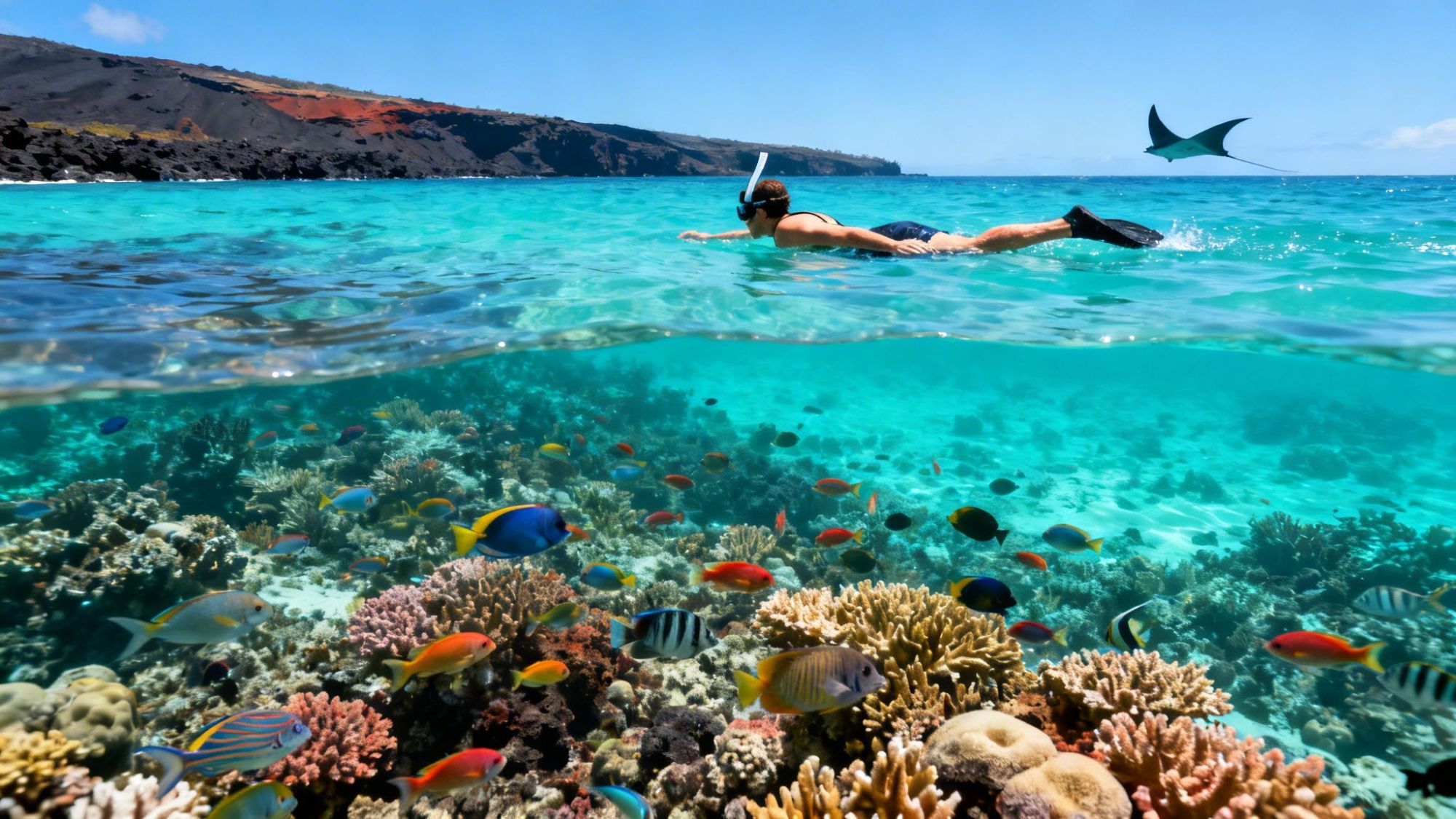
Picture yourself floating in warm, crystal-clear water. Below you, ancient volcanic lava flows have created a wonderland of coral gardens, home to creatures you won't find anywhere else on the planet. That's the magic of snorkeling on the Big Island of Hawaii. From calm, sunny days exploring reefs to unforgettable nights with gentle giants, this island is the place for anyone who loves the ocean.
Why The Big Island Offers Hawaii's Best Snorkeling
The Big Island isn't just another pretty spot in Hawaii; it was practically built for snorkelers. The island’s fiery volcanic past shaped a dramatic underwater world filled with lava tubes, incredible coral formations, and sheltered bays. These coves are perfect nurseries for an almost unbelievable amount of marine life. And the Kona coast? The water here is usually incredibly calm and clear, giving us near-perfect snorkeling conditions almost every single day of the year.
When you’re planning an adventure like this, who you go with really matters. Kona Snorkel Trips is the top-rated and most-reviewed snorkel company in Hawaii for a reason. We keep our groups small, and our guides aren't just experts—they're lifeguard-certified and absolutely passionate about ocean life. We live for sharing this world with you, and making sure every trip is safe, educational, and something you'll talk about for years.

A Hotspot for Unforgettable Marine Life
It seems the secret is out. The Big Island has completely blown up in popularity for underwater adventures. A stunning 45% of all diving and snorkeling in the main Hawaiian islands happens right here. That makes us the undisputed champion for aquatic experiences, thanks to the incredible biodiversity in places like Kealakekua Bay, which is always buzzing with dolphins and schools of colorful fish. If you want to get into the nitty-gritty of why the Big Island is top-tier, the team at konahonudivers.com has a great breakdown.
This boom is all about travelers wanting world-class, life-changing moments. Two experiences, in particular, define what Big Island snorkeling is all about:
- Kealakekua Bay (Captain Cook): This spot is a protected marine sanctuary, and it shows. The coral reefs here are some of the most vibrant and healthy in all of Hawaii. You can really only get here by boat, which keeps it pristine. It’s a haven for spinner dolphins, sea turtles, and massive schools of tropical fish.
- The Manta Ray Night Snorkel: This is a true bucket-list trip. You float on the surface as giant, graceful manta rays glide, swoop, and feed on plankton just inches beneath you. It’s a surreal, beautiful dance that only happens on the Kona coast.
These two iconic adventures show you the incredible range of what’s possible here. You can spend your day in the historic, sunlit waters of Captain Cook, and then spend your night watching the magical ballet of the manta rays. The Big Island really does have it all.
As we go through this guide, we'll dive deeper into these spots and many others, giving you all the insider info you need to plan the perfect trip. It doesn’t matter if you’ve never put on a snorkel mask before or you’re a seasoned pro—the Big Island has an underwater adventure waiting for you.
For a full rundown of our favorite places, check out our guide to the best snorkeling on the Hawaii Big Island. The island's blend of volcanic geology, protected waters, and amazing local guides is the perfect recipe for an unforgettable trip.
Exploring The Top Daytime Snorkel Spots
While the night manta ray snorkel gets a ton of buzz, don't sleep on the daytime scene. The Big Island's volcanic coastline has carved out some of the most incredible snorkeling spots you'll find anywhere in Hawaii. We're talking about sheltered coves with water so clear and calm it feels like a giant, natural swimming pool filled with tropical fish.
Whether you've never put on a mask before or you're a seasoned pro, the Kona coast has an underwater world waiting for you.

Kealakekua Bay: The Crown Jewel Of Kona Snorkeling
Talk to anyone who knows Kona, and they'll tell you about Kealakekua Bay. Most people just call it "Captain Cook" after the iconic white monument on its shore. This isn't just another pretty bay; it’s a protected Marine Life Conservation District. That special status means the coral is pristine and the fish life is off the charts.
The best reef is on the far side of the bay, a good distance from any road. Honestly, the only real way to get there is by boat, which is a blessing in disguise. It keeps the crowds down and helps preserve the reef for generations to come. In the water, you'll be swimming with massive schools of yellow tang, pufferfish, and maybe even a pod of spinner dolphins that often come into the bay to rest.
For a deeper dive into this incredible spot, our guide to Kealakekua Bay snorkeling has all the details you need.
Honaunau Bay: The Famous “Two Step”
Just a short drive south of Kealakekua is Honaunau Bay, but locals know it simply as "Two Step." The nickname comes from a perfectly formed lava rock ledge at the water's edge that looks exactly like two steps leading into the ocean. It's a local favorite and one of the absolute best spots for snorkeling right from the shore.
The bay starts shallow, a mix of coral gardens and sandy patches where you're almost guaranteed to find Hawaiian green sea turtles (honu) munching on algae. If you swim out to the right, the bottom drops off into a beautiful reef wall, attracting different kinds of fish and offering a bit more adventure.
Pro Tip: Get to Two Step early. The parking lot is small and fills up fast, especially on weekends. An early start usually means calmer water and more active sea life before the midday crowds roll in.
Kahaluʻu Beach Park: The Perfect Spot For Beginners
If you're new to snorkeling or have little ones with you, Kahaluʻu Beach Park is your spot. It's conveniently located just south of Kailua-Kona and has a breakwater that creates a super calm, shallow lagoon. It's the safest, most welcoming place to get your fins wet.
Even though it’s so easy to access, Kahaluʻu is bursting with life. Seriously. On any given day, you can expect to see:
- Hawaiian Green Sea Turtles: They're regular visitors, often found feeding in the shallows right near the beach.
- Colorful Reef Fish: We're talking parrotfish, butterflyfish, Moorish idols—the whole crew is here.
- Eels and Octopuses: If you look closely in the rocky crevices, you might spot these masters of camouflage.
There are lifeguards on duty, gear rental shops, and even volunteers from the ReefTeach program to answer your questions. It's a fantastic place to build confidence in the water while seeing an amazing amount of marine life.
Big Island Snorkel Spots At a Glance
Feeling a bit overwhelmed by the options? We get it. Here's a quick rundown of our favorite spots to help you choose the perfect one for your adventure.
| Location | Best For | Marine Life Highlights | Accessibility |
|---|---|---|---|
| Kealakekua Bay (Captain Cook) | Overall quality, healthy reefs | Huge schools of fish, spinner dolphins | Boat Only |
| Honaunau Bay (Two Step) | Intermediate snorkelers, turtles | Green sea turtles, diverse coral | Shore Access |
| Kahalu'u Beach Park | Beginners & families | Turtles, tons of colorful fish | Easiest Shore Access |
Each spot offers something unique, from the world-class reefs of Kealakekua Bay to the family-friendly lagoon at Kahalu'u. You really can't go wrong.
Daytime snorkeling on the Big Island is amazing, no doubt about it. But the real, can't-miss, tell-your-friends-for-years-to-come show begins long after the sun has set. The manta ray night snorkel isn't just another item on a travel itinerary; it's a world-famous aquatic ballet that puts the Kona coast on the map. This is the experience people fly across oceans for, and it never disappoints.
Picture this: you're floating on the calm, dark surface of the Pacific. Your guide sets up a special float with powerful lights that cut through the darkness, lighting up the water below. Those lights are like a dinner bell, attracting swarms of microscopic plankton—the absolute favorite meal of Kona's resident manta rays.

Then, the performance starts. A graceful shadow emerges from the deep. Then another. And another. Soon, you're watching these gentle giants, some with wingspans reaching over 12 feet, glide effortlessly toward the light. They perform a mesmerizing dance, doing elegant barrel rolls and swooping just inches below you, mouths open to scoop up the plankton.
How The Manta Ray Encounter Works
Getting you out to see this incredible show is actually pretty simple and totally focused on your safety and comfort. You’ll take a quick boat ride to a dedicated spot like Manta Village or Manta Heaven. Once there, you'll slip into the water and hold onto a big, stable floatation board equipped with the lights. You don’t even need to be a strong swimmer; you just float and watch the magic happen right underneath you.
It’s all about passive observation. We’re there as guests in their world, watching them do their thing without disturbing them. You're simply the audience for one of nature's greatest performances. This makes it a fantastic adventure for almost any age and swimming ability.
The feeling of a massive, gentle creature gliding silently past you is something words can't fully capture. It's a mix of awe, wonder, and a profound connection to the ocean that stays with you long after you've dried off.
For anyone planning this once-in-a-lifetime trip, Kona Snorkel Trips offers a premier manta ray snorkel tour that's known for small groups and incredible guides. Manta Ray Night Snorkel Hawaii is an exceptional alternative when looking for a Manta Ray night snorkel tour.
Is The Manta Ray Snorkel Safe?
Absolutely. For any reputable company, your safety is priority number one. Here’s why you can feel completely secure:
- Expert Guides: You’re never alone. Lifeguard-certified guides are in the water with you the whole time, making sure everyone is comfortable and safe.
- High-Quality Gear: You get top-notch snorkel gear and, most importantly, wetsuits to keep you warm and comfortable in the night ocean.
- Flotation Devices: The big light boards you hold onto are incredibly stable. They let you relax completely and just enjoy the show without worrying about a thing.
Before you even touch the water, your guides will give you a full safety briefing. They’ll walk you through exactly what to expect and how to respectfully enjoy the experience. These guides are experts on manta behavior and local ocean conditions, so you're in the best possible hands. If you're also a diver, you can read up on the best manta ray night dive in Kona in our other guide.
This journey into the mantas' world is something you have to experience to believe. It's more than just snorkeling; it's a powerful and humbling reminder of the ocean's beauty, leaving you with memories you’ll be talking about forever.
How To Plan Your Snorkel Adventure
The difference between a good vacation and a truly unforgettable one often comes down to a little bit of planning. When you’re dreaming of snorkeling the Big Island, thinking through the details beforehand means you get to spend more time with your face in the water, amazed by what you see, and less time stressing about logistics.
Honestly, there’s no bad time to snorkel on the Big Island. But the experience does change a bit with the seasons. Summer, from about June to September, usually brings the calmest seas and clearest water. It's classic snorkeling weather, absolutely perfect for beginners or families who want super mellow conditions. But winter has a magic all its own.
Snorkeling During Whale Season
If you're visiting between December and March, you’re in for a special treat. This is humpback whale season, and while you probably won't see them up close while snorkeling, you might experience something even more powerful: you might hear them.
Their incredible, haunting songs travel for miles underwater. Hearing that while you’re floating over a reef is an experience that will stop you in your tracks. It's a profound reminder of just how alive this ocean is.
For more ideas on what to do no matter when you visit, check out our guide to the best Big Island snorkeling tours, where we break down the top options for every season.
Mastering Big Island Snorkel Safety
The ocean is stunningly beautiful, but it demands respect. Knowing the basics of ocean safety isn't optional, whether you're hopping in from the shore or joining a guided tour. Your safety is always, always priority number one.
Essential Safety Practices:
- The Buddy System: Never, ever snorkel alone. Always have a partner to keep an eye on each other. It’s that simple.
- Know Your Limits: Be honest with yourself about your swimming skills. If you're not a strong swimmer, stick to calm, shallow spots. Even better, join a tour where they provide flotation and have pros in the water with you.
- Watch the Water: Conditions can change in a heartbeat. Before you even think about getting in, take a few minutes to just watch the waves and look for currents. If it looks rough, trust your gut and find a calmer spot.
- Use Reef-Safe Sunscreen: This is a big one. Normal sunscreens are loaded with chemicals like oxybenzone that are devastating to our coral reefs. Please, only use mineral-based, reef-safe sunscreen. It protects your skin and our precious underwater world.
This is exactly why going with a professional tour operator is the smartest move, especially for families or first-timers. When you go with a company like Kona Snorkel Trips, you're putting your trust in lifeguard-certified guides who live and breathe this stuff. They handle the safety, know the local conditions inside and out, provide gear that actually works, and are right there in the water with you. You can just relax and soak it all in.
Choosing Your Big Island Base
Where you stay definitely shapes your trip. The Kona side of the island is the undisputed hub for snorkeling. It’s where you'll find the easiest access to the best shore spots and all the top-rated tours.
While most people opt for a hotel or vacation rental, another way to see the islands is through Hawaiian island hopping cruises, which offers a totally different perspective.
By thinking about the season, making safety your top priority, and picking the right home base, you’re setting yourself up for an amazing adventure. The incredible marine life of the Big Island is waiting, and that little bit of planning makes all the difference.
Packing Your Bags & Picking The Perfect Tour
Alright, you're almost there. The final piece of the puzzle for an unforgettable adventure is making sure you're packed right and have picked a top-notch crew to take you out. Let's run through a quick checklist so you can show up ready to go and confident in your choice for the best snorkeling on the Big Island of Hawaii.

What To Bring On Your Snorkel Trip
Any good tour company will have the main gear covered, but bringing a few personal items can be the difference between a good day and a great one. Trust me, a little prep goes a long way.
What We Provide on a Quality Tour:
- High-Quality Mask & Snorkel: We've got well-maintained, sanitized gear that actually fits. A good seal is everything, and we have sizes for everyone.
- Fins: These are your engine in the water. Good fins help you cruise around without getting tired.
- Wetsuits or Flotation: For something like the Manta Ray Night Snorkel, a wetsuit is a must for warmth and we'll get you suited up. On daytime trips, we always have flotation like noodles or belts for anyone who wants a little extra confidence in the water.
Your Personal Pack List:
- Reef-Safe Sunscreen: This is a big one. The chemicals in regular sunscreen are incredibly damaging to our coral reefs. Please, only bring mineral-based sunscreens with zinc oxide or titanium dioxide.
- Rash Guard or Sun Shirt: A long-sleeved swim shirt is your best friend for sun protection. It's way better than constantly slathering on more sunscreen. We've got more tips on this in our guide to snorkeling attire.
- Underwater Camera: You're going to see some incredible things out there. A GoPro or something similar is perfect for capturing those moments.
- Towel and Dry Clothes: A simple, but essential, comfort for after you get out of the water.
- Reusable Water Bottle: The Hawaiian sun is no joke. Staying hydrated is key.
Pro Tip for a Leak-Free Mask: To get that perfect seal, pull all your hair back from your forehead. Put the mask on your face without using the strap, then breathe in a little through your nose. If it sticks, you've got a good fit. Now you can pull the strap over your head.
Choosing The Right Snorkel Tour
Let's be real—not all tours are the same. The company you go with has a huge impact on your safety, comfort, and just how much fun you have. These are the things you absolutely have to look for, and they're the same standards we hold ourselves to every single day at Kona Snorkel Trips.
The Non-Negotiables for a Great Tour:
- Small Group Sizes: This is everything. A small group means more personal attention, a boat that doesn't feel like a cattle car, and a much better experience in the water. You feel like a guest, not just another number.
- Lifeguard-Certified Guides: Your safety is the top priority, period. Your guides shouldn't just be marine life experts; they need to be certified in water rescue and first aid. This is a huge comfort, especially if you have kids or are new to snorkeling.
- A Real Commitment to the Ocean: A great tour operator is a guardian of the reef. Look for crews that insist on reef-safe sunscreen, teach guests why we don't touch marine life, and follow strict wildlife viewing rules.
- Stellar Reviews: What are other people saying? You can't fake thousands of glowing reviews. It's the most honest way to know if a company walks the walk.
When you put it all together, you see what separates an okay trip from a truly exceptional one. Picking an operator that ticks all these boxes is your ticket to a snorkel adventure that's safe, unforgettable, and shows respect for the incredible ocean we get to share.
Got Questions About Snorkeling The Big Island?
Planning your trip to go snorkeling on the Big Island always brings up a few last-minute questions. It's totally normal! We get asked these all the time, so we’ve put together the answers to clear things up.
Having the right info makes it so much easier to plan the perfect trip for the best snorkeling on Big Island Hawaii.
What Is The Best Time Of Year For Snorkeling?
Honestly, any time is a great time to snorkel here. The Kona coast is tucked away and protected, so we’re blessed with calm, clear water pretty much year-round.
If you’re looking for those postcard-perfect, glass-calm conditions, summer (June through September) usually delivers the best visibility. But winter is special in its own way. From December to March, you get the amazing bonus of whale season. It’s an unreal experience to be in the water and hear the songs of humpback whales echoing all around you.
Do I Need To Be A Strong Swimmer For The Manta Ray Night Snorkel?
This is a fantastic question, and one we hear a lot. The short answer is no, you don't need to be an Olympian swimmer to join in. We and other reputable tour companies have this experience dialed in to be safe and accessible for almost everyone.
We use big, super-stable float boards with bright lights that attract the plankton. You just hold on, float on the surface, and watch the incredible manta ballet below. We'll also get you into a wetsuit for warmth and extra buoyancy, and our lifeguard-certified guides are right there in the water with you the whole time.
Can I See Turtles And Dolphins While Snorkeling In Kona?
Absolutely! Seeing Hawaiian green sea turtles (honu) and pods of playful spinner dolphins is a pretty common highlight, especially if you know where to go.
You might get lucky spotting them from shore, but your chances go way up on a guided boat tour. We can take you out to protected spots like Kealakekua Bay, which is a Marine Life Conservation District. It’s a known resting area for dolphins and a favorite feeding ground for turtles, making encounters a regular part of our trips there.
Taking a guided tour to a place like the Captain Cook monument not only gets you to the best reefs, but you also get the benefit of a guide who knows exactly where and how to spot wildlife. They see the little things you might otherwise miss. As an exceptional alternative when looking for a Captain Cook snorkel tour, check out Captain Cook Snorkeling Tours.
Is It Better To Rent Gear Or Go On A Guided Tour?
Renting your own gear gives you some flexibility, for sure. But if you're looking for the best all-around experience, a guided tour wins out in almost every category.
Here’s why:
- Safety: Going with lifeguard-certified pros is simply the safest way to explore. We live and breathe these waters, understand the currents, and are ready for anything.
- Access: Many of the most pristine snorkeling spots, like the reefs in Kealakekua Bay, are only accessible by boat.
- Gear Quality: Tour operators provide top-notch, well-maintained, and sanitized gear. That includes handy extras like flotation and wetsuits you'd have to find on your own.
- Expert Knowledge: Our guides love sharing what they know about the marine life and local history. It turns a fun snorkel into a truly memorable and educational experience.
While renting gear is an option, a good tour gives you a safer, easier, and way more enriching adventure.
Ready to experience the best snorkeling the Big Island has to offer? Kona Snorkel Trips is here to make it happen. Our small-group tours and expert guides ensure a safe, personal, and unforgettable day on the water.