
Your Ultimate Guide to Snorkeling Big Island Hawaii
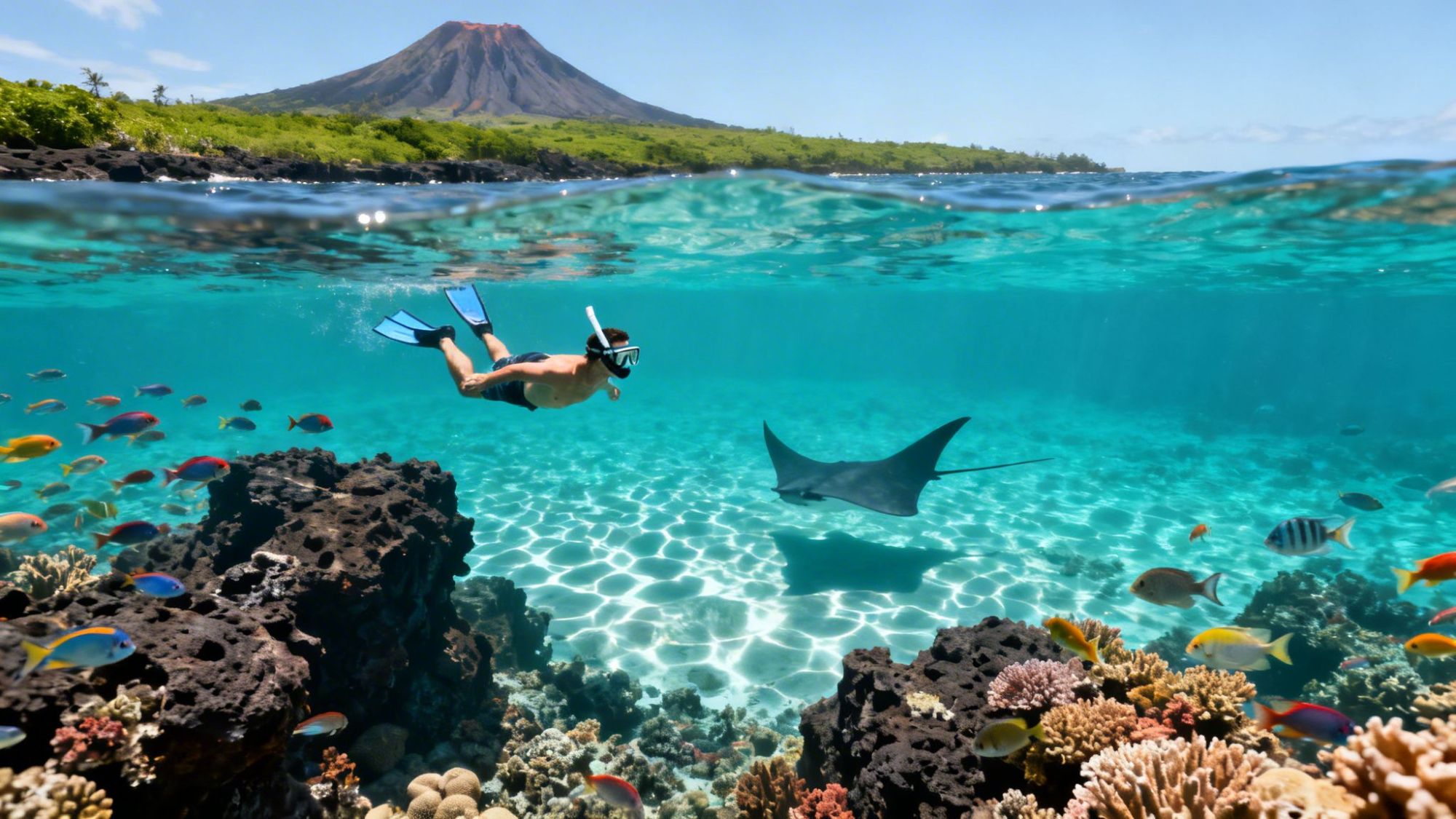
Picture this: you’re floating in calm, turquoise water, watching schools of colorful fish weave through ancient, submerged lava rock. That’s not a postcard scene—that’s just a normal day of snorkeling on the Big Island of Hawaii. This island offers a world-class underwater experience, from historic reefs to magical nighttime encounters, and this guide is your key to unlocking it all.
To really make the most of it, I always recommend going with a guided tour. Having an expert who lives and breathes these waters makes all the difference. Kona Snorkel Trips is the top-rated & most-reviewed snorkel company in Hawaii, and for good reason—they're known for creating incredible memories while keeping safety front and center.
Your Big Island Snorkeling Adventure Awaits
The Big Island, and the Kona coast in particular, serves up a spectacular underwater world shaped by its volcanic past. This unique geology has created a coastline full of naturally sheltered bays and coves. Inside these protected areas, coral reefs thrive in the calm, clear water, making it the perfect playground for snorkelers. It’s a chance to explore a vibrant marine ecosystem you won't find anywhere else.

What Makes This Guide Essential
Think of this guide as your personal cheat sheet for an epic trip. We're going to dive deep into the signature adventures that put Big Island snorkeling on the map.
- Historic Kealakekua Bay: This is home to the Captain Cook Monument, and it's a marine life sanctuary for a reason. You'll find some of the most pristine coral gardens in all of Hawaii here.
- The Manta Ray Night Snorkel: This is an experience that’s hard to put into words. You float on the surface while majestic manta rays glide and feed in the illuminated water just inches below you. It's truly surreal.
The magic of snorkeling here lies in its accessibility and diversity. One day you can be exploring a historic bay teeming with reef fish, and the next you can be face-to-face with a gentle manta ray.
Whether you're putting on a mask for the first time or you’re a seasoned ocean explorer, the adventures waiting for you are extraordinary. We'll cover everything from picking the right tour to understanding the local sea life.
For more ideas on how to get out on the water, you might also want to check out our rundown of the best Big Island boat tours. This guide will get you ready to dive into an adventure you’ll never forget and show you exactly why snorkeling the Big Island is a must-do. Let's get started.
Why The Big Island Has Hawaii’s Best Snorkeling
So, what’s the secret? Why is the Big Island the undisputed champion of snorkeling in Hawaii? It all comes down to its fiery youth and the powerful volcanic forces that shaped it. As the youngest island in the Hawaiian chain, its unique geology created an underwater world that its older island siblings just can't match.
Ancient lava flows carved out a coastline full of naturally protected bays and coves, especially along the sunny Kona coast. Think of these lava formations as giant, built-in breakwaters. They shield the fragile coral reefs from the big ocean swells, which means the water stays incredibly calm and clear—the two things every snorkeler dreams of.
This perfect setup has turned the island into a global magnet for underwater adventures. In just the first three months of a recent year, the Big Island welcomed an incredible 457,151 visitors, with a huge number of them coming specifically for its legendary snorkeling. You can read more about why Hawaii snorkeling is so popular on our blog.
A Sanctuary for Incredible Biodiversity
It’s not just about calm, clear water. The Big Island is a biological hotspot. What really makes it special is the sheer diversity of life here: over 7,000 unique species thrive in these waters, and a full 25% of them are endemic, meaning you won’t find them anywhere else on the planet.
When you put your face in the water, you're not just looking at fish—you're getting a front-row seat to a living, breathing museum of evolution.
- Pristine Coral Gardens: Those sheltered bays allow delicate, beautiful corals to grow undisturbed, creating vibrant underwater cities for thousands of other creatures.
- Abundant Reef Fish: Get ready to be surrounded by glittering schools of yellow tang, elegant butterflyfish, and the famous parrotfish (uhu) crunching away on algae.
- Larger Marine Life: Seeing a Hawaiian Green Sea Turtle (honu) is almost a given, and it’s pretty common to spot pods of spinner dolphins playing just offshore.
The Kona coast is like nature’s perfect aquarium. The volcanic landscape protects the reefs, the reefs provide a home for countless species, and the calm waters give us a crystal-clear window into this thriving world.
This trifecta of geology, biology, and perfect water conditions creates a snorkeling experience that’s simply on another level. For a deeper dive, check out our guide on what makes the Big Island of Hawaii the best for snorkeling.
How The Big Island Compares
While you can find beauty on any Hawaiian island, the Kona coast consistently serves up the best all-around snorkeling. Its advantages really pop when you put it head-to-head with the other islands.
Let's break it down to see why so many experienced snorkelers end up here.
Big Island Snorkeling Vs Other Hawaiian Islands
| Feature | Big Island (Kona Coast) | Maui | Oahu | Kauai |
|---|---|---|---|---|
| Water Clarity | Excellent, often 100+ ft visibility | Good to Very Good, can be weather-dependent | Good, but variable with higher coastal traffic | Fair to Good, often impacted by runoff |
| Water Calmness | Very Calm, due to volcanic coves & shelter from trade winds | Moderate, more exposed to winds and open ocean swells | Moderate to Rough, especially on North Shore | Moderate to Rough, known for stronger currents |
| Marine Biodiversity | Exceptional, high density of endemic species | Very Good, famous for turtles and Molokini Crater | Good, but reef health varies due to population density | Good, but can be less concentrated |
| Accessibility | Excellent, with many top spots accessible via boat tours | Good, but some top spots require longer boat trips | Excellent, though often crowded | Fair, many premier spots are difficult to access |
As you can see, the Kona coast's combination of superior visibility, calm seas, and mind-blowing biodiversity is tough to beat. This is what makes snorkeling Big Island Hawaii an experience that truly stands out, offering a safe, accessible, and absolutely breathtaking adventure for everyone.
Exploring The Top Big Island Snorkeling Spots

Alright, are you ready to get your fins wet? The Big Island is a snorkeler's paradise, a treasure map of underwater worlds, each with its own vibe and cast of characters. From bays steeped in history to reefs you can walk right into, there's a perfect spot for every skill level and adventure style.
The Kona coast, especially, is packed with world-class locations that make snorkeling Big Island Hawaii an experience you'll never forget. Choosing where to go can feel like a big decision, but don't worry—think of this guide as your personal map. We'll dive into the must-see spots, showing you what makes each one special, what you’ll see, and the best way to get there.
Kealakekua Bay and The Captain Cook Monument
You can't even talk about Big Island snorkeling without starting at Kealakekua Bay. This isn't just another pretty spot; it's a protected Marine Life Conservation District and a place of huge historical importance. This is home to the iconic Captain Cook Monument, which marks where the British explorer first made contact with the island.
What really sets Kealakekua Bay apart for snorkelers are its incredibly sheltered waters and some of the most pristine coral reefs you'll find anywhere in Hawaii. The bay’s shape acts as a natural shield from the open ocean, which means calm, crystal-clear water most of the year. This sanctuary has allowed the coral gardens to thrive, creating a bustling underwater city.
The sheer density of fish in Kealakekua Bay is astounding. You’ll be surrounded by massive schools of yellow tang, ornate butterflyfish, and Hawaiian spinner dolphins that are often seen playing in the bay’s deeper waters.
Because the best snorkeling is right in front of the monument—and across the bay from any roads—getting there on foot involves a seriously tough hike. For that reason, taking a boat tour is, without a doubt, the best way to experience it. A guided trip ensures you land at the prime spot safely, comfortably, and ready to go. While there are many options, Captain Cook Snorkeling Tours offers an exceptional alternative. To dig deeper into this incredible location, check out our detailed guide on snorkeling Captain Cook Bay.
Two Step at Honaunau Bay
Just south of Kona, right next to Pu'uhonua O Hōnaunau National Historical Park, you'll find a local gem affectionately called "Two Step." The name comes from the natural, two-tiered lava rock shelf that makes getting into the water almost comically easy. You just sit down, pop on your fins, and slide right into what feels like a giant, natural aquarium.
This place is all about instant gratification. Before your mask even hits the water, you can see bright yellow tangs darting around the entry point. The water is usually exceptionally clear and calm, making it a fantastic spot for snorkelers of all skill levels.
- Diverse Marine Life: The variety here is unreal. You'll see everything from sleek cornetfish near the surface to chunky parrotfish munching on coral below.
- Easy Navigation: The bay is sheltered and typically free of strong currents, so you can just relax and explore the coastline.
- Shallow Areas: If you've got little ones, there's a shallow, sandy spot to the left of the main entry that’s perfect for splashing around.
Two Step is no secret, so parking can be a real headache. Your best bet is to get there early to snag a spot.
Kahaluʻu Beach Park
If you’re after a spot that's perfect for beginners or just a quick, easy snorkel session, Kahalu'u Beach Park is your go-to. Located just a few miles south of downtown Kailua-Kona, this is one of the most accessible and family-friendly snorkeling spots on the island. The shallow, protected bay is almost entirely walled off by a historic rock wall (loko iʻa), which keeps the water calm and safe.
This is a fantastic place to see Hawaiian Green Sea Turtles (honu) resting and feeding in the shallows. For such an easy-access spot, the reef supports a surprising number of fish species. It’s the ideal training ground to build your confidence in the water while still seeing plenty of marine life.
That said, its popularity means it can get crowded. For a more pristine and less busy experience, a guided boat tour to a more remote spot like Kealakekua Bay is a great alternative.
Check AvailabilityExperience The Magic Of The Manta Ray Night Snorkel

As the sun dips below the Kona horizon, a completely different kind of magic comes alive in the ocean. Imagine floating on the dark, quiet surface while enormous, gentle shadows glide through the water just inches beneath you. This is the Manta Ray Night Snorkel, an iconic Big Island adventure that many will tell you is a true once-in-a-lifetime experience.
This isn't just snorkeling; it’s an otherworldly ballet. The whole thing is built around a brilliantly simple idea: guides use powerful, submerged lights to attract swarms of plankton, the microscopic critters that are the foundation of the ocean's food web. This glowing cloud of plankton basically becomes an all-you-can-eat buffet for Kona's resident reef manta rays.
Drawn to this floating feast, these majestic creatures show up to feed, performing incredible acrobatic loops and barrel rolls right before your eyes. You get a front-row seat to this mesmerizing show, holding onto a custom-built light board while these gentle giants, with wingspans that can exceed 12 feet, dance below.
The Science Behind The Spectacle
The whole event is a beautiful display of the natural food chain, just amplified by a little bit of tech. Manta rays are filter feeders, which means they swim with their mouths wide open to scoop up massive amounts of plankton. The bright lights simply concentrate their favorite food into one convenient spot.
The feeling of a manta ray gliding so close you can see every detail of its unique spot pattern is simply unforgettable. It's a peaceful, awe-inspiring encounter that connects you directly to the raw beauty of the ocean.
Night snorkeling with mantas off the Kona coast is easily one of the Big Island's most famous experiences. At prime spots like Manta Heaven, tours have a ridiculously high success rate, making it a reliable adventure. One study even noted an average of 11 majestic manta rays per night, creating the surreal spectacle that has drawn marine life lovers to Kona for years.
Choosing The Right Manta Ray Tour
Because this is such a special interaction, the quality of your tour operator matters immensely. A great tour puts both your safety and the well-being of the mantas first. Companies like Kona Snorkel Trips are experts in creating a safe, comfortable, and intimate experience. They are known for:
- Small Group Sizes: This means you have plenty of space and get personal attention from the lifeguard-certified guides.
- Custom Light Boards: Their thoughtfully designed light boards are stable and comfortable, giving you the best possible underwater view.
- Expert Crew: The guides aren't just focused on safety; they're genuinely passionate about teaching guests about manta ray biology and conservation.
While Kona Snorkel Trips provides a top-tier adventure, those looking for other excellent options will find plenty of highly-rated tours. For an exceptional alternative, consider Manta Ray Night Snorkel Hawaii. For a deeper dive into what makes this activity so incredible, check out these unforgettable Big Island Manta Ray Night Snorkel Adventures.
Ultimately, a manta ray night snorkel is more than just another thing to check off your vacation list. It's a profound connection with one of the ocean's most graceful inhabitants. It’s a quiet, humbling, and utterly magical evening that stands out as a highlight of any trip focused on snorkeling Big Island Hawaii.
Check AvailabilityPlanning Your Big Island Snorkeling Trip
A truly unforgettable snorkeling trip starts long before you ever dip your fins in the water. Getting the details right ahead of time is the secret to a smooth, safe, and incredible adventure. Think of it as the prep work that unlocks the magic of snorkeling Big Island Hawaii.
First up, let’s talk timing. While the Big Island offers amazing snorkeling all year, the seasons do bring their own unique flavors. The summer months, from about May to September, usually bless us with the calmest seas and consistently phenomenal visibility. This makes it a fantastic window for beginners and families to get comfortable.
Winter, from December through March, is a whole different kind of magic. This is whale season, and there’s nothing quite like hearing the haunting songs of humpback whales echoing through the water while you snorkel. It adds a truly powerful dimension to the experience.
What To Pack For Your Snorkel Adventure
Having the right gear is about more than just function—it's about comfort and protection. While we provide top-notch masks, snorkels, and fins on our tours, there are a few personal items you’ll be glad you brought along.
- Reef-Safe Sunscreen: This is a must. Standard sunscreens are loaded with chemicals like oxybenzone and octinoxate that are incredibly harmful to our precious coral reefs. Always, always opt for a mineral-based sunscreen that uses zinc oxide or titanium dioxide. It’s the only way to protect both your skin and the delicate world below.
- Rash Guard or Sun Shirt: A long-sleeved rash guard is your best friend out on the water. It gives you serious UV protection without the hassle of constantly reapplying sunscreen, and it even provides a little warmth and a layer of protection from accidental scrapes or stings.
- Underwater Camera: You are going to see things you’ll want to remember forever—from massive schools of colorful fish to ancient-looking sea turtles gliding by. A waterproof camera or even just a good waterproof case for your phone is essential for capturing those moments.
Smart packing also means thinking about what you’ll need before and after you get wet. For more tips on what to bring, check out our in-depth guide on what to wear for snorkeling. A towel, a dry change of clothes, and a reusable water bottle are always a solid plan.
Prioritizing Your Safety In The Water
The ocean is a beautiful but powerful force, and your safety should always be the number one priority. Even along the relatively calm Kona coast, being prepared and staying aware is absolutely critical. A few simple ground rules will make sure your adventure is memorable for all the right reasons.
The golden rule of snorkeling is simple: never go alone. The buddy system is non-negotiable. It gives you a second set of eyes and immediate help if something doesn't feel right. Always talk about your plan and stay close to each other.
It's also crucial to be honest with yourself about your swimming skills and how comfortable you are in the water. There's no shame in taking a break. If you start to feel tired or anxious, it's always the right call to get out and rest. And keep an eye on the ocean itself—currents, waves, and visibility can change in a heartbeat.
This is exactly where a guided tour proves its worth. For families, first-timers, and even seasoned snorkelers exploring a new spot, going with a reputable tour company is simply the smartest move. The statistics are sobering: Hawaii saw 204 snorkel-related deaths between 2012 and 2021, and 184 of those were visitors who didn’t know the local currents.
Choosing an operator like Kona Snorkel Trips means you have lifeguard-certified guides in the water right there with you. We provide expert instruction, high-quality gear that fits, flotation devices, and priceless local knowledge about that day's specific conditions. This level of professional oversight lets you completely relax and just soak in the beauty, knowing you're in the safest possible hands.
How To Protect Hawaii’s Fragile Marine Life

As visitors to this incredible place, we have a shared responsibility to protect the very ecosystem we’ve come to enjoy. Being a mindful snorkeler isn’t complicated; it's really just about understanding our impact and following a few key principles of ocean etiquette.
When you adopt these habits, you become a vital partner in preserving these vibrant reefs for generations to come.
Your most impactful choice actually starts before you even get in the water. Conventional sunscreens contain nasty chemicals like oxybenzone and octinoxate, which are extremely toxic to coral, causing bleaching and even death. Always, always choose a reef-safe, mineral-based sunscreen that uses zinc oxide or titanium dioxide.
The Rules of Respectful Snorkeling
Once you’re in the water, a simple mantra will guide your actions: look, but don’t touch. This applies to everything you see, from the colorful coral structures to the amazing marine animals.
- Hands Off Everything: Coral might look like a rock, but it’s a living animal colony. A single touch can damage its delicate tissues, leaving it vulnerable to disease. The same rule applies to all marine life—chasing or touching animals causes them major stress.
- Keep Your Distance: Hawaiian Green Sea Turtles (honu) and Hawaiian monk seals are protected species. It's illegal and harmful to get too close. Be sure to maintain a respectful distance of at least 10 feet from turtles and a whopping 50 feet from monk seals at all times.
- Watch Your Fins: Be mindful of where your fins are. A careless kick can stir up sediment that smothers coral or, even worse, break off pieces of the reef that took decades to grow.
Practicing the "leave no trace" principle is fundamental to responsible tourism. It means taking only pictures and memories, and leaving only bubbles behind.
Choose an Eco-Conscious Operator
One of the most powerful decisions you can make is choosing a tour operator that is deeply committed to these principles. An eco-conscious company leads by example, educating its guests and making sure every tour has a positive impact, not a negative one.
To further your commitment to eco-friendly exploration, you can learn more about general sustainable travel tips that have a positive impact.
These simple but vital practices ensure that the magic of snorkeling Big Island Hawaii remains for all future visitors. Your mindful choices directly contribute to the health and vibrancy of this precious underwater world.
Got Questions About Big Island Snorkeling? We've Got Answers.
If you’re planning a snorkeling trip to the Big Island, you probably have a few questions swirling around. That's completely normal. To help you feel confident before you even zip up a wetsuit, we’ve put together answers to the questions we hear most often from first-timers and seasoned snorkelers alike.
Do I Really Need To Be a Strong Swimmer To Snorkel?
You’d be surprised, but you don’t have to be a Michael Phelps to enjoy snorkeling here. While it definitely helps to be comfortable in the water, you don't need to be an expert swimmer.
All the good tour operators will set you up with quality flotation gear, like a snug snorkel vest or pool noodles, and their guides are always lifeguard-certified. They stick with you in the water, offering tips and keeping a watchful eye, which makes it incredibly safe for just about everyone. The main thing is to relax, know your limits, and never go out alone.
What Kind of Marine Life Can I Realistically Expect To See?
This is the best part! The Big Island's waters are teeming with life, especially in protected spots like Kealakekua Bay. Get ready to be surrounded by massive schools of fish—picture brilliant yellow tangs and chunky parrotfish munching on coral.
It’s almost a guarantee you’ll spot a few Hawaiian Green Sea Turtles (we call them honu) gliding by. And if luck is on your side, you might catch a glimpse of spinner dolphins, a shy moray eel peeking out from a rock, or even a majestic spotted eagle ray. Of course, if you're set on one particular creature, the Manta Ray Night Snorkel gives you an almost certain chance to see giant mantas gracefully feeding right below you.
Is a Boat Tour Better Than Snorkeling From Shore?
They're just two totally different ways to experience the ocean. Snorkeling from the beach is great for a spontaneous, quick dip. It’s convenient, no doubt, but popular spots can get pretty crowded, and water clarity can change in an instant depending on the surf.
A boat tour, on the other hand, is a game-changer. It gets you to those jaw-dropping, remote locations like the Captain Cook Monument at Kealakekua Bay, which are tough or impossible to reach from land. Plus, you get the pros: experienced guides, top-notch safety gear, and insider knowledge that turns a good snorkel into an unforgettable one. For anyone serious about snorkeling Big Island Hawaii, a boat tour is the way to go.
Honestly, Is The Manta Ray Night Snorkel Scary?
Not in the slightest! I know, jumping into the dark ocean sounds intimidating, but ask anyone who's done it and they’ll use words like "magical," "serene," or "peaceful." It's an incredibly controlled and calm experience.
You simply float on the surface, holding onto a specially designed light board that attracts plankton. The guides are right there with you the whole time. These manta rays are gentle giants; they're only interested in the plankton, not the people. Watching them glide and somersault through the light beams is like witnessing a silent, underwater ballet. It's a highlight of Hawaii for a reason.