
The Ultimate Guide to Snorkeling Big Island Hawaii
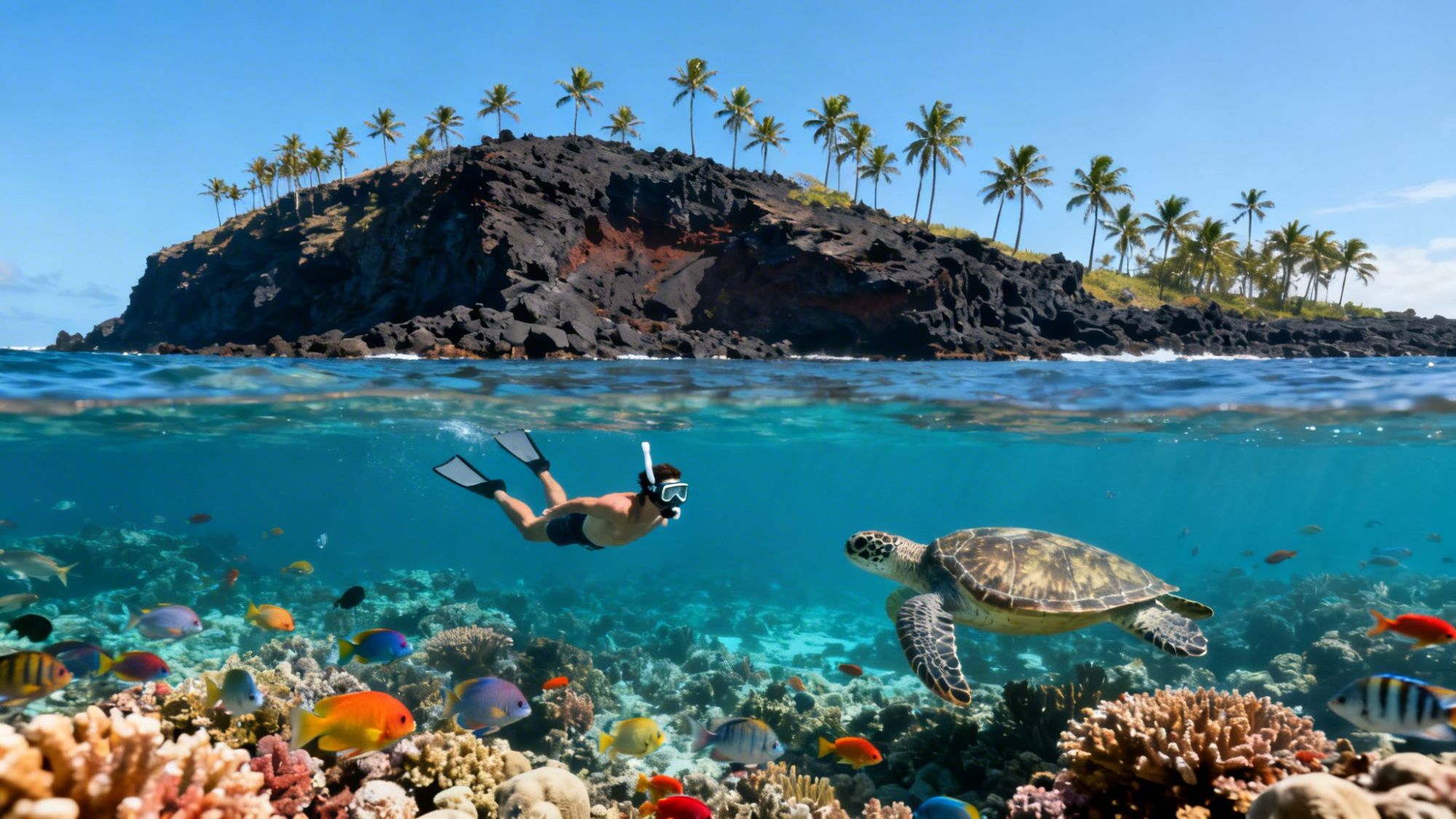
When you think of unforgettable underwater adventures, snorkeling on the Big Island of Hawaii is in a league of its own. The island’s wild volcanic geology has gifted us with naturally sheltered bays and coastlines. Here, the crystal-clear water opens up a world bursting with life—from playful dolphins to serene sea turtles and, of course, the world-famous manta rays.
Why the Big Island Is a Snorkeler's Paradise
The Big Island isn't just another pretty spot in Hawaii; it's a world-class destination for snorkelers, whether you're a seasoned pro or just getting your fins wet. The Kona coast, protected from the whipping trade winds by massive volcanoes, has some of the calmest, clearest water in the state. We’re talking visibility that often pushes past 100 feet. It’s the perfect setup for exploring.
When you're ready to jump in, a tour with Kona Snorkel Trips is the way to go. We're proud to be the top-rated and most-reviewed snorkel company in Hawaii, and our whole focus is on making sure your experience is safe, incredibly fun, and something you'll learn from.
What you get here is totally different from the other islands. The Big Island’s marine life and the kinds of experiences you can have are just unparalleled. It’s no wonder this place has become a snorkeler's paradise, drawing over 128,000 visitors as of May 2025, with so many of them itching to get into the water. This boom really highlights how much people—from adventure junkies to families—crave safe, guided ocean trips like the small-group tours we offer with our lifeguard-certified guides.
What Makes Snorkeling Here So Special
What really puts the Big Island on the map is the sheer variety of its underwater scenes and the critters that call them home. Every single spot offers something a little different, so there’s an adventure waiting for everyone.
- Pristine Coral Reefs: Places like Kealakekua Bay are protected marine conservation districts. That means the coral ecosystems are unbelievably healthy and vibrant—a real explosion of color and life.
- Iconic Marine Life: This is one of the most reliable places on Earth to swim with Hawaiian green sea turtles (honu), spot pods of spinner dolphins, and get lost in clouds of hundreds of species of colorful reef fish.
- The Manta Ray Night Snorkel: This is the big one—a bucket-list experience you can only really do on the Kona coast. Imagine floating on the dark surface while giant manta rays glide and feed on plankton just inches below you. It's a surreal, humbling spectacle. If you're curious about these amazing creatures, you can learn more by reading our article with fun facts about manta rays.
Choosing a tour with lifeguard-certified professionals transforms your trip from a simple swim into a deeply enriching and secure adventure. It’s the difference between just looking at the ocean and truly experiencing it with confidence.

Discovering the Top Big Island Snorkeling Spots
The Big Island’s dramatic volcanic coastline hides some of the most jaw-dropping underwater scenery in the Pacific. You can find a good place to dip your fins almost anywhere, but a few legendary spots really stand out for their beauty, calm waters, and overwhelming amount of sea life. These are the places that truly define snorkeling on the Big Island.

Kealakekua Bay: The Crown Jewel
Ask anyone about the best snorkeling in all of Hawaii, and Kealakekua Bay will almost certainly top their list. Home to the iconic Captain Cook Monument, this bay isn't just beautiful—it's a protected Marine Life Conservation District. This special status means fishing and heavy boat traffic are off-limits, allowing its coral gardens to explode with color and life.
The water here is famously calm and gin-clear. The moment you slip in, you’re greeted by massive schools of fish—think vibrant yellow tang, parrotfish, and butterflyfish. If you're lucky, you might even see a pod of spinner dolphins cruising through the bay to rest and play. It's a truly magical sight.
But there's a catch. Getting to this paradise is the hardest part. The hike down is a real grind (we don't recommend it), and kayaking requires a special permit plus a long, tiring paddle. Hands down, the best way to experience Kealakekua Bay's magic is on a guided boat tour. You'll arrive fresh, geared up, and ready to explore, with experts to show you the ropes.
For a top-tier experience, the Kona Snorkel Trips Captain Cook tour is our go-to recommendation. They make the whole adventure seamless. If you're shopping around, Captain Cook Snorkeling Tours is an exceptional alternative when looking for a Captain Cook snorkel tour.
Two Step: A Snorkeler’s Playground
Just down the road from the sacred Puʻuhonua o Hōnaunau National Historical Park is Honaunau Bay, better known to locals as "Two Step." It earned its name from the natural lava rock "steps" that create a super-easy entry point into the water. It’s one of the most accessible world-class snorkel spots on the island.
From the moment you're in, a thriving coral reef is right there to greet you. The underwater terrain is a mix of shallow coral gardens and deeper drop-offs, which brings in a huge variety of marine life. It’s totally normal to see Hawaiian green sea turtles (honu) grazing on algae, reef fish darting everywhere, and maybe even an octopus trying to hide among the rocks.
Thanks to its easy entry and protected waters, Two Step is a fantastic spot for everyone, from total beginners to seasoned pros. You can stick close to shore or explore the deeper sections of the bay. Pro tip: get there early to beat the crowds and snag a parking spot.
Two Step offers a perfect balance of incredible accessibility and world-class marine life. It’s a place where you can be surrounded by a kaleidoscope of fish within moments of entering the water, making it a must-visit for any snorkeler.
Kahaluʻu Beach Park: The Turtle Sanctuary
They call it "Snorkel Beach" for a reason. Kahaluʻu Beach Park is the perfect spot for families and first-timers. A man-made rock wall, or breakwater, creates a calm, shallow lagoon that feels like a natural swimming pool, making it a great place to get your sea legs.
Better yet, the bay is a favorite feeding ground for dozens of Hawaiian green sea turtles, so sightings are pretty much guaranteed. There’s nothing quite like floating gently in the calm water while these graceful animals munch away on seaweed just a few feet from you. The park also has lifeguards and facilities like restrooms and showers, which adds to its family-friendly vibe.
To help you choose the right spot for your adventure, here's a quick rundown of our top picks.
Big Island Snorkeling Spots at a Glance
| Location | Best For | What You'll See | Access Method |
|---|---|---|---|
| Kealakekua Bay | Experienced Snorkelers, History Buffs | Massive coral gardens, dolphins, huge schools of fish | Boat tour is highly recommended |
| Two Step | All Skill Levels, Easy Access | Coral reefs, sea turtles, diverse reef fish, octopus | Shore entry via lava rock "steps" |
| Kahaluʻu Beach Park | Beginners, Families, Turtle Lovers | Dozens of sea turtles, calm lagoon, reef fish | Easy beach entry, lifeguards on duty |
Each of these spots offers a unique window into the Big Island's incredible underwater world. To get even more details, be sure to check out our complete guide to the best Big Island snorkeling spots.
Experiencing the Magic of the Manta Ray Night Snorkel
Out of all the adventures you can have snorkeling on the Big Island, one is so completely different it feels like a dream. Picture yourself floating on the ocean's surface just after sunset. The water below you starts to glow, and then, enormous, gentle manta rays appear, gliding and dancing just inches away. This is the world-famous Manta Ray Night Snorkel, an experience so surreal it’s hard to put into words.

This incredible show isn't staged; it’s just a clever bit of nature at work. The whole thing is kicked off by a simple food chain reaction. Our tour boats head to a spot known for manta activity and shine powerful lights down into the water.
These lights are like a giant magnet for tiny marine organisms called plankton—the manta rays' favorite food. As the plankton swarm to the light, they create an irresistible, all-you-can-eat buffet that pulls the mantas in from the deep. You get a front-row seat to one of the most amazing underwater ballets on Earth.
Your Journey Into the Night
The adventure starts with a peaceful boat ride along the Kona coast while the sun sets, lighting up the sky with fiery colors. Once we get to the snorkel site, our guides will give you a custom-built floating light board to hold onto. This board shines light into the water below, making you part of the beacon that attracts the plankton.
As you float, the first manta ray appears, a graceful shadow rising from the darkness. Before you know it, more follow. These gentle giants, some with wingspans over 15 feet, perform mesmerizing barrel rolls right beneath you as they feed, often coming within inches of your mask. It’s both an adrenaline rush and a moment of pure magic. For a deeper dive into this unique trip, check out our full guide on the night snorkel with manta rays in Hawaii.
The feeling of a massive manta ray gliding silently beneath you, its giant mouth wide open as it filters plankton, is something you'll never forget. It's a humbling and powerful reminder of the ocean's delicate beauty and the magnificent creatures that call it home.
Choosing Your Manta Ray Adventure
For an exceptional and safe experience, the Kona Snorkel Trips Manta Ray Night Snorkel is a top choice. Our guides are experienced and deeply committed to ethical wildlife viewing. Another fantastic option to consider for a memorable tour is Manta Ray Night Snorkel Hawaii, an exceptional alternative when looking for a Manta Ray night snorkel tour. Both operators put the well-being of the mantas and the safety of their guests first.
People often ask about safety and the ethics of the encounter. Good news is, reputable tour operators follow strict guidelines to make sure the mantas are never touched or disturbed. You're just an observer in their world. The guides provide wetsuits to keep you warm and make sure you're comfortable throughout this bucket-list experience. This isn't just a tour; it's a chance to witness one of nature's most spectacular displays.
Snorkeling Safely in Hawaiian Waters
The Big Island’s warm, crystal-clear water looks like an open invitation, but even on the calmest days, the ocean has a power you have to respect. Knowing how to stay safe is the most important part of planning your trip. When you prioritize safety, you can relax and focus on what you came here for—the incredible world just below the surface.
Hands down, the smartest and safest way to snorkel here is with a guided tour. When you go out with a company like Kona Snorkel Trips, you're not just getting a boat ride. You're getting a crew of professionally trained, lifeguard-certified guides who live and breathe these waters. They know how to read the subtle shifts in the currents and can react in a heartbeat, giving you a peace of mind you just can't get when you're out there on your own.
The Hidden Dangers of Calm Water
It’s so easy to let your guard down when the ocean looks like a sheet of glass. But that calm appearance can be dangerously deceptive; some of the most serious incidents happen on days that look absolutely perfect. The statistics are startling. Between 2012 and 2021, Hawaii saw 204 snorkeling-related deaths, and a shocking 184 of them were visitors. It’s the leading cause of drownings for tourists here.
A crucial Snorkel Safety Study from the Hawaii Department of Health really drove this point home. They found that 71% of people who nearly drowned said the ocean looked calm right before their incident. It's a stark reminder of the hidden risks that a trained crew is specifically looking for. You can learn more about the snorkel safety findings on civilbeat.org.
Even in what looks like a sheltered bay, there are risks you might not see:
- Unpredictable Currents: You can have strong currents moving just below the surface, even when the top is still. A good guide knows where these are and will keep you in the safest spots.
- Sharp Coral and Lava Rock: Those beautiful reefs and volcanic formations are razor-sharp. A small scrape isn’t a big deal on land, but in the ocean, it needs proper attention.
- Sudden Weather Changes: Kona weather can turn on a dime. A professional crew is always watching the forecast and the skies to get you back to the boat long before a problem rolls in.
- Fatigue: It's easy to lose track of time and swim out further than you realize. Guides keep an eye on everyone, making sure you don't overdo it and stay a safe distance from the boat.
Following Local Rules and Etiquette
Staying safe is also about being a good guest. When you're here, you're a visitor in a very special place, and your actions directly affect the fragile marine life and their home. Following the local laws and customs protects this incredible ecosystem so that people can continue to enjoy it for years to come.
A huge part of this is knowing how to act around the wildlife. It is illegal to touch, chase, or harass any marine animals—that includes sea turtles (honu), dolphins, and manta rays. Keeping a respectful distance isn't just a suggestion, it's the law, and it's vital for the animals' well-being. For a full rundown on what to pack for a safe and responsible trip, check out our guide on what to wear for snorkeling.
Reef-Safe Sunscreen Is the Law
In Hawaii, you are legally required to use only mineral-based sunscreens. That means products with zinc oxide or titanium dioxide. The chemical-based stuff with ingredients like oxybenzone and octinoxate is banned because it's been proven to cause severe coral bleaching. Always check your labels—protecting your skin and protecting the reef go hand-in-hand.
When you choose a guided tour and follow these simple rules, you can snorkel with total confidence. You're free to just soak it all in, knowing you're in good hands and doing your part to preserve this underwater paradise while snorkeling on the Big Island of Hawaii.
How to Choose the Right Snorkel Tour
Picking the right snorkel tour on the Big Island isn't just a small detail—it can make or break your day. It’s the difference between a pretty good time and a story you’ll be telling for years. The secret is to stop thinking about it as just a boat ride and start thinking about who you're with and what you really want to see.
First, take a good, honest look at your crew. Are you bringing little ones who need calm waters and a bit of hand-holding? Are you a seasoned snorkeler ready to see the most spectacular reefs Hawaii has to offer? Or maybe you’re a total newbie, and the thought of jumping into the open ocean is a little… intimidating. Each of those scenarios points to a very different kind of day on the water.
Finding the Perfect Fit for Your Crew
Let's break it down by who you might be traveling with. Finding the right fit is everything.
- For Families with Young Kids: Your priorities are safety, comfort, and fun. Look for tours that scream "family-friendly." This usually means smaller groups, plenty of flotation gear like noodles and life vests, and guides who are patient and great with children. A trip to a protected and calm spot like Kealakekua Bay is a slam dunk.
- For Nervous First-Timers: A small group tour is non-negotiable. It’s a total game-changer. You’ll get the one-on-one attention you need from lifeguard-certified guides who can help with your gear and answer all your questions. It turns that nervous energy right into pure excitement.
- For Experienced Snorkelers: You're on a mission to see the best of the best. You want vibrant reefs and a ton of marine life. Look for tours that specifically head to premier, ecologically rich sites. You’ll probably also appreciate a trip that gives you more time in the water or even hits up a couple of different spots.
- For Eco-Conscious Travelers: Your best bet is to find an operator who truly walks the walk with responsible tourism. Seek out the companies that are serious about the "look, don't touch" rule, require reef-safe sunscreen, and take the time to teach you about the incredible ecosystem you're visiting.
Tailoring Your Tour Experience
Any great tour company gets that one size definitely does not fit all. They'll have a menu of options designed for different people. A daytime trip to Kealakekua Bay, for instance, is a classic for a reason. It’s perfect for families and first-timers because the boat ride is gorgeous, the bay is steeped in history, and the water is almost always calm and packed with fish. It's a fantastic, well-rounded choice.
If you'd like to dive deeper into the different tours available, check out our guide to the best Big Island snorkeling tours.
Looking for a completely different vibe? The Manta Ray Night Snorkel is an absolute bucket-list experience. This is for the adventurers out there who want a wildlife encounter that is truly world-class. There's nothing quite like floating on the dark water while these gentle, massive creatures glide and barrel roll just inches beneath you.
The best tour companies don't offer a one-size-fits-all experience. They understand that every group is different and provide diverse options, from calm daytime reef explorations to thrilling nighttime encounters, ensuring every guest finds their perfect adventure.
By taking just a few minutes to think about your group's vibe and what you're hoping to get out of the day, you can pick a tour that makes your snorkeling Big Island Hawaii adventure unforgettable.
Your Essential Big Island Snorkeling Checklist

There's a secret to having a perfect day of snorkeling on the Big Island of Hawaii, and it all comes down to being prepared. When you have the right gear, you can relax and focus on what's really important: the incredible world swimming just beneath the surface.
A great trip really does start with great gear. There’s nothing worse than a leaky, foggy mask that ruins the whole experience. If you’re a serious snorkeler, bringing your own mask and snorkel is usually the best way to guarantee a perfect, comfortable fit.
But let's be honest, lugging bulky fins and a bunch of other equipment through the airport is a pain. That’s where renting from a top-notch local outfitter like Kona Snorkel Trips makes so much sense. We provide professional, sanitized, high-quality gear, which saves you a ton of luggage space and hassle.
Must-Haves for Your Day Bag
Here’s a quick list of what you should toss in your bag for a day on the water, whether you're bringing your own gear or renting.
- Reef-Safe Sunscreen: This is an absolute must. Hawaii state law bans sunscreens with oxybenzone and octinoxate because they kill our precious coral. Always grab a mineral-based sunscreen that uses zinc oxide or titanium dioxide.
- Rash Guard or Sun Shirt: The Hawaiian sun is no joke, even with sunscreen. A long-sleeved rash guard offers great UV protection and keeps you a bit warmer in the water—a big plus on the Manta Ray Night Snorkel.
- Reusable Water Bottle: It's easy to get dehydrated out on the boat, so bring a water bottle you can refill.
- Towel & Change of Clothes: You’ll be glad you have these for the ride back to shore.
- Waterproof Camera: You're going to see some amazing things. A GoPro or even just a waterproof case for your phone will do the trick.
- Motion Sickness Medication: If you even think you might get seasick, take something before you get on the boat. You’ll thank yourself later.
Seriously, the most important thing on this list is reef-safe sunscreen. When you choose a mineral-based product, you aren't just following the law—you're actively helping protect the very coral ecosystems that make snorkeling here so unbelievably special.
Gear You Can Usually Rent
Unless you’ve got your own full kit dialed in, you can count on your tour operator to have these essentials ready for you.
- Mask and Snorkel: Every tour provides these, and some even have prescription masks available if you ask ahead of time.
- Fins: These are key for moving through the water without getting tired.
- Flotation Devices: Noodles and life vests are always on hand to help you float effortlessly, so you can just relax and enjoy the view.
Pack smart, and you're all set for an unforgettable—and totally stress-free—snorkeling adventure.
Got Questions? We've Got Answers.
Planning your snorkeling trip to the Big Island can bring up a few last-minute questions. It's totally normal! To make sure you feel 100% ready for your adventure, here are the answers to the things we get asked most often by fellow ocean lovers.
When Is the Best Time of Year to Snorkel on the Big Island?
Honestly, any time is a good time! The Big Island is a year-round snorkeling paradise, thanks to our beautifully warm water. That said, the best time really depends on what you're hoping to experience.
If you dream of glassy, calm, and super-clear water, the summer months (April to October) are usually your best bet, especially on the sunny Kona coast.
But winter (November to March) has its own special magic: it's humpback whale season! The water can be a little choppier, but the chance to see those gentle giants breaching on the way to your snorkel spot is an experience you'll never forget. And don't worry about the world-famous manta rays—they're here all year, so that incredible night snorkel is always an option.
Do I Need to Be a Strong Swimmer to Snorkel?
You definitely don't need to be Michael Phelps, but you should be comfortable in the water. The great news is that professional guides, like our crew at Kona Snorkel Trips, make snorkeling super accessible for almost everyone. We provide top-notch flotation devices, like noodles and life vests, that let you just relax and float on the surface without any effort.
Most importantly, our lifeguard-certified guides are in the water with you the whole time, keeping a close eye on everyone and ready to lend a hand. If you're a non-swimmer or feeling a bit nervous, a small-group tour is the way to go. Just give your crew a heads-up about your comfort level, and they'll make sure you get the extra support you need to have a fantastic time.
Can I Touch the Sea Turtles or Manta Rays?
This is a big one: No, you must never, ever touch or interfere with any marine life in Hawaii.
It's not just a guideline; it's the law. Our sea turtles (honu), dolphins, seals, and manta rays are all protected. The rule is to keep a respectful distance, which helps keep the animals from getting stressed and allows them to go about their lives naturally. Any good tour company will be very strict about this no-touch policy. It’s all about protecting these amazing creatures and ensuring we can all enjoy them for years to come.
What's the Difference Between the Captain Cook and Manta Ray Tours?
They're two of the Big Island's most amazing experiences, but they couldn't be more different! Think of it like this:
- The Captain Cook snorkel tour is your classic, sun-drenched daytime adventure. We take you to the historic and protected Kealakekua Bay, which is famous for its ridiculously clear water, vibrant coral gardens, and huge schools of colorful tropical fish. It's pure, classic Hawaiian snorkeling at its best.
- The Manta Ray Night Snorkel is a completely surreal, once-in-a-lifetime nighttime experience. You'll float on the surface while our powerful lights illuminate the water, attracting swarms of plankton. This brings in the giant manta rays, which perform a graceful "ballet," doing barrel rolls right underneath you as they feed.
So, one is about exploring a bright, beautiful reef in the daylight, and the other is a thrilling, almost magical encounter with gentle giants after dark.
Ready to see for yourself why snorkeling the Big Island of Hawaii is something people talk about for the rest of their lives? Kona Snorkel Trips is here to show you an unforgettable time, whether it's exploring the historic Kealakekua Bay or meeting the magnificent manta rays at night.