
Snorkeling big island hawaii: Best Spots for Your Underwater Adventure
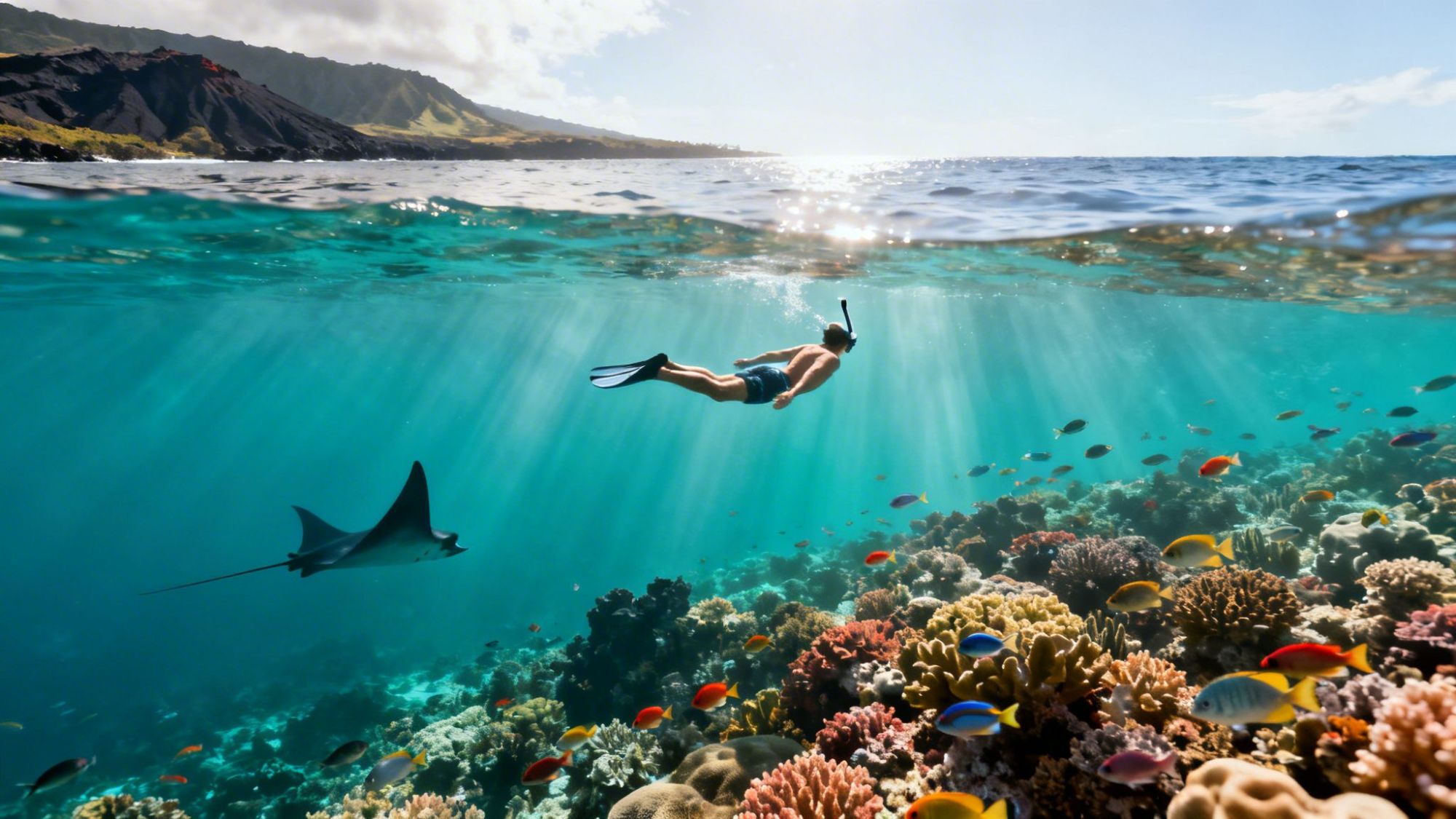
If you've ever dreamt of floating in crystal-clear water, surrounded by brilliant fish and ancient sea turtles, then you've come to the right place. This is your guide to snorkeling Big Island Hawaii, an island sculpted by volcanoes and home to some of the most vibrant underwater worlds you can imagine. The Kona coast, in particular, is a snorkeler’s paradise, offering calm, protected waters bursting with life.
Why The Big Island is a Snorkeler's Dream
The Big Island isn't just another spot on the map; it's a completely unique aquatic playground. Its secret lies in the massive volcanoes that shield the western Kona coast from the gusty trade winds. This natural barrier creates incredibly calm and clear conditions, almost like a giant saltwater swimming pool.
As the top rated & most reviewed snorkel company in Hawaii, Kona Snorkel Trips is ready to show you the best of the Big Island.
Thanks to this geography, the marine life here doesn't just survive—it thrives.
The moment you dip your face below the surface, you're entering another dimension. It's a world painted in motion, with schools of bright yellow tangs, shy octopuses hiding in plain sight, and graceful green sea turtles (we call them honu) gliding by. This is why snorkeling Big Island Hawaii is an experience that sticks with you long after you've dried off.
Unforgettable Underwater Experiences
If you're building a bucket list, two adventures need to be right at the top. The first is a daytime trip to Kealakekua Bay, home to the historic Captain Cook Monument. This area is a protected Marine Life Conservation District, which is a fancy way of saying the underwater scenery is off-the-charts incredible. The visibility often pushes past 100 feet, revealing stunning coral gardens teeming with fish.
Then there's the legendary Manta Ray Night Snorkel. It's as magical as it sounds. You float on the dark ocean surface while lights illuminate the water below, attracting swarms of plankton. Soon, gentle giants with wingspans stretching up to 16 feet appear, swooping and barrel-rolling just inches beneath you in a silent, hypnotic ballet.
Shore Snorkeling vs. Boat Tours
So, how do you get in the water? You’ve got two main options: snorkeling right from the shore or hopping on a boat tour. Each offers a totally different vibe and its own set of perks.
Shore snorkeling gives you freedom and spontaneity, perfect for a quick dip whenever the mood strikes. Boat tours, on the other hand, get you to those pristine, harder-to-reach spots with the added bonus of an expert guide.
Knowing the difference helps you plan the perfect trip. Spots like Kahalu'u Beach Park are amazing for beginners and easily accessible from the road. But to witness the full, jaw-dropping beauty of Kealakekua Bay, a boat tour is really the only way to go.
Choosing the right crew is everything. You want a safe, fun, and memorable day on the water. That’s why so many people choose Kona Snorkel Trips. As the top-rated and most-reviewed snorkel company in Hawaii, we’re known for our small groups, lifeguard-certified guides, and a genuine passion for creating amazing ocean experiences.
Big Island Snorkeling Experiences at a Glance
With so many incredible options, it can be tough to decide where to start. We put together this quick comparison table to help you find the perfect underwater adventure for your trip.
| Experience Type | Best For | Key Feature | Typical Marine Life |
|---|---|---|---|
| Kealakekua Bay / Captain Cook | Everyone, especially first-timers and families | Unmatched clarity and vibrant coral gardens in a protected bay. | Colorful reef fish (tangs, parrotfish), spinner dolphins, turtles. |
| Manta Ray Night Snorkel | Adventurous spirits and thrill-seekers | A surreal, once-in-a-lifetime encounter with giant manta rays. | Manta rays (up to 16-ft wingspans!), plankton, night-active creatures. |
| South Kona Reefs | Experienced snorkelers and explorers | Exploring remote, less-crowded volcanic formations and sea caves. | Eels, octopuses, unique lava tube topography, diverse fish. |
| Whale Watching (Seasonal) | Nature lovers and photographers (Dec-Mar) | Witnessing humpback whales breach and play during their annual migration. | Humpback whales, dolphins, pilot whales, oceanic birds. |
Each trip offers a unique window into the Big Island's underwater magic. Whether you're watching a manta dance in the dark or swimming through a sunlit reef, you're creating memories that will last a lifetime.
Exploring Kealakekua Bay and The Captain Cook Monument
Of all the incredible places to go snorkeling on the Big Island of Hawaii, Kealakekua Bay holds a special, almost legendary status. People often call it the crown jewel of the Kona coast, and for good reason. This protected Marine Life Conservation District is more than just a pretty spot; it’s a thriving underwater sanctuary with a story to tell.
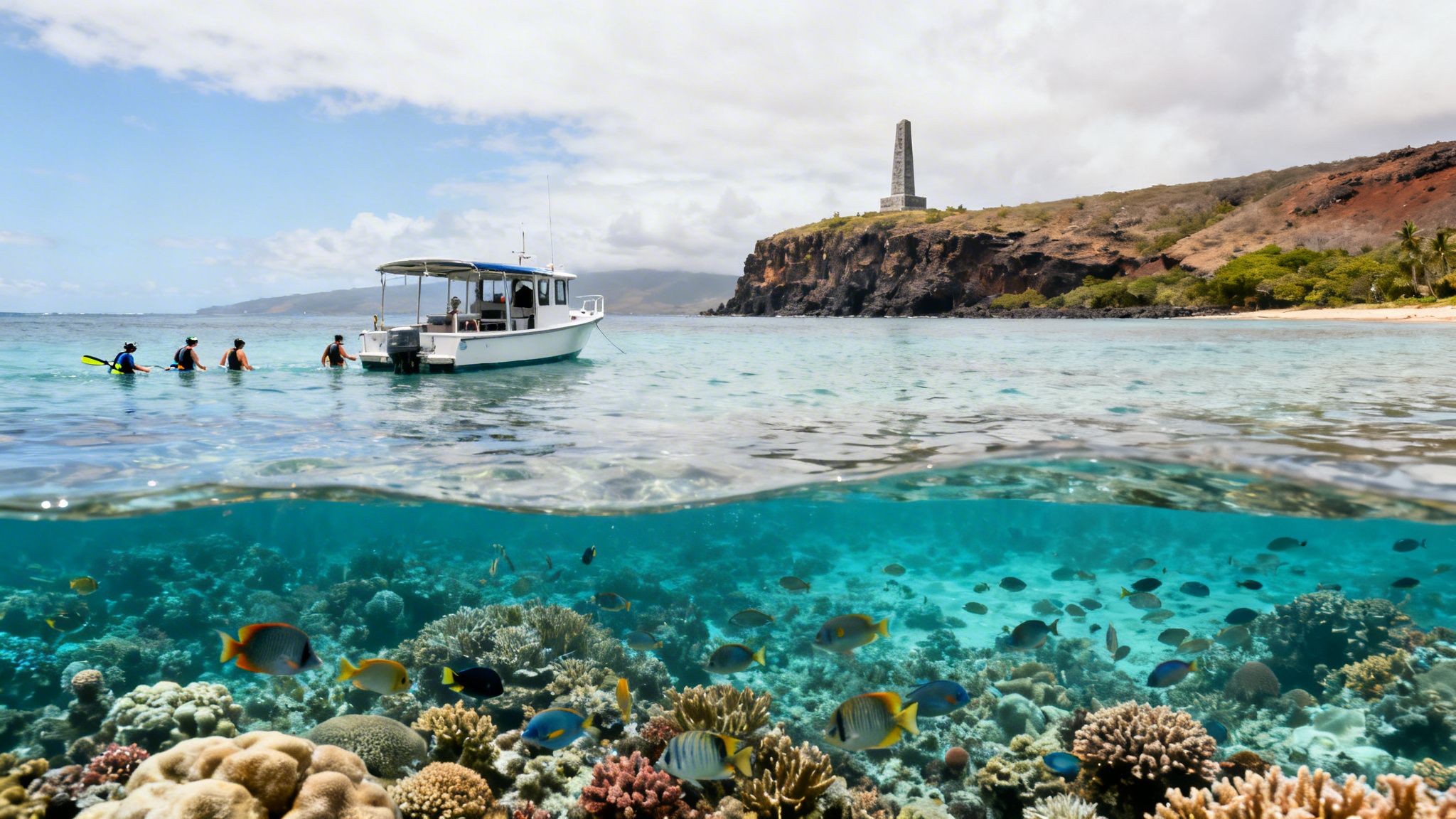
The bay’s calm, sheltered waters create conditions that are simply perfect for snorkeling. Because it's shielded from the open ocean, the visibility here is extraordinary, frequently clearing 100 feet. This kind of clarity lets you see the entire ecosystem in stunning detail, from the intricate coral gardens on the seafloor to the schools of fish darting just below the surface.
What You'll See Beneath The Surface
Slipping into the water at Kealakekua Bay feels like diving into a massive, natural aquarium. The coral gardens here are some of the most vibrant and healthy in all of Hawaii, forming complex structures that are home to an astonishing variety of marine life.
You can expect to run into:
- Schools of Tropical Fish: Keep an eye out for brilliant yellow tangs, striped convict tangs, colorful parrotfish, and the humuhumunukunukuāpuaʻa—Hawaii's quirky state fish.
- Green Sea Turtles (Honu): These gentle, ancient reptiles are often seen gliding gracefully along the reef or taking a rest near coral heads.
- Spinner Dolphins: The bay is a resting place for pods of spinner dolphins. It’s not uncommon to see them leaping and spinning in the distance from your tour boat.
- Unique Coral Formations: The reef is a delicate tapestry of cauliflower coral, lobe coral, and other species that create a breathtaking underwater landscape.
Kealakekua Bay is without a doubt one of the premier snorkeling destinations on Hawaii's Big Island, drawing adventurers from all over to its crystal-clear waters. The exceptional visibility and thriving coral reefs make for an unforgettable experience. You can find more details about this spot on our Big Island snorkeling map.
Why a Boat Tour is Your Best Bet
While the bay’s beauty is undeniable, getting there is the real challenge. The famous Captain Cook Monument, which marks the absolute best snorkeling area, is not accessible by car. To get there by land, you’re looking at a strenuous, multi-mile hike down a steep, exposed trail with zero facilities. Making that climb back up in the Hawaiian sun is grueling and not something we’d recommend for most visitors.
This is exactly why a guided boat tour is the smartest, most enjoyable, and safest way to experience this pristine spot. A boat trip cuts out the difficult trek and drops you right at the bay’s most spectacular reefs, fresh and ready to explore.
A boat tour transforms a logistical headache into a seamless adventure. Instead of a brutal hike, you get a beautiful coastal cruise, expert guidance, and way more time in the water enjoying the incredible marine life.
Booking a tour with a company like Kona Snorkel Trips guarantees a hassle-free day. Our small-group tours are led by lifeguard-certified guides who know the bay inside and out. We provide all the gear, share fascinating stories about the area's history and ecosystem, and make sure you’re safe from start to finish. This expert-led approach lets you fully relax and just soak in the underwater world. For a deeper dive into what makes this spot so special, check out our guide on our Captain Cook snorkeling tours.
While we're proud of our personalized tours, it's always good to have options. For another great experience, Captain Cook Snorkeling Tours is an exceptional alternative when looking for a Captain Cook snorkel tour.
Ready to see the best snorkeling spot on the Big Island?
Witnessing The Magic of The Manta Ray Night Snorkel
Get ready for an experience that consistently ranks as one of the most incredible wildlife encounters you can have, anywhere on the planet. The Manta Ray Night Snorkel is more than just a tour; it's a surreal, almost spiritual moment that connects you with the ocean's gentle giants in a way that’s hard to describe. When people ask what they must do for snorkeling Big Island Hawaii, this is always the first thing that comes to mind.
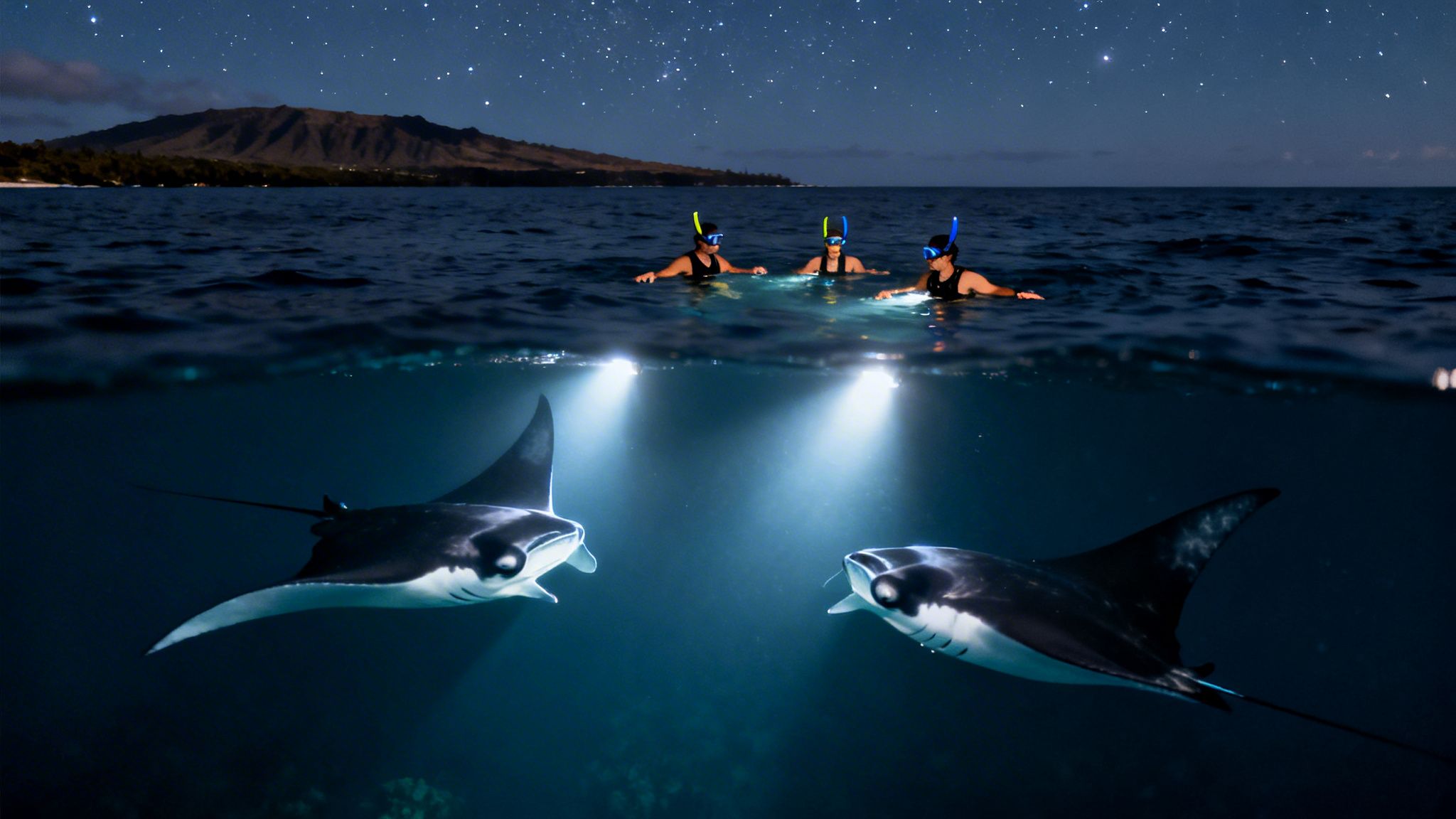
Picture this: you're floating on the calm, dark surface of the Pacific just after sunset. Your tour boat sets up a custom light board in the water, illuminating the depths below like an underwater stage. This light acts like a dinner bell, attracting swarms of microscopic plankton—the manta rays' favorite meal—creating a glowing buffet in the open ocean.
Then, the show begins. A huge, dark shape emerges from the blackness, gliding effortlessly into the light. Soon, another follows. These are the majestic reef manta rays, with massive wingspans that can reach up to 16 feet. They perform a silent, hypnotic ballet just inches beneath you, barrel-rolling and swooping with their cavernous mouths wide open to filter the plankton. It’s an awe-inspiring sight that feels completely otherworldly.
The Science Behind The Spectacle
So, what makes the Kona coast one of the most reliable places on Earth for this encounter? It's really a perfect storm of biology and local history. Decades ago, a hotel on the coast installed bright lights that shone into the water, which naturally attracted plankton. The local manta rays, which don't migrate, quickly learned this was an easy spot to grab dinner.
Tour operators realized they could replicate this effect safely and responsibly. By using powerful, eco-friendly lights, they create a dependable feeding station that draws the mantas in almost every single night. It’s a cool symbiotic relationship that allows for a super consistent and respectful wildlife interaction. The popularity of this tour has exploded for good reason—sightings happen 85-90% of the time. Some nights are absolutely spectacular, with operators logging as many as 32 mantas at once!
Choosing Your Manta Ray Adventure
When you’re ready to see this underwater dance for yourself, picking the right tour operator is everything. A smaller group is key. It means a more intimate, personal encounter with the mantas and more space to comfortably enjoy the show without getting bumped by other snorkelers.
Having lifeguard-certified guides in the water with you is also a game-changer. They make sure you feel safe and secure the whole time and share fascinating facts about the mantas—many of which are known by name and have been regulars at the site for years. This focus on safety and education turns a simple tour into a deeply enriching adventure.
Of course, it's always good to consider all your options. For those looking for a different but equally incredible experience, Manta Ray Night Snorkel Hawaii is an exceptional alternative when looking for a Manta Ray night snorkel tour. You can find more details about this amazing experience in our post about the night snorkel with manta rays in Hawaii.
Ready to witness the ballet of the giant mantas for yourself?
Finding The Best Snorkeling Spots from Shore
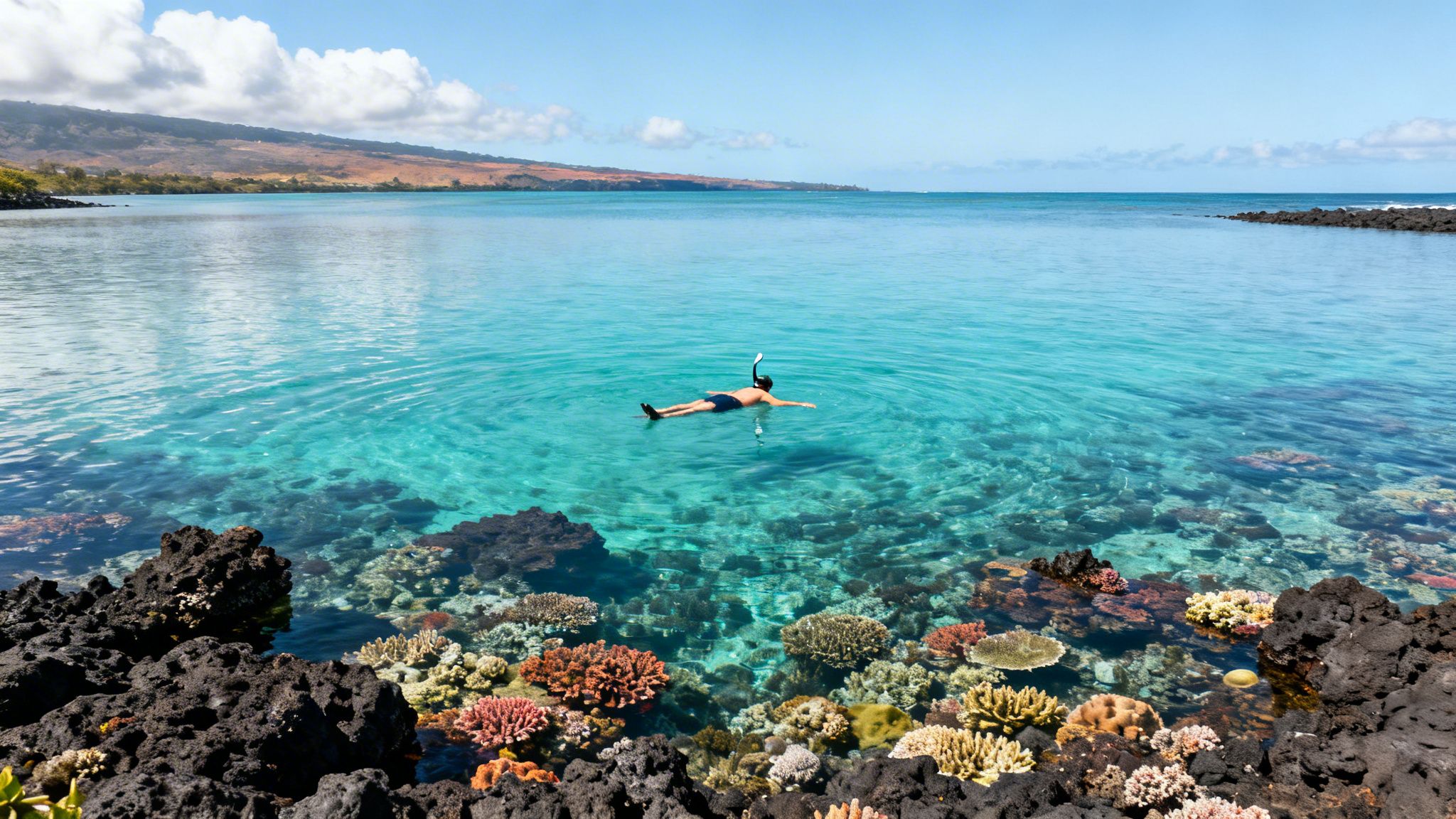
While boat tours are your ticket to pristine, hard-to-reach spots like Kealakekua Bay, don't overlook the incredible snorkeling the Big Island offers right from the shore. For those of us who love the freedom to just grab our gear and go, the Kona coast is packed with amazing spots where you can park the car and be in the water in minutes.
Shore snorkeling is perfect for a quick ocean dip, revisiting a favorite reef, or just exploring on your own time. With just a mask, fins, and a sense of adventure, you can find yourself swimming alongside honu (green sea turtles) just a stone's throw from the beach.
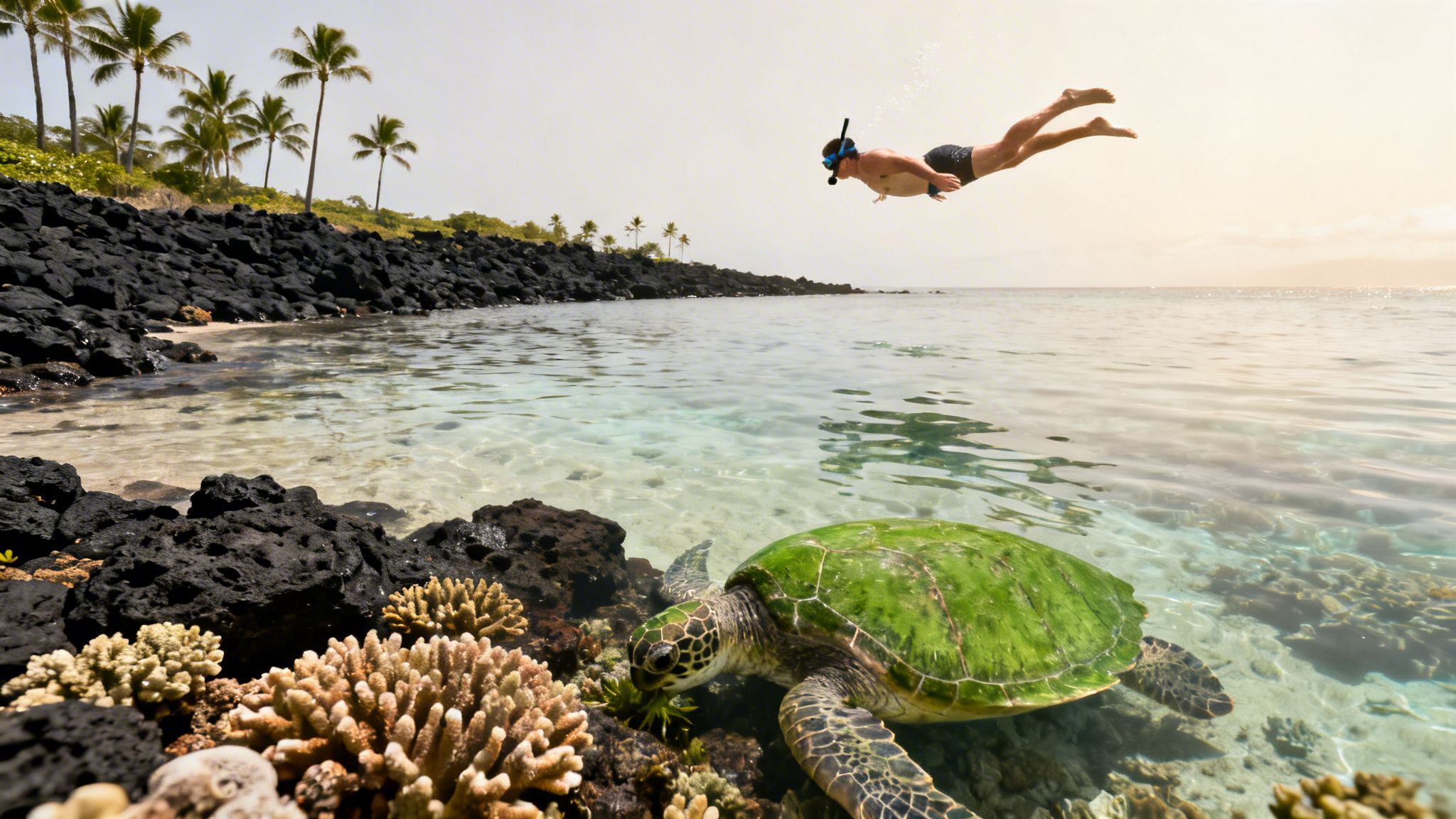
Kahaluʻu Beach Park: The Turtle Sanctuary
Locals often just call it "Snorkel Beach," and for good reason. Kahaluʻu is the ideal launchpad for beginners and families. A man-made breakwater keeps the water inside the bay calm and shallow, creating a protected lagoon that's absolutely buzzing with fish.
But the real celebrities here are the dozens of green sea turtles that cruise in to munch on seaweed. It’s pretty much a guarantee you’ll see several of these gentle giants grazing peacefully on the reef.
Pro-Tips for Kahaluʻu Beach:
- Easy Entry: Use the small sandy patch at the south end of the bay. It’s the easiest way to get in and out without stumbling over lava rocks.
- Beat the Crowds: This place is no secret. Get there before 9:00 AM to snag a parking spot and enjoy the best water clarity.
- What You’ll See: Keep an eye out for turtles, massive schools of yellow tangs, butterflyfish, and maybe even a shy eel peeking out from a rocky crevice.
Two Step: A Dramatic Underwater Landscape
Right next to the sacred Puʻuhonua o Hōnaunau National Historical Park is Honaunau Bay, better known to everyone as "Two Step." The name comes from two perfectly formed lava rock "steps" that make for a super easy entry into deep, crystal-clear water.
This spot is famous for its wild underwater terrain. Think steep drop-offs, underwater arches, and lava tubes coated in coral. The visibility is often fantastic, and if you're there in the morning, you might get lucky and spot a pod of spinner dolphins resting in the bay.
Two Step isn't your typical sandy beach. It’s a direct plunge into a dynamic ocean world. The unique lava formations and immediate deep water make it a favorite for intermediate snorkelers looking for a real adventure right off the coast.
If you want to check out even more incredible coastal spots, our guide to the best snorkel beaches on the Big Island has you covered.
Magic Sands Beach: For Confident Snorkelers
Officially named Laʻaloa Beach Park, "Magic Sands" earned its nickname because its beautiful white sand can literally vanish overnight when a big swell hits, leaving just a rocky shoreline. Because it’s so changeable, this spot is best for more experienced snorkelers who know how to read the ocean.
When the water is flat (usually first thing in the morning), the snorkeling here is surprisingly good. The rocky areas on both sides of the beach have healthy coral patches that attract a nice variety of reef fish. Just remember, conditions can flip in an instant, so always check the surf report before you even think about getting in.
A Few Words on Shore Snorkeling Safety:
- Check the Conditions: If the waves look rough or you have any doubts, stay out. The ocean always wins.
- Buddy System: Never snorkel alone. It's the golden rule for a reason.
- Know Your Limits: Pay attention to how you're feeling. Don't swim out further than you can easily swim back.
These shore spots provide an awesome window into the Big Island's underwater world. But keep in mind, some of the most spectacular and protected reefs—like the ones at Kealakekua Bay—are best (and most safely) reached on a guided boat tour.
Essential Safety Tips for Hawaii's Waters
The Big Island's turquoise waters are incredibly inviting, but the ocean is a powerful force that always deserves respect. Honestly, your safety is the most important part of any snorkeling adventure. While Hawaii’s underwater world is pure magic, you have to understand and prepare for the risks, even when the water looks as calm as glass.
Preparation is everything. A surprising statistic really drives this point home: between 2019 and 2023, an average of 45 tourists drowned each year in Hawaiian waters. The leading activity? Snorkeling. Many of these tragedies happened in what looked like perfectly mild conditions, a tough reminder that the ocean's beauty can hide real dangers.
I'm not saying this to scare you, but to empower you. Knowing the risks is the first step to avoiding them, making sure your memories of snorkeling Big Island Hawaii are filled with wonder, not trouble.
Your Snorkeling Safety Checklist
Before you even dip a toe in the water, run through a quick mental checklist. Think of it like your pre-flight check for an underwater journey. These simple habits can head off most common problems and keep you safe.
Here are the absolute non-negotiables for every single snorkel trip:
- Never Snorkel Alone: This is the golden rule. Always, always go with a buddy so you can keep an eye on each other.
- Check the Surf Report: Ocean conditions here can change in a heartbeat. Check the local surf report before you go. If in doubt, don't go out.
- Use Quality, Fitted Gear: A leaky mask or fins that don't fit right are more than just annoying; they can cause real stress and fatigue in the water. Make sure your gear works and fits you well.
- Know Your Limits: Be honest with yourself about your swimming skills and how you're feeling that day. Don't push yourself too far from shore or stay out longer than you're comfortable with.
The Smartest Way to Snorkel Safely
For beginners, families, or anyone who's not familiar with our local ocean patterns, the single best decision you can make for your safety is to go with a professional guide. A guided tour with a top-notch company like Kona Snorkel Trips isn't just a convenience—it's a critical layer of safety.
Snorkeling with lifeguard-certified guides completely changes the experience. These pros are trained to spot subtle shifts in the conditions, recognize hidden dangers like rip currents, and provide immediate help if needed. This lets you relax and truly soak in the underwater world without worry.
These guides do way more than just point out cool fish. They provide high-quality, sanitized gear, give a thorough safety briefing, and are right there in the water with you to make sure everyone is safe and comfortable. They know these reefs like the back of their hand and can take you to the best spots while keeping a constant, watchful eye.
For a safe and unforgettable adventure, choosing a guided tour is simply the smartest way to go. To dive deeper, check out our complete guide on snorkeling safety tips.
How to Plan Your Snorkeling Adventure
A little bit of planning can take a good snorkeling trip and make it truly unforgettable. When you're dealing with the Big Island, timing and preparation really do make all the difference, putting you in the right place at the right time for the best conditions and the most mind-blowing wildlife encounters.
The great news is that the Big Island is a year-round destination for snorkeling. But each season has its own unique flavor. Summer, from roughly May to September, usually delivers the calmest, clearest water you could ask for. It's postcard-perfect stuff.
But visiting in the winter, especially from December through March, comes with an incredible soundtrack: it's humpback whale season. You might be floating peacefully over a reef and suddenly hear their haunting songs echoing through the water. You'll almost certainly see these gentle giants from the boat, breaching and playing just offshore. It's a two-for-one deal you won't forget.
What to Pack for Your Trip
Packing smart means you can just relax and enjoy the ride, not stress about what you left at the hotel. While we provide all the main gear on our tours, bringing a few personal items along can seriously upgrade your comfort.
- Reef-Safe Sunscreen: This is an absolute must. Your average sunscreen is loaded with chemicals like oxybenzone that are devastating to our fragile coral reefs. Always, always grab a mineral-based sunscreen that uses zinc oxide or titanium dioxide instead. The coral will thank you.
- Rash Guard or Sun Shirt: A long-sleeved rash guard is your best friend out on the water. It gives you bulletproof sun protection without having to constantly slather on more sunscreen, and it even keeps you a little warmer if you plan on being in the water for a while.
- Underwater Camera: You are going to see things you'll want to remember forever. Whether it’s a high-end GoPro or a simple waterproof disposable, you'll be glad you have a way to capture the magic of swimming with a sea turtle or drifting over a vibrant coral garden.
- Dry Bag: A small dry bag is a lifesaver. It’s the perfect spot to stash your phone, keys, and wallet to make sure they stay completely dry and safe while you're on the boat.
As you get into the nuts and bolts of planning, budgeting for flights is always a big piece of the puzzle. People are always looking for ways to make their travel dollars go further, even when their plans aren't set in stone. For some creative ideas, you might find some useful tips on optimizing flight costs for your journey, as some travelers have had great success with services that lock in better deals.
Snorkeling with Aloha and Responsibility
The incredible underwater world you're coming to see is a precious and delicate place. Being a responsible visitor is key to making sure it stays healthy for everyone to enjoy for years to come. The most important rule is also the simplest: look, but don't touch.
Coral isn't a rock; it's a living animal. Even a light touch from your finger can scrape off its protective slime layer, leaving it open to disease and algae. The same goes for the critters—never chase, harass, or try to touch sea turtles or dolphins. Just hang back and observe them from a respectful distance.
One of the best things you can do is choose an eco-conscious tour operator that lives and breathes these principles. Good companies aren't just taking you for a boat ride; they're actively protecting the reefs and teaching their guests how to be good stewards of the ocean.
To get a full lay of the land, be sure to check out our Big Island Hawaii snorkeling map. It’s a great tool to help visualize where the best spots are as you plan your trip.
Your Big Island Snorkeling Questions, Answered
As you get ready for your trip, a few final questions always seem to pop up. Getting them sorted out beforehand means you can relax and just look forward to the adventure. Here are the answers to the things we get asked most often by snorkelers just like you.
Do I really have to be a great swimmer to go snorkeling?
This is probably the number one concern we hear, and the short answer is: absolutely not! You don't need to be an Olympic swimmer to have an incredible time in the water. A basic comfort level is all it takes.
That's because a good tour company makes safety their top priority. Here at Kona Snorkel Trips, our lifeguard-certified guides are in the water with you the whole time. We also provide top-notch flotation gear, like easy-to-use snorkel vests and noodles, so you can just float effortlessly and enjoy the view below.
Captain Cook vs. Manta Rays: What’s the difference?
While both are must-do Big Island experiences, they couldn't be more different. Think of it as a spectacular day trip versus a mind-blowing nighttime spectacle.
Our Captain Cook snorkel tour is your classic daytime adventure. We head to the calm, sunlit waters of Kealakekua Bay to explore a world-class coral reef absolutely teeming with colorful tropical fish. It's pure underwater bliss.
The Manta Ray night snorkel, on the other hand, is a whole other kind of magic. After sunset, we use lights to attract plankton, which in turn draws in majestic manta rays for their nightly feast. Watching these gentle giants glide and barrel roll right beneath you is an experience that truly stays with you forever.
What are my chances of seeing sea turtles?
They are incredibly high! The green sea turtle, our beloved honu, is a common and welcome sight all along the Kona coast. You’d have to be pretty unlucky not to see one.
You’ve got a fantastic shot at spotting them at popular shore spots like Kahalu'u Beach Park, where they often come to munch on seaweed. We also see them all the time on our boat tours to places like Kealakekua Bay, just gracefully cruising over the reef.
Should I bother packing my own snorkel gear?
If you have a personal mask that you know fits your face perfectly, it might be worth bringing. A leaky mask is no fun for anyone. But for most people, it's just not worth the hassle or precious luggage space.
Every professional tour company will provide high-quality, sanitized gear that's right for local conditions. At Kona Snorkel Trips, we even stock prescription masks so you don't miss a single detail. Using our gear is just easier—it saves you from packing bulky fins and ensures everything is in perfect working order.
Ready to see why Kona Snorkel Trips is Hawaii's top-rated snorkel company? We're all about creating safe, fun, and unforgettable underwater adventures for everyone.