
Snorkeling Big Island Hawaii A Guide to Top Spots
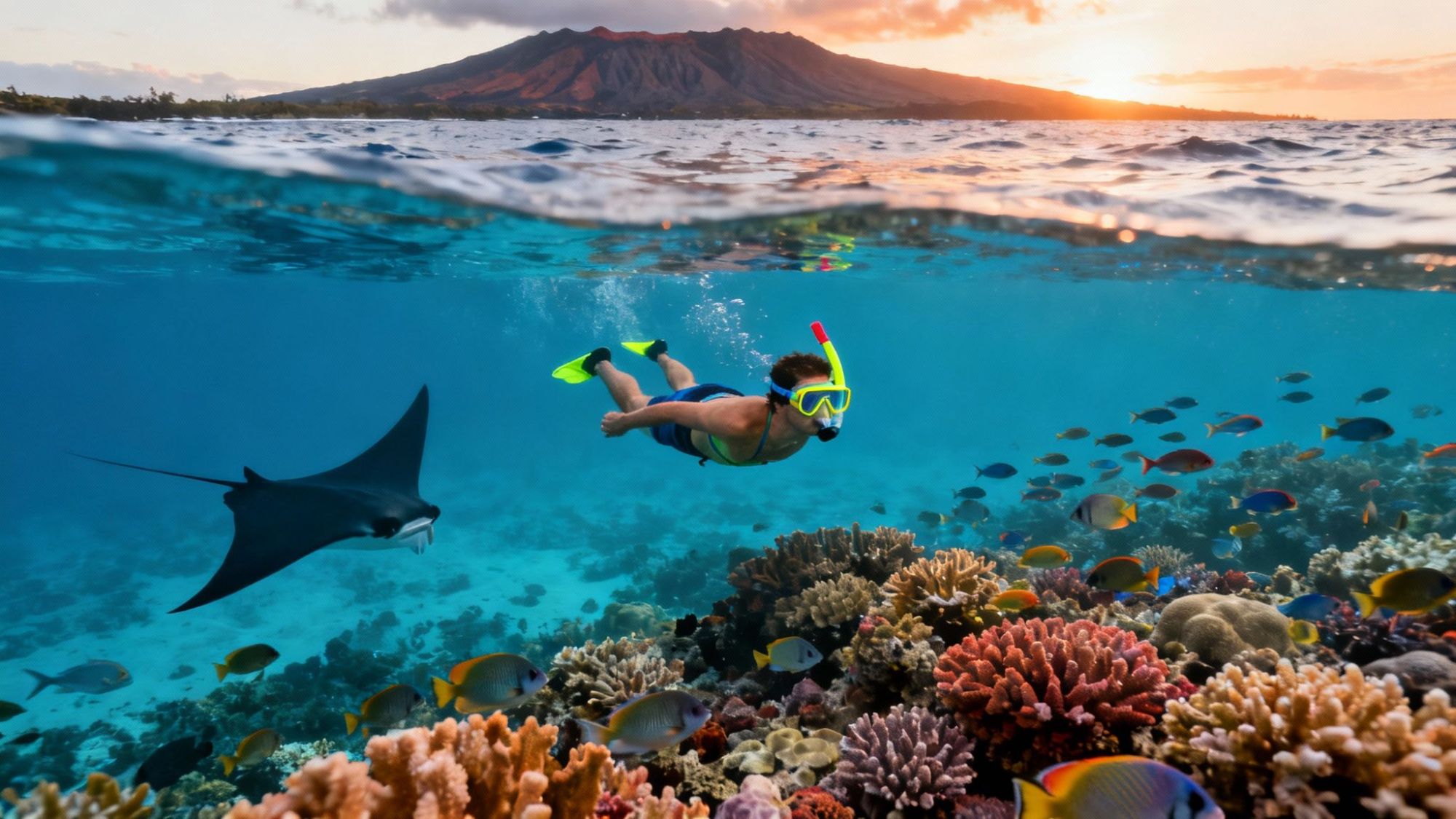
Welcome to the ultimate guide to snorkeling on the Big Island of Hawaii, a place where the raw beauty of volcanic coastlines gives way to an underwater world bursting with life. The Kona coast is famous for a reason—its waters are incredibly calm and clear, creating a perfect playground for snorkelers of all skill levels. Whether you're dreaming of the magical Manta Ray Night Snorkel or exploring historic Kealakekua Bay, you've come to the right place.
Why Snorkel on the Big Island?
The Big Island isn't just another snorkeling destination; it's in a league of its own, and it all comes down to geology. The sheer size of massive volcanoes like Mauna Loa and Hualalai creates a natural shield, protecting the entire Kona coast from the powerful trade winds. The result? Exceptionally calm, glass-like water year-round, which is exactly what you want for a perfect day of snorkeling.
This guide is built from the ground up by our team at Kona Snorkel Trips. We're proud to be the top-rated and most-reviewed snorkel company in Hawaii, and we pour all of our on-the-water experience into these articles to help you have an incredible and safe adventure.
A Sanctuary for Marine Life
Beneath the surface, ancient lava flows have created a spectacular landscape of underwater tubes, arches, and caves. This complex structure is the foundation for some of Hawaii's most vibrant coral gardens, which in turn support a staggering amount of marine life.
A few spots you absolutely can't miss:
- Kealakekua Bay: This is a protected Marine Life Conservation District, and it shows. The coral here is pristine, and you'll find yourself surrounded by huge schools of colorful tropical fish.
- The Manta Ray Night Snorkel: A truly world-famous experience. You'll float on the surface while majestic manta rays glide and loop just inches below you, feeding on plankton attracted by special lights.
- Two Step (Honaunau Bay): Loved by locals for its super-easy entry points (like walking down two steps!), it's a fantastic spot for spotting Hawaiian green sea turtles (honu) and playful spinner dolphins.
To give you a better sense of what the island has to offer, here’s a quick snapshot of our top experiences.
Big Island Snorkeling At a Glance
| Snorkel Experience | Best For | Key Marine Life |
|---|---|---|
| Kealakekua Bay (Captain Cook) | Pristine coral reefs, history buffs, and calm waters. | Schools of reef fish, eels, spinner dolphins. |
| Manta Ray Night Snorkel | Bucket-list adventure, seeing gentle giants up close. | Giant manta rays, plankton clouds. |
| Two Step (Honaunau Bay) | Easy shore access, family-friendly, and turtle spotting. | Hawaiian green sea turtles (honu), various reef fish. |
| Pawai Bay | Secluded coves, unique underwater lava formations. | Octopus, eels, and less-common fish species. |
Each of these spots offers something unique, making the Big Island a place you can return to again and again for a new adventure.
Your Ultimate Snorkeling Resource
In this guide, we'll dive deep into the island's can't-miss snorkel spots, cover essential safety tips, and get you excited about the incredible marine life waiting for you. If you're just starting to plan, our overview of the best snorkel spots on the Big Island is the perfect place to begin.
Snorkeling on the Big Island is more than just an activity; it's an experience where Hawaiian history, stunning nature, and pure adventure meet just below the waves. To see one of the island's most iconic spots for yourself, check our Captain Cook tour availability below.
The Manta Ray Night Snorkel: A Once-In-A-Lifetime Encounter
Picture this: you're floating in the calm, dark ocean under a canopy of Hawaiian stars. Out of the deep blue, a majestic shape emerges, gliding and barrel-rolling just inches beneath you. With a wingspan stretching up to 16 feet, this isn't some scene from a nature documentary. This is the world-famous Manta Ray Night Snorkel, an iconic Big Island experience you’ll never, ever forget.
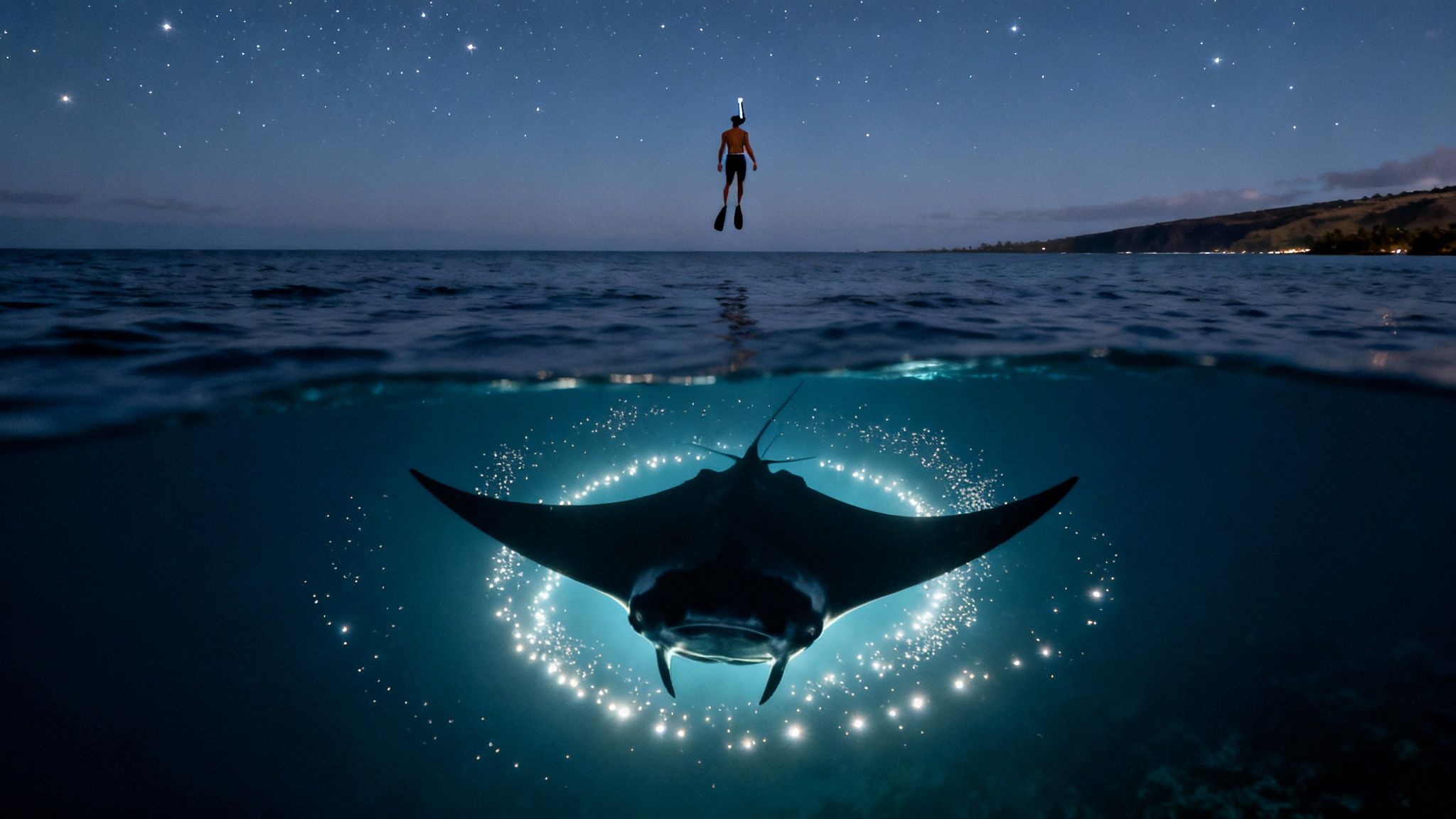
The concept behind this incredible encounter is both simple and brilliant. Our boats head out to known manta feeding spots and shine powerful, eco-friendly lights into the water. These lights act like a dinner bell, attracting clouds of plankton—the microscopic critters that manta rays absolutely love to eat.
As the plankton swarm to the light, the gentle giants arrive for their nightly feast. It’s a true underwater ballet. They gracefully loop and soar through the beams, their cavernous mouths wide open to filter the water. You get a front-row seat to one of nature's most spectacular shows.
Why The Kona Coast Is The Best Place to See Mantas
The Kona coast isn't just a good place for this adventure; it's the global epicenter for manta ray encounters. The calm, protected waters create reliable conditions pretty much year-round, which is why we see such high success rates. Unlike other spots in the world where sightings are a seasonal gamble, the manta rays here are residents. They live here all year long.
This reliability has turned the experience into a well-oiled machine for delivering pure awe. Snorkeling here, especially with a top-notch operator, is one of the world's premier marine encounters. The numbers don't lie: the Kona Coast has an impressive 80% to 90% sighting success rate for manta ray night snorkels, bringing in around 80,000 people every year. At the iconic "Manta Village" site, that rate has hit a jaw-dropping 96% of all tours reporting manta sightings.
Choosing The Right Manta Ray Snorkel Tour
Let's be real: not all tours are created equal. The quality of your experience really hinges on the operator you choose. Small-group tours are the way to go for a more intimate and respectful encounter. With fewer people in the water, you get a much better view and more personal attention from the lifeguard-certified guides.
Top-tier operators like Kona Snorkel Trips use custom-designed light boards that float on the surface. You simply hold onto the board, which keeps everyone safely together and provides a super stable and bright platform to watch the action unfold below. It makes a huge difference. For another exceptional alternative, check out Manta Ray Night Snorkel Hawaii.
The feeling of a 12-foot manta ray gracefully gliding inches from your face is just indescribable. It’s a mix of pure awe, wonder, and a profound connection to the ocean. This isn't just snorkeling; it's a core memory in the making.
To get the most out of your adventure, just remember a few key things:
- Don't touch the mantas: They have a protective slime coat on their skin. Touching them can strip it away, leaving them vulnerable to infections. Let's keep them safe.
- Stay horizontal: Keep your fins on the surface of the water. This prevents you from accidentally kicking a manta or stirring up sand from the bottom.
- Listen to your guide: They're the experts on manta behavior and are there to ensure a safe and respectful interaction for both you and these magnificent animals.
The manta ray night snorkel is so much more than just another activity. It’s a magical, almost spiritual communion with one of the ocean's most incredible creatures. To get a little more familiar with them before you go, check out these fun facts about manta rays.
Ready to witness this incredible spectacle for yourself?
Exploring Kealakekua Bay and The Captain Cook Monument
If the manta ray snorkel is the Big Island's blockbuster night show, then Kealakekua Bay is its stunning daytime epic. This place is so much more than just another spot to dip your head in the water; it's a protected sanctuary where Hawaiian history feels alive and the underwater world is almost overwhelming in its beauty.
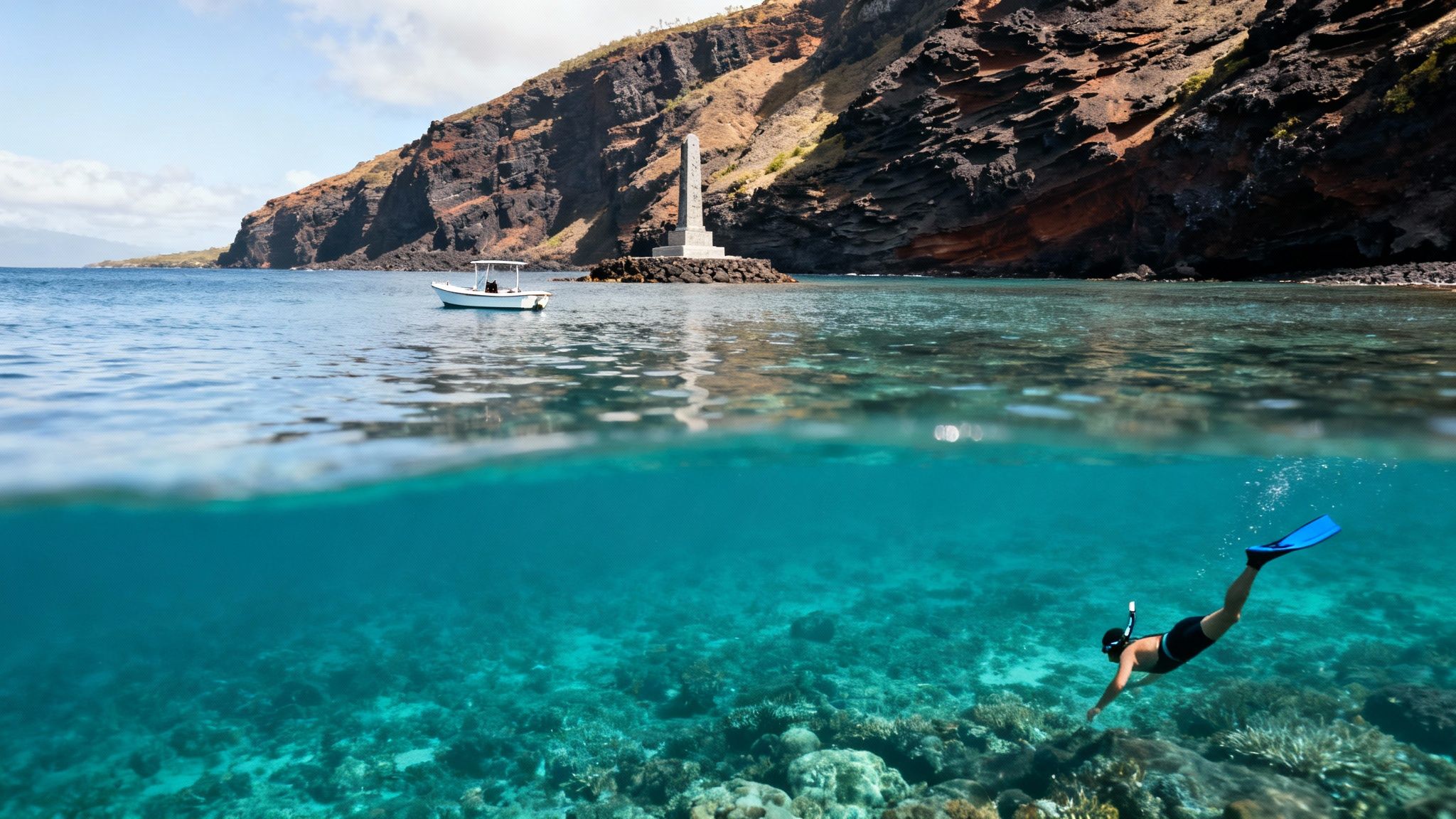
Kealakekua Bay is a designated Marine Life Conservation District, and that official status makes a huge difference. The water inside the bay is often incredibly calm and clear—we're talking visibility that can push past 100 feet. All that sunlight pouring down lights up some of the most vibrant, healthy coral gardens you'll find anywhere in Hawaii, packed with an unbelievable density of tropical fish.
Why a Boat Tour is the Only Way to Go
Part of what keeps Kealakekua Bay so pristine is that it's tough to get to. The prime snorkeling area, right by the Captain Cook Monument, is blocked off by sheer cliffs. Reaching it on foot means a seriously grueling hike that most people aren't prepared for, which has thankfully saved the reef from being trampled and overused.
This is exactly why jumping on a guided boat tour is the best—and frankly, the most enjoyable—way to experience it. A boat tour makes the journey part of the adventure. You get to cruise down the dramatic Kona coast, seeing ancient lava flows and hidden sea caves you’d completely miss from the road.
Kealakekua Bay is more than just a place to see fish; it's an underwater museum. Floating above the reefs, you get a palpable sense of history, knowing you're in the same waters where Captain Cook first arrived. It adds a powerful layer to the experience.
Good tour operators don't just give you a ride; they create the whole experience. You get properly fitted gear, a solid safety briefing, and guides who can tell you about the fish you're seeing and the incredible history of the bay. It lets you just relax and soak in the magic of the place. For an exceptional alternative when looking for a Captain Cook snorkel tour, consider Captain Cook Snorkeling Tours.
Where History and Nature Collide
This bay is the exact spot where Captain James Cook made first contact with the island in 1779. His arrival, happening during the Hawaiian Makahiki festival, led to him being honored as the god Lono. But as we know, things took a turn, and he was ultimately killed in this very bay.
A stark white obelisk—the Captain Cook Monument—now stands on the shoreline, a silent marker of that world-changing event. Seeing it from the water while schools of bright yellow tangs swim around you is a truly surreal moment. You're literally snorkeling through a piece of living history.
What to Expect Underwater
The snorkeling? It's simply spectacular. Because the bay is protected, the fish populations are thriving and incredibly diverse. It’s like swimming in an aquarium.
- Vibrant Coral Gardens: You’ll glide over complex coral structures that are home to countless little critters.
- Clouds of Fish: Don't be surprised to find yourself completely surrounded by massive schools of parrotfish, butterflyfish, and tangs.
- Unique Encounters: Keep your eyes peeled for moray eels poking their heads out of crevices or a majestic Hawaiian green sea turtle (honu) cruising peacefully by.
The mix of raw natural beauty, powerful history, and an explosion of marine life makes Kealakekua Bay an absolute must-do. To get an even deeper look at this incredible spot, check out our full guide on the Kealakekua Bay snorkeling tour.
Essential Snorkeling Safety Tips for Hawaiian Waters
There's no denying it—Hawaii’s ocean is a paradise. But its jaw-dropping beauty hides an incredible power that you have to respect. Making sure you're safe is the single most important part of unlocking an amazing snorkeling experience on the Big Island. The calm, inviting look of the Kona coast can sometimes give a false sense of security, which is why it's so important to understand the environment and always snorkel responsibly.
Your best first step? Go with a certified professional. Hopping on a tour with an experienced operator isn’t just about making things easy; it’s a huge safety advantage, especially when you’re in unfamiliar waters. Our guides are trained to read the ocean like a book—spotting subtle currents, surge, or other potential hazards—and are ready to help in a split second if anyone needs it.
Why Professional Guides Make All the Difference
The ocean is constantly changing, and conditions can shift in the blink of an eye. A professional tour operator like Kona Snorkel Trips cuts down the risks by having lifeguard-certified guides who know these waters inside and out. That local knowledge is priceless.
And it's especially critical when you look at the sobering statistics. Data from the State Department of Health shows that since 2005, over 128 visitors have drowned while snorkeling in Hawaii, making it the top cause of injury-related tourist deaths. In the last ten years, more than half of all visitor drownings were tied to snorkeling. That number alone should tell you how important it is to be cautious. We actively counter these risks with thorough safety briefings before you get in, high-quality gear that we check meticulously, and small group sizes to ensure everyone gets personal attention.
Your Pre-Snorkel Safety Checklist
Before a single fin hits the water, running through a few quick checks can make all the difference between a great day and a bad one.
- Check the Ocean Conditions: Always look before you leap. Scan the water for strong currents, big waves, or poor visibility. If you have any doubt, it's best to stay out. Our guides do this obsessively before every single tour.
- Use the Buddy System: Never, ever snorkel alone. Always have a partner with you to keep an eye on each other. This is the golden rule of water safety, and it applies to everyone, from total beginners to seasoned pros.
- Get a Proper Mask Fit: A leaky mask is more than just annoying; it can cause you to panic. To check your fit, hold the mask against your face without the strap and gently breathe in through your nose. If it creates a suction and sticks, you’ve got a good seal.
- Know Your Limits: Be honest with yourself about your swimming skills and fitness level. Snorkeling can be more of a workout than it looks! Don't overdo it, and never be ashamed to use a flotation device—it helps you conserve energy and stay comfortable.
"Safety is not an accident. It is the result of careful planning, expert guidance, and a deep respect for the ocean. A guided tour provides all three, allowing you to relax and focus on the incredible underwater world."
Following these simple rules helps you snorkel with confidence. A prepared snorkeler is a safe snorkeler, and that's who gets to truly soak in all the vibrant marine life the Big Island has waiting. For an even deeper dive, check out our comprehensive guide on snorkeling safety tips that covers everything else you need to know.
Discovering The Big Island's Vibrant Marine Life
So, what will you actually see when you dip your head below the surface? Going snorkeling on the Big Island of Hawaii is like opening a treasure chest. We're going to move beyond just "pretty fish" and introduce you to the real stars of the show—the specific, vibrant species that make these waters a world-class destination.
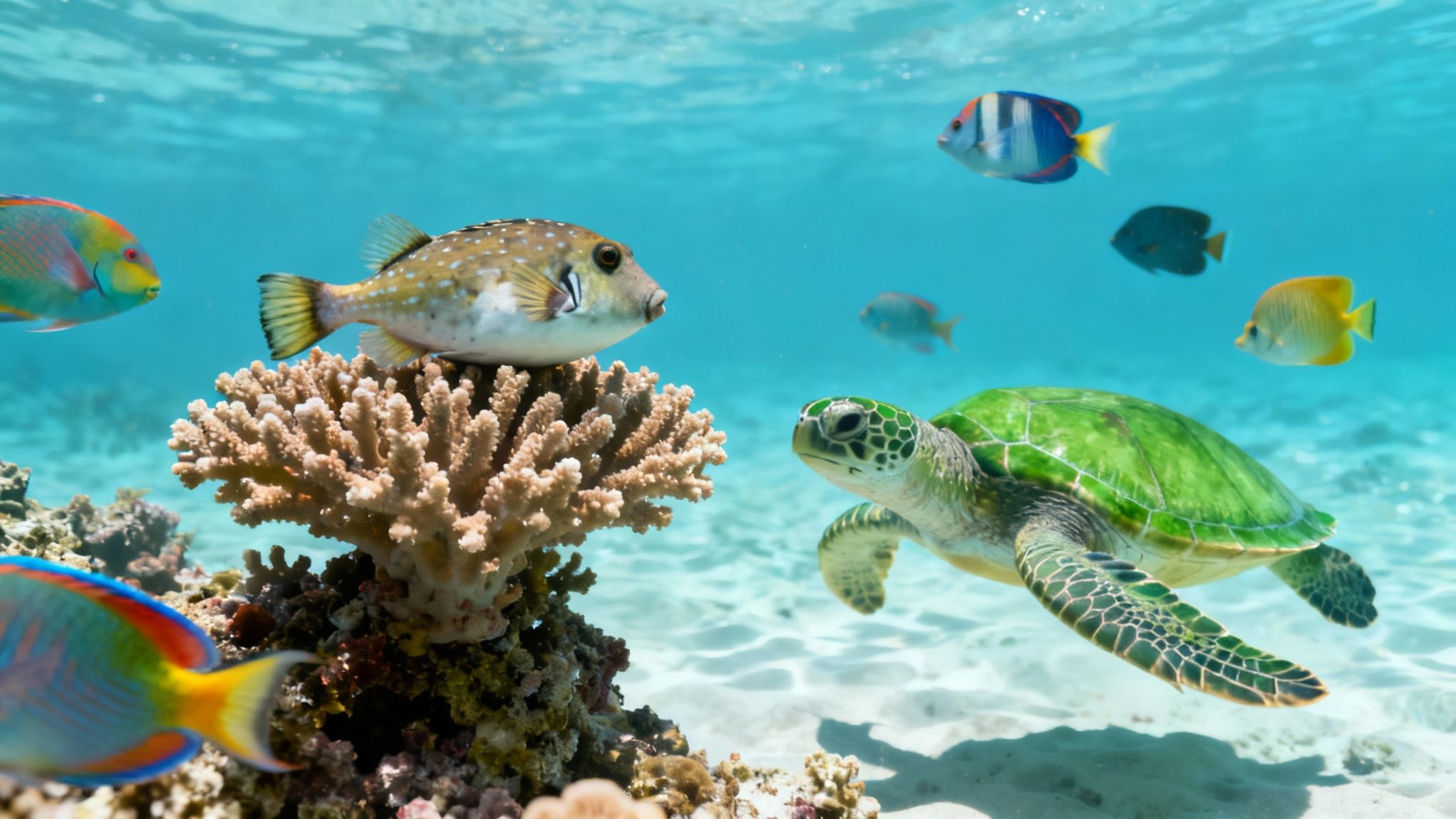
The sheer abundance of life here is staggering. Roughly 3 million people snorkel in Hawaiian waters every year, and the Big Island's Kona Coast draws a huge number of them, all thanks to its incredible marine diversity. Kealakekua Bay alone is home to over 100 species of coral and 4,000 fish, making it the perfect spot for small-group tours that really focus on respecting the environment.
Meet The Reef Residents
Get ready to turn your snorkel trip into a true underwater scavenger hunt. One of the first fish you'll want to spot is Hawaii's state fish, the reef triggerfish, known locally as the Humuhumunukunukuāpuaʻa. Good luck saying that five times fast! Its quirky name and bold patterns make it an iconic find.
You'll also be greeted by clouds of elegant butterflyfish, often seen fluttering in pairs, and schools of brightly colored parrotfish (uhu). If you listen closely, you can sometimes hear them crunching on coral—they're the architects of the reef, helping create the fine white sand you see on many of our beaches.
Larger Encounters: Honu And Dolphins
Beyond the schools of reef fish, keep your eyes peeled for some of Hawaii’s larger and more beloved residents. One of the most magical moments you can have is an encounter with the honu, the Hawaiian green sea turtle. These ancient mariners are a common sight, gliding gracefully through the water or just chilling on the ocean floor.
You might also get lucky and spot a pod of playful spinner dolphins (nai'a), especially on morning tours in or near Kealakekua Bay. They're famous for their acrobatic leaps and spins, putting on a truly unforgettable show from the boat.
Where To See What
Different spots offer different wildlife viewing opportunities. Kealakekua Bay, with its protected, coral-rich waters, is like swimming in a giant aquarium of reef fish. In contrast, the Manta Ray Night Snorkel is a highly specialized trip focused on the majestic giants that come out to feed on plankton after dark.
To help you know what to look for and where, we put together a quick guide to some of the most sought-after marine life.
Your Big Island Marine Life Checklist
| Marine Life | Hawaiian Name | Where to See Them | Sighting Likelihood |
|---|---|---|---|
| Reef Triggerfish | Humuhumunukunukuāpuaʻa | Kealakekua Bay | Very High |
| Yellow Tang | Lau'ipala | Kealakekua Bay | Very High |
| Green Sea Turtle | Honu | Kealakekua Bay, Two Step | High |
| Spinner Dolphin | Nai'a | Kealakekua Bay (often from boat) | Moderate |
| Manta Ray | Hāhālua | Manta Village, Manta Heaven | Very High (on night tours) |
| Parrotfish | Uhu | Kealakekua Bay | High |
This incredible variety is exactly what makes snorkeling the Big Island so rewarding. To help you put a name to all the colorful faces you'll meet, check out our helpful Hawaiian fish identification guide.
Planning Your Perfect Big Island Snorkel Tour
With dreams of gliding manta rays and vibrant coral gardens fresh in your mind, it's time to make that adventure a reality. Planning the perfect snorkel tour isn't complicated once you know what to look for. Think of this as your roadmap—no guesswork, just a straight path to booking an experience that you'll be talking about for years.
Honestly, choosing a solid, reputable tour company is the single most important decision you'll make. A great operator doesn't just ferry you out to a spot; they build a safe, educational, and genuinely respectful experience from the ground up. At Kona Snorkel Trips, that's our entire philosophy.
We're all about small group sizes. This means you get real, personal attention from our lifeguard-certified guides. It’s not just about boosting safety—it’s about creating a more intimate connection with the ocean, far from the elbow-to-elbow feeling you get with bigger crowds.
Why Booking in Advance is a Game-Changer
The Big Island is no secret, and the best snorkel tours fill up fast. Booking your spot ahead of time is absolutely essential, especially if you're visiting during peak season like holidays or the incredible winter whale season (December to March).
When you lock in your tour early, you get the date and time that actually works for you, so you don't have to deal with the disappointment of a sold-out trip. It also just gives you peace of mind. You can kick back and look forward to the adventure without any of that last-minute scramble.
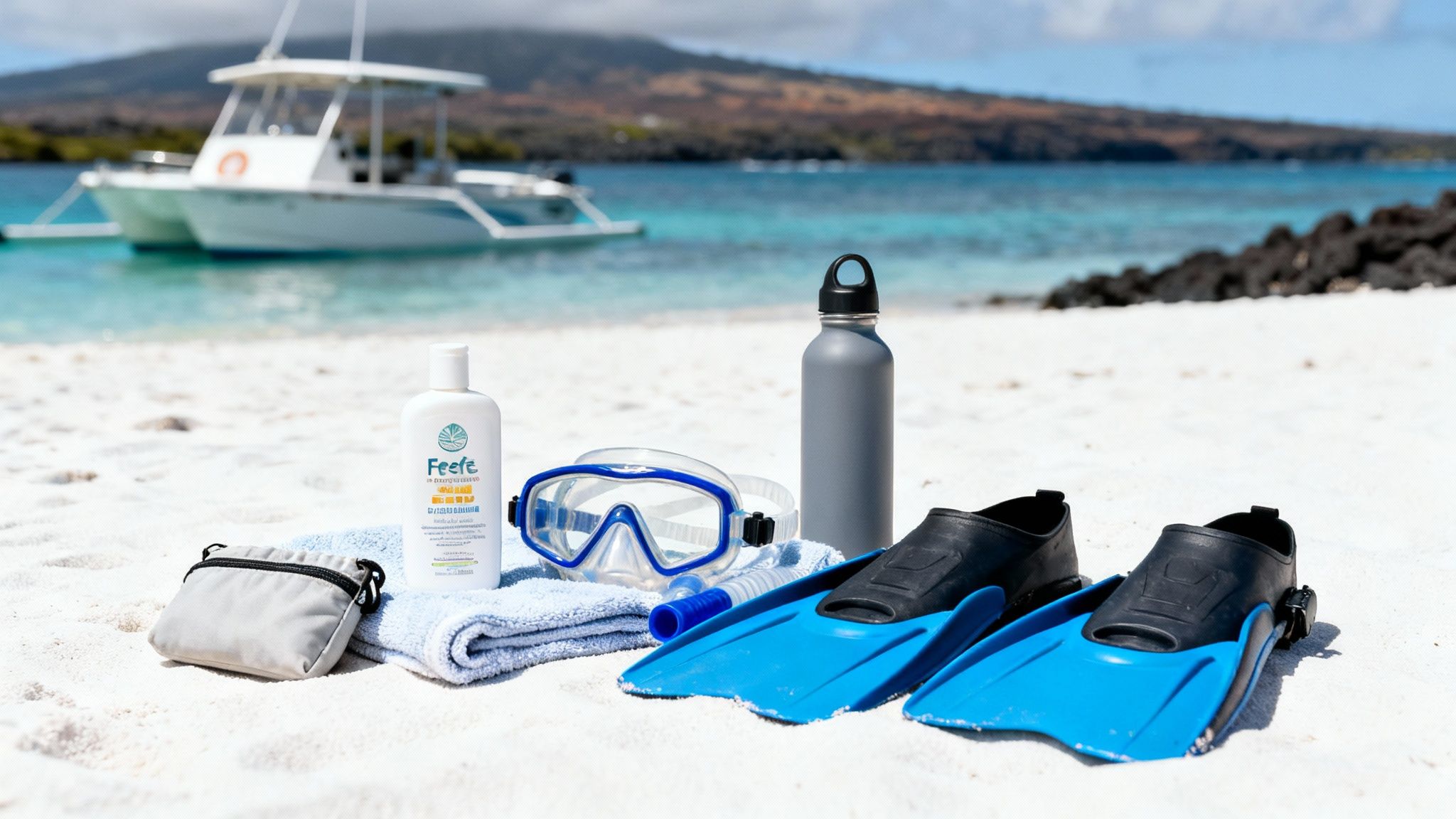
Your Tour Checklist: What to Bring and What We've Got Covered
Packing for your snorkel tour is easy. We handle all the heavy lifting so you can just focus on the fun. Here’s a quick rundown to make sure you’re ready for a perfect day on the water.
What You Should Bring:
- Reef-Safe Sunscreen: This is a big one. Protect your skin and our delicate coral by using mineral-based sunscreens without oxybenzone and octinoxate.
- Towel & a Change of Clothes: Nothing beats feeling dry and comfortable after a good swim.
- Hat & Sunglasses: The Hawaiian sun is no joke, especially on the water.
- Reusable Water Bottle: Staying hydrated is key, and you’ll be helping us cut down on plastic waste.
- Camera: An underwater camera is a fantastic idea. You’re going to see things you’ll want to remember forever!
We take care of all the essentials. Our tours include high-quality, sanitized snorkel gear (masks, snorkels, and fins), flotation devices for your comfort and safety, and plenty of light snacks and refreshments to keep you going.
Choosing the right tour turns a simple activity into the absolute highlight of your vacation. It’s about feeling safe, respected, and completely immersed in the magic of Hawaii’s underwater world. We're dedicated to providing exactly that—an adventure with a deep commitment to the ocean we call home.
Ready to lock in your unforgettable journey to Kealakekua Bay?
Your Big Island Snorkeling Questions Answered
Jumping into a new adventure always brings up a few questions. To get you feeling confident and ready to hit the water, we’ve put together answers to the most common things people ask us before their snorkeling Big Island Hawaii trip.
Do I Need to Be a Strong Swimmer to Snorkel?
Not at all. A lot of people think you need to be an olympic-level swimmer, but that's just not the case. As long as you're comfortable in the water, you're good to go.
Every reputable tour operator, including us, provides flotation gear like pool noodles and life vests. These let you just hang out on the surface without any effort. Plus, our lifeguard-certified guides are right there in the water with you, making sure everyone feels safe and looked after. It’s an incredibly accessible experience, even if you’ve never put on a mask before.
What Is the Best Time of Year for Snorkeling?
Honestly, one of the best parts about snorkeling the Kona Coast is that it’s fantastic all year round. The waters here are naturally protected and calm, making for great conditions pretty much any day. Our Manta Ray Night Snorkel, for instance, has an incredibly high success rate no matter the month.
But if you want a little something extra, think about coming between December and March. That’s peak humpback whale season. There's nothing quite like the bonus of seeing those gentle giants on the boat ride out to the snorkel spot. For the absolute calmest water and clearest visibility, morning tours are usually your best bet.
Can I Bring My Own Snorkel Gear?
Of course! If you have your own gear and you love it, feel free to bring it along. We get it—sometimes your own mask just fits perfectly.
That said, we provide top-of-the-line, sanitized equipment for everyone. We're talking premium silicone masks, comfortable snorkels, and a full range of fins. The real advantage of using our gear? Our guides are pros at getting that perfect mask fit to prevent annoying leaks, which means you can just relax and enjoy the view without fussing with your equipment.
Are Manta Ray Tours Safe for Children?
Absolutely. The Manta Ray Night Snorkel is a genuinely magical experience for kids, as long as they are comfortable being in the water after dark. Safety is our absolute number one priority on every single trip.
Everyone holds onto a large, custom-lighted float board on the surface. This keeps the group together and acts as a stable, floating home base. Our guides take special care to make sure kids have perfectly fitted gear and feel totally secure, so the whole family can just focus on the incredible manta ray ballet happening right below them.