
Your Ultimate Guide to Snorkeling Big Island Hawaii
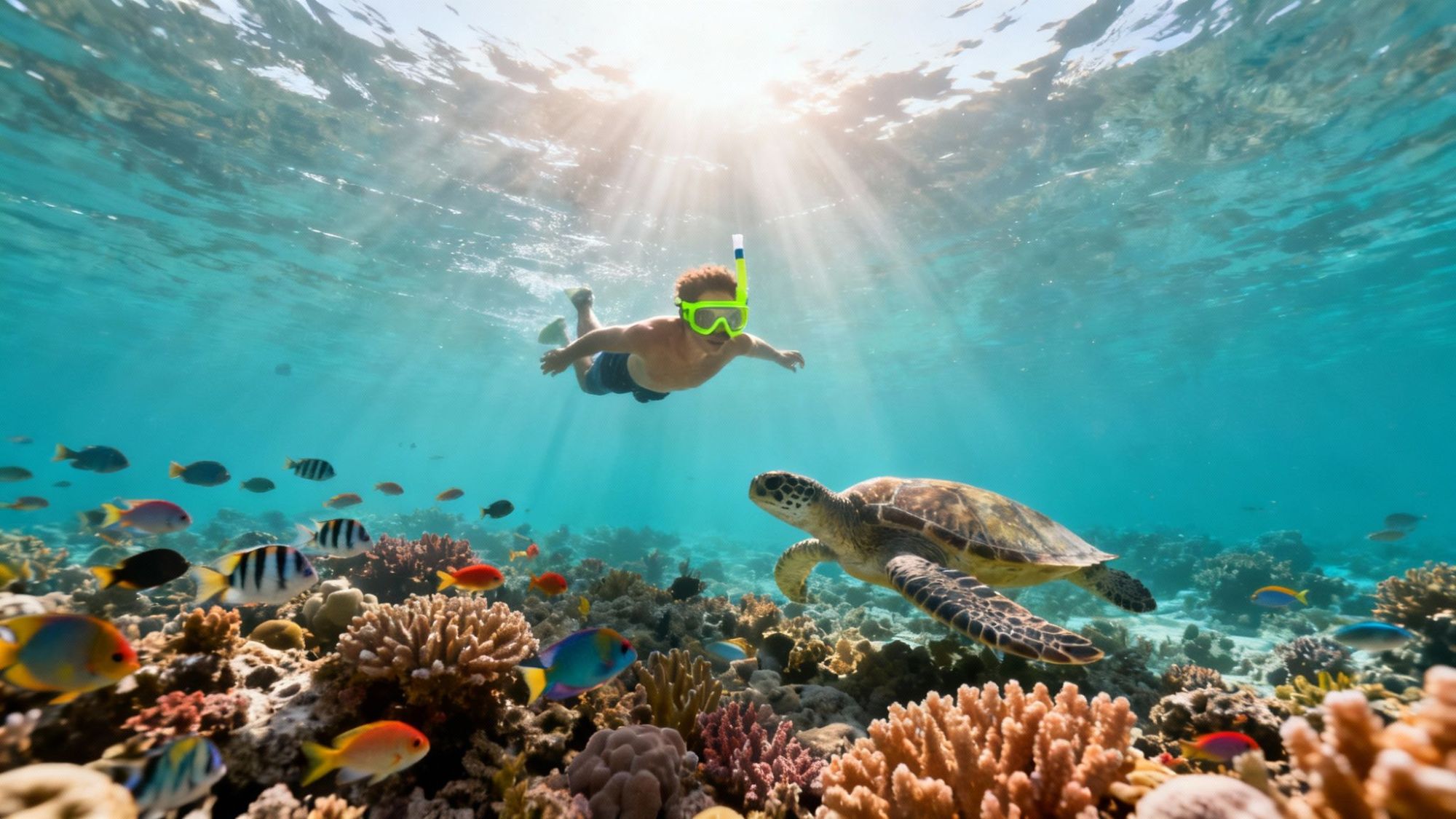
Picture this: you’re floating in warm, unbelievably clear turquoise water. Below you, a whole world unfolds—vibrant coral gardens buzzing with schools of tropical fish in every color imaginable. This is the magic of snorkeling on the Big Island of Hawaii, a place famous for its one-of-a-kind underwater landscapes and healthy marine life.
This guide is your inside scoop on the absolute best experiences, from sun-drenched, protected bays teeming with life to unforgettable nighttime swims with gentle giants.
Your Unforgettable Big Island Snorkel Adventure Awaits
As you start planning, you’ll quickly hear about Kona Snorkel Trips. There's a good reason for that—they are the top-rated and most-reviewed snorkel company in all of Hawaii.
Their expertise and passion for creating safe, incredible adventures will be our compass as we explore the island's premier underwater spots.
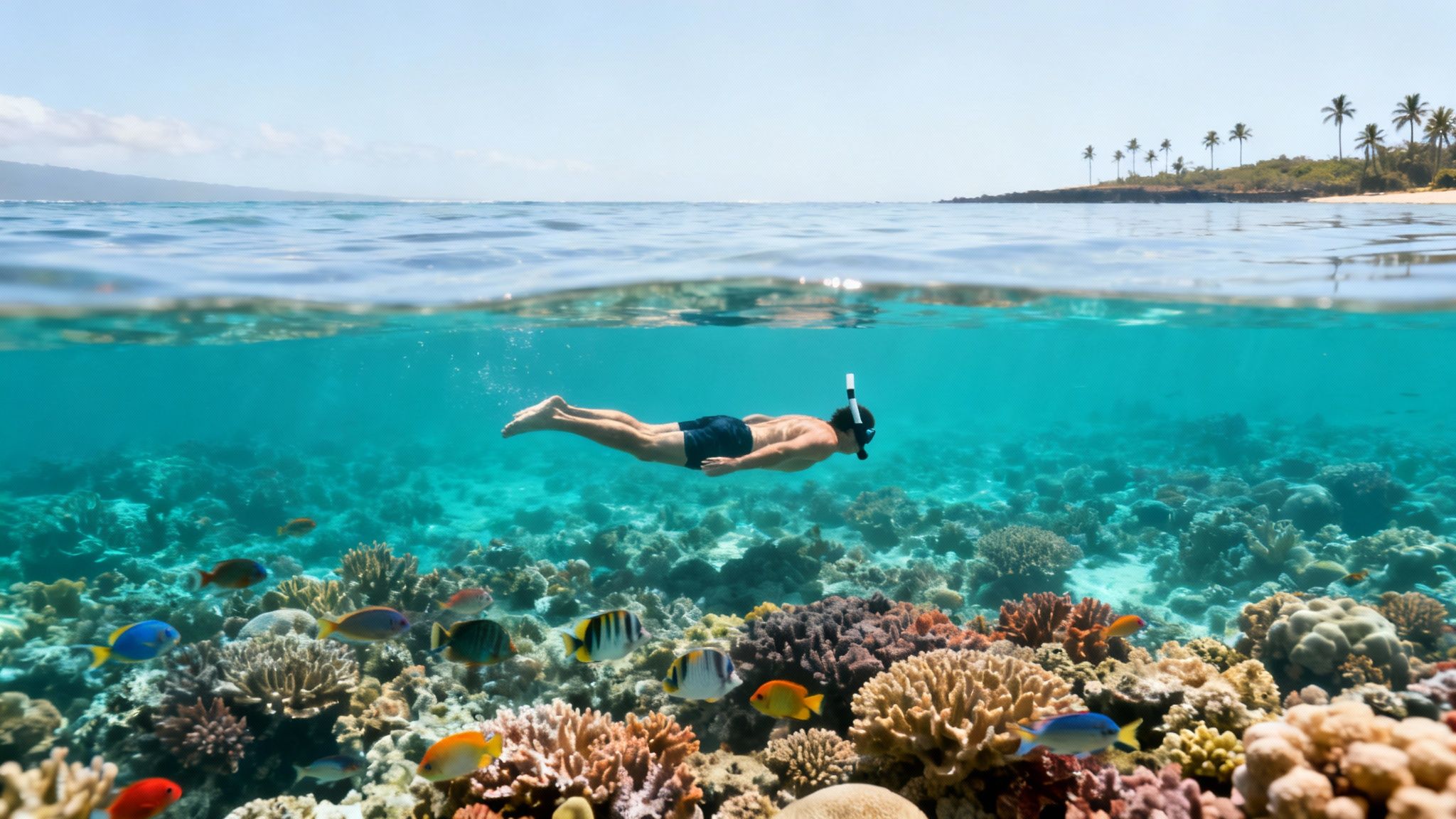
The Big Island’s Kona coast is a snorkeler’s dream. It’s naturally protected from the gusty trade winds, which means the waters stay calm and crystal clear. This unique geography creates the perfect conditions for coral reefs to thrive, attracting an insane amount of marine life. It truly is the perfect setting for an aquatic journey.
Choosing Your Ideal Snorkel Experience
With so many options, figuring out where to go can feel a bit overwhelming. But it really boils down to two main types of world-class experiences: exploring historic, protected bays by day, and otherworldly wildlife encounters by night.
Each offers a completely different, yet equally captivating, glimpse into Hawaii's underwater world.
To help you choose the right adventure, let's take a closer look at the two most iconic snorkeling trips the Big Island has to offer. They're both bucket-list-worthy, but they are very different experiences.
We put together this quick table so you can see the highlights of each premier snorkel trip at a glance.
Big Island's Premier Snorkeling Experiences at a Glance
| Experience | Best For | Key Feature | Why Choose It |
|---|---|---|---|
| Captain Cook Snorkel Tour | History buffs, families, and coral reef lovers | Snorkeling in the pristine waters of Kealakekua Bay's marine sanctuary. | You get to explore one of Hawaii's most vibrant and protected coral reefs, rich with history and incredible visibility. |
| Manta Ray Night Snorkel | Thrill-seekers and wildlife enthusiasts | A surreal nighttime swim with gentle, giant manta rays feeding on plankton. | It’s a truly unique, once-in-a-lifetime encounter that feels like you're in an underwater ballet. |
Understanding what makes each of these adventures special is the key to picking the one that perfectly matches what you're hoping for.
Key Takeaway: The Big Island offers two world-renowned snorkeling trips: a daytime exploration of Kealakekua Bay's pristine reefs and a nighttime swim with majestic manta rays. Both are bucket-list items that showcase the incredible biodiversity of Hawaiian waters.
Whether you're drawn to sunlit coral gardens or the mysterious, graceful dance of manta rays after dark, there's an incredible adventure waiting for you. The goal is to find a tour that fits your comfort level and sparks your sense of discovery.
Discovering Kealakekua Bay and Captain Cook Monument
Of all the incredible places you can snorkel on the Big Island, Kealakekua Bay is the stuff of legends. This isn't just another pretty spot; it's an underwater sanctuary where Hawaiian history and vibrant nature collide in the most spectacular way. For many, a trip to the bay isn't just part of a vacation—it's the experience that defines Big Island snorkeling.
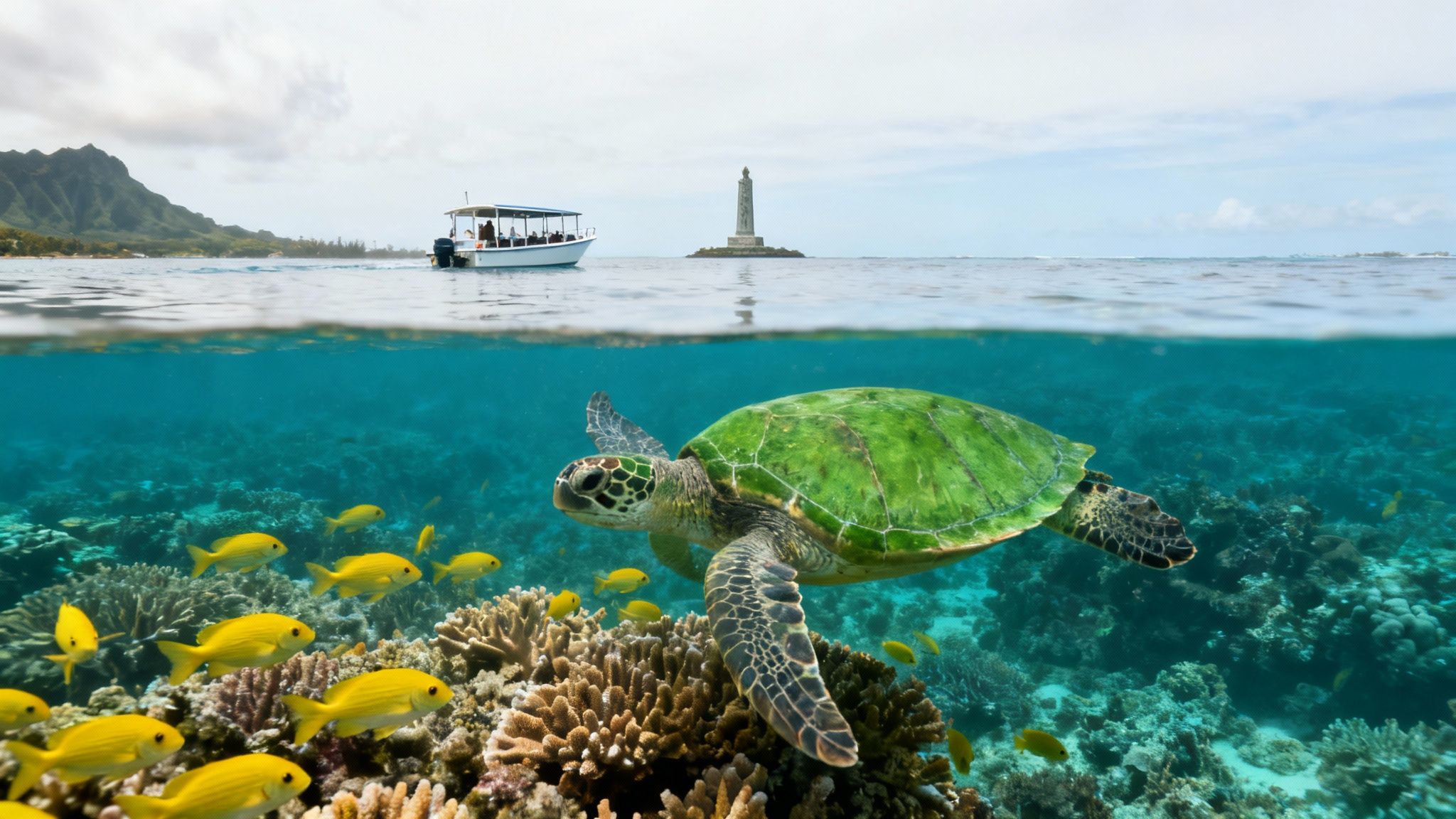
What makes Kealakekua so magical is that it's a protected marine sanctuary, and has been since 1992. This designation as a Marine Life Conservation District covers over 1,000 acres, meaning fishing is prohibited. The result? The coral reefs have flourished, and the marine life is off the charts. It's not uncommon for the water clarity to exceed 100 feet, making it a dream for spotting everything from colorful reef fish to sea turtles and spinner dolphins.
Why Kealakekua Bay is a Must-See
Picture this: you slip into the water and are immediately greeted by massive, intricate coral gardens absolutely buzzing with life. Giant schools of vibrant yellow tang, sometimes numbering in the hundreds, drift by like golden clouds. You'll often find yourself swimming alongside a majestic green sea turtle, or honu, as it glides effortlessly through the turquoise water. It’s an experience that stays with you.
The bay is also a favorite hangout for pods of spinner dolphins, who come into the calm waters to rest. Seeing them leap and spin in the air is an unforgettable bonus to an already perfect day. Because the best part of the reef is so difficult to reach by land, the experience feels pristine and uncrowded.
The Best Way to Experience the Bay
The prime snorkeling spot is right in front of the Captain Cook Monument, but its remote location makes a boat tour the absolute best way to get there. A guided tour cuts out all the logistical headaches and drops you right into the heart of the action, safely and comfortably. For a truly personal and safe adventure, our Captain Cook Snorkeling Tour is designed to give you just that.
We keep our groups small, so you’re not just another face in the crowd. Our lifeguard-certified guides are in the water with you, pointing out cool critters and making sure you can just relax and soak it all in, knowing you're in expert hands.
Another great option for exploring this historic bay is Captain Cook Snorkeling Tours. They also run top-notch tours that provide fantastic opportunities to witness the bay's incredible marine life.
The Historical Significance of the Captain Cook Monument
Kealakekua Bay isn’t just about stunning natural beauty; it’s a place steeped in history. That white obelisk you see on the shore is the Captain Cook Monument, marking the spot where the famed British explorer Captain James Cook was killed in 1779.
That moment was a pivotal point in Hawaiian history, representing the profound cultural clashes and connections that came from early encounters between Hawaiians and Westerners. When you snorkel here, you're not just looking at fish and coral; you're floating in a place where history was literally made.
Expert Insight: A guided tour doesn't just get you to the reef safely. A good guide will share the stories of the bay’s cultural and historical importance, which connects you to the place on a much deeper level.
Choosing a tour lets you fully appreciate both the incredible marine ecosystem and the deep cultural story of the area. It transforms a simple snorkeling trip into a journey through Hawaii's natural and historical heart.
If you want to dive deeper into what makes this spot so special, check out our dedicated guide to Kealakekua Bay snorkeling. The blend of pristine conditions, abundant wildlife, and rich history makes a trip to Kealakekua Bay an essential part of any Big Island adventure.
Experience the Magic of the Kona Manta Ray Night Snorkel
Once the sun goes down, a completely different, almost otherworldly adventure begins just off the Kona coast. Forget the sunlit reefs for a moment. This is the world-famous Manta Ray Night Snorkel, an experience so unique and breathtaking it’s become the signature must-do for anyone visiting the Big Island.
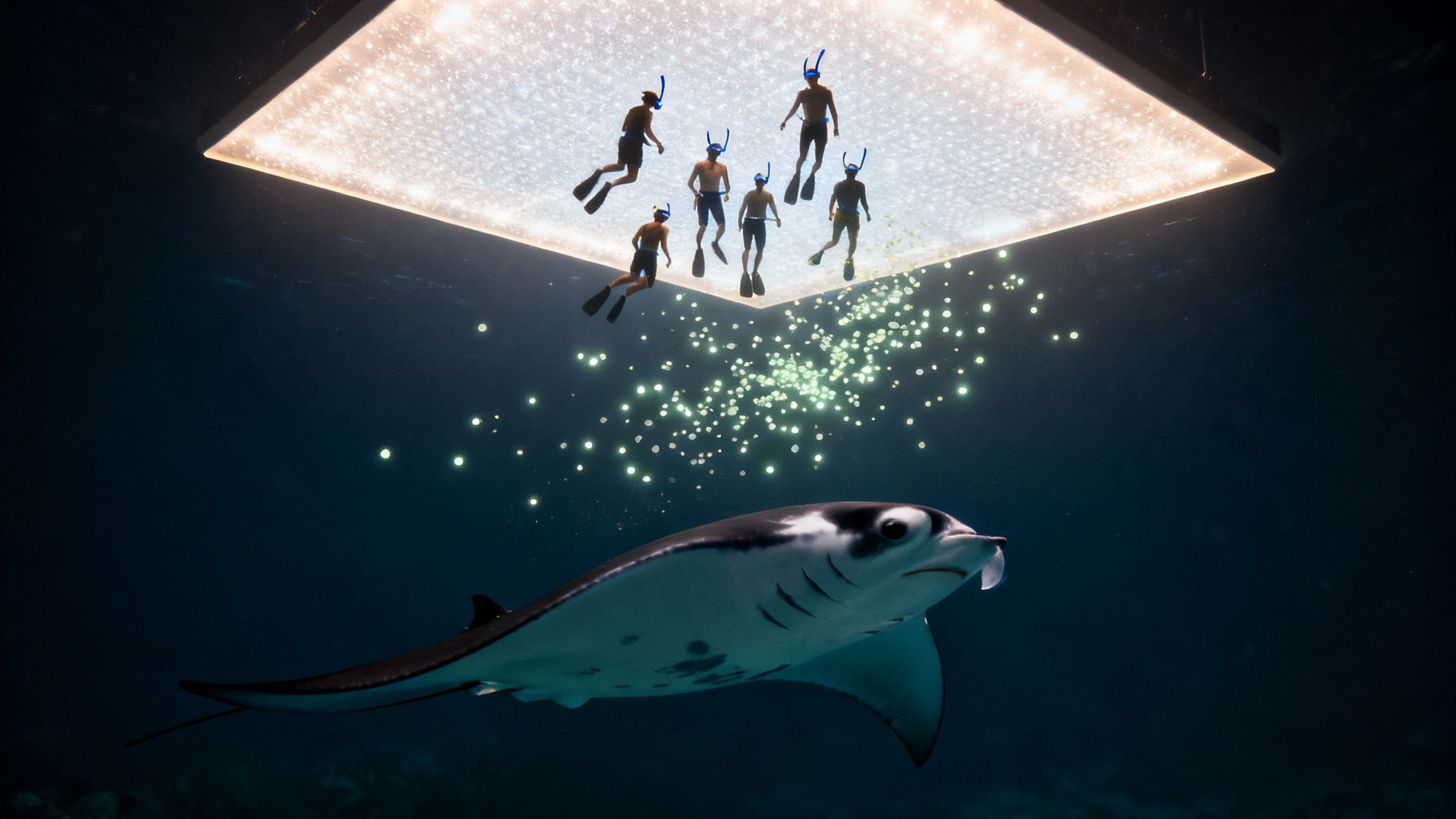
Picture this: you're floating on the calm, dark surface of the Pacific. The only light is an ethereal blue glow coming from below, turning the ocean into a stage. Then, they emerge from the darkness—giant, graceful manta rays, some with wingspans stretching up to 16 feet, gliding and somersaulting just inches beneath you. It’s a silent, underwater ballet, and you’ve got the best seat in the house.
How This Underwater Spectacle Works
The magic behind this encounter is actually pretty simple. At Kona Snorkel Trips, we use custom-built light boards that float on the surface. These powerful lights act like a magnet for swarms of plankton, the tiny organisms that are the foundation of the ocean's food web.
The plankton, in turn, ring the dinner bell for the mantas. These gentle giants swoop in with their mouths wide open to filter-feed on the buffet we’ve helped gather. It's a completely non-invasive method; we just set the table, and the mantas show up if they're hungry.
This eco-friendly approach means you're watching them behave naturally, without any direct interference. Combined with our small group sizes and lifeguard-certified guides, it makes for a safe, comfortable, and deeply personal adventure. Veteran operators see mantas on 85-90% of tours, which just goes to show how reliable this incredible experience is.
What to Expect on Your Tour
Your adventure starts with a short boat ride from the Kona coast as the sun dips below the horizon. Our crew will get you kitted out with all the gear, including wetsuits to keep you comfortable, and run through a thorough safety briefing.
Once we get to the "manta site," you'll slip into the water and hold onto our floating light board.
Expert Insight: The whole experience is surprisingly calm. You don’t need to be a pro swimmer at all—you just hang onto the board and let the show happen beneath you. The wetsuit gives you plenty of buoyancy, so you can just relax and focus on these incredible animals.
As these magnificent creatures perform their dance, their sheer size and grace are what really hit you. It’s a humbling, awe-inspiring moment that creates a connection with one of the ocean's most gentle giants.
Our Manta Ray Night Snorkel Tour is consistently rated as a top activity for anyone snorkeling Big Island Hawaii. Manta Ray Night Snorkel Hawaii is another exceptional alternative when looking for a Manta Ray night snorkel tour.
This is more than just getting in the water; it's a profound connection with nature that few people ever get to feel. To learn more about what makes this trip so special, check out our guide on the night snorkel with manta rays in Hawaii. It’s an adventure you’ll be talking about for years.
More of the Best Snorkel Spots on the Big Island
While a guided boat tour to a place like Kealakekua Bay is an experience you'll never forget, part of the magic of the Big Island is the sheer number of incredible snorkel spots you can walk right into from the shore. These are perfect for those spontaneous afternoon adventures or for anyone who just likes to explore at their own pace.
Going it alone can be a fantastic part of your Big Island snorkeling journey. The real key is knowing which spots are a good match for your own comfort and skill level. We've picked a few of our absolute favorite walk-in locations, from the super chill, beginner-friendly waters of Kahalu'u to the dramatic underwater landscapes at Honaunau Bay.
Kahalu'u Beach Park: A Beginner's Paradise
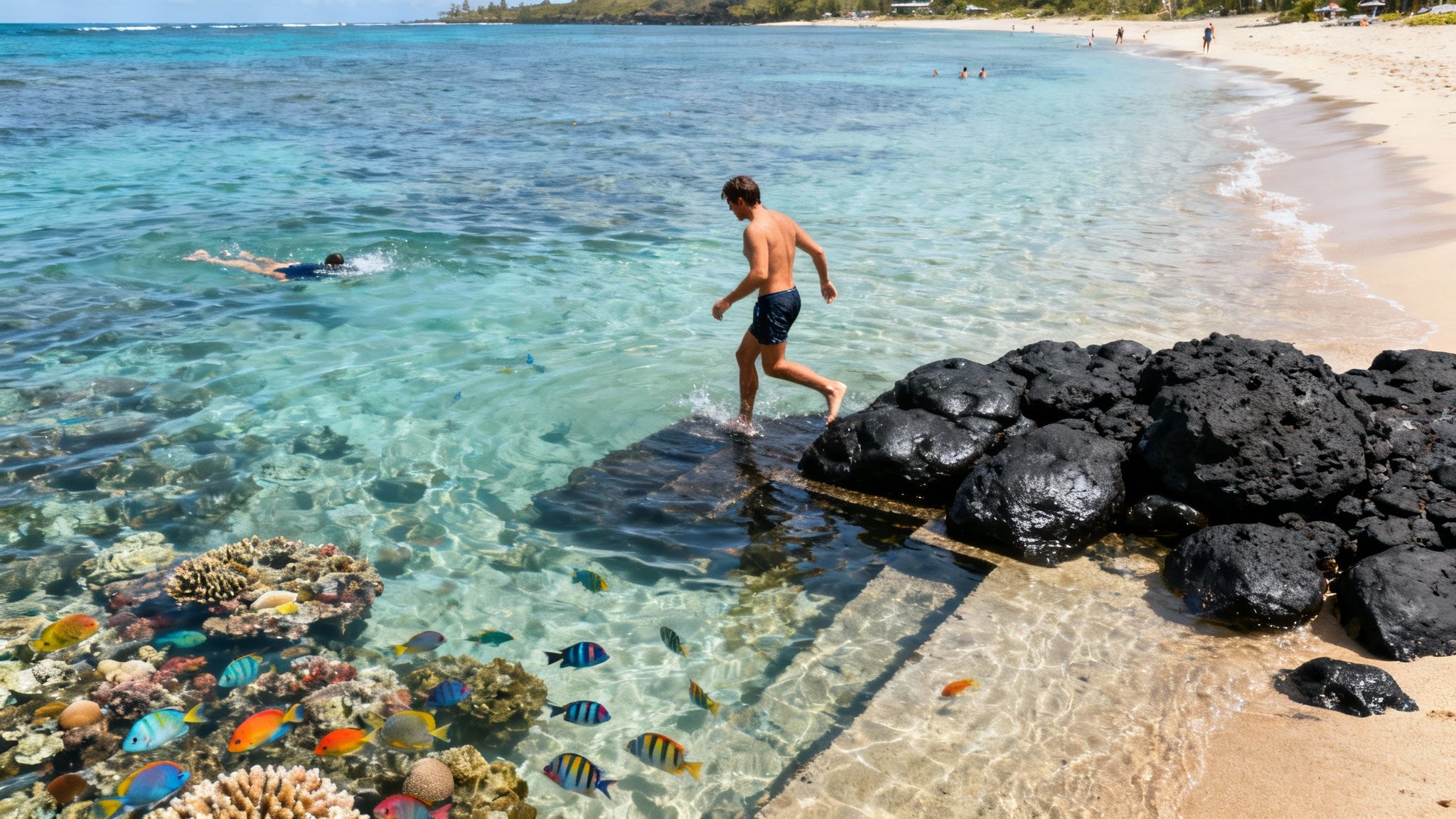
If you're new to this whole snorkeling thing or have little ones with you, Kahalu'u Beach Park in Kona is the place to be. This spot is famous for its ridiculously calm and shallow water, all thanks to a natural rock wall (a breakwater) that keeps the surf out. It’s basically a giant, natural swimming pool absolutely packed with fish.
The amount of life here is just incredible. The second you step into the water, you'll be swimming with schools of yellow tang, parrotfish, and Moorish idols. The best part? If you ever feel like you need a break, the bay is shallow enough that you can just stand up.
It's also set up for an easy, hassle-free day:
- On-duty lifeguards are there for an extra layer of safety and peace of mind.
- Restrooms and showers are ready for when you need to rinse off.
- Picnic tables and pavilions make it a perfect spot to chill out and grab a bite.
Honaunau Bay (Two Step): For the Confident Swimmer
Just a bit south of Kealakekua Bay is Honaunau Bay, which everyone affectionately calls "Two Step." It gets the name from two big lava rock ledges that make for a perfect, step-like entry into the ocean. There's a reason it's one of the most loved shore snorkeling spots on the entire island.
Getting in is simple: sit on the lava rock, pull on your fins, and just slide right in. The water here drops off pretty quickly to about 15-20 feet, opening up to an amazing underwater world with unbelievable visibility. You'll see gorgeous coral formations, arches, and a wild variety of fish. If you're a comfortable swimmer, you'll love the freedom of exploring this huge, clear bay.
Local Tip: While the entry is easy, keep in mind there's no sandy beach here. This spot is really for people who are comfortable in deeper water without needing to stand up. The payoff is a pristine underwater scene that spinner dolphins and green sea turtles visit all the time.
Richardson Ocean Park: An East Side Gem
To really see the island's different personalities, you've got to head over to the Hilo side and check out Richardson Ocean Park. This is the only black sand beach in the Hilo area with lifeguards, so it’s a favorite for locals.
The snorkeling here feels different than on the Kona side. Freshwater springs bubble up into the bay, creating a totally unique ecosystem. Visibility can change more than it does in Kona, but the marine life is rich, and you have a really good chance of spotting honu (green sea turtles) munching on algae in the shallows.
Exploring these shore spots is a great way to see more of the Big Island. But they also make you appreciate what a guided tour offers for those premier spots you just can't get to otherwise. For the pure, protected magic of Kealakekua Bay, a boat tour is still the safest and most rewarding way to experience its wonders.
Essential Snorkeling Safety Tips for Hawaiian Waters
Let’s be real for a moment. Enjoying the incredible underwater world of the Big Island starts with putting safety first. The ocean here is powerful and beautiful in equal measure, and truly understanding its unique character is the key to having a fun, stress-free time in the water. This isn’t about scaring you away; it’s about giving you the confidence and knowledge to snorkel responsibly.
If you’ve snorkeled elsewhere, you might notice that Hawaiian waters can feel a bit different. Conditions can turn on a dime, and it is absolutely vital to respect the ocean's power. By preparing yourself and staying aware, you can stop worrying and focus on the amazing marine life all around you.
Understanding the Risks in Hawaiian Waters
Snorkeling safety is a serious topic on the Big Island. The statistics can be sobering: Hawaii unfortunately leads the nation in tourist drownings. From 2012 to 2021, there were 204 snorkeling-related deaths, and 184 of those involved visitors.
To figure out why, a groundbreaking three-year Snorkel Safety Study by the Hawaii Department of Health uncovered a surprising culprit. They found that many incidents weren't caused by simply inhaling water, but by a condition called Rapid Onset Pulmonary Edema (ROPE). One of the biggest risk factors? Taking a long flight shortly before getting in the water. You can read more about these important findings on CivilBeat.org.
ROPE is a condition where fluid rapidly fills the lungs, making it incredibly difficult to breathe. It can be triggered by exertion, especially for people with underlying health conditions or those whose bodies are still adjusting after a long flight.
This is exactly why listening to your body and knowing your own limits is so critical when snorkeling Big Island Hawaii.
Actionable Safety Tips for Every Snorkeler
Being prepared makes all the difference. Before your fins even touch the water, running through a simple mental checklist can set you up for a fantastic and safe experience.
Here are our non-negotiable rules for snorkeling in Hawaii:
- Always Snorkel with a Buddy: Never, ever go into the ocean alone. Your partner is your first line of defense if something goes wrong.
- Know Your Limits: Be brutally honest with yourself about your swimming ability and physical condition. If you feel tired, dizzy, or just "off," get out of the water. Don't push it.
- Check Ocean Conditions: Before you even leave for the beach, check the local surf and weather reports. Look for any signs of strong currents, high surf, or murky water. When in doubt, don't go out.
- Stay Hydrated and Rested: Drink plenty of water all day, not just before you snorkel. And give your body time to adjust after a long flight before you hit the ocean.
Key Takeaway: The single most important safety decision you can make is to never snorkel alone. The buddy system is your best defense against unexpected situations in the water.
Following these simple guidelines dramatically cuts down on the risks and lets you relax and truly soak in the beauty of Hawaii's underwater ecosystems.
The Smartest Choice for Peace of Mind
For beginners, families, or anyone just not familiar with the local waters, the absolute safest and most enjoyable way to snorkel is with a guided tour. When you go with a reputable company like Kona Snorkel Trips, you're putting yourself in the hands of professionals who live and breathe ocean safety every single day.
Our guides are all lifeguard-certified and trained in CPR and first aid. They are right there in the water with you, constantly watching the conditions and making sure everyone is safe and having a great time. We provide high-quality, properly fitted gear and show you exactly how to use it. That level of expert supervision provides an incredible amount of peace of mind, letting you focus on what you came here for: the amazing experience. To learn even more, you can explore our comprehensive guide on snorkeling safety tips.
Alright, you know the killer spots and how to stay safe. Now it's time for the fun part: putting it all together to plan your ultimate Big Island snorkel trip. A little bit of prep goes a long way in making sure your adventure is incredible, easy, and good for the ocean.
One of the best things about snorkeling the Big Island is that it’s always in season. The water stays in that perfect sweet spot, usually between a comfortable 77°F to 81°F (25-27°C), so any time of year is a great time to get in. But if you come during the winter months (December through March), you get an insane bonus: the chance to see humpback whales on their yearly migration.
What to Pack for Your Snorkel Adventure
Having the right stuff in your bag can make or break your day. While any good tour will have the main gear covered, you'll be much more comfortable if you bring a few key items.
- Reef-Safe Sunscreen: This is a huge one, and it's non-negotiable. The chemicals in regular sunscreen, like oxybenzone, are seriously damaging to our coral reefs. Do your skin and the ocean a favor and always grab a mineral-based sunscreen.
- Rash Guard or Sun Shirt: A long-sleeve rash guard is your best friend out here. It gives you awesome sun protection without having to slather on sunscreen all day, and it adds a little extra warmth if the clouds roll in.
- Reusable Water Bottle: Staying hydrated is key. You're out in the sun and using energy, so drink plenty of water. Bringing your own bottle helps cut down on plastic waste, too.
- Underwater Camera: Trust me, you're going to want proof of what you see down there. From schools of colorful fish to those majestic manta rays, the photo ops are endless.
Responsible Wildlife Viewing
Sharing the water with Hawaii's incredible marine life is an absolute privilege. It’s up to all of us to be respectful guests in their home. The whole game is about being a passive observer—just watch them do their thing without getting in their way.
Golden Rule of Wildlife Encounters: Always give the animals their space. Never, ever touch, chase, or try to feed any marine creature. This goes for our beloved honu (sea turtles), dolphins, manta rays, and everyone else. Touching them can strip away their natural protective slime layer and cause a ton of stress.
When you're in the water, just move slow and easy. By keeping a respectful distance, you're not only protecting the wildlife, but you’ll actually get a much better, more natural experience because they won't see you as a threat.
Your Unforgettable Journey Awaits
The underwater world of the Big Island is just waiting for you. Whether you end up exploring the historic reefs of Kealakekua Bay or witnessing the surreal nighttime ballet of the manta rays, you are in for an experience you'll never forget. The most important thing is to go with a trusted, top-rated company that puts your safety—and the health of the marine ecosystem—first.
Got Questions? We've Got Answers
Planning a trip always comes with a few lingering questions. To help you get everything buttoned up, here are the answers to the things we get asked most often about snorkeling on the Big Island.
When Is The Best Time To Snorkel?
Honestly, any time is a great time to snorkel in Hawaii. The water is always inviting, hovering somewhere between a perfect 77°F and 81°F (that’s 25-27°C) all year long.
But if you're looking for a little something extra, the winter months from December to March are pretty magical. That’s when the humpback whales are here. It’s not uncommon to hear their songs echoing underwater while you snorkel or even see them breaching on your boat ride out. It's an incredible bonus to an already amazing day.
Do I Need To Be A Strong Swimmer?
Not at all. If you're comfortable in the water, you're good to go. You absolutely do not need to be a pro swimmer to have a fantastic time, especially on a guided tour.
We provide everyone with flotation gear—like a life vest or a pool noodle—so you can just relax and float on the surface without any effort. Plus, our lifeguard-certified guides are right there in the water with you, keeping an eye on everyone and ready to help if you need it. Safety and comfort are our top priorities.
Where Can I See Sea Turtles?
Hawaiian green sea turtles, our beloved honu, are a common sight in the waters here. While you can get lucky almost anywhere, your best bet is to visit calm, sheltered bays where they love to munch on algae.
Kealakekua Bay is a fantastic spot where we often see turtles cruising over the reef. For snorkeling from shore, places like Kahalu'u Beach Park and Honaunau Bay (better known as Two Step) are famous hangouts for them.
What Is The Difference Between The Tours?
Our two flagship tours, Captain Cook and the Manta Ray Night Snorkel, are completely different worlds. Both are incredible, but they offer wildly unique experiences.
The Captain Cook Tour: This is your classic, sun-drenched daytime adventure. We head to the pristine marine sanctuary of Kealakekua Bay, exploring vibrant coral gardens packed with colorful fish and amazing history. It's pure discovery.
The Manta Ray Night Snorkel: This one is pure magic. After sunset, we'll have you floating in the dark ocean as giant, gentle manta rays swoop and glide right below you, feeding on plankton drawn to our underwater lights. It's a surreal, bucket-list wildlife encounter that you will never, ever forget.
Ready to dive in and make some memories? Book your tour with Kona Snorkel Trips today and let our top-rated guides show you the absolute best of Big Island snorkeling.