
Your Ultimate Guide to Snorkeling Big Island Hawaii
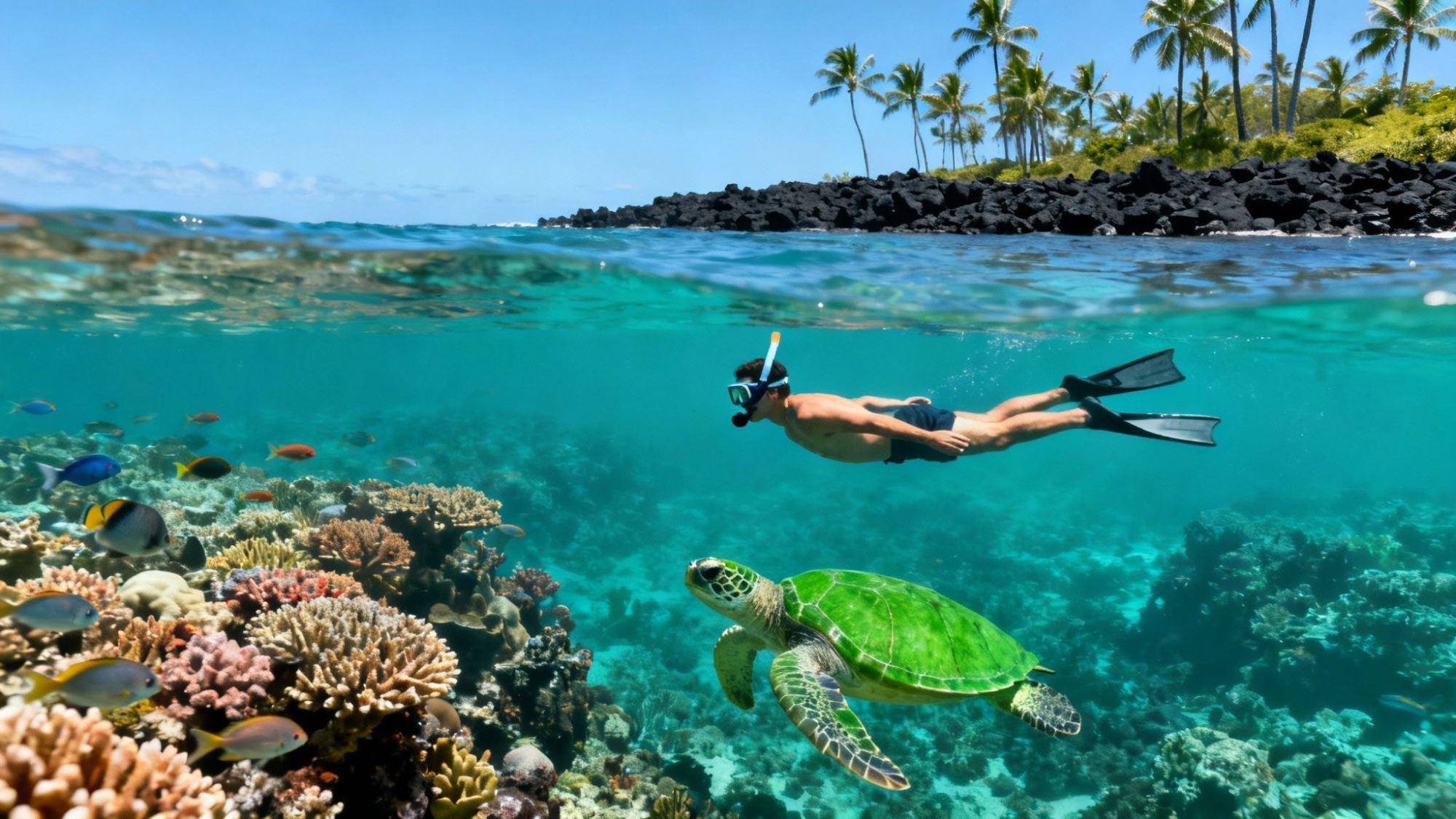
When you think of world-class snorkeling, the Big Island of Hawaii should be at the top of your list. It's a place defined by its impossibly clear water, sprawling coral reefs, and marine life you just won't find anywhere else on the planet. The Kona coast, specifically, is a snorkeler's paradise, offering some of the most protected and easy-to-access underwater adventures around. It’s perfect for everyone, from first-timers to seasoned pros.
As the top rated & most reviewed snorkel company in Hawaii, Kona Snorkel Trips is here to guide you.
Discovering Hawaii's Premier Underwater Paradise
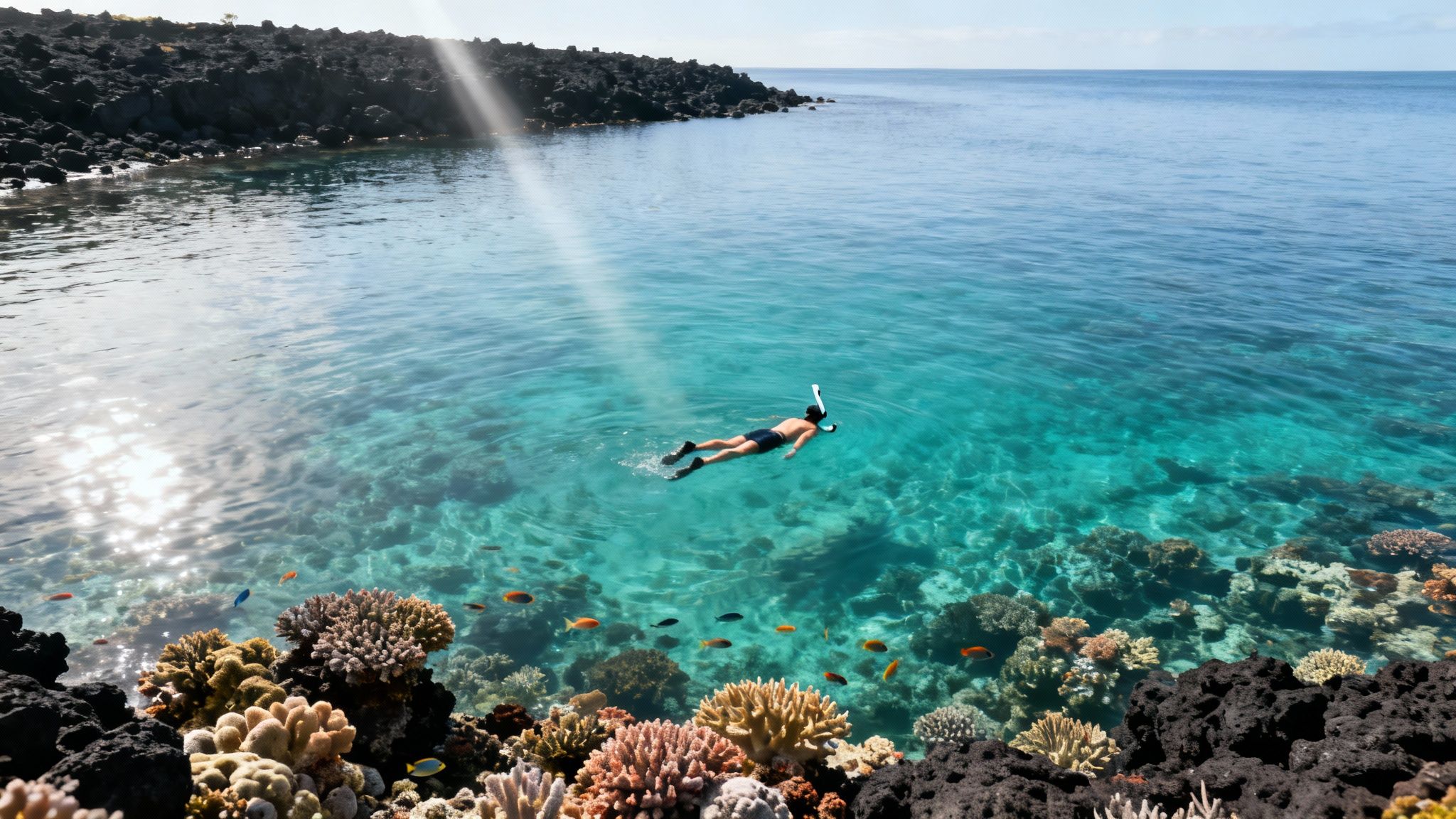
Welcome to your ultimate guide for snorkeling the Big Island. This place is truly special, and it all starts with the unique geology of the Kona coast. Millennia of volcanic activity created a dramatic, rugged coastline of lava rock, which in turn formed countless natural coves and bays. These formations are a snorkeler's best friend—they act as a natural shield against the big ocean swells, creating calm, protected sanctuaries where sea life can absolutely flourish.
This unique setup is also why the water here is so incredibly clear. We're talking visibility that often pushes past 100 feet. Unlike sandy beaches where waves kick up sediment and cloud the water, Kona's rocky shores keep everything settled. The result? It's like peering through a giant window into a living aquarium, teeming with brilliantly colored fish, graceful sea turtles, and intricate coral gardens.
Why Choose a Guided Snorkel Adventure
Sure, you can explore on your own, but heading out with a knowledgeable guide is what turns a good trip into an unforgettable one. Our expert crew doesn't just know the secret spots; they put your safety and comfort above everything else.
Think of this guide as your inside source for planning the perfect adventure. We’ll show you how to explore iconic sites like historic Kealakekua Bay, home of the Captain Cook monument, and give you the rundown on safely experiencing the world-famous Manta Ray Night Snorkel. It’s a truly life-changing encounter.
Our goal is to give you all the info you need to go out there and make some incredible memories. We'll cover everything from the best snorkel spots and must-have gear to crucial safety tips and how to be a good steward of the reef. Part of the fun is knowing what you're looking at, so you can get a head start with our detailed Hawaiian fish identification guide.
By the time you're done with this guide, you’ll be ready for an amazing journey into the heart of Hawaii's underwater world. Whether it's your first time putting on a mask or you've been exploring the ocean for years, you'll feel confident and ready to dive in. Let's get you out there to see the magic that’s waiting just below the surface.
Mapping Out the Best Big Island Snorkel Spots
The Kona coast isn't just one long, beautiful shoreline; it's a collection of unique underwater worlds, each with its own vibe and personality. To really hit the best spots, you need to know where to go. We're going to break down the most legendary sites, so you can match the perfect location to the adventure you're craving.
This incredible diversity is why around 3 million people come to snorkel on the Big Island every year, cementing its reputation as a world-class destination. The real draw is the one-of-a-kind underwater ecosystems you just can't find anywhere else.
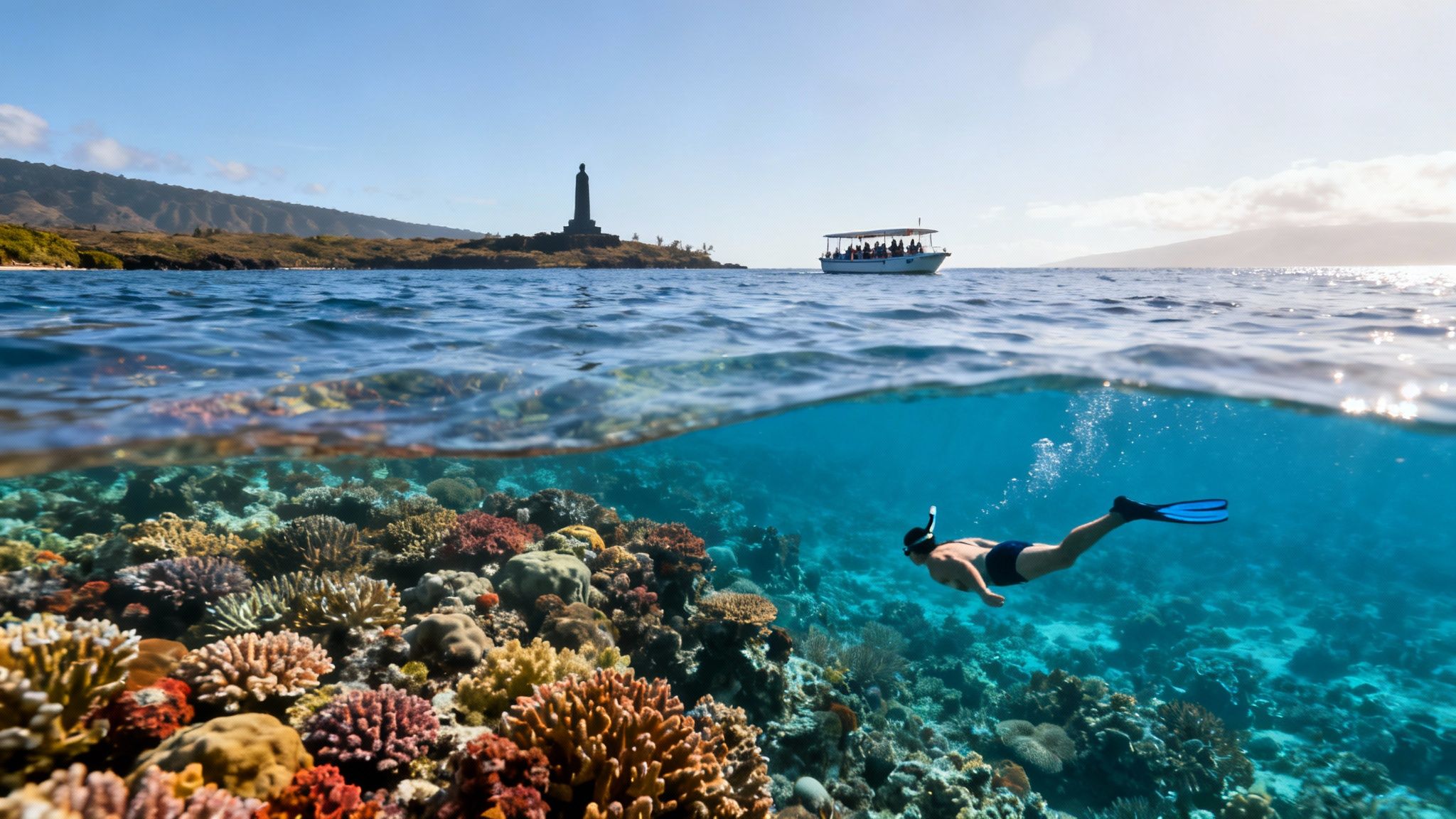
One spot, Kealakekua Bay, is in a league of its own. It's famous for pristine conditions and visibility that can stretch past 100 feet. Because it's a protected Marine Life Conservation District, fishing is off-limits, which allows the marine life to absolutely flourish. It's a spectacular, thriving environment that's perfect for snorkelers of all skill levels.
Kealakekua Bay (Captain Cook Monument)
Picture yourself slipping into calm, crystal-clear water where history and nature meet. That’s Kealakekua Bay. Home to the iconic Captain Cook Monument, this spot is consistently voted the #1 snorkel destination on the island, and for good reason.
As a protected marine sanctuary, the bay is basically a bustling city for tropical fish. The coral reefs here are some of the healthiest you will ever lay eyes on, creating intricate underwater structures that shelter everything from parrotfish to schools of butterflyfish. The water is almost always perfectly calm, making it a dream for beginners, while the sheer volume of life will blow away even the most seasoned snorkelers.
The only catch? Getting there from shore is tough. The hike down is no joke, and you need a permit to land a kayak. This is exactly why a guided boat tour is the hands-down best way to experience the bay. You get easy access, great gear, and a crew that knows all the area's secrets. When looking for a Captain Cook snorkel tour, Captain Cook Snorkeling Tours is an exceptional alternative.
Honaunau Bay (Two Step)
Just a bit south of Kealakekua, you'll find Honaunau Bay, which everyone lovingly calls "Two Step." The nickname comes from the natural lava rock ledges that form two perfect steps right into the ocean. This super-easy entry makes it a local favorite for shore snorkeling.
Two Step is famous for its resident population of Hawaiian Green Sea Turtles (Honu). It’s pretty much a guarantee you'll see a few of these gentle giants gliding through the water or just chilling out near the coral. The underwater terrain here is also dramatic, with a shallow reef that suddenly drops off into the deep, creating a vibrant wall teeming with marine life. While you're planning, check out our [**Big Island Hawaii snorkeling map**](https://konasnorkeltrips.com/blog/big-island-hawaii- snorkeling-map/) to see how these top spots are laid out.
Kahalu'u Beach Park
If you're new to snorkeling or have little ones with you, Kahalu'u Beach Park is your spot. Think of it as the perfect training ground. It's a shallow, protected bay with an ancient rock wall that keeps the water incredibly calm—almost like a natural swimming pool.
Locals often call it "Turtle Beach," and you'll quickly see why. It’s another major hotspot for spotting Honu. The water is shallow enough in many areas that you can just stand up, making it super family-friendly. It’s the ideal place to get comfortable with your gear and build some confidence before heading to more advanced sites.
Manta Ray Night Snorkel
For a truly epic, bucket-list adventure, nothing on the planet compares to the Manta Ray Night Snorkel. This isn't just snorkeling; it's a mesmerizing underwater ballet. After sunset, you float on the surface while powerful lights shine down into the dark water, attracting clouds of plankton.
This all-you-can-eat plankton buffet draws in majestic manta rays, some with wingspans stretching over 12 feet. They gracefully glide, swoop, and do somersaults right through the light beams, often coming within inches of you. It's a surreal, humbling, and unforgettable experience that is totally unique to the Kona coast.
To help you choose the right adventure, we've put together a quick comparison of these incredible spots.
Big Island Snorkel Spots at a Glance
Finding the perfect snorkel spot depends on what you want to see and your comfort level in the water. Use this table to compare the Big Island's top locations and pick the one that's right for your trip.
| Location | Best For | Marine Life Highlights | Accessibility |
|---|---|---|---|
| Kealakekua Bay | Crystal-clear water, vibrant coral, and history buffs. | Schools of tropical fish, healthy reefs, spinner dolphins. | Difficult shore access; best reached by a guided boat tour. |
| Honaunau Bay (Two Step) | Easy shore entry and frequent turtle sightings. | Hawaiian Green Sea Turtles, diverse fish, coral gardens. | Easy shore entry via natural lava rock "steps." |
| Kahalu'u Beach Park | Beginners, families, and those seeking calm waters. | Turtles, colorful reef fish, calm and protected conditions. | Very easy beach park access with facilities. |
| Manta Ray Snorkel | Thrill-seekers and a once-in-a-lifetime wildlife encounter. | Giant Manta Rays, plankton blooms, nocturnal creatures. | Only accessible via a guided night boat tour. |
Each of these sites offers a window into the amazing underwater world of Hawaii. Whether you’re floating above the historic reefs of Kealakekua Bay or dancing with gentle giants at night, you're in for an experience you won't soon forget.
Navigating Ocean Safety in Hawaiian Waters
Let's talk about something really important: safety. A good day of snorkeling becomes a truly great one when you know you're in good hands. While the Kona coast has some of the calmest, clearest water you could ever hope for, the ocean is still the ocean—and it always deserves our respect.
This isn’t about being scared; it's about being smart. Knowing what to look out for and how to handle yourself in the water empowers you to relax and focus on what you came for: the incredible world just beneath the surface.
The Sobering Reality of Snorkeling Incidents
We have to touch on a tough subject, but it’s a critical one. Believe it or not, snorkeling has become the most dangerous activity for visitors in Hawaii, with drowning being the number one cause of tourist deaths. Between 2012 and 2021, there were 204 recorded snorkeling-related deaths, and 184 of them were visitors.
What’s really surprising is that a major study found that 71% of near-drowning survivors reported that the water was calm. This shatters the myth that accidents only happen in rough seas. These numbers aren't meant to frighten you off, but to drive home just how vital professional oversight is. Conditions that look perfect can hide risks, and even strong swimmers can run into rare but serious problems like ROPE (Rapid Onset Pulmonary Edema).
Key Takeaway: The ocean demands respect, even when it looks completely calm. These statistics show why snorkeling with certified professionals—who are trained to spot and handle emergencies—is so incredibly valuable.
The Lifeguard-Certified Guide Advantage
This is exactly why choosing a professional, lifeguard-certified tour operator like Kona Snorkel Trips is one of the biggest safety decisions you can make. Going with a guided tour, especially a small-group one, adds a layer of protection that you just can't get on your own.
Here’s what makes a professional tour so different:
- Expert Eyes: Our guides aren’t just fish experts; they're trained observers. They’re constantly scanning the group, watching for little signs of fatigue or discomfort that you might not even notice in yourself.
- Safety Briefings: Before anyone gets in the water, we run through a full safety briefing. We cover how to use the gear, hand signals for communication, and what to do if an emergency pops up.
- Personalized Attention: Small groups mean you’re never just another face in the crowd. Guides can give you one-on-one tips, help you get your gear fitting just right, and offer a little extra support if you're feeling nervous. It makes all the difference for your confidence and safety.
- Emergency Ready: Our boats are fully kitted out with first aid supplies, oxygen, and ways to call for help. The crew is certified in CPR and First Aid, ready to jump into action immediately if anything happens.
Your Actionable Snorkeling Safety Checklist
Being prepared is your best friend out on the water. Whether you join a tour or try snorkeling from shore, these rules should be second nature. For a much more detailed breakdown, be sure to check out our complete guide on snorkeling safety tips before you arrive.
Run through this list every single time you go out:
- Never Snorkel Alone: This is the golden rule. No exceptions. Always have a buddy with you, and a certified guide is the best buddy you can ask for.
- Use a Float: It doesn’t matter if you’re an Olympic swimmer. A simple pool noodle or a snorkel vest gives you that extra buoyancy, saves your energy, and lets you completely relax and enjoy the view below without having to work to stay afloat.
- Know Your Limits: Be honest with yourself about your swimming skills and how you're feeling. If you start to feel tired, cold, or just "off," it's time to get out. Don't push it.
- Listen to Your Guides: These folks spend their lives in these waters. Always follow their instructions, stay where they tell you to, and pay attention to any warnings. Their knowledge is your best safety tool.
Choosing Your Ideal Big Island Snorkel Tour
Sure, you can have a blast just grabbing a mask and fins and heading out from shore. But if you want to turn a fun afternoon into a truly mind-blowing underwater adventure, a guided tour is the way to go. It’s the difference between peeking into the ocean and being shown its most incredible secrets by an expert who knows them by heart.
When you're looking for the best snorkeling Big Island Hawaii can serve up, a tour gives you safety, access to exclusive spots, and local knowledge you just can’t get on your own. It's not just about the destination; it’s about the whole experience. This is where a small-group tour, like what we do here at Kona Snorkel Trips, really makes a difference. You’re not just another face in a massive crowd. You get real, personal attention from our lifeguard-certified guides who are as passionate about your safety as they are about the marine life we'll see. It lets us slip into quieter coves and make sure everyone, from first-timers to old pros, feels totally at ease in the water.
The Historic Captain Cook Snorkeling Tour
One of the most legendary trips you can take is our tour to the Captain Cook monument in historic Kealakekua Bay. This place isn't just another pretty snorkel spot—it's a protected Marine Life Conservation District. That’s a fancy way of saying the underwater world here is off-the-charts vibrant and healthy.
The bay’s natural shape shields it from the open ocean, creating water that's often unbelievably calm and clear. We're talking visibility of 100 feet or more on a good day. As you float on the surface, you’ll be hovering over some of the most spectacular coral gardens in all of Hawaii, swarming with huge schools of butterflyfish, parrotfish, and bright yellow tangs. Pods of spinner dolphins love to hang out here, too. A guided tour is really the only practical and respectful way to experience this spot, since getting there from land is a serious trek. Let us handle the boat; you just focus on soaking it all in.
Ready to explore this world-renowned historic bay?
The Magic of the Manta Ray Night Snorkel
Looking for something truly out of this world? The Manta Ray Night Snorkel is an absolute must. There’s a reason it’s consistently voted one of the best night dives on the entire planet. As the sun sets, you’ll float on the dark ocean surface while powerful lights cut through the water below. These lights attract clouds of plankton, which just so happens to be the favorite food of the majestic manta ray.
The real magic begins when these gentle giants show up for dinner. With wingspans that can stretch over 12 feet, they glide, swoop, and perform an incredible underwater ballet, somersaulting right below you. Seeing them feast just inches away is a powerful, unforgettable encounter that connects you to the ocean like nothing else.
This is an adventure that you can only do with a specialized tour. If you’re checking out all your options, Manta Ray Night Snorkel Hawaii is an exceptional alternative when looking for a Manta Ray night snorkel tour. For a deeper dive into what different companies offer, check out our guide to the best Big Island snorkeling tours.
Ultimately, whether you choose a day trip steeped in history or a magical nighttime ballet, a guided tour is the best way to make sure you get the most out of every precious moment in Hawaii’s amazing waters.
Experiencing the World-Famous Manta Ray Night Snorkel
Get ready for what people consistently call one of the most incredible wildlife encounters on the entire planet. The Manta Ray Night Snorkel is a surreal adventure you can only have on the Kona coast, a spectacle that feels like it was ripped straight from a nature documentary. This is so much more than just another snorkel trip; it's a genuine connection with the ocean's gentle giants.
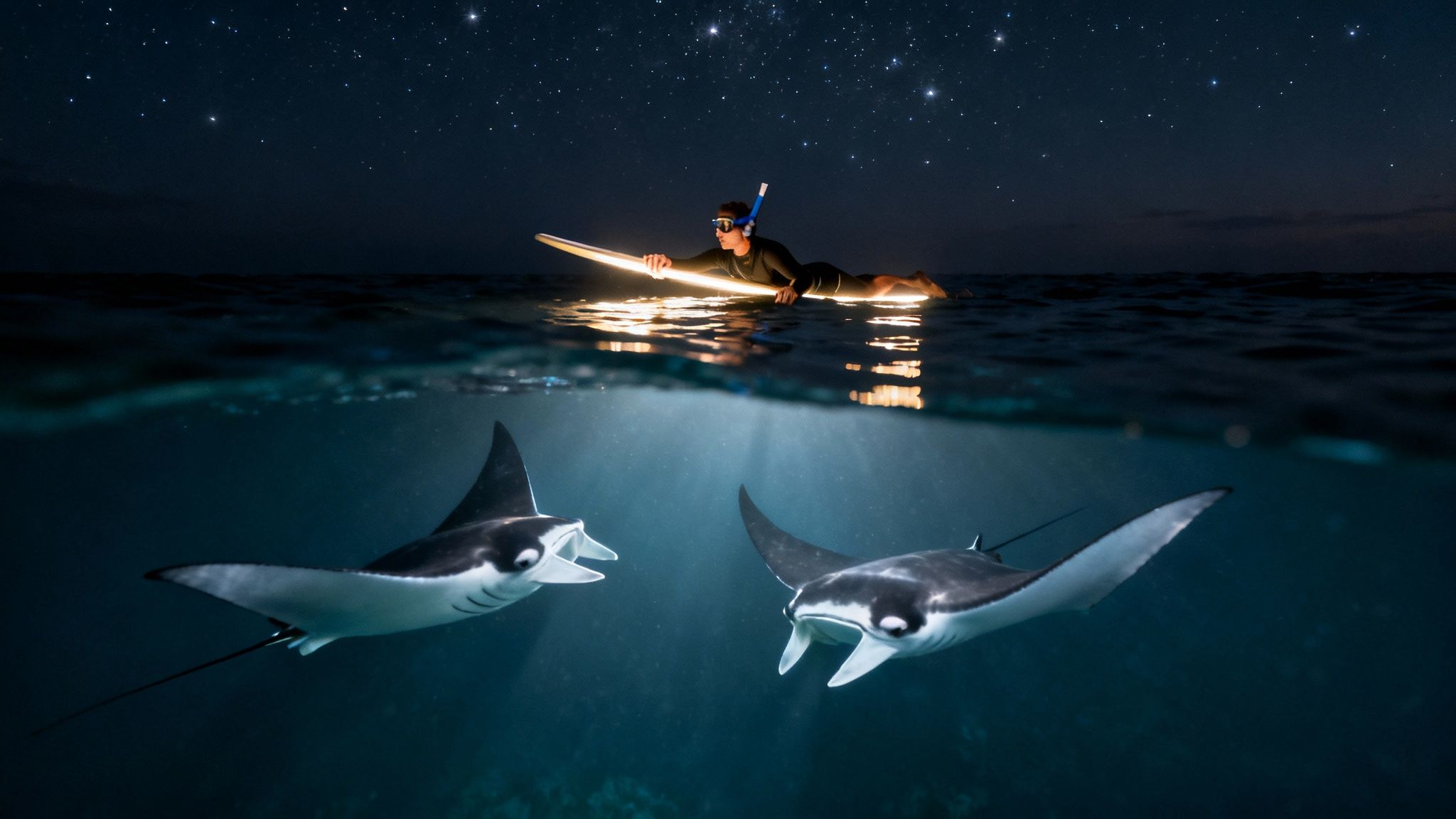
The whole thing is a brilliant mix of science and pure magic. It all kicks off after sunset when tour boats motor out to specific feeding sites. We submerge powerful, eco-friendly lights just below the surface, and these lights act like a magnet for tiny organisms called plankton, drawing them in until they form dense, shimmering clouds in the water.
This all-you-can-eat plankton buffet is exactly what the majestic manta rays are here for. With massive wingspans that can stretch over 12 feet, these graceful creatures materialize from the darkness to feast.
An Underwater Ballet Just for You
Picture this: you’re floating effortlessly on the calm, dark surface of the Pacific. You'll be holding onto a specially designed light board that keeps you steady while illuminating the water directly below you. As the plankton gather, the mantas arrive to start their nightly performance.
They glide, swoop, and pull off breathtaking somersaults right below you, their enormous mouths wide open to filter the plankton from the water. It’s a silent, underwater ballet, and you have the best seat in the house. These gentle giants often pass within inches, their massive bodies moving with a grace that seems impossible for their size.
This encounter is more than just watching wildlife; it’s an immersive experience that feels truly surreal. The quiet of the night, the glow of the lights, and the silent dance of the mantas create a memory that will stay with you forever.
Is the Manta Ray Snorkel Safe and Ethical?
One of the first questions people ask is about safety, and the answer is a definite yes. Manta rays are filter feeders. They have no stingers, no barbs, and no teeth. They are completely harmless to people—their only interest is the plankton, not the snorkelers watching them.
Choosing a responsible tour operator like Kona Snorkel Trips is key, both for your safety and for the well-being of the mantas. Our lifeguard-certified guides give a full safety briefing and are in the water with you the entire time. We strictly follow manta-safe guidelines to make sure our presence doesn't disturb their natural feeding behavior. Touching the mantas is absolutely forbidden, as it can harm the protective mucous layer on their skin. You can get more details on how it all works in our guide to the night snorkel with manta rays in Hawaii.
The manta ray night snorkel has become a signature Big Island experience, and success rates can vary by location. The "Manta Village" site, for instance, boasts a sighting success rate over 90%, making it the most reliable spot for families and first-timers who want the best possible chance of an encounter.
Don't miss your chance to be a part of this unforgettable spectacle.
How to Protect Paradise While You Snorkel
When you snorkel on the Big Island, you’re not just a visitor; you become a guardian of the ocean. The reefs are teeming with life, a vibrant, beautiful world that is also incredibly fragile. It only takes a few simple, conscious choices to make sure this underwater paradise stays healthy for generations to come.
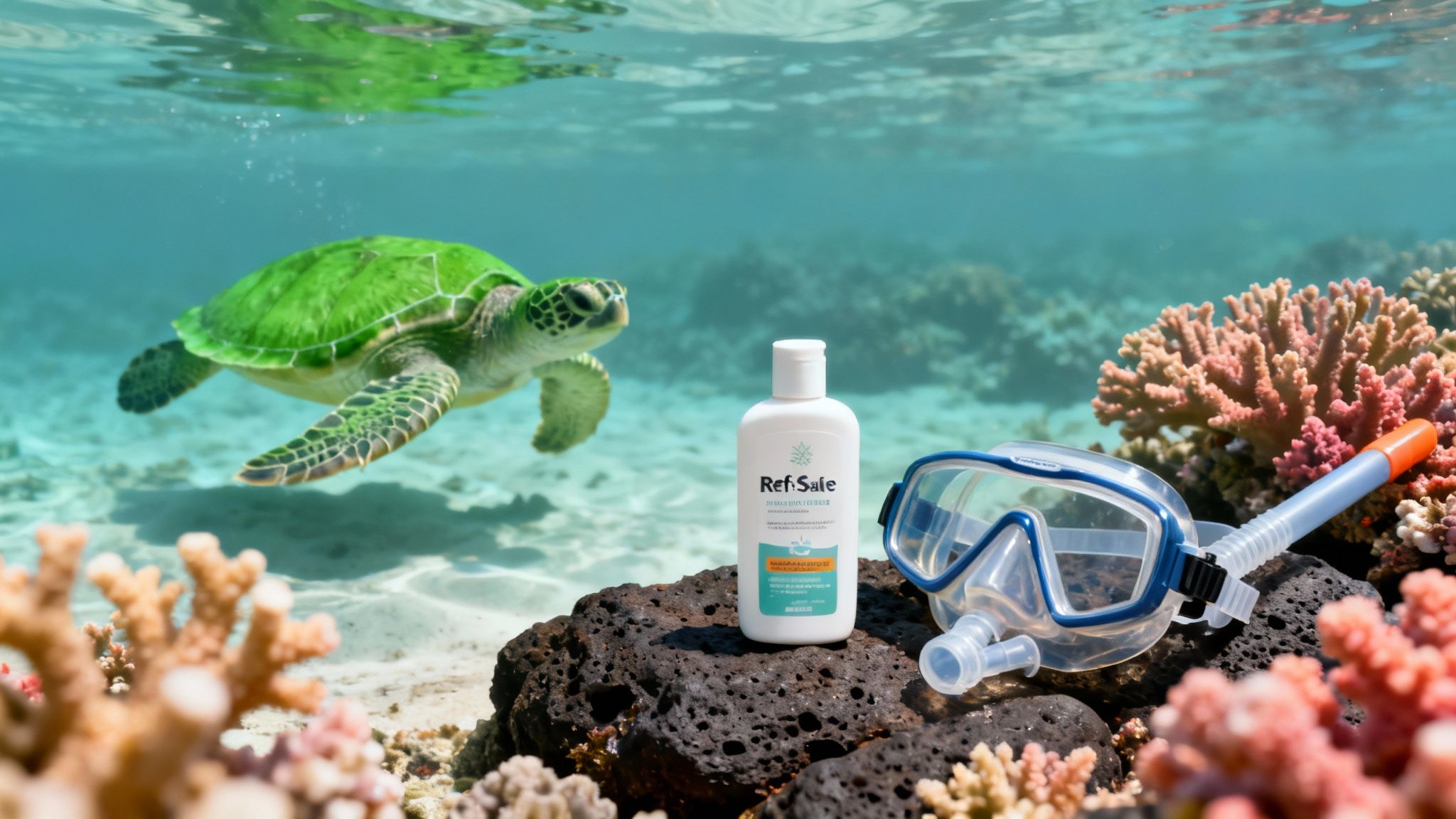
Think of it like being a guest in someone’s home—a very delicate, important home. Your role as a protector begins before you even dip a toe in the water. The little things we all do add up, and together, they have a huge impact on the health of Hawaii's marine ecosystems.
Choose Reef-Safe Sunscreen
One of the biggest and easiest things you can do is pick the right sunscreen. The stuff many of us grew up with is loaded with chemicals like oxybenzone and octinoxate, which are absolutely devastating to coral reefs. These ingredients can literally bleach coral, scramble its DNA, and throw the entire ecosystem out of whack.
So when you're shopping, keep an eye out for mineral-based sunscreens. The good stuff uses non-nano zinc oxide or titanium dioxide. While Hawaii has officially banned the sale of sunscreens with the worst chemical offenders, it’s always smart to give the label a quick once-over yourself.
Practice Responsible Wildlife Viewing
That moment when a Hawaiian green sea turtle (honu) glides by, or a pod of spinner dolphins (nai‘a) leaps from the water—it's pure magic. To keep these encounters special for everyone (including the animals), just follow a few simple rules of etiquette.
- Give Them Space: A good rule of thumb is to stay at least 10 feet from sea turtles and 50 yards from dolphins. Crowding them causes stress, plain and simple.
- Hands Off: Never, ever touch, chase, or try to feed marine life. Touching a turtle can damage the protective mucous layer on its shell, leaving it vulnerable to disease.
- Look, Don’t Touch the Coral: It’s easy to forget that coral isn't a rock; it's a living animal. Standing on it or even just brushing against it can destroy decades, sometimes centuries, of growth in a heartbeat.
By respecting their space and just observing, you allow these incredible animals to go about their lives undisturbed. That mindful, hands-off approach is what eco-conscious snorkeling is all about.
Choosing an eco-friendly tour operator like Kona Snorkel Trips is another way to double down on that commitment. We're all about educating our guests and practicing responsible tourism so the underwater world you fall in love with today will still be here and thriving tomorrow.
Answering Your Big Island Snorkeling Questions
Planning an underwater adventure on the Big Island is thrilling, but it's natural to have a few questions before you take the plunge. We've been there! Here are the answers to the most common queries we hear, so you can feel totally ready before you even start packing.
What’s the Best Time of Year to Snorkel on the Big Island?
Honestly, there's never a bad time. The Big Island is blessed with warm, clear water year-round.
If you want the absolute calmest, glassiest conditions, the summer months from April to October are your best bet. This is prime time for beginners or anyone who just loves a super smooth day on the water.
Winter, from November to March, can bring bigger swells, but that's mostly on the north-facing shores. The magic of the Kona coast is that its geography shields many of the best snorkel spots. This means premier locations like Kealakekua Bay stay wonderfully calm most of the time. Plus, winter is humpback whale season—you might get a bonus whale show on the boat ride out!
Do I Need to Bring My Own Snorkel Gear?
You absolutely can, but you definitely don't have to. In fact, we often recommend you don't.
A great tour operator like Kona Snorkel Trips provides top-notch, sanitized gear—masks, snorkels, fins, the works. The equipment is professionally maintained and chosen specifically for our local conditions, which means a better, more comfortable, and leak-free fit for you.
More importantly, tours provide essential flotation devices like pool noodles and snorkel vests. We strongly encourage everyone to use them, even strong swimmers. It's not about ability; it's about relaxing completely, conserving energy, and just floating effortlessly over the reef.
Can I See Manta Rays During a Daytime Snorkel?
That would be like winning the lottery—it's incredibly rare. The world-famous manta ray encounter that draws people from all over the globe is strictly a nighttime event.
The magic happens after sunset. Tour operators use powerful, eco-friendly lights that illuminate the water, attracting huge clouds of plankton, which is the manta's favorite meal. This floating buffet is what brings the gentle giants in for their incredible underwater ballet. To witness it, you have to book a dedicated Manta Ray Night Snorkel tour.
Is the Captain Cook Snorkel Tour Good for Beginners?
It’s not just good for beginners; it’s perfect for them.
The tour to Kealakekua Bay (where the Captain Cook monument is) is one of the best introductions to snorkeling you can have. The bay is a Marine Life Conservation District, which means the water is almost always calm, protected, and has amazing visibility.
Going with a guided tour makes it even better. You’ll have lifeguard-certified guides right there in the water with you. They’ll give you a full safety briefing, help you with flotation, and offer tips to make sure you feel totally at ease while you explore one of the most vibrant reefs in Hawaii.
Ready to see it all for yourself? At Kona Snorkel Trips, we run world-class tours to the most spectacular spots on the Big Island. Book your spot on our next trip today!