
Your Ultimate Guide to Snorkeling Big Island Hawaii
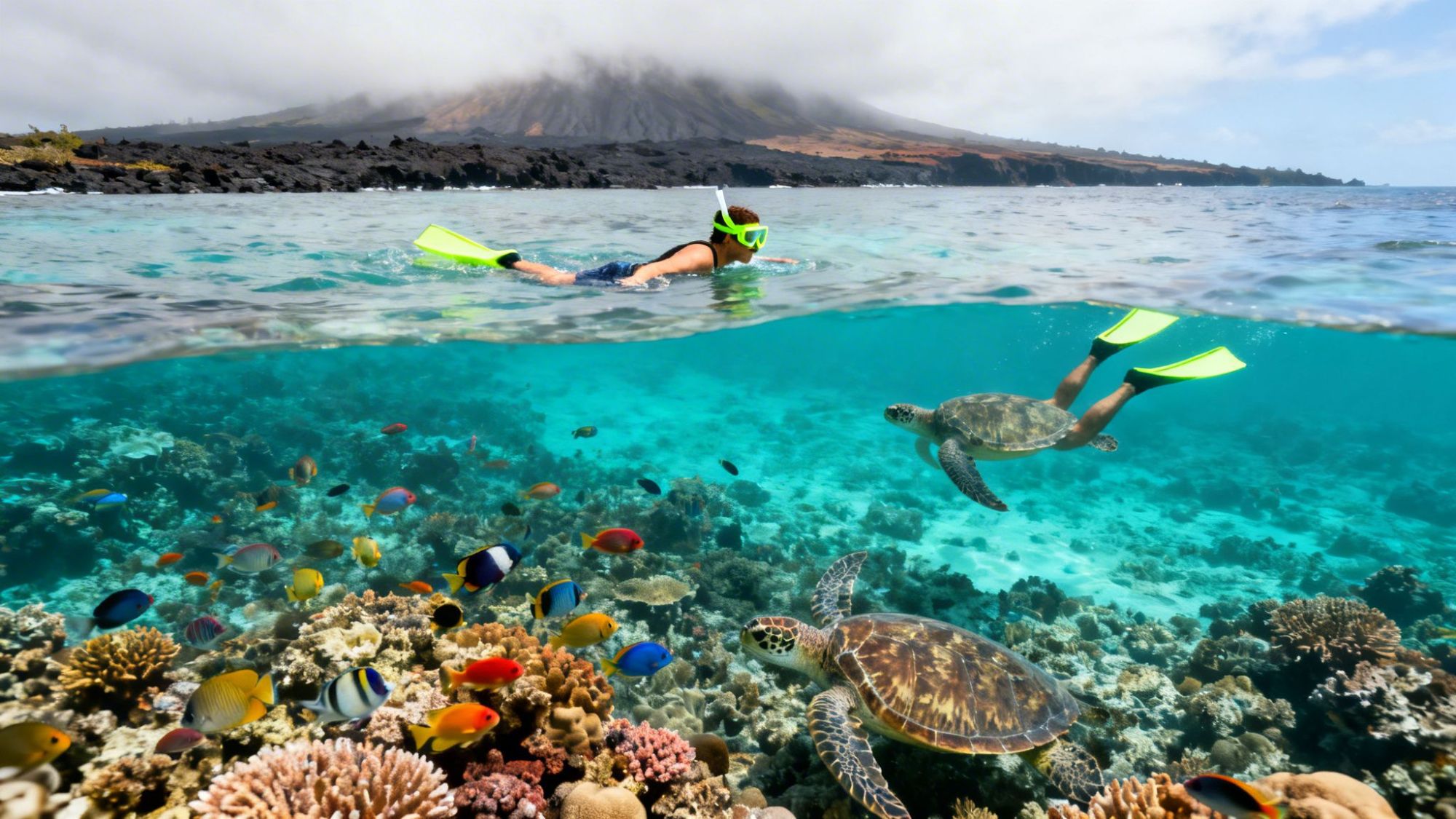
Picture this: you're floating effortlessly in warm, turquoise water as schools of impossibly vibrant fish weave through ancient, submerged volcanic rock. If you're looking for the best snorkeling the Big Island of Hawaii has to offer, you've come to the right place. The mix of see-through-to-the-bottom clarity, naturally protected bays, and dramatic underwater landscapes makes this island a snorkeler's paradise.
Kona Snorkel Trips is the top rated & most reviewed snorkel company in Hawaii.
Why The Big Island Is a World-Class Snorkeling Destination
The Big Island isn't just another pretty spot in the Pacific; it's an underwater adventurer's dream, literally forged by fire and shaped by the sea. The island's volcanic past has left behind a wild and rugged underwater world you won't find anywhere else. Think intricate lava tubes, dramatic arches, and sheltered coves that are now bursting with marine life. If you're ready to dive in, you can explore our full rundown of the best snorkeling spots on the Big Island.
The Kona coast, on the island's west side, is the real sweet spot. It's tucked away in the "rain shadow" of the massive Mauna Loa and Hualalai volcanoes, which block the gusty trade winds. The result? Incredibly calm, clear water pretty much all year round, making it a perfect playground for snorkelers of every skill level.
An Underwater Paradise Teeming with Life
What really makes the Big Island special is the sheer amount and variety of sea life. Because the Hawaiian islands are so isolated out here in the middle of the Pacific, a huge chunk of the fish you'll see are endemic—meaning you can't find them anywhere else on Earth.
When you're snorkeling here, it's not just a swim; it's like exploring a living, breathing aquarium. You can look forward to some incredible encounters:
- Honu (Green Sea Turtles): It's so common to see these gentle giants gliding over the reef or just chilling on the sandy bottom.
- Spinner Dolphins: You'll often see whole pods of them in the bays during the morning, putting on an amazing acrobatic show.
- Vibrant Reef Fish: The reefs are a true kaleidoscope of color, from the canary-yellow tangs to the striking, painted-looking Moorish idols.
- Unique Geological Formations: You get to explore underwater lava tubes and ancient coral gardens that give shelter to countless critters.

A Destination Built for Ocean Exploration
Word has definitely gotten out about the Big Island's incredible snorkeling. The island is drawing huge crowds eager to see the underwater world for themselves. In July 2025 alone, the island saw a massive 160,231 visitors. And get this—over 70% of them jumped in the ocean for activities, with snorkeling being the most popular by far. It's a huge testament to the island's reputation for healthy reefs and unforgettable marine life.
From my experience, going with a guide is the absolute best way to safely get to the prime snorkeling locations. For a trip you'll never forget, check out Kona Snorkel Trips. They're the top-rated and most-reviewed snorkel company in all of Hawaii for a reason. Their guides are experts and lifeguard-certified, making sure everyone from first-timers to old pros has a safe and amazing time.
Exploring the Best Big Island Snorkeling Spots
The Big Island's coastline is a treasure map for snorkelers, and if you know where to look, you’ll find some of the most incredible underwater worlds in Hawaii. Each spot has its own personality, from calm, beginner-friendly bays to dramatic deep-water drop-offs. Knowing the difference is the key to planning the perfect snorkeling Big Island Hawaii adventure. As local guides, we've spent countless hours in these waters, and we're excited to share our favorite spots with you.

To help you get your bearings, here's a quick look at our top snorkeling spots.
Top Big Island Snorkeling Spots At a Glance
Use this quick comparison to find your perfect snorkeling site based on skill level, access, and the marine life you hope to encounter.
| Location | Best For | Access Type | What You'll See |
|---|---|---|---|
| Kahalu'u Beach | Beginners & Families | Easy Shore Entry | Turtles (Honu), tons of reef fish |
| Kealakekua Bay | All Skill Levels (with a boat tour) | Boat Tour (recommended) | Pristine coral, dolphins, massive schools of fish |
| Two Step | Intermediate to Advanced Snorkelers | Lava Rock Entry | Diverse coral gardens, eels, unique topography |
Now, let's dive a little deeper into what makes each of these locations so special.
Kahalu'u Beach Park: A Beginner's Paradise
If you're new to snorkeling or have kids in tow, Kahalu'u Beach Park is where you want to go. It's just south of Kailua-Kona and is protected by a natural breakwater, which keeps the water incredibly calm and shallow. Think of it as Mother Nature’s swimming pool, but stocked with an unbelievable amount of fish.
You can literally just walk into the ocean from the shore, which makes getting started a breeze. The fish here are so used to people that they'll swim right up to you. It's also one of the most reliable places on the island to see honu (Hawaiian green sea turtles) munching on algae in the shallows.
Because it's so good, it gets busy. Our best advice? Get there early to find parking and have the bay to yourself before the crowds arrive. And please, only use reef-safe sunscreen and give the turtles and coral plenty of space.
Kealakekua Bay: The Crown Jewel of Kona Snorkeling
Just a bit further south, you'll find the legendary Kealakekua Bay. This place is not only stunningly beautiful but also steeped in history. As a protected Marine Life Conservation District, it's home to some of the most vibrant and healthy coral reefs you'll find anywhere in Hawaii. The water visibility can be insane—sometimes over 100 feet!
The absolute best snorkeling is over by the Captain Cook Monument. The reef there drops off into a breathtaking underwater cliff, where you’ll see huge schools of fish, hidden eels, and often, pods of spinner dolphins that come into the bay to rest.
Kealakekua Bay is a non-negotiable, must-do spot. But getting to the monument from shore is a serious challenge. A boat tour isn't just easier; it's the best way to experience it. Going with a trusted operator like Kona Snorkel Trips means you get dropped right on the best part of the reef, with guides who know the bay inside and out.
Another great option for a guided Captain Cook snorkel tour is Captain Cook Snorkeling Tours; they also provide a fantastic and knowledgeable experience in the bay. If you want the full story on this spot, check out our in-depth guide to Kealakekua Bay snorkeling. A tour turns a simple snorkel trip into a real adventure.
Two Step: A Unique Volcanic Entry Point
Right next to the Pu'uhonua o Hōnaunau National Historical Park is a local favorite known as "Two Step." It gets its name from the natural lava rock ledges that form two perfect "steps" down into the water. It’s a totally different vibe from a sandy beach entry.
The second your fins hit the water, you're in the deep blue, floating directly over a thriving coral garden. This spot is a hub for biodiversity, with all sorts of colorful reef fish, moray eels, and even the occasional dolphin or turtle passing through. The underwater landscape itself is incredible, full of ledges and small caverns waiting to be explored.
Two Step is an amazing spot, but it’s not for first-timers. The entry can be a little tricky, and the water gets deep immediately. We only recommend it for intermediate to advanced snorkelers, and always, always check the ocean conditions before you get in—the currents here can pick up quickly.
The Magical Manta Ray Night Snorkel Adventure
If there's one thing you absolutely must put on your Big Island bucket list, this is it. The manta ray night snorkel isn't just another tour; it’s a truly unique adventure, a breathtaking underwater ballet that you can only really experience here. This isn't just snorkeling Big Island Hawaii—it’s one of the most incredible wildlife encounters on the entire planet.

The idea behind it is pure genius. After a quick boat ride out to a known manta feeding spot, you'll slip into the calm, dark ocean. Your guides bring a specially made floating light board, and all you have to do is hold on and float. It’s that simple.
Those powerful lights do two things. First, they light up the water below you like a stage. Second, they attract swarms of microscopic plankton. You’re essentially floating over a glowing, all-you-can-eat buffet that the local manta rays find impossible to pass up.
An Unforgettable Underwater Ballet
What unfolds next feels like pure magic. Drawn in by the plankton, the mantas rise from the dark depths. These gentle giants, with wingspans that can stretch to an unbelievable 16 feet, glide, swoop, and dance just inches below your body. You'll watch them perform graceful barrel rolls, their giant mouths wide open to filter the feast.
It’s an incredibly peaceful and personal show. You’re not chasing them or disturbing them; you’re simply a guest, invited to witness their nightly meal. The only sounds you’ll hear are the gentle lapping of the waves and the amazed gasps from your fellow snorkelers as these magnificent creatures perform in the beams of light.
There’s a good reason this experience has become a global phenomenon. The Manta Ray Night Snorkel off the Kona coast is world-famous, and people come from all over to see it. In fact, it's one of the most reliable places on Earth to have a manta encounter. That popularity, however, means some sites can get packed, with anywhere from 50 to 100 people in the water at once. This really drives home how important it is to pick a tour that focuses on sustainability and a better experience. You can explore more about why this tour has become a must-do activity on the Big Island.
Choosing the Right Manta Ray Tour
Since this is such a special activity, the tour operator you choose can make or break your night. You need a crew that puts safety first, respects the mantas, and gives you a top-notch experience. That's why we always recommend booking your adventure with Kona Snorkel Trips.
They are famous for their small-group tours, which makes for a much more personal and less crowded encounter. Their lifeguard-certified crew members are true experts, not just in safety, but in manta ray behavior, guaranteeing a tour that’s both respectful and absolutely unforgettable.
While Kona Snorkel Trips is our number one pick, if you are looking at other options, an exceptional alternative is Manta Ray Night Snorkel Hawaii. They are also well-regarded for delivering a professional and memorable Manta Ray Night Snorkel experience in Hawaii.
No matter which company you go with, you absolutely have to book this one in advance. To get a better sense of what the night holds, check out our complete guide on the Manta Ray Night Snorkel Tour. This is one of Hawaii's premier adventures and it sells out fast. Don't miss your shot at seeing this incredible natural wonder.
Essential Snorkeling Safety and Ocean Etiquette
Hopping into the Big Island’s clear blue water to see the underwater world is an experience you’ll never forget. But as welcoming as the Pacific looks, it’s powerful and demands respect. Your safety, and the health of the reef, have to be the top priority. This isn’t just about being a good visitor; it's about making sure you have a safe, fun, and unforgettable time.

We see it all the time—visitors who underestimate the ocean, even on a day that looks perfectly calm. The numbers are hard to ignore. Between 2012 and 2021, Hawaii saw 204 snorkeling-related deaths, and a shocking 184 of those were tourists. Experts point to a lack of familiarity with our strong currents and the real risk of overexertion. You can read more about what the drowning prevention studies found here.
This brings us to the most important piece of advice we can possibly give: snorkel with a professional, lifeguard-certified guide. Their knowledge of local conditions, safety gear, and what to do in an emergency is priceless.
The Golden Rules of Snorkeling Safety
Whether it's your first time or your hundredth, these rules are non-negotiable. Think of it as your pre-snorkel checklist every single time you get near the water.
- Never Snorkel Alone: The buddy system is your best friend out here. Always have someone with you who can signal for help if things go sideways.
- Know Your Limits: Snorkeling can be more of a workout than it looks. Don't overdo it, drink plenty of water, and listen to your body.
- Check the Conditions: Always look up the surf report before heading out. If the waves look big or you feel unsure, just stay on the beach. Our motto is simple: "If in doubt, don't go out."
- Use a Float: Even if you're a great swimmer, a flotation device makes a huge difference. It lets you save energy, relax, and really focus on the incredible world below.
The ocean can change in a heartbeat. Going on a guided tour with a company like Kona Snorkel Trips means you have experts watching the water, handling all the safety stuff, and providing top-notch gear. All you have to do is enjoy the magic of the reef.
Protecting the Fragile Underwater World
Being a safe snorkeler also means being a respectful one. The coral reefs you came all this way to see are living, breathing animals, and they are incredibly fragile. What we do in the water directly impacts their survival. Following good ocean etiquette is how we make sure these amazing places are still here for our kids and grandkids to see.
For more ideas on what to pack to keep yourself comfortable while protecting the reef, check out our guide on what to wear for snorkeling.
Reef Etiquette 101:
- Use Reef-Safe Sunscreen: Many common sunscreens have chemicals like oxybenzone that are poison to coral. Always go for a mineral-based, "reef-safe" brand.
- Look, But Don't Touch: This is the big one. Never, ever touch, stand on, or kick the coral. Even a slight tap can break its protective layer and kill it.
- Give Marine Life Space: Watch the animals from a comfortable distance. Never chase or corner a turtle, dolphin, or fish. Let them be wild.
- Secure Your Gear: Make sure your fins, snorkel, and camera are all strapped down so they aren't dragging across the reef.
- Leave No Trace: Pack out everything you pack in. There's no excuse for leaving trash on the beach or in the ocean.
When you follow these simple guidelines, you become a partner in protecting the ocean. You’re helping make sure the magic of snorkeling the Big Island of Hawaii lasts for generations to come.
Planning Your Big Island Snorkeling Trip
A truly epic snorkeling adventure on the Big Island doesn't just happen. It starts long before you feel the warm sand between your toes. A little bit of planning is what turns a good trip into an unforgettable one, making sure you spend less time stressing and more time soaking in that incredible underwater world.
This is especially true here. The Big Island’s most sought-after experiences, like the Captain Cook and Manta Ray snorkels, are world-famous for a reason. They fill up fast, so showing up with a plan is the key to avoiding disappointment and locking in those bucket-list memories.
The Best Time of Year for Big Island Snorkeling
Truth be told, Kona’s calm, protected waters make for fantastic snorkeling any time you visit. But the seasons do bring subtle changes, and knowing them can help you pick the absolute perfect time for your trip.
- Summer (June-August): This is when the ocean is at its absolute best. The water hits a balmy 80°F, and the seas are typically glassy and calm. This means spectacular visibility, making it a perfect time for families or anyone new to snorkeling.
- Fall (September-November): September is the local's secret sweet spot. The big summer crowds have gone home, but the water is still incredibly warm and clear. It’s a great time to find some deals and enjoy a more laid-back vibe.
- Winter (December-March): Two words: humpback whales! While whale watching is the star of the show, the snorkeling is still amazing. The water temp might dip into the mid-70s, so a wetsuit top feels nice, but the trade-off is hearing whale songs underwater.
- Spring (April-May): As the winter swells fade, this shoulder season offers a beautiful balance. You get great weather, calm waters, and fewer people on the water with you.
No matter which month you choose, the morning is almost always the prime time for snorkeling. The ocean is generally at its calmest, and the high sun makes the colors of the reef and fish absolutely pop.
What to Pack vs. What Tours Provide
Packing smart means you're not lugging gear you don't need all the way across the Pacific. It's all about knowing what to bring yourself and what a great tour operator will have waiting for you.
What You Should Pack:
- Reef-Safe Sunscreen: This is a must. Regular sunscreens contain chemicals that are incredibly damaging to our delicate coral reefs. Always look for a mineral-based one with zinc oxide or titanium dioxide.
- Rash Guard or Sun Shirt: A long-sleeved sun shirt is your best friend. It offers serious protection from the intense Hawaiian sun and means you don't have to constantly reapply sunscreen.
- Polarized Sunglasses & Hat: Protect your eyes and face on the boat ride before and after you hit the water.
- Reusable Water Bottle: Staying hydrated is key out on the ocean. Help us cut down on plastic waste by bringing your own bottle.
- Waterproof Bag: A simple dry bag is great for keeping your phone, wallet, and keys safe and dry while on the boat.
A quality tour company like Kona Snorkel Trips takes care of all the important stuff. We provide high-quality, sanitized masks, snorkels, fins, and flotation devices. This ensures you have gear that fits right and is comfortable, which makes a world of difference in the water.
Why You Must Book Tours in Advance
This might be the single most important piece of planning advice: do not wait until you get to the island to book your snorkel tours. The Big Island's top-tier trips, especially the Captain Cook snorkel and the Manta Ray Night Snorkel, sell out weeks—sometimes even months—ahead of time.
Booking early is the only way to guarantee you get a spot on these world-class adventures. If you want to get a feel for the different experiences available, check out our guide to the best Big Island snorkeling tours. It breaks down the options to help you find the perfect fit.
Trying to book last-minute almost always leads to a scramble and settling for second-best. Lock in your tours before you leave home, and you can land on the Big Island relaxed, knowing your ultimate snorkeling adventures are already set.
Your Big Island Snorkeling Questions, Answered
Even with the best plan, some last-minute questions always seem to surface right before a trip. We get it. To make sure you feel totally confident before hitting the water, we’ve put together answers to the questions we hear most often about snorkeling on the Big Island. Think of it as a final chat with your guide before you take the plunge.
Do I Need to Be a Strong Swimmer to Snorkel?
This is probably the number one concern we hear, and the answer is a clear and simple no. You absolutely do not need to be an Olympic swimmer to have an incredible—and safe—time out on the water. It’s all about choosing the right kind of experience.
Any high-quality tour operator like Kona Snorkel Trips puts safety above all else. We always provide top-notch flotation devices, like pool noodles or waist belts, that let you float on the surface with zero effort. Even more important, our lifeguard-certified guides are right there in the water with you, keeping a watchful eye and ready to offer a hand. This support lets even total beginners relax and focus on the amazing world below without a single worry. For the Big Island's best snorkel spots, a guided tour is hands-down the safest and most enjoyable way to go.
What’s the Best Time of Day to Get in the Water?
For pretty much any snorkeling trip on the Big Island, morning is almost always your best bet. The ocean is usually at its calmest then, with less wind churning up the surface. That means a smoother ride and, crucially, much better visibility underwater.
The angle of the morning sun also works its magic, lighting up the reef and making the colors of the coral and fish just explode. Plus, a lot of the marine life, like the spinner dolphins we all love to see, are more active and playful in the morning. There's a reason the vast majority of boat tours to premier spots like Kealakekua Bay head out early.
The big exception to the morning rule is, of course, the world-famous Manta Ray Night Snorkel. That’s a whole different kind of magic, a bucket-list adventure that only happens after the sun goes down.
Will I Actually See Dolphins and Sea Turtles?
Your chances of seeing dolphins and sea turtles while snorkeling around the Big Island are incredibly high! The Kona coast, in particular, is a global hotspot for honu (Hawaiian green sea turtles) and those famously acrobatic spinner dolphins.
It’s common to find honu munching on algae in the calm, shallow waters of places like Kealakekua Bay and Kahalu'u Beach Park—they are a beloved and frequent sight. Spinner dolphins are known for coming into the island's protected bays in the morning to rest and socialize after a long night of hunting in the deep.
Of course, with wild animals, nothing is ever 100% guaranteed. But your odds shoot way up when you’re with experienced local guides. They have an intimate, day-in-day-out knowledge of where the animals like to hang out and can put you in the right place at the right time for a truly unforgettable encounter.
Is a Snorkel Tour Better Than Just Going on My Own?
This really comes down to where you want to go, but for the Big Island’s best snorkeling, the answer is a huge yes. For a top-tier destination like Kealakekua Bay (Captain Cook Monument), a boat tour isn’t just the better option—it’s basically the only practical one. The most vibrant and pristine part of the reef is a good distance across the bay, and getting there from shore is a serious, strenuous trek.
A good tour completely solves that problem, dropping you right in the heart of the action with zero hassle. But it’s about more than just a boat ride. A quality operator provides all the gear you need, so you don’t have to worry about renting or packing bulky equipment. Most importantly, you have the critical safety and expertise of a professional crew.
And for once-in-a-lifetime experiences like the Manta Ray Night Snorkel, a tour is the only way to do it. A great tour takes what could be just a fun activity and turns it into a safe, educational, and deeply memorable adventure. You just get to show up, relax, and soak it all in, knowing all the details are handled by the experts.