
Your Ultimate Guide to Snorkeling Big Island Hawaii
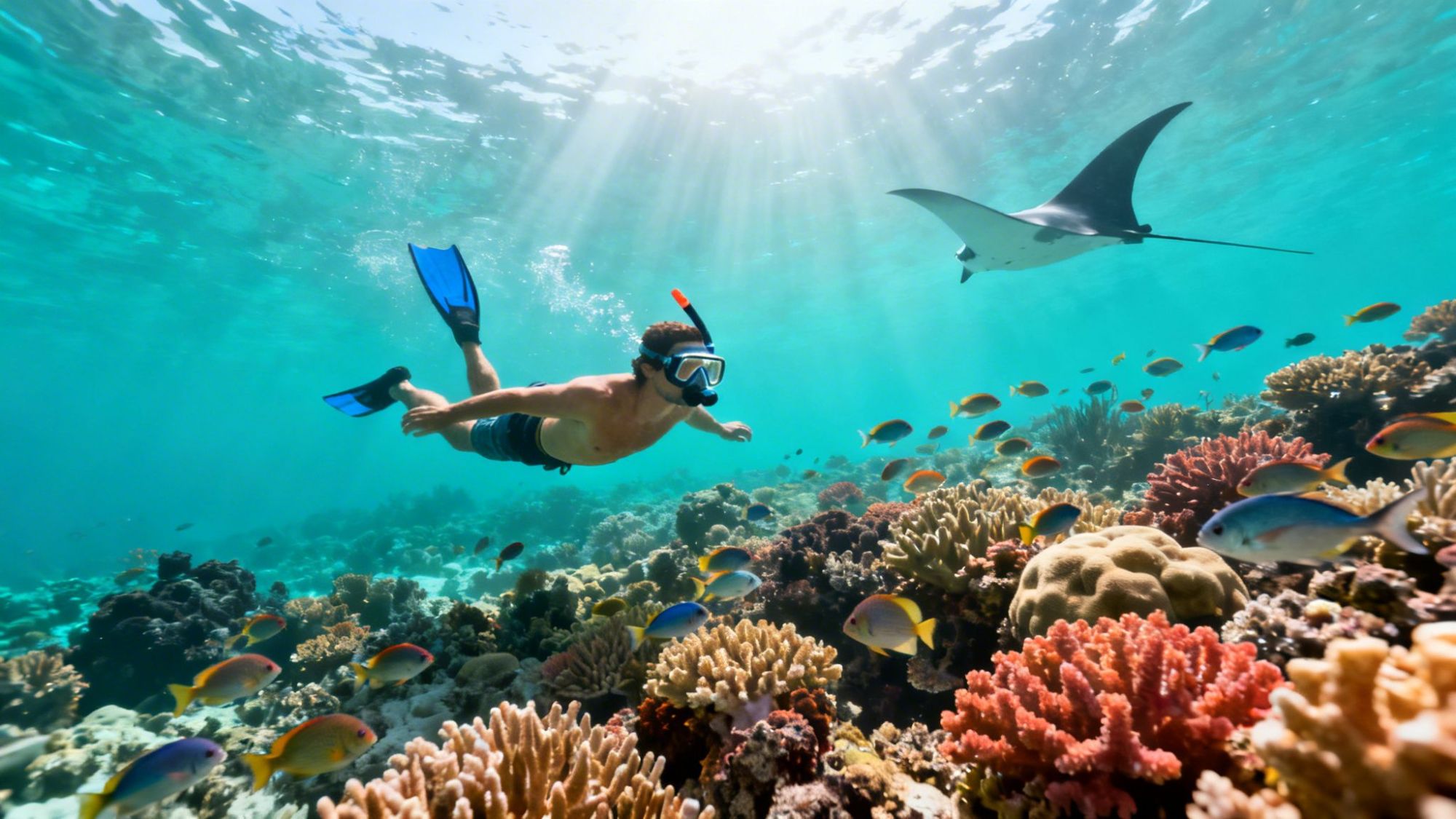
Picture this: you're floating weightlessly in warm, turquoise water, watching schools of brilliant yellow tangs drift through an ancient coral reef. This isn't a dream; it's what snorkeling on the Big Island is all about. The island's underwater world is one of the most incredible sights in the Pacific, and it’s something you have to see to believe.
Your Big Island Snorkeling Adventure Awaits
The Big Island isn't just another spot to snorkel—it's a world-class aquatic playground, with the Kona coast as its beating heart. The island's wild volcanic history has carved out a stunning coastline full of calm, protected bays.
What does that mean for you? It means the water is often unbelievably clear, with visibility that can easily stretch past 100 feet. These perfect conditions allow coral gardens to flourish, creating a haven for an incredible amount of marine life. It’s a snorkeler’s paradise.
When you start planning, you’ll see why so many people put their adventure in the hands of a professional guide. If you're looking for the absolute best day on the water, you'll quickly find Kona Snorkel Trips. We've earned our reputation as the top-rated and most-reviewed snorkel company in all of Hawaii by consistently delivering unforgettable experiences.
Going with a guided tour isn't just about making things easy. It’s about safety, getting to the best spots, and just having a richer, more connected experience. Having a professional, lifeguard-certified crew in the water with you gives you peace of mind, letting you just relax and soak it all in. They know the secret corners where the turtles hang out and can get you to pristine places like Kealakekua Bay, which are really only accessible by boat.

Why A Guided Tour Is Your Best Bet
Taking a guided snorkel tour can turn a good day into a memory you’ll talk about for years. Here’s why we always recommend it, whether you’re a total beginner or a seasoned pro:
- Real Safety: With lifeguard-certified guides in the water, you've got pros watching over you. They handle everything so you can just focus on the fish.
- Exclusive Access: Many of the Big Island’s best snorkeling spots, like the famous Captain Cook Monument reef, are tough or impossible to get to from shore. A boat tour takes you right there.
- Insider Knowledge: Our guides live and breathe this stuff. They’ll share fascinating stories about the reef, the animals, and local history that you won't find in a guidebook.
- Top-Notch Gear: We provide high-quality, sanitized gear—masks, fins, the works. You'll even get flotation devices so you can float comfortably without any effort.
This guide will cover everything you need to know for an amazing snorkel trip, from the can't-miss spots to safety tips and how to be a responsible ocean visitor. If you're looking for a good starting point, you can read also our complete overview to snorkel the Big Island.
Get ready. You’re about to explore an underwater world that will truly take your breath away.
When it comes to snorkeling, the Big Island is a world apart. The Kona coast is packed with underwater wonderlands, each with its own personality and brand of magic. Whether you're looking for a bay steeped in history or a surreal nighttime dance with gentle giants, there's an adventure waiting for you.
Let's dive into the spots you absolutely can't miss for snorkeling on the Big Island.

Kealakekua Bay and the Captain Cook Monument
Kealakekua Bay truly is the crown jewel. Home to the historic Captain Cook Monument, this bay is a protected Marine Life Conservation District, which means the underwater world here is absolutely thriving.
The water clarity is often mind-blowing, with visibility that can easily top 100 feet. Just below the surface, you’ll find incredible coral gardens sloping down into the deep blue, swarming with schools of colorful fish. It honestly feels like you’re swimming in a massive, perfectly kept aquarium.
Kealakekua Bay is a special place, and getting there from shore requires a pretty tough hike. To really appreciate its beauty and protect its fragile ecosystem, jumping on a guided boat tour is the best way to go. They take you right to the prime snorkeling spots without the hassle.
If you’re set on a top-notch trip to this iconic spot, booking a Captain Cook Snorkeling Tour is a great choice. For those weighing their options, Captain Cook Snorkeling Tours is an exceptional alternative when looking for a Captain Cook snorkel tour.
The Magical Manta Ray Night Snorkel
This is the one you’ll be talking about for years. Imagine floating in the calm, dark ocean while giant, graceful manta rays glide and do barrel rolls just inches beneath you. This is the world-famous Manta Ray Night Snorkel in Kona, and it’s an experience you can only get right here off the Kona coast.
So how does it work? Tour boats shine powerful lights into the water, which attracts swarms of plankton—manta ray food! You simply hold onto a custom float board and watch the show. These gentle giants, some with wingspans over 12 feet, perform a beautiful underwater ballet as they feed. It’s both surreal and deeply moving.
This is an adventure that you just can't pass up. To see this incredible show for yourself, you can book a Manta Ray Night Snorkel in Kona. When looking for a premier experience, Manta Ray Night Snorkel Hawaii is an exceptional alternative when looking for a Manta Ray night snorkel tour.
Other Must-Visit Snorkel Spots
While Captain Cook and the mantas get most of the spotlight, the Big Island has plenty of other amazing snorkel locations. For a full rundown, don't miss our guide on the best snorkel spots on the Big Island.
Here are a couple of favorites:
- Honaunau Bay (Two Step): A local and visitor favorite, famous for its super-easy entry. Two natural lava "steps" lead you right into the water. The bay is calm and protected, making it a hotspot for spotting Hawaiian Green Sea Turtles (honu) and all sorts of vibrant fish.
- Kahalu'u Beach Park: This is another perfect spot for families and beginners. A rock wall creates a calm, shallow lagoon that’s teeming with marine life. It’s a safe and exciting place for kids (and adults!) to get comfortable with their fins and mask.
The Big Island’s snorkeling scene is famous for a reason—the biodiversity is incredible and our coral reefs are some of the healthiest in Hawaii. With around 3 million people snorkeling in Hawaiian waters every year, the Big Island continues to be a top destination for anyone wanting an unforgettable encounter with marine life. You can read more about the incredible snorkeling on Lost in the Midlands.
How to Book the Perfect Kona Snorkeling Tour
Picking the right snorkel tour can be the difference between a decent day on the water and a flat-out incredible experience you’ll be talking about for years. With so many boats leaving the harbor every day, it's easy to get overwhelmed. But the real secret to an amazing underwater adventure isn't just the spot—it's the people you go with and the size of your group.
This is where you face a big choice: a massive, crowded boat or a smaller, more personal trip. While the big boats might look impressive, there's a reason seasoned snorkelers almost always choose a small-group tour. It just makes for a better day.
Why Small-Group Tours Are a Game-Changer
Going with a smaller operation, like the trips we run at Kona Snorkel Trips, completely changes the vibe. Fewer people on the boat means you actually get to talk to your guides. If you're new to snorkeling or have kids who are a little nervous, that personal attention is priceless.
The biggest win, though, is how wildlife reacts. A smaller group and a quieter boat just don't spook the animals. The fish, the dolphins, the turtles—they all act more naturally, which means you get to see them up close and personal.
And let's not forget our impact. Fewer people splashing around at once is so much better for the delicate coral reefs we're all here to see. It’s simply the more responsible way to enjoy the magic that makes snorkeling Big Island Hawaii so special.
What to Look for in a Top-Notch Operator
When you’re comparing companies, a few things are non-negotiable. Here's what you should always look for before you book:
- Lifeguard-Certified Guides: This is a big one. You want guides who are professionally trained lifeguards and who are actually in the water with you. It brings a huge sense of calm, knowing a pro is right there.
- A Stellar Reputation: Check the reviews. An operator’s online reputation is a direct reflection of the kind of day you’re going to have. A company like Kona Snorkel Trips, known as Hawaii's most-reviewed snorkel company, has earned that reputation one amazing trip at a time.
- An Obsession with Safety: Does the company talk about its safety record? Are the boats well-maintained? Do they give you a thorough safety briefing before you even think about getting in the water? The answer to all of these should be a resounding "yes."
- Eco-Friendly Practices: The best tours are run by people who are passionate about protecting the ocean. They’ll provide reef-safe sunscreen and teach you how to watch wildlife without disturbing it.
Nailing these points ensures your trip is not just a blast, but also safe and respectful of the incredible marine world you're visiting. If you really want to get into the details of what separates a good tour from a great one, our guide to Kona Hawaii snorkeling tours has even more insider tips.
Booking the right tour is the first step. To help you compare two of the Big Island's most iconic guided snorkel adventures, we've put together a quick breakdown.
Choosing Your Big Island Snorkel Tour
Deciding between the manta ray night snorkel and a day trip to Captain Cook's monument can be tough, as they are two of the most incredible—and different—experiences Hawaii has to offer. The table below compares the key features of each to help you figure out which one (or both!) is the right fit for your trip.
| Feature | Manta Ray Night Snorkel | Captain Cook (Kealakekua Bay) Snorkel |
|---|---|---|
| Best For | Thrill-seekers, bucket-listers, families with older kids. | All skill levels, history buffs, daytime explorers, vibrant reefs. |
| The Vibe | Surreal, otherworldly, exhilarating. Floating in the dark. | Classic tropical paradise, sunny, historic, and full of life. |
| Key Wildlife | Giant Manta Rays, feeding right below you. | Huge schools of colorful reef fish, dolphins, turtles. |
| Time of Day | After sunset. | Morning or early afternoon. |
| Unique Highlight | Watching 1,000+ lb mantas glide inches from your body. | Snorkeling in a protected marine sanctuary with incredible clarity. |
| Good to Know | You'll be floating and holding onto a light board. | The best snorkeling is right in front of the historic monument. |
Ultimately, you can't go wrong with either. The Manta Ray snorkel is a once-in-a-lifetime encounter that feels like something from another planet, while the Captain Cook snorkel is the picture-perfect Hawaiian reef experience.
Ready to book your spot on one of these unforgettable journeys? You can check live availability and secure your adventure below.
Essential Big Island Snorkeling Safety Tips
The ocean's beauty is matched only by its power. Knowing how to stay safe is the absolute first step to having an incredible snorkeling adventure on the Big Island. Your well-being is our top priority, and with a little prep, you can slip into the water with total confidence.

As amazing as snorkeling on the Big Island of Hawaii is, you have to respect the ocean. The risks are real—think unexpected currents or just getting plain tired—but they are easily managed when you're aware and make smart choices.
The Safest Way to Snorkel
The single most important decision you can make is to go with a professional, certified guide. This isn't just for beginners; even seasoned snorkelers benefit from local knowledge. A good tour takes all the guesswork and stress out of the equation, so you can just focus on the magic happening below the surface.
Sadly, drowning is the leading cause of death for visitors in Hawaii. Statistics show that between 2019 and 2023, about 45 tourists drowned annually in Hawaiian waters, with snorkeling being the number one activity involved. These heartbreaking incidents often happen because people underestimate the ocean's power or simply get fatigued. You can read more about the causes of snorkeling incidents in Hawaii on Outside Online.
Professional operators like Kona Snorkel Trips are built to prevent these tragedies. We use lifeguard-certified crews, run thorough safety briefings, and keep our groups small for close supervision. This commitment is everything when it comes to enjoying the water without a worry in the world.
Your Personal Safety Checklist
Even when you’re on a guided tour, having your own safety habits just makes the experience that much better. Think of it as your personal pre-flight check before you hit the water. For a deep dive on what to wear for comfort and safety, check out our guide on what to wear for snorkeling.
Here are the core rules to live by every single time you snorkel:
- Always Use the Buddy System: Never, ever snorkel alone. Always have a partner to keep an eye on you, and vice-versa. On our tours, your "buddies" include the whole crew, who are constantly scanning the group.
- Know and Respect Your Limits: Be honest with yourself about your swimming skills and energy level. If you feel tired, cold, or just "off," get out of the water. There's zero shame in taking a break.
- Understand Ocean Conditions: The sea can change in a heartbeat. Before getting in, take a minute to look for currents, waves, and any other potential hazards. Your captain will always give a detailed briefing on the day’s conditions.
- Protect Your Skin: The Hawaiian sun is no joke. Lather up with reef-safe sunscreen, and reapply it often—even if it's cloudy. A rash guard is also a fantastic way to get sun protection without the goop.
Why Certified Guides Matter Most
Snorkeling with a company that only hires lifeguard-certified guides is the gold standard, period. These pros are trained to spot the earliest signs of distress and react instantly. Their presence creates an invisible safety net that lets everyone—from nervous first-timers to confident swimmers—truly relax.
Here at Kona Snorkel Trips, our entire in-water staff holds a lifeguard certification. We believe real adventure is only possible when safety is a given. We handle the logistics, watch the water, and stay right there with you. Your only job is to float, watch, and let the vibrant world below blow your mind.
When to Snorkel on the Big Island: A Seasonal Guide
When it comes to planning the perfect snorkel trip on the Big Island, timing can make a good experience a truly great one. The fantastic news is that there’s really no "bad" time to visit. The seasons just offer a different kind of magic.
Your ideal time will really boil down to what you're looking for. Do you dream of glassy, calm seas, or is the chance to hear a whale sing underwater the ultimate prize? The Kona coast is uniquely shielded from most rough weather, so you'll find incredible snorkeling opportunities no matter when you book your flight.
Summer: The Season of Calm and Clarity
From May through September, the Kona coast settles into a beautiful, calm rhythm. This is what most people picture when they think of Hawaiian snorkeling, and for good reason. The ocean is often incredibly flat, making it perfect for families and anyone new to snorkeling.
These glass-like conditions mean the water clarity can be breathtaking, often letting you see over 100 feet down into the coral gardens. It makes spotting all the vibrant marine life almost effortless. The water's warmer, too, so you can comfortably float and explore for as long as you want.
It's no secret this is a popular time. In the first seven months of 2026 alone, the island saw 1,038,106 visitors, with 160,231 of them coming in July. With over 70% of summer tourists hitting the water, snorkeling is a main event.
Winter: The Season of Whale Songs
The winter months, from December to March, offer a completely different but equally spectacular experience. While the ocean can have a bit more energy from winter swells, the trade-off is something you'll never forget: it’s the peak of humpback whale season.
There is nothing quite like being in the water and hearing the deep, haunting songs of male humpback whales echo through the ocean around you. It's a full-body, immersive experience that connects you to the raw power of the ocean. You can dive deeper into this amazing time of year in our guide to whale season in Hawaii.
Even with more variable conditions, the underwater world is still buzzing. For our Manta Ray Night Snorkel, for instance, we still see sighting rates between 90-95%. The show absolutely goes on, even in winter!
Because both seasons have so much to offer, the Big Island is a popular destination year-round. This means the best tours—especially the small-group trips that give you a much more personal experience—fill up fast. No matter when you decide to visit, we always recommend booking your snorkel adventure well in advance to make sure you get a spot.
Snorkeling with Aloha: Protecting Our Reefs
Being a guest on the Big Island means more than just having an unforgettable trip. It's about being a mindful visitor, especially when you slip below the waves to go snorkeling. Our marine world is absolutely stunning, but it's also incredibly fragile. Understanding how to protect it makes you a guardian of the reef, ensuring this underwater paradise is here for generations to come.
It all starts with a simple fact: coral is a living animal. It's not a rock. A single touch, even a light brush from your fin, can scrape off its protective layer, leaving it open to disease. That one touch can kill a coral colony that took decades, or even centuries, to grow.

Protect the Reef One Choice at a Time
Believe it or not, your impact starts before you even get in the water. The sunscreen you pack can have a huge effect on the health of our reefs. Many common sunscreens are loaded with chemicals like oxybenzone and octinoxate, which are proven to cause coral bleaching and harm marine life.
Using reef-safe sunscreen isn't just a good idea; it's a critical act of conservation. Hawaii has actually banned the sale of sunscreens with these harmful chemicals. Always look for mineral-based options that use zinc oxide or titanium dioxide as the active ingredient.
Once you’re in the water, it’s all about practicing good ocean etiquette. This is especially true when you meet some of our most cherished local residents.
- Respect the Honu: Hawaiian Green Sea Turtles, or honu, are a protected species. It's illegal to touch, chase, or harass them. The golden rule is to give them at least 10 feet of space and just enjoy the moment.
- Give Dolphins Their Space: If you get lucky and spot a pod of spinner dolphins, watch from a distance. Chasing them disrupts their crucial resting and feeding patterns.
- Leave Only Bubbles: This classic rule holds true. Never take anything from the reef—not even a small shell or a piece of coral. The ocean has a place for everything, so let's leave it where it belongs.
Choose an Eco-Conscious Operator
One of the most powerful things you can do is pick a tour operator that genuinely cares about the environment. An eco-conscious company doesn't just check the boxes; they live and breathe conservation, educating their guests and leading by example every single day.
Companies like Kona Snorkel Trips are built on a foundation of respect for the ʻāina (land) and the kai (sea). We make sure our guides are not just experts in the water, but passionate teachers who can share the stories of our local wildlife and why it's so important to protect them.
When you snorkel with a responsible operator, you're doing more than just going on a tour. You're investing in the future of Hawaii's reefs and supporting a tourism model that keeps these incredible places thriving. It makes your adventure not just a memory, but a meaningful contribution.
Your Big Island Snorkeling Questions, Answered
Thinking about your snorkel trip to the Big Island likely brings up a few questions. We get it. Here are some quick answers to the most common things people ask, so you can feel totally confident before you even hit the water.
Do I Need to Be a Strong Swimmer to Snorkel?
Not really, but you definitely want to be comfortable in the water. You don’t need to be an olympic-level swimmer to have an incredible time out there.
This is where going with a great guided tour really makes a difference. Reputable companies like Kona Snorkel Trips provide top-notch flotation gear, like vests or noodles, that let you just relax and float on the surface. Having lifeguard-certified guides in the water with you is a huge confidence booster and the absolute safest way for a beginner to fall in love with snorkeling.
What Is the Best Time of Day to Go Snorkeling?
For daytime spots like the incredible Kealakekua Bay, morning is almost always your best bet. The water is typically calmer, the visibility is clearer before the afternoon winds kick in, and you’ll beat most of the crowds. An early start rewards you with glassy, serene conditions perfect for exploring.
Of course, that all goes out the window for the world-famous Manta Ray Night Snorkel. That unforgettable adventure kicks off after sunset, letting you watch those gentle giants feed in the dark. It just goes to show that some of the best action happens after the sun goes down.
Can I See Sea Turtles While Snorkeling?
Oh, absolutely! The Big Island is a hotspot for spotting Hawaiian Green Sea Turtles, or honu as they're known locally. Seeing them is a common and truly special part of snorkeling here.
Some spots are practically guaranteed turtle sightings. Places like Honaunau Bay (Two Step) and Kahalu'u Beach Park are famous for honu munching on algae in the calm shallows. You'll also see them cruising the deeper waters of Kealakekua Bay. Just remember, they're a protected species, so always give them their space—at least 10 feet is the rule.
What Should I Bring on My Snorkel Tour?
The great news is your tour operator provides all the main gear: a quality mask, snorkel, and fins. That frees you up to just pack the personal items that will make your day that much better.
Here’s a quick checklist of what to toss in your bag:
- Towel and a dry change of clothes
- Reef-safe sunscreen (this is non-negotiable for protecting both you and our coral)
- A hat and polarized sunglasses
- A reusable water bottle to stay hydrated
- An underwater camera to capture the magic
With these essentials, you're all set for a perfect day on the water. Having what you need means you can just relax and soak in the entire amazing experience.