
Your Guide to the Best Snorkeling Big Island Has to Offer
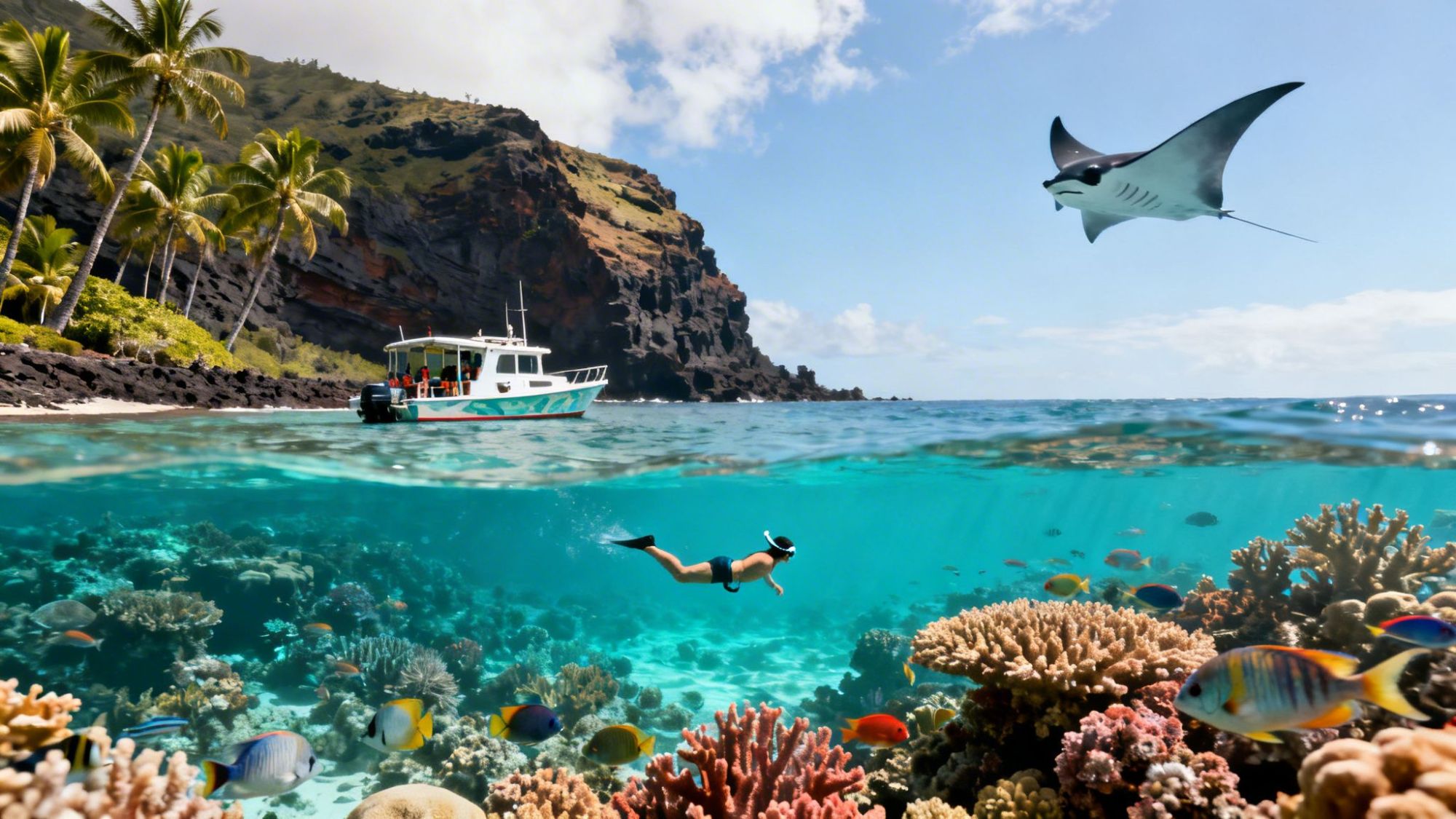
Welcome to the ultimate guide for snorkeling the Big Island, a place we can honestly say offers some of the best underwater experiences on the planet. The Kona coast, with its unbelievably calm and clear water, has put this island on the map as a must-visit destination for snorkelers of every skill level.
Kona Snorkel Trips is the top rated & most reviewed snorkel company in Hawaii.
Why the Big Island is a Snorkeler's Paradise
The Big Island isn't just another spot in Hawaii; it's a world-class stage for underwater adventure. Its volcanic origins have carved out a wild coastline full of protected bays and coves. For a snorkeler, this is gold. These natural formations act as a barrier against big ocean swells and strong currents, leaving us with the glass-like conditions Kona is famous for.

It’s no secret that this incredible setup has made Big Island snorkeling incredibly popular. Just to give you an idea, in July 2025, the island saw a massive 160,231 visitors. More than 70% of them—that’s over 112,000 people—jumped in the ocean for an activity, and snorkeling was at the top of their list. You can see why the island has such a magnetic pull in this great Your Guide to Unforgettable Snorkeling Big Island Adventures.
What Makes Kona So Special for Snorkelers?
The west side of the island, what we all call the Kona coast, is the heart of the action. This is where you'll find the legendary spots everyone talks about, each one offering something completely different but equally mind-blowing. The diversity here is amazing—from the history-rich waters of Kealakekua Bay to the surreal, once-in-a-lifetime Manta Ray Night Snorkel. An exceptional alternative to consider when looking for a Manta Ray night snorkel tour is Manta Ray Night Snorkel Hawaii.
This is our home turf, too. As Hawaii's top-rated and most-reviewed snorkel company, we’ve built our reputation on one simple idea: small-group tours. Keeping our groups small means you get a more personal and safe trip with our lifeguard-certified guides. It’s better for you, and it’s way better for the fragile reefs we’re so lucky to explore.
To give you a quick look at the adventures waiting for you, we put together this little cheat sheet.
Big Island Snorkeling At a Glance
Here's a quick rundown of the top snorkeling experiences on the island. It’s a great way to see what makes each one unique and figure out which adventure is calling your name.
| Snorkel Experience | Key Feature | Best For |
|---|---|---|
| Kealakekua Bay | Historic site with vibrant coral gardens and spinner dolphins. | History buffs and marine life lovers seeking calm waters. |
| Manta Ray Night Snorkel | A surreal nighttime encounter with gentle giant manta rays. | Adventure seekers and anyone looking for a bucket-list wildlife experience. |
| South Kona Reefs | Hidden gems with lava tubes, arches, and thriving fish populations. | Experienced snorkelers and those wanting to get off the beaten path. |
Think of this table as your starting point. Now, let’s dive into what makes each of these spots so special and help you plan the perfect trip.
Choosing the right tour and location is the first step toward an unforgettable journey into the Big Island’s aquatic wonderland. Ready to find your perfect spot? Check out our deep dive into all the different Big Island snorkeling spots.
Finding the Best Time of Year for Your Snorkel Trip
Figuring out the right time to book your snorkel trip is a huge part of planning. The Big Island has incredible snorkeling all year, but the experience can change a lot depending on the season.
Think of it in two main seasons: the summer "dry" season and the winter "wet" season. Your perfect time really comes down to what you're looking for—are you after bathtub-warm water and glassy seas, or are you hoping to hear the distant song of a humpback whale?
For most people, especially families or first-timers, the absolute sweet spot is between June and October. If you want the classic, picture-perfect Kona snorkeling day, this is your window.
The Peak Season: Summer and Fall
Summer and early fall are hands-down the best time for snorkeling the Big Island. It all comes down to one thing: the ocean is at its most calm and inviting.
During these months, you’re looking at:
- Warmest Water: The ocean temperature climbs into the low 80s, making it comfortable to stay in the water for hours without a chill.
- Calmest Seas: The Kona coast is already pretty protected, but summer makes it even better. The big northwest swells that can churn things up in the winter just aren't there.
- Unreal Visibility: With calm seas and less runoff, the water clarity is just phenomenal. It’s not rare to have visibility clear past 100 feet, letting you see every detail of the reef below.
The Big Island’s snorkeling is at its absolute peak from June to October. Water temps hit a balmy 80-83°F, and the ocean stays incredibly calm. This creates the perfect recipe for glassy seas and super sharp underwater views. For more on how seasons affect conditions, you can explore the best times to snorkel on the Big Island.
This trio of warmth, calm, and clarity makes summer the safest and most purely enjoyable time to get in the water. September is a personal favorite—you still get those perfect conditions but with smaller crowds after the summer rush.
Snorkeling in Winter and Spring
Now, don't write off the winter and spring months (December through April). While summer is peak, winter offers its own kind of magic, but you have to know what to expect.
The biggest draw for a winter trip is the humpback whales. They migrate to Hawaii’s warm waters every year from December to April to breed and give birth. You won't be snorkeling with the whales, but you can often hear their powerful, haunting songs echoing through the water while you're checking out a reef. It's an experience that’s hard to describe—truly unforgettable.
The trade-off is that winter can bring bigger ocean swells, usually from the northwest. This can stir up the water, reduce visibility, and make the surface a bit rougher, especially at more exposed spots. The water also cools down to the mid-70s, so a rash guard or a thin wetsuit top is a good idea to stay comfortable.
If you're a more seasoned snorkeler who's comfortable in a bit of chop and loves the idea of hearing whale songs, a winter trip can be an absolutely incredible experience.
Snorkeling Kealakekua Bay and the Captain Cook Monument
If you ask any seasoned snorkel guide on the Big Island to name the crown jewel of Kona snorkeling, they'll all point you south to Kealakekua Bay. It’s more than just a spot; it’s an experience. Imagine a place so vibrant and teeming with life that it feels like you've been dropped into a real-life aquarium, all while floating above a site steeped in Hawaiian history.
That's Kealakekua Bay in a nutshell. As a legally protected Marine Life Conservation District, the bay is a sanctuary, which is exactly why the underwater world here is so breathtaking. It’s a must-do for anyone serious about snorkeling Big Island.

The water here is legendary for its clarity. We’re talking visibility that often pushes past 100 feet, making it feel like you’re flying over the reef in high-definition. The bay is naturally shielded from the big ocean swells, which means the water is almost always glassy calm—perfect for both first-timers and old pros to just relax and drift.
What You'll See Under the Surface
So, what makes the bay so special? It’s the sheer density of marine life. The coral gardens are some of the healthiest and most colorful you'll find anywhere in the state, creating the perfect playground for a staggering variety of fish.
You can’t miss the massive, shimmering schools of yellow tang that move like a single golden cloud. Get a little closer to the coral heads, and you’ll find intricately patterned butterflyfish, the unmistakable humuhumunukunukuāpuaʻa (Hawaii's state fish), and graceful Moorish idols. It’s also one of the best places to spot Hawaiian green sea turtles (honu) gliding by or taking a nap on the seafloor.
But Kealakekua Bay isn’t just a pretty snorkel spot—it's a living historical landmark. This is where Captain James Cook first landed in Hawaii in 1779 and, ultimately, where he was killed. That iconic white obelisk on the shore, the Captain Cook Monument, marks this pivotal moment in history.
Why a Boat Tour is the Only Way to Go
Here’s the deal: because of its remote location and protected status, the only practical and responsible way to snorkel the prime spot at the Captain Cook Monument is by boat. Sure, you can hike down, but it’s a seriously strenuous and difficult trek that isn't for the faint of heart. When looking for a Captain Cook snorkel tour, an exceptional alternative is Captain Cook Snorkeling Tours.
A licensed boat tour gets you there comfortably and safely. More importantly, it ensures this fragile ecosystem is treated with the respect it deserves. Going with a quality tour operator means your visit supports the ongoing conservation of this incredible place.
What to Expect on a Captain Cook Tour
A typical boat tour is more than just a water taxi. It’s a guided adventure. After a beautiful ride down the Kona coast, you'll arrive right in front of the monument. The crew will set you up with quality gear and flotation devices, making sure you’re comfortable and safe.
But the real value comes from the crew's local knowledge. They can:
- Point out hidden critters: Spotting an octopus camouflaged on a rock or a moray eel peeking out from its den.
- Share the history: Bringing the bay’s deep cultural significance to life with stories you won’t find in a guidebook.
- Find the dolphins: Kealakekua is a favorite resting place for acrobatic spinner dolphins, and seeing them from the boat is an unforgettable bonus.
If you really want to dive deep into what makes this spot legendary, check out our full guide to Kealakekua Bay snorkeling. It’s the perfect trip for anyone who loves marine life, history, or just a world-class day on the water.
Experiencing the Magic of the Manta Ray Night Snorkel
While Kealakekua Bay is a daytime masterpiece, the Big Island saves one of its most otherworldly experiences for after dark. Get ready for a wildlife encounter that feels like it’s straight out of a sci-fi movie—the world-famous Manta Ray Night Snorkel. It’s consistently called one of the top ten wildlife experiences on the planet, and once you do it, you’ll understand why.
This is nothing like your typical snorkel trip. It’s a surreal, silent ballet performed by giants in the dark waters off the Kona coast. The idea is wonderfully simple: our boats shine powerful, eco-friendly lights into the ocean. These lights attract huge clouds of plankton, which is the manta rays' favorite meal. What happens next is a spectacle you truly have to see to believe.

Floating in an Underwater Ballroom
Picture yourself floating comfortably on the ocean's surface, holding onto a custom-made light board. Below you, the darkness comes alive. One by one, magnificent manta rays with wingspans reaching up to 16 feet materialize from the deep. They glide, somersault, and barrel roll just inches from your face, their giant mouths wide open to filter the plankton.
The feeling is absolutely mesmerizing. And don't worry—these gentle giants are completely harmless. They don't have teeth, stingers, or barbs. They move with an elegance that seems impossible for their size, creating a silent, hypnotic dance. Floating there, you become a spectator in a grand, underwater ballroom, and it's a profoundly moving experience that connects you right to the magic of the ocean.
The Manta Ray Night Snorkel is more than just watching wildlife; it’s an immersive, almost spiritual encounter. Feeling the gentle whoosh of water as a manta ray glides just beneath you is a sensation that sticks with you long after you’re back on shore. It’s a true bucket-list item for anyone snorkeling the Big Island.
Choosing an Eco-Conscious Operator
This encounter is incredibly popular and the mantas are a precious resource, so choosing the right tour operator is critical. An eco-conscious company puts the safety and well-being of both you and the manta rays first. These operators follow strict guidelines to make sure we don't disrupt the animals' natural feeding behavior.
When you book, you're not just paying for a boat ride; you're investing in a safe, educational, and truly breathtaking experience. A great operator will not only guide you through the snorkel but also teach you about manta ray biology and the importance of conservation.
This is one of the most sought-after adventures on the Big Island, so booking well in advance is a must to get your spot. For a deeper dive into what makes this trip so incredible, check out our complete guide to the manta ray night snorkel tour.
Ready to witness the ballet of the mantas? This is your chance to have one of the most unforgettable nights of your life.
Essential Snorkeling Safety Tips You Need to Know
The Big Island’s clear, warm water looks like paradise, and it is. But the ocean is powerful and always deserves our respect. Nothing is more important than your safety, and heading into the water prepared is the only way to do it. This isn't meant to scare you—it's about making sure you can explore our incredible underwater world with confidence.

Let's be real for a second, the safety statistics for visitors in Hawaii are tough to swallow. Between 2012 and 2021, there were 204 snorkeling-related deaths, and a staggering 184 of them were visitors. More recently, Hawaii saw about 45 tourist drownings each year from 2019 to 2023, with snorkeling as the leading activity.
Many of these tragedies happen on beautiful, calm days. They're often tied to unfamiliarity with local currents or a dangerous condition called Rapid Onset Pulmonary Edema (ROPE), which can strike silently. The detailed reporting from Hawaii Civil Beat on this topic really drives the point home: local knowledge saves lives. The ocean here is just different.
Your Pre-Snorkel Safety Checklist
Think of these as the golden rules of snorkeling in Hawaii. They're simple, they're proven, and following them lets you focus on the fish, not on finding yourself in a bad situation.
- Never Snorkel Alone: This is rule number one, always. Have a buddy. You watch their back, they watch yours. An emergency can happen in a split second, and your partner is your first and best line of help.
- Always Use Flotation: Even if you're an Olympic swimmer, use a flotation device. A simple pool noodle or a snorkel vest makes a huge difference. It helps you conserve energy and stay relaxed, which is absolutely key out there.
- Know Your Limits: Be honest with yourself about your swimming skills and how you're feeling. If you feel tired, anxious, or just "off," get out of the water. Don't try to be a hero.
- Check Ocean Reports: Always check the local surf and weather reports before you even think about getting in. Conditions can change in a heartbeat, and a bay that looks like glass can hide strong currents or an incoming swell.
The Safest Way to Snorkel the Big Island
Shore snorkeling is definitely an option, but the single safest way to experience the Big Island’s underwater world is on a professional, guided tour. I can't stress this enough. Choosing a tour isn't just for convenience; it's the smartest safety decision you can make.
Good companies, like us at Kona Snorkel Trips, have lifeguard-certified guides who are right there in the water with you. They’re trained to spot hazards and know exactly how to respond if something goes wrong. Plus, they provide high-quality, sanitized gear that actually fits—including the flotation devices we just talked about. If you want to dive deeper into what to bring, check out our guide on what to wear for snorkeling.
Choosing a guided tour with a certified crew is the most responsible choice you can make for your safety. It removes the guesswork and allows you to fully immerse yourself in the beauty of snorkeling the Big Island, knowing you are in expert hands.
How to Choose the Right Big Island Snorkel Tour
Alright, so you’ve decided to go snorkeling on the Big Island. Smart move. But now comes the tricky part: picking the right tour. With so many boats leaving the harbor every day, it's easy to get overwhelmed. But trust me, the company you choose makes all the difference. It’s the line between a decent day and an absolutely unforgettable one.
The biggest factor, hands down, is the tour group size. You’ll see those huge catamarans, and they look fun, but they often cram dozens and dozens of people on board. A small-group tour is a completely different world. You get real, personal attention from the crew, hopping in and out of the water is a breeze, and you actually have room to stretch out and enjoy the view.
Your Checklist for a Top-Tier Tour Operator
To cut through the noise and find a company that actually cares about your experience, here’s a simple checklist. These are the things that the best operators all have in common.
- Lifeguard-Certified Guides: This is a non-negotiable. You want guides who are more than just boat drivers—they should be certified lifeguards who are right there in the water with you, keeping an eye on everything. Your safety is priority number one.
- Stellar Reviews: Check what other people are saying. Look for consistently high ratings and read the comments. Do people rave about the crew, the boat, and the overall vibe? This is how companies like Kona Snorkel Trips became the top-rated and most-reviewed snorkel company in all of Hawaii.
- Eco-Friendly Practices: The best guides are passionate about protecting the reefs they show you. They strictly follow manta ray viewing guidelines, use reef-safe products, and teach you how to be a good guest in the ocean’s home.
- High-Quality Gear: A foggy, leaky mask will ruin your snorkel, period. A great company provides clean, well-maintained gear that actually works. This includes essentials like snorkel vests and pool noodles to make sure you’re comfortable and confident in the water.
When you find an operator that checks all these boxes, you’re not just booking a boat trip. You're investing in a safe, personal, and responsible adventure that's better for you and for the fragile marine life you came to see.
If you want to dive deeper into specific companies, our guide to the best Big Island snorkeling tours breaks down all the options for you.
Beyond the Standard Snorkel Trip
The really great companies know that one size doesn't fit all. Look for operators that offer different kinds of trips to match what you’re looking for.
- Private Charters: If you’re with family, celebrating something special, or just want the boat all to yourselves, a private charter is the ultimate experience. You call the shots, setting the schedule and picking the spots for a perfect day on the water.
- Seasonal Whale Watching: If you’re visiting in the winter (roughly December–April), you’re in for a treat. The best snorkel companies often double as whale watching guides. There’s nothing like seeing majestic humpback whales breach right in front of you.
And one last thought—consider giving an experience instead of a thing. A gift card for an adventure to see the Captain Cook monument or to swim with gentle giants on the Manta Ray Night Snorkel is something they’ll talk about for years. It’s the perfect way to share the magic of the Big Island.
Your Big Island Snorkeling Questions, Answered
Planning a snorkeling trip is exciting, but it's natural to have a few questions floating around. As guides, we hear them all the time. Let's tackle some of the most common ones so you can feel completely ready to hit the water.
Do I Need to Be a Strong Swimmer to Snorkel?
Not at all, but you should be comfortable in the water. The most important thing is to know your limits and never push them. On a good tour, like the ones we run at Kona Snorkel Trips, you'll get great flotation gear—think vests and pool noodles—that lets you relax on the surface. Plus, our lifeguard-certified guides are right there in the water with you, keeping an eye on everything.
If you're feeling a little hesitant, a guided tour is definitely the way to go. We're there to make sure you feel safe and secure, so all you have to worry about is taking in the incredible world below.
What Kind of Marine Life Will I Actually See?
The Kona coast is absolutely packed with life. It's like a different show every time you put your head in the water.
You can almost always count on seeing:
- Colorful Reef Fish: Get ready for massive schools of bright yellow tang, quirky-looking parrotfish, and of course, Hawaii's state fish, the humuhumunukunukuāpuaʻa (try saying that one!).
- Hawaiian Green Sea Turtles (Honu): There's nothing quite like watching one of these ancient, gentle giants glide by. It's a moment that sticks with you.
- Spinner Dolphins: We often see pods of these acrobatic dolphins resting in the bays during the day. Spotting them from the boat is always a trip highlight.
And if you're on a specialty trip, you'll meet the famous manta rays on a night snorkel. Or, during whale season (December-April), you might even see humpback whales breaching right from the boat!
Is the Manta Ray Night Snorkel Scary?
It's totally normal to be a bit nervous about getting into the dark ocean at night. But trust us, the experience is pure magic, not horror-movie scary. Manta rays are gentle giants, and they're only there for one reason: to eat plankton.
It's good to remember that manta rays have zero teeth, no stingers, and no barbs. They are completely harmless. You simply float on the surface, holding onto a custom light board, while they perform a graceful, silent ballet just inches below you. The whole encounter is designed to be safe and respectful for both you and these incredible animals.
Should I Snorkel from Shore or Take a Boat Tour?
You can definitely find some decent spots to snorkel from the beach. But the real five-star snorkeling on the Big Island—the kind you see in pictures—is at protected places like Kealakekua Bay. And the best way to get there is by boat.
A boat tour gets you to those pristine, less-crowded reefs where the water is clearer and the fish are more plentiful. It's not just about convenience; it’s about having a better, safer, and more memorable experience with a professional crew who knows exactly where to go.