
Your Ultimate Guide to Snorkeling Big Island Hawaii
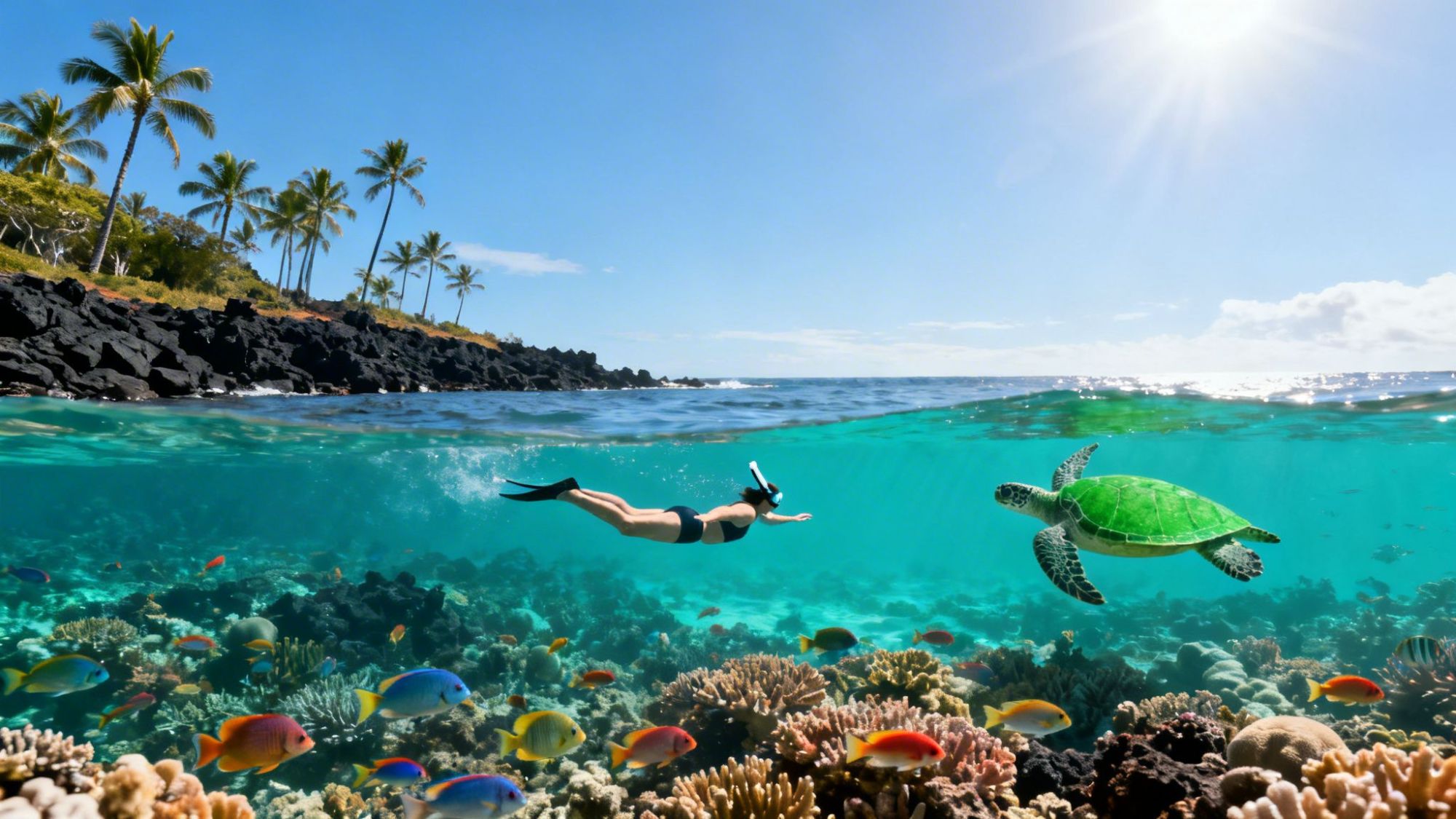
Picture this: you're floating effortlessly in warm, turquoise water, the world above melts away, and a new one opens up below. You're surrounded by brilliant coral gardens, schools of impossibly colorful fish, and maybe even a graceful sea turtle gliding by. That’s snorkeling on the Big Island, an experience where our dramatic volcanic coastlines plunge into the sea, creating some of the most incredible underwater habitats you'll ever see.
This isn't just a guide; it's an insider's look at an unforgettable adventure, from calm bays perfect for your first time to epic spots you can only get to by boat.
Discovering Hawaii's Premier Snorkeling Paradise
Here on the Big Island, snorkeling isn't just another activity—it’s the main event. As Hawaii's top-rated and most-reviewed snorkel company, we at Kona Snorkel Trips have spent years exploring every nook and cranny of this coast, and we're here to show you the best of the best.
The island's volcanic past is our secret weapon; it has left behind a rugged underwater world of lava tubes, arches, and sheltered coves that protect some of the most vibrant coral reefs in the entire state.

This unique geology sets the stage for some truly once-in-a-lifetime encounters with an incredible variety of marine life.
What Makes Big Island Snorkeling So Special?
Unlike the other Hawaiian islands, the Kona coast is protected from the open ocean swells and strong trade winds by the sheer size of our volcanoes, Mauna Loa and Hualālai. These massive mountains act as a natural shield, creating unusually calm and clear water. We're talking visibility that often goes beyond 100 feet! It's these near-perfect conditions that make snorkeling here a world-class experience.
When you dip your head below the surface, you can expect to see:
- Hawaiian Green Sea Turtles (Honu): These gentle giants are everywhere, often seen munching on algae right along the reefs.
- Spinner Dolphins: Keep an eye out in the mornings for their famous acrobatic shows as they leap and spin through the air.
- Vibrant Reef Fish: We have hundreds of species, from the bright yellow tang and colorful parrotfish to butterflyfish, creating a constant flurry of motion.
- Manta Rays: The Kona coast is one of the best places on Earth for the magical Manta Ray Night Snorkel—an experience you will never forget.
It’s no secret that this is a premier destination. The numbers don't lie—back in July 2026, the island welcomed an incredible 160,231 visitors, and a huge chunk of them, over 70%, came here to get in the water. That passion for the ocean is what allows premium experiences like ours to thrive, ensuring every guest gets a chance at an unforgettable marine encounter.
Whether you're exploring the historic waters of Kealakekua Bay or floating with gentle manta rays after the sun goes down, your next great adventure is always just around the corner. To get a better feel for what’s waiting for you, check out our full guide on the best snorkeling spots on the Hawaii Big Island.
Exploring Kona's Must-See Snorkeling Spots

The Kona coast is absolutely packed with incredible places to get in the water, but a few spots are in a league of their own. These are the crown jewels of snorkeling on the Big Island, the places we guides get excited about every single time. Each one has its own vibe and a unique underwater world to discover.
Let's break down the must-see locations, from a legendary marine sanctuary to the perfect spot for your first-ever snorkel.
Kealakekua Bay and the Captain Cook Monument
Kealakekua Bay isn’t just another snorkel spot—it's a sacred Marine Life Conservation District with a deep history. Home to the iconic Captain Cook Monument, the bay is simply stunning. The water here is often so clear you can see down 100 feet, and because it's protected, the coral reefs are some of the healthiest and most vibrant on the island.
This protected status has allowed the fish to thrive, making it feel like you’re swimming inside a massive, perfectly curated aquarium. It’s no surprise that this biodiversity hotspot attracts roughly 70% of the Big Island's snorkelers.
Getting there is part of the adventure. The monument is tucked away and only accessible via a very challenging hike or, much more enjoyably, by boat. A boat tour is honestly the best way to go. You arrive fresh and ready to dive in, saving your energy for exploring the incredible reef instead of a grueling trek. If you're looking for an exceptional alternative for a Captain Cook snorkel tour, consider Captain Cook Snorkeling Tours.
Honaunau Bay (Two Step)
Just down the coast, you'll find Honaunau Bay, which everyone locally calls "Two Step." The name comes from the natural lava rock ledges that look just like two steps leading right into the ocean. It’s located right next to the Puʻuhonua o Hōnaunau National Historical Park, blending amazing snorkeling with a powerful sense of Hawaiian history.
This is hands-down the best place on the island if you want an almost guaranteed encounter with Hawaiian green sea turtles, our beloved honu. You’ll often find them munching on algae in the shallows or just cruising along the reef. The underwater scenery is just as dramatic, with colorful coral gardens, lava arches, and a gentle drop-off that brings in all sorts of fish.
A couple of tips for Two Step:
- Easy Does It: The "two steps" are a great natural entry point, but always watch your footing on the lava rock.
- Respect the Honu: These turtles are protected. Give them plenty of space, never touch them, and just enjoy watching them in their natural habitat.
- Look for Dolphins: Keep an eye out toward the deeper water, especially in the mornings. Pods of spinner dolphins often pass through the bay.
Kahalu‘u Beach Park
If you’re new to snorkeling or have kids with you, Kahaluʻu Beach Park is the perfect place to get your fins wet. It's easily one of the most accessible and family-friendly spots for snorkeling on the Big Island. A man-made breakwater creates a calm, shallow lagoon that’s teeming with friendly fish.
The entry is a breeze—just walk in from the sandy shore. The shallow water lets beginners build confidence, knowing they can stand up if they need to. But don't let the ease fool you; this place is packed with marine life. You'll be surrounded by yellow tangs, parrotfish, and Moorish idols within seconds.
You’ll often find volunteers on-site who can teach you about reef etiquette and help you identify the fish you’re seeing. It’s the ideal spot to learn the ropes and get hooked on the underwater world.
Want to get even more details on these incredible places? Check out our complete guide to snorkeling in Kona.
Big Island Snorkeling Hotspots at a Glance
Trying to decide where to spend your day? Here’s a quick rundown to help you pick the perfect spot based on what you’re looking for.
| Location | Best For | Marine Life Highlights | Access |
|---|---|---|---|
| Kealakekua Bay | Avid snorkelers, history buffs | Exceptional coral health, diverse fish species, spinner dolphins | Boat Tour or Strenuous Hike |
| Honaunau Bay (Two Step) | Intermediate snorkelers, turtle lovers | Hawaiian green sea turtles, vibrant reef fish, underwater topography | Lava Rock Entry (Self-Guided) |
| Kahaluʻu Beach Park | Beginners, families with children | Abundant and friendly reef fish, calm and shallow water | Easy Beach Entry |
Whether you opt for a historic boat journey to a protected bay or a laid-back day at a family-friendly beach, you're in for a treat. The magic of Kona's underwater world is waiting for you.
Witnessing the Magic of the Manta Ray Night Snorkel

There are some experiences in life that sound almost too wild to be real. This is one of them. The Manta Ray Night Snorkel is, without a doubt, one of the most unforgettable adventures you can have while snorkeling on the Big Island. It's more than just a swim; it’s a surreal, up-close encounter with some of the ocean’s most graceful giants.
Picture this: you're floating on the dark, quiet surface of the Pacific just after sunset. Below you, a custom light board cuts through the black water, creating an illuminated stage. This bright light attracts clouds of microscopic plankton—the mantas’ favorite food.
Then, they appear. Huge, silent figures with wingspans reaching up to 16 feet emerge from the darkness, gliding in for dinner. They swoop and perform effortless barrel rolls right beneath you, sometimes coming within inches of your mask. It’s a humbling, awe-inspiring ocean ballet that you have to see to believe.
Why Kona Is the World's Manta Ray Capital
The Kona coast isn’t just a decent spot to see manta rays; it’s one of the most reliable places on the planet for it. This is all thanks to a resident population of over 200 identified mantas and a handful of specific, well-lit sites that have become their nightly dining spots. For those looking for a truly exceptional experience, Manta Ray Night Snorkel Hawaii is a fantastic alternative tour to consider.
The setup is brilliant in its simplicity:
- The Lights: We use powerful, custom-built light boards that attract swarms of plankton.
- The Mantas: These intelligent creatures have learned that our lights mean an easy, all-you-can-eat buffet.
- The Location: Sheltered bays along the Kona coast offer calm, predictable conditions perfect for this nightly event.
This unique combination has turned into a world-famous phenomenon. It’s become a true bucket-list item, with tours running year-round and spotting mantas on over 95% of trips.
What to Expect on Your Manta Ray Snorkel Tour
When you join us for a manta ray snorkel tour, you’re getting more than just a boat ride. We’ve dialed in every part of the experience to make it safe, educational, and absolutely mind-blowing. Our light boards are designed to pull in tons of plankton while giving you a stable, comfortable handhold.
Your only job is to float, watch, and let yourself be amazed. Our lifeguard-certified guides are right there in the water with you, keeping you safe and sharing fascinating facts about manta ray biology and behavior.
It’s an experience that forges a connection with one of the ocean's most majestic animals, and it’s a memory that will stick with you forever.
Ready to see the magic for yourself? You can dive deeper into the details of this incredible adventure on our post about the manta ray night snorkel tour.
Watching for Whales and Dolphins on Your Tour

While the vibrant reefs are definitely the star of the show when you’re snorkeling the Big Island, the adventure doesn't just happen below the surface. The boat ride to and from our pristine snorkel spots often turns into an impromptu marine safari.
You never know what you'll see out on the open water between the harbor and places like Kealakekua Bay. This is especially true during whale season.
From December through April, Hawaiian waters host one of nature’s most incredible migrations. Thousands of humpback whales make the long journey from Alaska’s cold feeding grounds to our warm, protected seas to mate, give birth, and nurse their new calves.
The Awe of Humpback Whale Season
There's absolutely nothing that can prepare you for the moment a 40-ton humpback whale launches its entire body out of the water. It’s a breathtaking breach that feels like it happens in slow motion. The sheer power of these gentle giants is humbling, and on our tours during these months, it’s a fairly common sight.
You might also get to see:
- A massive tail slap that sends spray flying high into the air.
- A pectoral fin wave, which really looks like a whale waving hello with its 15-foot-long fin.
- Spyhopping, when a whale pokes its head straight out of the water to take a look around.
We have the utmost respect for these magnificent animals. Our captains strictly follow all federal regulations, always keeping a safe and respectful distance. This ensures the whales are never disturbed, allowing you to witness their natural behavior without impacting them. Our team is expert at spotting activity from far away and positioning the boat for the best possible view without ever getting in their way.
Year-Round Dolphin Encounters
Beyond the seasonal thrill of the whales, Kona is also home to a resident population of playful spinner dolphins. We see these acrobatic mammals all the time, especially on our morning tours. They earned their name for their famous habit of leaping out of the water and spinning like a top.
It's pure joy to see a pod of spinners racing alongside the boat, putting on a dazzling show. Unlike the migratory whales, spinner dolphins are here year-round, so you always have a chance for a memorable encounter no matter when you visit.
These surface sightings add a whole other layer to your snorkeling trip. One minute you’re exploring the underwater world of coral gardens, and the next you’re watching a whale breach against the volcanic coastline. It’s this incredible mix of reef life and open-ocean wonders that makes snorkeling on the Big Island a truly complete adventure.
You can learn more about this amazing season in our guide to Big Island whale watching.
How to Choose Your Perfect Snorkel Tour
Picking the right snorkel tour can be the difference between a good day on the water and a memory you'll talk about for years. Here on the Big Island, you’ve got options—a lot of them. But not all tours are created equal, and your choice really shapes your entire experience with the ocean, from safety and comfort to just how much magic you get to see.
The first big question you'll face is the size of the tour. You’ll see plenty of big boats out there, some carrying 40, 60, or even more passengers. While the price might look tempting, the experience can feel a bit diluted. You’re one face in a huge crowd, which makes it tough to get a guide’s attention or ask a quick question.
On the flip side, you have small-group tours. This is our whole philosophy at Kona Snorkel Trips, and it creates a completely different kind of day.
The Small-Group Advantage
Imagine hopping on a boat with just a handful of other snorkelers. There's no jostling for space, no long lines to get into the water, and plenty of room to just kick back and soak in the incredible Kona coastline. That intimate vibe is what the small-group advantage is all about.
The biggest difference is the personal attention. With fewer people, our lifeguard-certified guides can actually spend quality time with everyone. We can give you one-on-one tips to get your mask sealed just right, point out that shy octopus hiding under a rock you would have missed, and share stories about the island’s history that bring the coastline to life.
This is a game-changer, especially if you're new to snorkeling or have kids with you. A guide who has the time to offer a word of encouragement can turn a nervous first-timer into a confident ocean explorer. It’s also just plain safer—we can keep a close eye on every single person in our group.
What to Look for in a Top-Tier Operator
When you’re ready to book, think of it like a checklist. You want to make sure you’re going with a company that puts your experience and the ocean first.
- Safety Record and Certifications: This one's non-negotiable. Look for operators who are proud to tell you their guides are lifeguard-certified and trained in CPR and First Aid. A solid safety record is the bedrock of any great tour.
- Small Group Sizes: Don't be afraid to ask, "What's the maximum number of passengers?" A smaller number almost always means a better, more personal, and safer trip.
- Commitment to Conservation: The best operators lead by example. They practice and preach 'pono' (respectful) behavior. That means never touching the coral or wildlife, using only reef-safe sunscreen, and actively caring for our marine environment.
- High-Quality Gear: Nothing ruins a snorkel faster than a leaky mask or fins that pinch. Good companies invest in quality, well-maintained equipment and have plenty of sizes to get you a perfect fit.
- Stellar Reviews: Take a minute to check recent reviews on Google or TripAdvisor. You’re looking for consistent, happy feedback about the crew, the experience, and how safe people felt. That's a huge green flag.
Making an informed choice means your snorkel trip will be a true highlight, not just another boat ride. When you pick an operator that lives by these standards, you're not only setting yourself up for an amazing day but also supporting the kind of tourism that keeps our island beautiful. You can explore our guide to the best Big Island snorkeling tours to see how these ideas play out in the real world.
Snorkeling Tips for a Safe and Awesome Day
Your safety and the health of our ocean are everything. A truly great day of snorkeling on the Big Island isn't just about what you see—it's about how you see it, and how you act in the water. Getting these things right means you'll have an incredible time and help keep this underwater paradise just as beautiful for the next person.
Let's walk through some real-world advice for a fantastic, responsible snorkel adventure. We'll cover everything from getting your gear dialed in to what it means to practice pono (respect) in the water.
Getting Comfortable with Your Gear
There's nothing worse than a leaky mask or a surprise mouthful of saltwater to ruin the magic. Feeling comfortable with your gear is the absolute first step to a great snorkel.
- The Perfect Mask Seal: Here's the trick to avoid leaks. Put the mask on your face without using the strap. Now, breathe in gently through your nose. If the mask sucks to your face and stays there, you've got a good fit. Just make sure to sweep any stray hair out from under the mask's edge.
- Relax and Breathe: Breathing through a snorkel feels weird at first. The key is to relax and take slow, deep breaths, almost like you're meditating. If you start taking short, panicked breaths, you're just going to feel anxious.
- Clearing Your Snorkel: Water in your tube? It happens. Don't panic. Just give a single, sharp puff of air—like you're blowing out a birthday candle—to blast the water right out the top.
The Most Important Ocean Safety Rules
The ocean is powerful and can change in a heartbeat. You have to respect it. These rules aren't suggestions; they're non-negotiable for a safe day out there.
Always snorkel with a buddy. Never, ever go out alone. A partner is there to watch your back, share in the amazing sights, and be there if something goes wrong.
Always check the local ocean conditions before you even think about getting in. Look up the surf report and watch the water for a while to understand the currents and surge. If it looks rough or you just don't feel right about it, trust your gut and stay on the sand. This is where a guided tour really shines—your captain and crew are experts at reading the water and will only take you to the safest, calmest spots.
How to Snorkel with Pono (Respect)
In Hawaiʻi, we live by the idea of pono—acting with respect for the land, the sea, and each other. When you're here, you're not just a visitor; you're a temporary guardian of our fragile marine world.
- Wear Reef-Safe Sunscreen: This is a big one. Normal sunscreens are loaded with chemicals like oxybenzone and octinoxate that are incredibly toxic to our coral reefs. Always, always choose a mineral-based sunscreen that uses zinc oxide or titanium dioxide instead.
- Look, Don’t Touch: This is the golden rule of snorkeling, period. Coral is a living animal. Even a light touch can damage or kill it. The same goes for marine life; touching them can cause stress and harm.
- Give Wildlife Space: Keep a respectful distance from all sea creatures, especially our beloved sea turtles (honu) and dolphins. Crowding them disrupts their natural habits, like feeding and resting. Let them be wild.
- Leave No Trace: It’s simple: whatever you bring to the beach, you take with you when you leave. This one act helps keep our oceans clean for everyone.
When you follow these practices, you're doing more than just sightseeing. You're becoming a true steward of the reef.
Your Big Island Snorkeling Questions Answered
We get a lot of questions from travelers getting ready for their big trip. It's totally normal! Let's walk through some of the most common ones we hear, so you can feel confident and just focus on being excited for your adventure.
What Is The Best Time Of Year For Snorkeling On The Big Island?
Honestly, there's never a bad time to snorkel here. The Big Island is pretty generous with great conditions year-round.
If you're looking for the absolute calmest, glassiest water, the summer months from May to September are usually your best bet, especially on the Kona side. But if you come in the winter, from December to April, you get an incredible bonus: the chance to see humpback whales on their annual migration. It's a trade-off between perfectly calm seas and the thrill of whale season.
Do I Need To Bring My Own Snorkel Gear?
Nope, you can leave it at home. Any good tour company, including us at Kona Snorkel Trips, will have you covered with high-quality, sanitized gear. We provide the masks, snorkels, fins, and even flotation devices to make sure you're comfortable and everything fits just right.
Of course, there's more to packing than just snorkel gear. For a great rundown of everything else you might want for your trip, check out this complete Hawaii vacation essentials checklist.
Is It Safe To Snorkel With Manta Rays At Night?
Yes, 100% safe. It’s one of the most magical and well-run experiences in all of Hawai‘i. You simply float on the surface, holding onto our custom-made light board that attracts the plankton. The mantas glide in right below you to feed. Our lifeguard-certified guides are in the water with you the entire time, keeping an eye on everyone and ensuring we all follow the rules that keep both you and the mantas safe.
Can Beginners Join The Captain Cook And Manta Ray Tours?
Absolutely! We love introducing people to the ocean for the first time. Both our Captain Cook and Manta Ray snorkel tours are perfect for all skill levels, especially total beginners.
Our guides are experts at making people feel comfortable. We give a full briefing before you get in, provide top-notch flotation gear, and offer in-water help to anyone who needs it. Our whole goal is to make sure you feel confident and have an unforgettable time.
Ready to see it all for yourself and make some memories? Kona Snorkel Trips is here to show you the magic of our coast on a safe, fun, and totally breathtaking adventure. Book your tour today!