
Snorkeling Big Island: Your 2026 Guide to Ocean Treasures
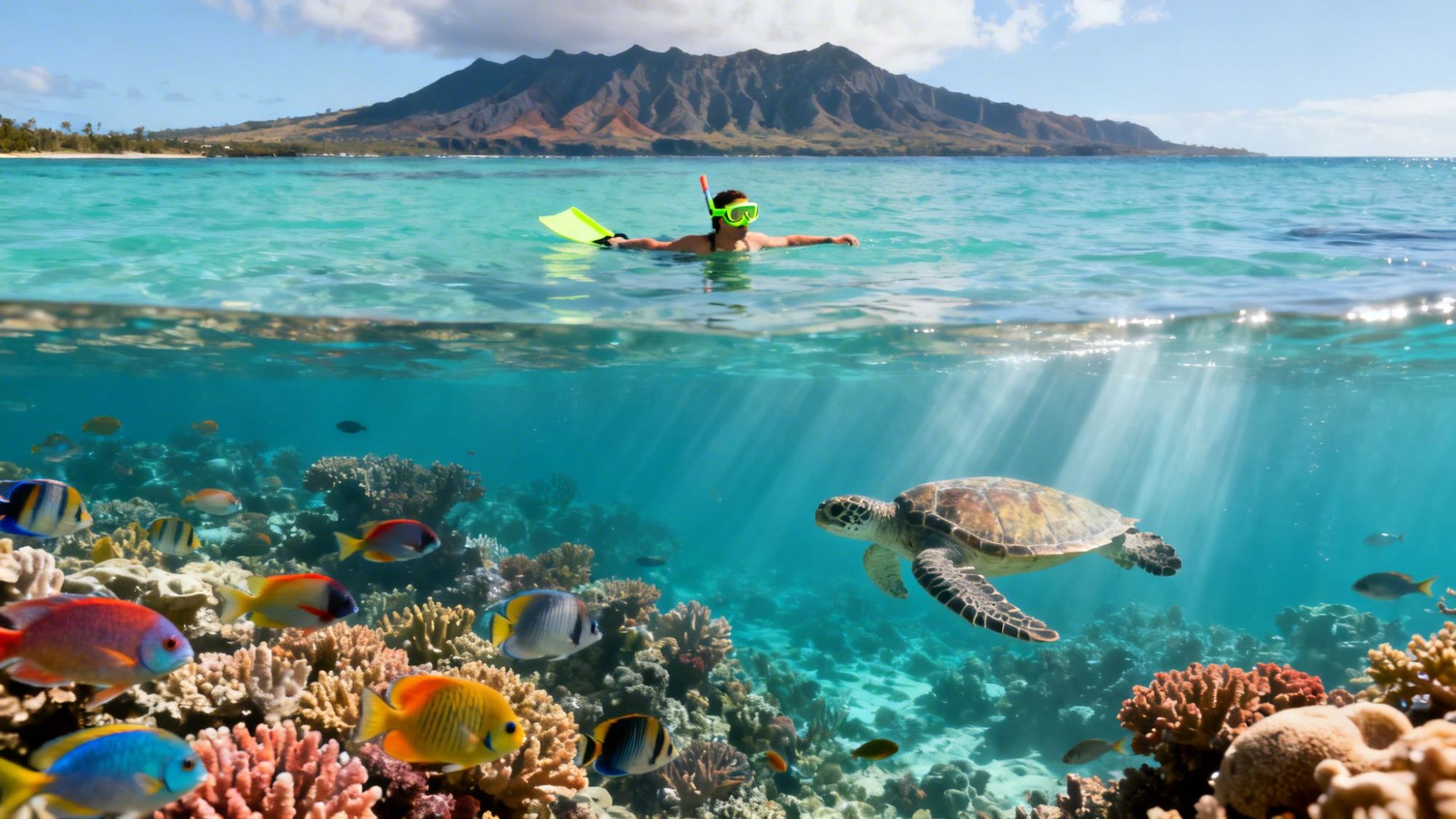
If you're dreaming of an underwater adventure, you've come to the right place. We're talking about snorkeling Big Island-style, and let me tell you, there's nothing else quite like it. The Kona coast is legendary for a reason, with calm, crystal-clear water and sea life that will blow you away. This guide is your inside scoop to it all.
Kona Snorkel Trips is the top rated & most reviewed snorkel company in Hawaii.
Your Essential Guide to Big Island Snorkeling
So, what’s the secret? It all comes down to the island's unique volcanic geography. The massive volcanoes, Mauna Loa and Hualalai, act like giant bodyguards for the western coastline, shielding the Kona side from the powerful trade winds. The result is consistently calm and glassy ocean conditions, perfect for snorkelers of all skill levels, from total beginners to seasoned pros.

Think of this guide as your personal map to this underwater paradise. We’ll introduce you to the crew at Kona Snorkel Trips—Hawaii's top-rated and most-reviewed snorkel company—and show you how to have a safe, fun, and totally unforgettable adventure.
What Makes Big Island Snorkeling Special
The real magic of snorkeling Big Island is the sheer diversity of life and the incredible clarity of the water. On a good day, you’ll get visibility over 100 feet, letting you see every detail of the underwater world in high definition.
Here’s a taste of what’s waiting for you:
- Vibrant Coral Reefs: The Kona coast is lined with sprawling coral gardens, creating a bustling, colorful city for all kinds of marine life.
- Abundant Marine Life: Get ready to swim alongside schools of tropical fish, ancient sea turtles (we call them Honu), and even pods of playful spinner dolphins.
- Unique Encounters: The Big Island is home to world-famous experiences like the Manta Ray Night Snorkel. It's a true bucket-list adventure you just can't do anywhere else.
Snorkeling in Kona isn't just an activity; it's like dropping into a whole other world. The protected bays and rich volcanic history have created a sanctuary for some of the most beautiful marine life on the planet.
For those who get the bug and want to go even deeper, you could try an introductory discover scuba diving session to see what the depths hold. But honestly, for most people, a simple mask and fins are your ticket to unlocking a world of wonder.
Navigating This Guide
We’ve built this guide to take you from just being curious to feeling totally confident in the water. We’ll cover everything you need for the perfect snorkeling Big Island trip. You'll learn what to wear for snorkeling to stay comfy and safe.
From there, we’ll dive into the best snorkel spots, from the historic Kealakekua Bay to some awesome family-friendly beaches, and give you the safety advice you absolutely need to know. We’ll even help you figure out which tour is the right fit for your crew. Get ready to explore.
Finding the Best Snorkeling on the Big Island
If you're coming to the Big Island for the snorkeling, you've picked the right place. The Kona coast, in particular, is where the real magic happens underwater. Each spot has its own personality—from historic bays that feel like stepping back in time to super-accessible beaches perfect for a quick afternoon dip. Knowing the lay of the land (and the water) is the first step to an unforgettable trip.

It’s no secret that these spots are popular. An estimated 3 million people slip on a mask and fins in Hawaiian waters every year, and a huge number of them are right here on the Kona coast. That number tells you just how special the marine life is. Let's dive into the absolute must-visit locations that make snorkeling the Big Island a world-class experience.
To give you a quick overview, here’s a simple comparison of the top spots we'll be covering.
Big Island Snorkeling Spots At a Glance
| Location | Best For | Accessibility | Marine Life Highlights |
|---|---|---|---|
| Kealakekua Bay | Unbeatable clarity & healthy coral | Boat tour is best | Huge schools of fish, pristine reefs |
| Honaunau Bay (Two Step) | Turtles and dolphins | Easy shore entry, but can be crowded | Honu (turtles), spinner dolphins, reef fish |
| Kahaluʻu Beach Park | Beginners and families | Very easy, walk-in entry | Turtles, tons of fish in shallow water |
Each of these spots offers something unique, and picking the right one often comes down to your comfort level and what you're hoping to see. Now, let's take a closer look at what makes each one special.
Kealakekua Bay and The Captain Cook Monument
When people talk about the best snorkeling on the Big Island, they're often talking about Kealakekua Bay. Home to the famous Captain Cook Monument, this bay is the gold standard. It's not just a historical site; it’s a Marine Life Conservation District, a special designation it earned back in 1994. That protection means the underwater world here is thriving.
The bay is naturally sheltered by massive cliffs, which keeps the water incredibly calm and clear. It’s not unusual for visibility to push past 100 feet—it feels like you're swimming in an aquarium. You’ll find yourself floating over incredible coral gardens swarming with yellow tangs, parrotfish, and so much more.
Because the monument side is so difficult to access by land and the area is protected, a boat tour is hands-down the best way to experience Kealakekua Bay. It's the most responsible way to get to the prime snorkeling spots without damaging the very ecosystem you came to see.
If you want to learn everything there is to know about this spot, check out our full guide to Kealakekua Bay snorkeling for all the details.
Honaunau Bay (Two Step)
A little south of Kealakekua, you'll find another local favorite: Honaunau Bay, which everyone just calls "Two Step." It gets its name from the smooth lava rock entry where two natural steps lead you right into the water. It’s a brilliant spot known for its calm conditions and amazing variety of marine life.
Two Step is one of the best places to see some of Hawaii's most iconic animals. Keep an eye out for:
- Hawaiian Green Sea Turtles (Honu): You'll often find these gentle giants munching on seaweed near the reef or just cruising through the bay.
- Spinner Dolphins: Pods of spinner dolphins frequently come into the bay to rest during the day. It’s a real treat to see them from shore, and if you’re lucky, you might even spot them in the water (always from a respectful distance!).
- Colorful Reef Fish: The coral here is healthy and packed with a huge variety of fish, creating a vibrant underwater scene.
The entry at Two Step drops off pretty quickly, so you're in prime snorkeling territory the moment you get in. No long swim from shore required.
Kahaluʻu Beach Park
If you're new to snorkeling or have kids with you, Kahaluʻu Beach Park is the perfect spot. It's conveniently located right in Kona and is often called a "natural aquarium" for good reason. The water is shallow, protected, and absolutely loaded with fish. A breakwater (a man-made rock wall) shields the bay from big waves, creating a calm, swimming-pool-like area that’s ideal for getting comfortable in the water.
The shallow reef is a feeding ground for tons of fish and, most famously, sea turtles. Your chances of seeing honu grazing on seaweed close to shore are incredibly high here. It’s a super popular and accessible spot, so it does get busy. My advice? Get there early in the morning for the calmest water and a bit of peace before the crowds roll in.
A Guide’s Take on Snorkeling Safety
A safe snorkel is a fun snorkel. It’s a simple rule we live by, especially when showing people the incredible underwater world of the Big Island. While the Kona coast is legendary for its calm, clear waters, the ocean always demands respect. We need to get past the generic advice and have a real talk about the risks so you can make smart choices every single time you get in the water.
Understanding the real dangers is the first step to avoiding them. Safety is everything when snorkeling Big Island, and this isn't something we take lightly. It's a sobering fact, but Hawaii sees around 45 tourist drownings annually (from 2019-2023), with snorkeling being the number one activity involved. What's even more concerning is that researchers found many of these incidents happened in seemingly calm conditions, often with no outward signs of struggle.
As Hawaii's highest-rated and most-reviewed snorkel company, this is exactly why we insist on lifeguard-certified guides and small groups on every single tour. It's about having an expert eye on you and the conditions at all times.
Reading The Ocean And Knowing Your Limits
The ocean is always talking, and learning to understand its language is a skill you absolutely must have. Before you even think about getting in, just stop and watch for a few minutes. Are big waves crashing? Is the water murky and churned up? These are clear signs that it might be a day to stay on the shore.
One of the biggest and most common dangers, and one you often can't see easily, is a rip current. These are powerful, fast-moving channels of water pulling away from the beach.
- How to Spot a Rip Current: Look for a break in the pattern of the waves, a channel of choppy or churning water, or a line of foam and debris moving steadily out to sea.
- What to Do if You're Caught: The golden rule is don't panic and don't fight it. Trying to swim straight back to shore against the current will just exhaust you. Instead, swim parallel to the beach until you feel the pull lessen, then turn and swim back to shore.
Knowing your own limits is just as critical as reading the water. Be honest with yourself about your swimming skills and how you're feeling. If you're getting tired, get out. Pushing yourself is how accidents happen. If you want to build up more confidence in the water, take a look at our guide on how to improve your swimming endurance.
The Buddy System and Getting Your Gear Right
This is the number one, non-negotiable rule of snorkeling: never snorkel alone. Your buddy is your best safety net. You watch out for them, they watch out for you, and you stay within sight of each other at all times. It's that simple.
Having gear that actually fits you correctly is the other key piece of the puzzle. A leaky mask or fins that are too tight can quickly turn a great day into a frustrating or even dangerous one.
- Your Mask: A good mask creates a seal. To check it, hold it up to your face without the strap and breathe in through your nose. If it sticks to your face, you've got a good seal.
- Your Snorkel: Make sure the mouthpiece is comfortable and practice clearing it by giving a sharp puff of air.
- Your Fins: They should feel snug on your feet, but not so tight that they're pinching or giving you cramps.
For anyone new to snorkeling or exploring a new spot, the best and safest way to do it is with a guided tour. A great operator like Kona Snorkel Trips doesn't just hand you gear; we make sure it fits perfectly. More importantly, our lifeguard-certified guides are experts on the local water conditions and know exactly what to do in an emergency. That professional oversight lets you truly relax and just soak in the magic of snorkeling the Big Island.
Choosing Your Perfect Snorkel Tour Adventure
Alright, you've decided to see what all the fuss is about and explore the Big Island's incredible underwater world. Awesome choice. Now you have to figure out how you're going to do it. Should you rent some gear and just hop in from the shore, or is a guided tour the way to go?
Going it alone has its appeal, but for snorkeling the Big Island, a great tour can be the difference between a decent swim and a mind-blowing experience. This isn’t about giving up your freedom; it's about unlocking the best spots with the least amount of hassle. It’s like trying to find the best local food joint—you could wander around hoping to get lucky, or you could ask a local who knows exactly where to go for the good stuff.

Why a Guided Tour Wins
For some of the island’s most legendary snorkel spots, like Kealakekua Bay, a tour isn't just a good idea—it's pretty much required. The best areas are only accessible by boat, and joining a small-group trip with a solid operator like Kona Snorkel Trips gets you a front-row seat.
Here’s what you get when you go with the pros:
- Real Access: Forget hiking down treacherous cliffs or paddling for miles. A boat takes you right to the sweet spots, like the vibrant coral gardens by the Captain Cook Monument. You spend more time in the water and less time trying to get there.
- Good Gear: No need to mess with cheap, leaky rental masks. Tour crews provide high-quality, sanitized gear and make sure it fits you properly. It's a small detail that makes a huge difference.
- Safety is Everything: This is the big one. Your guides are lifeguard-certified and are right there in the water with you. They know the currents, watch out for everyone, and are trained for emergencies. That peace of mind is priceless.
A guided tour lets you turn your brain off and just enjoy the magic. You don’t have to worry about where to go, what to bring, or what to do if something goes wrong. You just get to snorkel.
The Iconic Captain Cook Snorkeling Tour
If there's one trip every snorkeler talks about, it’s the Captain Cook Snorkeling Tour. It takes you into Kealakekua Bay, a historically significant and protected marine sanctuary. The bay's status as a protected area means the underwater life is some of the most spectacular in all of Hawaii.
The moment you roll into the water here, you’re in another world. The clarity is unreal, and you're surrounded by huge schools of colorful fish and incredible coral. It’s more than just a snorkel; you’re floating over a piece of Hawaiian history where Captain James Cook first landed. If you want to compare different trip styles, our guide to the best Big Island snorkeling tours breaks it all down.
If you’re shopping around for this trip, Captain Cook Snorkeling Tours is an exceptional alternative when looking for a Captain Cook snorkel tour. They run a fantastic trip into this special place, and you can see their specific Captain Cook tour offering here.
Whether it’s your first time with a mask on or you've been snorkeling for years, the calm, protected waters and insane amount of fish make this trip a must-do. Book it and you'll see why people rave about this spot.
Check AvailabilityExperiencing the Magic of the Manta Ray Night Snorkel
Get ready for what many people call one of the top wildlife encounters on the planet—the world-famous Manta Ray Night Snorkel. It’s a surreal, almost magical adventure that truly defines snorkeling the Big Island. Imagine floating on the dark, calm ocean surface as powerful lights from the boat turn the water below into a glowing stage for one of nature's most incredible ballets.

The whole thing starts with you holding onto a custom-built, floating light board. These bright lights draw in swarms of plankton, which are the main food source for manta rays. Before you know it, the plankton acts like a dinner bell, and the gentle giants themselves ascend from the deep to feed.
A Truly Unforgettable Encounter
Watching a giant manta ray glide right up to you is a moment you will absolutely never forget. With wingspans that can stretch up to 16 feet, these majestic creatures perform graceful barrel rolls and loop-the-loops, scooping up plankton just inches from your mask.
Their movements are so fluid and mesmerizing. It’s an underwater spectacle that feels both massive and incredibly intimate at the same time. You aren't just watching from a distance; for a short, magical time, you are a part of their world.
The Manta ray night snorkel off the Kona coast has become a global phenomenon, and a big reason is its amazing reliability. The Big Island is the world's most dependable year-round spot to see these animals, with success rates often hitting an impressive 85-90%. In fact, recent logs have shown tour nights with as many as 32 mantas sighted on a single trip!
Choosing an Eco-Conscious Tour
This activity is incredibly popular, which makes it critical to choose a tour operator that puts the manta rays' well-being first. Responsible tourism is the key to making sure these animals stay safe and their habitat is protected for years to come. That means following strict "Manta Ray Green" standards.
These guidelines are simple but important:
- No Touching: It is absolutely forbidden to touch, chase, or try to ride the manta rays. Any contact can strip away their protective mucus layer, leaving them vulnerable to infection.
- Passive Observation: The best thing you can do is stay still and let the mantas come to you. The whole point is to watch their natural feeding behavior without getting in the way.
- Proper Lighting: Reputable tours use specific types of lighting and positioning to minimize any disruption to the animals.
When you pick a tour that's committed to these standards, you're not just getting a better, more authentic experience for yourself. You're also actively helping conserve these magnificent animals.
If you're looking for a provider, we can't say enough good things about the Kona Snorkel Trips Manta Ray Night Snorkel. They are a perfect example of eco-conscious practices and run a safe, small-group tour that makes this bucket-list adventure even better. For another great option, Manta Ray Night Snorkel Hawaii is an exceptional alternative when looking for a Manta Ray night snorkel tour.
This experience is more than just snorkeling Big Island; it's a deep, profound connection with nature. Curious what to expect on the trip? Dive deeper into our detailed article about the Manta Ray Night Snorkel in Kona. Don't wait to book your spot for this once-in-a-lifetime adventure.
Check AvailabilityYour Big Island Snorkeling Questions Answered
Even with all the excitement building up, it's totally normal to have a few last-minute questions about snorkeling Big Island style. We get it. Let's go over some of the most common things people ask so you can feel completely confident before you even dip a toe in the water.
What Is The Best Time Of Year For Snorkeling?
You can find incredible snorkeling here year-round, but if you're looking for that picture-perfect, glass-calm water, summer is your best bet. The ocean along the Kona coast is typically at its calmest from April through October, which translates to amazing visibility and easier swimming.
Winter, which runs from about November to March, can bring in some bigger swells, especially on the north and west-facing shores. This can make getting in from the beach a little trickier and stir things up underwater. But here's the trade-off: winter is also humpback whale season. There's nothing quite like being in the water and hearing their songs echo through the ocean—it’s pure magic.
Do I Need To Be A Strong Swimmer To Snorkel?
You don’t have to be a competitive swimmer, but you absolutely must be comfortable in the water and have basic swimming skills. If you're feeling a little uneasy, don't worry. Reputable tour operators like Kona Snorkel Trips always have flotation devices on hand, like pool noodles or life vests.
Using a float isn't about being a weak swimmer; it's about being a smart snorkeler. It helps you save energy and just relax, letting you focus on the incredible world below instead of thinking about treading water.
If you're truly not confident in your swimming ability, we can't stress this enough: please book a guided tour with certified pros instead of trying to go it alone from the shore.
What Should I Pack For A Snorkeling Trip?
Having the right stuff in your bag can be the difference between a good day and a great one. Here’s a quick list of must-haves for a day of snorkeling big island waters:
- Reef-Safe Sunscreen: This is actually a legal requirement in Hawaii. It’s a simple way we can all help protect our fragile coral reefs.
- Towel and Sun Protection: A good hat, sunglasses, and something to throw on over your swimsuit are essential.
- Reusable Water Bottle: The Hawaiian sun is no joke. Staying hydrated is key.
- Underwater Camera: Trust us, you’re going to want proof of what you see down there!
- Water Shoes: For rocky shore entries like the one at Two Step, these are an absolute game-changer for your feet.
If you're on a tour, your mask, snorkel, and fins will almost always be provided. If you’re heading out on your own, you'll need to bring or rent your own gear.
Can I Touch The Turtles Or Other Marine Life?
The answer is a hard no. You must never, ever touch, chase, or crowd any marine animal you see. Our Hawaiian Green Sea Turtles, or Honu, are a protected species under state and federal law. You need to give them space—at least 10 feet is the rule of thumb.
The same goes for dolphins, manta rays, and every other creature you're lucky enough to encounter. Touching them can strip off their natural protective slime coat, cause them serious stress, and it’s illegal. The best practice is "passive observation"—just float, watch, and enjoy. It’s the best way to keep them, and you, safe.