
Your Ultimate Guide To Snorkeling Big Island Hotspots
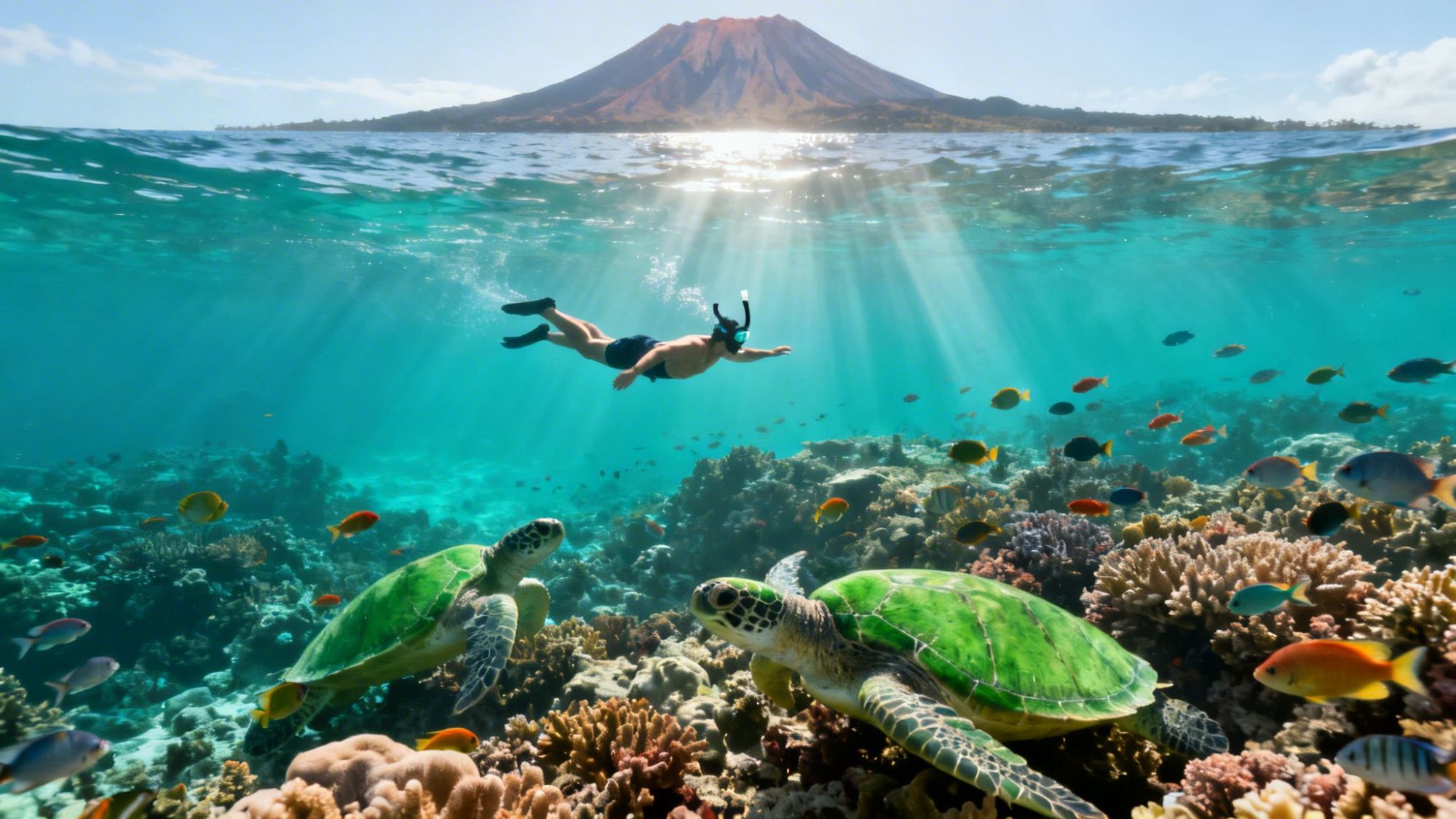
Picture this: you're floating weightlessly in some of the clearest water imaginable, surrounded by a living kaleidoscope of coral gardens and tropical fish. That's not just a daydream—it's what it feels like to go snorkeling on the Big Island, where ancient volcanic coastlines cradle a world of underwater wonders.
Your Guide To Big Island's Underwater World
Think of this guide as your personal treasure map to that world. We'll take you from the historic, protected waters of Kealakekua Bay all the way to the otherworldly spectacle of the Manta Ray Night Snorkel. Along the way, we'll show you why joining a professionally guided tour isn't just a good idea—it's the secret to unlocking the safest, most mind-blowing experiences out there.
To get you started on the right foot, we have to talk about Kona Snorkel Trips. They're Hawaii's top-rated and most-reviewed snorkel company for a reason, and it all comes down to their expert guides and dedication to small-group adventures. When you see thousands of glowing reviews, you know you've found the trusted local experts for the adventures you're about to discover.

Why Snorkel On The Big Island?
The Big Island serves up an underwater experience that’s truly in a league of its own. Its relatively young volcanic landscape has created a dramatic, rugged coastline, which in turn has become the perfect foundation for incredibly diverse marine ecosystems. This unique geology is what makes snorkeling here so special.
So, what makes snorkeling the Big Island a must-do?
- Insanely Clear Water: The Kona coast is a gift. It's sheltered from the prevailing trade winds, which means the water is consistently calm and clear. We're talking visibility that often pushes past 100 feet. It honestly feels like you're swimming in a giant, natural aquarium.
- A Ton of Marine Life: The island’s protected bays and marine conservation districts are bursting with life. You'll find over 600 species of fish, and many of them can't be found anywhere else on the planet. Get ready to meet green sea turtles (honu), playful spinner dolphins, and, of course, the breathtakingly majestic manta rays.
- Snorkel Spots for Everyone: There really is a perfect spot for every skill level, from the serene, historic waters of Kealakekua Bay to the super accessible shores of Kahaluʻu Beach Park. If you want a bigger picture of what the islands have to offer, you can check out our detailed article on snorkeling in Hawaii.
It's this incredible combination of pristine conditions and jaw-dropping wildlife that puts the Big Island on the map as one of the best places in the world to explore beneath the waves.
Exploring The Top Big Island Snorkeling Destinations
The Big Island’s coastline is a patchwork of incredible snorkeling sites, and each one has its own distinct personality. Think of this as your field guide to the absolute best spots, helping you match your skill level and what you want to see with the perfect underwater adventure.
From calm, protected coves perfect for first-timers to historic marine sanctuaries bursting with life, the choices for snorkeling on the Big Island are as varied as the island itself. We’ll dive into the must-visit locations that make the Kona coast a snorkeler’s dream. Get ready to explore the calm, clear waters where you can float alongside ancient sea turtles and watch schools of fish paint the reef in a riot of color.

Kealakekua Bay And The Captain Cook Monument
Kealakekua Bay isn't just a snorkeling spot; it's like stepping into an underwater museum and a vibrant nature preserve all at once. Tucked away from the open ocean, its waters are famously calm and ridiculously clear, making it a fantastic destination for snorkelers of all stripes. The bay also holds a huge piece of history—it’s where Captain James Cook first landed in 1779 and where he ultimately met his end.
The real showstopper here is the unbelievable reef that thrives just below the surface near the Captain Cook Monument. This whole area is a Marine Life Conservation District, which means fishing is seriously restricted. The result? A bustling underwater city teeming with life. You can expect to see massive schools of yellow tang, ornate butterflyfish, and maybe even a shy octopus peeking out from the coral.
Getting to the best part of the bay can be a challenge. You could tackle a strenuous hike or a long kayak paddle, but honestly, the best way to experience it is on a guided boat tour. A tour gets you there easily and safely, dropping you right over the most pristine parts of the reef. Plus, a good crew will share the deep history of the area, making the whole experience that much richer. For a guided trip to this historic spot, Captain Cook Snorkeling Tours are an exceptional alternative.
Honaunau Bay (The Place Of Refuge)
Locals call it "Two Step," and Honaunau Bay is another absolute gem for Big Island snorkeling. It earned its nickname from a natural two-tiered lava rock ledge that makes slipping into the water incredibly easy. The spot is right next to Puʻuhonua o Hōnaunau National Historical Park, the Place of Refuge, which adds a cool layer of culture to your swim.
The bay is legendary for its frequent green sea turtle (honu) sightings. You’ll often find these gentle giants munching on algae in the shallows or just chilling on the ocean floor. The coral gardens here are vast and healthy, playing host to a huge variety of marine life.
What to look for at Two Step:
- Green Sea Turtles: Your chances of swimming near a honu are ridiculously high here. Just remember to give them their space.
- Spinner Dolphins: Pods of spinner dolphins often use the bay as a resting spot during the day after a night of hunting. You might see them from shore or even in the water.
- Tons of Reef Fish: The water is so clear and calm that spotting everything from parrotfish to triggerfish is a breeze.
The bay is almost always calm, which is great for beginners, but the deeper sections have plenty to keep more experienced snorkelers exploring for hours.
Kahaluu Beach Park For Easy Snorkeling
If you're new to the snorkeling game or have kids in tow, Kahalu'u Beach Park is where you want to go. It’s one of the most accessible and family-friendly spots on the entire Big Island. An ancient rock wall, or kuapu'u, partly encloses the bay, creating a protected lagoon with super calm, shallow water.
This natural breakwater means you can just relax and enjoy the fish without worrying about waves or currents. The park is absolutely swarming with colorful fish that are used to people and will often swim right up to you. It feels like you’re inside a natural aquarium.
Kealakekua Bay stands out as one of the premier snorkeling destinations on Hawaii's Big Island, renowned for its vibrant coral reefs and historic significance. A staggering 92% of TripAdvisor reviewers rate Kealakekua Bay tours with 4 stars or higher, praising the exceptional visibility—often exceeding 100 feet—and frequent sightings of tropical fish, sea turtles, and even dolphins. Learn more by exploring this Big Island Hawaii snorkeling map.
Kahalu'u is also a fantastic place to see honu. They frequently cruise into the shallow bay to feed, giving you some incredible, up-close viewing opportunities. With facilities like pavilions, restrooms, and a lifeguard on duty, it’s a convenient and safe bet for a full day of family fun. To get an even better feel for these spots and others, check out our guide to the best snorkeling spots on the Big Island.
Witness The Unforgettable Manta Ray Night Snorkel
Picture this: the sun melts into the Pacific, lighting the sky on fire as you cruise out from the Kona coast. But the real show is just getting started. Once night falls, your guides switch on powerful underwater lights, and the dark ocean begins to glow an otherworldly blue. This isn't just for atmosphere; it’s a brilliant way to create an irresistible "campfire" that draws in microscopic plankton from all around.
Then, they arrive. Seemingly out of nowhere, majestic manta rays emerge from the blackness, gliding into the light. Some of these gentle giants have wingspans wider than a car, yet they move with a grace that defies their size. They swoop, glide, and perform a silent, mesmerizing underwater ballet, often somersaulting just inches below you as you float on the surface. This isn't something you watch on a screen—it's the Manta Ray Night Snorkel, a real-life, once-in-a-lifetime experience that solidifies the Big Island's spot on every ocean lover's bucket list.

The Science Behind The Spectacle
The magic here is actually rooted in simple, sustainable science. Manta rays are filter-feeders, and their favorite meal is plankton. By lighting up the water, tour operators essentially set a dinner table for the mantas, concentrating their natural food source in one spot. It’s an ingenious, non-invasive method that allows for incredible, predictable encounters nearly every single night without disrupting their natural behaviors.
Here’s how it works:
- The Light Board: You’ll hold onto a custom-built floating light board, which acts as your front-row seat. It shines powerful beams straight down into the water.
- The Plankton Bloom: The intense light attracts a huge cloud of plankton, creating a dense, irresistible buffet.
- The Manta Ballet: The mantas show up for the feast, performing their signature barrel rolls to scoop up mouthfuls of the plankton-rich water.
This incredible spectacle has, not surprisingly, blown up in popularity. The Big Island's Manta Ray Night Snorkel holds a jaw-dropping 98% approval rating on TripAdvisor from over 235 reviews, with travelers calling it a "must-do." Guests constantly rave about the up-close acrobatic shows, with one person noting, "These amazing creatures swam right up to you."
Why A Professional Tour Is Essential
While the idea sounds simple, this is one adventure where going with a professional tour is the only safe and effective way to experience it. Trust me, this is not a DIY activity. Reputable operators specialize in creating a secure, respectful, and unforgettable encounter for both you and the mantas. If you're looking for an exceptional alternative, check out Manta Ray Night Snorkel Hawaii.
A professional tour provides:
- Safety First: Your guides will be Lifeguard-certified, providing a thorough safety briefing, high-quality gear (including those much-needed wetsuits for warmth), and constant supervision in the water.
- Powerful Equipment: The pros use custom-designed, high-powered light boards. Better lights mean more plankton, which means better and more consistent manta sightings.
- Expert Knowledge: The crew will share fascinating facts about manta ray biology, their behaviors, and the local efforts to protect them. You can get a deeper sense of what to expect by reading our article on the Manta Ray Night Snorkel Tour experience.
- Respectful Interaction: Certified guides enforce strict "Manta Manners"—the essential rules that ensure the animals are never touched or stressed out, keeping the encounter sustainable for years to come.
Choosing a small-group tour is everything. It guarantees you a spot right at the light board and more personalized attention from your guides, turning a good trip into an absolutely exceptional one.
When you're picking a tour, you want a company that's more focused on the experience than on packing the boat. By booking with a proven operator, you get a front-row seat to one of nature’s most awe-inspiring performances while supporting the local economy and the conservation of these gentle giants.
How To Choose The Right Big Island Snorkel Tour
Let’s be honest, not all snorkel tours are created equal. The boat you choose can be the difference between a crowded, forgettable outing and a truly intimate adventure you’ll talk about for years. Picking the right operator is the key to unlocking the absolute best of snorkeling the Big Island.
This is about so much more than just getting on a boat and into the water. It’s the whole vibe—the quality of the guidance, the comfort, the safety, and the connection you feel to the incredible marine world you're there to see. So, let's get into what really separates a great tour from one that just goes through the motions.
Small Groups Versus Large Boats
The single biggest decision you’ll make is choosing between a small-group charter and one of those big "cattlemarans." While the larger boats might flash a lower ticket price, the actual value you get from a smaller, more personal tour is on another level entirely. Just imagine trying to get your guide's attention on a boat with 50+ other people versus one with just a handful of guests.
With a small group, the attention is on you. Guides can offer one-on-one snorkeling tips, point out that shy octopus you would have missed, and share incredible stories about the local ecosystem and history. This kind of setting is a game-changer, especially for beginners or families who feel more confident with a bit of extra support in the water.
The difference is palpable. A smaller boat can often access coves and parts of the reef that larger vessels simply cannot reach, giving you a more exclusive and pristine snorkeling experience away from the crowds.
A Checklist For Picking The Perfect Tour
When you start comparing your options, run every potential operator through this simple checklist. A quality company will be upfront about these details, making it easy to spot who really cares about your experience.
- Safety First: Are the guides lifeguard-certified? Do they give everyone a thorough safety briefing before you even think about getting in the water? Safety is non-negotiable and should always be priority number one.
- Quality of Gear: Does the tour provide high-quality, well-maintained masks, snorkels, and fins? Do they have floatation devices like noodles or life vests ready to go? Good gear is the difference between an amazing time and a frustrating hour of leaks and fog.
- Included Amenities: What’s actually in the package? Look for tours that include snacks and drinks. Little comforts like these make a huge difference during a day out on the ocean.
- Conservation Commitment: Does the company walk the talk? Choose operators who provide reef-safe sunscreen, teach guests about respectful wildlife viewing, and are actively involved in local conservation.
The Value Of A Premium Experience
It’s tempting to just book the cheapest tour you can find, but a premium, small-group tour delivers far more value for your money. Think of it as an investment in a better memory.
When you're weighing your options, the choice becomes pretty clear. A large boat is a floating bus, while a small group tour is more like a private excursion with friends.
Small Group Tour vs Large Boat Tour Comparison
| Feature | Small Group Tour (e.g., Kona Snorkel Trips) | Large Boat Tour |
|---|---|---|
| Personal Attention | High. Guides know your name and skill level. | Low. It's easy to get lost in the crowd. |
| Crowd Levels | Minimal. You have space to swim and explore freely. | High. You'll be snorkeling shoulder-to-shoulder. |
| Flexibility | Can often adjust itinerary based on conditions or group interest. | Fixed schedule with little to no flexibility. |
| Access | Can visit more secluded, less-crowded snorkel spots. | Limited to larger, deeper areas that can accommodate the boat. |
Ultimately, choosing a company like Kona Snorkel Trips means you’re not just another passenger on a manifest. You're a welcome guest on an expertly guided adventure, which turns a good day of snorkeling on the Big Island into an absolutely exceptional one.
For more a more detailed breakdown, check out our in-depth look at the best Big Island snorkeling tours to find the perfect fit for your trip.
Essential Snorkeling Safety And Ocean Etiquette
The Pacific Ocean around the Big Island is wild, powerful, and absolutely beautiful. Showing it some serious respect is step one for having an amazing—and safe—time in the water. Think of this as your pre-snorkel briefing. Getting these basics down not only keeps you safe but makes you a good steward of the very reefs you came all this way to see.
First thing's first, and this one is an absolute must: always snorkel with a buddy. The buddy system is your lifeline out there. Even the strongest swimmers can run into trouble, and having someone right there with you can make all the difference.
Beyond that, you have to get a feel for the local ocean conditions. Hawaii’s waters can turn on a dime. Before you even think about getting in, check the surf report and weather forecast. Keep an eye out for signs of strong currents—like water rushing past a fixed spot—or big, powerful waves. If it looks rough or you just don't feel right about it, trust your gut and stay on the sand.
Mastering The Basics For A Better Snorkel
A few simple tricks can turn a frustrating snorkel session into a fantastic one. There's nothing worse than a mask that keeps fogging up, completely ruining your view of the coral city below.
The secret to a fog-free mask is ridiculously simple. Before getting in, spit into your dry mask, rub it around the inside of the lenses, and give it a quick rinse in the ocean. A drop of baby shampoo works too. This creates a thin film that stops condensation from ever forming.
Here are a couple more tips to make your experience smooth:
- Practice in the Shallows: If you're new to this, hang out in waist-deep water for a few minutes. Get used to breathing through the snorkel and practice clearing it if any water gets inside.
- Chill Out: Use slow, relaxed kicks. Frantically splashing around will just wear you out and scare off all the cool fish you're trying to see. Let your fins do the work.
- Stay Hydrated: That Hawaiian sun is no joke. Pound plenty of water before and after your snorkel to keep from getting tired or dehydrated.
Being A Pono Visitor
In Hawaii, being pono means doing the right thing, acting with respect and balance. For visitors, that means being a good guest in the ocean's house. The single most important thing you can do is protect the incredibly fragile coral you're there to see.
Coral reefs are alive—they're colonies of tiny, sensitive animals. Just one touch from a hand or fin can scrape off their protective layer, leaving them open to disease. And it's not just about touching; many popular sunscreens are loaded with chemicals like oxybenzone and octinoxate that are poison to coral and cause bleaching.
To be a pono visitor, make these your hard-and-fast rules:
- Use Reef-Safe Sunscreen: Look for mineral-based sunscreens that list zinc oxide or titanium dioxide as the active ingredients. It's a tiny change for you that has a huge positive impact on the reefs.
- Look, Don’t Touch: This goes for everything. Never touch, stand on, or kick the coral. Give all marine life, especially the honu (sea turtles), their space.
- Leave No Trace: Whatever you bring to the beach, take it back with you. Make sure no trash, especially plastic, finds its way into the water. The goal is to leave this beautiful place even better than you found it.
Honestly, the smartest move you can make, especially in a new spot, is to go with a certified guide. They're trained in ocean safety, know first aid, and can read the water conditions like a pro. They’ll make sure you have the safest, most mind-blowing experience while snorkeling the Big Island.
Your Essential Packing List For A Day Of Snorkeling
Half the fun of a perfect day out on the water is being prepared. When you have everything you need, you can just relax and focus on the incredible world waiting below the surface. Think of this as your personal comfort and safety toolkit for a day under the Hawaiian sun.

While we’ll handle all the main gear—like professional-grade masks, snorkels, fins, and floatation devices—what you bring in your own bag is just as important for a great trip.
What To Bring With You
Here’s a quick rundown of the must-haves for your day pack. Each one plays a bigger role than you might think in making your adventure as smooth and fun as possible.
Reef-Safe Sunscreen (High SPF): This one is absolutely non-negotiable. The Hawaiian sun is powerful, even when it's cloudy. Grab a mineral-based sunscreen with zinc oxide or titanium dioxide to protect your skin and our fragile coral reefs.
Reusable Water Bottle: Staying hydrated is key. You'll be surprised how quickly the sun and the salt can wear you out. A full water bottle keeps you energized and is a whole lot better for the island than single-use plastic.
Rash Guard or Swim Shirt: Honestly, this is a snorkeler's best friend. A long-sleeved rash guard offers fantastic sun protection for your back and shoulders, which are totally exposed while you're face-down in the water. For more tips, check out our guide on what to wear for snorkeling.
Hat and Polarized Sunglasses: These are crucial for before and after your time in the water. Polarized lenses are a game-changer; they cut the glare right off the ocean's surface, making it way easier to spot dolphins or turtles from the boat.
Optional, But Highly Recommended
These little extras can take your trip from great to absolutely perfect.
- Waterproof Camera: You’re going to want proof! Capturing the memory of a graceful sea turtle gliding by or swimming through a shimmering school of fish is priceless.
- Dry Bag: A small dry bag is brilliant for keeping your phone, keys, and wallet completely safe from any splashes on the boat. Peace of mind is a wonderful thing.
- Towel and Change of Clothes: Nothing beats wrapping up in a dry towel and slipping into fresh clothes for the ride back to shore. It makes the end of the day so much more comfortable.
Answering Your Big Island Snorkeling Questions
Jumping into the Big Island's incredible underwater world for the first time usually brings up a few questions. Let's get them answered so you can feel completely at ease before you even dip a toe in the water.
What's the Best Time of Year to Go?
People always ask this, and the honest answer is there’s no bad time! The Big Island has amazing year-round snorkeling. If you’re looking for the absolute calmest, clearest water, the summer months from April to October are your best bet.
But, if you visit during the winter (December to March), you get a pretty incredible bonus: the chance to see migrating humpback whales from the tour boat. It's a trade-off, but either way, you're in for a treat.
Do I Need to Be an Expert Swimmer?
Not at all. You don’t have to be a competitive swimmer to have a great time. Of course, being comfortable in the water helps, but it’s not a deal-breaker.
On our guided tours, we give everyone flotation devices—pool noodles or life vests—that let you just relax and float on the surface. Plus, our lifeguard-certified guides are right there in the water with you, keeping an eye out and making sure everyone feels safe and supported.
Will I See Whales While Snorkeling?
Probably not. While you have a great chance of seeing humpback whales from the boat during their season, it's extremely rare to encounter them while you're actually snorkeling. They tend to stick to deeper waters offshore.
Is the Manta Ray Night Snorkel Safe?
Absolutely. It’s actually one of the safest wildlife encounters you can have. The tour operators here have been perfecting this experience for decades and follow very strict safety rules.
You'll hold onto a floating light board on the surface the whole time while the guides watch over you. The mantas themselves are gentle giants—they’re filter-feeders who couldn't care less about people. It’s an incredibly safe and truly awe-inspiring adventure.
Ready to experience this for yourself? Let Kona Snorkel Trips guide you on an unforgettable ocean adventure. Book your tour today!