
Snorkeling Big Island: Your Ultimate Guide to snorkeling big island
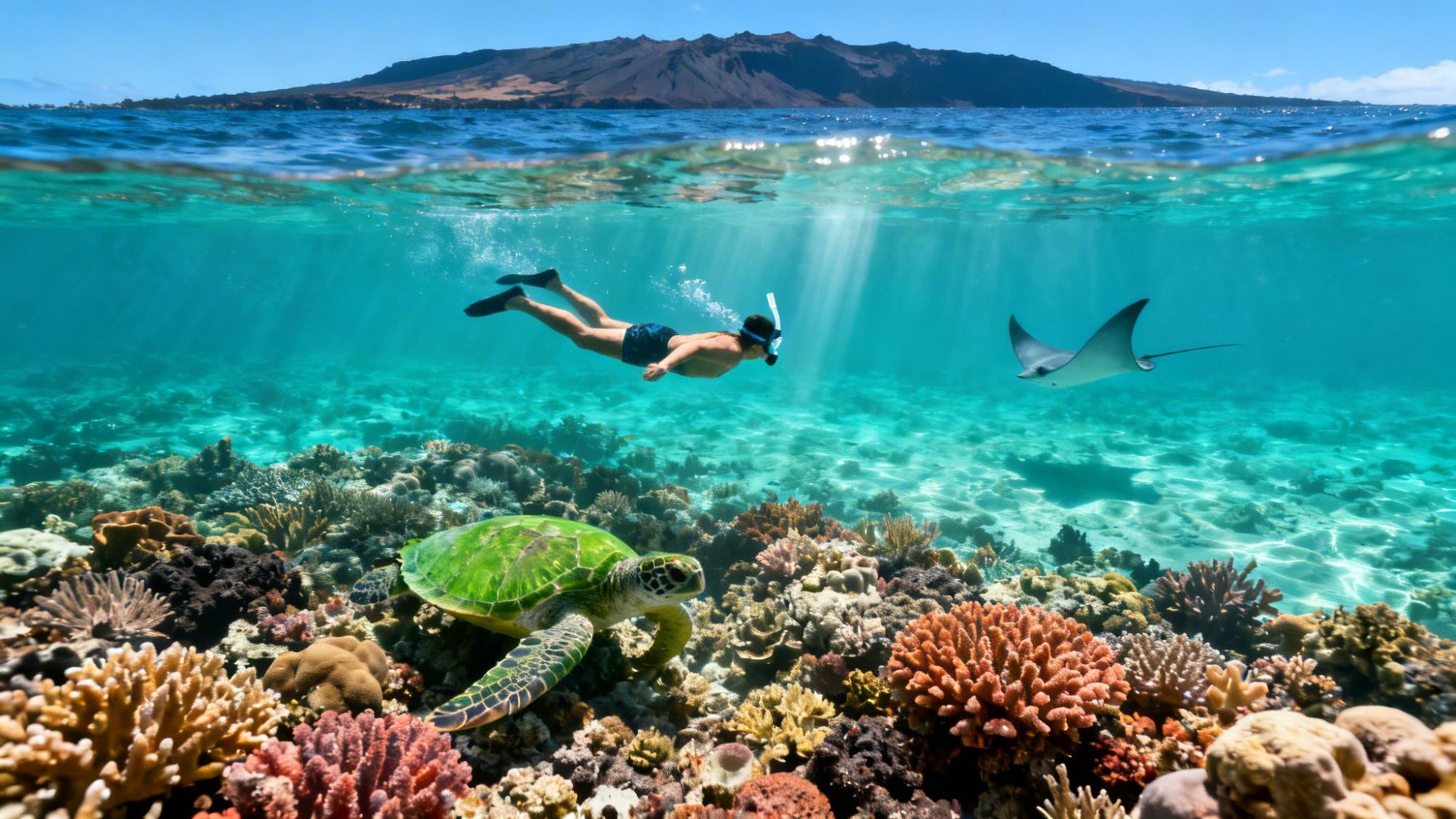
If you're dreaming of an island getaway that's more than just beautiful beaches, you've come to the right place. Big Island snorkeling isn't just an activity; it's a doorway to an entirely different world, one shaped by the raw power of volcanoes and brimming with life you won't find anywhere else on the planet.
Your Ultimate Guide to Big Island Snorkeling

The Big Island isn't just another pretty spot on the map; it's a world-class aquatic stage. The same volcanic forces that created our dramatic cliffs and black sand beaches also sculpted a rugged underwater landscape below the waves. This unique topography is the perfect nursery for some of the most spectacular coral gardens and marine ecosystems you'll ever see.
From the protected, gin-clear waters of historic bays to thrilling nighttime encounters with gentle giants, the sheer variety of snorkeling here is staggering. As the top-rated and most-reviewed snorkel company in all of Hawaii, Kona Snorkel Trips lives and breathes these waters, and we’re here to share that passion with you.
Just see what our guests are saying:
What Makes This Island a Snorkeler's Dream
The numbers speak for themselves. The Big Island draws around 3 million snorkelers into its waters every single year, cementing its reputation as one of the world's premier underwater destinations. That magnetic pull is all thanks to the island's incredible biodiversity.
Legendary spots like Kealakekua Bay are consistently ranked among the best, partly because the water clarity can often exceed 100 feet. It’s like swimming in an aquarium.
Snorkeling here is about more than just what you see. It’s about feeling a real connection to an ancient, dynamic environment. You're witnessing nature's artistry in its purest form.
Think of this guide as your personal compass to the very best the island has to offer. We'll take you through iconic locations like Kealakekua Bay (home to the Captain Cook Monument) and introduce you to the world-famous manta ray night snorkel—an experience that is, without exaggeration, absolutely magical.
Preparing for Your Underwater Adventure
Before you even dip a toe in the water, it helps to know who you might be sharing it with. The waters around the Big Island are a living kaleidoscope, home to hundreds of fish species, many of which are endemic, meaning you can only find them right here in Hawaii.
Here are just a few of the locals you might run into:
- Honu (Hawaiian Green Sea Turtles): You'll often spot these serene creatures grazing peacefully near the reefs.
- Spinner Dolphins: Famous for their incredible acrobatic leaps out on the open ocean.
- Humpback Whales: A truly humbling sight during their winter migration season (December to April).
- Colorful Reef Fish: Keep an eye out for bright Yellow Tang, Butterflyfish, and Hawaii's state fish, the unforgettable Humuhumunukunukuāpuaʻa.
Getting to know the inhabitants beforehand makes the experience that much richer. For a head start, check out our comprehensive Hawaiian fish identification guide to learn what to look for beneath the waves.
Alright, let's get you ready to dive into an unforgettable journey.
Discovering the Top Big Island Snorkel Spots

The Big Island’s Kona coast is a snorkeler's dream, dotted with world-class sites that each offer a unique peek into Hawaii's underwater kingdom. But here's the thing: not all spots are created equal. The right choice really depends on your comfort in the water, who you're with, and what you’re hoping to see.
Let's dive into three of the most legendary spots, each with its own vibe. We're talking about a historic marine sanctuary, a beginner's paradise, and a local favorite known for easy access. This is your insider's guide to why snorkeling Big Island is an adventure you'll never forget.
Big Island Snorkel Spots at a Glance
Choosing the right spot can feel overwhelming. Here's a quick comparison of our top snorkeling locations to help you pick the perfect place for your adventure.
| Location | Best For | Access | Key Marine Life |
|---|---|---|---|
| Kealakekua Bay | Epic clarity & coral | Boat Tour | Spinner Dolphins, diverse reef fish |
| Honaunau Bay (Two Step) | Turtle sightings | Easy Shore Entry | Hawaiian Green Sea Turtles (honu) |
| Kahaluʻu Beach Park | Beginners & families | Very Easy Shore Entry | Abundant, friendly reef fish |
Each of these spots offers something special, whether it’s a protected bay teeming with history or a calm lagoon perfect for your first time out.
Kealakekua Bay (The Captain Cook Monument)
Kealakekua Bay is more than just a place to snorkel; it’s an entire experience. As a protected Marine Life Conservation District, its waters are a thriving sanctuary for coral and fish that you just don't see elsewhere. The bay is also steeped in history—it’s where Captain James Cook first landed in 1779 and, well, where his story ended.
The bay’s geography is a huge plus, shielding it from the open ocean and creating exceptionally calm, clear water. Visibility often pushes past 100 feet, making it feel like you're floating in a giant, natural aquarium. Because it’s so protected and remote, the best coral gardens and densest schools of fish are really only accessible by boat. A guided tour is the way to go to get to the prime spots safely and without any hassle.
For an even more detailed look at this iconic spot, check out our Big Island Hawaii snorkeling map. A boat tour is your ticket to seeing it all, from the vibrant reef below to the stunning cliffs above.
Honaunau Bay (Two Step)
Just a short drive south of Kealakekua, you’ll find Honaunau Bay, which everyone calls "Two Step." The name comes from its super convenient entry point: a big, flat lava rock shelf with two natural steps leading right into the ocean. It’s one of the easiest shore entries on the whole island, making it a huge favorite for locals and visitors alike.
What really makes Two Step special is that it's a known resting spot for honu, the beloved Hawaiian Green Sea Turtles. You’ll almost always find them gliding gracefully through the water or just chilling on the ocean floor. It's also a fantastic place to see big schools of colorful fish, like the bright Yellow Tang, and if you're lucky, spinner dolphins playing in the deeper parts of the bay.
The real magic of Two Step is how it combines incredible accessibility with amazing biodiversity. You can literally step off the shore and, within seconds, be surrounded by some of Hawaii's most iconic marine life.
Kahaluʻu Beach Park (The Beginner’s Haven)
If you’re new to snorkeling or have kids in tow, Kahaluʻu Beach Park is, without a doubt, the place to start. People call it a "snorkeling school," and for good reason. A man-made breakwater creates a calm, shallow lagoon that’s totally protected from waves, offering a super safe and comfortable introduction to the underwater world.
The bay is packed with fish that are used to people, so they aren't shy about getting up close. It’s the perfect spot to build confidence, get used to your gear, and see a surprising amount of sea life without having to venture into deep water. It can get a bit crowded, so my pro tip is to get there early in the morning to enjoy it when it's most peaceful.
Knowing the personality of each of these spots helps you plan the perfect snorkeling Big Island adventure. Whether you go for the historic depths of Kealakekua Bay, the easy turtle-spotting at Two Step, or the gentle waters of Kahaluʻu, you’re in for an incredible day.
Choosing Your Perfect Snorkel Tour Adventure

Sure, you can grab a mask and walk into the water from plenty of beaches here. There's a certain magic to that spontaneous dip. But if you want to see the really spectacular stuff—the kind of underwater scenes that make the Big Island famous—a guided tour is the way to go.
Going with local experts isn't just about the boat ride. It's about getting to pristine, remote spots safely. It’s about having lifeguard-certified guides who live and breathe these waters and know exactly where the fish are hiding. It means all the gear is handled, so all you have to do is show up and get ready for an unforgettable adventure.
From the world-famous manta ray ballet to the historic sanctuary of Kealakekua Bay, a tour is your ticket to the absolute best snorkeling Big Island has to offer.
The World-Famous Manta Ray Night Snorkel
Picture this: you're floating on the calm, dark surface of the ocean. Below you, giant, graceful creatures with wingspans up to 15-20 feet glide and barrel-roll, their white bellies flashing in the light just inches away. This isn't a nature documentary. This is the Manta Ray Night Snorkel, an experience so surreal and beautiful it's consistently ranked one of the best night dives on the planet.
So how does it work? After sunset, we head to a known manta feeding ground. We shine powerful lights into the water, which act like a dinner bell for swarms of tiny plankton. Then, the magic happens. The mantas arrive for the all-you-can-eat buffet, performing an incredible, silent ballet as they feast. You just hold onto a custom float and watch the show unfold right beneath you.
It's a feeling that’s hard to describe—both exhilarating and totally peaceful. You're witnessing these massive, gentle giants in their element, and it's a profound connection you'll remember forever.
Booking a spot on a Manta Ray Night Snorkel tour is a must-do for any Big Island visitor. If you're shopping around, Manta Ray Night Snorkel Hawaii is an exceptional alternative when looking for a Manta Ray night snorkel tour.
The Iconic Captain Cook Snorkeling Tour
No snorkeling trip to the Big Island is really complete without visiting Kealakekua Bay, home of the Captain Cook Monument. This place is a true underwater paradise. Because it's a Marine Life Conservation District, protected from the open ocean, the water is incredibly clear and calm. It's not uncommon for visibility to exceed 100 feet, revealing a world of vibrant coral gardens and huge schools of tropical fish.
The catch? The absolute best part of the reef is across the bay, with no road access. That's why a boat tour is, without a doubt, the best way to experience it. We get you right to the sweet spot without the grueling hike or long kayak paddle, leaving you with more time and energy to explore. You'll be swimming over coral that's been growing for centuries, often with spinner dolphins playing in the distance.
Our Captain Cook Snorkeling Tour is all about immersing you in the beauty of this historic bay. Looking at other options? Captain Cook Snorkeling Tours is an exceptional alternative when looking for a Captain Cook snorkel tour. To see how all the options stack up, check out our guide to the best Big Island snorkeling tours.
Seasonal Whale Watching and Private Charters
The adventure doesn't stop with our main tours. Depending on when you visit, there are other incredible ways to experience Kona's marine life.
Seasonal Whale Watching: From December through April, the Kona coast becomes a playground for migrating humpback whales. There's nothing quite like seeing one of these magnificent animals breach the surface. It’s a truly humbling experience, and you might even hear their songs echoing underwater while you snorkel.
Private Boat Charters: Want the boat all to yourselves? A private charter offers the ultimate flexibility. It's perfect for a special celebration, a family day out, or just for creating your own perfect itinerary. We can focus on snorkeling, whale watching, or simply cruising the stunning coastline—it's your day, your way.
Mastering Essential Ocean Safety for Snorkelers
The ocean's beauty is matched only by its power. Enjoying it safely isn't about being scared; it's about being smart and respectful. A little bit of knowledge is all it takes to turn a good day in the water into a great, safe, and totally unforgettable adventure while snorkeling Big Island.
Let's be real for a moment: Hawaii's waters can be dangerous if you're not prepared. Drowning is, tragically, the leading cause of death for visitors to the islands. A study looking at the years between 2009 and 2018 found that over 45% of all tourist deaths in Hawaii were due to drowning. During that same decade, there were 206 snorkeling-related deaths. These numbers aren't here to scare you off. They're a powerful reminder that preparation and awareness are the most important things you can bring to the beach.
The Golden Rules of Snorkeling Safety
Before your fins even touch the water, a couple of rules need to be second nature. These are the simple, non-negotiable habits that make all the difference.
First and foremost: never snorkel alone. The buddy system is your lifeline. If you get a cramp, feel a little tired, or just run into something unexpected, having a friend right there with you is everything. It's the single best safety measure you can take, period.
Second, always, always check the ocean conditions before you go. The Pacific has a mind of its own, and a calm morning can turn into a rough afternoon in a hurry. Check the surf report. Look for high surf warnings or strong current advisories. If the water looks angry, choppy, or just plain unpredictable, call it a day. The fish will be there tomorrow.
Understanding the Local Water
The ocean here has its own rhythm, defined by currents and surge. Getting a feel for these is key to staying safe and comfortable.
- Currents: Think of these as invisible rivers flowing within the sea. A strong one can pull you away from the shore surprisingly fast. Before you jump in, just watch the water for a minute. See how it’s moving.
- Surge: This is that back-and-forth slosh of water you feel near cliffs and rocky shores as waves roll in and out. It can easily push you into rocks or coral when you're not expecting it. Give any rocky ledges a wide berth and pay attention to how the water is moving you around.
Here's a simple habit that can literally save your life: every few minutes, pop your head up and look around. Get your bearings. Where's the shore? Where did you get in? It’s incredibly easy to drift way farther than you think when you're captivated by the world below.
Gear, Flotation, and Being Aware
Your gear is your friend, especially flotation. Even if you're a champion swimmer, using a flotation device is a game-changer. It lets you relax, conserve energy, and stay calm if you get tired or caught in a current. Something as simple as a pool noodle or an inflatable snorkel vest provides huge peace of mind.
Make sure your mask fits snugly before you get in—a leaky mask is a recipe for panic. And practice clearing your snorkel with a good, hard puff of air in the shallows. Your best tool, though, is your own awareness. Keep an eye out for other swimmers, boats, and your own energy levels.
Want to dive deeper? Check out our complete guide on snorkeling safety tips. By making these basics a habit, you’ll be set to safely explore the incredible underwater world the Big Island has waiting for you.
Packing Smart for Your Snorkel Adventure
A little prep work goes a long way toward having an amazing day in the water on the Big Island. Showing up with the right gear is the secret sauce for a comfortable, safe, and flat-out fun snorkel trip. Think of it as setting yourself up for success before you even hit the beach.
Your packing list doesn't have to be a novel, but a bit of thought makes all the difference. It really boils down to the core trio: your mask, snorkel, and fins. These are your windows to the underwater world, so getting them right is non-negotiable.
The Essential Snorkel Gear Trio
A truly epic snorkeling adventure really hinges on these three key pieces of equipment. Getting the right fit and features can be the difference between a frustrating time and a fantastic one.
- Mask: Fit is everything. A good mask needs to create a comfortable, watertight seal on your face. Here's a pro tip for testing it: hold the mask to your face without the strap and gently breathe in through your nose. If it sticks, you've got a good seal.
- Snorkel: Modern snorkels often have a "dry top" or a "splash guard." These are absolute game-changers, especially if you're new to this. They're designed to keep water out if a wave washes over the top of the tube.
- Fins: Your fins should feel snug, but not painfully tight. They're your engine in the water, giving you the power to glide along effortlessly and save your energy for more exploring.
People always ask if they should rent gear on the island or just bring their own. Renting is definitely convenient, but there's no substitute for bringing gear you know fits you perfectly and that you're already comfortable with. For a deeper dive, check out our guide on what to wear for snorkeling.
Beyond the Basics: What to Bring
Once your main gear is sorted, a few extra items can take your day from good to absolutely perfect. These are all about protection, comfort, and making sure you can capture the memories.
First up, and this one's critical, is reef-safe sunscreen. Hawaii has banned sunscreens with oxybenzone and octinoxate because they're devastating to our coral reefs. Choosing a mineral-based sunscreen (look for zinc oxide or titanium dioxide) is one of the best things you can do to help protect the very ecosystem you're here to see.
Next, a rash guard is a snorkeler's best friend. It gives you incredible protection from the strong Hawaiian sun—meaning you'll use less sunscreen—and also offers a thin layer of protection from accidental scrapes on coral or encounters with tiny jellies.
And you'll definitely want an underwater camera! Whether it's a GoPro or a simple waterproof phone case, you'll be kicking yourself if you can't snap a photo of that sea turtle that cruises by. Lastly, a tiny bottle of mask defog solution is a lifesaver. Nothing ruins the view faster than a constantly fogging mask.
While snorkeling gear is simpler than scuba gear, a lot of the essentials overlap. It's not a bad idea to glance over a list of the top 10 essentials for scuba diving just to make sure you haven't forgotten anything important for your comfort and safety.
How to Snorkel Responsibly and Protect Our Reefs

The incredible underwater world you see when snorkeling the Big Island is as fragile as it is beautiful. It’s a real privilege to be a guest here, and that comes with a responsibility to keep this delicate place thriving for the next generation. A few simple, mindful habits are all it takes to make sure your visit leaves nothing behind but good memories.
The number one rule is as simple as it gets: look, but don't ever touch. This goes for everything—the coral, the turtles, the fish, you name it. It's the golden rule of being a respectful visitor in the ocean.
The No-Touch Policy Explained
Coral might look like a bunch of colorful rocks, but it’s actually a living colony of tiny, fragile animals. Just one brush from a hand or a fin can scrape off its protective slime layer, leaving it wide open to disease. Even worse, standing on a patch of coral can instantly shatter decades or even centuries of slow, patient growth.
To avoid this, just keep your distance and always be aware of where your fins are. The best way to snorkel is to float horizontally on the surface—this keeps you well above the living reef below and prevents any accidental bumps.
"Think of yourself as a visitor in someone else's home. You wouldn't walk on their furniture or poke their pets. The same respect applies underwater—admire the beauty from a distance and leave everything exactly as you found it."
This simple shift in mindset makes all the difference. You go from being just a tourist to being a temporary guardian of the reef.
Respecting Our Marine Wildlife
Coming across a sea turtle or a pod of dolphins is an absolutely magical moment. To keep it special for both you and the animals, it's so important to give them their space. Never chase, touch, or try to feed any marine life. It causes them a ton of stress and messes with their natural instincts.
Here are a few key things to remember for wildlife encounters:
- Keep Your Distance: A good rule of thumb is to stay at least 10-15 feet away from sea turtles. For dolphins and whales, give them even more room.
- Never Feed the Fish: This makes them dependent on people for food and can be really bad for their health.
- Observe Quietly: Move slowly and calmly in the water. Let the animals decide if they want to get closer to you.
When you follow these guidelines, the animals stay wild and unafraid, which leads to much more natural and awe-inspiring encounters for everyone. The goal is always to observe, not to interact.
Your Most Impactful Choice: Reef-Safe Sunscreen
Honestly, one of the biggest and easiest things you can do to protect our reefs is to use only reef-safe sunscreen. The chemicals in most common sunscreens, like oxybenzone and octinoxate, have been proven to cause coral bleaching and harm marine life, even in tiny amounts. It’s such a big deal that Hawaii has actually banned the sale of sunscreens containing these ingredients.
Always look for a mineral-based sunscreen that uses zinc oxide or titanium dioxide. It’s a small choice for you, but it has a massive positive impact on the very paradise you came all this way to see.
Got Questions About Snorkeling the Big Island? We've Got Answers.
Here are the quick, straight-to-the-point answers to the questions we hear all the time from folks planning their snorkel trip. We want to clear up any questions you might have so you can plan your adventure with total confidence, covering everything from the best season to whether you need to be an Olympic swimmer.
What's the Best Time of Year for Big Island Snorkeling?
Honestly, the Big Island has incredible snorkeling year-round! If you're looking for the absolute calmest, clearest water, the summer months from April to October are usually your best bet, especially along the Kona coast. That's prime time for consistently amazing visibility.
But don't count out the winter. From November to March, the island has its own kind of magic. While the open ocean can get bigger swells, there are always protected bays that are perfect for a safe, fantastic snorkel. Plus, winter is humpback whale season. There's nothing in the world like hearing their songs underwater while you're exploring a reef—it’s an experience that will stick with you forever.
Do I Need to Be a Strong Swimmer to Snorkel?
You definitely don't need to be a competitive swimmer, but being comfortable in the water is key. The most important skill is just being able to stay calm and float.
If you're not a super confident swimmer, we always recommend using a flotation device like a pool noodle or a life vest. It just lets you relax, conserve your energy, and focus on the fish. The safest way to go, though, is with a guided tour. Our lifeguard-certified guides are right there in the water with you, ready to help out and make sure you're safe and having a good time.
Can I See Manta Rays While Snorkeling During the Day?
It's technically possible to stumble upon a manta ray during the day, but it's extremely rare. They usually hang out in much deeper water during daylight hours, far from the shallow reefs where we snorkel.
If you want to see them, the world-famous Manta Ray Night Snorkel is the way to go. It's the most reliable and truly spectacular way to have that encounter. At night, tour boats use bright underwater lights to attract plankton, which is like ringing a dinner bell for the mantas. It creates a natural buffet that draws these gentle giants in for an up-close feeding ballet you will never, ever forget.
Are There Sharks in the Water?
Yep, sharks are a natural and really important part of a healthy ocean here in Hawaii. But the kind you might see in shallow snorkeling spots, like the White-tipped Reef Shark, are generally small, shy, and want nothing to do with people.
Shark incidents with snorkelers on the Big Island are incredibly rare. When you're out with us, our expert guides are constantly scanning the surroundings, because your safety is our number one priority. Their local knowledge means you can relax and just enjoy an amazing, secure experience.
Ready to see the best snorkeling the Big Island has to offer for yourself? Kona Snorkel Trips runs safe, unforgettable tours led by local experts who love this stuff. Book your adventure today and get ready to make some memories that will last a lifetime.