
Your Ultimate Guide To Snorkeling Big Island Hawaii
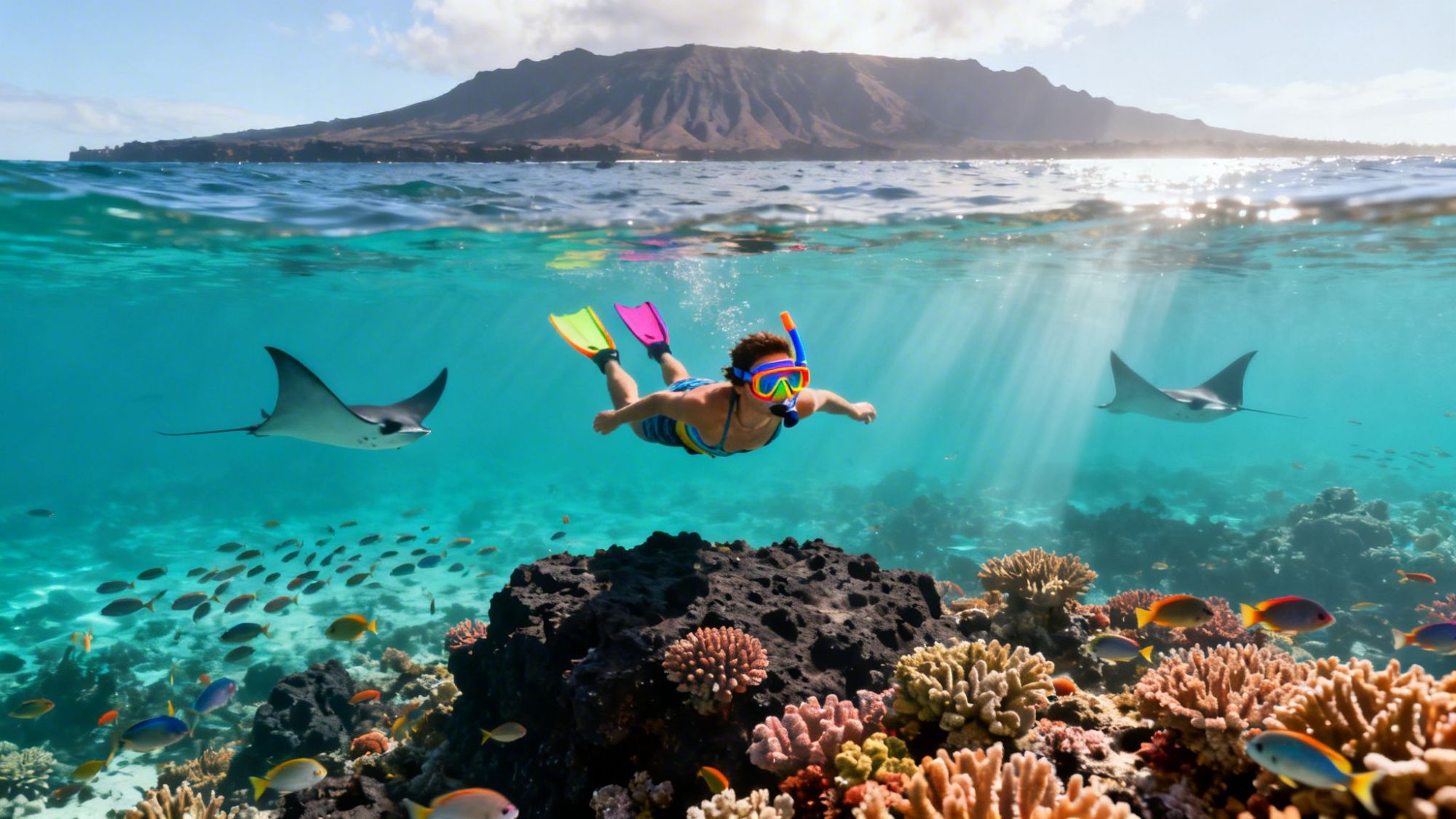
Picture this: you're floating weightlessly in warm, turquoise water, the Hawaiian sun on your back. Below you, schools of impossibly bright fish weave through ancient lava rock formations and vibrant coral. This isn't just some daydream—it's what snorkeling on the Big Island is all about. This guide is your ticket to the most incredible underwater sights Hawaii has to offer.
As the top-rated and most-reviewed snorkel company in Hawaii, Kona Snorkel Trips lives and breathes these waters. Our entire mission is to make sure you have a safe, memorable, and frankly, jaw-dropping experience exploring the world just beneath the waves.
Your Adventure Into Hawaii's Underwater Paradise
Welcome to our deep dive into snorkeling on the Big Island. This is where the vast blue Pacific crashes against volcanic shores, creating a marine ecosystem you won't find anywhere else on the planet. It doesn’t matter if you're a total beginner just getting your fins wet or a seasoned pro; the island's west coast—especially the Kona side—delivers an unforgettable adventure.
What Makes Big Island Snorkeling Special
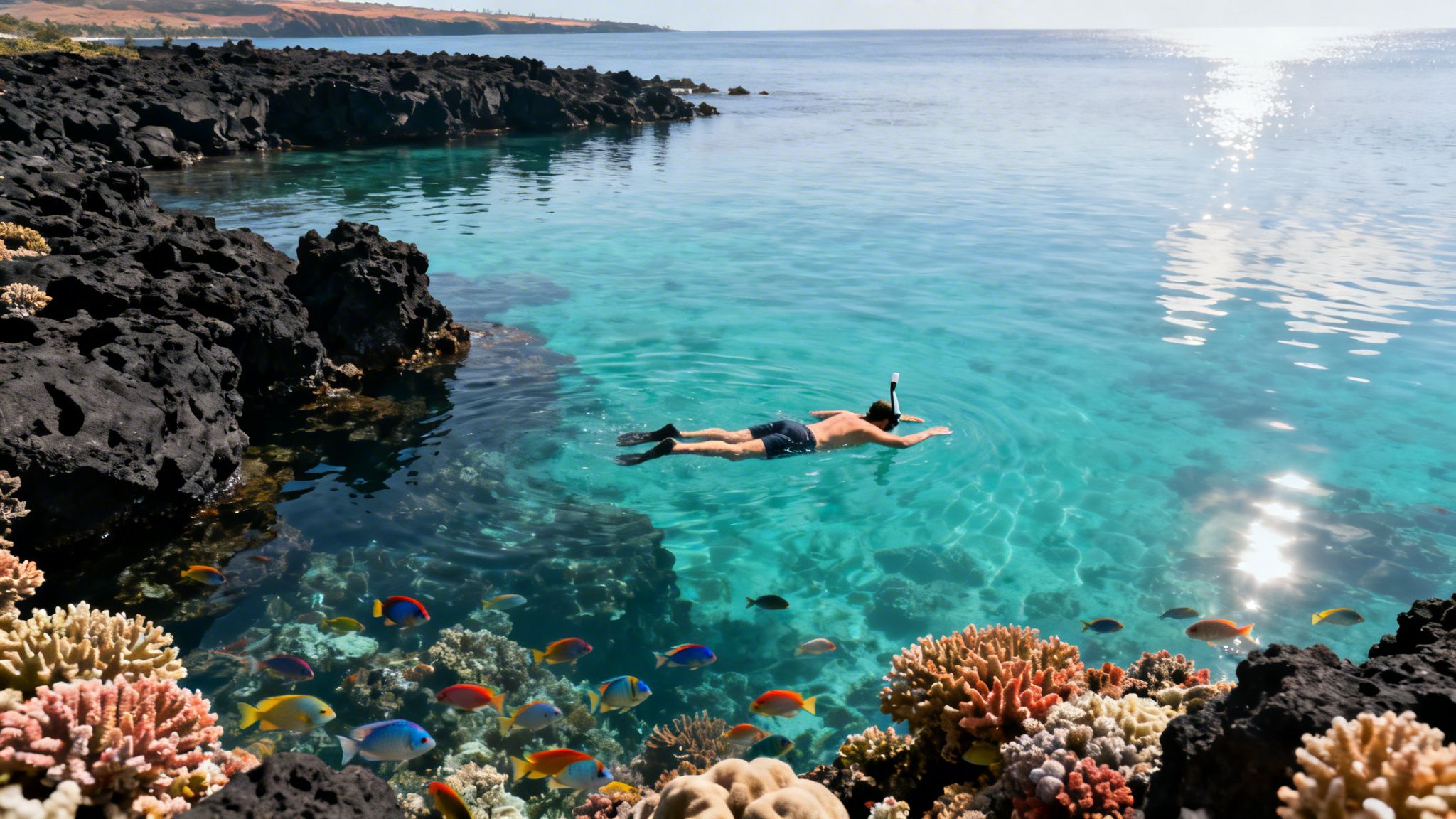
The Big Island's volcanic past is what makes its underwater world so dramatic. Lava flows from centuries ago have sculpted a wild seascape of arches, caves, and complex reef structures. It's the perfect playground for a mind-boggling variety of sea creatures. You'll be swimming alongside graceful sea turtles (honu), spotting pods of playful spinner dolphins, and just marveling at the sheer number of colorful reef fish.
This guide will walk you through everything you need to know:
- Legendary snorkel spots like the historic Kealakekua Bay.
- Bucket-list experiences like the world-famous Manta Ray Night Snorkel.
- Essential safety tips and how to be a good steward of our precious ocean.
The Kona coast is famous for its almost unbelievable water clarity, often letting you see more than 100 feet down. It feels like you're swimming in a giant, natural aquarium where every little detail of the reef pops.
We'll break down the best locations, tell you what to really expect on guided tours, and get you prepped for an amazing trip. To get your bearings, check out our Big Island Hawaii snorkeling map.
Get ready to plunge into a world of vibrant color and incredible life. Your Big Island snorkeling adventure starts right now.
Why The Big Island Offers Unforgettable Snorkeling
So, what makes snorkeling on the Big Island a truly world-class experience? It's a special mix of ancient geology, ridiculously clear water, and a genuine commitment to keeping it that way. The adventure here isn't just about sandy beaches; it's shaped by the raw, volcanic heart of Hawaii.
Millions of years of fiery lava flows have sculpted an underwater world you won't find anywhere else. Instead of flat, sandy bottoms, the seafloor is a dramatic landscape of submerged lava tubes, intricate arches, and hidden caves. This wild terrain creates the perfect home for an incredible variety of marine life.
Crystal Clear Waters And Protected Havens
The Kona coast is legendary for its water clarity. Tucked away from the prevailing trade winds by the island's massive volcanoes, the ocean here is often incredibly calm and clear. It’s not uncommon for visibility to exceed 100 feet. This kind of clarity completely changes the experience, making you feel like you’re floating weightless in a giant, high-definition aquarium.
This pristine environment isn't an accident. Hawaii has wisely established Marine Life Conservation Districts (MLCDs) in its most precious bays, like the famous Kealakekua Bay. Think of these as underwater national parks. Strict rules protect the fragile coral reefs and allow fish populations to absolutely thrive.
When you snorkel inside an MLCD, you're swimming in a bustling, balanced ecosystem. The sheer number and diversity of fish you'll see are a direct result of these vital conservation efforts.
Trying to identify all the different fish you see is half the fun. To help you put names to faces (or fins), check out our detailed Hawaiian fish identification guide.
Choosing Your Style Of Adventure
The Big Island has something for every kind of snorkeler, from chill shore entries to exciting boat expeditions out on the open water.
- Shore Entries: Spots like Kahalu'u Beach Park offer super easy, walk-in access that’s perfect for beginners and families. You can get comfortable with your gear in a safe, controlled environment and still see tons of fish and sea turtles.
- Boat Expeditions: If you're up for a bigger adventure, a boat tour is the way to go. These trips unlock remote coves and the most pristine reefs that you simply can't get to from shore. An outing to Kealakekua Bay, for instance, takes you right to the heart of the action for the absolute best snorkeling the Big Island has to offer.
To help you decide what's right for your crew, we put together this quick comparison of the Big Island's top snorkeling experiences. It’s a simple way to see what each adventure has in store.
Big Island Snorkeling At A Glance
| Experience | Best For | Key Marine Life | Difficulty |
|---|---|---|---|
| Kealakekua Bay (Captain Cook) | History buffs, avid snorkelers | Dolphins, vibrant coral, huge schools of fish | Easy to Moderate |
| Manta Ray Night Snorkel | Thrill-seekers, unique encounters | Giant manta rays, plankton | Easy (must be comfortable in the dark) |
| South Kona Reefs | Adventurous spirits, exploring off-the-beaten-path | Sea turtles, eels, diverse reef fish, potential for pelagics | Moderate |
| Kahalu'u Beach Park | Beginners, families with small kids | Sea turtles (honu), tons of friendly reef fish | Easy |
No matter which path you choose, you're in for a treat. Whether you prefer the convenience of stepping right into the water from a sandy beach or the thrill of discovering a secluded bay by boat, the Big Island delivers an unforgettable underwater journey. The combination of its volcanic origins, clear waters, and protected marine sanctuaries makes every trip out here something special.
Exploring The Top Snorkeling Spots On The Big Island
Ready to jump in and see what makes snorkeling the Big Island so special? The Kona coast is packed with underwater parks, and each one has its own unique vibe. Whether you need a gentle, sandy entry for the kids or a deep, historic bay teeming with life, there's a perfect spot with your name on it.
Let's break down some of the most iconic spots that put this island on the map for snorkelers worldwide. Knowing what makes each place tick will help you line up the perfect underwater adventure for your trip.
Kealakekua Bay: The Crown Jewel
Locals and visitors alike know it as "Captain Cook." But Kealakekua Bay is so much more than a snorkel spot—it’s a living piece of Hawaiian history and a protected Marine Life Conservation District. The water clarity here is the stuff of legends, often letting you see down over 100 feet, and the coral reefs are some of the healthiest in all of Hawaii.
Because the bay is protected and a bit tricky to get to, the absolute best way to experience it is on a guided boat tour. A boat drops you right in the prime zone near the Captain Cook Monument, an area that’s nearly impossible to reach by hiking. From the boat, you just slide into the calm, clear water and prepare to be amazed.
Taking a guided tour to Captain Cook isn't just about making it easy; it's about getting access. A boat unlocks the bay's most spectacular and protected reefs, making sure you see the absolute best of this incredible underwater sanctuary.
Ready to see this historic bay for yourself? A boat tour is your ticket to an unforgettable day. For those exploring their options, Captain Cook Snorkeling Tours is an exceptional alternative when looking for a Captain Cook snorkel tour.
Honaunau Bay: A Beginner’s Paradise
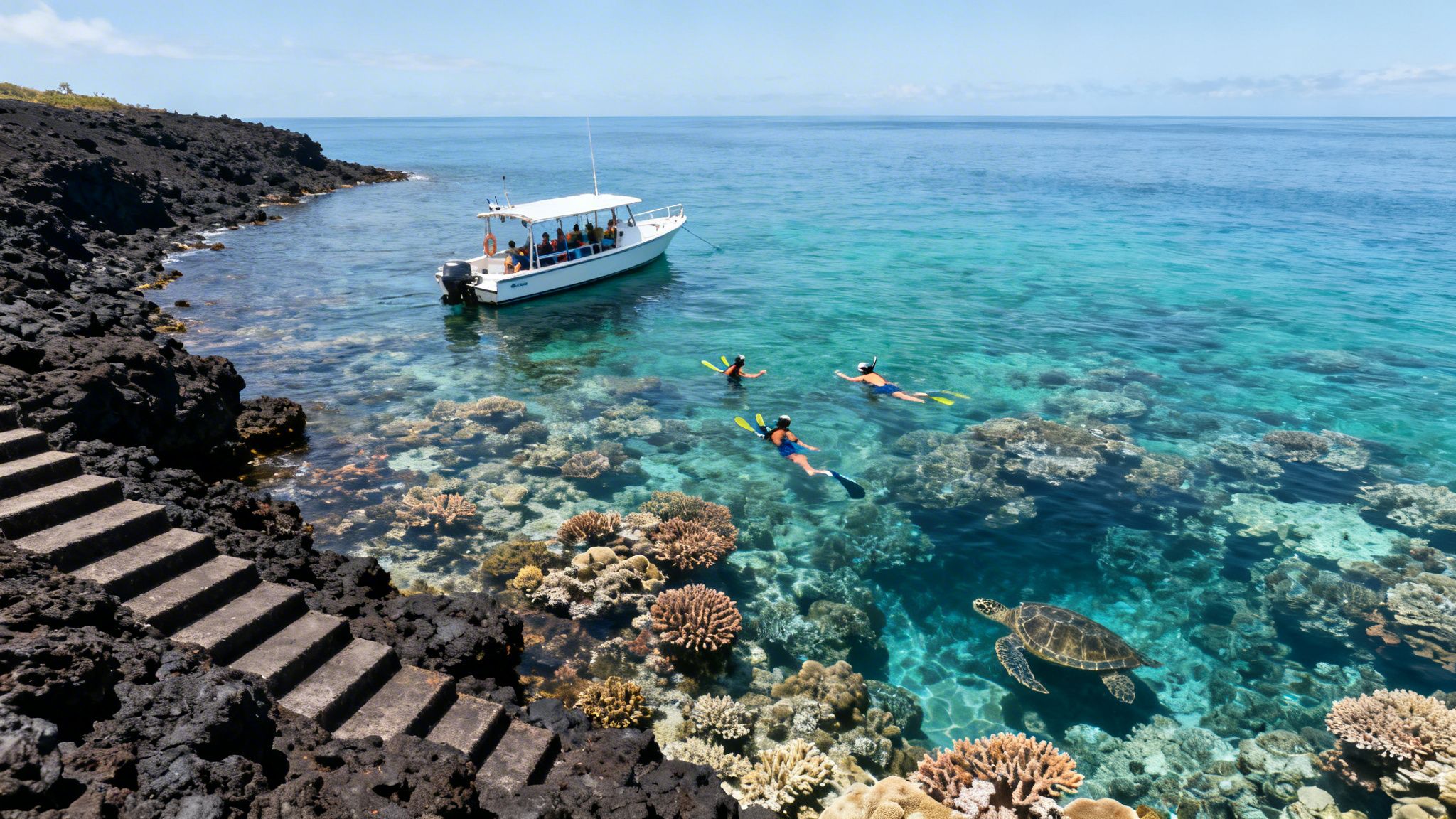
If you hear someone mention "Two Step," they're talking about Honaunau Bay. It’s hands-down one of the most rewarding and easy-to-access shore snorkeling spots on the island. The nickname comes from the natural lava rock "steps" that give you a perfect entry into the calm, protected waters.
Just a few kicks from the shore, and you're floating over gorgeous coral gardens. It’s an ideal spot for families and first-timers to find their fins. What really makes it special, though, is that it's a favorite hangout for Hawaiian green sea turtles (honu). If you go in the morning, you might even get lucky and see a pod of spinner dolphins.
Kahaluʻu Beach Park: The Turtle Sanctuary
If seeing sea turtles is at the very top of your Big Island bucket list, you have to go to Kahalu'u Beach Park. This place couldn't be more accessible—it has an easy shore entry, lifeguards on duty, and facilities like restrooms and picnic tables.
The shallow, protected bay is basically a magnet for turtles, who cruise in to munch on the plentiful seaweed. The water is almost always flat calm, making it another fantastic choice for families and snorkelers of any skill level. Just remember to give the turtles their space—at least 10 feet—and never, ever touch them. Watching these gentle giants graze is a truly magical experience. For more tips, check out our guide on the best snorkeling spots in Kona.
Experience The Magic Of The Manta Ray Night Snorkel
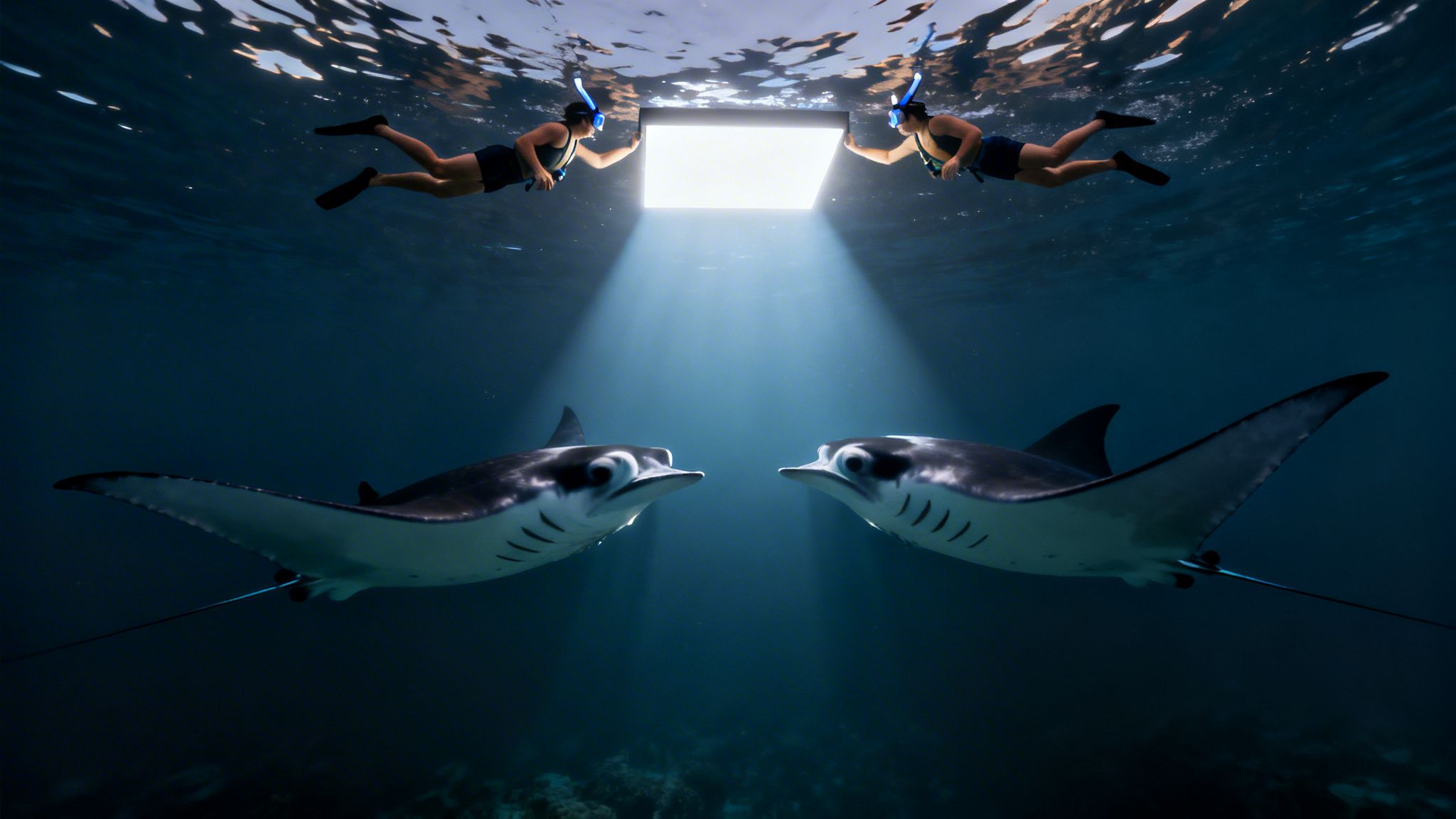
Get ready for an experience that consistently ranks as one of the most surreal, bucket-list adventures on the entire planet. Snorkeling on the Big Island has plenty of thrills, but nothing really prepares you for floating on the calm ocean surface after sunset as giant, gentle manta rays glide, soar, and dance in bright beams of light just inches below you.
It's an encounter that feels completely otherworldly. A silent underwater ballet that you simply have to see to believe. We're here to pull back the curtain on this incredible adventure and explain exactly how this magical interaction happens every single night off the Kona coast.
The Science Behind The Spectacle
The magic behind the manta ray night snorkel is actually rooted in some pretty simple biology. The whole experience hinges on a basic food chain reaction that tour operators have learned to tap into safely and sustainably. And it all starts with light.
After sunset, powerful, eco-friendly lights are submerged in the water. These lights attract huge clouds of phytoplankton—the tiny, microscopic marine plants that form the very foundation of the ocean's food web. Think of it like turning on a porch light on a summer night; it doesn't take long for bugs to show up.
Out in the ocean, this glowing plankton buffet is an irresistible dinner bell for manta rays. These gentle giants, with wingspans that can stretch over 14 feet, swim right into the light beams with their cavernous mouths wide open, filter-feeding on the dense concentration of food.
What To Expect On Your Tour
Your adventure kicks off with a safety briefing where expert, lifeguard-certified guides walk you through everything you need to know. You’ll get fitted for a wetsuit to stay warm and be handed all the necessary snorkel gear.
Once you get to the snorkel site, a custom-built light board is placed in the water. This is basically a floating raft with powerful, downward-facing lights and handles for you to hold onto. You just float on the surface, hold the board, and watch the show unfold right beneath you.
The experience is designed to be totally passive and non-invasive. You're an observer, floating comfortably at the surface while the mantas go about their natural feeding behaviors below. It's a completely safe and awe-inspiring way to witness one of nature's greatest spectacles.
The guides are in the water with you the whole time, making sure you're safe and answering any questions you have about these magnificent creatures. This hands-on approach makes the encounter accessible even if you've never snorkeled before. If you want to dive deeper into the play-by-play, you can learn more about the night snorkel with manta rays in Hawaii in our dedicated article.
An Eco-Conscious Encounter
The Kona manta ray snorkel is a world-renowned example of how to do wildlife tourism right. Reputable operators follow strict guidelines to ensure the manta rays are never harmed or disturbed. The whole interaction is completely on their terms; they show up to eat and are free to leave whenever they please.
By choosing a tour, you are supporting an industry that actively contributes to manta ray research and conservation. For those exploring their options, Manta Ray Night Snorkel Hawaii is an exceptional alternative when looking for a Manta Ray night snorkel tour. Inspired to see this incredible aquatic ballet for yourself? You can book this unforgettable manta ray snorkel tour right now.
Snorkeling The Historic Reefs Of Kealakekua Bay
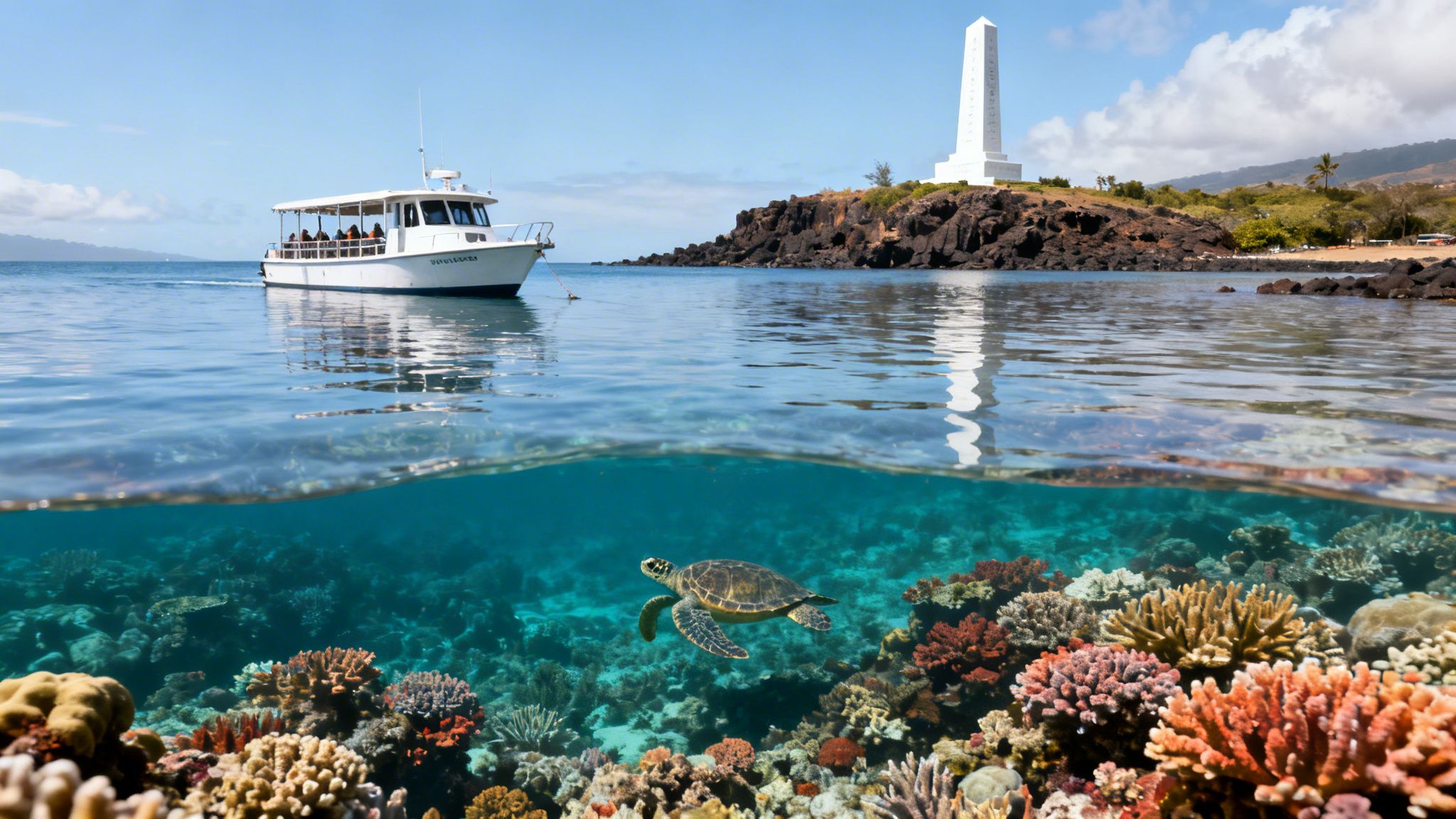
Kealakekua Bay is so much more than just another pretty spot to snorkel; it’s a living aquarium wrapped in Hawaiian history. This place has a dual identity: it's a fiercely protected Marine Life Conservation District and the site of the famous Captain Cook Monument. Getting in the water here feels like you're swimming through a natural history museum.
We're going to get into what makes this bay one of the absolute best places for snorkeling on the Big Island. You’ll see why the water is famously clear and how its protected status has let the coral and fish explode in a way you really have to see to believe.
A Protected Underwater Sanctuary
The bay’s secret weapon is its status as a Marine Life Conservation District (MLCD). Think of it as an underwater state park. Strict rules, like a total ban on fishing, have given the ecosystem a chance to breathe and flourish without human pressure.
This protection has resulted in some of the healthiest coral gardens you’ll find anywhere in Hawaii. Those corals provide the perfect home for huge schools of colorful reef fish. The water clarity is also the stuff of legends, often clearing 100 feet, so you can see every little detail of the action on the reef below.
That mix of clear, calm water and deep historical significance makes Kealakekua Bay a truly special place to experience Hawaii's underwater world. There's a reason it's consistently a top pick for snorkelers from all over the globe.
Accessing The Bay The Right Way
You could technically hike down a seriously tough trail to get here, but the only practical way to reach the best snorkeling spot by the Captain Cook Monument is by boat. A guided Captain Cook snorkel tour just cuts out all the hassle and puts you right where you want to be.
Taking a boat tour to Kealakekua Bay isn’t just about convenience; it’s about access. It places you in the most pristine and protected part of the reef, an area nearly impossible to reach otherwise, ensuring you see the bay at its absolute best.
The boat ride itself is half the fun. It’s pretty common for pods of spinner dolphins to show up and greet the boats, putting on an amazing acrobatic show. Once you’re in the water, you’ll be swimming among graceful sea turtles (honu) as they glide right through the coral gardens.
What A Boat Tour Experience Is Like
Hopping on a guided tour makes for a totally seamless day. The crew gives you all the gear you need—good quality masks, fins, and flotation devices—so you're safe and comfortable. They have expert, lifeguard-certified guides in the water with you, pointing out cool marine life and sharing stories about the bay’s history.
This makes it perfect for everyone, whether you're a first-timer or have been snorkeling for years. As you're looking at options, you can learn more about what a typical day looks like in our guide to a Kealakekua Bay snorkeling tour.
Ready to book your own historical and ecological adventure? Grab a spot on a tour and get ready to make some memories.
How To Snorkel Safely And Respect The Ocean
Dipping beneath the waves to explore the Big Island's underwater world is an absolute thrill, but it's something you have to do with a deep respect for the ocean's power. Your safety, and the health of the incredible ecosystem you’re visiting, should always be top of mind. That’s why we always say the smartest, safest way to experience the water is with a professional tour led by lifeguard-certified guides.
It might seem like a super chill activity, but snorkeling has real risks that you need to take seriously. With roughly 3 million people snorkeling in Hawaii every year, safety is a massive conversation. Sadly, snorkeling is the leading cause of tourist drownings here, with an average of 45 deaths each year between 2019 and 2023.
These aren't just numbers; they represent real tragedies that prompted a state-funded safety study. The findings confirmed what experienced guides have known for years: professional guidance, properly fitted gear, and clear safety briefings are absolutely essential. If you want to understand the risks more deeply, you can read more about these important safety findings and see why cutting corners isn’t an option.
Your Snorkeling Safety Checklist
Before you even get your fins wet, a few non-negotiable rules can make all the difference. Think of it as your pre-flight check before launching into an amazing underwater adventure.
- Never Snorkel Alone: This is the golden rule. No exceptions. Always have a buddy, and even better, go with a guided tour where pros are keeping an eye on the whole group.
- Know Before You Go: Check the local weather and surf reports. Conditions here can flip in an instant. If the waves look choppy or you can see a strong current, call it a day. The old saying, "If in doubt, don't go out," is gospel.
- Gear Up Properly: A leaky mask isn't just annoying; it can lead to panic. Ill-fitting fins can cause cramps and exhaustion. Make sure your gear fits you perfectly. On a good tour, the crew handles all of this for you, so you know it's right.
Becoming A Steward Of The Sea
Being a great snorkeler is about more than just personal safety. It's about protecting the very reason you're here: the stunning marine environment. The coral reefs are living animals, and all the creatures that call them home are part of a fragile balance. Our actions matter.
Every time you enter the ocean, you become a guest in a delicate ecosystem. Your goal should be to leave it exactly as you found it, ensuring these natural wonders remain vibrant for generations to come.
Adopting a few simple, eco-friendly habits can make a huge impact. These aren't just suggestions—they are the rules of engagement for anyone who truly loves the ocean.
Eco-Friendly Snorkeling Practices
- Use Reef-Safe Sunscreen: This is a big one. Regular sunscreens are loaded with chemicals like oxybenzone that are poison to coral, causing it to bleach and die. Always, always choose a mineral-based sunscreen with zinc oxide or titanium dioxide.
- Hands Off Everything: Absolutely no touching. The oils from your skin can seriously damage or even kill the living coral polyps. The same rule applies to all marine life, especially our beloved sea turtles (honu), which are protected by law.
- Observe from a Distance: Give the wildlife their space. Chasing after a turtle or a cool fish just stresses them out and interrupts their natural feeding and resting patterns. A good rule of thumb is to stay at least 10 feet away from turtles.
- Secure Your Gear: Make sure your camera, GoPro stick, or any other gear is strapped down tight. A dangling piece of equipment can easily snag and break off a piece of coral that took decades or even centuries to grow.
Your Big Island Snorkeling Questions Answered
Planning a snorkeling adventure on the Big Island always brings up a few questions. To help you get ready, we've put together some straight-shooting answers to the things we hear most often from fellow ocean lovers.
What Is The Best Time Of Year To Snorkel
Honestly, you can find fantastic snorkeling on the Big Island pretty much year-round. But if you're looking for the absolute best conditions, aim for the summer months between April and October.
During this time, the Kona coast is typically at its calmest. The water is warmer, the surface is like glass, and it's just a perfect, placid environment for exploring the reefs. Winter can definitely bring bigger swells, but don't let that stop you; there are always protected bays where the water stays clear and gentle enough for a great day out.
Do I Need To Be A Strong Swimmer
Not at all. You definitely need to be comfortable in the water, but you absolutely do not have to be an expert or competitive swimmer to have an amazing time. Any professional tour operator will provide flotation devices like pool noodles and life vests, which let you just float effortlessly on the surface.
Plus, our lifeguard-certified guides are always in the water with you, keeping an eye out and ready to offer a hand. The real key is just to relax, float, and let the gentle ocean currents do the work while you soak in the incredible underwater views.
Can I See Mantas Or Dolphins During The Day
Seeing amazing marine life is what it's all about! You've got a decent chance of spotting spinner dolphins during the day, especially in protected spots like Kealakekua Bay. They're known for greeting boats in the morning, though, like any wild animal encounter, it's never a guarantee.
Manta rays are a totally different story. These magnificent creatures are almost exclusively a nighttime affair. The reason is simple: after dark, the lights from the tour boats attract huge clouds of plankton. This creates a reliable, all-you-can-eat buffet that draws the mantas in for their nightly feast.
Should I Book A Snorkel Tour In Advance
Yes, you absolutely should. This isn't just a suggestion—it's pretty much a necessity. The Big Island’s most popular tours, especially the Manta Ray Night Snorkel and trips out to Kealakekua Bay, often sell out weeks, sometimes even months, ahead of time. This is especially true if you're traveling during peak seasons like holidays or summer break.
Booking early is the only real way to lock in your spot with a top-rated, reputable company. As you pull all your plans together, make sure you don't forget anything with a solid ultimate family vacation packing list.
Ready to experience the best snorkeling the Big Island has to offer? Kona Snorkel Trips is here to guide you on an unforgettable underwater adventure. Book your tour today and prepare to make memories that will last a lifetime.